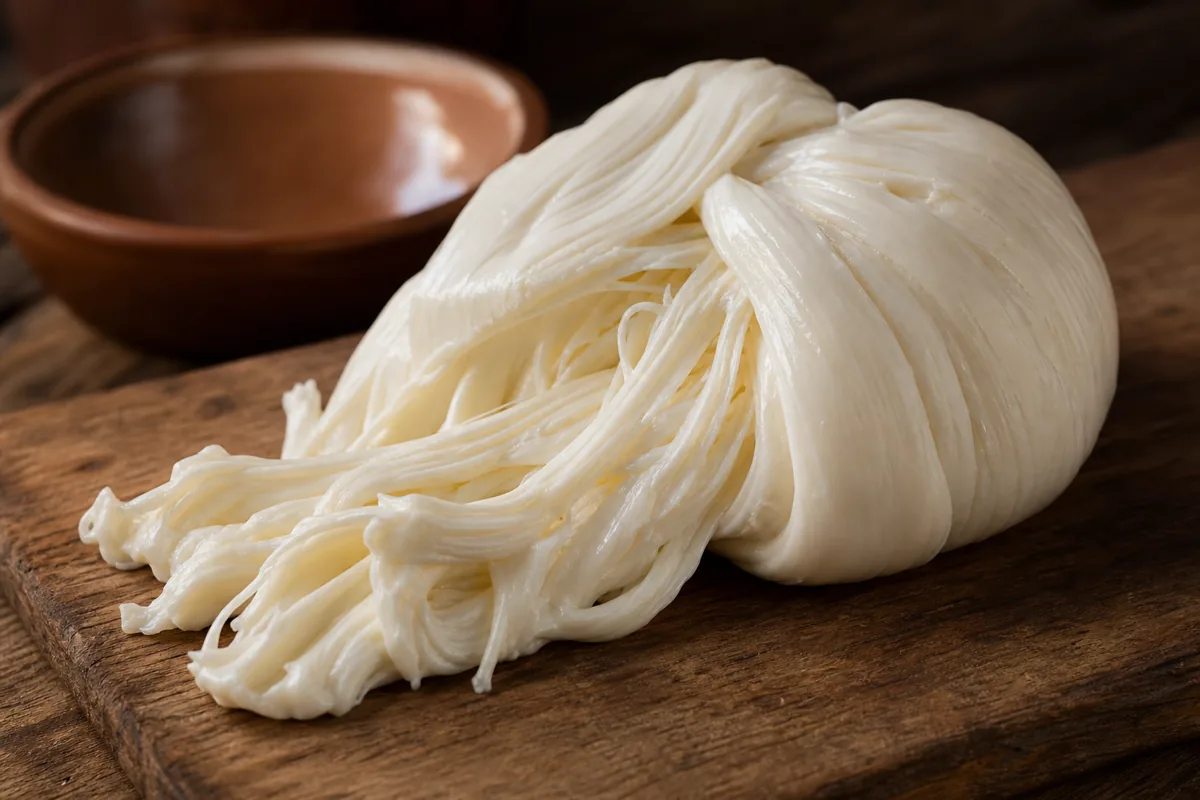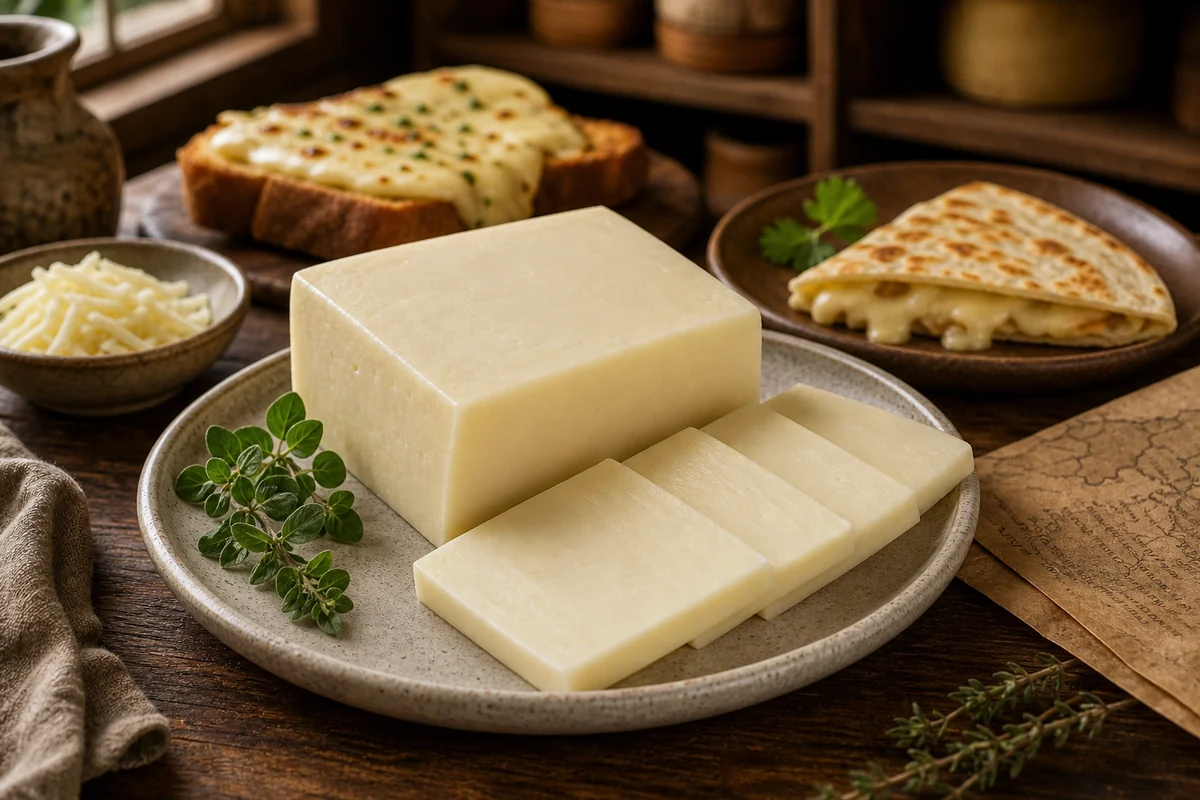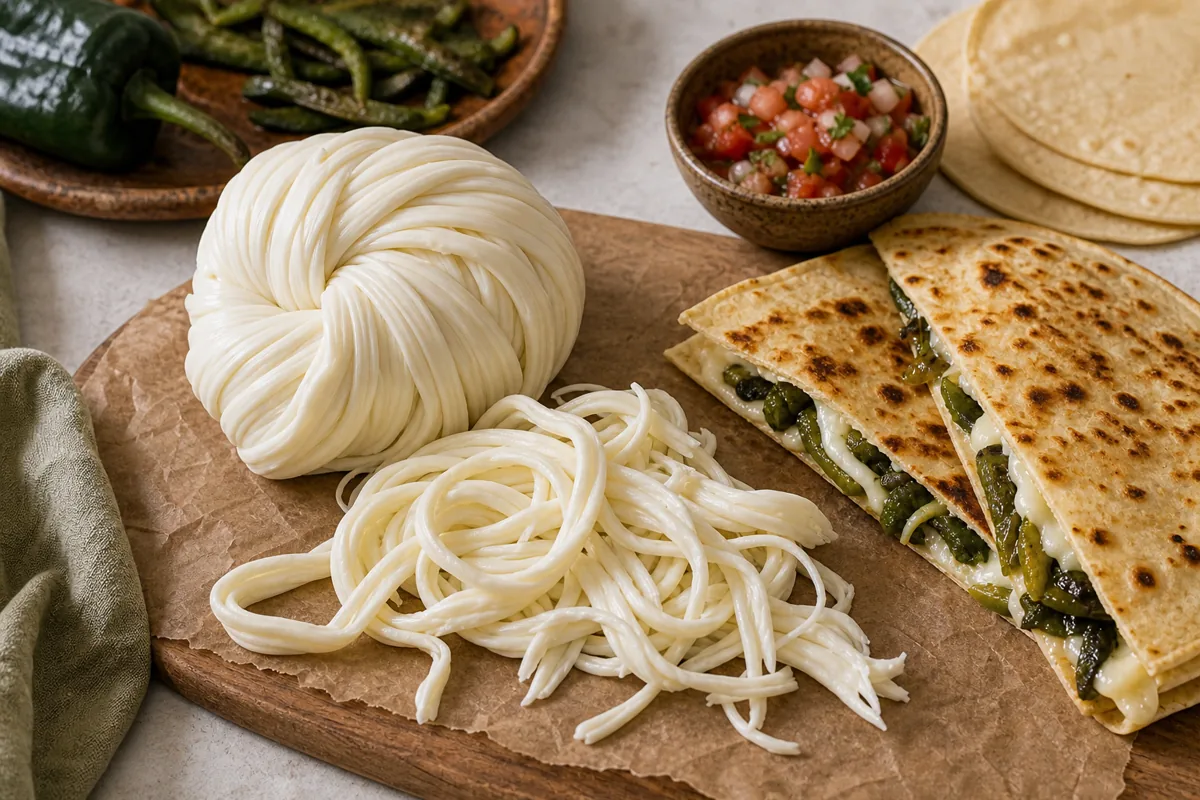
Queso Oaxaca is a mild Mexican cow's-milk cheese that separates into strands and melts into a stretchy filling. It is useful in quesadillas, warm sandwiches and stuffed dishes when you want melted cheese rather than a crumbly topping.
It is also commonly called quesillo in Mexico.
The meaning of quesillo and Reyes Etla needs more care when the word appears on a regional label or a menu from another country.
In This Article
How Do You Portion an Oaxaca Cheese Ball?
Find a loose end on the outside of the ball and unwind the amount you need.
You can split a broad ribbon into narrower strands, cut it shorter or slice the cheese to fit the dish.
Even thickness matters more than an unbroken ribbon. A thick knot in the middle of a quesadilla warms more slowly than cheese spread across the tortilla, so separate it before closing the filling.
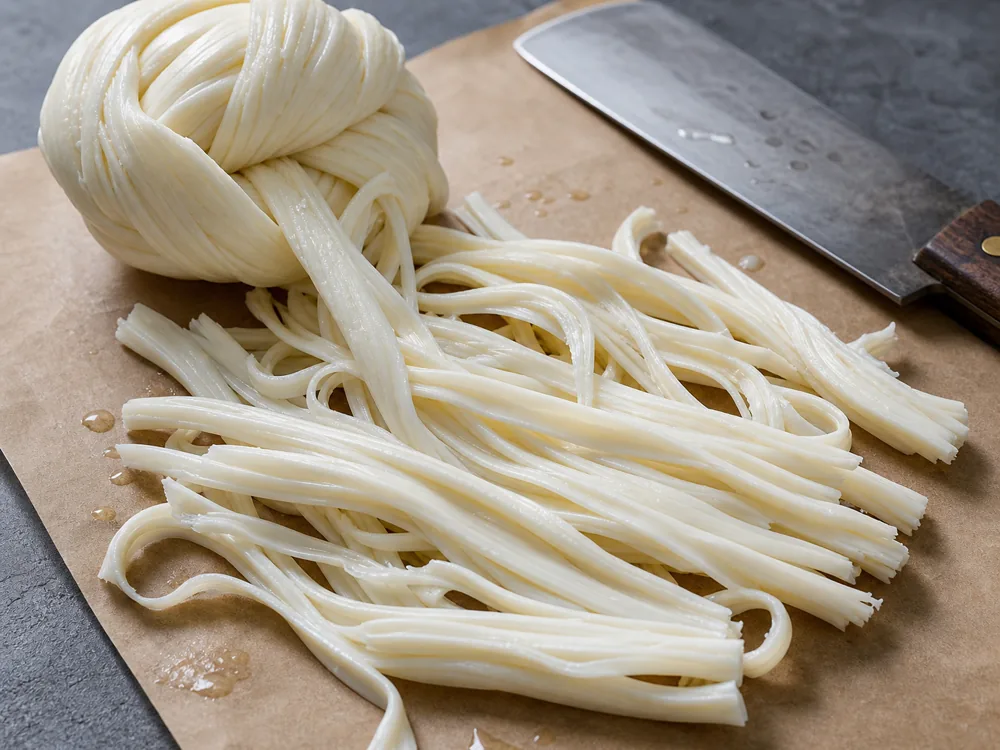
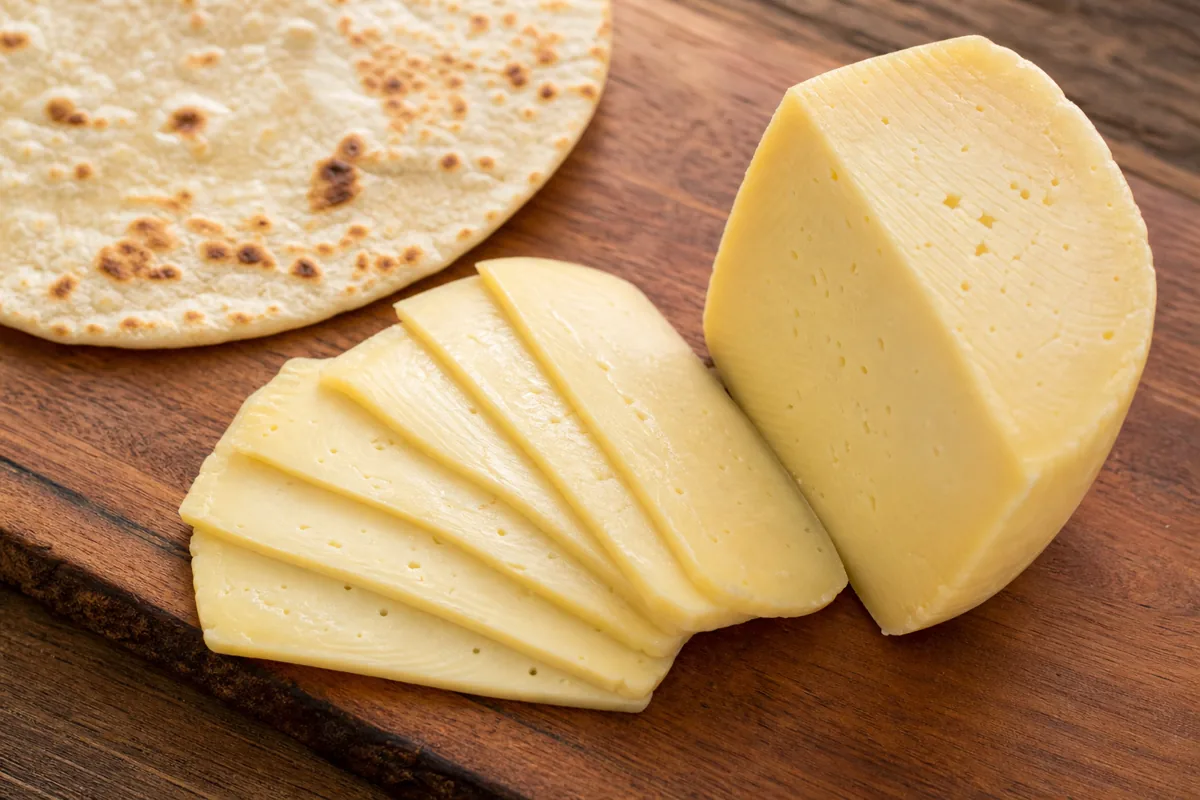
Hand-pulling is convenient, but it is not compulsory. Cacique recommends both shredded and sliced uses for its Oaxaca cheese, so using a knife does not make the result wrong.
The cheese can also be eaten cold if it is suitable for you and has been handled safely.
Cacique suggests small pieces as snacks, although a cold piece will not show the same stretch as a warm filling.
Can You Melt Oaxaca Evenly in a Quesadilla?
Prepare fillings that need cooking before assembling the quesadilla. The final time on the comal or skillet can then toast the tortilla and melt the cheese instead of trying to cook raw potatoes, meat or watery vegetables inside it.
Cacique's Papas con Chorizo Quesadilla follows that sequence: potatoes and chorizo are cooked before being combined with shredded Oaxaca in a tortilla. The assembled quesadilla is cooked until the tortilla is golden and the cheese has melted.
Spread the filling evenly and leave enough space at the edge to fold the tortilla.
If it browns before the centre warms through, reduce the heat and use a thinner filling on the next one.
Wet vegetables and excess sauce can make a crisp tortilla difficult to achieve. Cook off loose vegetable liquid first, or serve a liquid salsa alongside rather than flooding the filling.
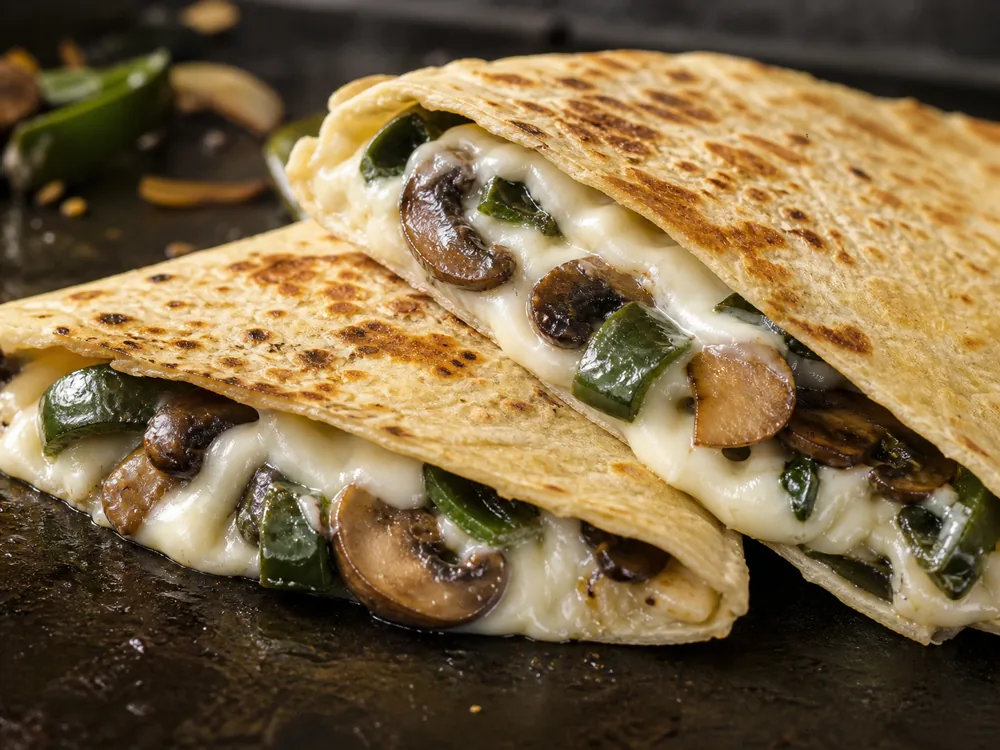
The same portioning approach works on a warm bean-topped roll or inside a sandwich.
In a stuffed chile, keep the cheese away from an open seam so the filling is easier to contain as it melts.
Oaxaca's stretch does not automatically make a smooth, pourable cheese dip. If that is your goal, use a complete sauce recipe that specifies its liquids and cheeses rather than melting a ball alone and expecting it to pour.
What Can Replace Oaxaca Cheese?
Low-moisture mozzarella is a practical starting point when you need a stretchy quesadilla filling.
Use a similar weight and spread it evenly, then adjust the other seasoning for the particular cheese.
That is a cooking substitution, not a claim that the cheeses taste identical. Fresh mozzarella packed in liquid brings more loose moisture, so it may need draining and is less convenient for a crisp tortilla.
Monterey Jack or a Mexican melting cheese such as asadero can also work when the recipe needs melted cheese more than the wound ribbon form. The mild melt of Monterey Jack suits many fillings, but do not expect every replacement to produce the same pull.
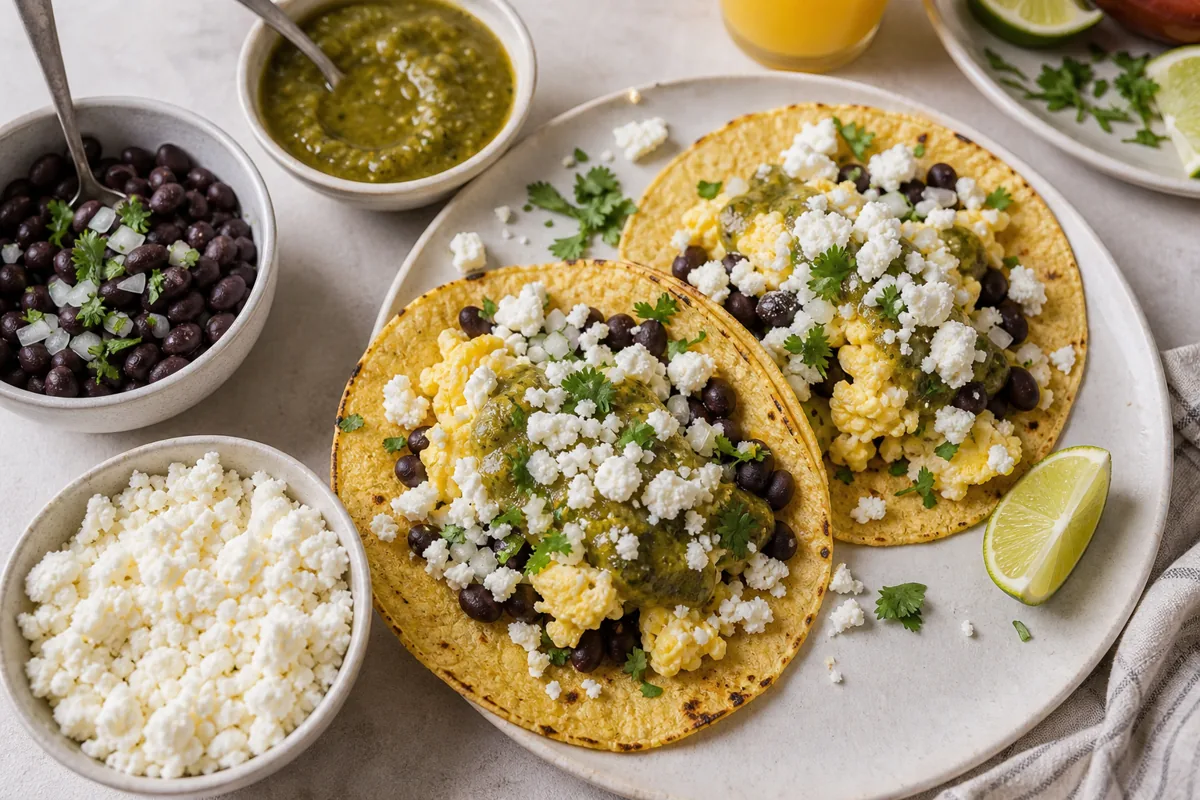
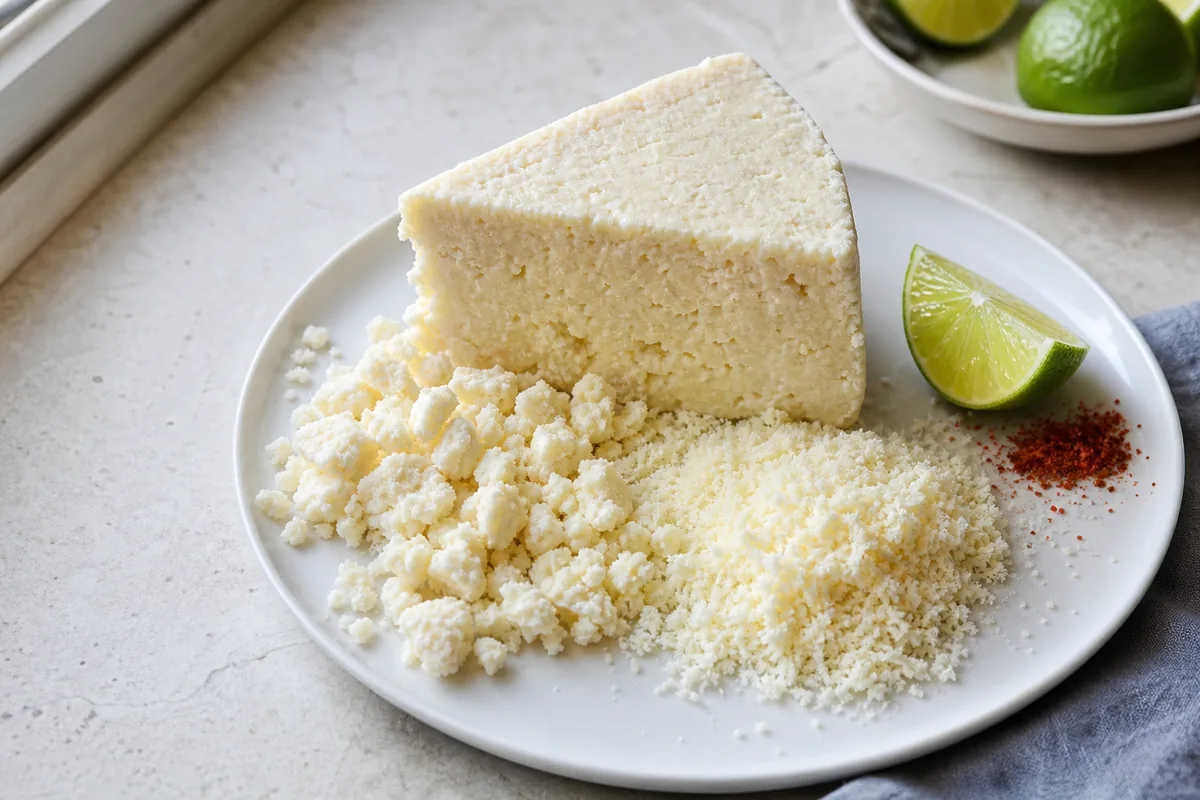
Queso fresco is useful when you want crumbles rather than elastic strands. Swapping it into a dish built around a stretching filling changes the result even though both cheeses are white and Mexican.
Should You Read the Label Before Buying Oaxaca?
Look for an intact, refrigerated package with a clear product name and storage instructions.
A wound shape can help identify the style, but it does not establish milk treatment, freshness or protected origin by itself.
For example, Cacique's ingredient list specifies cultured pasteurised milk and skim milk, salt and enzymes. Other producers can use different formulations, so read the product you are actually buying.
Compare protein, fat and sodium on the same serving weight if you are choosing between brands. A larger serving can have a higher protein number without the cheese being higher in protein per gram.
A milk-based cheese is not suitable for someone with a milk allergy, and a fresh or mild description is not a lactose measurement. Use explicit product information for dietary requirements rather than judging from the ribbon's appearance.
How Should You Refrigerate Oaxaca and Is It Safe in Pregnancy?
Keep the unopened package as directed, then reclose or wrap the remaining cheese after portioning it with clean utensils. Follow the pack's after-opening limit instead of assigning one shelf life to every ball.
FDA home-storage guidance calls for 40 F (4 C) or below.
Limit time out of refrigeration to two hours, or one hour when the temperature is above 90 F (32 C), including preparation and serving.
Discard unexpectedly mouldy soft cheese instead of cutting away a small patch, following USDA guidance. An ordinary smell does not prove that cheese left warm for too long is safe.
For a partially used package, our fresh-cheese wrapping and storage advice explains those handling limits.
Check the maker's advice before freezing, since preserving a portion does not guarantee it will unwind or melt exactly as it did fresh.
For pregnancy in the US, the CDC lists soft cheese made from unpasteurized (raw) milk as riskier and pasteurized soft cheeses heated to an internal temperature of 165 F or until steaming hot as safer. A warm, stretchy centre alone does not show that it has reached that condition.
Served cold, Oaxaca made with pasteurized milk is described as a semi-soft stretched-curd cheese, a type the CDC list does not cover, so ask a midwife or doctor. The NHS lists pasteurised or unpasteurised hard cheeses, pasteurised semi-hard cheeses and pasteurised soft cheeses as safe to eat, and says foods made from unpasteurised milk must be thoroughly cooked.
Check the milk label and use the pregnancy advice for your country. Pasteurisation, safe storage and any required cooking condition each answer a different part of the decision.