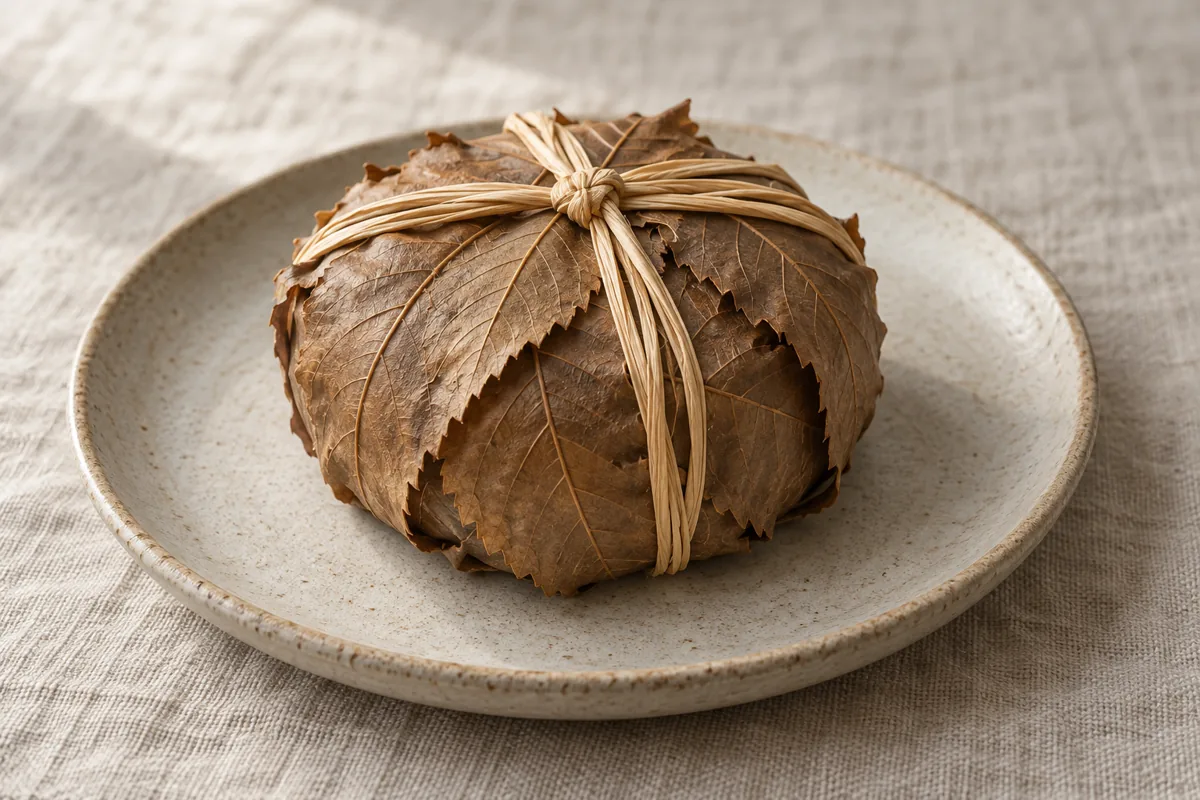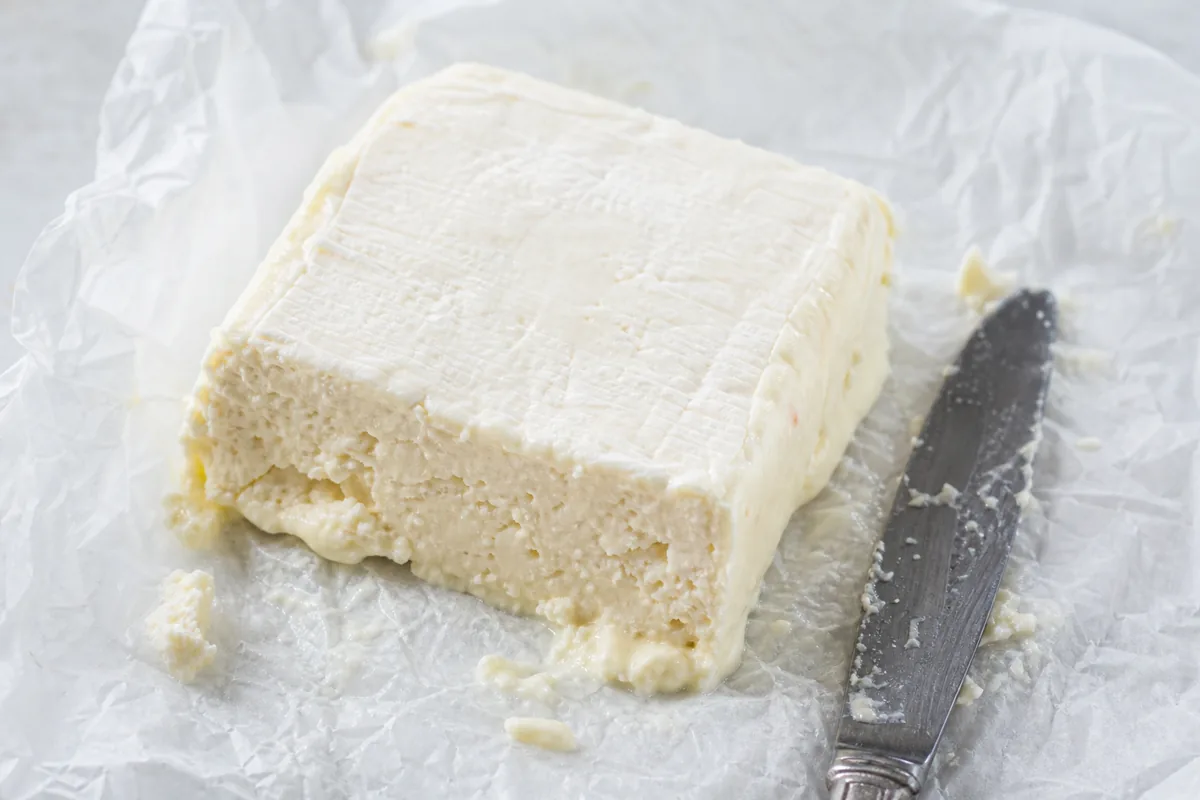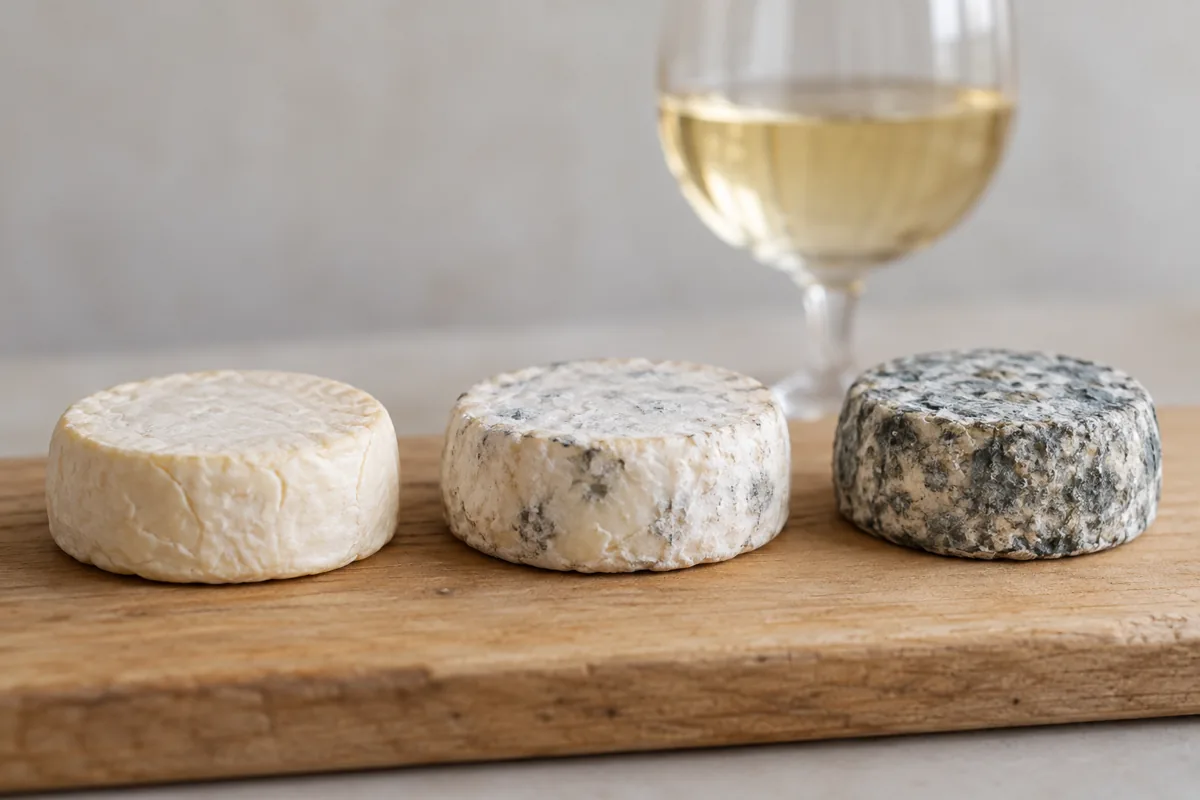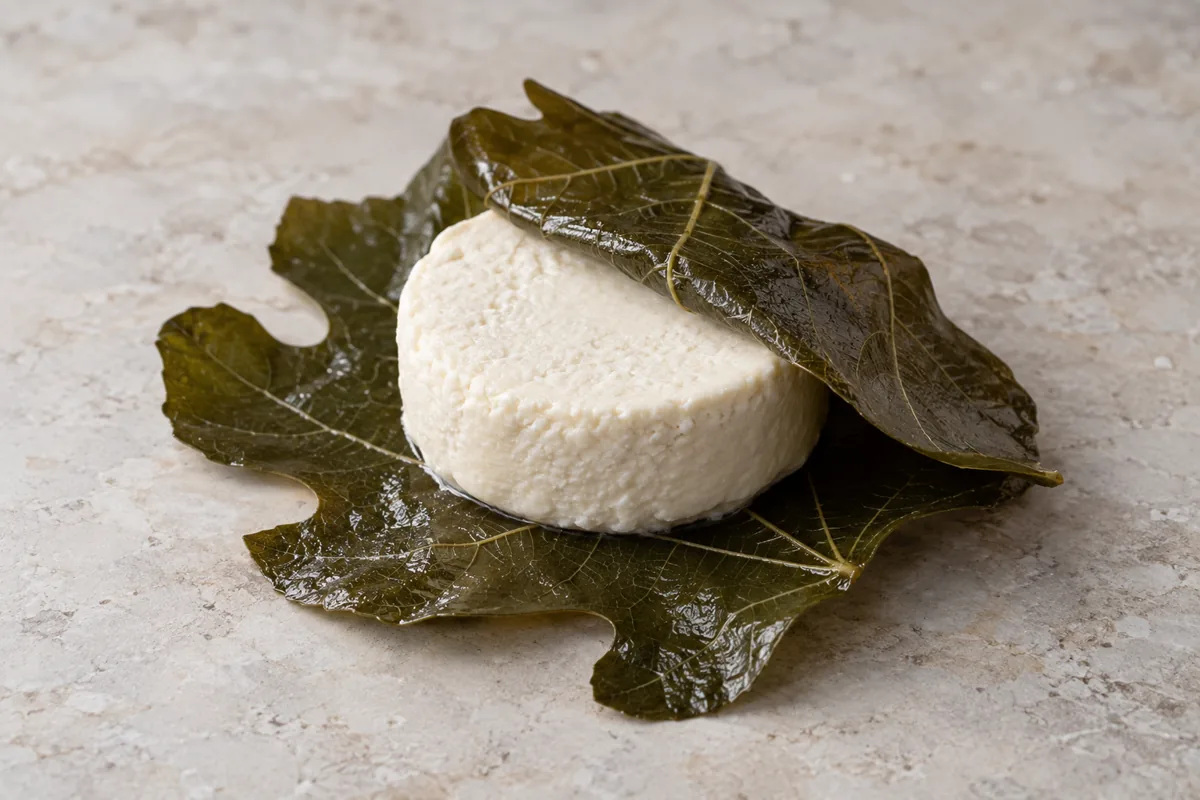
Figaro is a seasonal soft cheese from Andante Dairy in Petaluma, California, made with Jersey cow's milk and goat's milk and wrapped in a fig leaf soaked in white wine. Cheesemaker Soyoung Scanlan has made cheese at the dairy since 1999.
In This Article
What Is Figaro Cheese?
Culture's cheese library lists Figaro as a soft cheese with a finely textured interior that resembles a fresh cheese, and a leaf-wrapped rind. Andante Dairy's own page describes it as a mixed-milk cheese wrapped in wine-soaked fig leaves.
The dairy says it made Figaro to express its Mediterranean-like climate, and it ties the leaf wrap to the old practice of wrapping small cheeses in leaves, which it calls one of the ancient ways of preserving cheese.
Culture gives the format as 3 inches across and 1 inch high, which makes one cheese a small flat disk.
| Source | Size | Rennet | Milk treatment |
|---|---|---|---|
| Andante Dairy (producer) | 5 oz | Vegetarian | Not stated |
| Culture cheese library | 6 oz, about 3 in across | Microbial | Not stated |
| Good Eggs listing | 4 oz | "Rennet," type not given | Not stated |
| Cheese Shop SB listing | Not stated | Vegetarian | Pasteurized |
| San Francisco Chronicle report | 4-oz rounds | Not stated | Not stated |
The sources agree on the milks and the leaf, but they give the weight as 4 oz, 5 oz or 6 oz, and only one listing says anything about pasteurization. Good Eggs writes plain "rennet," and the producer and two other sources settle the rennet question as vegetarian.
Which Milks Go Into Figaro?
Andante Dairy's about page says its goat's milk comes from the farm where the dairy stands and its Jersey cow's milk comes from a coastal dairy.
A San Francisco Chronicle report described Figaro as a fifty-fifty blend of Jersey cow's milk and goat's milk. Treat that ratio as one report's figure for the time it was written.
Andante Dairy's page explains the mix as a matter of cost: goat's milk usually costs about three times as much as cow's milk by volume and yields less, so the milk for the same weight of cheese costs about 3.5 to 4 times more.
The page says the mixing began by necessity, when a dairy owner the cheesemaker worked with had surplus goat's milk too small for a batch of its own. It adds that adding cow's milk to goat's milk was once treated as adulteration, because goat's milk is the more expensive of the two.
On flavor, the page says Jersey cow's milk can be a little too heavy and tends to build bitterness, while goat's milk adds a delicate texture and a hint of grassy lightness. For its plain round, Mélange, it says the goat's milk makes the cheese lighter in color than an all-cow's-milk cheese and slightly tangier, which fits the goaty tang that Culture reports for Figaro.
How Does Figaro Differ From Andante's Mélange?
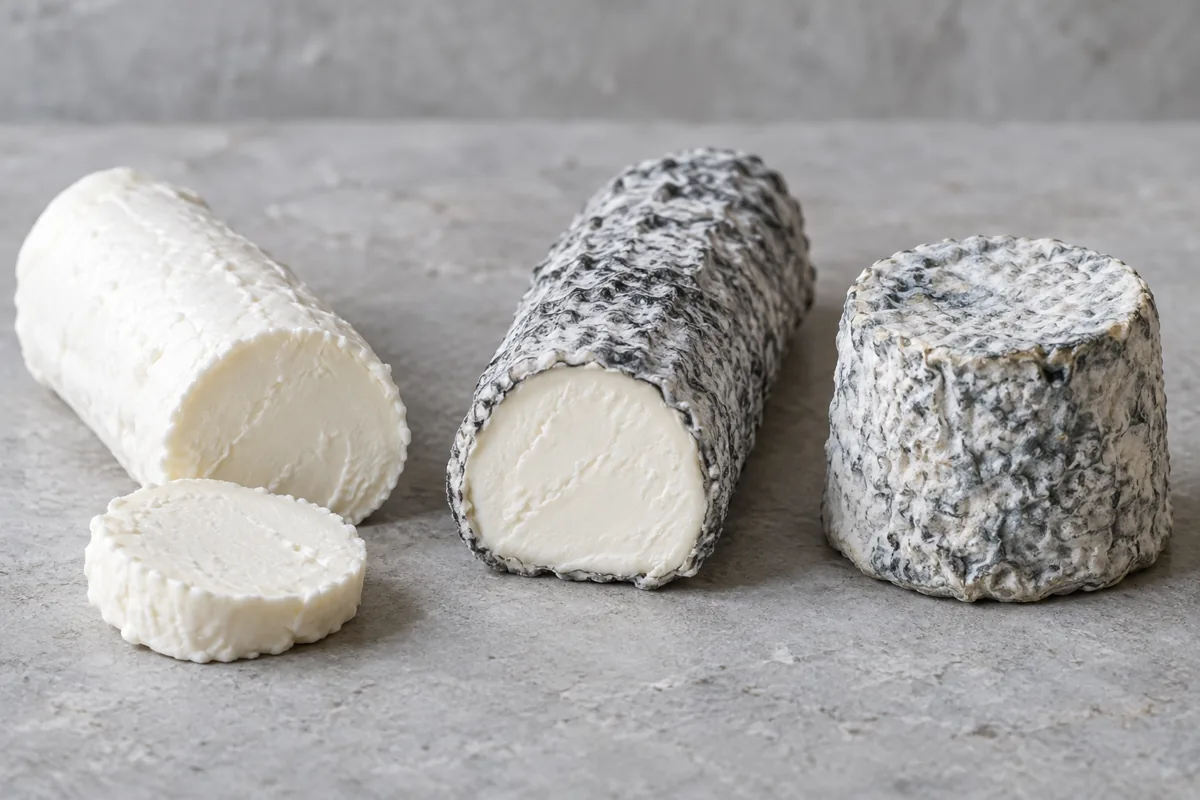
Andante Dairy's product page says Figaro is its Mélange wrapped in wine-soaked fig leaves, and it describes Mélange as a round cheese made by mixing some goat's milk into Jersey cow's milk.
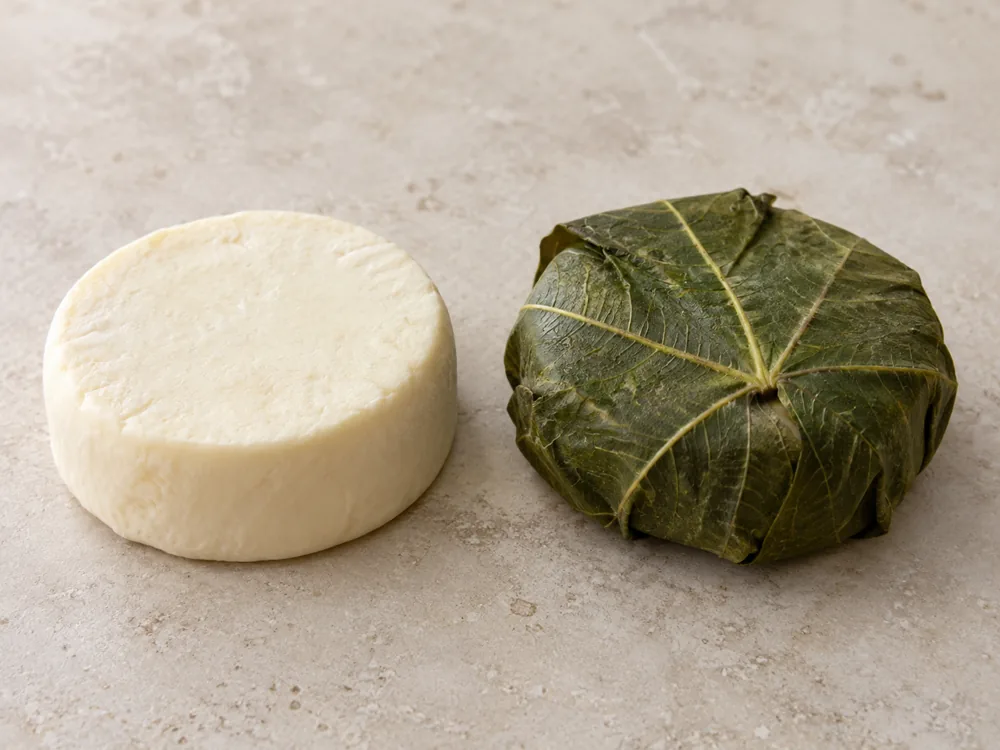
The two ingredient lists differ by only two items: Mélange lists Jersey cow's milk, goat's milk, starter culture, vegetarian rennet and salt, and Figaro adds fig leaf and white wine. The dairy lists Mélange at 4.5 oz and Figaro at 5 oz without saying what accounts for the half-ounce.
| Cheese | Finish | Listed size | Ingredients added to the base |
|---|---|---|---|
| Mélange | None, the plain round | 4.5 oz | None |
| Rondo | Herbes de Provence and pink peppercorn | 4.5 oz | Herbes de Provence, pink peppercorns |
| Figaro | Wine-soaked fig leaves | 5 oz | Fig leaf, white wine |
Andante says the fig leaves perfume the mixed-milk cheese and give it a herbaceous note, so the leaf is what separates Figaro from the plain Mélange, with the same milks in both.
Why Is Figaro Wrapped in a Fig Leaf?
Andante Dairy's ingredient list for Figaro names fig leaf and white wine alongside the two milks, starter culture, vegetarian rennet and salt. It also points out that many Mediterranean cooks wrap oily fish in fig leaves for grilling to perfume the flesh.
Culture says the cheese is made only at the end of the California fig season. The Chronicle report adds that Scanlan blanches the leaves in boiling water, steeps them in white wine, and wraps them by hand around young cheeses a little more than two weeks old.
Good Eggs agrees that the cheese is wrapped while young, in a leaf steeped in wine.
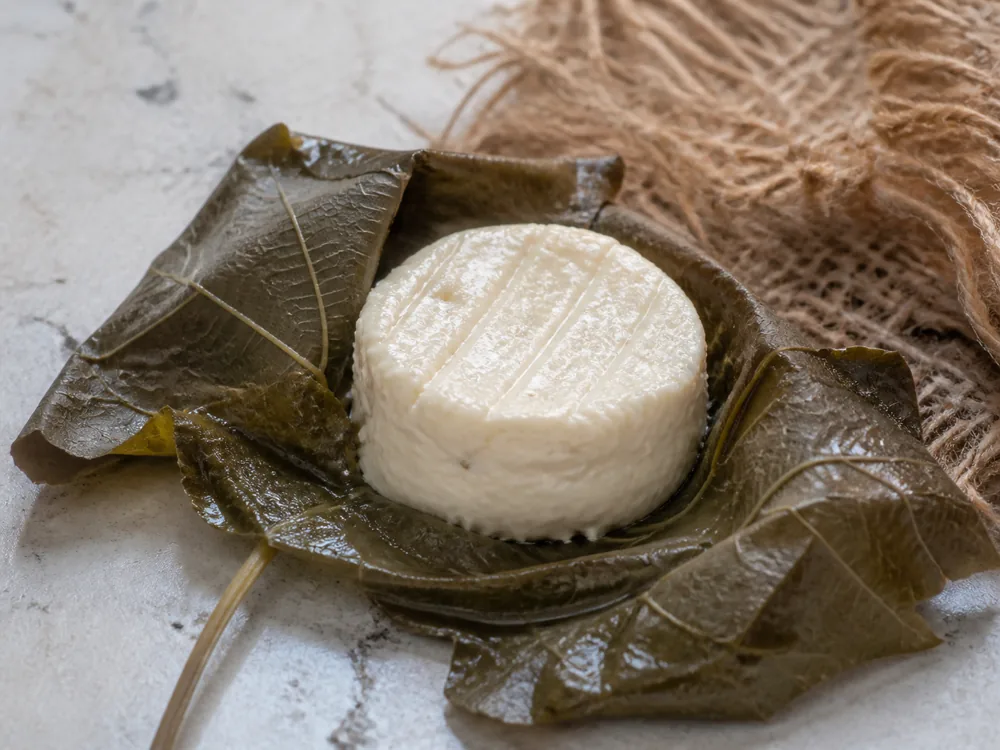
The flavor comes from the leaf and the wine: Andante Dairy's ingredient list names fig leaf and white wine, with no fig fruit or fig jam.
What Does Figaro Taste Like?
Culture describes a goaty tang with bright citrus flavors, and says the fig leaf gives the cheese a delicate coconut flavor. The other sources use different words for the same wrap.
- Andante Dairy: a herbaceous note and a tropical fruit scent from the leaf, and it says infusing fig leaves in milk or cream brings a hidden coconut and vanilla scent.
- Good Eggs: delicate flavors that are savory and mildly tangy, with a mild hint of fruity character.
- Cheese Shop SB: flavors of wine, lavender, tobacco and pine, which it says the wine-macerated leaves aid in developing.
Culture is the only source that tastes coconut in the cheese itself, because Andante's coconut and vanilla remark describes leaves infused in milk or cream. The other flavor words differ with who is describing the wrap.
The sources agree on a mild tang: Culture reports a goaty tang, Good Eggs says mildly tangy, and Andante says goat's milk makes Mélange slightly tangier than an all-cow's-milk cheese.
Can You Eat the Fig Leaf Around the Cheese?
Andante Dairy's Figaro entry says fig leaves are edible and used as a spice and a tea, with a herbaceous flavor and a tropical fruit scent.
That statement covers fig leaves in general, not the wine-soaked leaf on the cheese in particular.
What Pairs With Figaro?
The Good Eggs listing recommends serving Figaro with unoaked Chardonnay.
Its other suggestion is dry hard cider.
Both drinks carry a qualifier, unoaked and dry, so oaked Chardonnay and sweet cider fall outside what the retailer names.
| Pairing | Type | Why It Works |
|---|---|---|
| Unoaked Chardonnay | Wine | Named by the Good Eggs listing. |
| Dry hard cider | Drink | Named by the Good Eggs listing. |
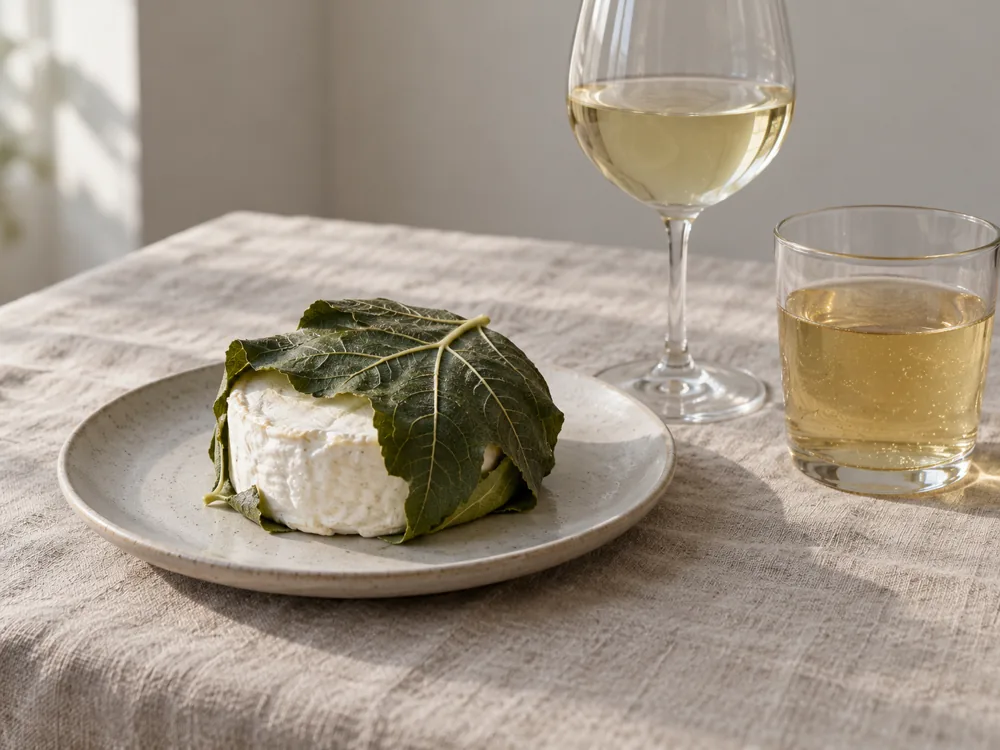
At 4 to 6 oz in the listings, one Figaro is a whole small round, which matters when you plan a cheese board around it.
Is Figaro Safe During Pregnancy?
The Cheese Shop SB listing says Figaro is pasteurized. Check the label, because Andante Dairy's ingredient list names the milks and rennet but not the milk treatment.
The CDC says pregnant women are 10 times more likely to get a Listeria infection, and it lists a soft cheese like Figaro made from unpasteurized milk as a riskier choice. Its safer choice for a pasteurized one is heating it to an internal temperature of 165°F or until steaming hot.
The NHS says pasteurised or unpasteurised mould-ripened soft cheeses with a white coating, such as brie, camembert and chèvre, must be thoroughly cooked.
The NHS lists pasteurised goats' cheese without a white coating as safe to eat.
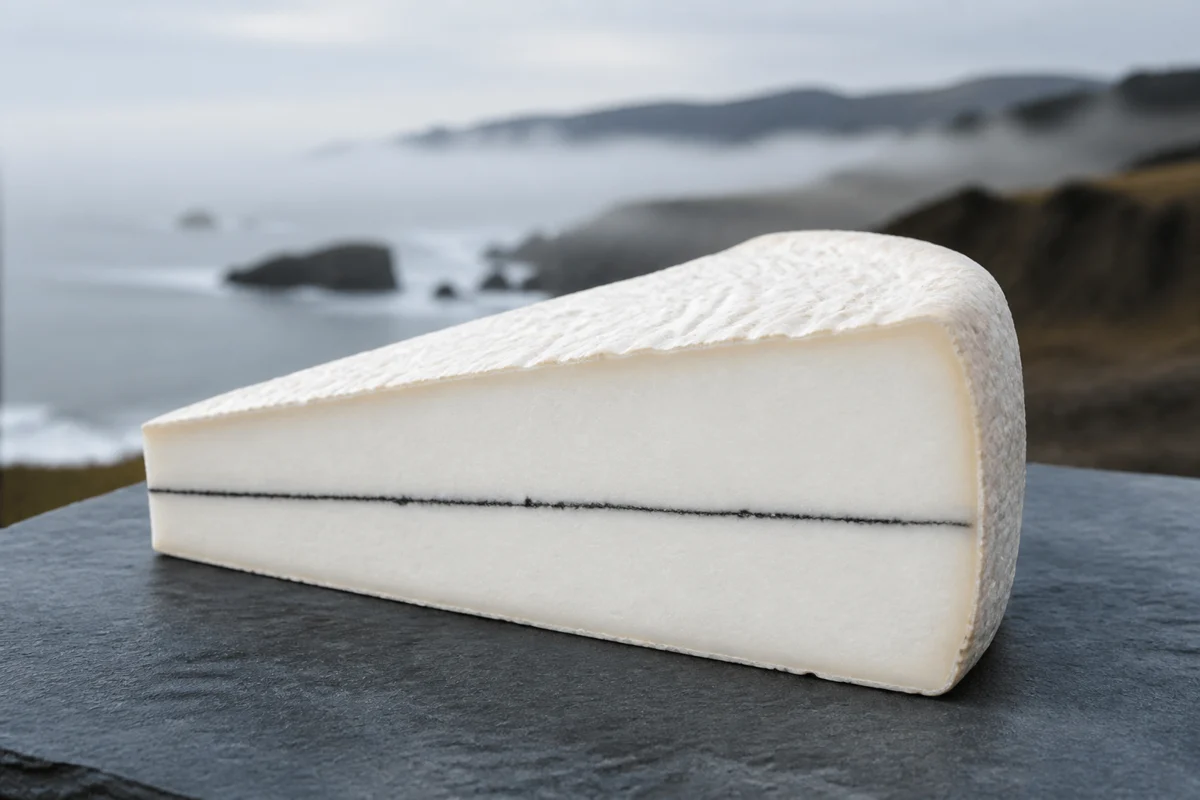
Good Eggs and Cheese Shop SB call Figaro soft-ripened, so check whether the cheese under the leaf has a white coating: if it does, the NHS rule for mould-ripened soft cheeses applies, and it must be thoroughly cooked whether or not the milk was pasteurised.
Why Is Figaro Cheese Hard to Find?
Figaro depends on the fig season that Culture describes, and the Chronicle report counted only about forty 4-oz rounds a week. That count comes from an early report, so it shows the scale of the dairy rather than current output.
Search for the full phrase Andante Dairy Figaro so the results stay on the cheese. Good Eggs listed Figaro as unavailable on 2026-10-01, which fits a cheese made in small seasonal batches.
Listings give 4, 5 and 6 oz for the same cheese, so weight cannot confirm it, while the ingredient lists at Andante Dairy and Good Eggs both name a fig leaf and wine. Cheese Shop SB calls it a season cheese from Soyoung Scanlan of Andante Dairy.
Ask the seller how long the disk has been held.
Figaro is a dairy food, which the CDC says to refrigerate within 2 hours, or within 1 hour above 90°F. Keep it refrigerated in a refrigerator at 40°F or below, the temperature the CDC gives for home refrigerators.
What Comes Closest When Figaro Is Unavailable?
Figaro's combination of Jersey cow's milk, goat's milk, wine-treated fig leaf and soft texture is specific to one maker.
The nearest cheese is that maker's own Mélange, which Andante describes as the base that Figaro wraps, so it keeps the mixed milks and the mild tang and drops the leaf's herbaceous note.
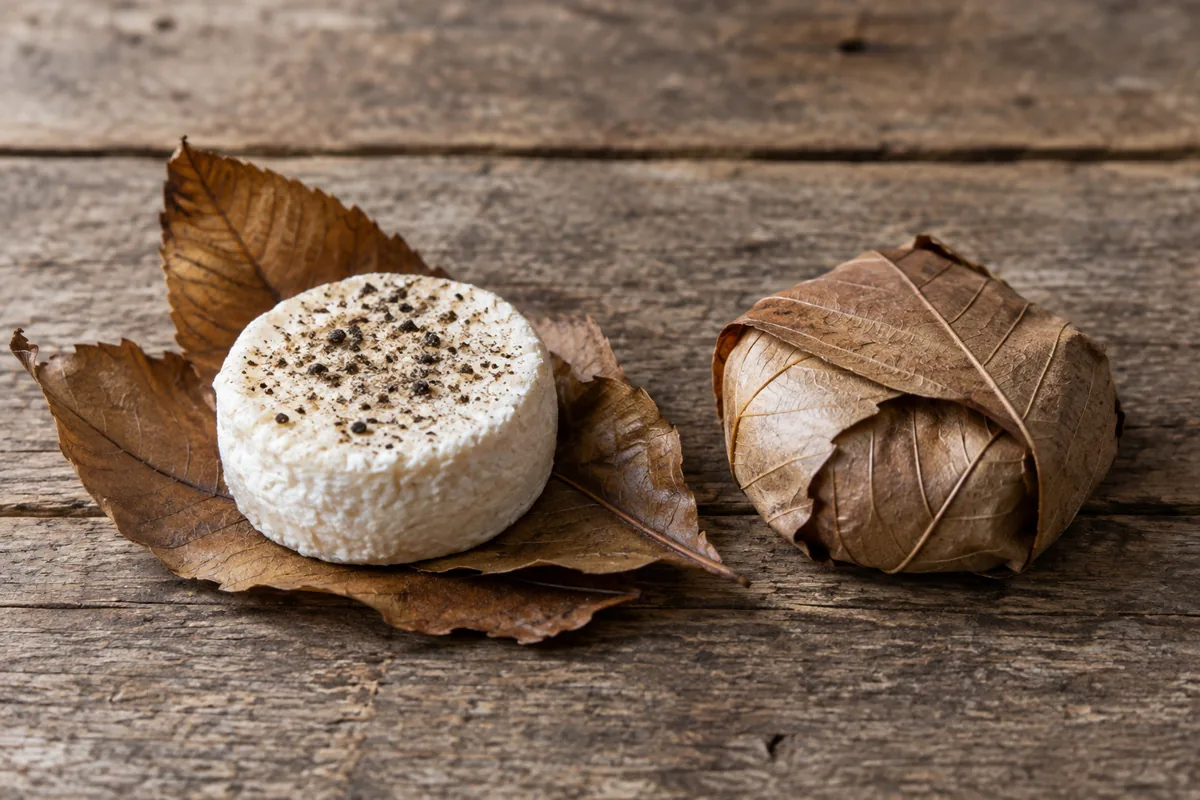
For the leaf itself, the relative is Banon, a goat's milk cheese wrapped in chestnut leaves, and the EU specification for its protected name requires raw, whole goat's milk, natural brown chestnut leaves and at least 15 days of maturation, 10 of them in the leaves.
| Point | Figaro | Banon |
|---|---|---|
| Milk | Jersey cow's milk and goat's milk | Raw, whole goat's milk |
| Leaf | Fig leaf soaked in white wine | Natural brown chestnut leaves |
| Timing | Leaf applied at a little over two weeks old (Chronicle) | At least 15 days, 10 of them in the leaves |
Banon is made only from raw milk, which the CDC lists as the riskier category for soft cheese.
SOURCES & REFERENCES
Both. Andante Dairy uses Jersey cow's milk and goat's milk, and a San Francisco Chronicle report described a fifty-fifty blend.
Andante Dairy says fig leaves are edible, speaking of fig leaves in general rather than the wine-soaked leaf on the cheese.
The Cheese Shop SB listing says pasteurized, so check the label for the milk treatment.
The Good Eggs listing recommends unoaked Chardonnay or dry hard cider.
Andante Dairy says Figaro is its Mélange wrapped in wine-soaked fig leaves, and the ingredient lists differ only by fig leaf and white wine.