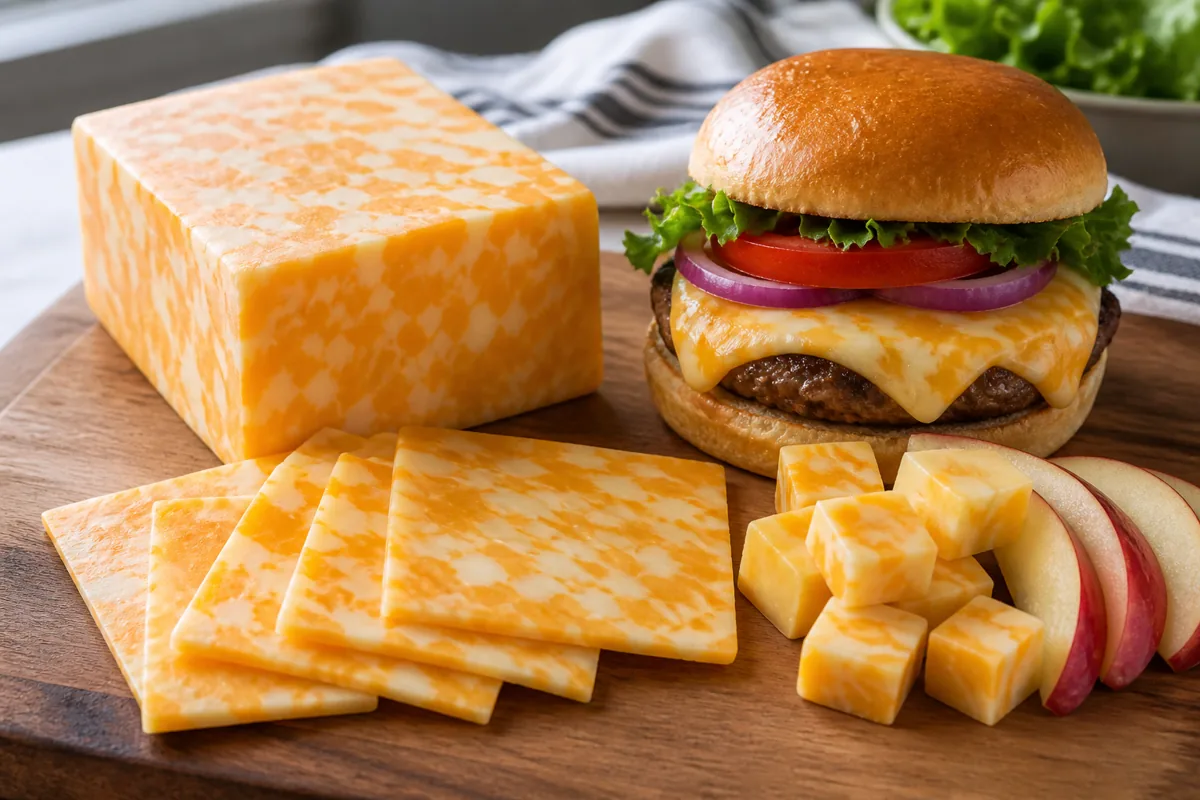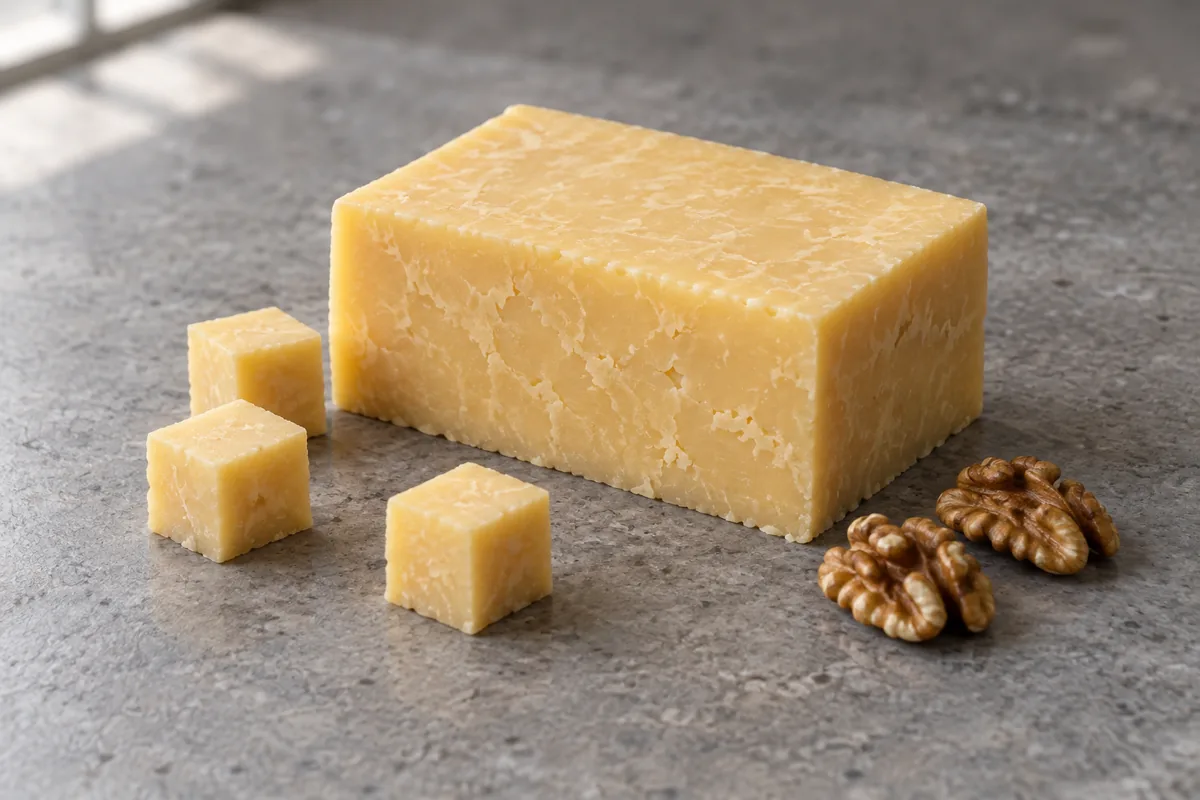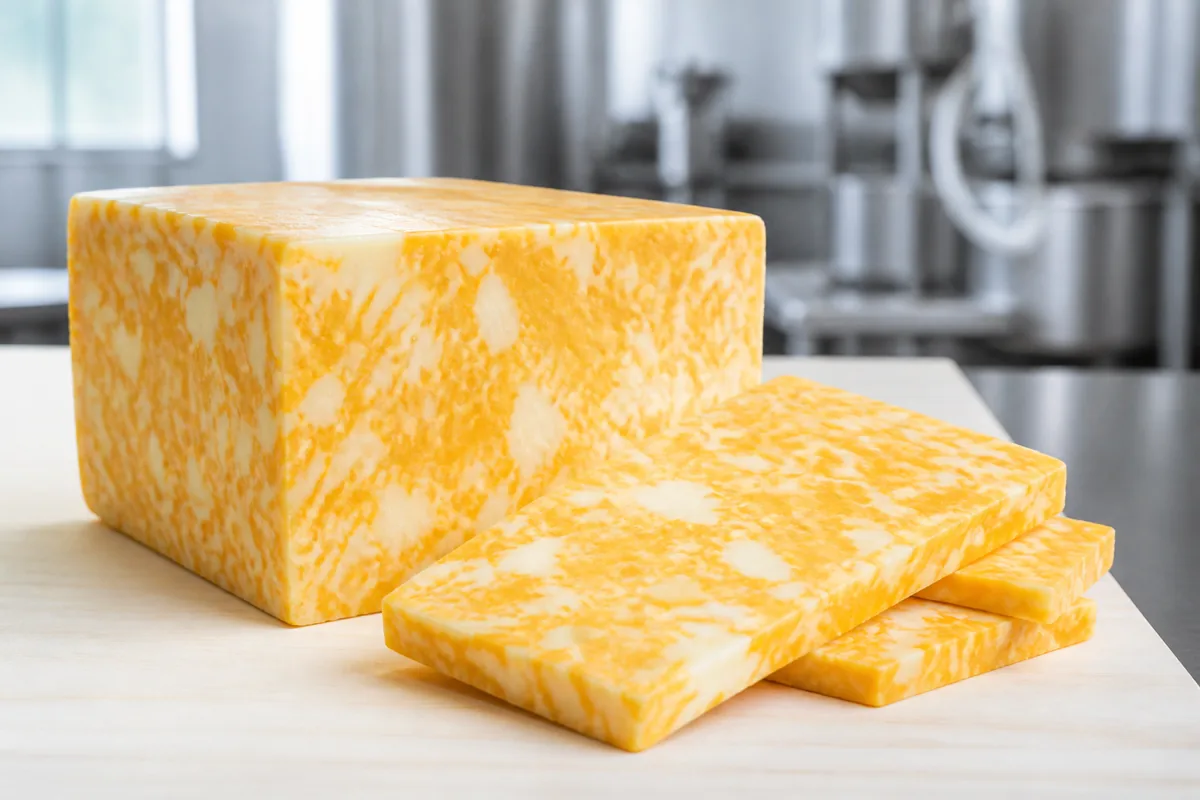
Marble Cheddar is Cheddar made from white and orange parts that are combined into one marbled block. Wikipedia's marble cheese entry describes it as a blend of white and orange Cheddar.
Colby-Jack is a different marble cheese: Wikipedia calls it the most popular one in the United States, and it pairs Colby with Monterey Jack instead of two Cheddars.
In This Article
Why Is Part of Marble Cheddar Orange?
The orange comes from annatto, an orange-red food coloring made from the seeds of the achiote tree, and Wikipedia's annatto entry says many Cheddars are made in a white and an orange version that differ only by the presence of annatto.
Bothwell, Balderson and Agropur each list annatto among their ingredients, which accounts for the orange parts of their blocks.
Cheese color once followed the season: the entry says fresh summer grass carries carotene that gives milk and the cheese made from it a natural orange tint, and because the pigment travels in the cream, cheese from skimmed milk came out white.
The entry says makers added annatto mainly to mask the paler winter cheese and to imitate the more intense color of summer cheese. The earliest known documentation of annatto in cheese is a 1743 Dutch household dictionary, according to Paul Kindstedt of the University of Vermont.
The entry also says annatto went into cheeses such as Red Leicester to make customers believe a darker orange meant richer milk and tastier cheese. None of the four Marble Cheddar makers ties the orange parts to richer milk, age or strength.
Does Each Color Taste Different?
Not according to the makers. Balderson describes a smooth Cheddar flavor similar to its Medium Cheddar, and Bothwell calls its blend mild yet flavorful, with no separate note for each color.
Cheese Scientist (Jonah Kincaid, 2026) says raw annatto seeds carry nutty, sweet and peppery notes, but that the flavor impact is minimal once the seeds are dried, ground and added to cheese in small amounts. None of the four makers reports a flavor difference between the orange and white parts.
How Does the Marble Pattern Get into the Cheese?
Balderson says it mixes white and colored Cheddar curds together, so the marbling is made at the curd stage.
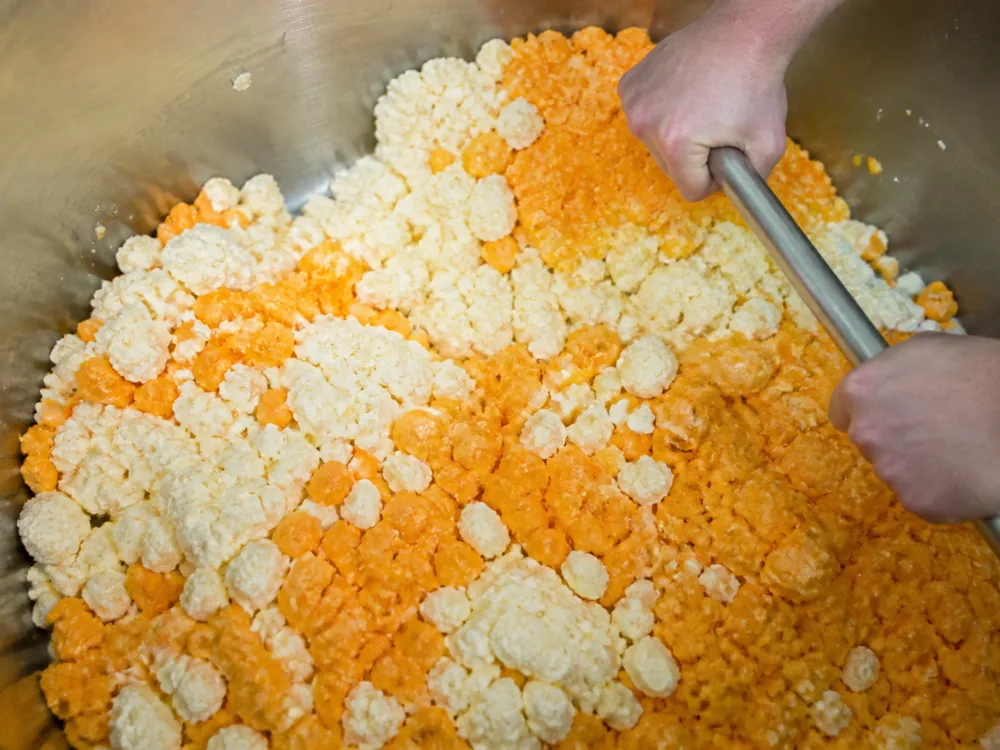
Wikipedia describes marble cheese in general as two differently colored curds combined, and Bothwell words it as blending its white and orange Cheddars.
Agropur describes a smooth body without holes.
Is Marble Cheddar the Same as Colby-Jack?
No. Marble Cheddar is white and orange Cheddar, while Colby-Jack is Colby marbled with Monterey Jack, according to Wikipedia's marble cheese and Colby-Jack entries.
| Check | Marble Cheddar | Colby-Jack |
|---|---|---|
| Made from | White Cheddar and orange Cheddar (Wikipedia, Bothwell) | Colby and Monterey Jack (Wikipedia) |
| Texture | Firm, smooth and rather elastic (Agropur); slightly firmer than Balderson's Medium Cheddar | Semi-hard in Wikipedia's summary, semi-soft in its text |
| Age stated | 3 to 6 months at Balderson; Agropur calls its block unripened | Up to 14 days (Wikipedia) |
| Flavor | Mild and slightly acidulous (Agropur); mild yet flavorful (Bothwell) | Mild to mellow (Wikipedia) |
| Other names | None given by the makers | Marble jack, Co-Jack, Cojack (Wikipedia) |
In Colby-Jack the two colors are two different cheeses: Wikipedia says annatto gives the Colby half its orange, and the white half is Monterey Jack. In Marble Cheddar both colors come from one Cheddar recipe.
Wikipedia says Colby and Monterey Jack are made separately and drained of whey, then high-quality curds of each are selected and blended into the marbling. The blend is shaped into a semicircular or rectangular block or shredded, and the entry says the flavor is determined by the individual cheeses used.
Wikipedia ties Colby-Jack's mildness to its short ageing and says the same period lets the cheese set and its two components combine. Balderson's Marble Cheddar is also called mild after months of ageing, so mildness identifies neither cheese.
Both are described as orange and white, so color does not settle which one is in the package.
The product name is the reliable test: Marble Cheddar is sold as Cheddar, while Colby-Jack names Colby and Monterey Jack, or goes by one of the short names in the table.
Where Does Marble Cheddar Come From?
Wikipedia says marble cheeses originate in the United Kingdom, and Cheese.com lists the United Kingdom as the country for Marble Cheddar. Wikipedia's claim cites Cheese.com, so the two count as one source, and neither names a maker, a place or a date.
The makers cited here point elsewhere: Bothwell makes cheese in New Bothwell, Manitoba, and calls its milk 100% Canadian, while Dairy Isle uses 100% Prince Edward Island milk. Agropur's product page lists Canadian provinces where the block is sold, and Balderson's page names no place.
Bothwell's page says its Marble Cheddar took 1st Place and Best of Class at the 2020 World Champion Cheese Contest.
Colby-Jack, in comparison, has a documented American origin: Wikipedia says Colby began in Colby, Wisconsin, in 1885 and Monterey Jack in Monterey, California, and that Colby-Jack is mainly produced in Wisconsin and California.
What Does Marble Cheddar Taste Like?
All four makers call the cheese mild.
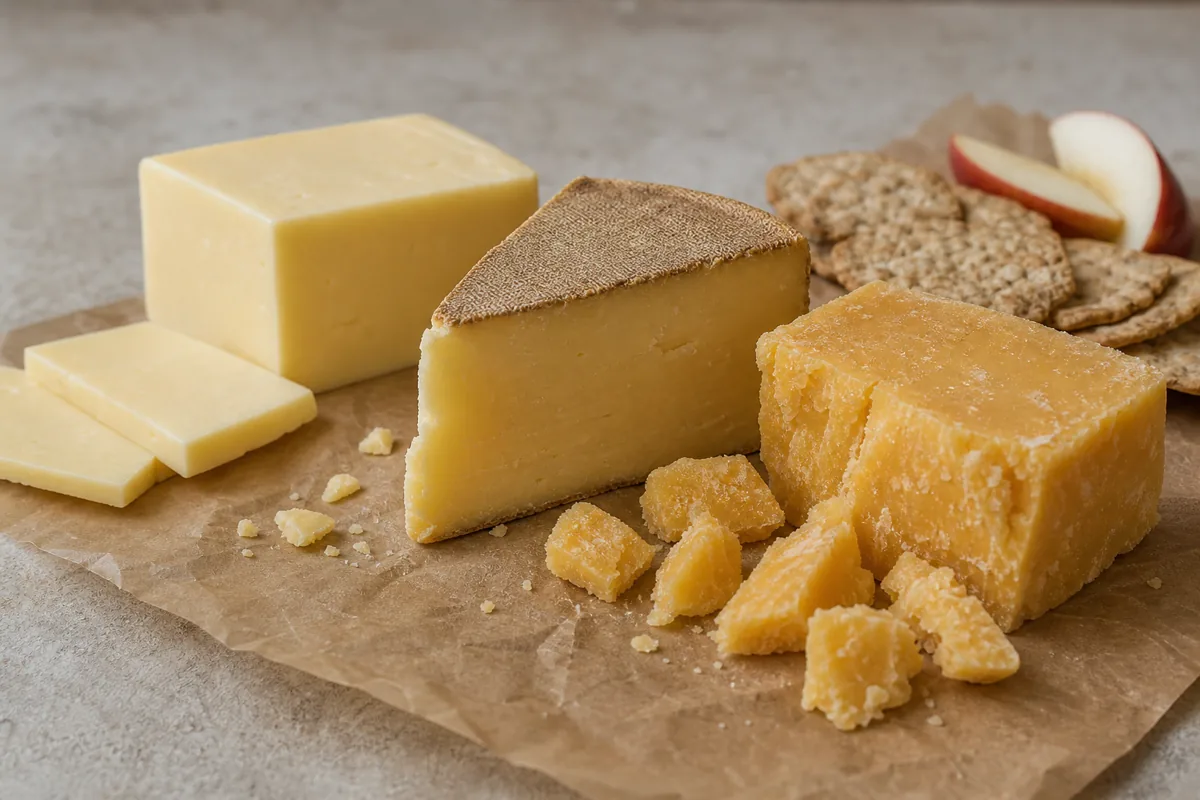
Age changes that picture. Cheese.com says the taste is creamy with a slightly tangy or sharp undertone depending on the age of the cheese.
Cheese.com also lists the aroma as rich, while Balderson's product line lists it as mild. Cheese.com describes the cheese in general and Balderson describes one block with a stated age, so for a particular pack the maker's line is the closer guide.
| Maker | Flavor | Texture | Age |
|---|---|---|---|
| Bothwell | Mild yet flavorful | Smooth | Not stated |
| Balderson | Mild, smooth Cheddar flavor similar to its Medium | Firm, slightly firmer than its Medium | 3 to 6 months |
| Dairy Isle | Mild | Slightly springy | Naturally aged, no length given |
| Agropur (mild, 34% M.F.) | Mild and slightly acidulous | Firm, rather elastic, no holes | Unripened |
Only Balderson prints an age, so with the other makers the word mild is the only guide to how sharp a block will be.
What Is Marble Cheddar Used For?
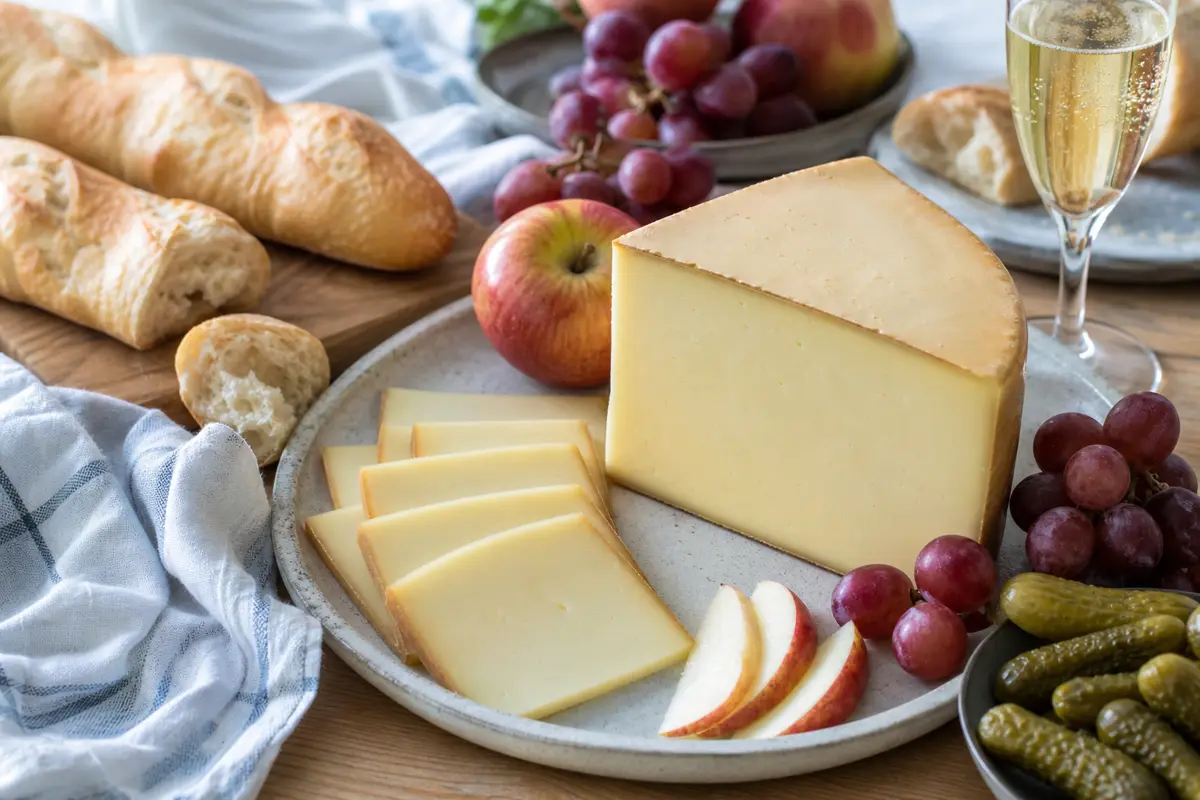
Balderson recommends it for snacks and sandwich slices, and says cubes, squares, triangles or sticks make a decorative garnish or a piece for cheese trays.
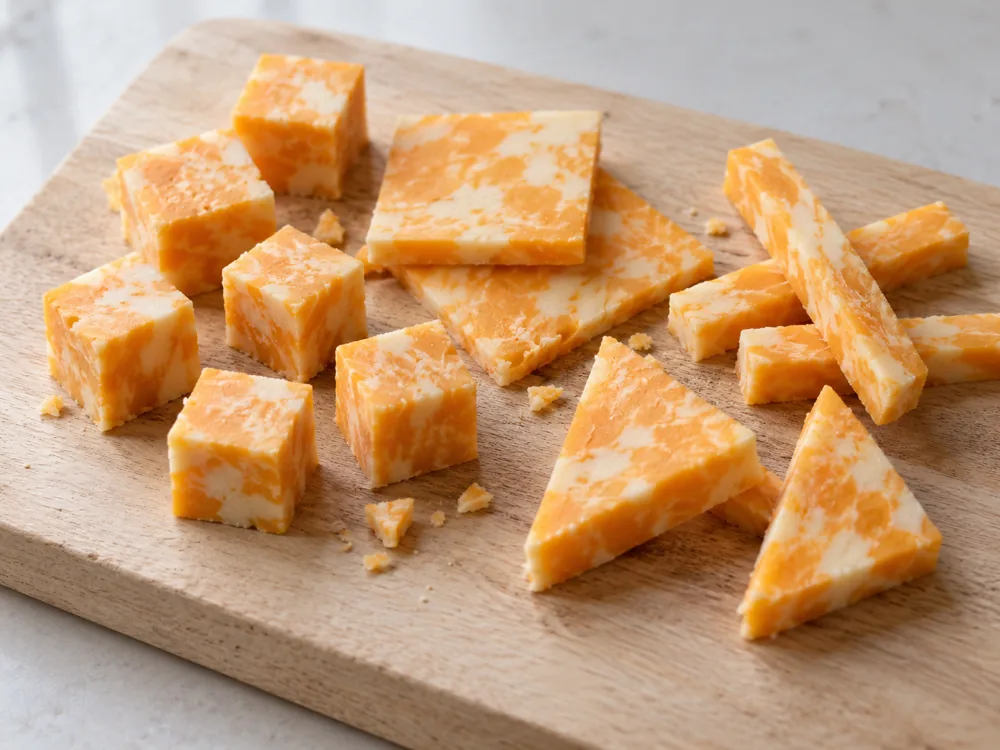
Dairy Isle also calls its Marble a colorful addition to a dish or a cheese tray, so two of the four makers sell the look of the cheese as much as its flavor.
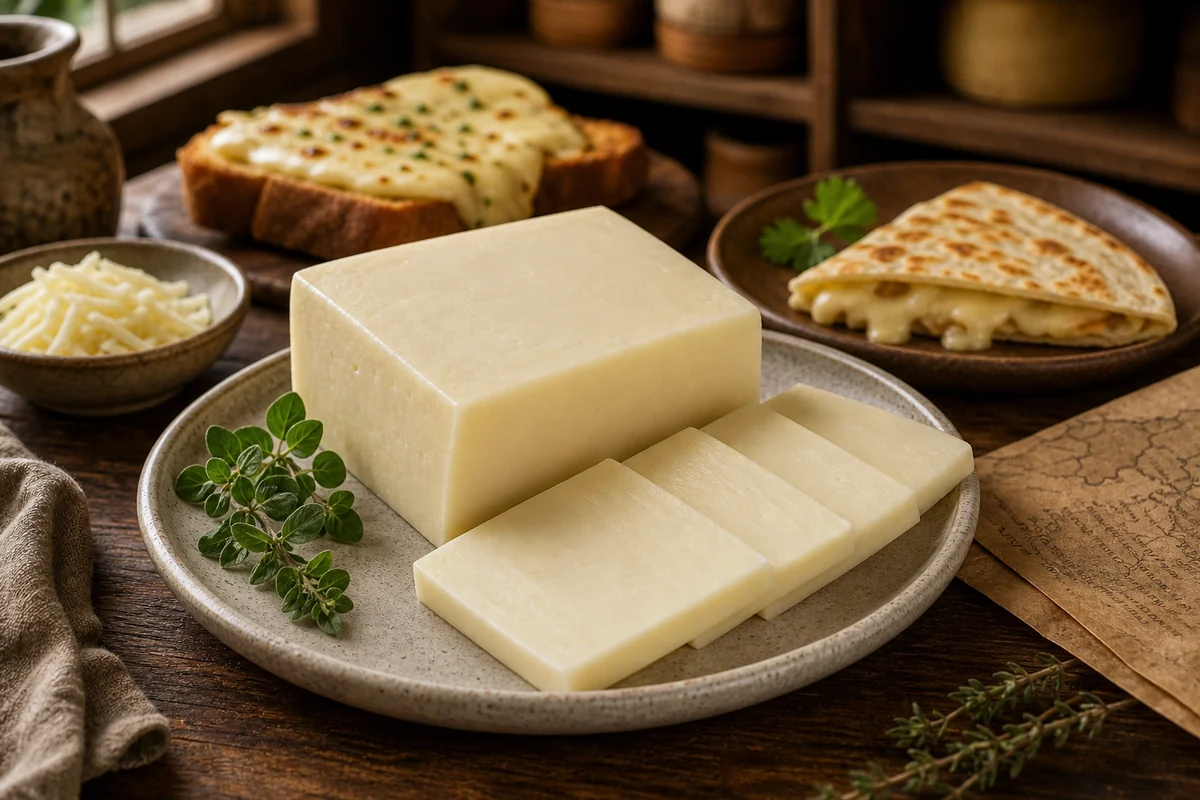
Bothwell's featured recipe is tuna crostini topped with melted Marble Cheddar, and Cheese.com suggests quiches, omelettes, burgers, and melting over baked dishes and vegetables.
Wikipedia's Colby-Jack entry lists burgers, pasta bakes, macaroni and cheese and casseroles, so the cooked uses of the two cheeses overlap. None of these pages says whether the orange and white stay visible once the cheese melts.
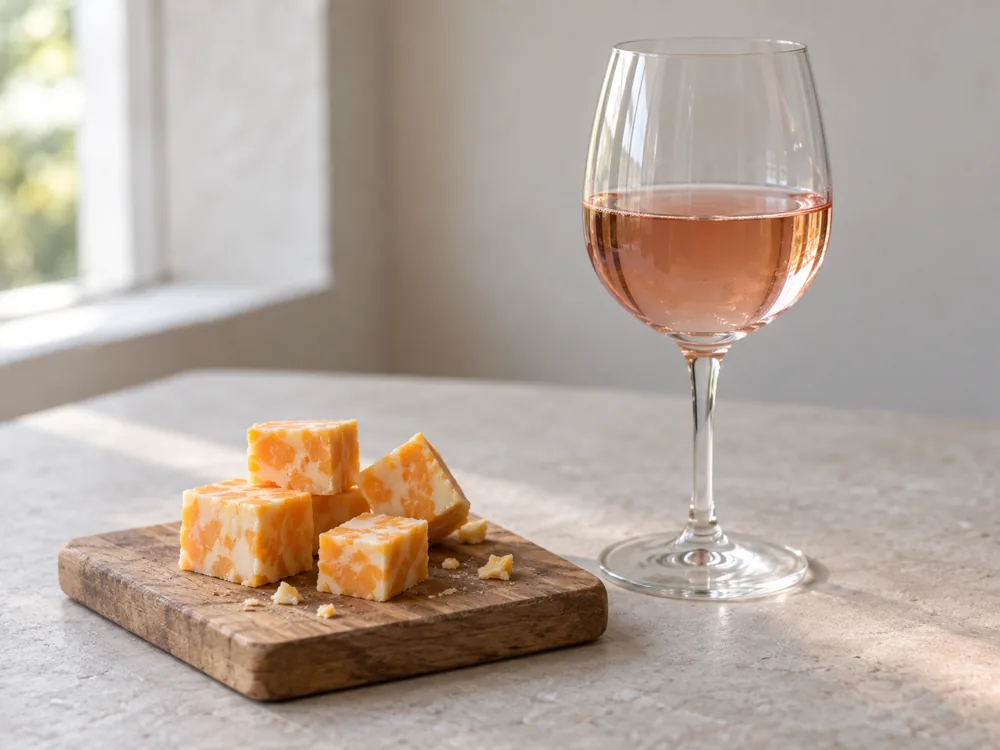
Bothwell gives the wider drinks list, six in all including pale ales and a good strong stout, while Balderson names two wines. Dry rosé is the one drink both makers name.
| Pairing | Type | Why It Works |
|---|---|---|
| Dry rosé | Wine | Named by both Bothwell and Balderson. |
| Chardonnay | Wine | On Bothwell's list. |
| Sparkling wine | Wine | Bothwell says any sparkling wine suits it. |
| Port | Wine | On Bothwell's list. |
| Fruity red wine | Wine | Balderson's second wine. |
| Pale ale or strong stout | Drink | Bothwell suggests trying either. |
Is Marble Cheddar Safe During Pregnancy?
Marble Cheddar is Cheddar, so the guidance for hard Cheddar applies. The UK NHS lists pasteurised or unpasteurised hard cheeses such as Cheddar as safe to eat in pregnancy.
The US CDC puts hard cheese made with pasteurized milk in its safer group and says pregnant women are 10 times more likely to get a Listeria infection.
Bothwell and Cheese.com state pasteurized milk, but Balderson, Dairy Isle and Agropur do not state the milk's pasteurization, so a reader following the CDC wording should confirm it on the package.
Is Marble Cheddar a Natural or Processed Cheese?
Cheese.com lists Marble Cheddar as hard, processed and rindless, and Wikipedia says marble cheeses are usually hard, processed cow's milk cheeses.
The makers describe it differently: Balderson says it mixes white and colored Cheddar curds, Bothwell's page calls its cheeses natural, and none of the four calls the texture hard.
Wikipedia's own definition leaves room for both readings, since it says marble cheeses are made by combining two differently colored curds, cheese curds or processed cheeses.
The three full ingredient lists in the next section name no emulsifying salt, but neither reference page explains how it reached the word processed, so the pack and the maker's page are the better guide to what is inside.
How Do Marble Cheddar Labels Differ?
The ingredient lists differ more than the flavor descriptions do.
| Maker | Ingredients as listed | Other stated facts |
|---|---|---|
| Bothwell | Pasteurized milk, bacterial culture, salt, microbial enzyme, annatto coloring | Per 2.5 cm cube (30 g): 120 calories, 10 g fat (6 g saturated), 7 g protein, 190 mg sodium |
| Balderson | Milk, cream, whey proteins, salt, bacterial culture, calcium chloride, microbial enzyme, annatto | Cow's milk; 280 g size listed |
| Agropur | Milk, modified milk ingredients, cream, salt, bacterial culture, annatto, calcium chloride, microbial enzyme | 34% M.F. and 39% moisture on the 2.27 kg block |
| Dairy Isle | No full list on the page | 100% Prince Edward Island milk; says no enhancers, artificial enzymes or modified milk ingredients |
Bothwell, Balderson and Agropur list a microbial enzyme, while the Dairy Isle page does not say which enzyme it uses.
Agropur sells the block through its foodservice line at 2.27 kg and Balderson lists a 280 g size, so the pages describe products for different buyers. Agropur's page also says that where its website and the product label differ, the label or packaging is the most accurate and up-to-date source.
Bothwell's 190 mg of sodium in a 30 g cube works out to about 630 mg per 100 g, close to the 600 mg per 100 g that Wikipedia gives for Colby-Jack in 2014, though the figures come from different years and sources.
Compare the printed age (only Balderson gives one, 3 to 6 months), the milk fat and moisture (only Agropur, 34% and 39%), and whether modified milk ingredients appear (Agropur lists them, Dairy Isle says it uses none).