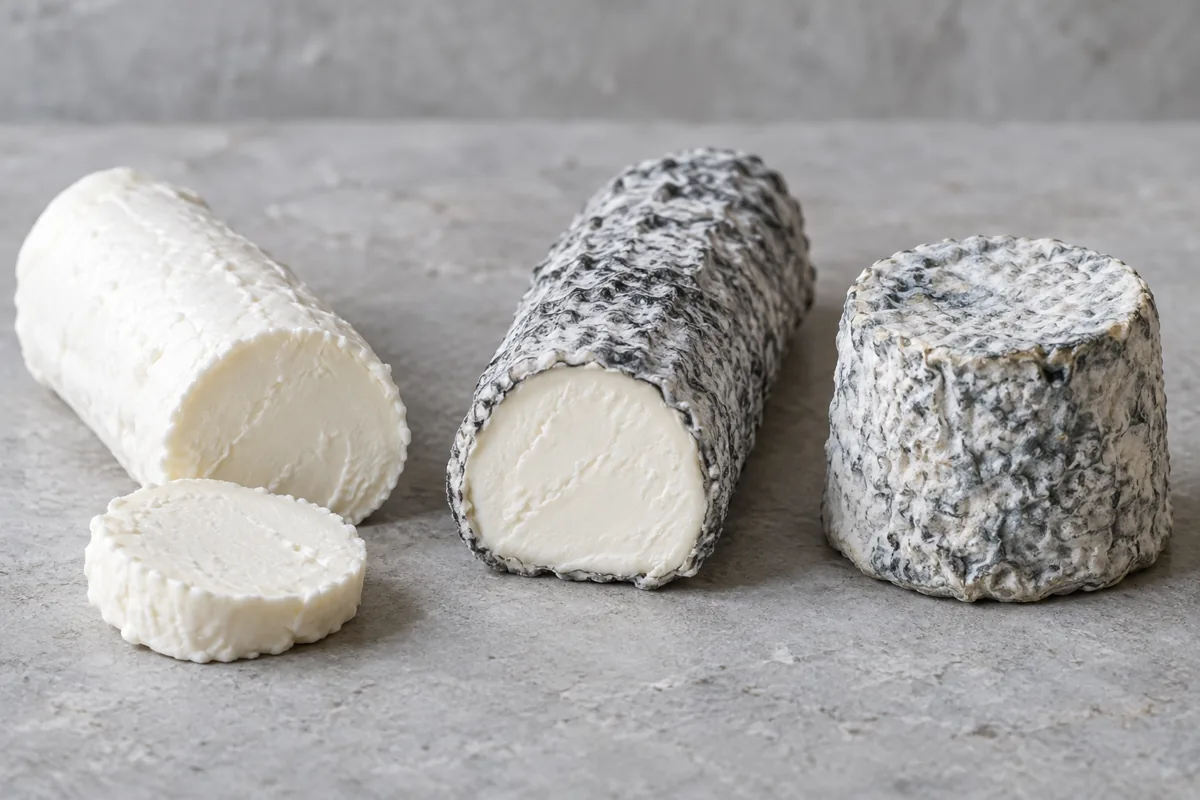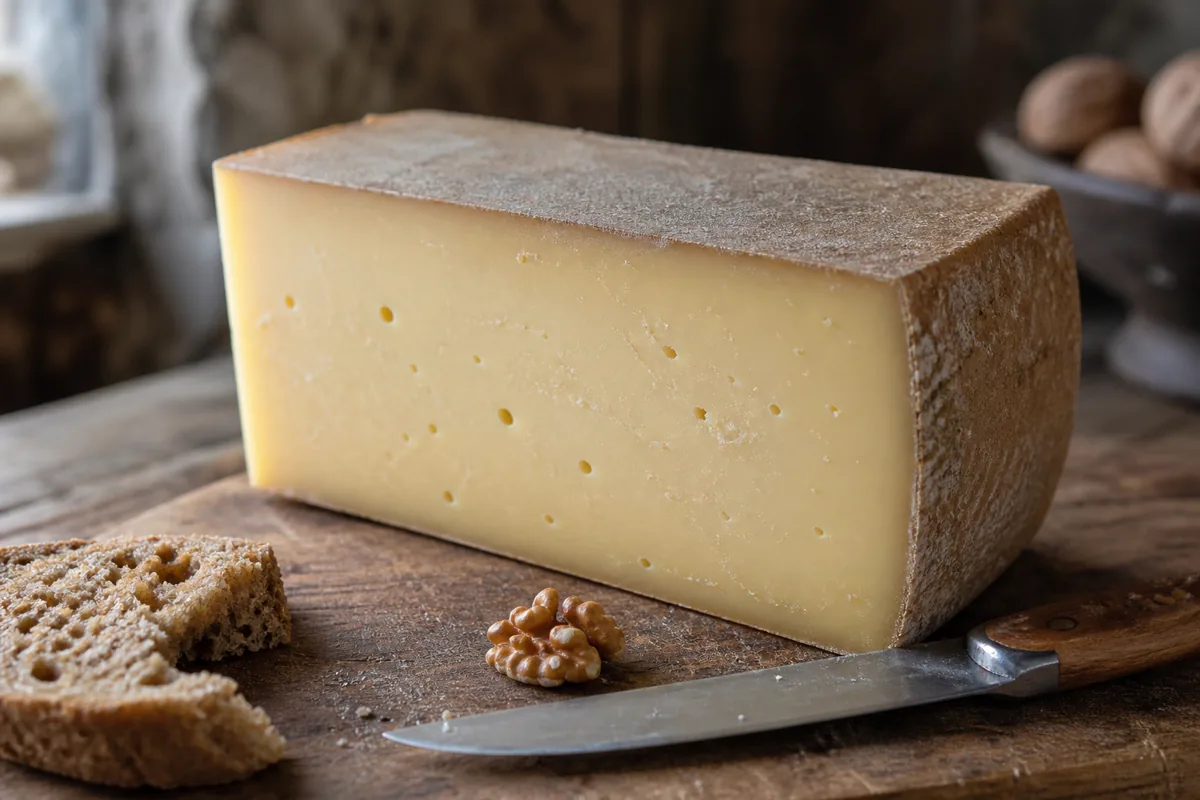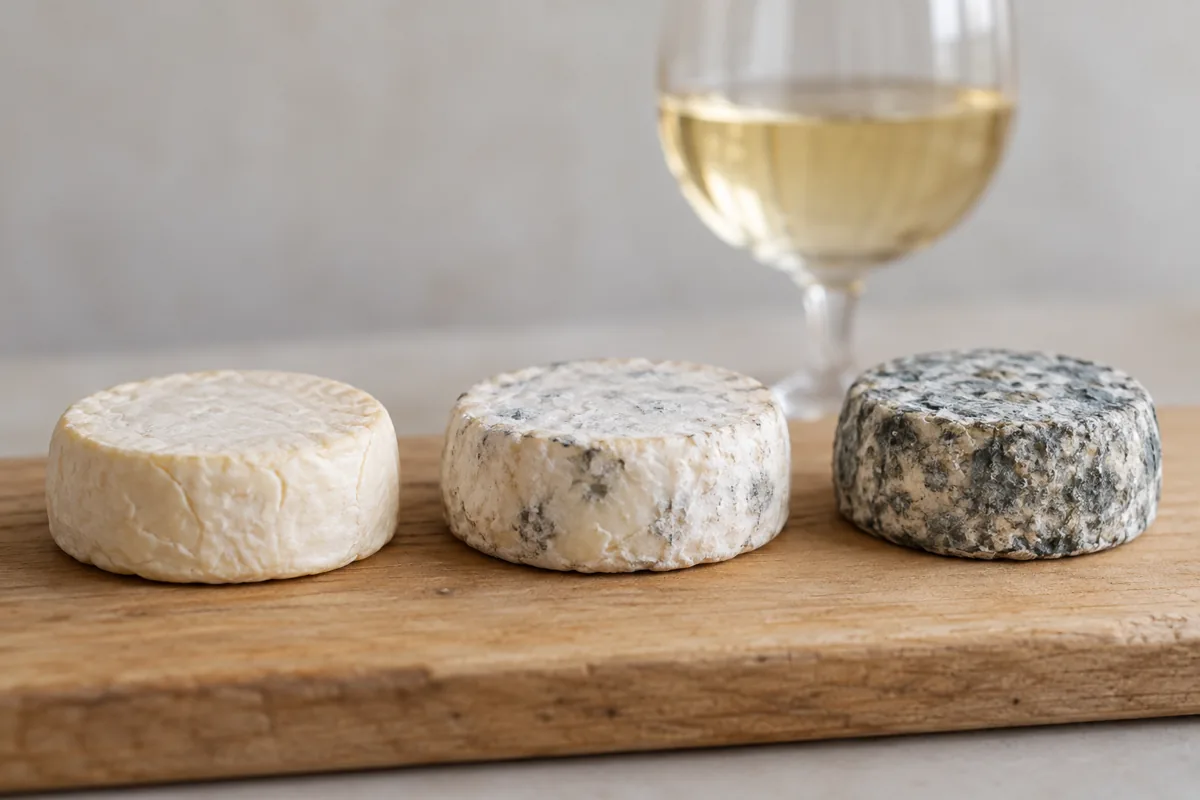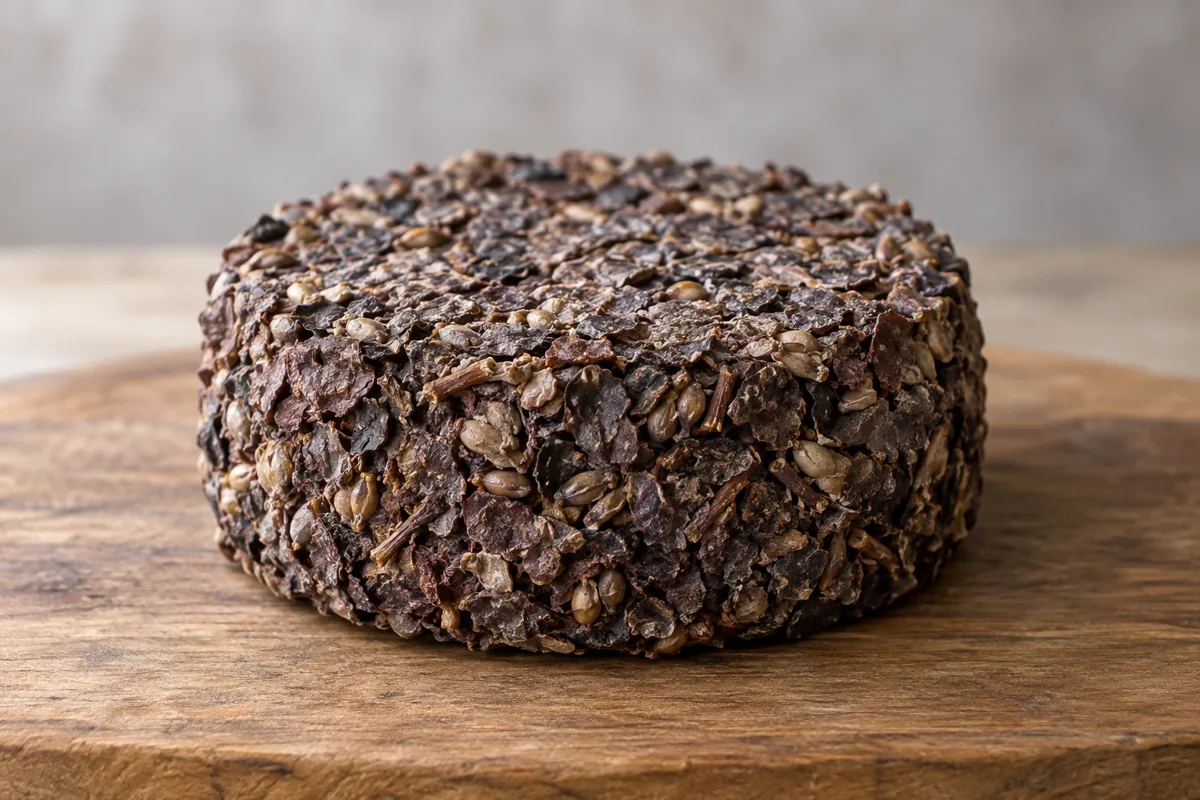
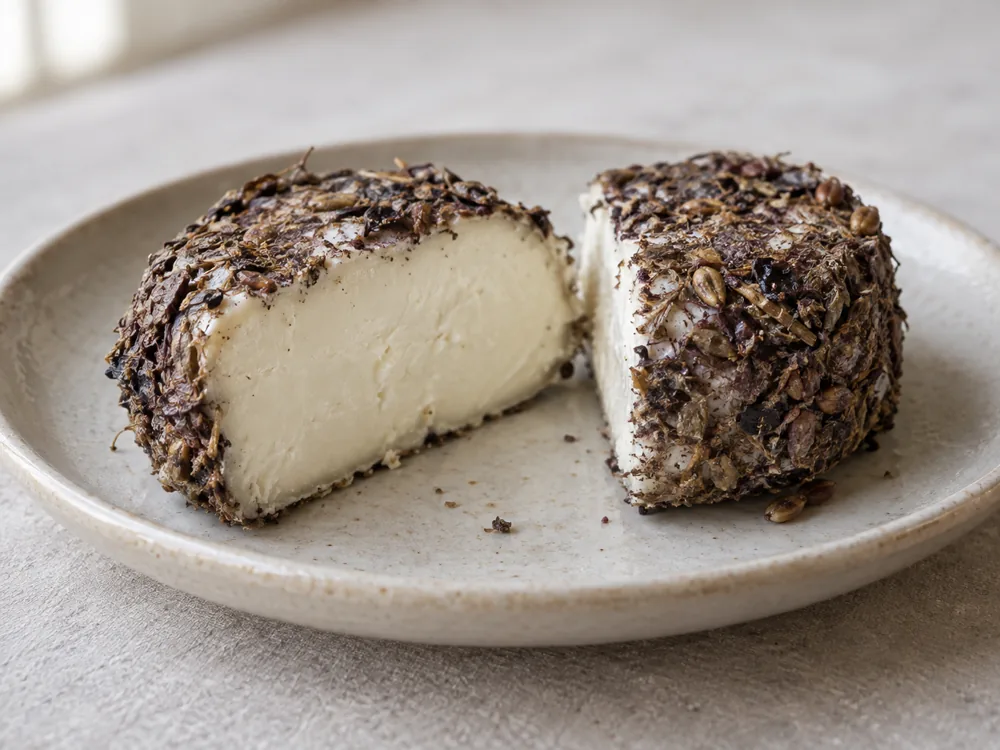
Aromes au Gene de Marc is a small, soft French cheese from the Lyon area that is coated in grape marc, the skins, seeds and stalks left after the juice is pressed. It is made from cow's milk, sometimes goat's milk, and the milk is raw in most descriptions, so the label of your piece is where to confirm the milk treatment.
The same cheese also goes by arôme de Lyon, arôme de gêne de marc, arôme lyonnais and arôme au vin blanc, and the name is an unprotected appellation.
In This Article
What Is Aromes au Gene de Marc Made From?
It starts as an immature cheese such as Rigotte or St Marcellin, and Picodon and Pélardon are also among the cheeses that go through the marc treatment.
That base is a lactic-curd cheese, whose curds are ladled into moulds, lightly pressed, drained, salted, dried and then aged.
The pieces sold by Les Alpages, a Saint-Marcellin, and by Fromagerie du Château are both raw cow's milk.
| Question | Value or range | Given by |
|---|---|---|
| Milk | Cow's, sometimes goat's | Cow's, sometimes goat's: Wikipédia (French), Produits du lait, OPT (Lyonnais tourism body), Le Guide du Fromage. Cow's and goat's: Cheese.com. Cow's: Androuet, Les Alpages (Saint-Marcellin base), Fromagerie du Château |
| Raw or pasteurised | Raw | Raw: Cheese.com (unpasteurised), OPT, Le Guide du Fromage, Les Alpages, Fromagerie du Château. Not stated: Androuet, Wikipédia (French), Produits du lait |
| Weight | 80 to 150 g; about 100 g in most | Cheese.com (80 to 120 g); Androuet (100 to 150 g); Wikipédia (about 100 g); Produits du lait (about 100 g); Le Guide du Fromage (100 g); Les Alpages (100 g); Fromagerie du Château (80 g) |
| Shape and size | Small flat disc or round, about 6 to 7 cm across and 3 cm thick | Androuet (small flat disc); Cheese.com (round); Wikipédia (6 to 7 cm across, 3 cm thick); Produits du lait (6 cm across, 3 cm high) |
How Is It Made in Grape Marc?
The young cheeses are macerated or cured in fermenting grape skins and pips, then rolled in marc before they are sold. That marc coating gives the finished cheese its rind and its aromas.
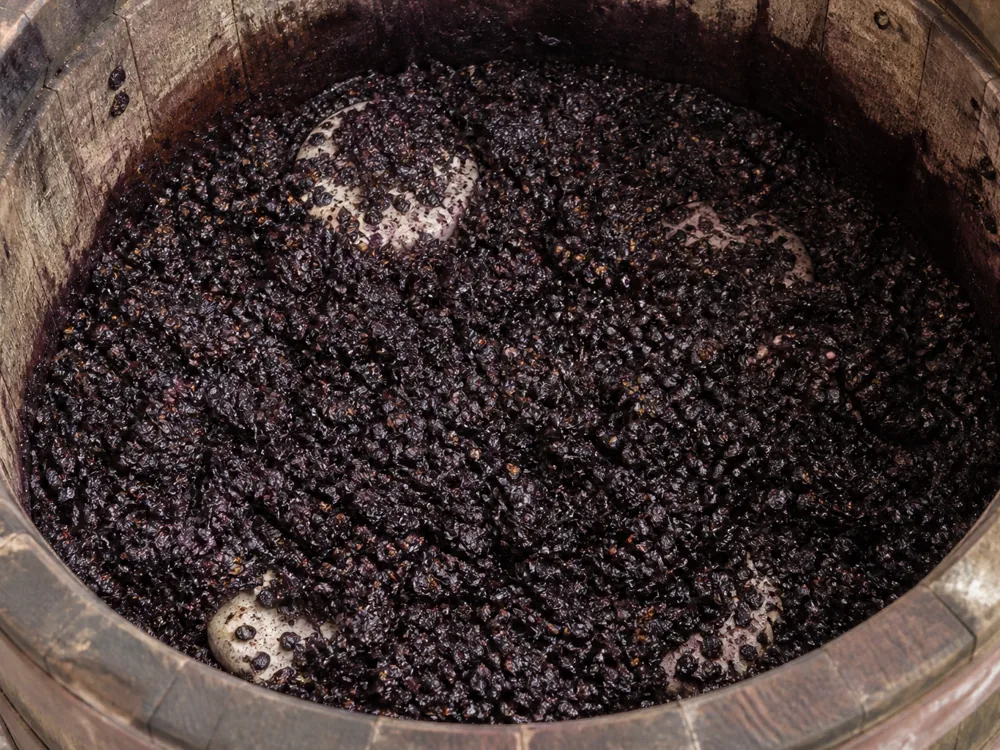
Wine plays a part in some versions: in a white-wine step the cheeses sit on small racks in jars so they take up the wine vapour, and they are also macerated in white wine or in grape stalks sprinkled with red wine.
The Saint-Marcellin that Les Alpages sells is steamed with white wine and then aged in barrels of grape marc. Fromagerie du Château's piece is aged 3 weeks with white wine (under 1% of the ingredients) and grape must, so its label names must rather than marc.
| Question | Value or range | Given by |
|---|---|---|
| Time in the marc or wine | 3 weeks to 2 months | Androuet (1 to 2 months); Produits du lait (4 to 8 weeks); Fromagerie du Château (3 weeks) |
| Fermentation, then maceration | 2 to 3 weeks of fermentation, then 3 weeks to 1 month of maceration | Wikipédia (French) |
| Medium | Grape marc; white wine, or grape stalks sprinkled with red wine; white wine and grape must | Marc: Androuet, Produits du lait, Cheese.com (fermenting grape skins and pips), Les Alpages (after white-wine steaming). White wine, or grape stalks sprinkled with red wine: Wikipédia. White wine and grape must: Fromagerie du Château |
| Container | Barrels, wooden crates, vats or jars | Androuet (barrels filled with marc); Produits du lait (oak barrels or wooden crates, covered with marc); Cheese.com (vats); Les Alpages (barrels of grape marc); Wikipédia (jars, on small racks) |
The time in the marc runs from 3 weeks to 2 months depending on who describes it, so ask the seller how long your piece was aged.
The method is traced to storing unsold summer cheeses, where the lack of oxygen and the alcoholic juice protected them against bacterial growth.
When it is made differs by account: Wikipédia says it is made all year and sells far more in winter, while Cheese.com says it is produced several months after the last of the vintage.
What Does It Taste Like?
Aromes au Gene de Marc is described as strong and fermented. Cheese.com calls it strong, bittersweet and distinctly yeasty with a fermented, pungent aroma, and Androuet gives it a pungent flavour and a strong smell of fermenting must.
| Question | Descriptions |
|---|---|
| Flavour | Strong, bittersweet and distinctly yeasty (Cheese.com); pungent (Androuet); slightly sweet (Les Alpages); fruity and slightly vinous, medium to bold (Fromagerie du Château); fruity milk notes with slightly vinous notes from the marc (OPT) |
| Smell | Fermented and pungent (Cheese.com); strong smell of fermenting must (Androuet); powerful aromas (Les Alpages) |
| Texture | Creamy and moist when young, flaky and hard when aged (Cheese.com); firm consistency (Androuet); tender (Les Alpages); creamy (Fromagerie du Château); creamy melting paste (OPT) |
| Rind | Viscous (Androuet) |
| Colour | Ivory paste under a rind from brown to grey (Le Guide du Fromage); white (Cheese.com); beige, more or less dark depending on how it is kept (Wikipédia) |
Wine shows up in some descriptions: OPT describes slightly vinous notes from the marc, and Fromagerie du Château calls its piece fruity and slightly vinous.
By Cheese.com's account the texture changes as it matures, from creamy and moist when young to flaky and hard when aged, so ask for a young piece if you want it creamy.
How Do You Serve Aromes au Gene de Marc?
Aromes au Gene de Marc is eaten as it is, at room temperature, and at the end of a meal with a wine from the region served at room temperature.
For a piece from the fridge, Fromagerie du Château advises taking it out 20 to 30 minutes before tasting.
If you pick one bottle, Saint-Joseph is the wine both Androuet and OPT suggest. Androuet adds Sancerre blanc and Vacqueyras, and OPT adds Condrieu and Beaujolais.
| Pairing | Type | Why It Works |
|---|---|---|
| Sancerre blanc | Wine | Androuet lists it first among its three suggested wines. |
| Saint-Joseph | Wine | Named by both Androuet and OPT. |
| Vacqueyras | Wine | The third Androuet suggestion. |
| Condrieu | Wine | An OPT suggestion; OPT also lists Beaujolais as a light red. |
| Dried fruit and nuts | Food | OPT suggests them, along with salads and fresh berries. |
How Do You Buy and Store Aromes au Gene de Marc?
Both shops sell it by the single piece under the Lyon name: Les Alpages as Arôme de Lyon affiné au marc de raisin, which it marks a rare product, and Fromagerie du Château as Arômes de Lyon aux gènes.
Les Alpages priced its 100 g piece at €3.45 and Fromagerie du Château its 80 g piece at €3.80. By weight, the smaller piece costs more, about €4.75 per 100 g against €3.45.
Fromagerie du Château's piece is to be kept in cold storage at 4 to 8 °C and eaten within 5 to 7 days.
Is Aromes au Gene de Marc Safe During Pregnancy?
Fromagerie du Château marks its raw cow's milk piece not recommended for pregnant women because of the raw milk.
The CDC lists soft cheese made from unpasteurized (raw) milk as a riskier choice during pregnancy, and pasteurized soft cheeses heated to an internal temperature of 165°F or until steaming hot as a safer choice.
The NHS says any foods made from unpasteurised milk must be thoroughly cooked, and lists any cheese that's been cooked until steaming hot, including soft or blue cheese, as safe to eat.
Check the label for the milk. For a piece labelled pasteurised, the NHS lists pasteurised soft cheeses as safe to eat, but eaten cold, a pasteurized soft cheese is a type the CDC list does not cover, so ask your midwife or doctor about that piece.
SOURCES & REFERENCES
What Other Questions Come Up About Aromes au Gene de Marc?
Yes. Arôme de Lyon, arôme de gêne de marc, arôme lyonnais and arôme au vin blanc are names for the same unprotected appellation, and Fromagerie du Château sells it as Arômes de Lyon aux gènes.
In most descriptions, yes: Cheese.com, OPT and Le Guide du Fromage give raw milk, and the pieces Les Alpages and Fromagerie du Château sell are raw cow's milk. The label of the piece in front of you is the answer for that piece.
From 3 weeks to 2 months, depending on the account: Androuet says 1 to 2 months, Produits du lait 4 to 8 weeks, and Fromagerie du Château 3 weeks for its piece. Wikipédia gives 2 to 3 weeks of fermentation followed by 3 weeks to 1 month of maceration.
Fromagerie du Château advises keeping its piece at 4 to 8 °C and eating it within 5 to 7 days.
Most descriptions give raw milk, Fromagerie du Château says not recommended for pregnant women, and the CDC lists soft cheese made from unpasteurized (raw) milk as a riskier choice, while the NHS says foods made from unpasteurised milk must be thoroughly cooked. A pasteurised piece eaten cold is a type the CDC list does not cover, so check the label and ask a midwife or doctor.