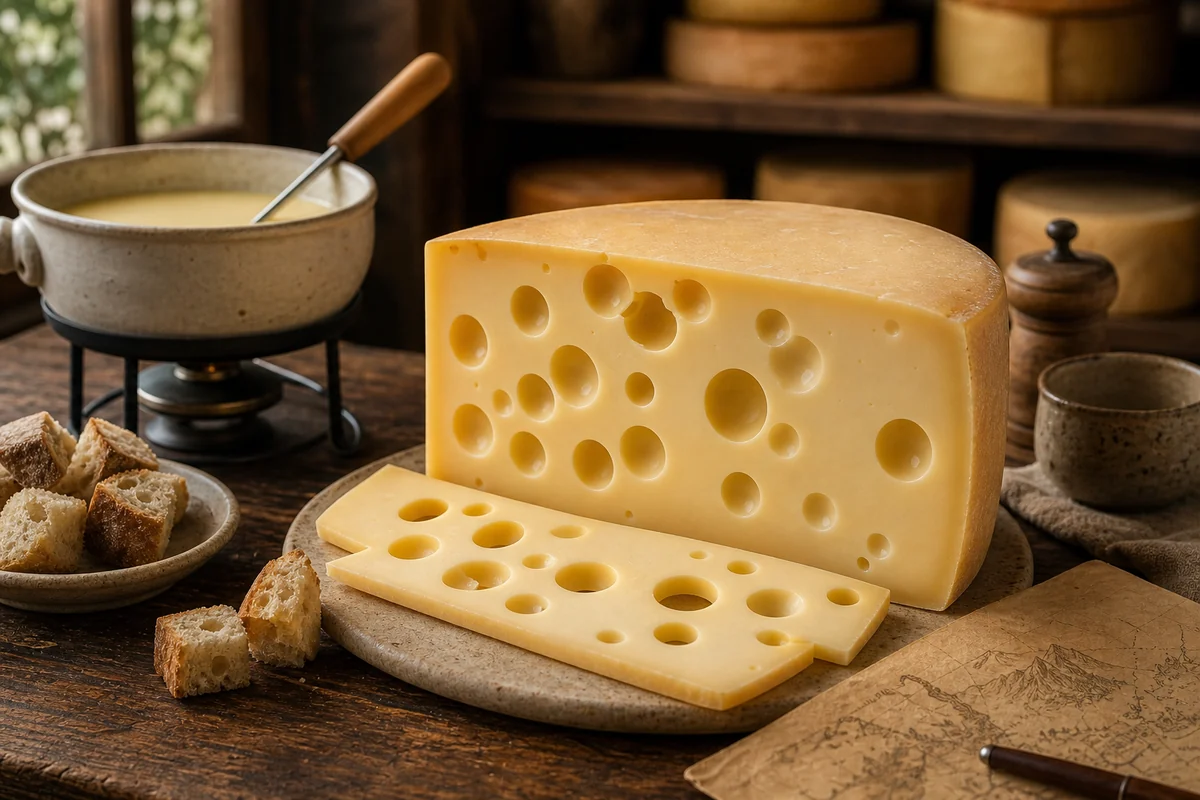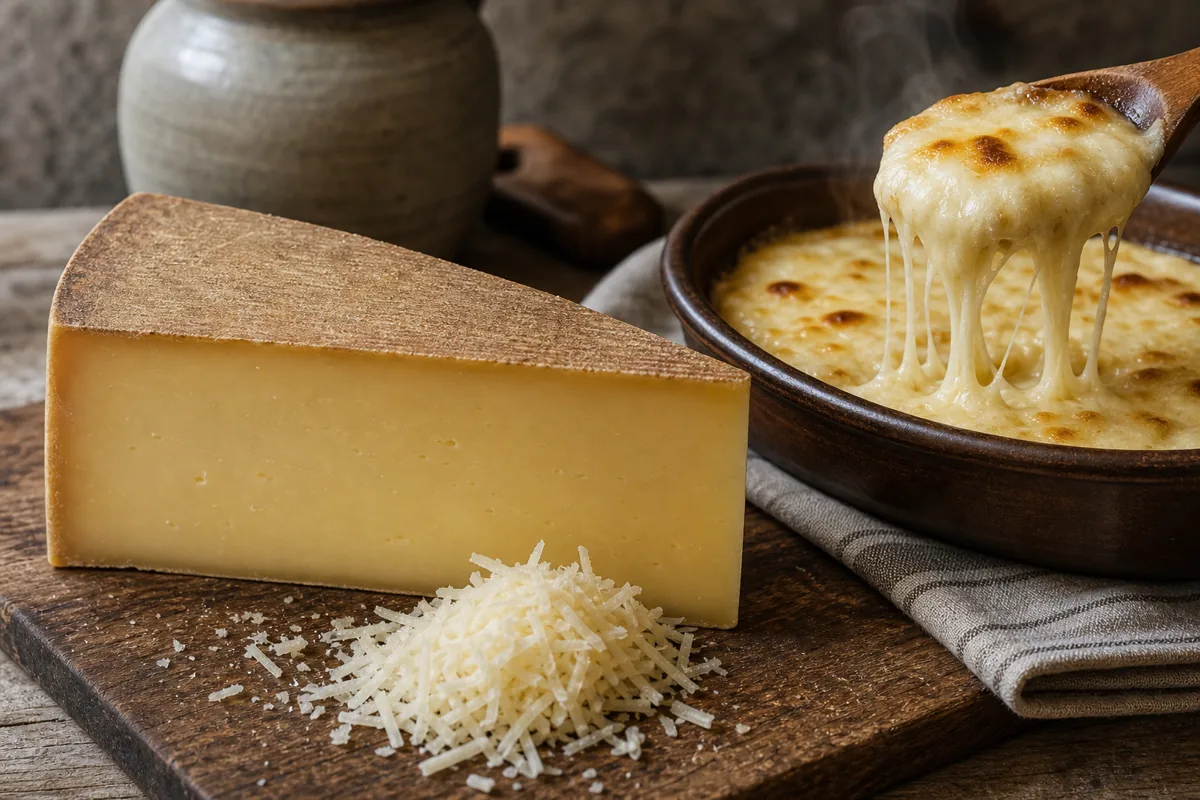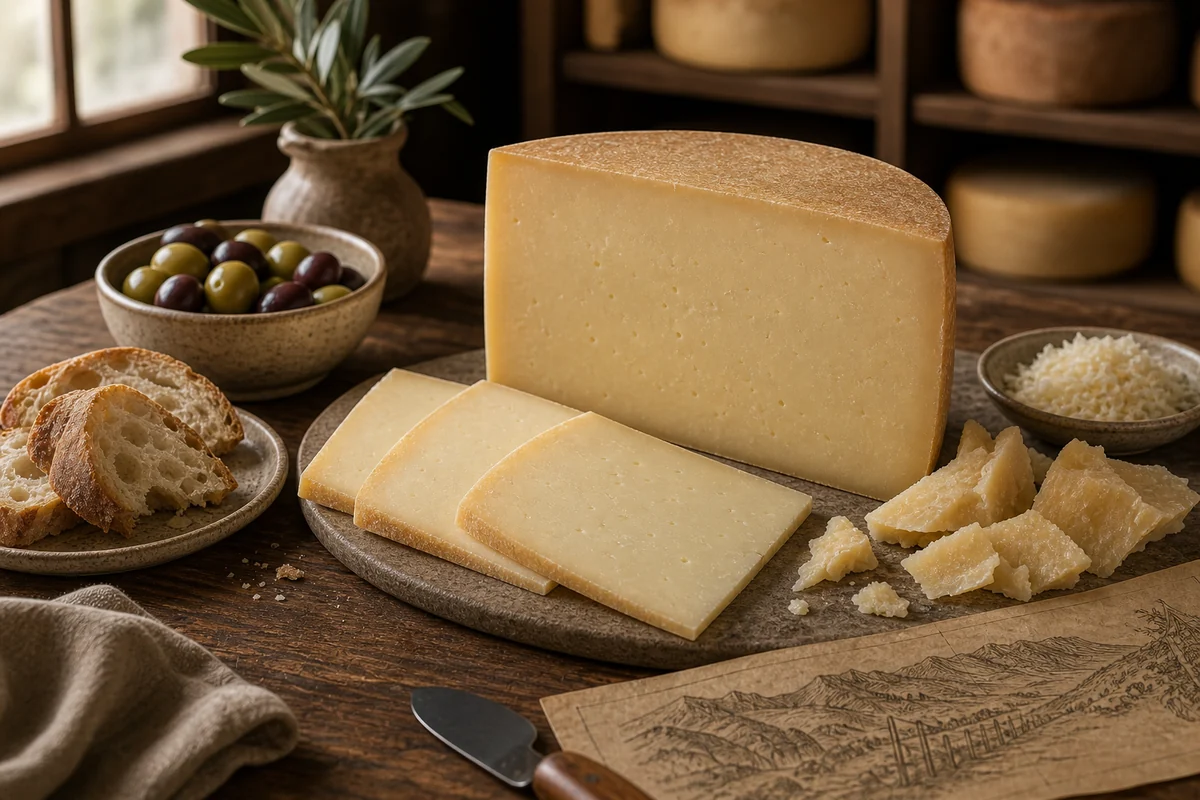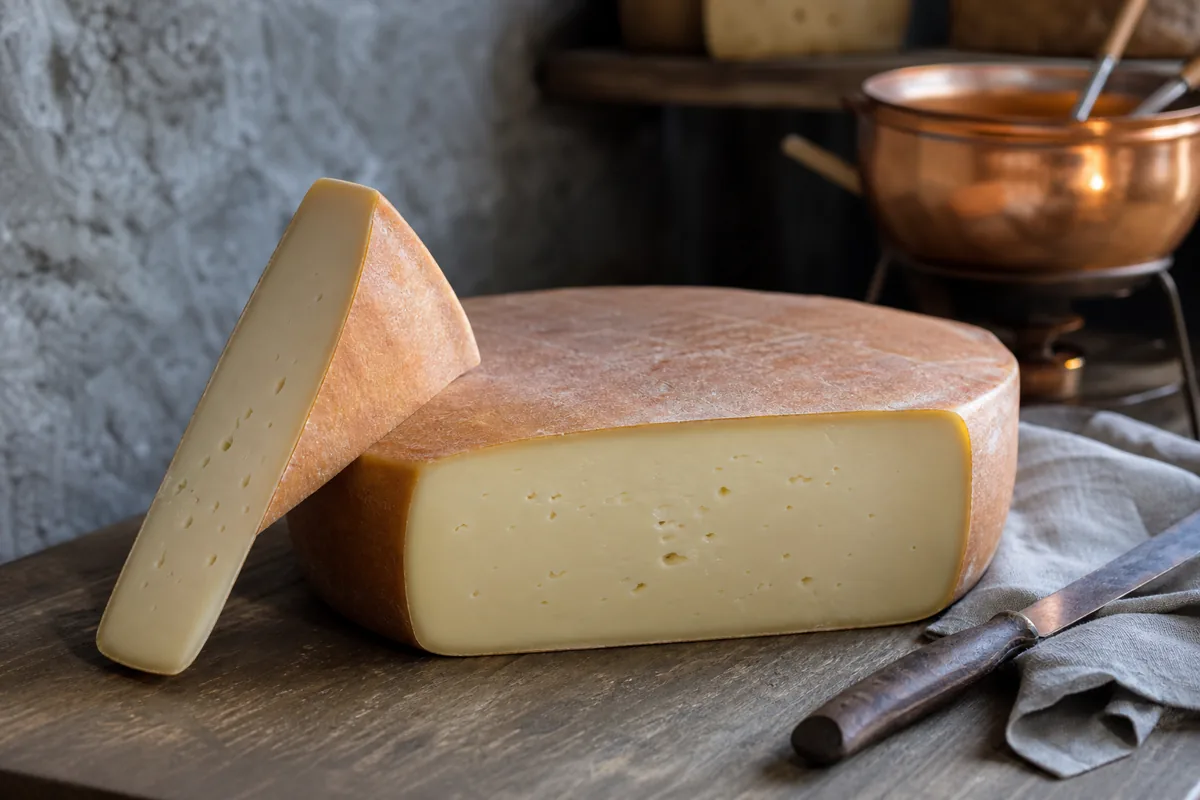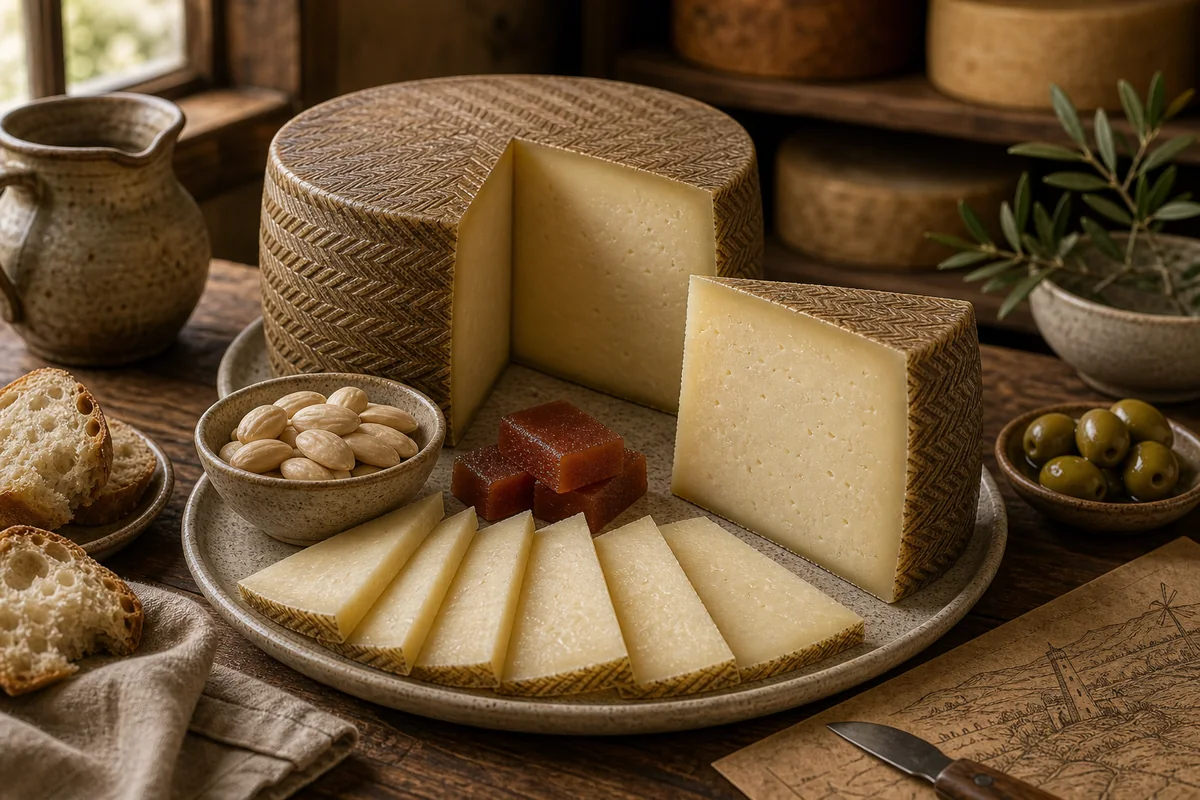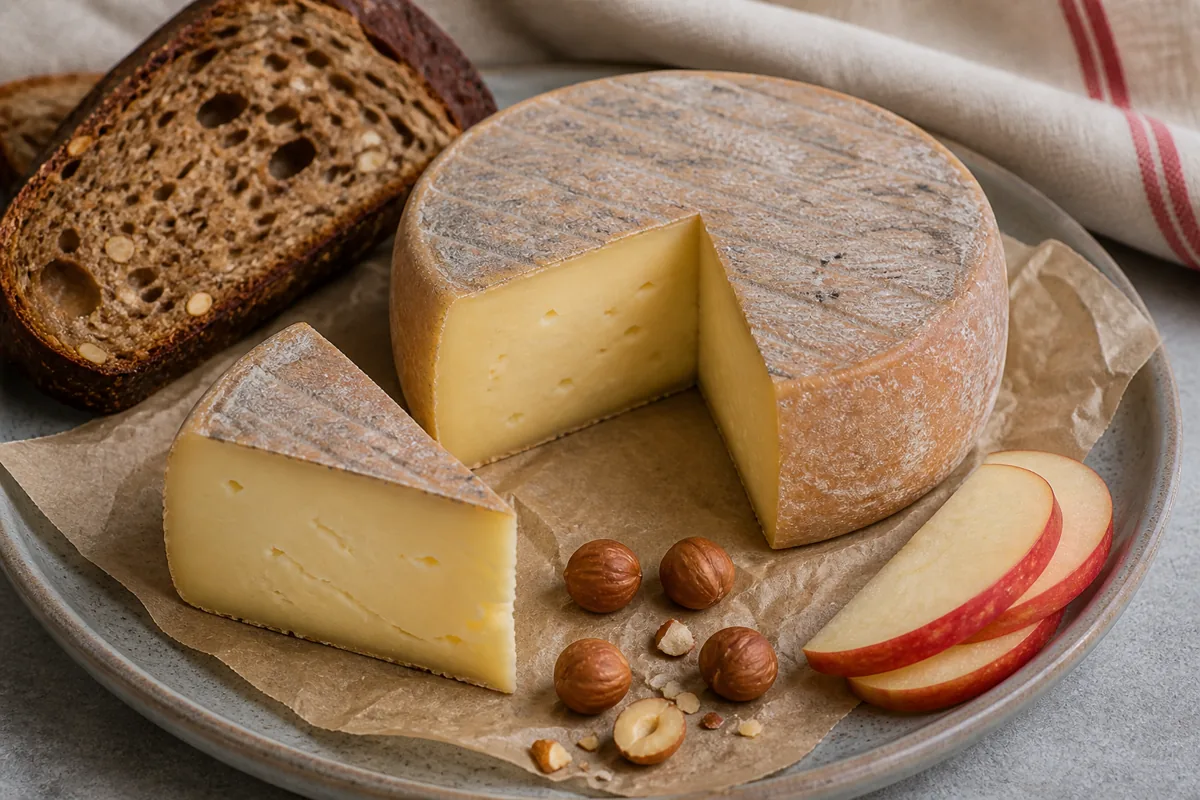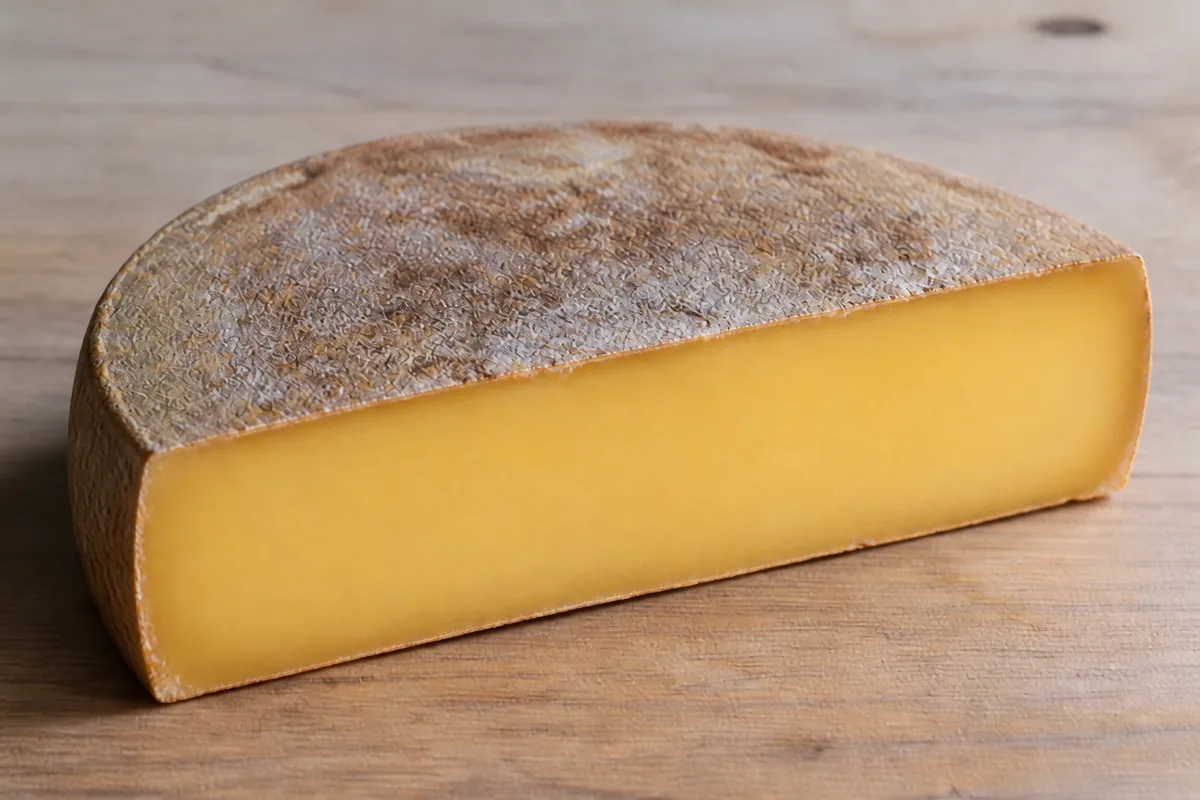
Alta Badia is Mila's South Tyrolean hard cheese, with a firm rind and a straw-coloured interior without holes.
It can be sliced for a cold plate or grated into a cheese sauce, and its treated rind should be removed before eating.
In This Article
What Does Alta Badia Taste Like?
Mila describes a strong flavour with milky, toasted and potato notes. The cheese takes its name from the Dolomite valley where Ladin is spoken.
The producer describes the paste as firm yet smooth and melting in the mouth. That texture differs from a soft, spoonable cheese and makes thin slices a useful starting point on a plate.
Its closed paste, without eyes, also distinguishes it visually from a large-holed Emmental.
Can You Eat the Alta Badia Rind? Age, Milk, and Rennet
Mila's technical specification, revision 14 dated 23 July 2021, describes a whole wheel of about 9 kg and maturation of approximately 180 days. These are the producer's documented figures, rather than a promise that every shop's cut has exactly the same weight or age.
The specification lists pasteurized milk, cultures, salt and microbial rennet; Moser's current 150 g retail listing agrees on those ingredients. Microbial rennet answers the animal-rennet question, while the milk ingredient remains relevant to anyone avoiding dairy.
Do not eat the rind.
Mila's specification explicitly marks it inedible and describes surface treatment with natamycin and E150d colouring.
Remove that outer layer before slicing or grating, and keep it out of a sauce or soup. A rustic-looking surface is not evidence that a rind is intended to be eaten.
How to Serve and Cook It
Mila suggests dark bread, potatoes and cured ham alongside Alta Badia. The ham adds a separate salty, savoury flavour; it is an accompaniment, not an ingredient in the cheese.
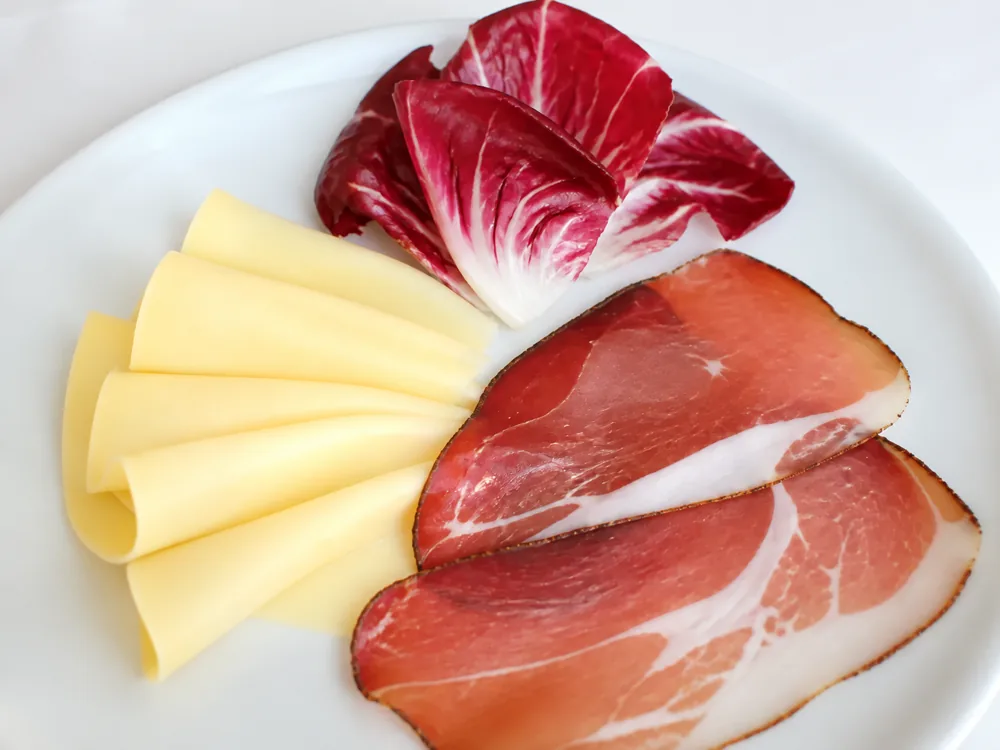
A few slices with bread make a straightforward cold meal; grated cheese is easier to distribute through a warm dish. For cooking, weigh the cheese after trimming its inedible rind so the recipe receives the intended amount.
Mila's tagliatelle with porcini and Alta Badia fonduta uses 150 g of grated cheese with 200 ml of cream for four servings. Its method heats the cheese with cream, pepper and a piece of butter until melted, then serves the sauce with the pasta.
That recipe supplies liquid as well as cheese, so its result is not equivalent to putting a dry wedge in a hot pan. Use controlled heat and stop prolonged heating once the mixture is ready; a six-month age does not guarantee that any cheese sauce can withstand boiling.
The ground dried porcini go into the pasta dough in that recipe, giving the mushroom flavour a separate place from the cheese sauce.
Is Alta Badia Lactose-Free? Nutrition per Portion
The table uses Mila's current Alta Badia nutrition panel, with a 30 g portion calculated from its 100 g values. A portion is easier to compare with the amount you actually slice onto bread.
| Nutrient | Per 100 g | Per 30 g, calculated |
|---|---|---|
| Energy | 392 kcal | 118 kcal |
| Fat | 32 g | 9.6 g |
| Saturated fat | 23 g | 6.9 g |
| Carbohydrate | 0 g | 0 g |
| Sugars | 0 g | 0 g |
| Protein | 26 g | 7.8 g |
| Salt | 1.8 g | 0.54 g |
The specification's 50% fat-in-dry-matter figure excludes water from its calculation. It is therefore compatible with 32 g of fat per 100 g of whole cheese; it does not mean half of a 30 g portion is fat.
Mila calls Alta Badia naturally lactose-free, with less than 0.1 g lactose per 100 g, and states that it contains galactose.
That claim does not make the cheese milk-free, nor does a rounded zero on a carbohydrate line establish an exact laboratory zero.
For dietary tracking, the panel on your current pack takes precedence if the formulation or label has changed. The table reports salt, not sodium, and its portion figures are arithmetic rather than a separate laboratory test.
Which Cheeses Substitute for Alta Badia?
Gruyère is a useful starting alternative for a firm cheese topping or gratin, though its flavour and ingredients differ. For a cream sauce, use a recipe designed for the replacement rather than assuming equal weights guarantee the same result.
Emmental gives another melting option when you want a milder dish, but neither name alone settles vegetarian suitability. If microbial rennet is why you chose Alta Badia, check that condition again on the replacement.
Look for Mila and Alta Badia together on the counter label or pack. A reference to the valley on a shop sign can cover several foods, so it does not identify this particular cheese.
How Should You Store Alta Badia After Cutting?
Cover the exposed cheese, refrigerate at 4 C / 40 F or below, and follow the pack's date and after-opening instructions. The roughly 180-day maturation period describes production, not how long a cut portion should sit in your fridge.
Mila's specification gives commercial shelf-life figures for different packaged formats and distribution channels. Those figures should not be reused as a universal home expiry after opening.
For perishable food outside refrigeration, the FDA household limit is two hours, or one hour when the air is above 32 C / 90 F. Remove only the amount needed for the meal and keep the rest cold.