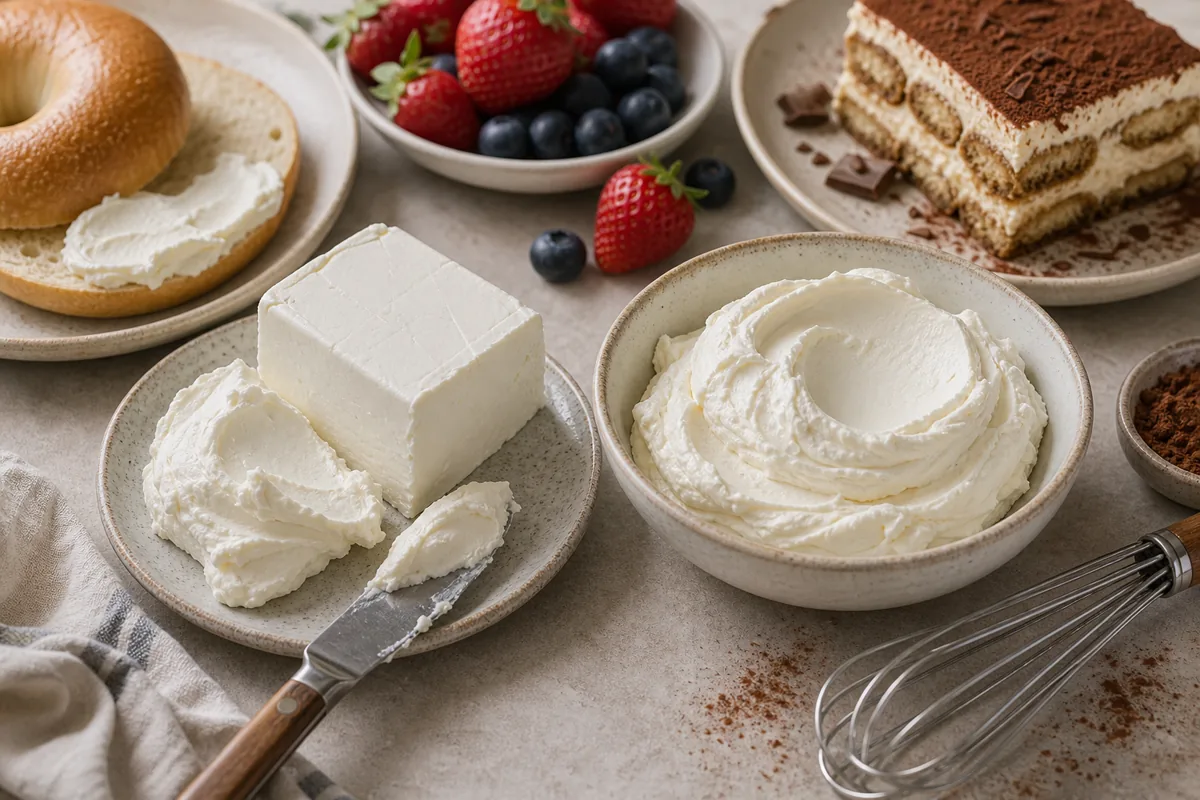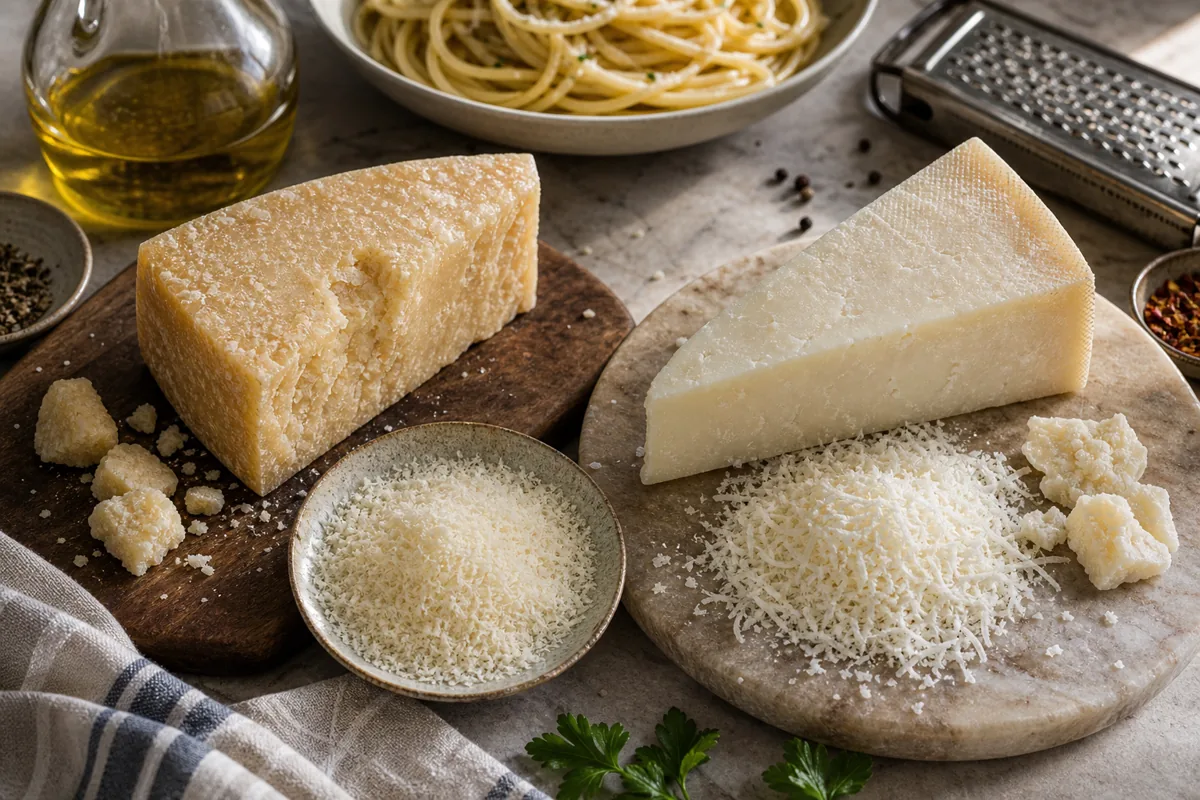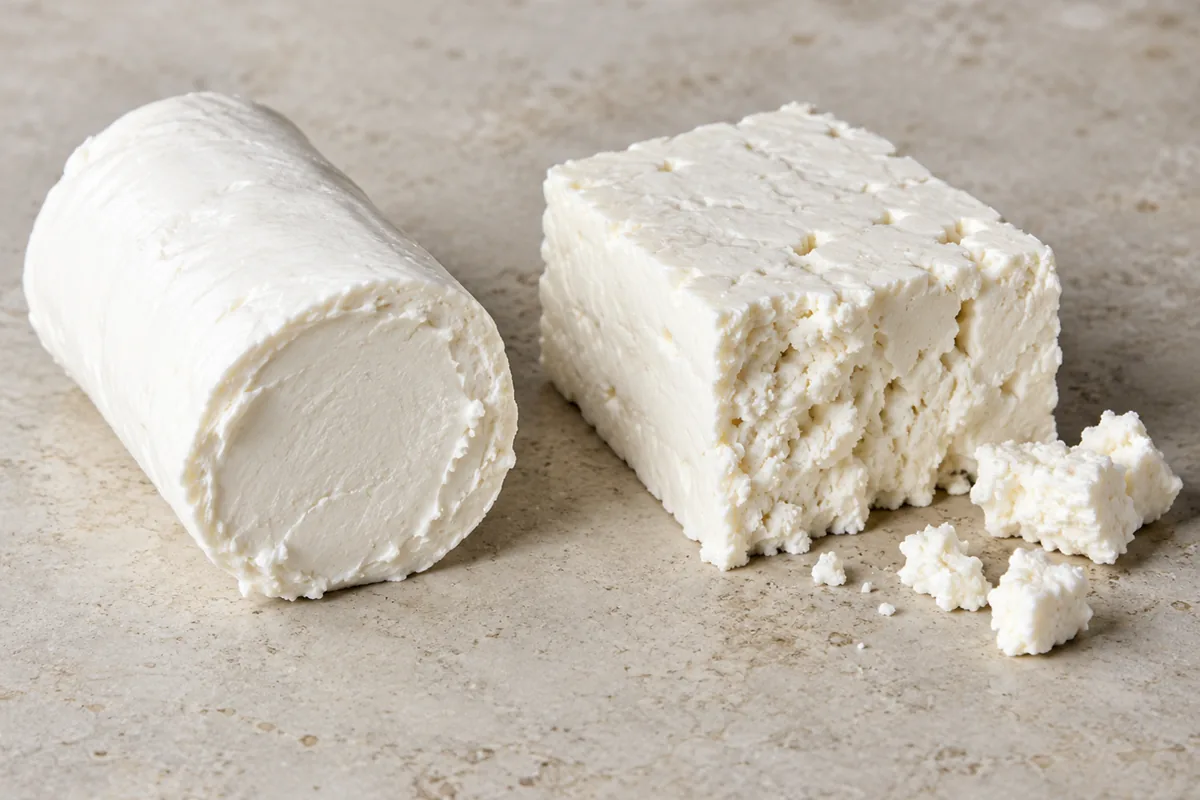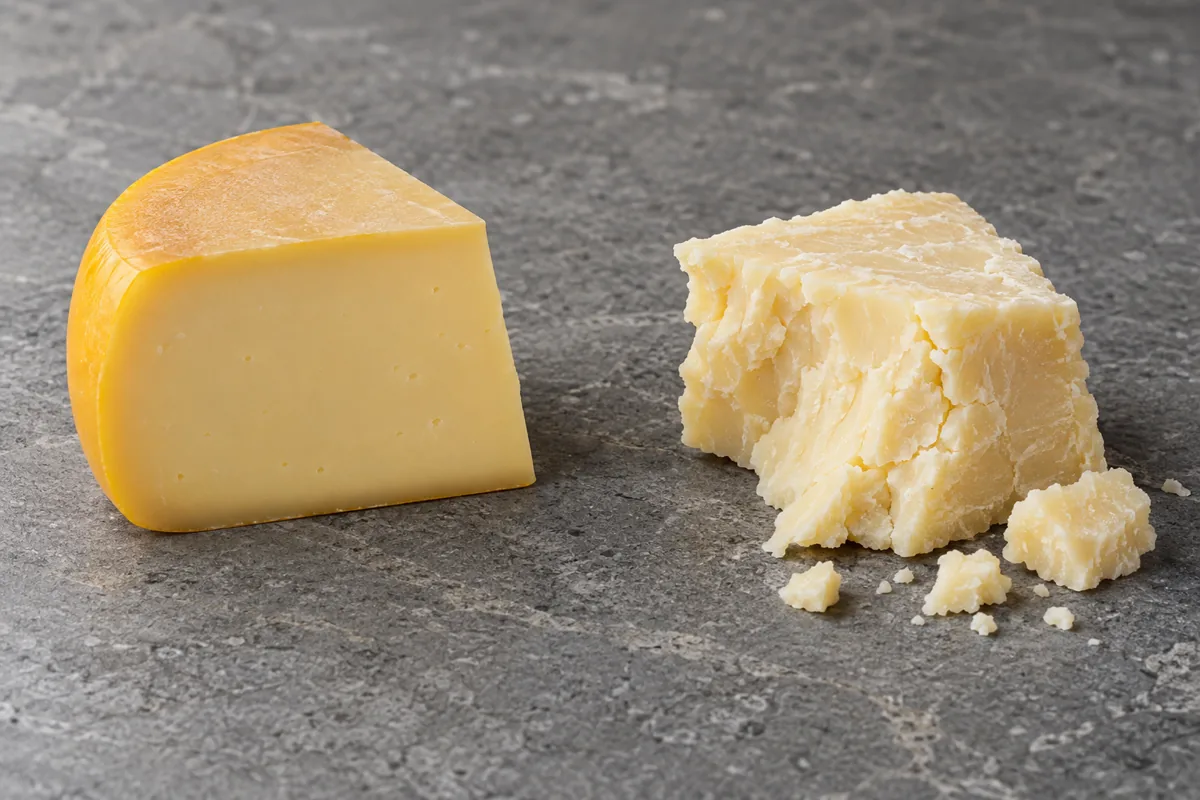
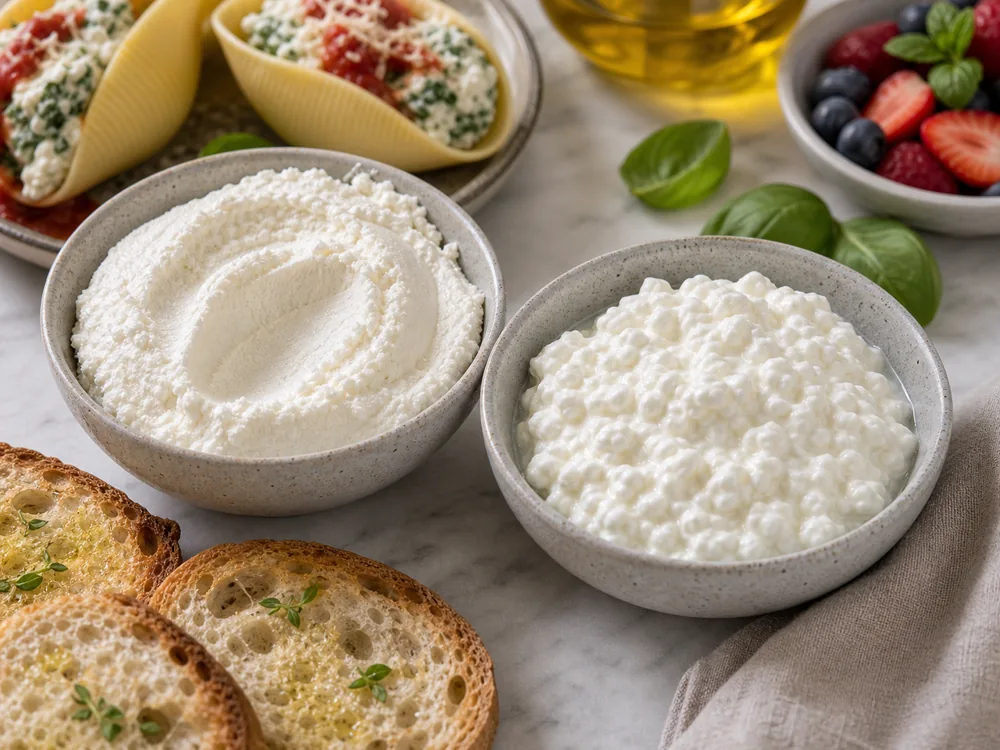
Ricotta has a finer grain, while cottage cheese has distinct curds in a creamy dressing. Choose ricotta when you want a fairly uniform filling, or cottage cheese when you enjoy a curdy texture or already have a tub to use in lasagna.
Both can work in baked dishes, spreads and snacks.
Protein and calorie comparisons need the labels from the products you are buying, because different serving sizes can make the gap look much larger than it is.
In This Article
How Do Ricotta and Cottage Cheese Differ?
Ricotta is often associated with whey, but the name does not mean every tub has the same ingredients. BelGioioso Ricotta con Latte lists whey and milk, whereas Organic Valley Whole Milk Ricotta lists milk, vinegar and salt.
That distinction matters when a recipe describes ricotta as if it were made only from whey. A milk-based retail ricotta is still sold as ricotta, so a simple whey-versus-milk rule cannot explain every product's flavour or baking behaviour.
Daisy describes making cottage cheese by culturing milk, cutting and cooking the curds, then adding a cultured dressing. The curds remain separate rather than forming a fine-grained paste.
In a cold dish, that texture is easy to notice: cottage cheese adds small soft lumps, while ricotta spreads into a finer layer.
Mild, milky ricotta works with honey or fruit as well as savoury fillings, and cottage cheese can be eaten with fruit or herbs without any blending.
Can Cottage Cheese Replace Ricotta in Lasagna?
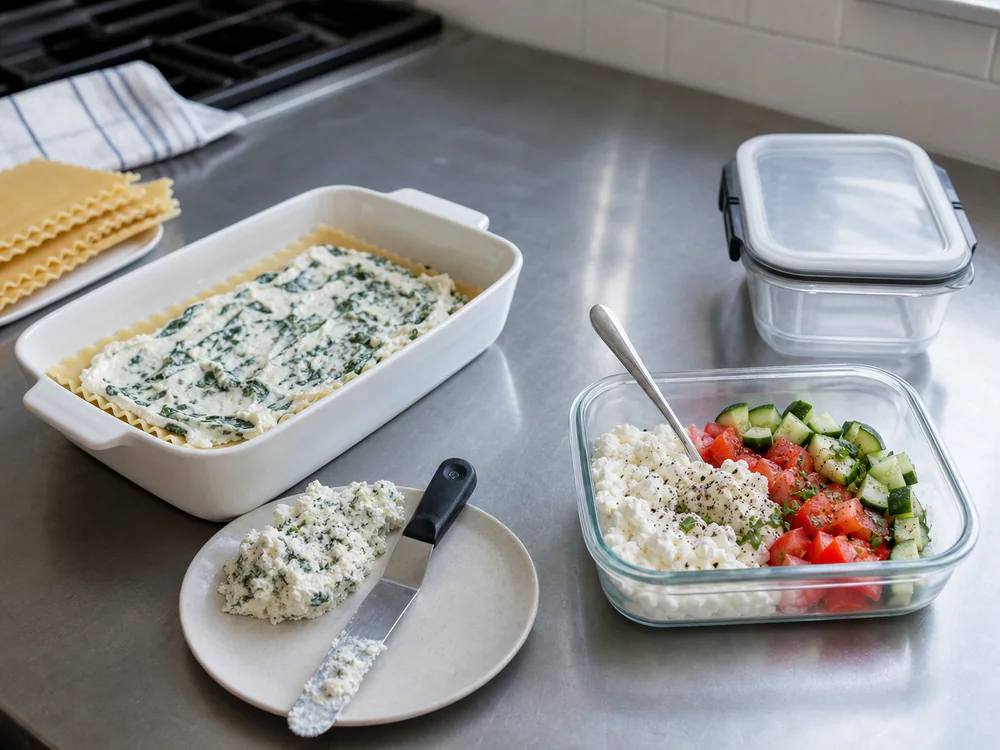
Yes. Cottage cheese can make a lasagna filling, and it does not always need to be blended or drained first.
Daisy's Veggie Lasagna Rolls mix cottage cheese with egg, shredded cheese and vegetables without blending the curds.
The recipe does squeeze the thawed spinach and cook liquid out of the mushrooms, which shows why moisture from the other ingredients matters too.
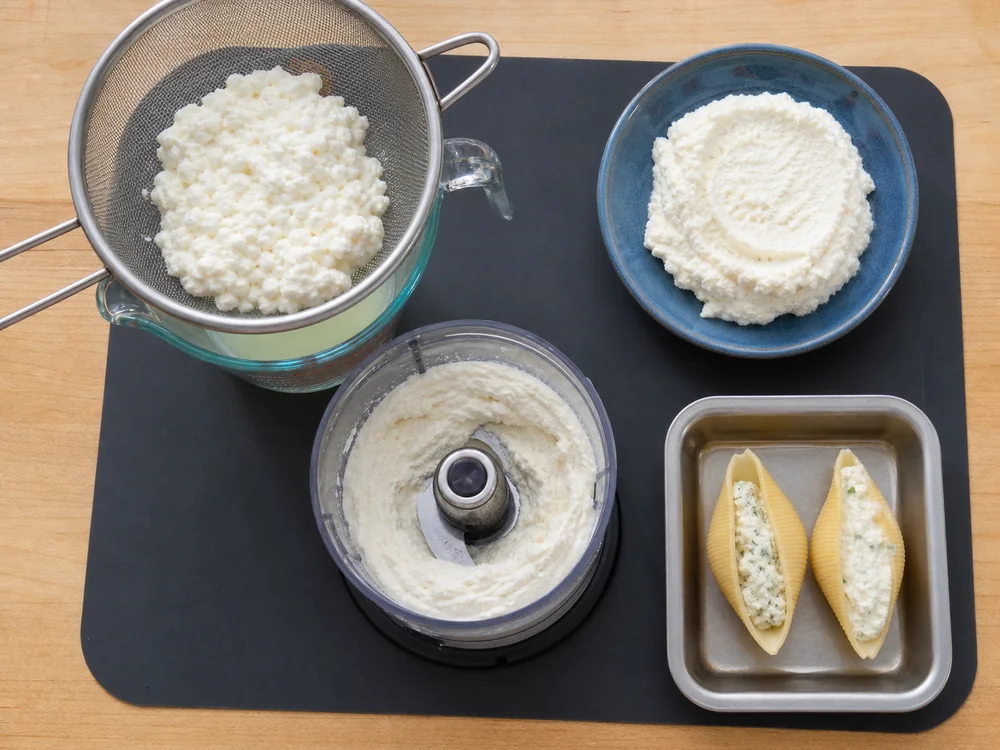
For a smoother result, blending cottage cheese is an option. It changes the texture, but it does not remove water, so blending alone will not fix an overly wet filling.
If your ricotta recipe needs a firm filling, start with the same weight of cottage cheese and assess its consistency before adding any optional liquid.
A noticeably loose product may need draining, and the usable weight after draining is the relevant amount.
For the most predictable result, use a recipe written for cottage cheese. Ravioli and tightly filled pasta shells leave less room for a loose filling than a layered lasagna does, so a successful swap in one dish does not guarantee the same result in another.
Ricotta can also withstand a long bake in an appropriate recipe. BelGioioso's Fresh Mozzarella Lasagna combines its Ricotta con Latte with Parmesan, egg and mozzarella, then bakes the layers for 50 to 60 minutes.
There is no useful rule that cottage cheese always survives heat better, or that ricotta always turns grainy in the oven. The cheese, sauce, vegetables, added binders and cooking method work together to determine the finished filling.
Which Has More Protein?
Compare equal weights before comparing protein. Organic Valley Whole Milk Ricotta lists 6 g of protein in a 55 g serving, while the large-tub label for Daisy 4% Classic Cottage Cheese lists 13 g in 113 g.
The cottage cheese serving is slightly more than twice the weight. Once both labels are converted to 100 g, protein is close for these two products, although calories, fat and sodium differ substantially.
| Per 100 g, calculated from package labels | Organic Valley Whole Milk Ricotta | Daisy 4% Classic Cottage Cheese |
|---|---|---|
| Protein | 10.9 g | 11.5 g |
| Calories | 182 kcal | 97 kcal |
| Total fat | 12.7 g | 4.4 g |
| Sodium | 82 mg | 327 mg |
These are approximate calculations from rounded US label values, checked in September 2026. They describe these products, not every ricotta or cottage cheese, and your pack's current label takes priority.
The Daisy product supplies similar protein with fewer calories per 100 g, while the Organic Valley product has less sodium.
A different fat level, flavouring or brand can change the comparison, so choose the measure that matters to you rather than assuming one category is always healthier.
Neither a protein claim nor a low-fat label establishes lactose content. If that matters to you, check the specific product rather than inferring it from these nutrition figures.
Which Tub Should You Choose?
For a recipe, match the cheese's fat level and consistency as closely as you can to the ingredient specified. Whole-milk ricotta, part-skim ricotta and cottage cheese with different fat percentages are distinct products, even when their tubs look similar.
For snacks or toast, either cheese can work.
Choose based on whether you want a finer spread or separate curds, then add sweet or savoury accompaniments to suit the meal.
Compare price by the same weight rather than assuming cottage cheese is cheaper everywhere. If a recipe needs drained cheese, a low package price may buy less usable filling than you expect.
Keep both cheeses refrigerated and follow the pack's use-by and after-opening instructions. If you need to keep an unfinished tub, see our storage advice for fresh cheese.