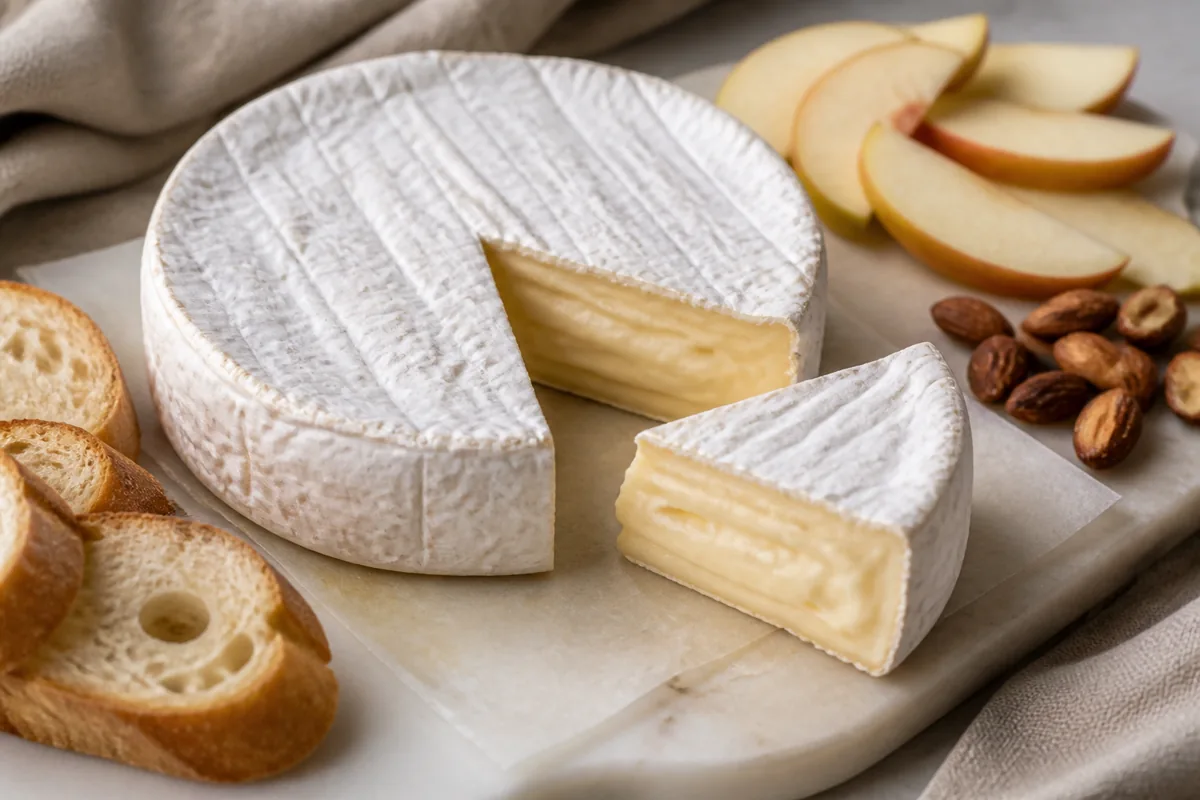
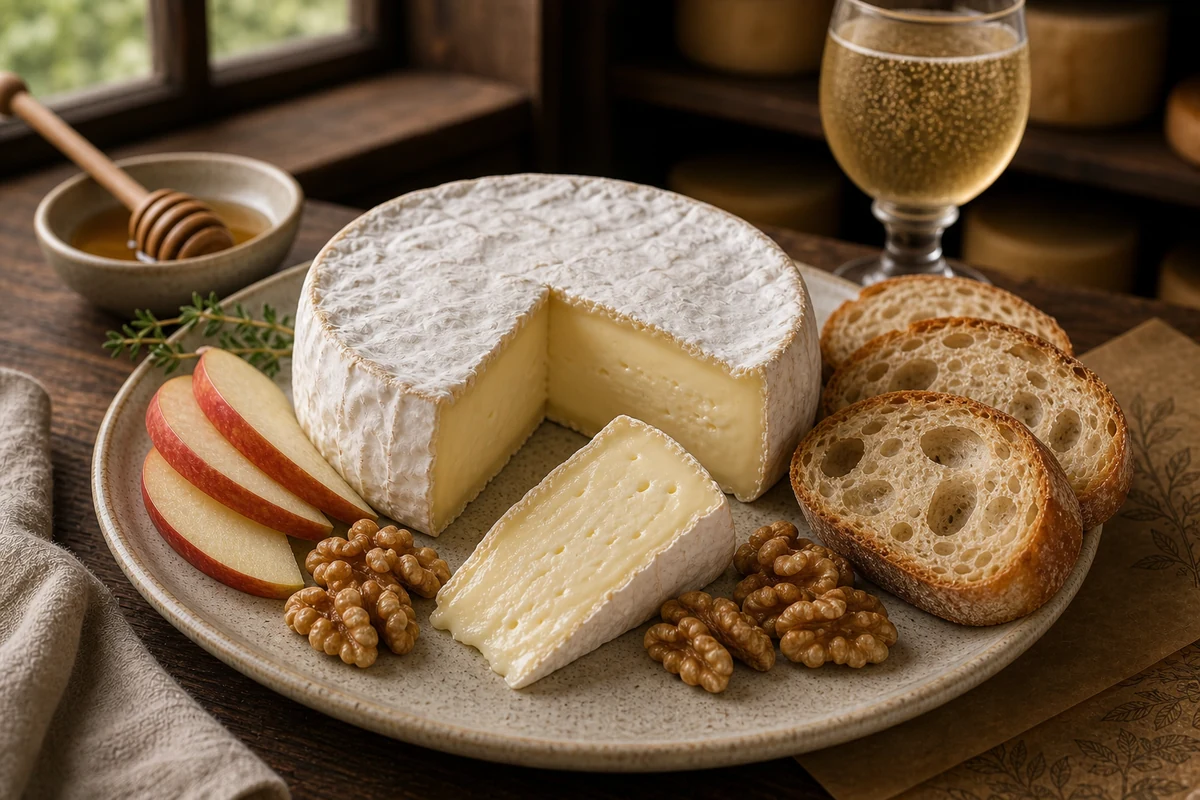
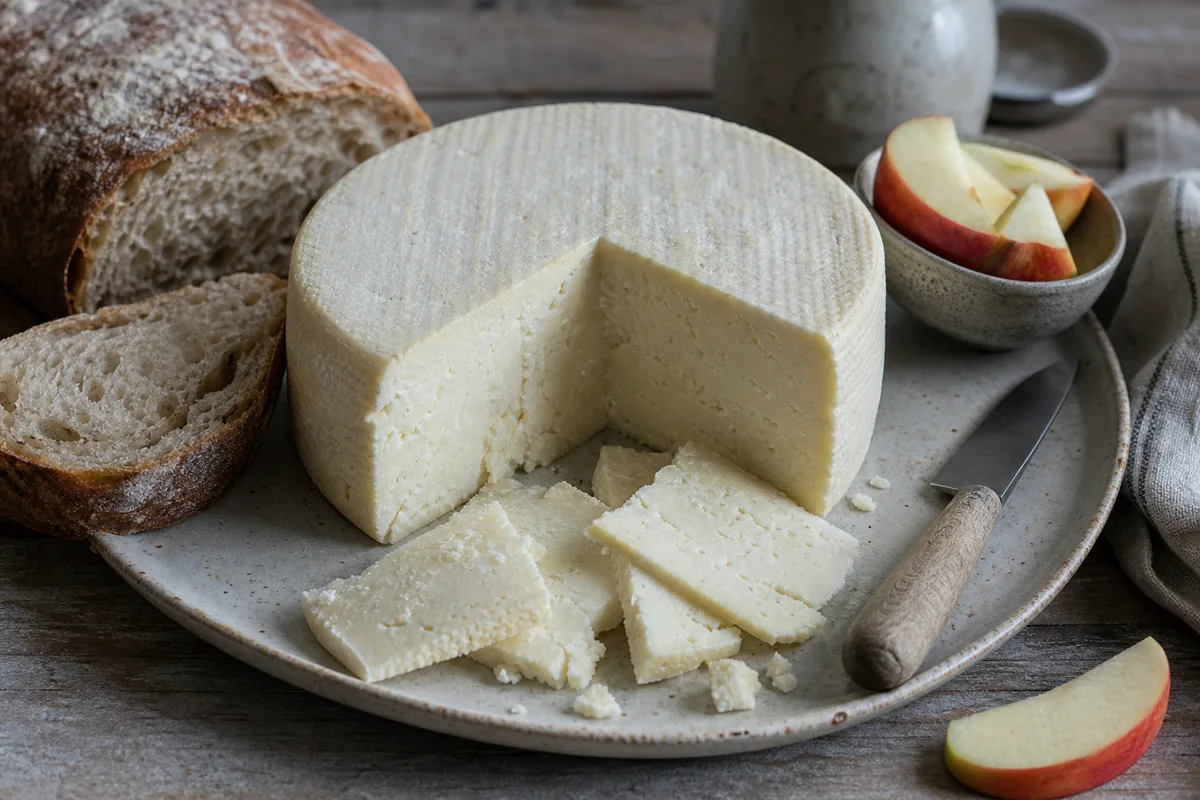
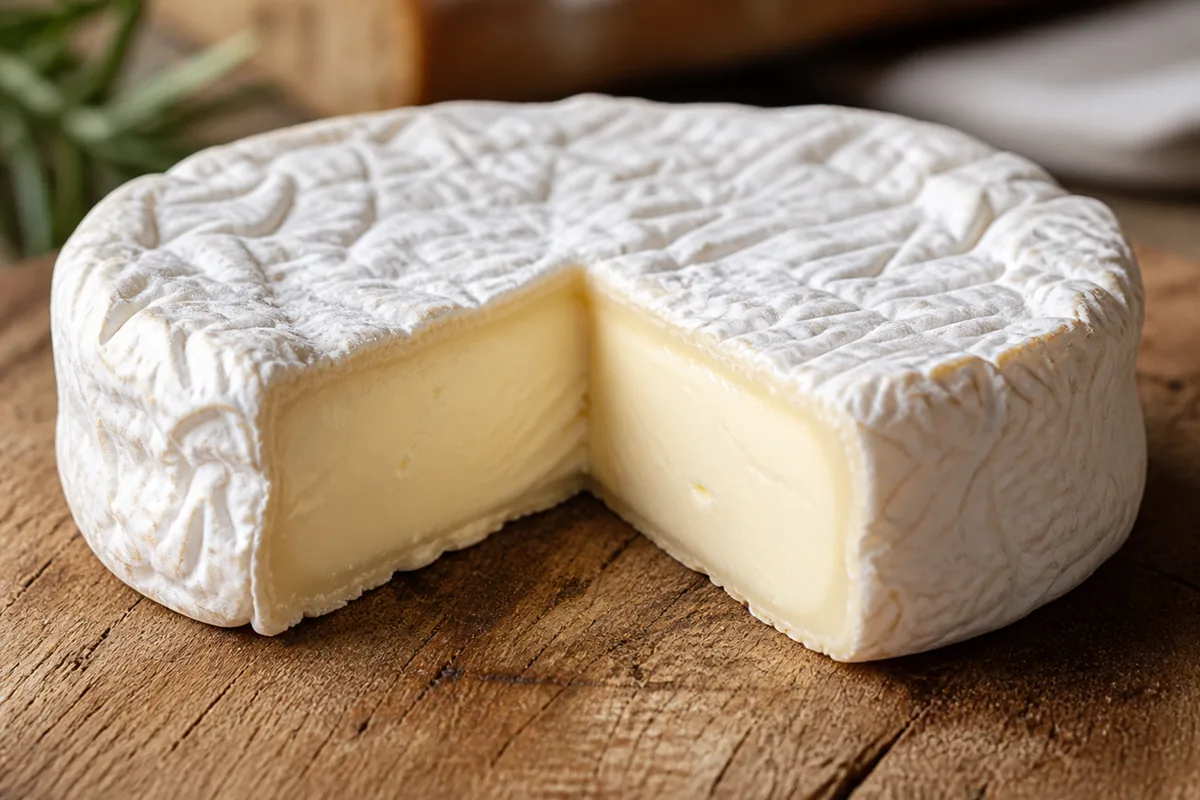
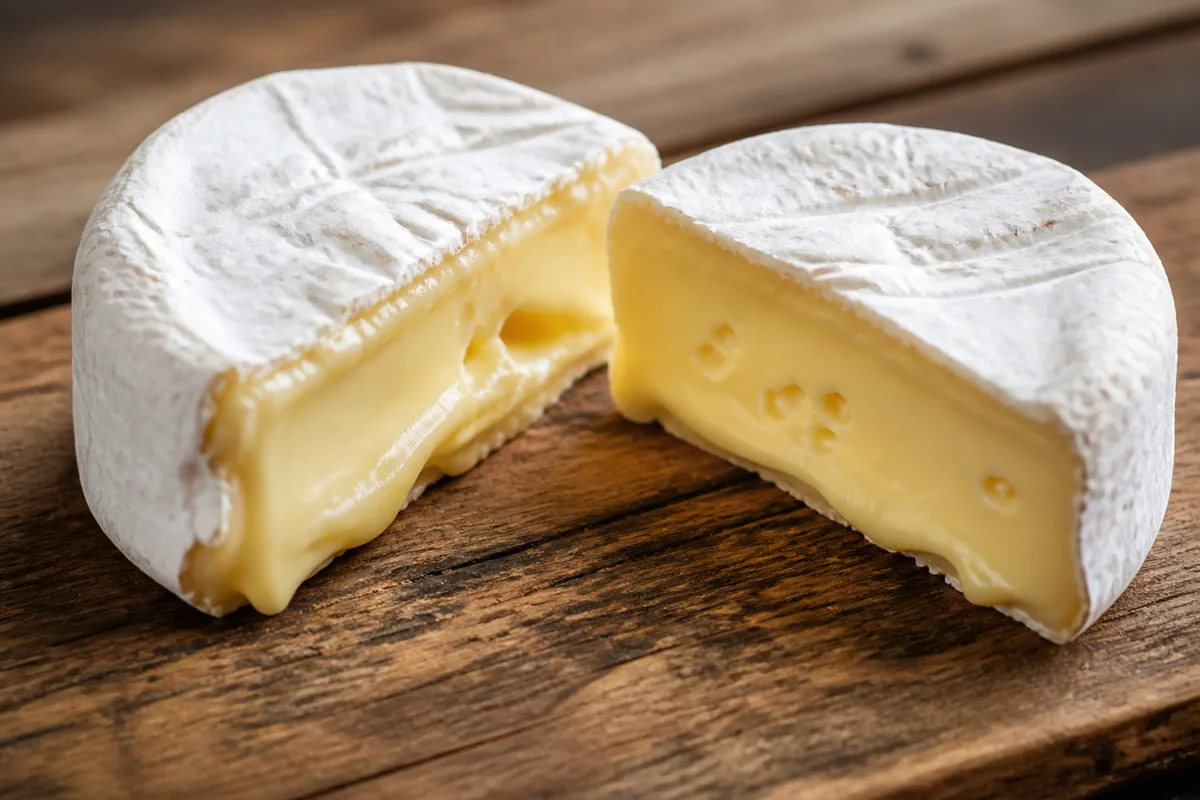
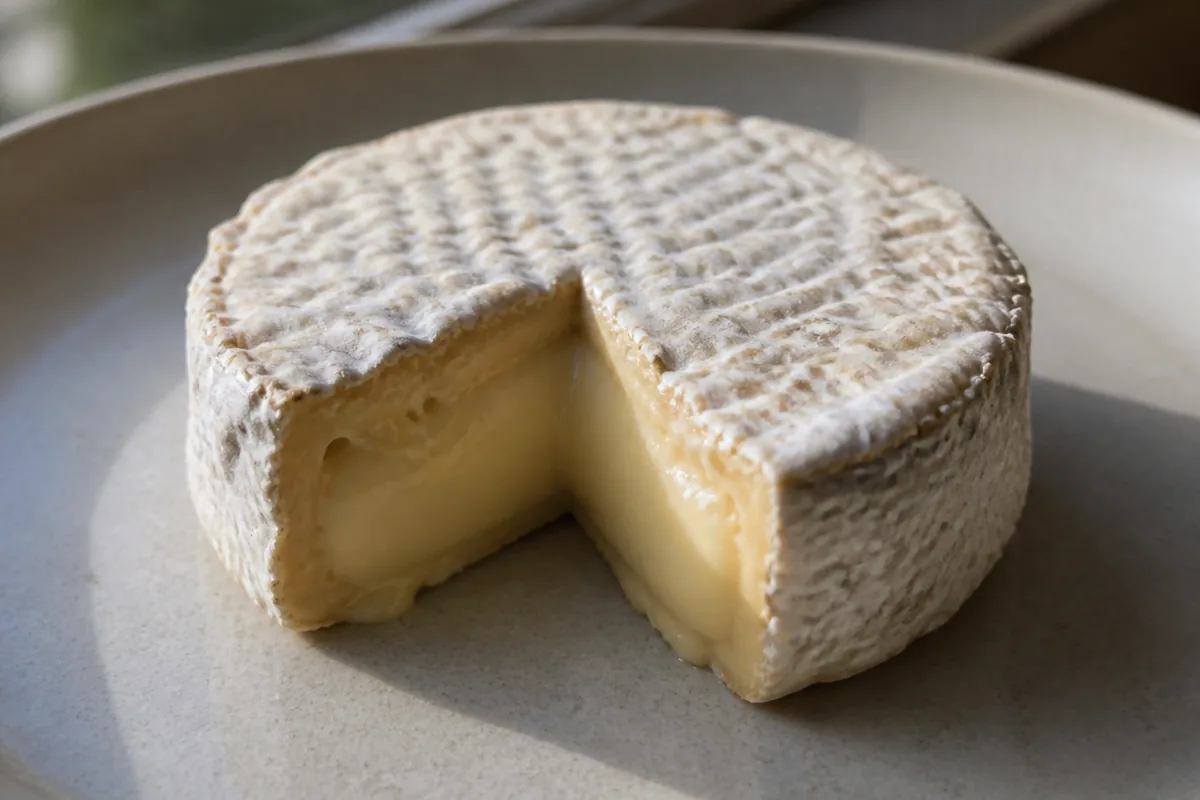
Perl Wen is a Welsh soft cheese from the Caws Cenarth dairy in West Wales, and its name means "White Pearl". It is described as a cross between a traditional Brie and a Caerffili, the Welsh spelling of Caerphilly.
In This Article
What Is Perl Wen Cheese?
Perl Wen starts from Caws Cenarth's farmhouse Caerffili recipe and is then described as mould-ripened like a brie.
Its parentage is also described more loosely, as a recipe inspired by brie and by the maker's original Caerphilly.
Its paste is described as pale yellow under a bloomy white rind.
What Is Perl Wen Made From?
Perl Wen is made from pasteurised organic cow's milk, sea salt, vegetarian rennet, cultures and Penicillium candidum, a mould. That list answers three common questions at once: the rennet is vegetarian, the milk is pasteurised and the milk is organic.
Caws Cenarth's Our Story page describes how its dairy works in general, naming soft white-rinded cheeses without naming Perl Wen. Pasteurised milk is warmed in vats, cultures go in, and after a coagulant is added the curd is cut with wire cutters into pieces the size of sugar cubes.
The curds move by gravity alone into moulding machines and rest overnight to acidify. On the second day the cheeses are hand-salted, left on racks for 2 hours, then washed to remove excess salt.
Soft whites then mature for about 3 weeks, followed by a final 2-week chilled ripening before dispatch. Those are the dairy's times for its soft white cheeses in general, not a stated age for Perl Wen.
Who Makes Perl Wen?
Caws Cenarth makes it at Glyneithinog Farm, in the valley of the river Cych in West Wales.
Gwynfor and Thelma Adams started the business in 1987 in response to milk quotas. The dairy traces cheesemaking in the family back to 1903, when Carwyn Adams's great-great-grandmothers Lizzie Wyn and Leisa Jones made cheese for the family and for the local market.
Carwyn Adams, the founders' son, has since developed newer cheeses, among them Perl Wen, the blue Perl Las and the washed-rind Golden Cenarth.
Caws Cenarth is described as the oldest established producer of Welsh farmhouse Caerffili, the recipe Perl Wen starts from.
The Supreme Champion title at the British Cheese Awards 2010 is credited to Golden Cenarth, the maker's washed-rind cheese, and not to Perl Wen.
What Does Perl Wen Taste Like?
The flavour descriptions agree on citrus in the soft centre: the maker gives a fresh citrus flavour and a hint of sea salt, and Pong Cheese calls the centre lemony.

On strength, the Mousetrap Cheese Shop's page disagrees with itself: its description calls the flavour mild with a citric centre, but the spec line on the same page reads "Flavour : Strong".
As it ripens, the paste under the white rind is described as becoming creamy and buttery.
How Ripe Should Perl Wen Be When You Buy It?
Choose by the date: for a soft cheese that is runny rather than one with a "young gritty quality", The Cheese Atlas advises eating it close to its Best Before Date.
For more time before that date, the Mousetrap Cheese Shop says a whole 200g round gives more length of date than a piece cut from a larger cheese at the counter.
Once it is home, the maker's product page says to keep it refrigerated.
Can You Eat Perl Wen When Pregnant?
If you are pregnant, cook Perl Wen until it is steaming hot before you eat it: the NHS says pasteurised or unpasteurised mould-ripened soft cheeses with a white coating on the outside, such as brie, camembert and chèvre, must be thoroughly cooked, and lists any cheese that's been cooked until steaming hot, including soft or blue cheese, as safe to eat.
If you follow US advice, heat Perl Wen to an internal temperature of 165°F or until steaming hot, or ask a midwife or doctor before you eat it cold.
The CDC lists pasteurized soft cheeses heated to an internal temperature of 165°F or until steaming hot as safer, and served cold, Perl Wen is described as a pasteurized soft, soft-ripened, creamy and buttery cheese with a white bloomy rind, runny near its best-before date and gritty when young, a type the CDC list does not cover.
The CDC says pregnant women are 10 times more likely to get a Listeria infection, and it lists soft cheese made from unpasteurized (raw) milk as riskier.
The milk is pasteurised in the maker's ingredient list and in the Mousetrap Cheese Shop and Blas ar Fwyd listings. Pong Cheese sells it as a soft Welsh cheese with a bloomy white rind, the maker lists Penicillium candidum in its ingredients, and the Mousetrap Cheese Shop describes it as mould-ripened like a brie.
How Much Fat and Salt Does Perl Wen Contain?
Per 100 g, Perl Wen has 334 kcal, 30.4 g fat and 1.9 g salt on the maker's product page, so a whole 200g round has 668 kcal, 60.8 g fat and 3.8 g salt. The whole-round column below is each figure doubled.
| Nutrient | Per 100 g (maker's page) | Whole 200g round (doubled) |
|---|---|---|
| Energy | 334 kcal (1,380 kJ) | 668 kcal (2,760 kJ) |
| Fat | 30.4 g | 60.8 g |
| of which saturates | 19.7 g | 39.4 g |
| Carbohydrate | 0.09 g | 0.18 g |
| of which sugars | 0.03 g | 0.06 g |
| Protein | 14.2 g | 28.4 g |
| Salt | 1.9 g (0.78 g sodium) | 3.8 g |
Perl Wen's nutrition list gives "Average serving: Not specified", so a portion has to be scaled from the 100 g column. It also lists fibre at 2.1 g per 100 g, which this table leaves out because the ingredient list holds only milk, salt, rennet, cultures and a mould.
How Do You Serve Perl Wen?
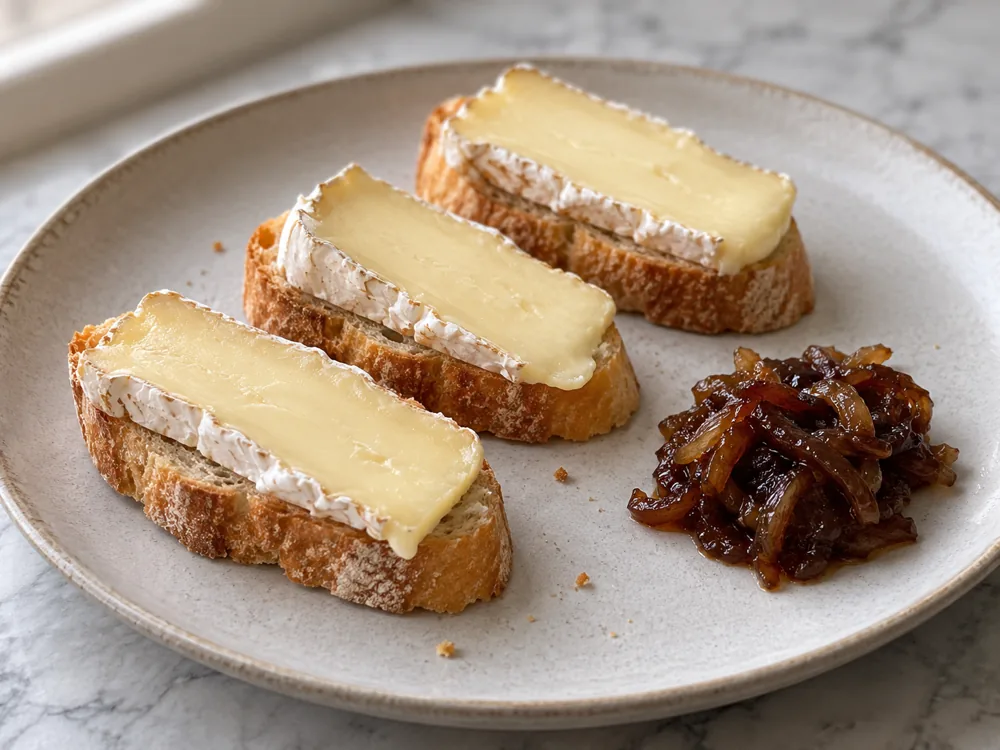
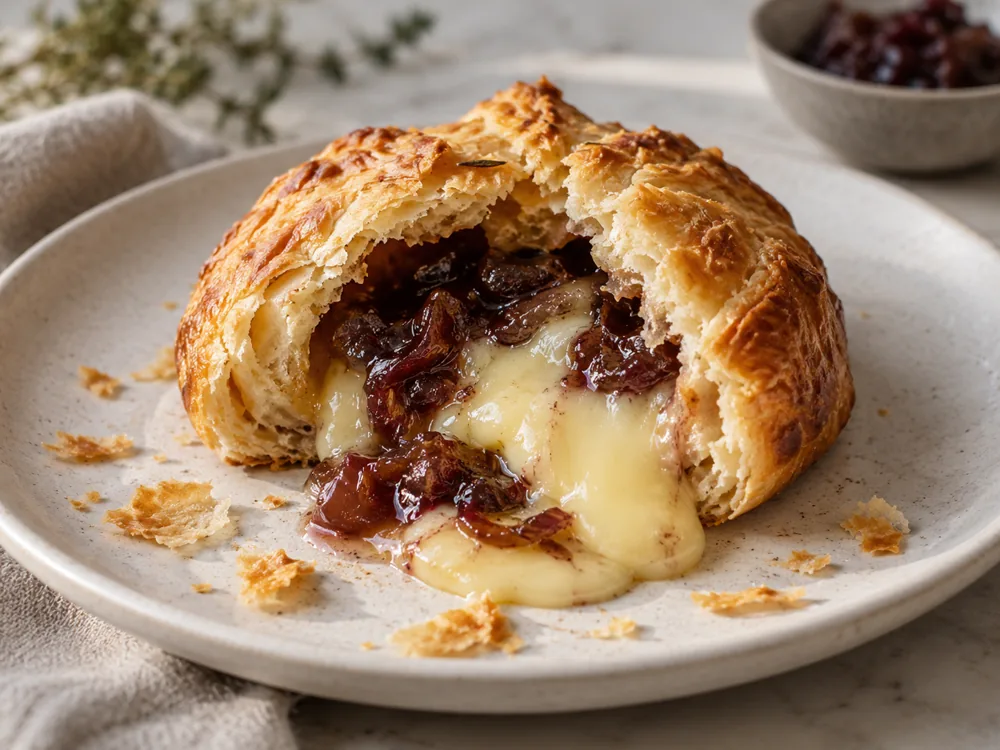
The serving ideas suggested for it run cold and hot: in a summer baguette or on a cheeseboard, melted in a panini with cured ham or bacon, or baked in a pastry parcel with a little chutney.
The two hot routes are where the NHS condition above applies, because the cheese counts as cooked only once it has been cooked until steaming hot.
For the drink and the side, The Cheese Atlas pairs it with caramelised onions and a crisp Sauvignon Blanc.
| Pairing | Type | Why It Works |
|---|---|---|
| Caramelised onions | Food | Named with Perl Wen by The Cheese Atlas. |
| Sauvignon Blanc | Wine | Named by The Cheese Atlas as a crisp white to pour with it. |
Where Can You Buy Perl Wen, and in What Sizes?
The standard size is a 200g round: Caws Cenarth, Pong Cheese and the Mousetrap Cheese Shop all sell it that way, and Mousetrap calls it "Baby Perl Wen".
Per 100 g, the maker's 200g price of £6.95 came to about £3.48 and Blas ar Fwyd's £42.50 for the approximately 1.2kg wheel to about £3.54, so at those two sellers the larger cheese cost about the same per gram. The Mousetrap Cheese Shop listed a 1.2kg whole cheese at £37.62, about £3.14 per 100 g, against £7.98, about £3.99 per 100 g, for its 200g round.
The maker's own shop listed a £24 minimum order, so one 200g round could not be bought there on its own.
A launch in selected Tesco stores across Wales was reported by Swansea Bay News on 25 January 2026: Caws Cenarth was launching Perl Wen there, with three other cheeses.
What Is Similar to Perl Wen?
Caws Cenarth also makes a brie, Cenarth Brie, and a Caerffili, Thelma's Original, and the table sets their descriptions beside Perl Wen's.
| Cheese | Flavour | Texture and aroma |
|---|---|---|
| Perl Wen | Fresh citrus with an underlying hint of sea salt | Soft centre under a white bloomy rind |
| Cenarth Brie | Mushroomy and cabbagy as it softens and matures | Stronger aroma than Perl Wen |
| Thelma's Original (Caerffili) | Delicate on the palate but moreish | Loose and slightly crumbly |
The maker credits its Caerffili recipe for the citrus centre, and a brie from another dairy is not made from that recipe.