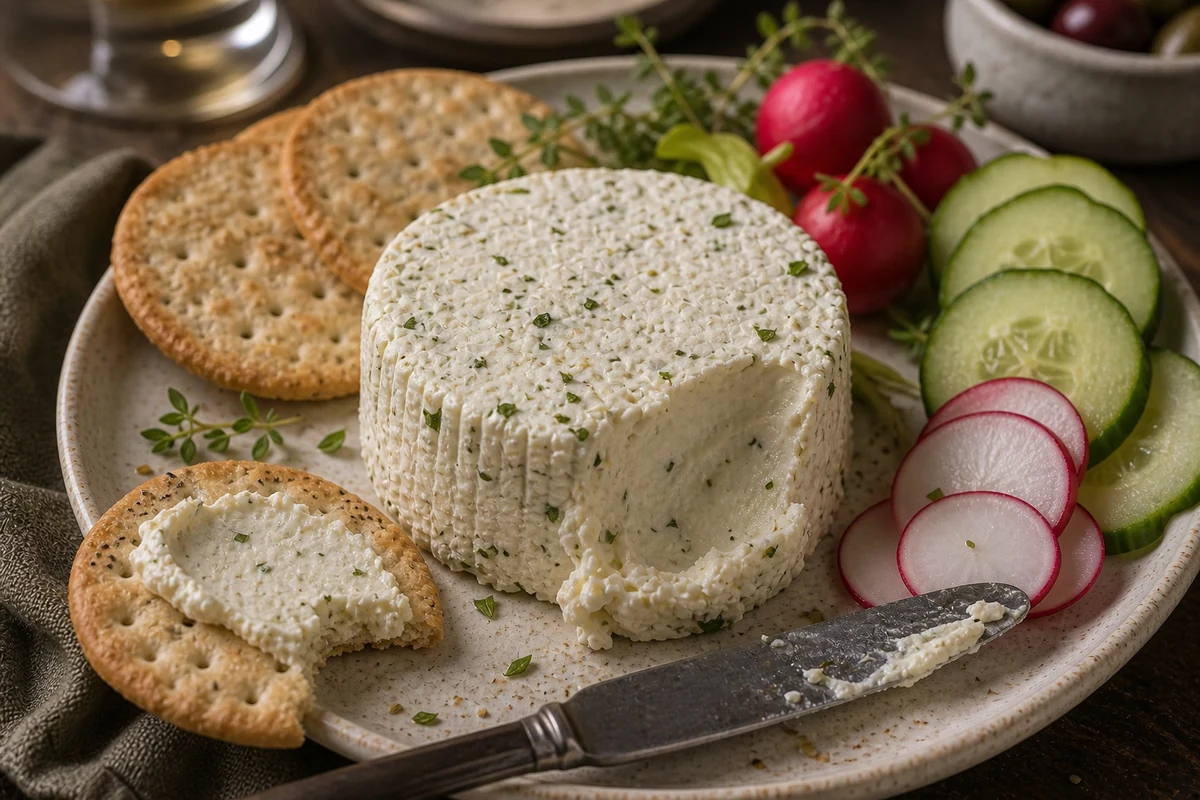
Boursin is a French fresh cheese built around garlic, fine herbs, and a rich cultured milk-and-cream base. Among fresh spreadable cheeses, it stands apart because the seasoning is already mixed into the cheese.
Most fresh cheeses are neutral building blocks. Boursin arrives finished.
This profile focuses on the foil-wrapped Garlic & Fine Herbs product as a cold spread and warm cooking ingredient. Other formats and flavors use different ingredients and labels.
In This Article
What Kind of Cheese Is Boursin?
Boursin is a double-cream fresh cheese from Normandy, France, blended with garlic and herbs. François Boursin created it in 1963, drawing directly on the Norman tradition of mixing fresh fromage frais with whatever herbs grew in the kitchen garden.
That tradition was informal for centuries before Boursin formalized it into a product. Normandy farmers mixed soft local cheese with parsley, chives, and garlic and served it as a simple table spread.
The 1963 version stabilized and scaled that habit.
- Origin: Normandy, France - created 1963 by François Boursin
- Milk: Pasteurized cow's milk, high-cream base
- Aging: None - sold and eaten fresh, no rind development
- Brand owner: Bel Group, with U.S. products marketed by Bel Brands USA
- Style: Double-cream fresh cheese, herb-blended, no protected origin designation
Unlike the Norman bloomy-rind wheel that shares its regional roots, Boursin is sold as a branded fresh cheese rather than under a regional cheese specification. Its available flavors and formats vary by country, so read the exact package because ingredients and nutrition can differ between the foil-wrapped cheese, Bites, Crumbles, and dairy-free products.
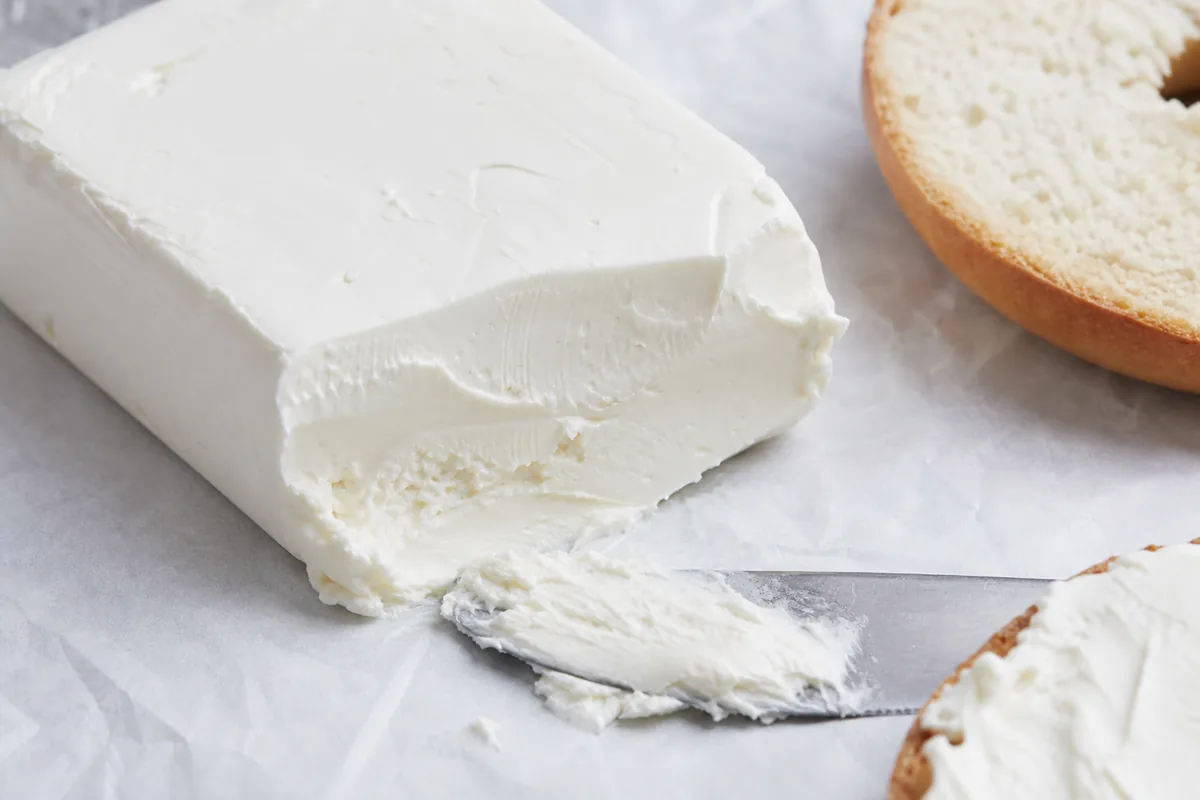
The texture sits between tangy American fresh cheese and whipped ricotta - smooth, slightly dense at refrigerator temperature, and quick to loosen once brought to room temperature.
How Did a Newspaper Mistake Create the Boursin Recipe?
The garlic version exists because a journalist got it wrong.
François Boursin opened his dairy in Normandy in 1957, making a fresh cheese in the Gournay style with no flavouring in it at all.
In 1961 a French newspaper reported that he had launched a garlic-infused Boursin. He had not, and no such recipe existed.
Readers wanted it anyway, and the demand did not go away.
He spent two years developing one properly, and the garlic and herb cheese reached the market in 1963, the same year he put his own name on the brand.
The advertising went further than the cheese. Boursin was the first cheese to run a national television campaign in France, built around the comedian Jacques Duby playing an insomniac who raids the fridge chanting the name.
The slogan that followed in 1972, du pain, du vin, du Boursin, is still the line most French shoppers can recite, which is why the product occupies a shelf position that its recipe alone would not explain.
What Does the Garlic and Fine Herbs Blend Taste Like?
Garlic & Fine Herbs is the founding Boursin flavor and the reference product on the current U.S. site. Its ingredient list includes garlic, parsley, and chives in the cultured milk-and-cream base, giving the cheese a rounded garlic-herb profile rather than the bite of freshly minced garlic.
The double-cream fat level is what makes the herb delivery work differently from a lower-fat fresh cheese or a yogurt dip. Higher fat coats the palate longer, which means the garlic lingers in a way it simply would not in a leaner base.
Creaminess anchors every Boursin flavor. Under it sits the lactic tang of the fresh cheese base, present but mild.
That tang is gentler than the bloomy-rind Norman original and gentler still than a fresh chèvre. Boursin sits in an accessible zone: enough acid to taste like a real cheese, neutral enough to carry the herb blend without competing with it.
- Garlic note: warm and background, not sharp - dried garlic integrates rather than punches
- Fine herbs: parsley and chives give a garden-fresh quality that keeps the cheese tasting light despite the fat level
- Lactic tang: mild, from the cream cheese base - adds presence without sourness
- Salt balance: moderate - enough to season a cracker without needing additional salt on the board
The result is a cheese that tastes complete without additions. You do not need to build flavor around it the way you would with a plain fresh ricotta or fromage blanc.
Let only the portion you plan to serve soften briefly. Cold Boursin spreads more firmly, while a short tempering period loosens the texture; keep the total unrefrigerated time within the maker's two-hour limit.
Which Boursin Flavor Should You Choose for the Dish?
Boursin's lineup changes over time and differs by market. The current U.S. site still treats Garlic & Fine Herbs as the reference product, while the same catalog also includes savory, sweet, and limited flavors that do different jobs.
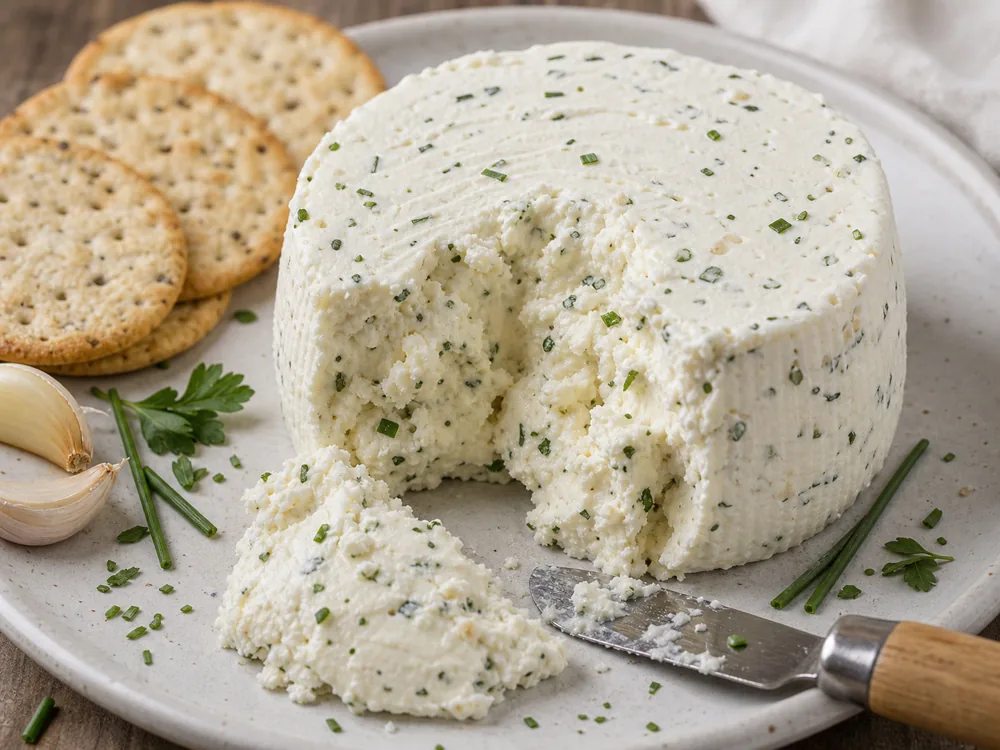
- Garlic & Fine Herbs: The original garlic, parsley, and chive blend. It is the most predictable choice for crackers, pasta, potatoes, eggs, and stuffed vegetables.
- Shallot & Chive: A milder onion-led direction for spreads, savory sandwich fillings, and dishes where garlic would dominate.
- Black Truffle & Sea Salt: An earthier version that suits mushrooms, potatoes, and a savory board.
- Caramelized Onion & Herbs: A sweeter savory profile for crostini, burgers that need an onion spread, or a board with tart fruit.
These are current U.S. examples, not a permanent global range. Check the local Boursin product page and the package in front of you before planning around a flavor name.
For a recipe that simply says Boursin, Garlic & Fine Herbs is the clearest default because it is the original product and its garlic-herb profile is the one most recipes assume.
How to Cook With It Without Splitting It
Boursin is a fresh cheese with a lot of moisture, so heat is something to add it into rather than something to cook it in.
Stir it into hot mashed potatoes as a first attempt. The starch is forgiving, and you get a clear sense of how the cheese loosens without risking a sauce.
For pasta, drain it and add the Boursin off the heat. Start with a small splash of cooking water, toss, and add more only if the sauce needs loosening.
That splash of starchy water is what turns the cheese into a sauce rather than a greasy coating.
Add it near the end and keep the heat gentle. Prolonged direct heat can make the sauce oily, while residual heat and a little cooking water keep it smoother.
Break the pack into pieces before adding it. Smaller pieces soften more evenly and need less stirring than a whole puck.
Stop when the cheese has dispersed and the sauce coats the pasta or vegetables. Add another small splash of cooking water if it tightens before serving.
If the dish has to wait, take the pan off the heat completely and cover it. Boursin holds better standing warm off the burner than sitting over a low flame.
Can You Use Boursin Cold as a Spread or Warm as a Sauce?
Boursin performs two distinct roles: a seasoned cold spread and a warm cooking base.
As a cold spread, it can go straight onto bread, crackers, or vegetables. A plain cracker keeps the focus on the garlic-herb seasoning, while a flavored cracker adds another layer that may suit a different flavor in the range.
Boursin softens and loosens under heat but does not stretch, pull, or brown like a conventional melting cheese.
It functions as a sauce base and flavor thickener, not a gratin cheese.
- Cold spread: straight from the foil onto crackers, crostini, cucumber rounds, or sliced baguette
- Pasta sauce: stir it into hot drained pasta off the heat, then add pasta water a little at a time until the sauce coats evenly
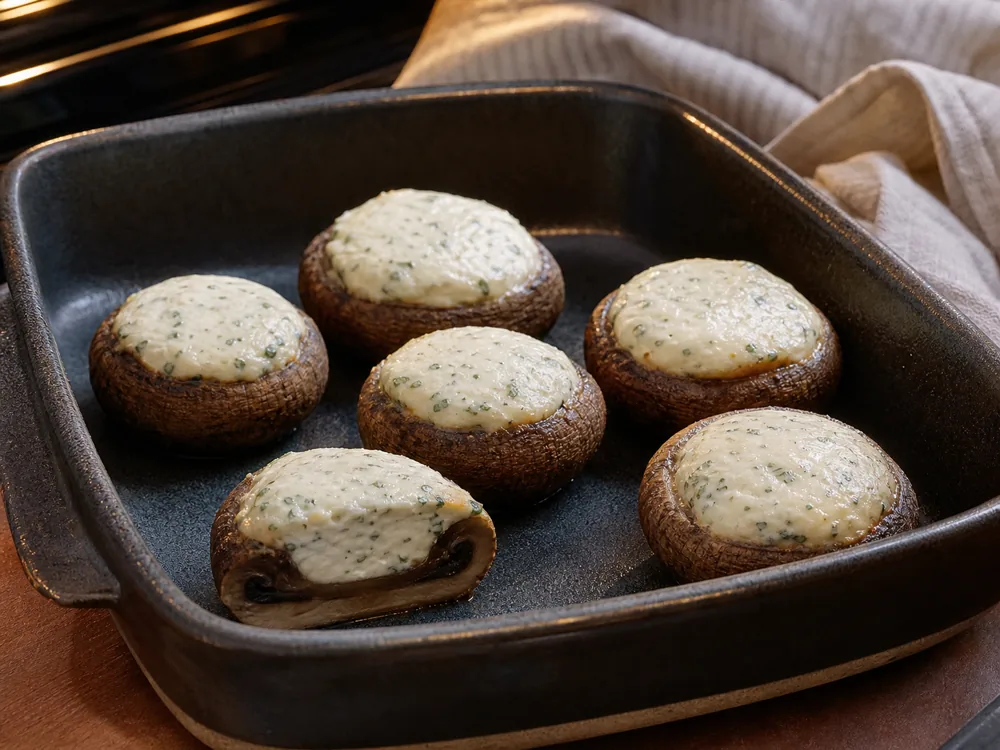
- Stuffed applications: chicken breast, mushroom caps, peppadew peppers, baby bell peppers, zucchini boats - holds its shape while filling and melts gently as the dish cooks
- Warm dip: warm it in an oven-safe dish only until soft, then serve with crudités or flatbread
- Egg dishes: swirl a tablespoon into scrambled eggs just before they set, or fold into an omelet before plating
For pasta, Boursin supplies both the fresh-cheese base and the seasoning. The best pasta cheese picks explains how that differs from using a neutral mascarpone or ricotta base.
One practical note: Boursin thickens as it cools in a pasta dish. Serve immediately after tossing, and keep a little extra pasta water nearby to loosen if the dish sits.
Which Wines Pair Best with Garlic-Herb Boursin?
The garlic-and-herb profile benefits from a drink with enough acidity to refresh the palate. Fruit, herbal notes, sweetness, and tannin then change how the seasoning reads.
| Pairing | Type | Why It Works |
|---|---|---|
| Sauvignon Blanc | Wine | A dry, high-acid Sauvignon Blanc can echo the green-herb side of Garlic & Fine Herbs while refreshing the palate after the creamy cheese. |
| Champagne or Crémant | Wine | Dry sparkling wine adds acidity and bubbles without competing with the garlic-herb seasoning. Check sweeter or truffle-flavored Boursin separately because the balance changes. |
| Dry rosé | Wine | A crisp, low-tannin rosé offers fruit without the weight of a full-bodied red. It is a flexible starting point for the original garlic-herb product. |
| Water crackers | Food | A plain water cracker adds crunch while leaving the built-in garlic and herbs in the foreground. |
| Endive spears | Food | Bitter, crisp endive contrasts with the rich fresh cheese and provides a sturdy scoop for a small portion. |
| Cucumber rounds | Food | Cold cucumber adds crunch and moisture, giving the rich spread a lighter serving base without another strong seasoning. |
On a cheese board, Boursin can fill the seasoned, spreadable role beside an aged firm cheese or blue cheese with a firmer texture.
- Board role: soft entry point alongside one aged firm cheese and one blue for contrast and range
- Oaked Chardonnay: oak and buttery notes add more richness, so choose this only when you want a rounder rather than sharper contrast
- Full-bodied reds: Cabernet Sauvignon and Syrah can dominate the herb notes; lighter reds or high-acid whites keep the seasoning clearer
- Good with cured meats: prosciutto and bresaola give the creamy garlic-and-herb cheese a salty, savory contrast
How Should You Store Boursin After Opening?
Boursin says its foil helps keep the cheese fresh and makes the package easy to rewrap. The manufacturer also says to eat the cheese by the date printed on the package rather than extending it with a generic day count.
Boursin does not publish one opened-package day count for every market and format. The package date and local handling directions remain the usable rule after opening.
Use a clean, dry knife and fold the foil back over the exposed cheese so the package returns to the refrigerator covered.
If you are unlikely to finish a large package by its printed date, buy a smaller format. The site's guide to protecting an opened cheese surface covers wrapping choices, but the manufacturer's package instructions still control this product.
Where Can You Buy Boursin, and What Are the Best Alternatives?
Boursin is sold widely, though the exact flavors and formats depend on the country and retailer. The current U.S. Garlic & Fine Herbs product page lists a 5.3 oz (150 g) foil-wrapped package.
When Boursin is unavailable, the closest fresh-cheese alternatives each solve a different part of the job:
- Cream cheese plus herbs: This is the closest adjustable substitute for a cold spread. It is usually denser, and the result depends on the garlic, herbs, salt, and cream cheese you use.
- Whipped cream cheese: This spreads more easily but starts unseasoned. Add garlic and herbs to match the dish rather than trying to copy a specific Boursin formula.
- Fromage blanc: This is often looser and tangier. It works better as a cold spread than as a direct replacement in a sauce that depends on Boursin's richer texture.
- Fresh tangy chèvre: Sharper lactic note and more crumbly texture. Works on boards and in stuffed applications, but reads as a different product rather than a true Boursin substitute.
For cream cheese swap options in baking or cheesecake, Boursin is not the right replacement - the herb blend makes it unsuitable for sweet applications.
If you are choosing between Boursin and another fresh cheese for a board, the deciding factor is whether you want the herb flavor built in or prefer a neutral cheese paired with separate condiments.
These swaps behave differently in a hot pan. Add liquid gradually and judge the sauce by how it coats the food rather than assuming the same quantity will produce the same texture.
What Does the Garlic and Fine Herbs Nutrition Label Show?
The current U.S. Garlic & Fine Herbs package uses a two-tablespoon serving of 29 grams. That serving contains 120 calories, 11 grams of fat, 170 milligrams of sodium, 1 gram of carbohydrate, and 2 grams of protein.
Those figures belong to the foil-wrapped U.S. product. Boursin Bites, Crumbles, dairy-free products, other flavors, and products sold in other countries can use different recipes and serving sizes.
For pregnancy and other higher-risk situations, the milk statement and the way the package was handled matter more than the brand name alone.
SOURCES & REFERENCES
What Else Do People Ask About Boursin Cheese?
These are the questions we hear most about Boursin, from flavor differences to cooking applications and shelf life.