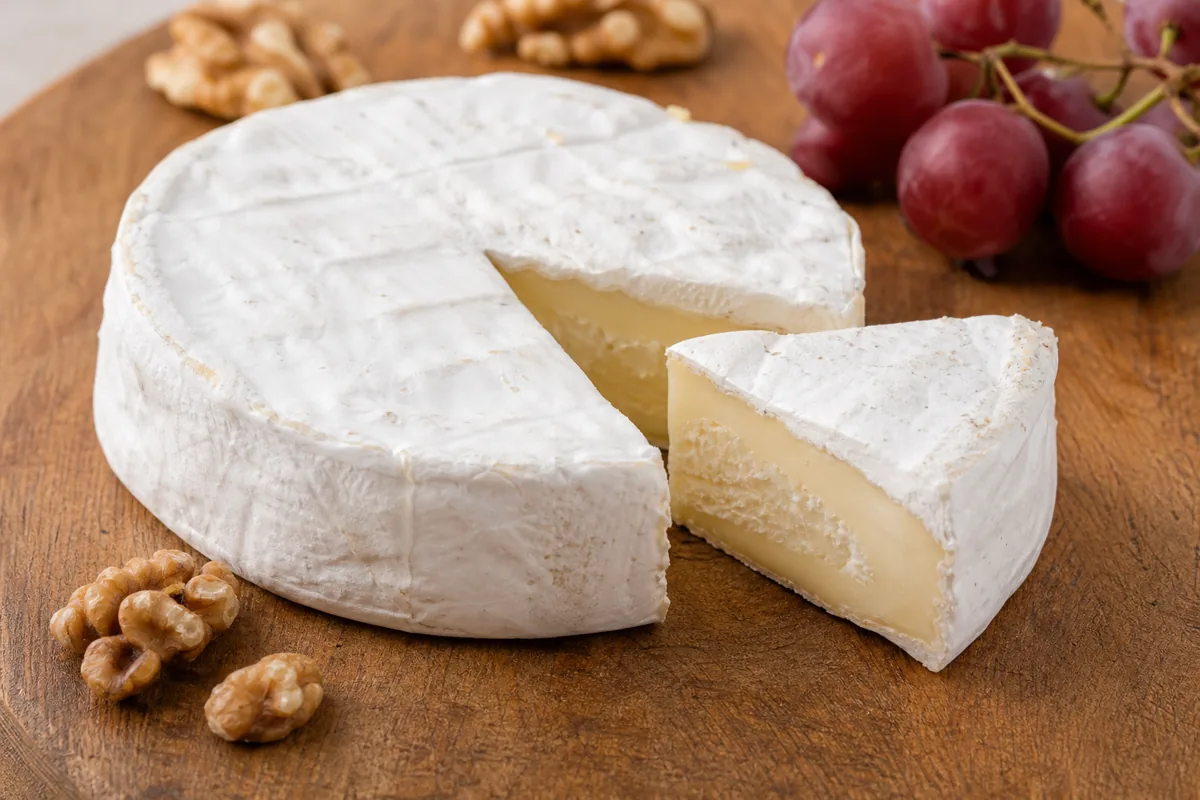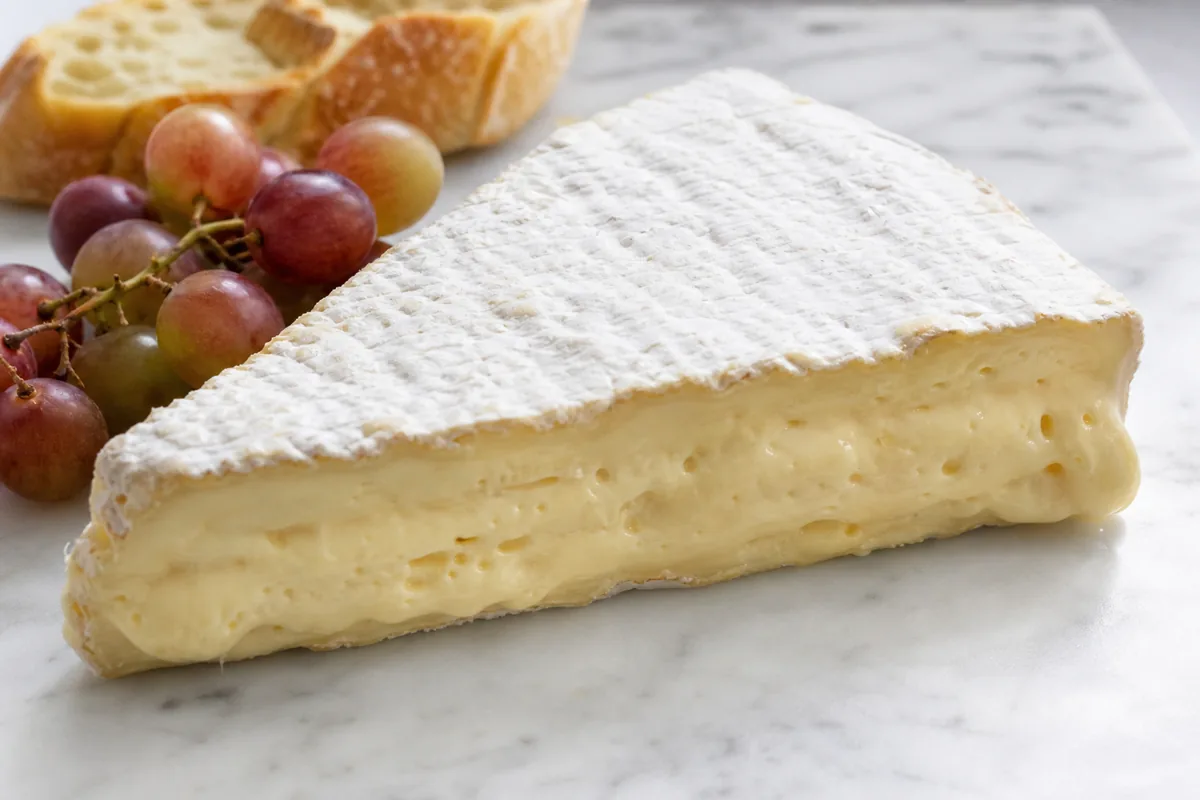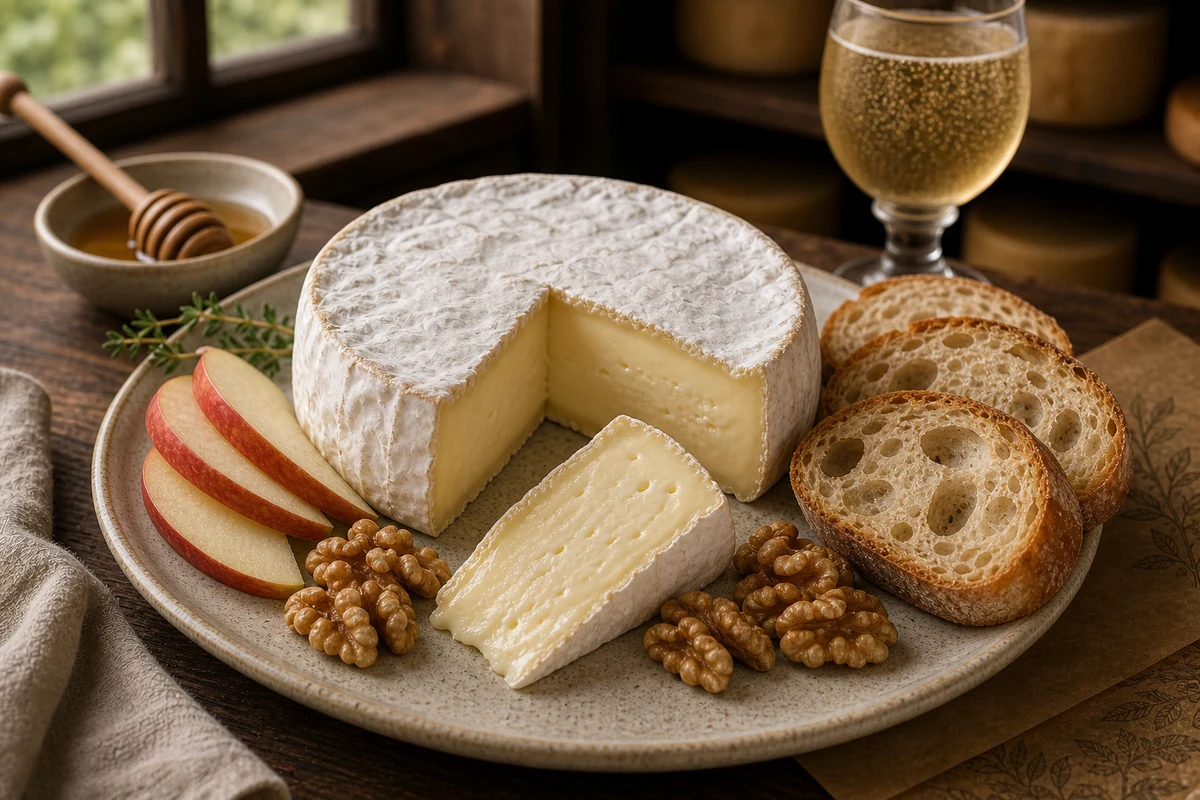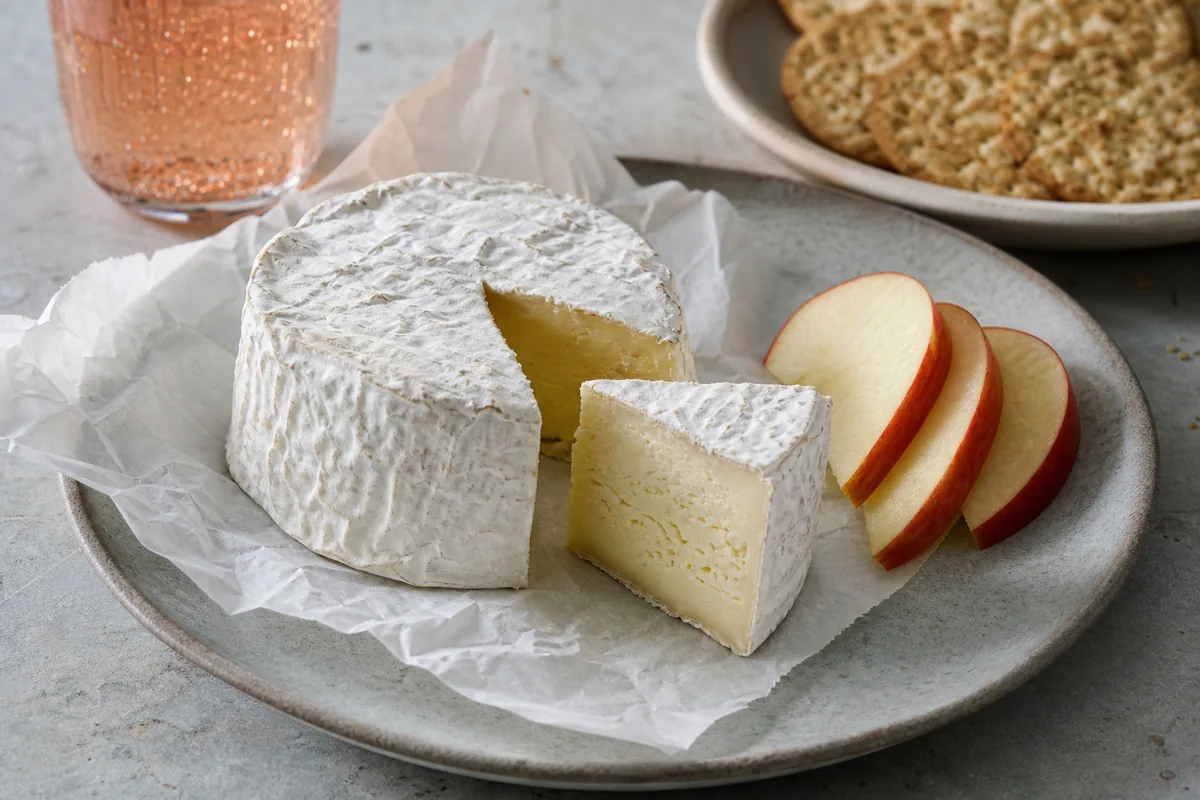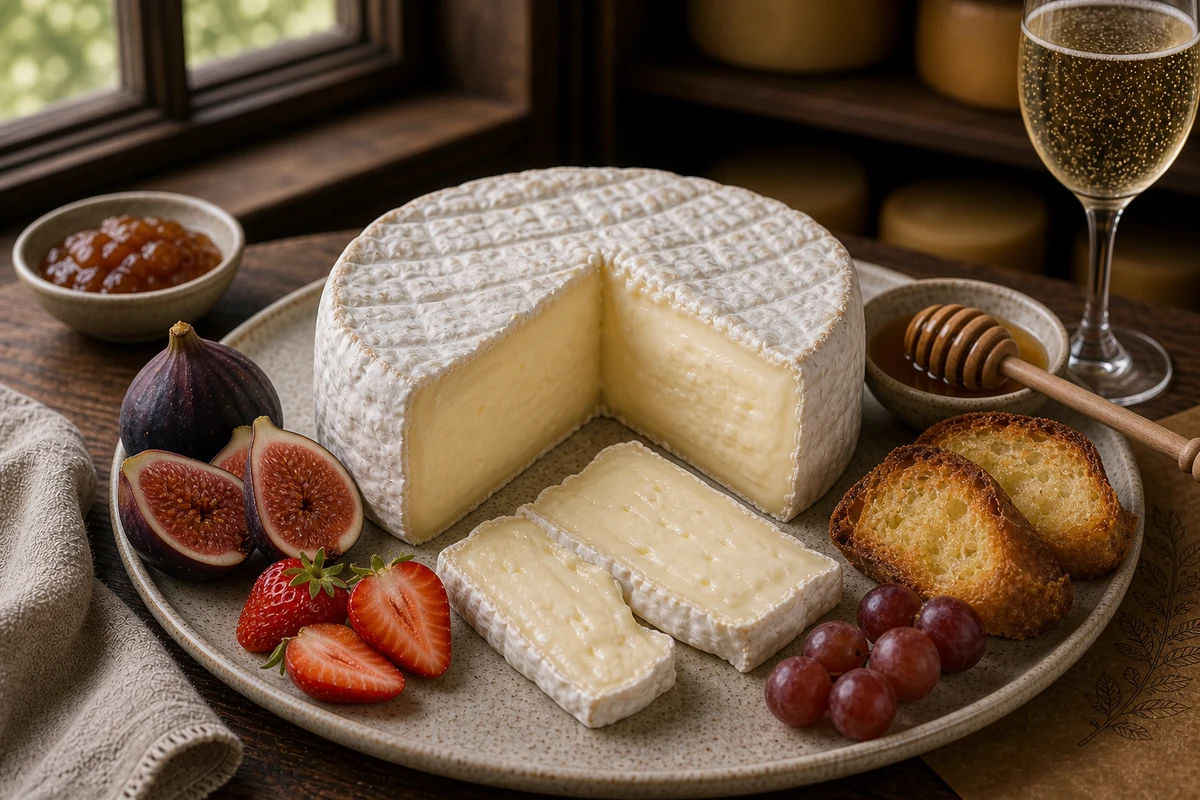
Brillat-Savarin is a French soft cheese enriched with cow's cream. Its protected geographical indication covers production from the Brie area toward northern Burgundy, and the current specification sets the cheese at at least 72 percent fat in dry matter.
It is not 72 percent fat in the finished cheese. Water is removed from the calculation, so the package nutrition panel and the PGI dry-matter figure answer different questions.
In This Article
What the PGI protects
The European Union's 2025 specification describes a regular cylinder with a fine, homogeneous paste and flavors of cream and fresh butter. It requires at least 40 percent dry extract, at least 72 percent fat in that dry matter, and less than 2 percent salt.
The cheese may enter the market no sooner than three days after rennetting. Every production stage must take place inside the defined area, which stretches from southern Seine-et-Marne to northern Saône-et-Loire rather than covering all of France.
INAO records the PGI registration in 2017 and says Henri Androuët named the cheese for the gastronome Jean-Anthelme Brillat-Savarin in 1930. The protected record, rather than a shop description, is the right reference for identity and minimum production rules.
How Does the Affiné Label Change Brillat-Savarin?
Brillat-Savarin can be sold young or matured. Fromagerie Delin describes a young version led by cream, gentle acidity, and freshness, while maturation develops a bloomy rind and adds mushroom and hazelnut notes.

Under the current specification, a product labelled affiné must be matured for at least five days from rennetting when small and eight days when large.
Those minimums do not guarantee the same softness. Storage, format, and time beyond the legal floor can still change the cheese you open.
If the affiné label matters to you, read the package rather than relying on a pale rind or a soft edge. Surface appearance can change with storage, while the label identifies how the product is being sold.
How Do You Judge Brillat-Savarin's Taste and Ripeness?
The official description starts with a pronounced lactic taste, a fine paste, and cream and fresh-butter flavors. An affiné cheese may add mushroom, woodland, subtle fruit, and hazelnut notes as its white-to-ivory surface flora develops.
For a piece that cuts into clean wedges, look for an intact rind and a center that still holds its shape. For softer spreading, choose a wheel with more even give across the cut face, while avoiding damaged packaging, pooled liquid, or unexpected discoloration.
Use smell and texture to choose a style. They cannot prove safety, so the use-by date, storage directions, seal, and cold chain remain the controlling checks.
How Should You Serve and Pair Brillat-Savarin?
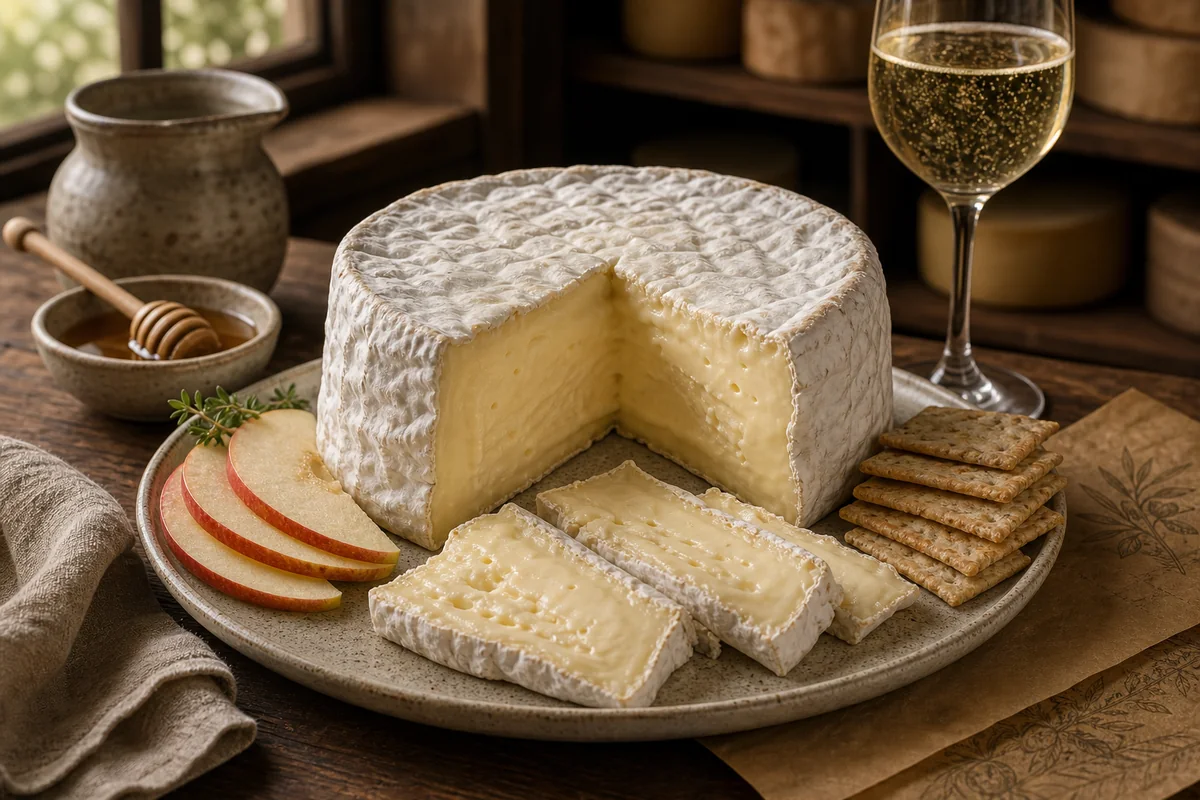
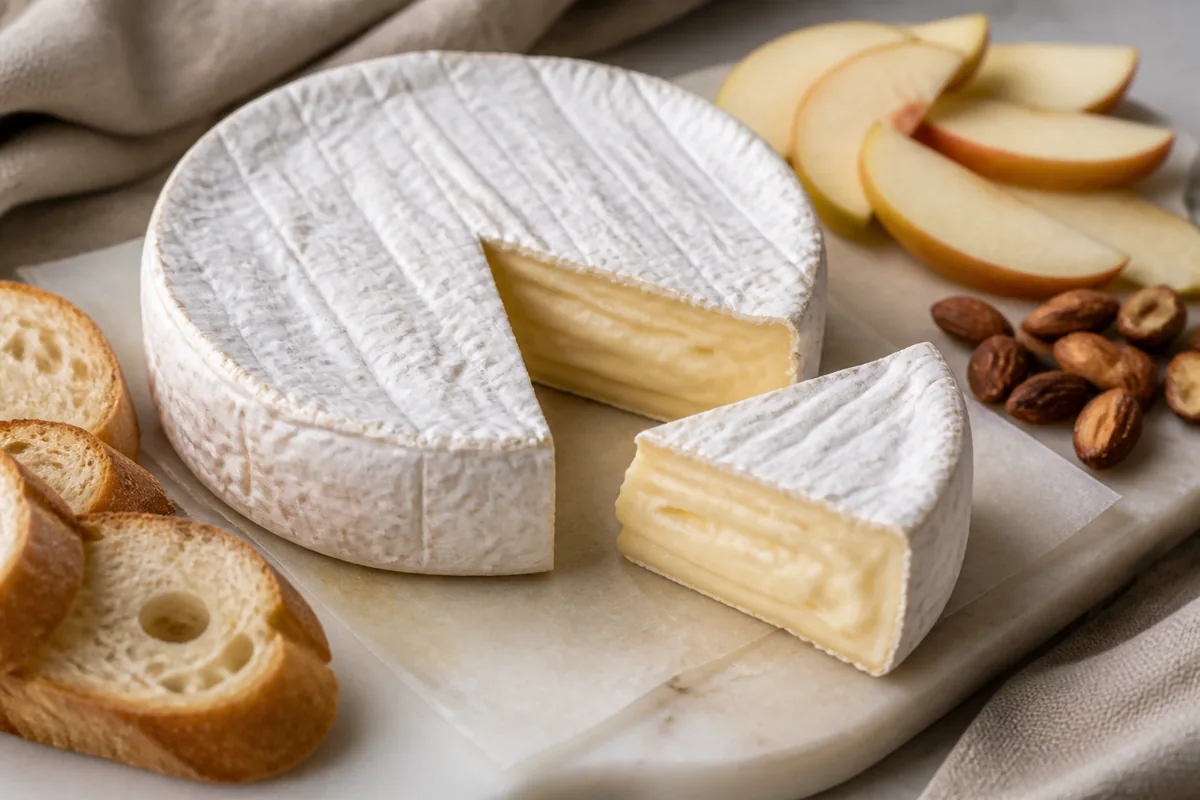
Keep the rind in every slice. A narrow wedge from rind to center shows the cheese's texture gradient.
Plain baguette or a dry cracker supports a soft paste. Tart apple, pear, or grapes add acidity and crunch.
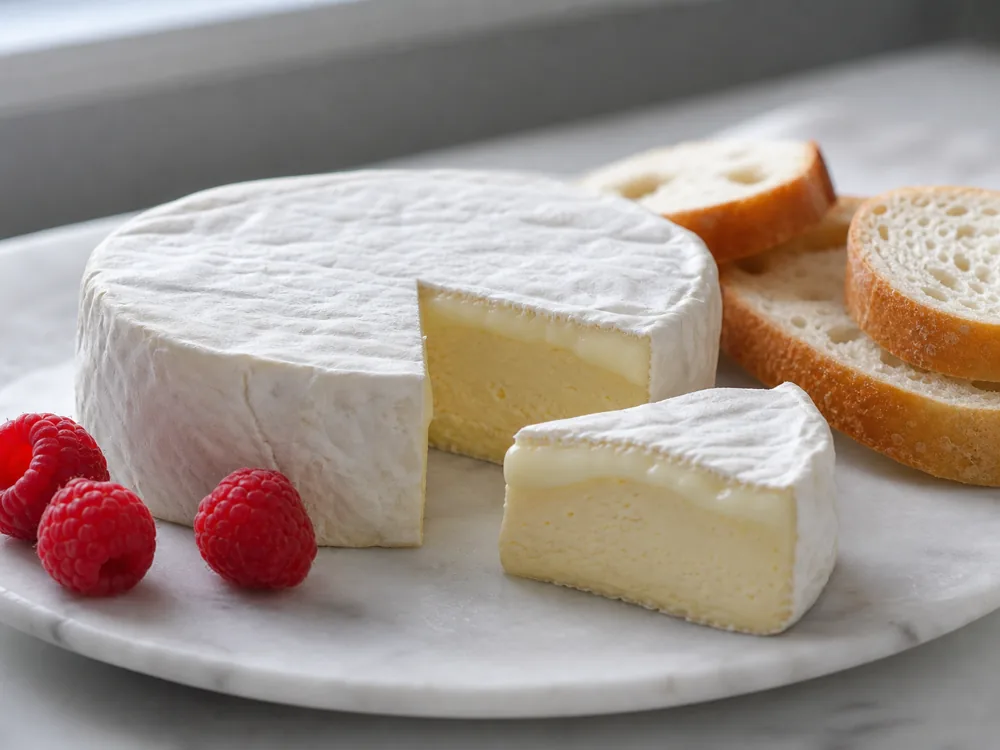
Dry sparkling wine is a practical match because acidity and bubbles refresh the palate between bites.
Dry cider or sparkling water with lemon can do the same job without adding another rich flavor.
| Pairing | Type | Why It Works |
|---|---|---|
| Baguette | Food | A plain base supports the soft paste without covering the dairy flavors. |
| Tart apple | Food | Acidity and crunch contrast with the cream-enriched paste. |
| Pear | Food | Juicy fruit adds freshness beside a soft wedge. |
| Dry sparkling wine | Wine | Acidity and bubbles refresh the palate between bites. |
| Dry cider | Drink | Apple acidity mirrors the fruit pairing in a lighter format. |
| Sparkling water | Drink | A squeeze of lemon provides an alcohol-free acidic counterpoint. |
What Should You Check on a Brillat-Savarin Label?
On a protected Brillat-Savarin, the registered name and EU PGI logo belong in the same visual field. The label must also identify the last operator, and the word affiné accompanies the name when the matured designation is used.
The package settles the milk-treatment question. The PGI specification defines cow's milk and cow's cream but does not make every Brillat-Savarin pasteurized, even though individual producers may sell pasteurized versions.
- Identity: Look for the Brillat-Savarin name and PGI logo together.
- Ripeness: Use the affiné wording when you specifically want the protected matured form.
- Product facts: Read the milk statement, ingredients, net weight, date, and storage range on that package.
How Should You Store Brillat-Savarin After Purchase?
Keep Brillat-Savarin in the refrigerator at the package temperature. The FDA advises holding a refrigerator at or below 40°F (4°C) and returning perishable food to refrigeration within two hours, or within one hour when the air temperature is above 90°F (32°C).
No single after-opening schedule fits every wheel. Protect the cut face, use a clean knife, follow the printed use-by date, and use the cheese promptly after opening.
Discard a package with a broken seal, unexplained swelling, or evidence that it stayed warm beyond those limits. Do not use an ammonia-like smell or a wet rind as the only safety test.
Can You Eat Brillat-Savarin During Pregnancy?
Brillat-Savarin sold as affiné is a mould-ripened soft cheese with a white rind, and the NHS says pasteurised or unpasteurised mould-ripened soft cheeses with a white coating on the outside must be thoroughly cooked. For a young cheese without that white rind, the NHS lists pasteurised soft cheeses as safe to eat and says foods made from unpasteurised milk must be thoroughly cooked.
This is a cooking condition, not a milk-label shortcut. The CDC lists pasteurized soft cheeses heated to an internal temperature of 165°F (74°C) or until steaming hot as safer, and soft cheese made from unpasteurized (raw) milk as riskier.
Served cold, a pasteurized Brillat-Savarin is described as a soft, cream-enriched cheese, a type the CDC list does not cover, so check the milk statement and ask a midwife or doctor.
What Cheeses Can Substitute for Brillat-Savarin?
Explorateur and Saint-André can fill the same rich, bloomy-rind slot on a board. Brie is useful when you want a broader range of formats and a less cream-enriched identity.
For a recipe, choose by function. A soft bloomy-rind cheese can replace the shape and rind, while mascarpone can supply richness in a filling but has no bloomy rind and does not reproduce the protected cheese.
These are practical substitutions. Their milk treatment, moisture, fat basis, storage instructions, and pregnancy conditions must come from their own packages and guidance.