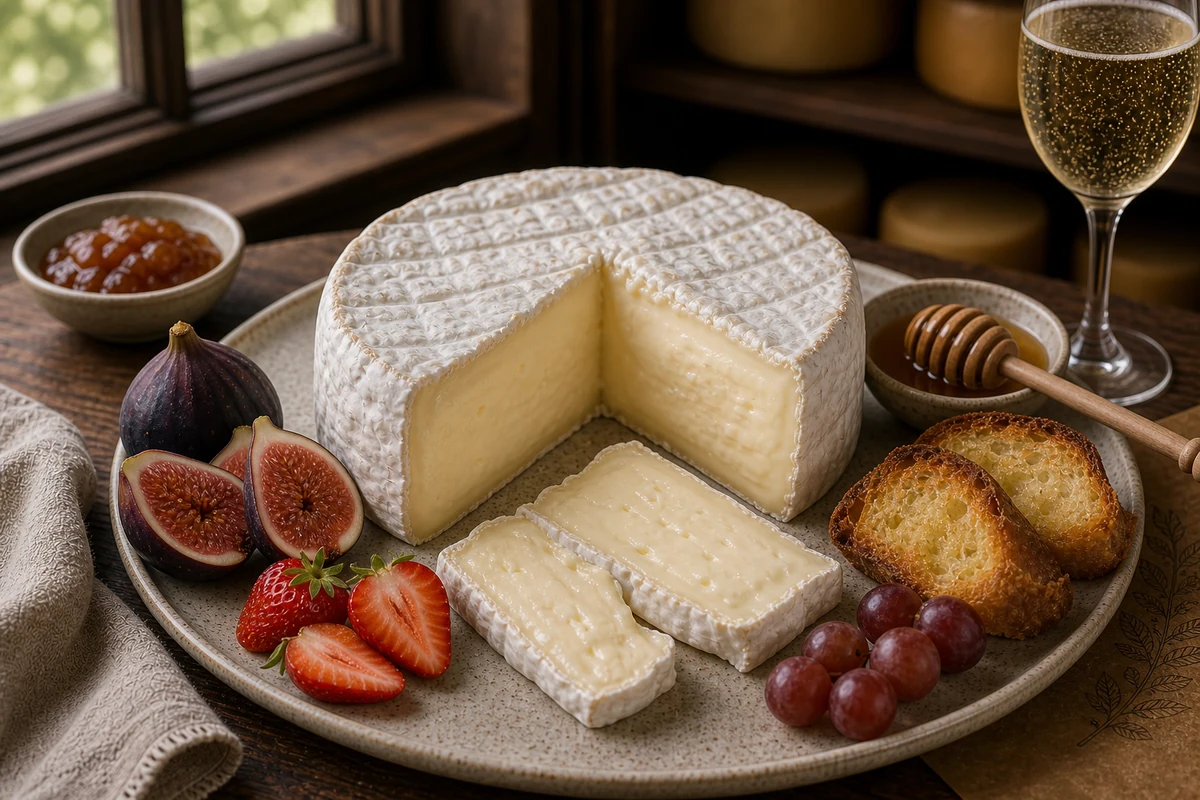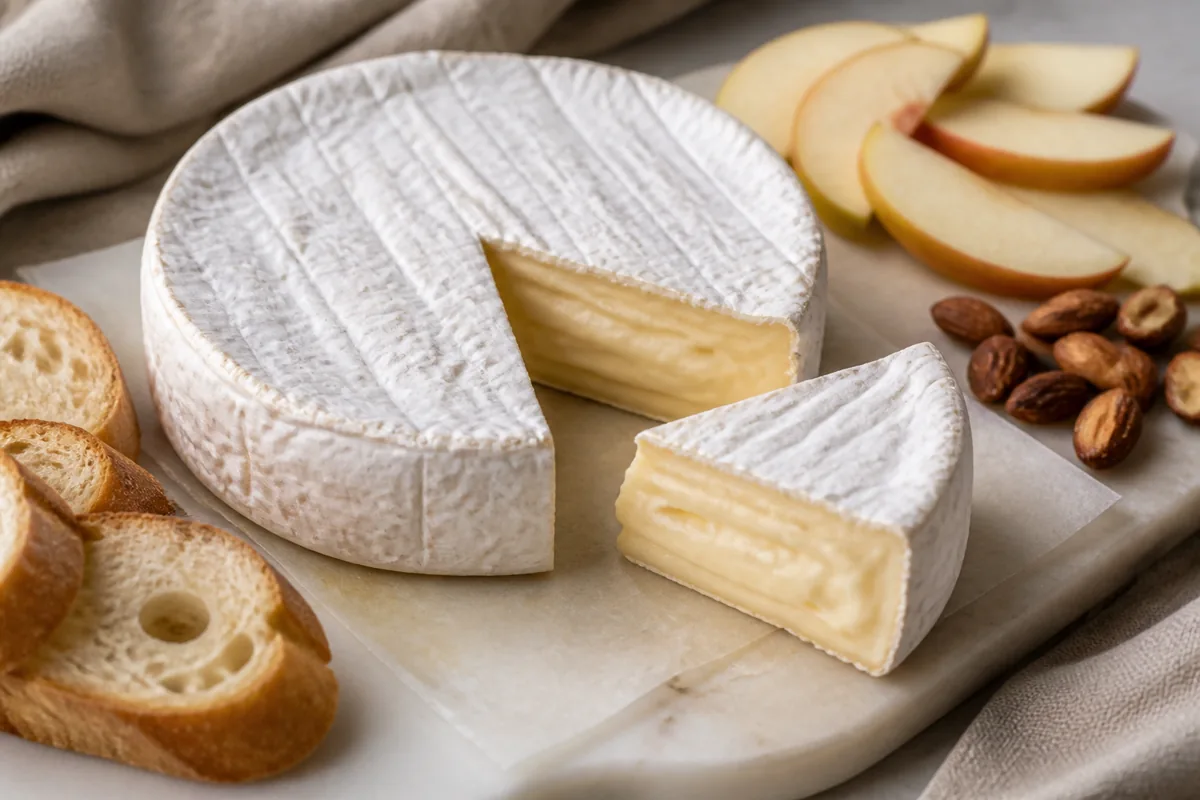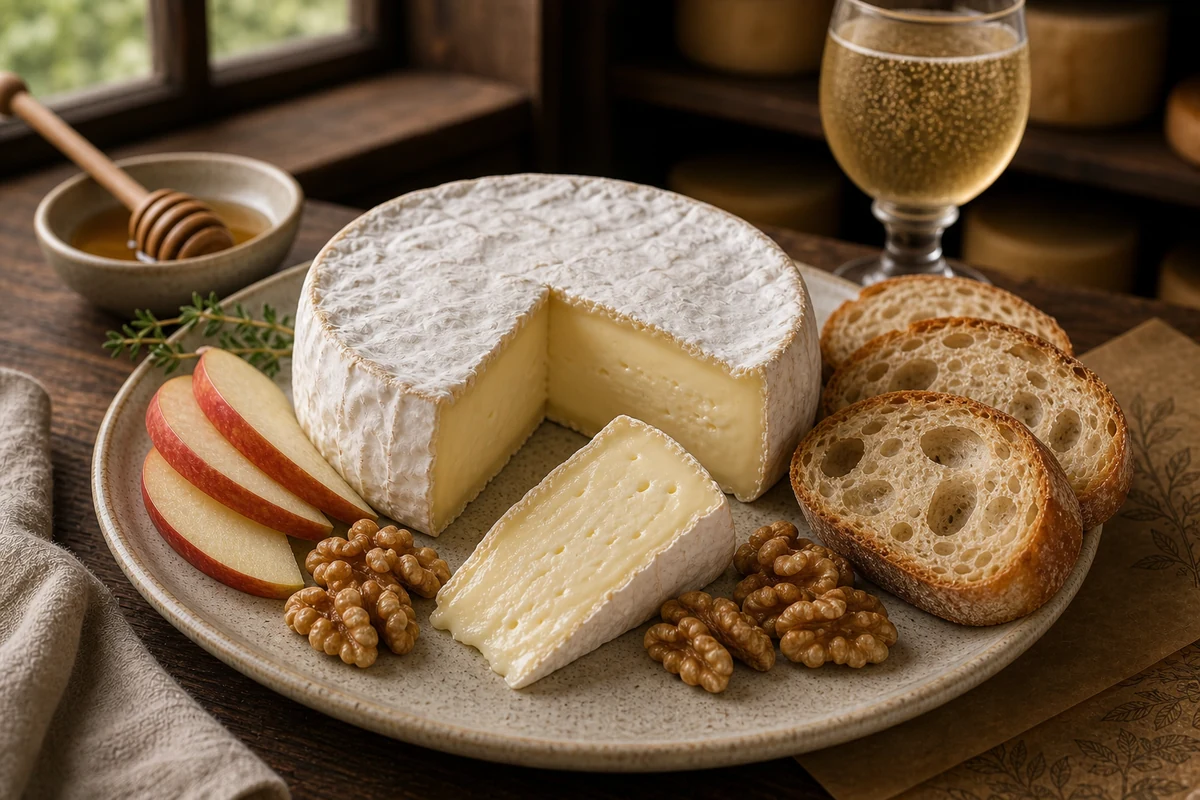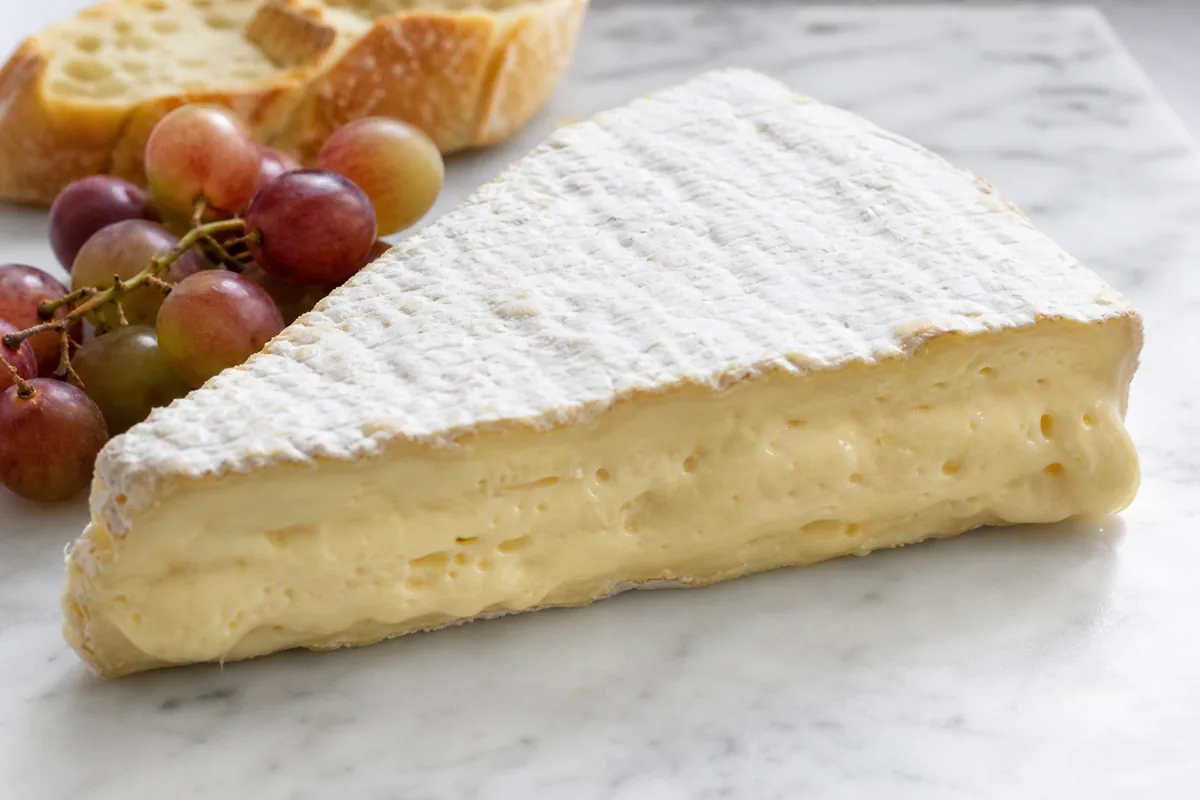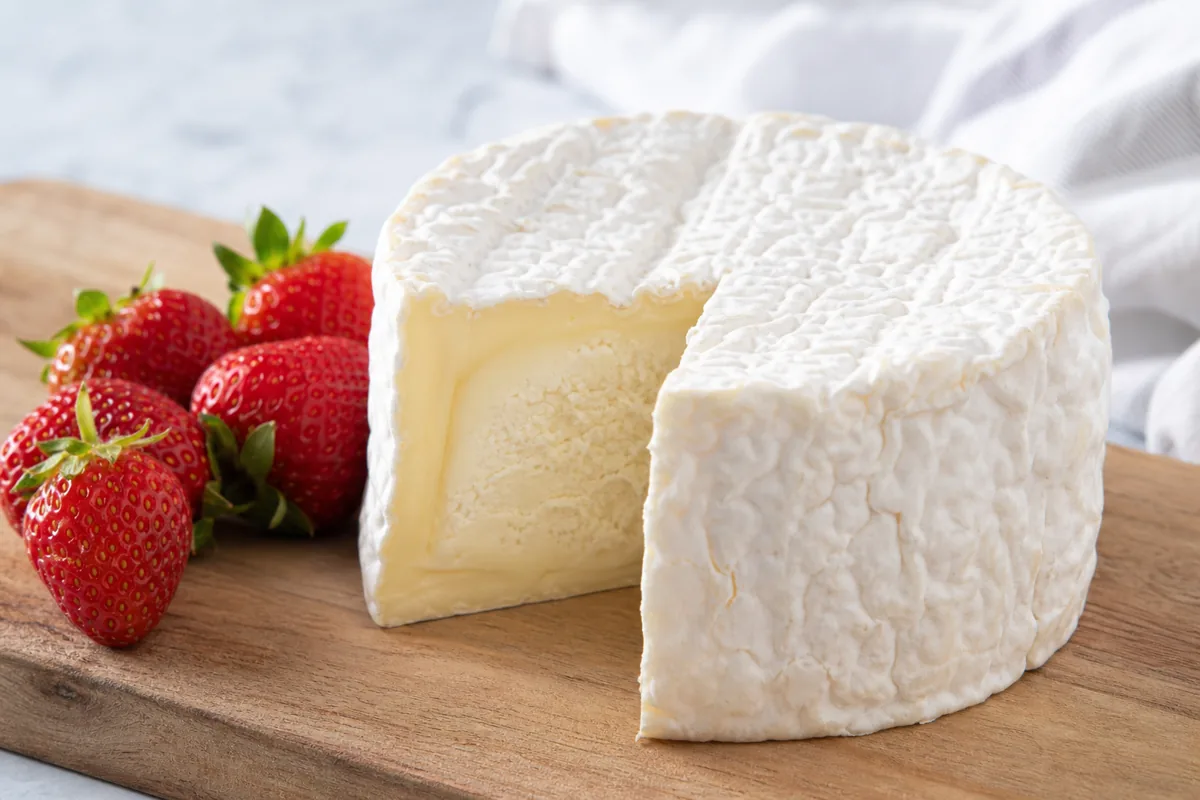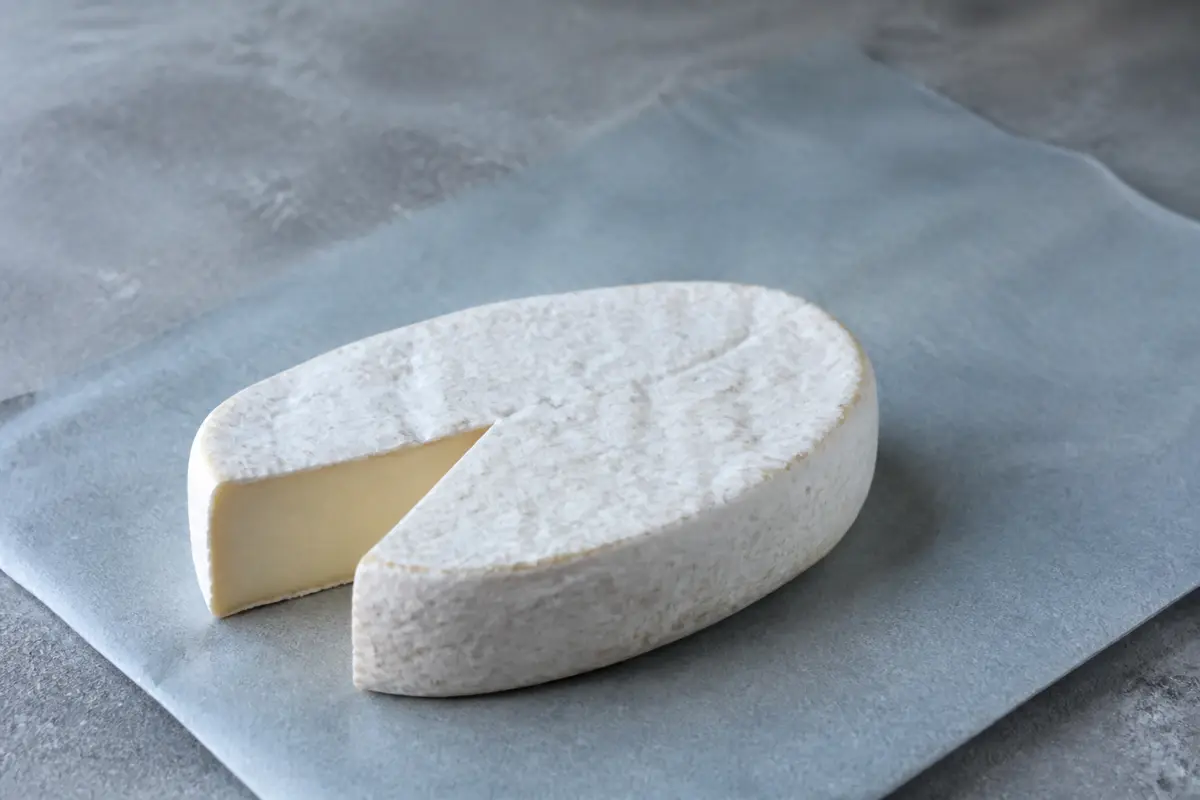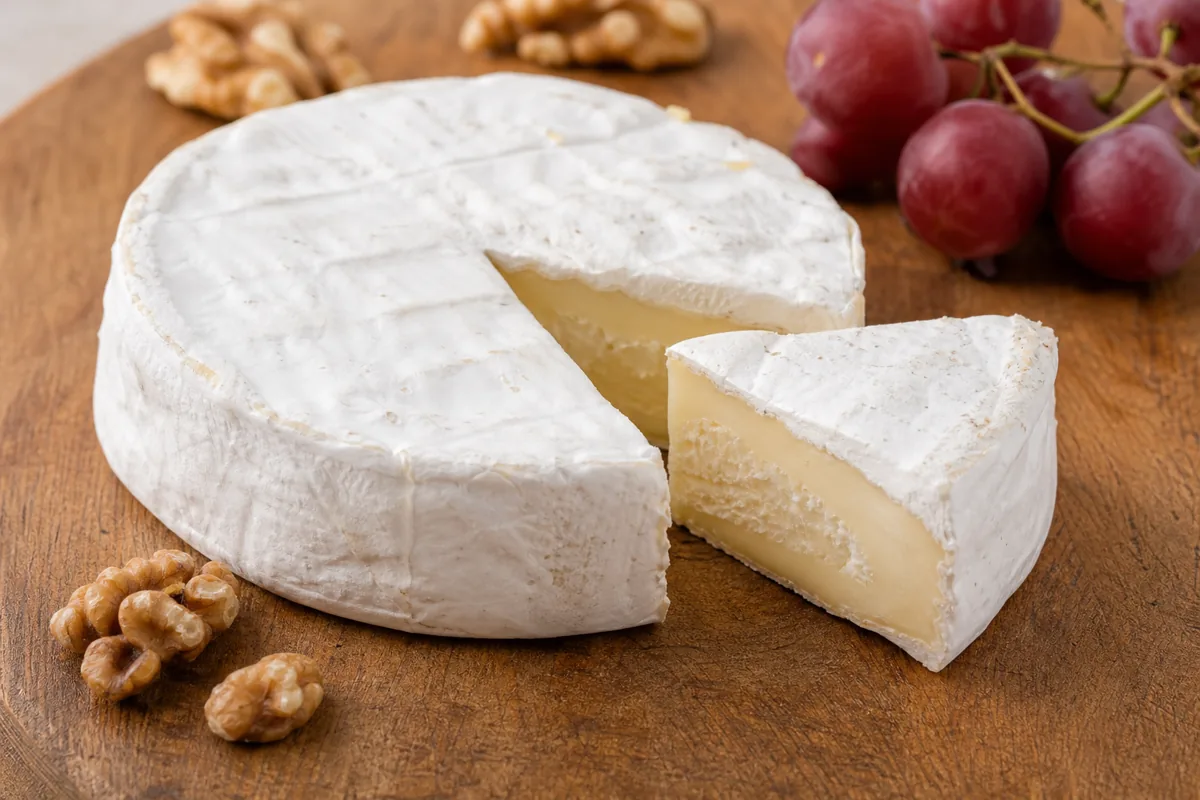
Coulommiers is a French cow's-milk soft cheese with a white bloomy rind. The name covers raw-milk and pasteurized products, so the exact maker and package tell you more than the name alone.
Look for a creamy paste, check how far softness has moved toward the center, and buy a stage that fits your serving date. During pregnancy, current NHS guidance treats it like other mould-ripened soft cheeses with a white coating and requires cooking until steaming hot.
In This Article
What Is Coulommiers?
Président describes Coulommiers as a soft bloomy-rind cheese named for the town of Coulommiers in Seine-et-Marne. Its overview places the format above Camembert and below Brie in size, while also noting that individual products may use raw or pasteurized cow's milk.
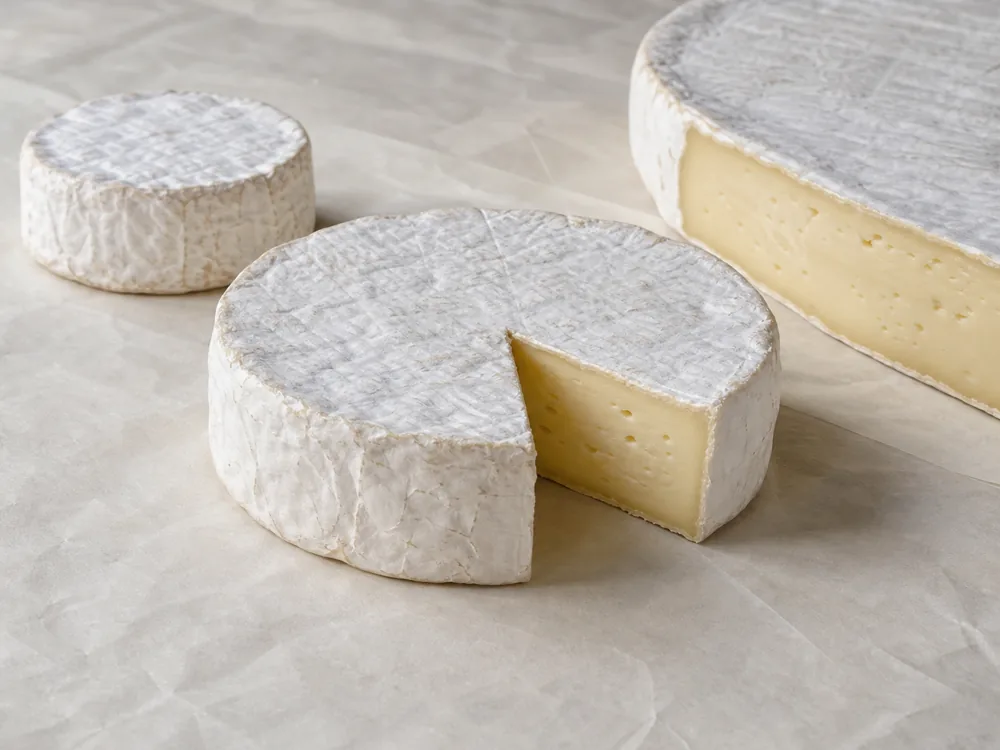
Current products show why the label matters. Président's Coulommiers is a pasteurized cow's-milk cheese made with Normandy milk, while the current Lactalis Foodservice Ambassador record identifies a separate pasteurized 320 g wheel.
- Family: Soft cheese with a white bloomy rind.
- Milk: Cow's milk, with raw and pasteurized versions in the wider category.
- Name: Linked to Coulommiers in the Seine-et-Marne department of France.
- Format: Product-specific. The Ambassador example is 13.5 cm across, 3.5 cm high, and 320 g.
- Buying rule: Read the maker, milk treatment, weight, date, and storage directions on the package.
The size relationship is a useful visual cue, but it does not create one fixed flavor scale. Milk treatment, recipe, cultures, ripeness, and storage can all change what a particular wheel tastes like.
How Does Coulommiers Taste at Different Ripeness Stages?
The Président overview describes Coulommiers as mild and creamy, with flavor intensity that changes as it matures. Its current branded product is described as savory with a creamy texture, while the Ambassador 320 g record emphasizes a mild, milky flavor.
Those descriptions belong to their products and do not guarantee that every Coulommiers will taste identical. Use the package and the cut face together when choosing a wheel.
University of Guelph cheesemaking material explains why a bloomy-rind wheel can be soft near the surface and firmer in the middle. Surface yeasts and moulds raise pH and drive texture changes from the rind toward the core.
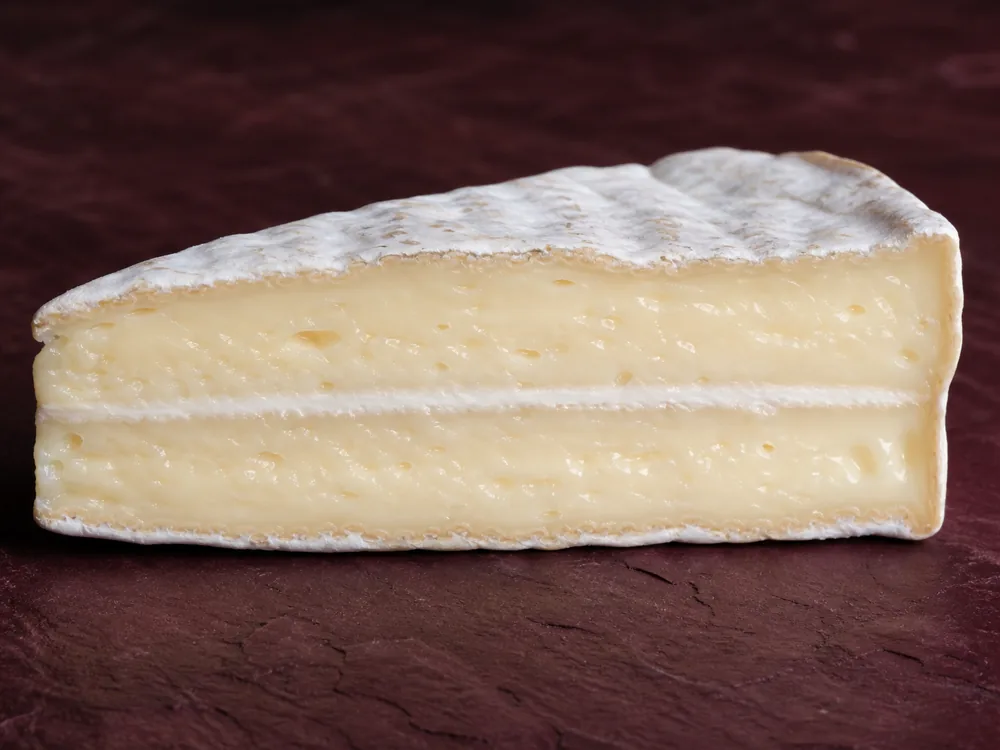
A center line is a texture cue, not a clock. It does not tell you an exact age or how many days the wheel will keep, so pair it with the printed date and the seller's handling information.
How to serve it
Président suggests fresh bread as a simple serving choice. The producer also uses Coulommiers in breaded pieces with salad and in a potato quiche, which makes the cheese useful both cold and cooked.
For a board, cut narrow wedges from center to rind so each serving includes the same texture gradient. Let the portion soften only as long as needed within the total room-temperature safety window.
- Simple board: Baguette, apple, pear, or grapes keep the cheese easy to taste.
- Salad: A breaded portion adds a warm creamy element beside crisp leaves.
- Quiche: The cheese can provide both dairy richness and bloomy-rind character.
- Cutting: Wipe a thin knife between wedges when the paste is soft.
How Does Coulommiers Compare with Brie and Camembert?
Président places Coulommiers between Camembert and Brie by size. That comparison helps you recognize the format, but it does not prove that one product will always be milder or stronger than another.
| Label | Useful format cue | What to verify |
|---|---|---|
| Camembert | Usually the smaller round in this comparison | Exact name, maker, milk treatment, weight, and ripeness |
| Coulommiers | Placed between Camembert and Brie by the producer overview | Whether the product is raw or pasteurized and how the center feels |
| Brie | Often the larger wheel or a wedge from one | Exact Brie type, maker, format, and ripeness |
Choose by the actual package and cut face. A ripe pasteurized Coulommiers and a young raw-milk version can differ more than the three family names suggest.
How Should You Buy Coulommiers, and What Do the Labels Say?
Inspect the wrapper and rind, then check the use-by date and storage directions. If the cheese is sold as a cut portion, keep the counter label because it identifies when and how that piece should be handled.
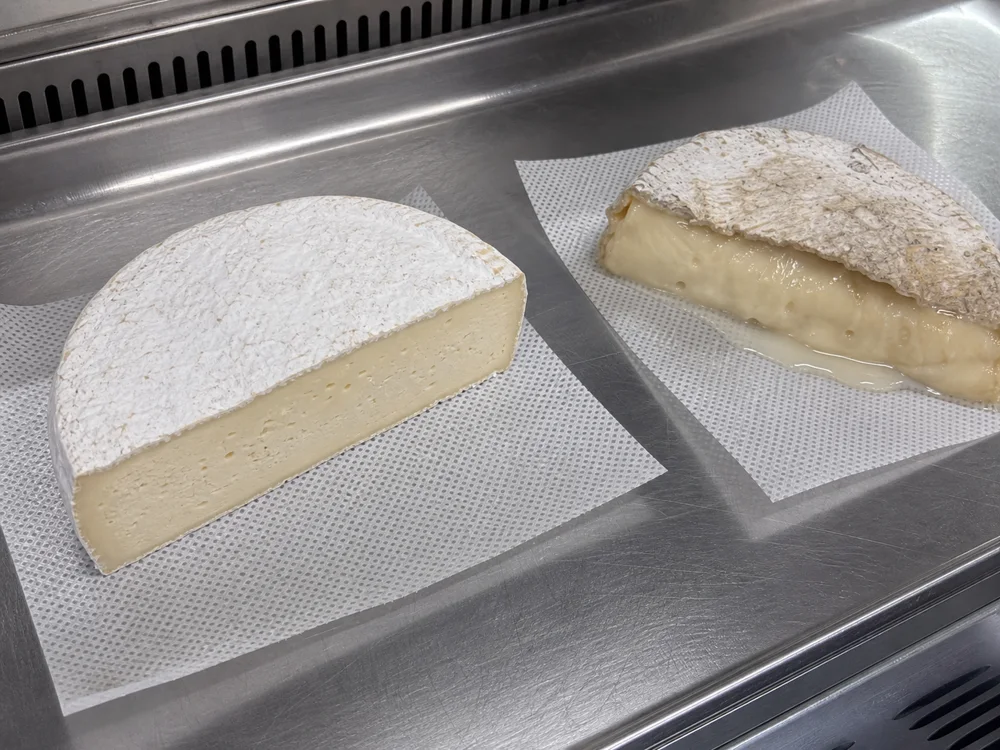
The figures below belong to the current Ambassador Coulommiers 320 g technical record. They are useful only when your package matches that product.
| Ambassador Coulommiers 320 g | Per 100 g | Per 30 g serving |
|---|---|---|
| Energy | 256 kcal | 77 kcal |
| Total fat | 20 g | 6.0 g |
| Saturated fat | 14 g | 4.2 g |
| Protein | 19 g | 5.7 g |
| Salt | 1.4 g | 0.42 g |
| Calcium | 450 mg | 135 mg |
Do not use that panel for a different maker or format. Compare labels on an equal serving basis when nutrition affects your choice.
How Should You Store Coulommiers?
Follow the exact package. The Ambassador foodservice record says to refrigerate at 4 to 8°C and consume promptly, while U.S. FDA home guidance sets the refrigerator at 40°F (4°C) or below.
The FDA's two-hour rule applies to perishable food at room temperature, with a one-hour limit above 90°F (32°C). Count the full time outside refrigeration rather than starting a new clock each time the cheese returns to the table.
Reseal the original wrapper or cover a cut piece in a clean container. Do not replace the printed date with a universal three-to-five-day rule because product, cut surface, and prior handling differ.
Is Coulommiers Safe During Pregnancy?
A pasteurized label does not make cold Coulommiers fit current NHS pregnancy advice. Coulommiers is a mould-ripened soft cheese with a white coating, so the NHS says to eat this category only when cooked until steaming hot.
Check the product label because raw-milk and pasteurized versions exist. If you are pregnant, use the cooking condition above, know that the CDC lists soft cheese made from unpasteurized (raw) milk as riskier, and follow any more specific advice from your clinician.
What Can Substitute for Coulommiers?
Choose the replacement by format and use, since the names alone do not guarantee the same recipe or ripeness.
- A Brie wheel or wedge: Use it when a larger-format bloomy-rind cheese suits the board.
- A Camembert round: Use it when you want a smaller bloomy-rind format.
- Fromager d'Affinois: Use it when a creamy paste matters more than the Coulommiers name.
- Délice de Bourgogne: Use it when added-cream richness is the main goal.
For a cooked dish, match the weight and moisture as well as the rind style. For a board, match the serving stage so the substitute has the texture you planned.