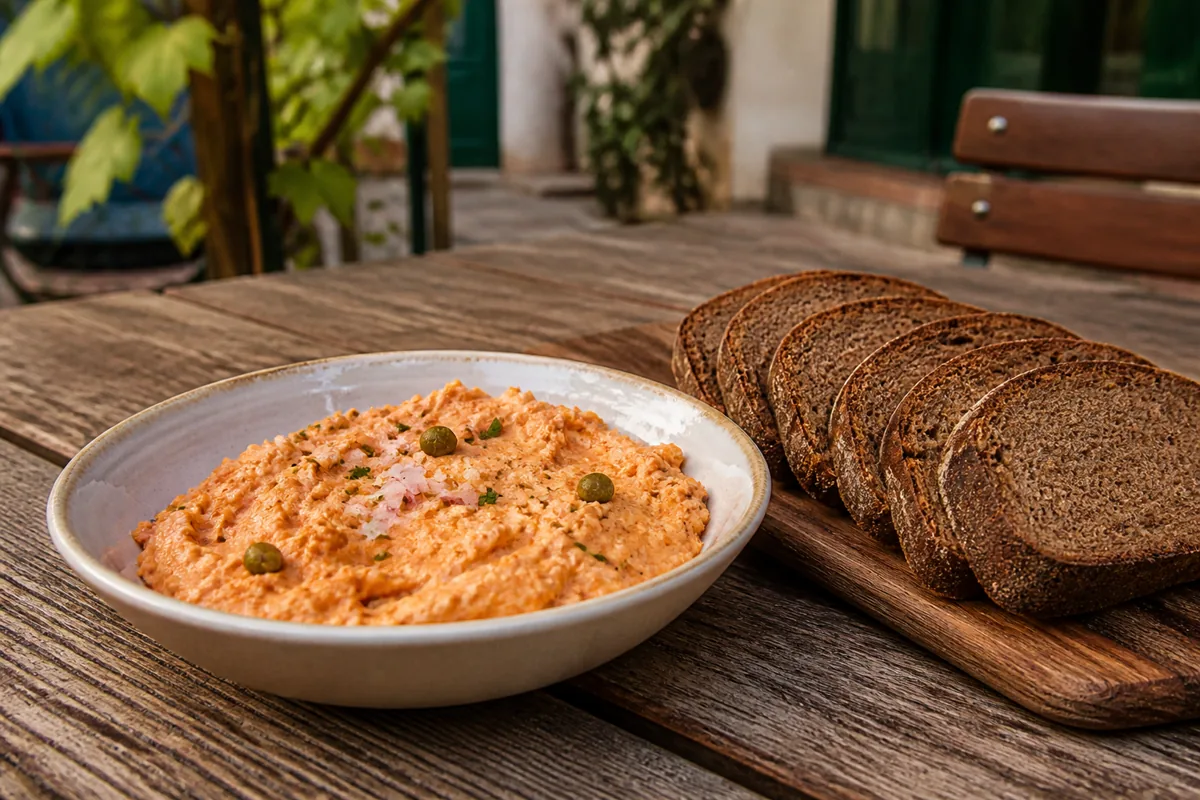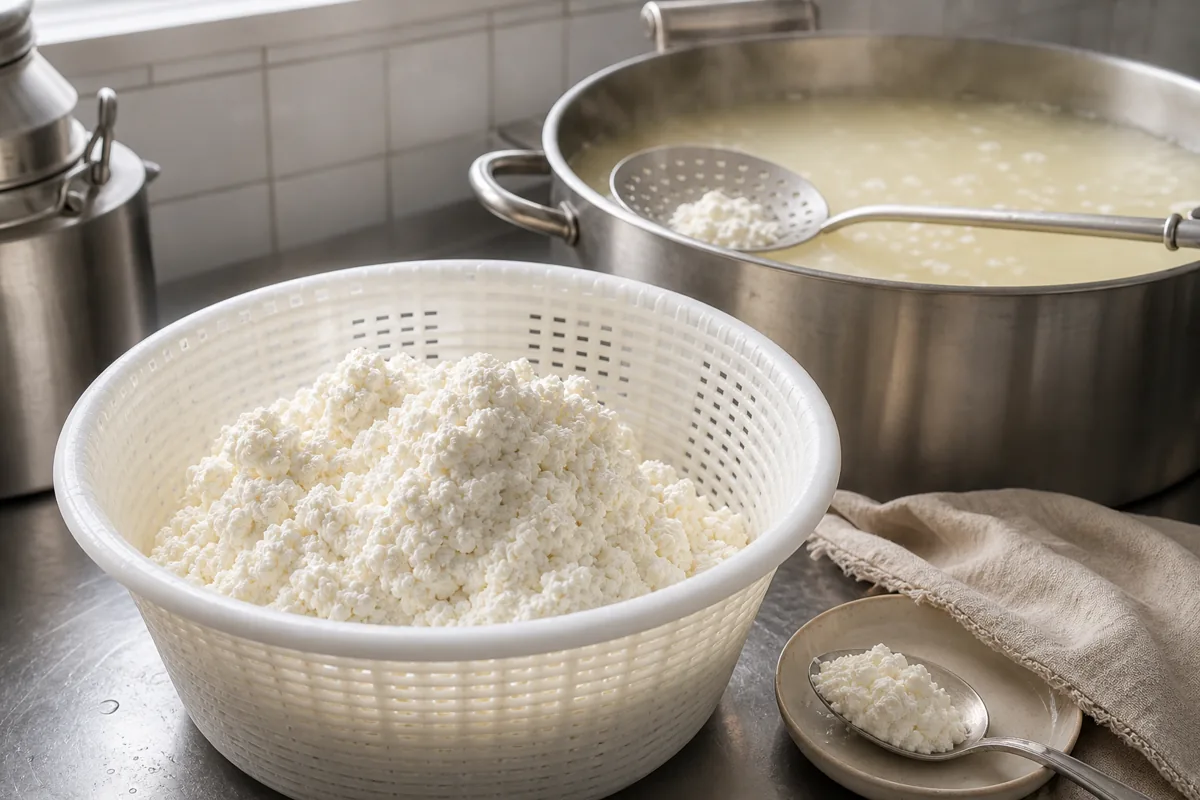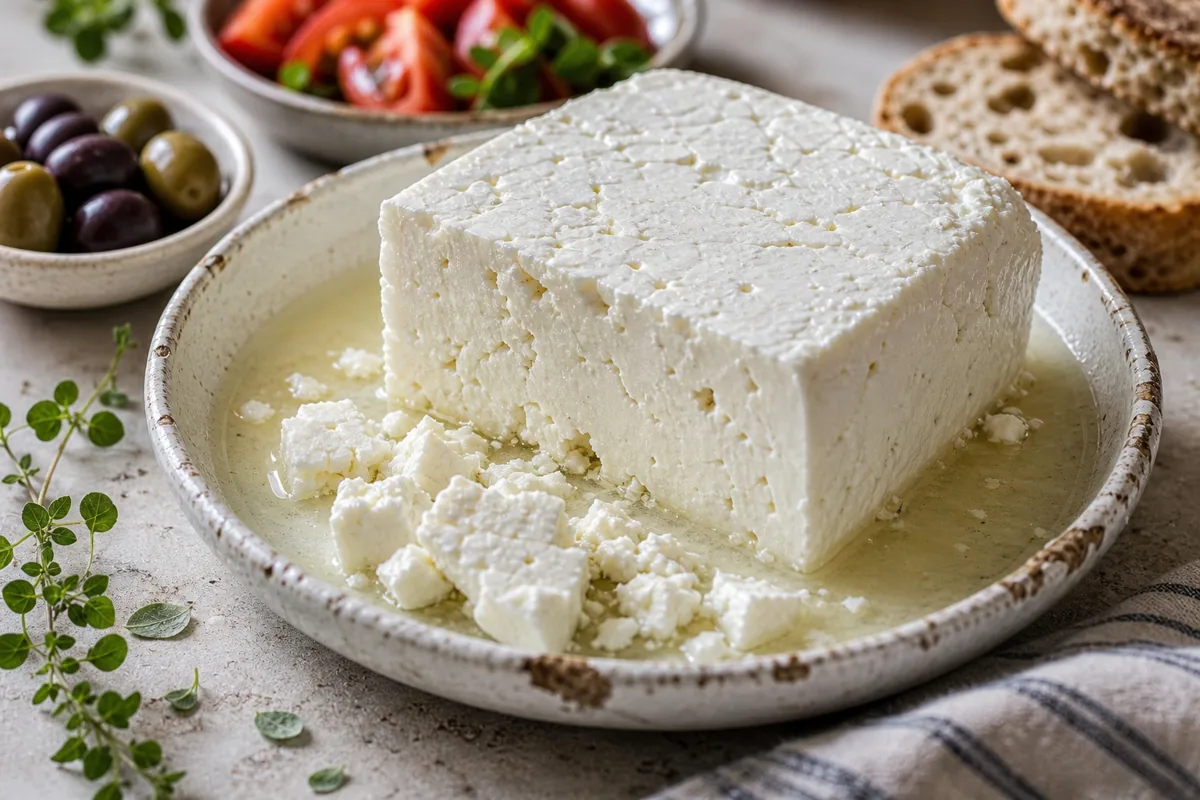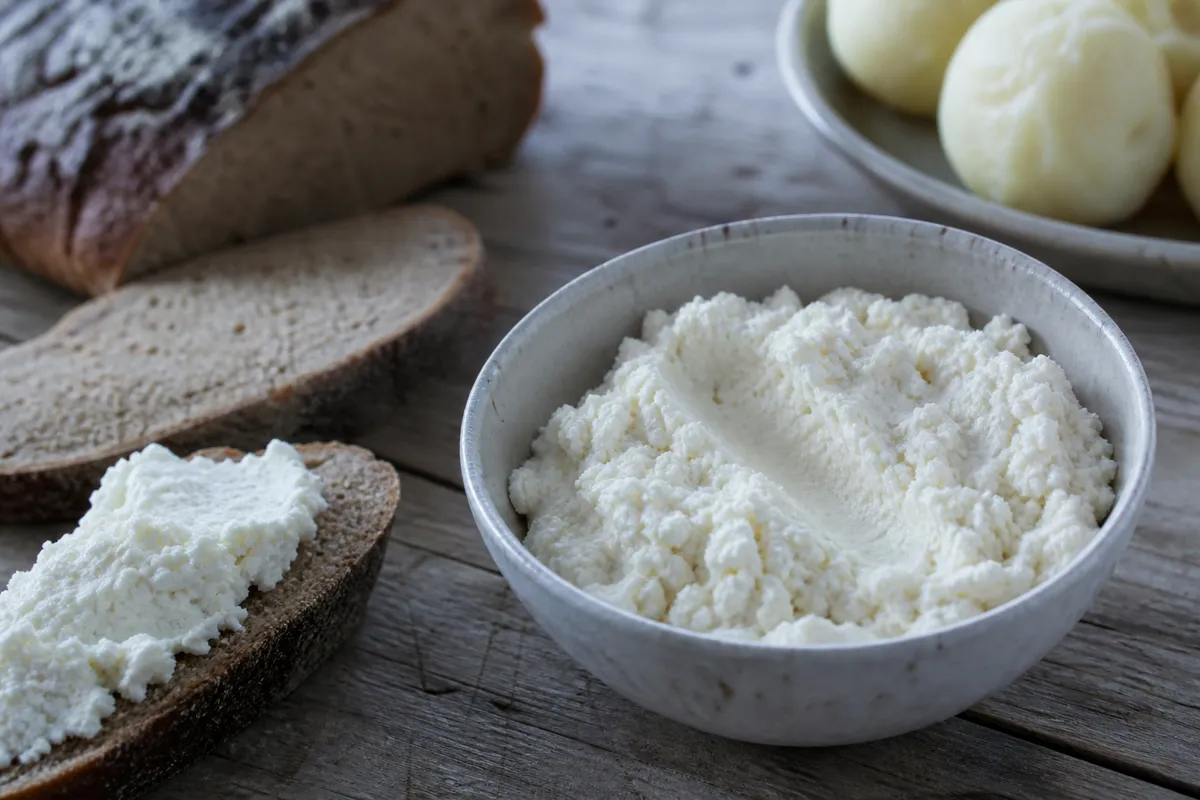
Bryndza is a white, tangy sheep's milk cheese from the Carpathian region, sold as a granular spread instead of a wheel. The protected-name summary for Slovenská bryndza calls it a natural, white, mature, spreadable cheese in granular form.
Milk is where the name stops being simple. The Slovak rules let cow's cheese make up as much as half of the mix, the Polish Bryndza Podhalańska rules cap cow's milk at 40%, and Grand Magazine calls the traditional cheese unpasteurized sheep's milk.
The label is the best guide, because the protected name, the plant address and the milk in the ingredients say more than the word bryndza alone.
In This Article
What Is Bryndza Cheese, and Is It Always Sheep's Milk?
Bryndza is traditionally a sheep's milk cheese, though Wikipedia says it can also be made with goat's milk or cow's milk. The Slovenská bryndza rules require at least 50% matured lump sheep's cheese, and the rest of the mix may be lump cow's cheese.
The Polish specification gives the goat's milk case a date: an instruction for the Ślemień estate in the Żywiec region, compiled in 1748, says bryndza was also made from goat's milk. State of Żywiec records for 1712 list sales of 105 fasks (barrels) of sheep bryndza and 5 fasks of goat bryndza, so goat's milk was an old but small share.
The word comes from the Romanian brânză, meaning cheese. Wikipedia and the Polish specification both trace it to Vlach, or Wallachian, shepherds who moved along the Carpathians.
The sources describe the milk differently, and they do not agree on pasteurization.
| Source | What it says about the milk |
|---|---|
| EU summary, Slovenská bryndza | Lump sheep's cheese share given as greater than 50% in the description and as a minimum of 50% in the production steps; the sheep cheese is made from raw sheep's milk, which may be pasteurized at 72 °C for 20 seconds, and the lump cow's cheese from pasteurized milk |
| Agrofarma Červený Kameň label | Stored sheep cheese from pasteurized milk, at least 50% of the dry matter, plus cow lump cheese from pasteurized milk |
| Polish specification, Bryndza Podhalańska | Sheep's milk from Polska Owca Górska sheep; cow's milk only if used, from Polish Red cows, and no more than 40% of the total milk |
| Wikipedia | Sheep, goat or cow milk; its summary box lists the cheese as unpasteurized |
| Grand Magazine | Traditionally unpasteurized sheep's milk; a mixture needs at least 50% sheep cheese in the dry matter |
The EU summary says the sheep lump cheese comes from raw milk but allows pasteurizing it if the maker adds a fermenting starter that replaces the natural flora. Agrofarma's label lists pasteurized milk throughout.
Only the ingredient list on the tub in your hand settles how that cheese was made.
How Do Slovenská Bryndza and Bryndza Podhalańska Rules Differ?
Slovenská bryndza is a protected geographical indication (PGI) that Wikipedia dates to 2008, and Bryndza Podhalańska is a protected designation of origin (PDO) that GOV.UK lists as registered in the EU on 12 June 2007.
The Slovak area is the mountainous part of the country, which the EU summary says covers more than 80% of Slovakia. Every production stage takes place there.
| Protected name | What the sources set |
|---|---|
| Slovenská bryndza (PGI) | Made in the mountainous part of Slovakia from at least 50% matured lump sheep's cheese, with lump cow's cheese allowed for the rest; crushed and ground on a cylinder mill |
| Bryndza Podhalańska (PDO) | Made in the Nowy Targ and Tatra poviats and six communes of the Żywiec poviat from Polska Owca Górska sheep's milk, with cow's milk capped at 40%; crumbled, salted and beaten |
| Plain bryndza or brynza | Wikipedia lists sheep, goat or cow milk for the plain word; the protected-name documents set milk and method only for their own names |
The two rules also count the cow share at different points. The Polish cap applies to the total milk used, before renneting, while the Slovak minimum applies to the matured lump cheeses ground together at the mill.
Podhalańska starts from a different cheese. The Polish specification describes shepherds who rennet the milk in a wooden barrel called a puciera, break the curd with a wooden ferula, then knead the mass by hand and hang it in a cloth for several to a dozen or so hours.
Renneting is loosely fixed: the specification gives 1.1 to 2.7 g of rennet powder per 100 litres of milk, and the milk sets in 30 to 60 minutes depending on whether it is near 28 °C or 39 °C. Its warmth at that point changes how thick the curd is, and the dose does not depend on the share of cow's milk.
The ferula then breaks the curd into grains the size of cereal, and hot water raises the mass to about 35 °C so the grains stick into lumps. The maker draws off 30 to 50% of the whey before kneading, and 4 to 6 litres of milk end up as 1 kg of bunc.
The specification bans using curdled milk, which would make the bunc more uniform but, it says, hurts the final taste.
The resulting loaf, called bunc or bundz, ripens for 4 to 12 days, and when cut it shows many round holes and tastes slightly sour. The ripened bunc is crumbled, mixed with salt to taste, and beaten until the mass is uniform and free of air bubbles.
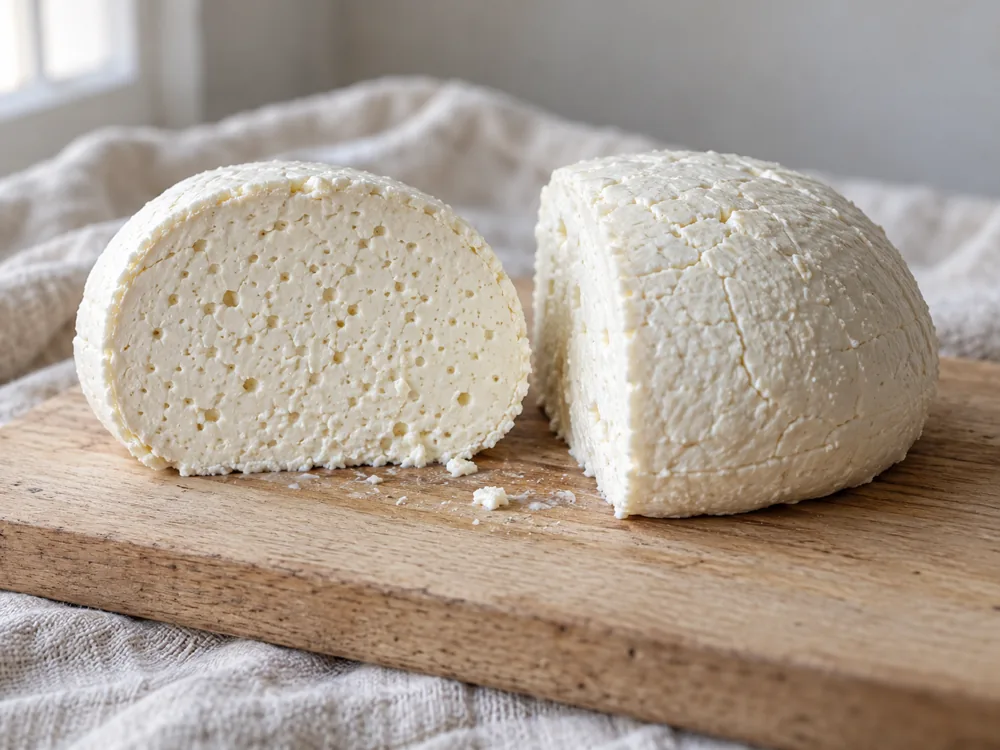
The finished cheese is white, white-cream or tinged aquamarine, with no more than 60% water and at least 38% fat in the dry matter. Makers sometimes pour melted butter over it to preserve it.
The Polish specification names the hard, smoked oscypek beside bundz and bryndza among the cheeses of the Podhale shepherds.
How Does Milling Give Slovenská Bryndza Its Texture?
The EU summary starts with sheep's milk warmed to 28 to 32 °C and set with liquid rennet. About half an hour later the milk curdles, and the curd is cut into pieces of 0.5 to 1 cm.
Makers shape the curd by hand into a lump of 3 to 7 kg and drain it for 4 to 10 hours. The lump then ferments at 21 to 25 °C for two to three days, until its pH is 5.2 or lower.
Maturing takes seven to eight days in total from the day the lump was made, at 8 to 20 °C, and the pH falls to between 4.2 and 4.8.
A matured lump no longer releases whey, is not elastic, can be moulded by hand, and tastes pleasantly milky and acidic.
At the bryndza plant the lumps are sorted by maturity, scraped clean of their dried layer, and pressed for two days at 0.5 to 4 bars. Sheep and cow lumps are then crushed into 2 to 5 cm chunks and ground on a cylinder mill in the required proportions.
The summary credits the different speeds of the mill's cylinders with grinding and spreading the cheese in one pass, which leaves a delicate, spreadable cheese that still consists of chunks.
A mixer homogenizes the ground cheese while salt or a saturated salt solution is added to reach the required salt and dry matter.
Grand Magazine credits Teodor Wallo of Zvolen with the saline solution: he ground sheep cheese with it instead of adding dry salt, and obtained the soft, greasy mass the magazine calls today's traditional bryndza.
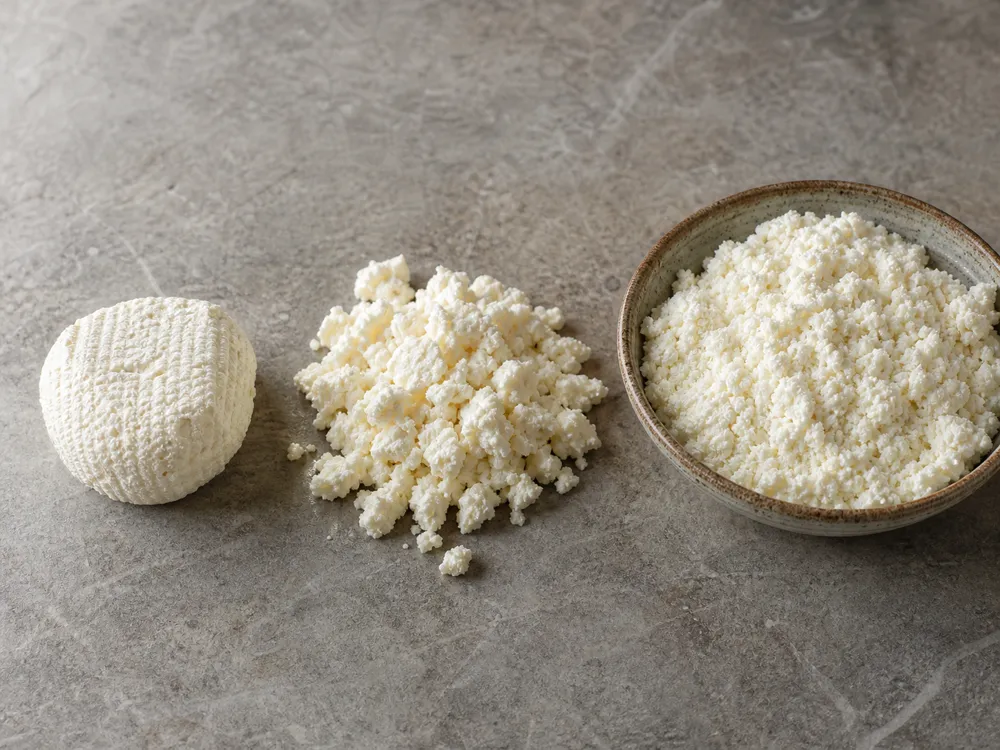
The EU summary credits the cheese's character to natural microflora, naming Lactobacillus, Enterococcus, Lactococcus, Streptococcus, Kluyveromyces marxianus and Geotrichum candidum.
Why Does Slovak Bryndza Mix Sheep and Cow Cheese?
The EU summary describes the cheese that came first: when milk was in surplus, lump sheep's cheese was crushed, pressed, salted and packed into wooden barrels, and this barrel bryndza kept for a long time as food when milk ran short.
The summary puts barrel cheese at about 4 to 6% salt and at least two months at 2 to 6 °C, which is saltier than a finished Slovak tub: Agrofarma's label caps salt at 3%.
The spreadable, reduced-salt form came later: the summary dates it to the start of the nineteenth century in Zvolen, after bryndza plants had opened at Detva in 1787 and Zvolenská Slatina in 1797.
Grand Magazine gives the reason cow's cheese is in the mix: makers salted summer sheep cheese at about 4% to store it for winter. Blending it with mature cow curd cheese made it soft and spreadable and brought the salt down to 2.0%.
That is the magazine's account. It also separates summer bryndza, made from fresh milk, from winter bryndza, made from curd sheep cheese produced in summer.
The cow's cheese is made separately: pasteurized full-fat cow's milk is warmed to 30 to 31 °C and renneted so that it curdles within 60 minutes. The curd is pressed at 20 to 22 °C for 24 hours, then fermented for 48 hours at 18 to 22 °C.
The summary says the cow's breed and rearing play no determining role in the quality of the cheese.
Does the Season or the Breed Change Bryndza?
The EU summary has Slovak sheep graze the lower mountain slopes in March and April and move to higher pastures in May and through the summer, and it ties the cheese's microflora to the soil and climate of the pastures where they graze.
Its production description draws the milk from Wallachian, improved Wallachian, Cigaya and Eastfrisian sheep, which account for 80% of farmed sheep, with the Lacaune breed growing.
The Polish rules fix the animal: the milk must come from Polska Owca Górska sheep, which the specification traces to the small Cakla sheep that arrived with Wallachian shepherds between the 14th and 16th centuries. It puts a ewe's yield at roughly 60 to 80 litres in 150 days of pasture milking.
The Polish specification also ties taste to the plants: it says the vegetation sheep eat in Podhale affects the taste and composition of the milk, and that some of those plants have no equivalent elsewhere in Poland.
Milking there runs from late April to early October, after lambs are reared from March to May, and the specification adds that the content of particular ingredients depends on the season and the milk's composition.
Sources disagree on the best month. Grand Magazine says May bryndza is often considered the best, because the sheep have been grazing for some time on nutrient-rich early-spring grass.
A mid-19th-century account by Żegota Pauli, quoted in the Polish specification, says the best bryndza comes from August and September milk, which is scarcer but fatty, and that spring milk is thinner and worse.
The accounts come from different mountains and different centuries and neither measures anything, and neither the Slovak label rule nor the Polish one in these sources asks for the month of milking.
What Does Bryndza Cheese Taste Like?
The sources agree on sour, salty and spicy, and split on strength. The EU summary calls the odour and taste delicate, while Wikipedia calls the cheese's smell and taste strong.
| Source | Look | Taste and texture |
|---|---|---|
| EU summary, Slovenská bryndza | White, granular | Delicate odour; pleasantly sour sheep's cheese taste, slightly spicy and salty |
| Agrofarma label | — | Fine-grained and spreadable; slightly spicy sheep cheese taste and a pleasant aroma |
| Polish specification | White, white-cream or tinged aquamarine; even or slightly convex surface, sometimes cracked | Spicy taste and smooth consistency; salty, with a characteristic smell and taste |
| Wikipedia | Creamy white | Tangy, crumbly and slightly moist; strong smell and taste with a notable taste of butyric acid; starts slightly mild, turns strong and fades to a salty finish |
The Polish specification lists four variable factors: how much whey is drained, how many days the bunc ripens, how much salt the maker adds, and the share of cow's milk. Those choices could account for part of the gap between delicate and strong.
How Do You Eat Bryndza Cheese?
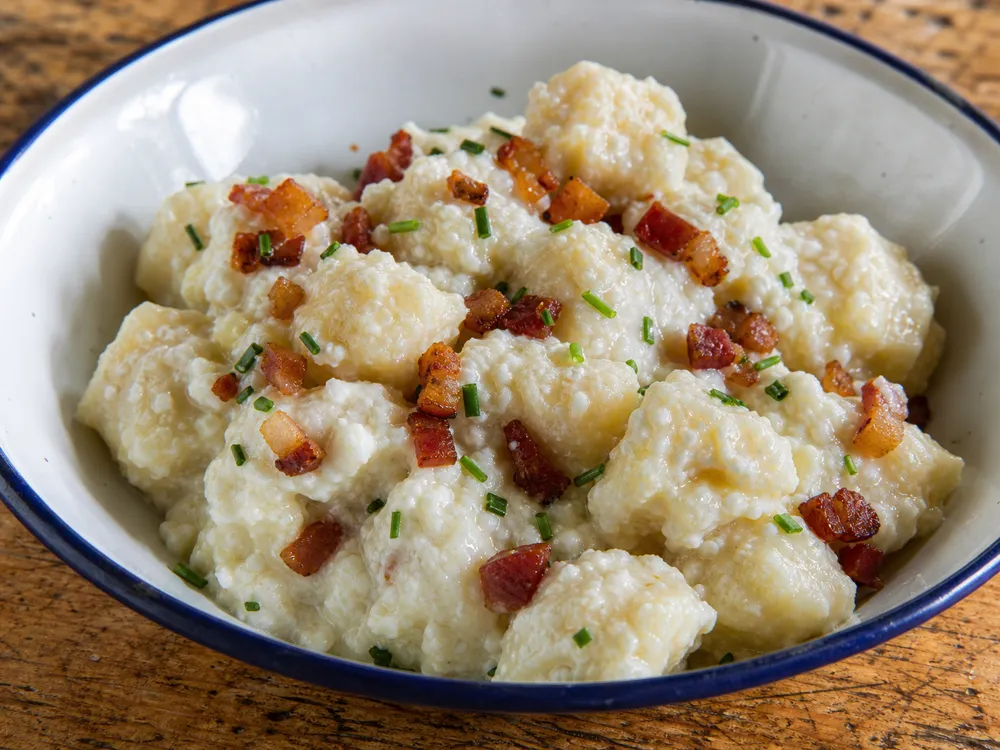
The national dish is bryndzové halušky, boiled potato dumplings coated with bryndza. Wikipedia says it may be sprinkled with cooked bits of smoked pork fat or bacon and with chives or spring onions, and that žinčica is traditionally drunk with the meal.
| Use | How It Works |
|---|---|
| Scones and cakes | The EU summary names pagáčiky (scones) and bryndzovníky (cakes). |
| Pirohy and pancakes | It also lists pirohy stuffed with bryndza and placky, a type of pancake. |
| Beer and wine snacks | Agrofarma lists the cheese for snacks served with beer and wine, and for vegetable, pasta and potato dishes. |
| Pizza and salads | Grand Magazine lists a spread, soup and pie among conventional uses, and pizza, vegetable and fruit salads, leek donuts and a melon salad with 220 g of bryndza among modern ones. |
Wikipedia says Austria called bryndza Liptauer, after the Liptov region of northern Slovakia, and the Liptauer spread kept that name.
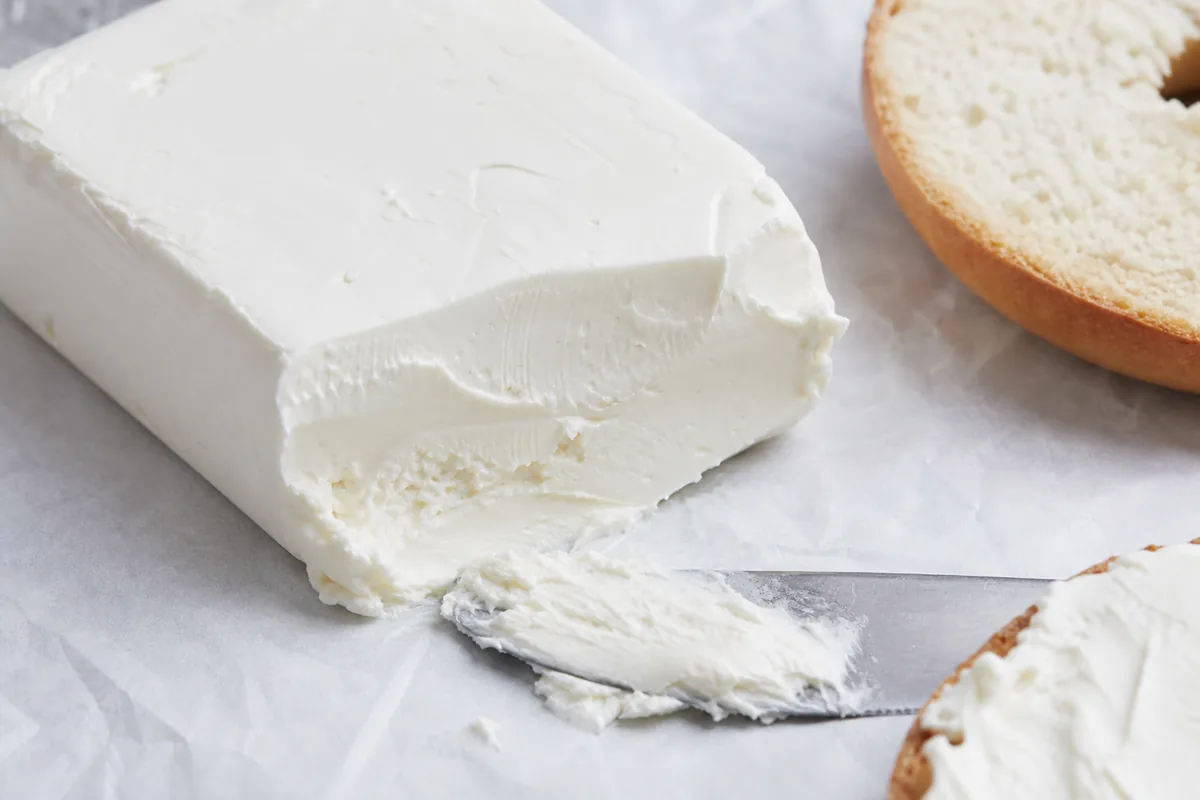
The Viennese Liptauer spread now uses common cow's milk cottage cheese instead, because Wikipedia says the original Slovak bryndza disappeared from the Austrian market after Austria-Hungary dissolved. A spread sold as Liptauer therefore does not promise bryndza.
What Can You Use Instead of Bryndza?
Kitchen Frau (Margaret Bose Johnson) reaches for feta because, she writes, bryndza is not readily available outside Slovakia.
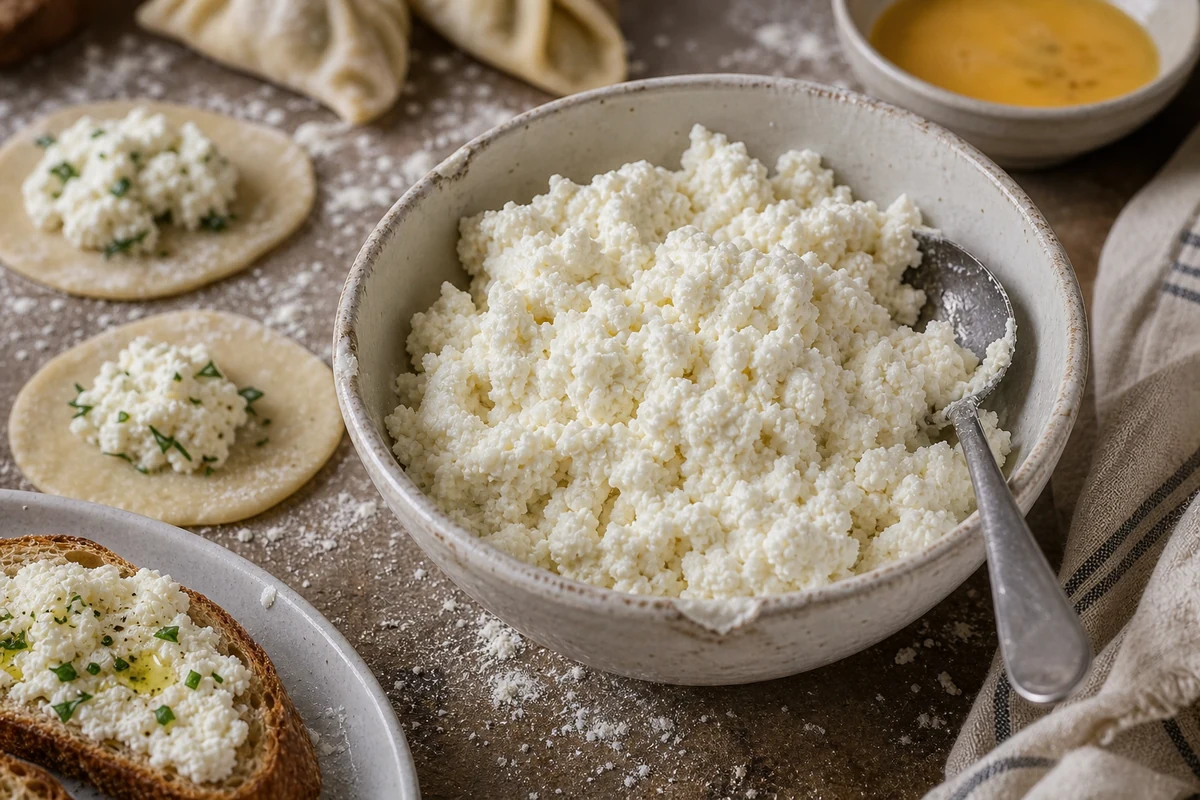
She mashes 140 g (1 cup) of crumbled sheep feta or Macedonian feta with 60 ml (¼ cup) of heavy cream and tosses the mix with the hot halušky, calling it a close substitute for bryndza.
This is one cook's mix, not a standard ratio, and a feta mix is a different cheese from the matured, milled product the EU summary describes.
Where Can You Buy Bryndza, and How Should You Store It?
A Slovak tub should show the words Slovenská bryndza and the address of the production plant, which the EU summary requires on the label. The summary also prohibits packaging outside the bryndza plants, so that nobody dilutes the cheese with curd cheese or water.
The EU summary lists 1 to 5 kg buckets, 125 g to 1 kg foil-wrapped prisms, small wood-covered rolls and cylinders in a plastic casing as the pack forms. Agrofarma lists its own Slovenská bryndza in 500 g, 1 kg and 5 kg sizes.
A Polish tub carries a different set of marks: the specification requires the name Bryndza Podhalańska with the PDO symbol or the words Chroniona Nazwa Pochodzenia (Ch.N.P.). It also says the packaging always states the milk used, including whether it is sheep's milk alone or a sheep and cow mix, and the cheese may be sold by weight in parchment paper.
A Slovak tub that is all sheep's cheese is called ovčia (sheep) bryndza, which Wikipedia describes as 100% sheep cheese, against the 50% minimum for plain Slovenská bryndza. Grand Magazine adds that the Sheep and Goat Breeders Association in Slovakia issues a Golden Sheep - 100% Sheep logo to highlight honest makers.
Agrofarma's label for its Slovenská bryndza gives an expiry of 15 days.
The EU summary warns that the product can spoil quickly, so follow the printed date.
The older method kept far longer: the Polish specification's history says bryndza salted, packed tight into a vessel and sealed with melted butter was stored from bryndza to bryndza, until May of the following year. It says the butter was poured on to preserve the cheese and leaves the salt to the maker's taste, so that keeping time says nothing about a modern tub, and Agrofarma's printed expiry is the 15 days above.
The CDC says to keep a refrigerator at 40°F (4°C) or below.
What Are the Nutrition, Lactose and Pregnancy Facts for Bryndza?
These figures come from Agrofarma's label for one Slovenská bryndza. Grand Magazine puts protein at 17 g per 100 g and salt at 2.0%, so the numbers shift from maker to maker.
One Slovak label is not a rule for the whole name: the Polish specification sets lower floors, at least 40% dry matter and 38% fat in the dry matter, against the 44% and 48% on Agrofarma's label. A Polish and a Slovak tub can therefore differ in richness.
Agrofarma's label lists milk, including lactose, as the allergen.
The EU summary names liquid rennet, and the Polish specification describes its traditional rennet as powdered calf's stomach, so vegetarians should not assume either name is rennet-free.
CDC says pregnant women are 10 times more likely to get a Listeria infection, and for soft cheese in pregnancy such as bryndza it lists soft cheese from unpasteurized milk as riskier.
Its safer choices include pasteurized soft cheese heated to an internal temperature of 165°F or until steaming hot.
NHS lists pasteurised soft cheeses such as feta, ricotta and cottage cheese as safe and does not name bryndza. NHS also says any foods made from unpasteurised milk must be thoroughly cooked.
Agrofarma's product page marks its Slovenská bryndza "not suitable for pregnant women", even though its ingredients list pasteurized milk.
SOURCES & REFERENCES
Bryndza is a white, soft, granular sheep's milk cheese sold as a spread. The Slovak version is made by milling matured lump sheep's cheese, sometimes mixed with lump cow's cheese, with salt or a saline solution.
No. Slovenská bryndza needs at least 50% matured lump sheep's cheese and may include lump cow's cheese, and Bryndza Podhalańska may use cow's milk up to 40% of the total milk.
Both names exist. Slovenská bryndza is a protected geographical indication, and Bryndza Podhalańska is a protected designation of origin.
Sources describe it as sour, salty and slightly spicy. They split on strength: the EU summary calls the odour and taste delicate, and Wikipedia calls them strong.
Grand Magazine says makers salted summer sheep cheese at about 4% to store it for winter, then blended it with mature cow curd cheese to make it soft and spreadable and to bring the salt down to 2.0%.
Kitchen Frau mashes 140 g of crumbled sheep feta with 60 ml of heavy cream and tosses it with the hot halušky. It is one cook's mix, and a feta mix is a different cheese from matured, milled bryndza.
It depends on the milk treatment, which differs between sources and tubs, and Agrofarma marks its own pasteurized-milk tub as not suitable for pregnant women. CDC treats soft cheese from unpasteurized milk as riskier, and NHS says foods made from unpasteurised milk must be thoroughly cooked, so check the label and ask your midwife or doctor.