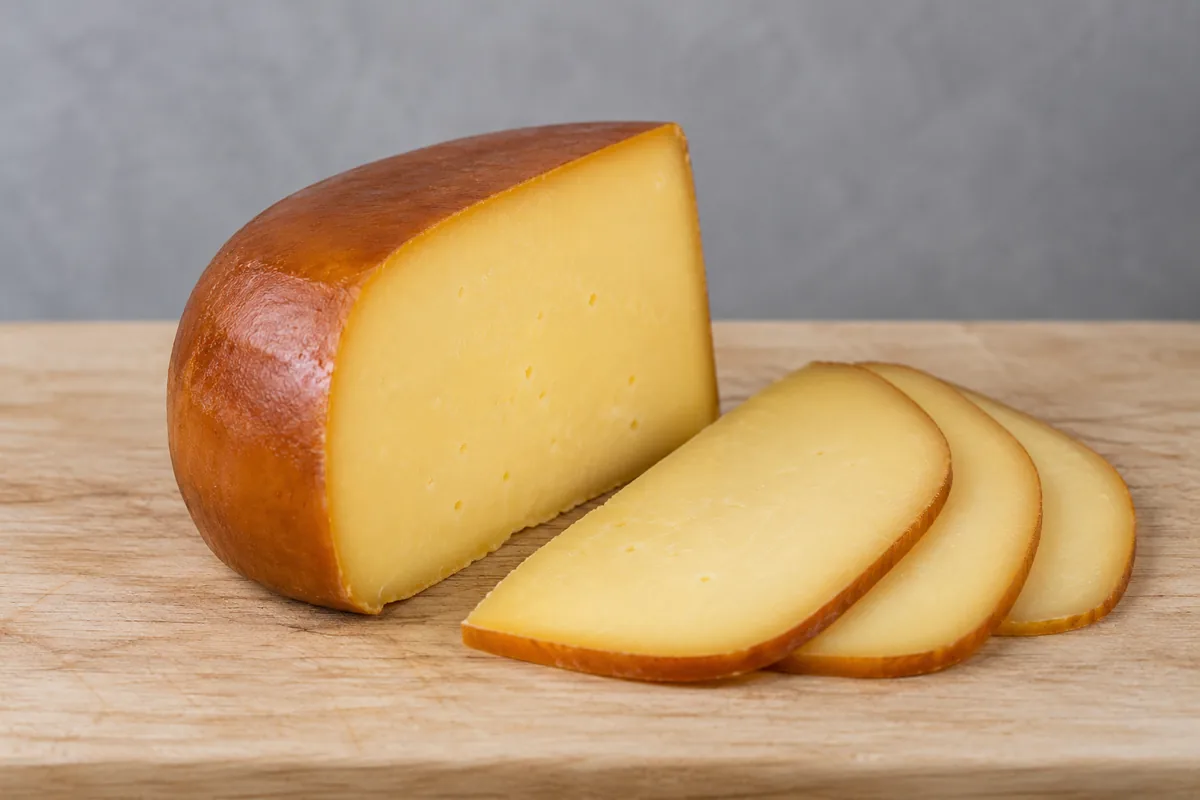
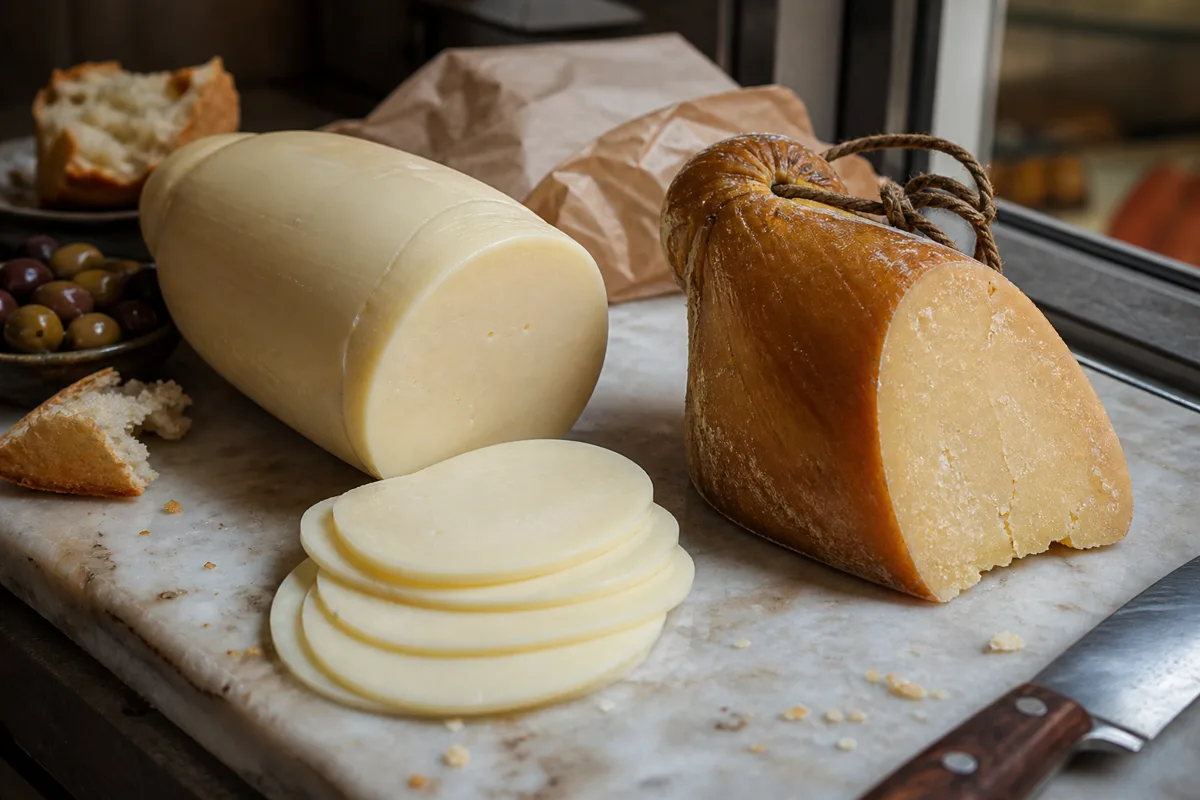
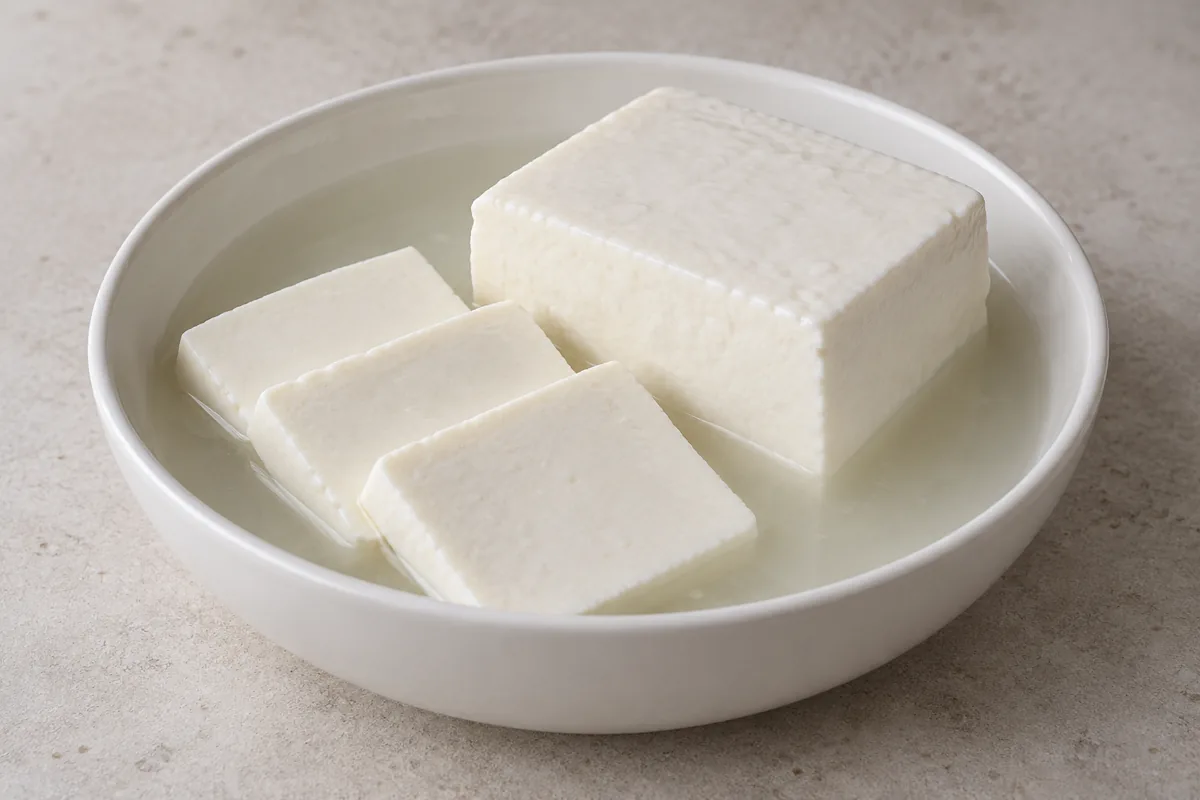
Oscypek is a smoked, spindle-shaped Polish cheese made with at least 60 percent sheep's milk in the Tatra and Podhale uplands, and its name has been an EU Protected Designation of Origin since 2008.
Cheese made from cow's milk is also sold under the name: a 2025 study that bought 16 Polish cheeses as oscypek lists cow's milk for six of them and sheep's milk for eight, so when you buy, the milk on the label tells you more than the name does.
In This Article
What Is Oscypek Made Of?
The protected recipe needs at least 60 percent sheep's milk from Polish Mountain sheep, and the Kraków agricultural and food quality inspectorate (WIJHARS) says any cow's milk in the remainder must come from Polish Red cows.
Goat's milk is where the accounts part: Cheese.com lists cow's, goat's and sheep's milk, and English Wikipedia says cow's or goat's milk may be added under strict rules, while the inspectorate allows only Polish Red cow's milk beside the sheep's milk.
Oscypek is made from May to September, the grazing season, by the account of the inspectorate and the Małopolska culinary-heritage register, while English Wikipedia gives a wider window, from late April to early October.
The season follows the sheep feeding on fresh mountain grass, and the inspectorate opens it in early May, when the sheep go up to the mountain pastures and the shepherds, the bacowie, return to their huts. Sales run later than the making: the cheese may be sold until the end of October, and you can buy it only from May until October.
The EU registered the name on 14 February 2008. The cheese may be made in Nowy Targ and Tatra counties and in parts of Cieszyn, Limanowa, Nowy Sącz, Sucha Beskidzka and Żywiec counties.
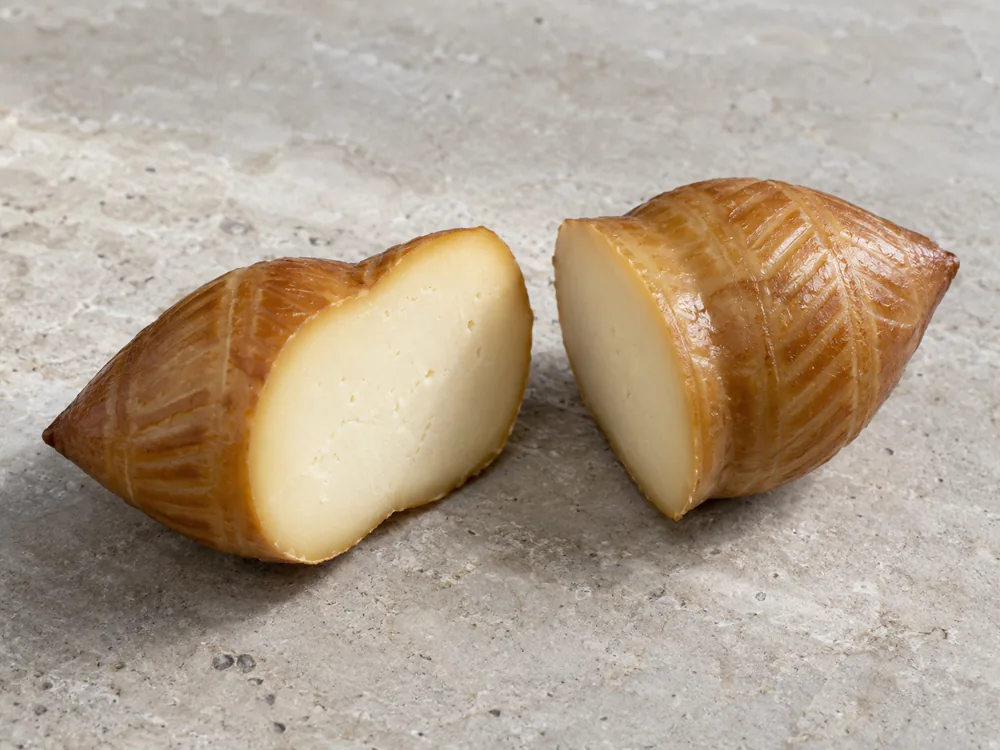
A finished cheese is a double cone 17 to 23 cm long and 600 to 800 g, up to about 10 cm across at its widest point. The EU specification also sets three composition limits: at most 44 percent water, at least 56 percent dry matter, and at least 38 percent fat in that dry matter.
Is Redykołka the Same Cheese as Oscypek?
No. Redykołka is a separate cheese with its own PDO, though English Wikipedia calls it oscypek's younger sister.
Redykołka is capped at 300 g, and its smallest pieces, between 30 and 60 g, are spindle-shaped, while the cheeses shaped as a rooster or as ducks are usually redykołki. It is made from May to September, may contain up to 40 percent Polish Red cow's milk and is smoked for 3 to 7 days.
The small cheese began as leftover curd too little to press into an oscypek, and shepherds gave redykołki out in pairs when the sheep came back from grazing.
If you see a small smoked cheese shaped like an animal on a Podhale stall, it may be redykołka, and its shape alone does not make it a counterfeit oscypek.
How Does Oscypek Differ from Podhale Bryndza?
The two cheeses start from the same sheep breed and part ways after the curd: Podhale Bryndza comes from the same Polish Mountain sheep, in the same May-to-September season, with up to 40 percent Polish Red cow's milk allowed. Bryndza was the first Polish product entered in the EU register as a PDO, on 12 June 2007.
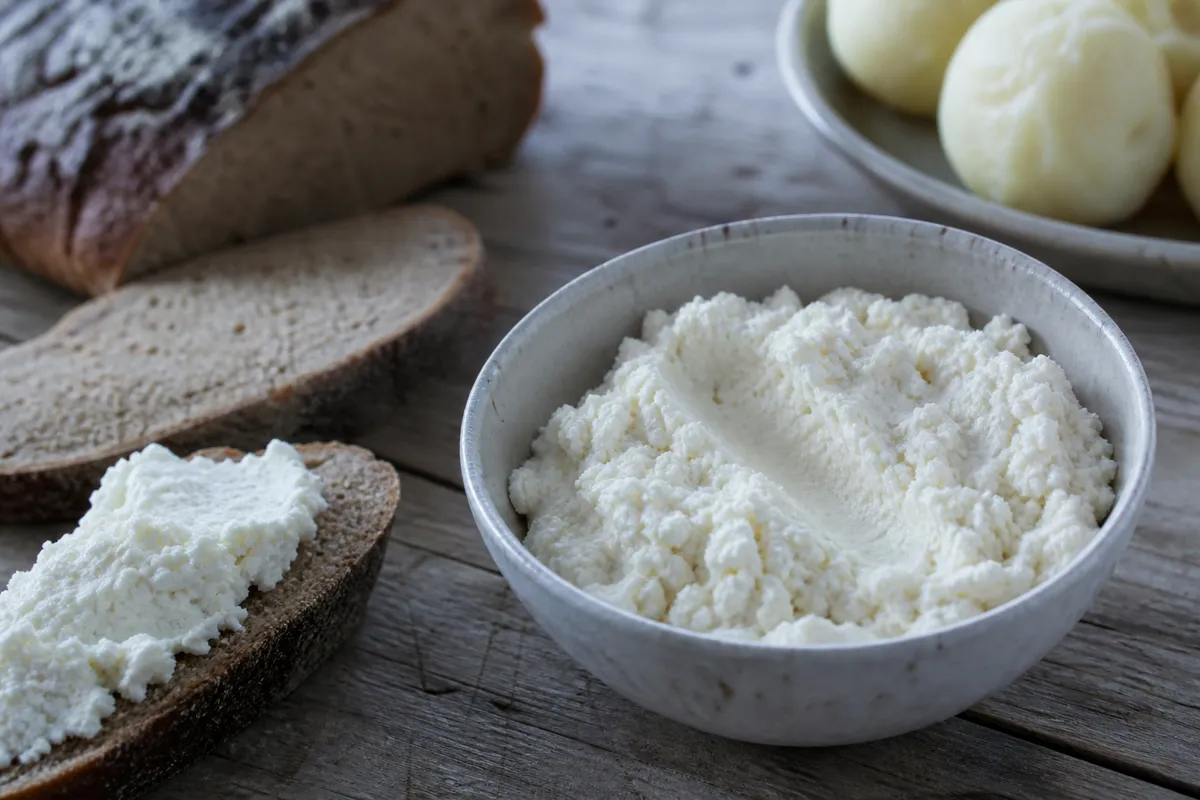
Bryndza's curd drains and ripens on a shelf for 4 to 12 days into bundz, which is mashed again and kneaded with salt into a smooth soft cheese with no set shape, while oscypek's curd is pressed into a cone, brined and smoked.
The Małopolska register describes bryndza as white, cream-white or light aquamarine, salty and spicy, sometimes very spicy, and puts its yield at 4 to 6 litres of milk per kilogram of cheese.
Is Oscypek Vegetarian?
No. The traditional recipe adds klag, a dried, powdered rennet, and Cheese.com lists oscypek as not vegetarian.
If you are vegetarian and need more than that general answer, ask the maker which rennet goes into its cheese.
Is Oscypek Pasteurised, and Can You Eat It While Pregnant?
If you are pregnant, check the label for the milk: oscypek is traditionally a raw-milk cheese, which English Wikipedia describes as made from unpasteurised sheep's milk, but a 2025 study of Polish and Slovak cheeses reports one of its Polish samples as made from pasteurised milk.
If there is no label, or it does not say pasteurised milk, cook oscypek thoroughly before you eat it, or ask a midwife or doctor whether it counts as a hard cheese before you eat it cold: the 2025 paper calls it hard scalded and Cheese.com calls it semi-hard, and the NHS lists pasteurised or unpasteurised hard cheeses as safe to eat and says any foods made from unpasteurised milk must be thoroughly cooked.
If you follow US advice, ask a midwife or doctor before you eat oscypek without a label that says pasteurised milk, even cooked: the CDC lists unpasteurized (raw) milk and dairy products made from raw milk as riskier, and its safer line for heated soft cheese names pasteurized soft cheeses heated to an internal temperature of 165°F or until steaming hot.
If you follow NHS advice, you can eat pasteurised oscypek: the NHS lists pasteurised or unpasteurised hard cheeses, pasteurised semi-hard cheeses, such as edam, and pasteurised soft cheeses as safe to eat.
If you follow US advice, ask a midwife or doctor whether pasteurised oscypek counts as a hard cheese before you eat it cold: the CDC lists hard cheese, when made with pasteurized milk, as safer, and served cold, oscypek is described as a pasteurized semi-hard, firm, dense, slightly elastic or smooth cheese, a type the CDC list does not cover.
The NHS also lists any cheese that's been cooked until steaming hot, including soft or blue cheese, as safe to eat, so if you follow NHS advice and grill or pan-fry oscypek, cook the slices until they are steaming hot.
How Is Oscypek Made?
The protected method starts with milk soured at room temperature, then mixed with fresh milk before rennet is added. The souring takes a few hours, and in a shepherd's hut the two milks are mixed in a copper vessel hung above the hearth.
The curd is beaten with a wooden tool called a ferula, up to half the whey is drained off, and the curd is ground by hand into a lump. Hot water goes in so the curd pieces stick together and sink.
English Wikipedia describes the curd being rinsed repeatedly with boiling water and squeezed, and the 2025 paper calls the finished cheese hard scalded.
A 2002 study of oscypek made from cow's and sheep's milk, which the paper cites, concluded that the variable coagulation temperature and the handling of the lumps shaped quality more than the type of milk did.
The lump is pressed, pierced with a skewer and shaped into a double cone with a ring at its widest point. The ring then comes off, the surface is smoothed by hand and the cone goes into cold water to set its shape.
The pattern is pressed into the cheese by a tool rather than cut into the finished cheese, and descriptions name three tools for it: a hand-carved wooden mould, a splittable one called an oscypiorka and a wooden ring.
The cheese then soaks in brine, for 24 hours in the Małopolska register's account or "a night or two" in English Wikipedia's, and dries for 12 to 24 hours before smoking. Polish Wikipedia says the day in brine draws excess water out of the cheese by osmosis, while the paper says the brine is there to enhance flavour.
Oscypek is smoked over coniferous wood, pine or spruce, but the accounts differ on how hot the smoke is and how long it lasts.
| Question | Answer in each account |
|---|---|
| How hot is the smoke? | Cold in the 2025 paper, cool in the Małopolska register, hot in English Wikipedia |
| How long does smoking last? | 3 to 7 days in the paper, a few to 10 or more days in the register, up to 14 days in English Wikipedia |
The cheeses rest on the top shelf of the hut while smoke passes over them, a stage the paper calls smoking and maturation. The paper credits the smoke with the cheese's golden colour and smoky aroma.
The smoked samples were drier: across the paper's Polish and Slovak samples, smoked cheeses averaged 59.80 percent dry matter against 55.06 for unsmoked ones, the only statistically significant gap, while the higher fat and salt in smoked samples were not significant.
What Does Oscypek Taste Like?
Oscypek is described as salty and smoky, but the descriptions differ on how salty: the inspectorate calls the taste distinctive, slightly salty and smoky, while Local Food Advice calls the cheese very salty and strong.
Cheese Scientist adds a slight tang and a firm, dense texture with a slightly elastic bite, and says smoking makes the outer layer feel firmer while the inside stays smooth. Heat, it says, turns oscypek creamier and its flavour more intense.
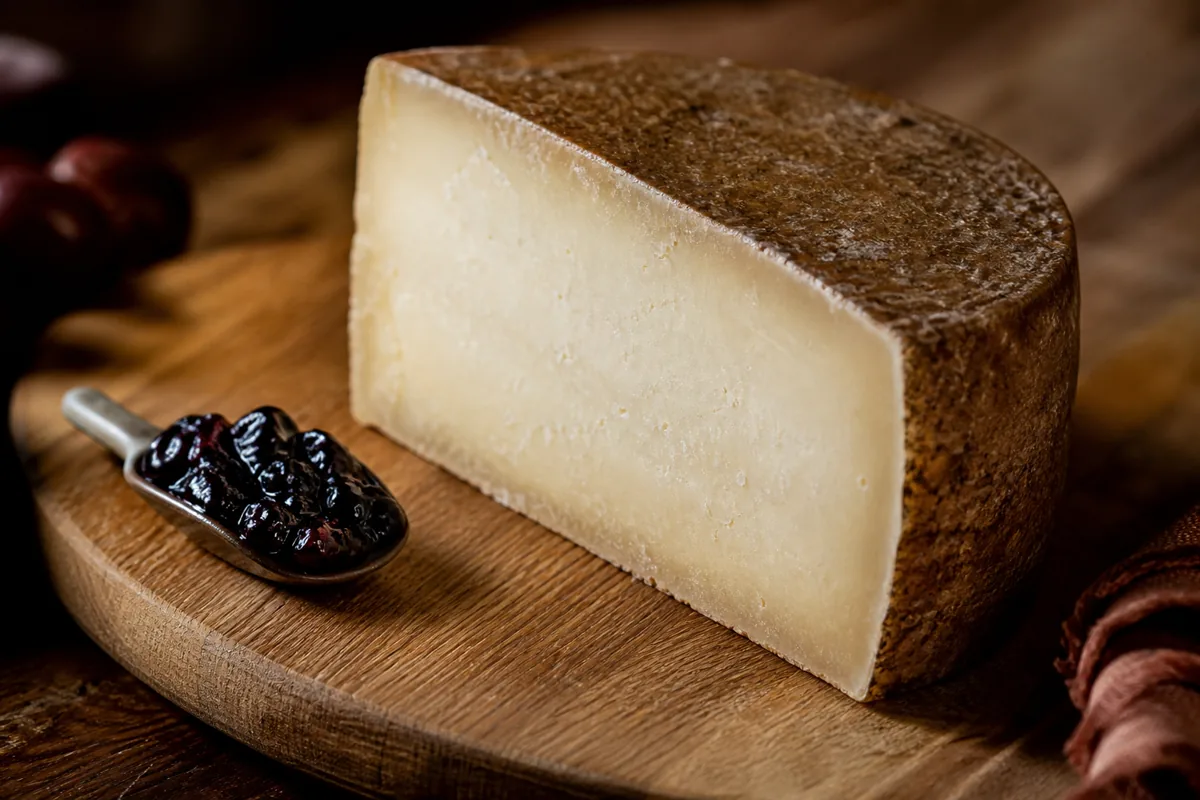
In the inspectorate's description, the rind is light brown and slightly glossy, and a genuine piece should not be overly soft or rubbery. Cut open, the paste is a rich cream colour that may be darker near the rind, though the 2025 paper also accepts a lighter, almost white paste.
The salt shows up in measurements: nine smoked Polish samples in the 2025 study averaged 2.33 percent salt, 27.5 percent fat and 26.4 percent protein. The paper notes that composition varies with smoking time and season.
That 2.33 percent average carries a standard deviation of 1.07 points, so one cheese can be a good deal saltier than the next. The average sits between the 0.5 to 0.7 percent salt of sour-curd cheeses and Emmental and the 4 to 6 percent of pickled cheeses such as feta, figures from a reference the paper cites.
Polish Wikipedia's nutrition panel, which cites the PZWL food composition tables, gives 369 kcal per 100 g, with 26.9 g of fat, 30.1 g of protein, 34.2 g of water and 1,442 mg of sodium. That water figure sits under the 44 percent cap in the EU specification.
How Do You Tell Real Oscypek from Gołka?
Check the shape and the milk: gołka is a cylindrical Polish smoked cheese made from cattle milk, while oscypek is a double cone made with at least 60 percent sheep's milk.
In Polish Wikipedia's account, selling gołka under the name oscypek was common enough that many sellers switched to the name scypek, which it calls unlawful because it misleads buyers.
Cow's-milk cheeses that look very much like oscypek turn up in Polish shops and restaurants as well as at mountain stalls, Local Food Advice says, adding that real oscypek is lighter than those, inside and out.
The 2025 paper's table lists the milk for 16 Polish samples bought as oscypek: eight sheep, two mixed and six cow.
Five of the 16 missed an EU composition limit: the three under the 56 percent dry-matter minimum were all listed as cow's milk, and two of the eight sheep samples fell below the 38 percent fat-in-dry-matter minimum. Even a sheep's-milk listing did not guarantee that a sample met the specification.
The Polish samples came from huts, farms and small dairies, mainly in Podhale and Bieszczady, and Bieszczady is not among the register's production areas. The paper labels one dairy's cheese "Oscypek type cheese", so its figures describe cheese sold as oscypek, not cheese verified as the PDO product.
| Check | Oscypek | Gołka |
|---|---|---|
| Shape | Two cones joined at the middle, 17 to 23 cm long | Cylinder |
| Milk | At least 60% sheep's milk | Cattle milk |
| Taste | Very salty and strong, in Local Food Advice's description | Delicate, not as salty |
| Colour | Light brown, slightly glossy rind | Yellow when smoked; a white unsmoked kind also exists |
On a stall, shape is your quickest check, while taste only helps after you buy. Before you pay, read the label: Local Food Advice names OWCZY, which it translates as made of sheep, as the word to look for.

Neither shape nor colour is foolproof: cheese sold as scypek can have a shape similar to the protected one, the paper accepts an almost white paste for oscypek, and Local Food Advice says unsmoked gołka is white.
Is Oscypek the Same Cheese as Slovak Oštiepok?
No: Slovak oštiepok is a separate cheese with its own protected name, a PGI where oscypek holds a PDO, and though the names are alike, the two differ in how they are made. Slovakia's protest delayed the oscypek registration, and the dispute ended with an agreement that oštiepok, despite a shared history, is a separate regional product.
| Check | Oscypek | Slovak oštiepok |
|---|---|---|
| Class | Hard scalded, smoked | Semi-fat, semi-hard; steamed or unsteamed; smoked or unsmoked |
| Milk | At least 60% sheep's milk | Sheep's milk, a sheep and cow mix, or pure cow's milk |
| Shape | Double cone, 17 to 23 cm long | Large egg, pinecone or ellipsoid with decorative relief |
| Smoke | Cold smoke, 3 to 7 days | Cold smoke from hardwoods, usually beech or oak, for several days |
| Minimum dry matter | 56% | 48% |
In the paper's own measurements, Polish samples averaged 25.91 percent protein and 59.70 percent dry matter against 22.79 and 55.20 for Slovak ones, and both gaps were statistically significant, while the differences in fat and salt were not. The name on the cheese tells you which specification it answers to: a cheese sold as oscypek answers to the Polish PDO, and one sold as oštiepok to the Slovak PGI.
How Do You Eat Oscypek?
The traditional serving is slices grilled or pan-fried until golden, with cranberry jam, żurawina, on the side. To grill it at home, Cheese Scientist's recipe cuts the cheese into rounds about 1 cm thick so they keep their structure on the grill, brushes them with olive oil, grills them 1 to 2 minutes per side until golden and tops them with cranberry sauce.

Local Food Advice describes oscypek pan-fried with fried onions and cranberries on the side and baked with bacon, and says it also makes a good starter in restaurants.
Oscypek also goes inside other food in Cheese Scientist's list: dumplings filled with oscypek, potato pancakes topped with grated or melted oscypek, and the highland sauerkraut soup kwaśnica, where it says melted oscypek adds a smoky depth.
| Use | How It Works |
|---|---|
| Grilled or pan-fried | Described as rounds about 1 cm thick, browned until golden and served with cranberry jam. |
| Melted or grated | Listed for kwaśnica soup, dumplings and potato pancakes. |
| With beer | Cheese.com suggests beer as the accompaniment. |
Where Can You Buy Real Oscypek?
Local Food Advice calls mountain shelters the safest place to buy, and warns that mislabelled cheese is common among street vendors on Krupówki Street and near Gubałówka mountain. It also points to the Szlak Oscypkowy, a list of mountain shelters that sell authentic oscypek.
Ask the seller for a certificate of authenticity, as Local Food Advice advises. A certificate of conformity with the EU specification goes to a producer only after an inspection of the place of production, the methods, each production stage and the origin of the raw materials.
A genuine oscypek carries the PDO mark on its packaging or in the seller's documentation, and the label or packaging is also where you check the milk species. The specification allows it to be sold only as a whole piece, so you can check the cone's shape and size on the piece itself.
Before paying, buy at a mountain shelter, ask for a certificate of authenticity and look for OWCZY, which Local Food Advice translates as made of sheep, on the label.
What Can You Use Instead of Oscypek?
If you cannot find oscypek, Cheese Scientist names two stand-ins, smoked provolone and smoked scamorza (scamorza affumicata), and says both are often semi-soft. It says oscypek is denser and drier than provolone, and credits that texture for oscypek's suitability for grilling.
Cheese Scientist also calls oscypek firmer and saltier than smoked Gouda, with a more pronounced smoky flavour, so a Gouda stand-in loses salt and smoke as well as firmness. No substitute carries the protected name, so choose by the property you want to keep: the bite that holds up on a grill, the smoke or the salt.