Cachaille is a strong cheese preparation from southeastern France, and no single recipe defines it.
Herders originally made it for their own use, according to the Observatoire des Produits du Terroir, which names cow tomme, cow-whey brousse, and goat tomme as bases in three different areas.
In This Article
What Is Cachaille?
Cachaille is also spelled cassaille or cacheille, and Le Gourmeur files it under the name pot marseillais.
The Observatoire says broussin or brou is the name on the Var coast and in the Nice hinterland, and it lists catcha, toupine-pétafine, and fuorte for the Queyras. It adds that a different composition gets a different name.
Cheese.com gives cacheille for the Lure and Banon region, fuorte for Queyras, and toupina for Briançonnais. For the Haut-Verdon it prints "wrestling", where French Wikipedia gives catcha, and Les produits laitiers adds fort de Ventoux for the Ventoux area.
Cheese.com places the cheese in the village of Puimichel in the Provençal Alps, and French Wikipedia says the first references would come from that village. Wikipedia adds that it was reported from the southern Alps as far as Marseille at the time of the Revolution.
The Observatoire defines it as a specialty made by mixing, fermenting, or both, using dairy products and other ingredients that follow regional tradition. Le Gourmeur dates it to the 18th century.
Each family developed its own method, according to Cheese.com, and Le Gourmeur says variants still differ from city to city.
Why Was Cachaille Made from Leftover Cheese?
Le Gourmeur describes the base as expired sheep and goat cheeses, and Les produits laitiers says the whole fromage fort family exists to use up leftovers, unsold cheese, and batches that went wrong in the making.
That purpose fits the Observatoire's report that herders first made it for their own consumption. French Wikipedia adds that the people of Reillanne, known for thrift, were mocked with the nickname mangea-cacheïo, "cachaille eaters", which suggested they lived on nothing but dry fermented tommes.
It was also a traded food: French Wikipedia quotes a passage on its former importance in the diet of peasants, who stocked up on it at the annual fair of Saint-Jean-de-Guarguier near Gémenos in the Bouches-du-Rhône. The name used in that passage is broussin, also called fromàgi couiènt.
Why Does Cachaille Change from Valley to Valley?
The Observatoire names a different base in each area: cow tomme and other cheese pieces in the Hautes-Alpes, cow-whey brousse in the Nice area, and goat tomme in the Maures massif.
French Wikipedia describes leftover sheep tomme and goat brousse as the base. Cheese.com calls it a soft goat's milk cheese.
| Source and area | Base | Additions named |
|---|---|---|
| Observatoire, Hautes-Alpes | Cow tomme and cheese pieces | Plum or grape eau-de-vie, or apple marc |
| Observatoire, Nice area | Cow-whey brousse | None named |
| Observatoire, Maures massif | Goat tomme | None named |
| French Wikipedia, Provence | Leftover sheep tomme and goat brousse | Eau-de-vie, white wine, vinegar, onion, garlic, olive oil, salt, pepper |
| Cheese.com, Puimichel | Tomme or leftover cheese, goat's milk | Pepper, onion, olive oil, wine, salt, brandy |
| Le Gourmeur | Expired sheep and goat cheeses | Eau-de-vie, vinegar, white wine, garlic, olive oil |
Eau-de-vie or brandy appears in four of the six rows, olive oil in three, and garlic in two. Le Gourmeur says the base is identical in every region, yet no two rows in the table match.
Les produits laitiers says every fromage fort starts from local cheese, cow or goat, and that the alcohol and the aromatics, from garlic and pepper to herbs, spices, or raisins, change with the area and the taste wanted. That offers one reading of the table: the base follows the local cheese, so cow tomme in the Hautes-Alpes and goat tomme in the Maures massif are both local choices.
What Does Cachaille Taste Like?
French Wikipedia calls cachaille a strong cheese, and Le Gourmeur says that in the 18th century the uninitiated found it far too strong to eat.
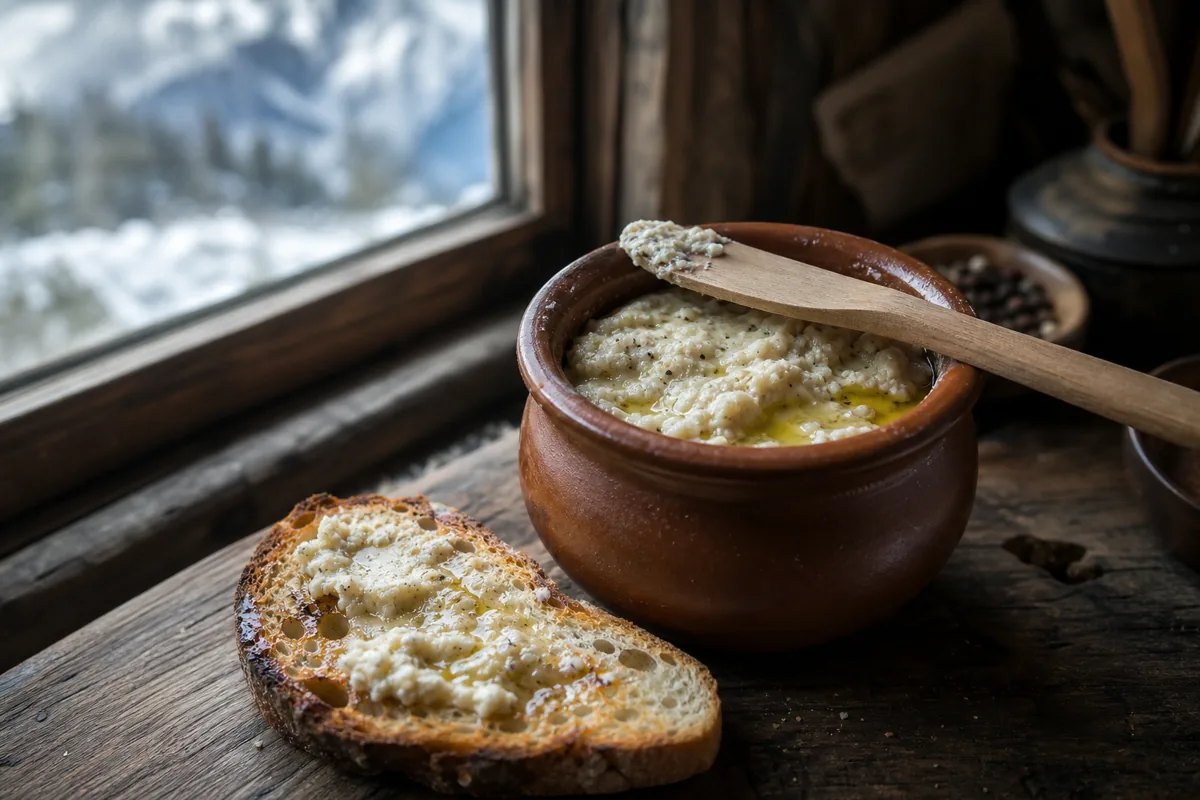
The finished paste is very creamy and slightly yellow, according to Le Gourmeur, and Cheese.com lists the texture as soft.
Les produits laitiers says that after ageing a fromage fort becomes pasty and takes a colour from yellowish to bluish. French Wikipedia quotes a description of the same paste as an unctuous cream, cream in colour, vaguely turning yellow or blue.
Les produits laitiers adds that fromages forts are as powerful on the nose as in the mouth, a muscular tasting that does not always please delicate palates.
If you want to compare two jars, the cheeses and additions each maker names are the guide, because the descriptions carry no fat percentage, salt level, or strength scale.
How Long Is Cachaille Aged, and How Is a Pot Kept Going?
Two sources give figures, but the Observatoire reports a fermentation period and French Wikipedia an ageing time. Two to three months sits inside the Observatoire range, so the figures do not conflict.
| Source | What it reports |
|---|---|
| Observatoire des Produits du Terroir | Fermented versions are made after a few weeks to several years of fermentation, and unfermented versions are eaten within days |
| French Wikipedia | Ageing lasts two to three months |
| Cheese.com and Le Gourmeur | No ageing time given |
French Wikipedia quotes the food journalist Frédéric Zégierman on why there are two kinds: in one, fermentation has no time to develop and the cheese is eaten within days of making, and in the other, fermentation is needed to "digest" the old cheese leftovers.
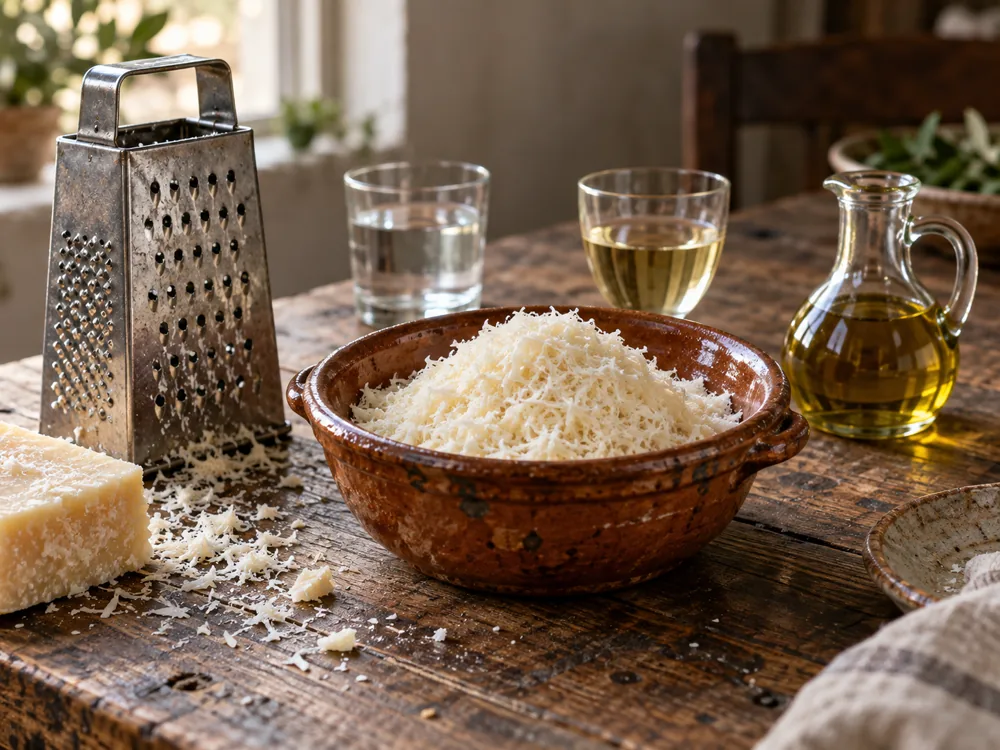
The same entry describes the method: dried grated cheese is moistened with eau-de-vie, white wine, and oil, most often olive oil, then mixed with fresh cheese no older than three days.
The pot keeps going when an equal amount of cheese is added after each portion is taken out, and French Wikipedia says it can then last up to 20 years. Les produits laitiers describes the same refill habit across the fromage fort family, with the pot fermenting continuously through the year.
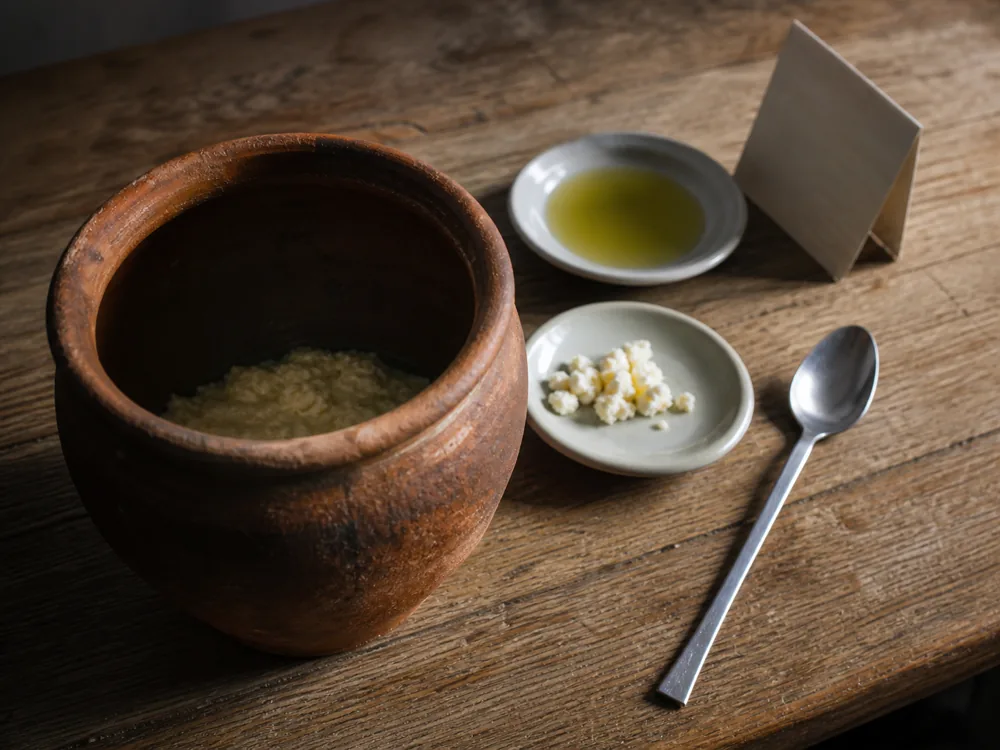
The Observatoire says cachaille is generally stored in earthenware jars and has pronounced aromas, and Les produits laitiers describes the pots for fromages forts as earthenware or stoneware.
It also reports that folk medicine once recommended cachaille for throat infections.
Keeping a pot going for years is a tradition, not a tested food-safety method, so this article offers no recipe for starting one.
How Do You Serve Cachaille?
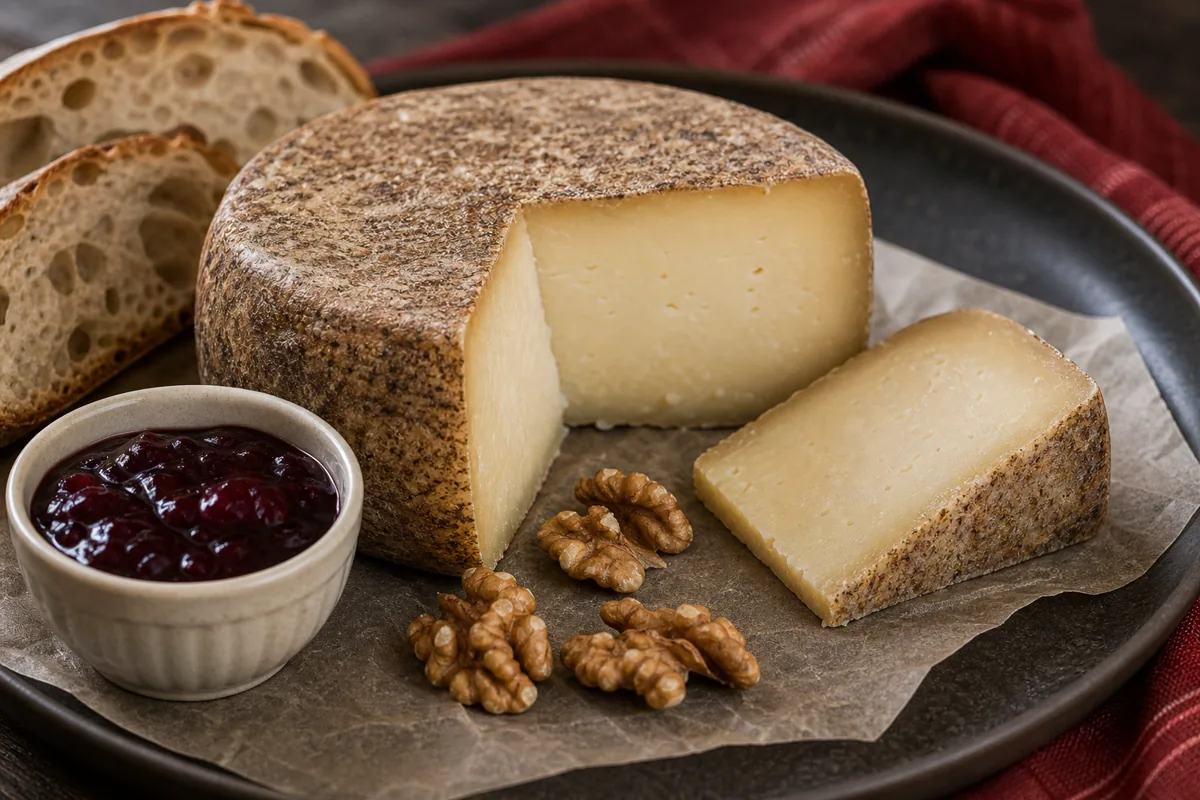
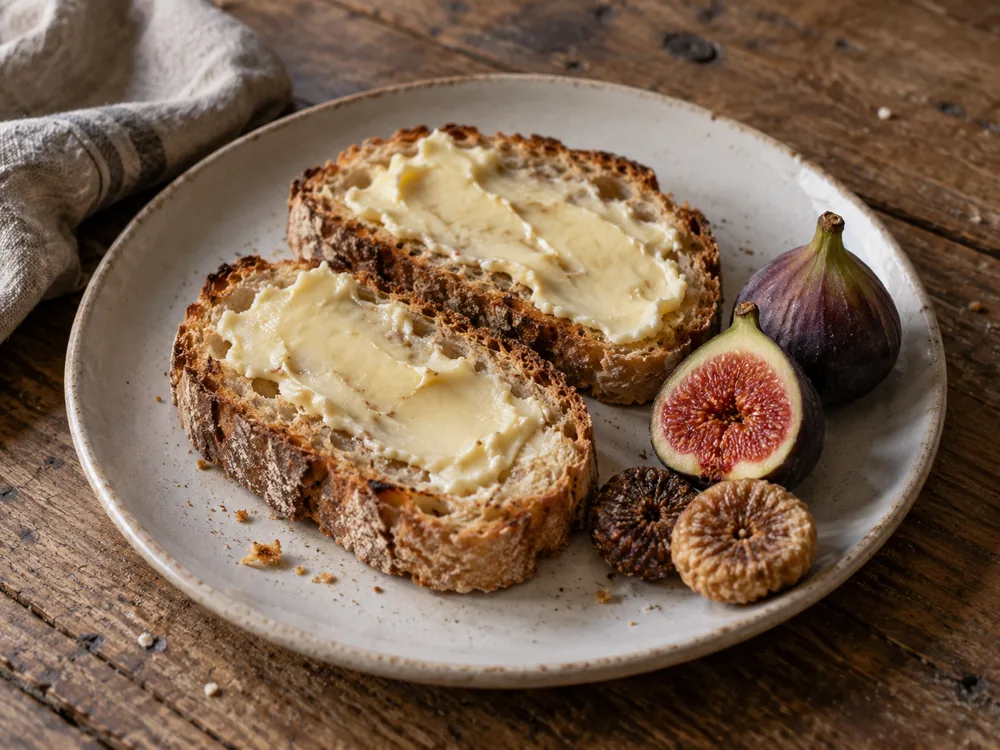
The traditional serving for cachaille is a slice of hot toasted bread, which melts the paste, and you can add olive oil on the toast. The Observatoire names this as a snack.
French Wikipedia says the bread can be grilled, peppered, onioned, or oiled. Le Gourmeur and Les produits laitiers both suggest country bread.
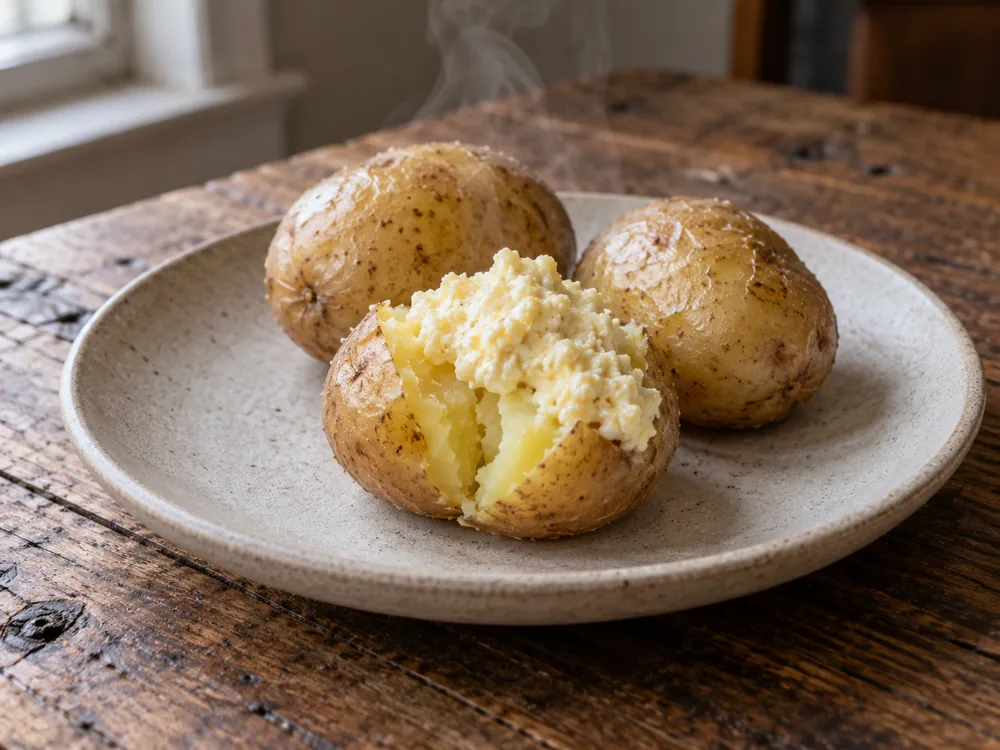
Hot potatoes are the other traditional base, named by both the Observatoire and French Wikipedia.
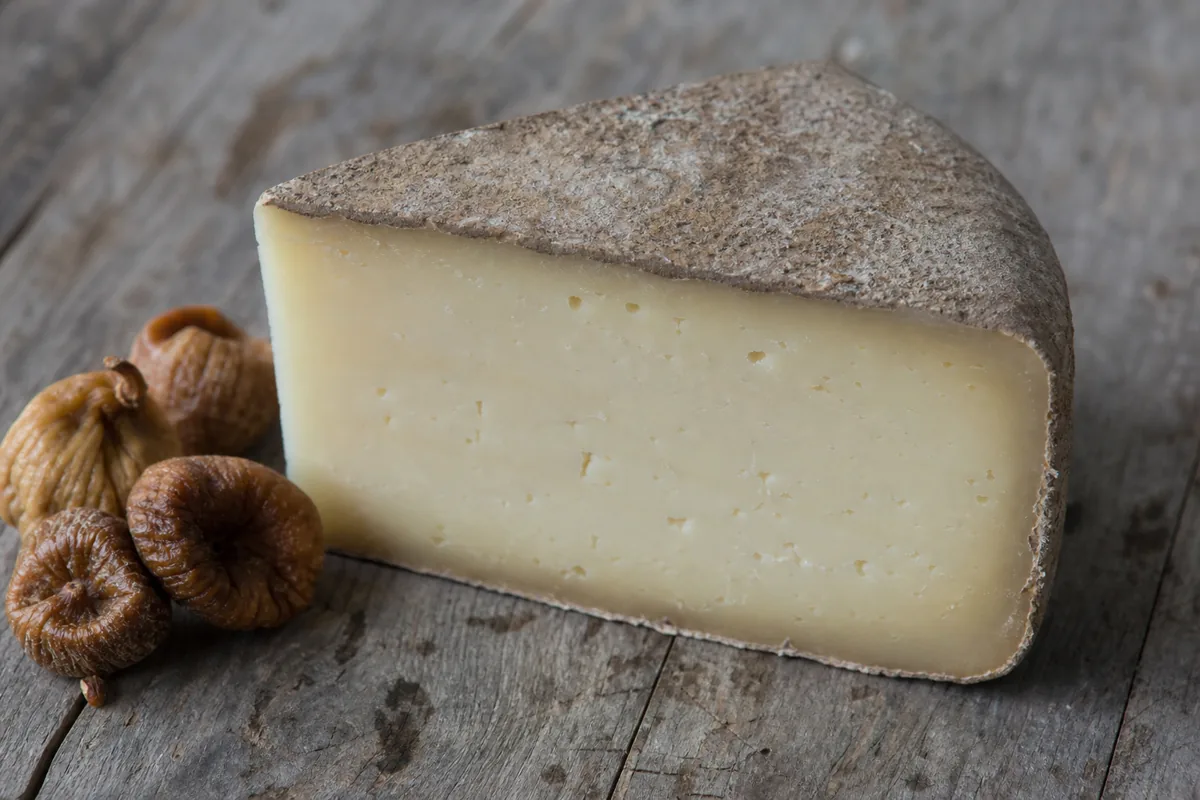
In Provence, French Wikipedia adds, people eat it with fresh or dried figs to calm its strength, and Les produits laitiers gives the same reason.
For a drink with the potatoes, both the Observatoire and French Wikipedia name red wine, and the Observatoire specifies a tannic one. French Wikipedia also names white or rosé.
| Pairing | Why It Works |
|---|---|
| Tannic red wine | Named by the Observatoire with hot potatoes. French Wikipedia also names red wine with steamed potatoes. |
| White or rosé wine | Named by French Wikipedia. |
How Does Cachaille Relate to Other Fromages Forts?
Les produits laitiers uses fromage fort as the generic name for preparations of leftover cheese, alcohol, and aromatics kneaded together in a large earthenware or stoneware pot, and it counts cachaille among them.
It finds the recipe above all in Rhône-Alpes and Provence. Its other examples include the fromage fort de la Croix-Rousse, pétafine du Dauphiné, and toupina of Savoie in Rhône-Alpes, bossons macérés in the Vivarais, pourri bressan in the Ain, fort de Béthune in the Pas-de-Calais, and confit d'Époisses in Burgundy.
The names overlap with cachaille's: Les produits laitiers puts toupina in Savoie and pétafine in the Dauphiné, while the Observatoire lists toupine-pétafine for the Queyras and Cheese.com gives toupina for the Briançonnais.
Where Can You Buy It?
The list of cheeses and additions on a jar is your only guide to what it holds.
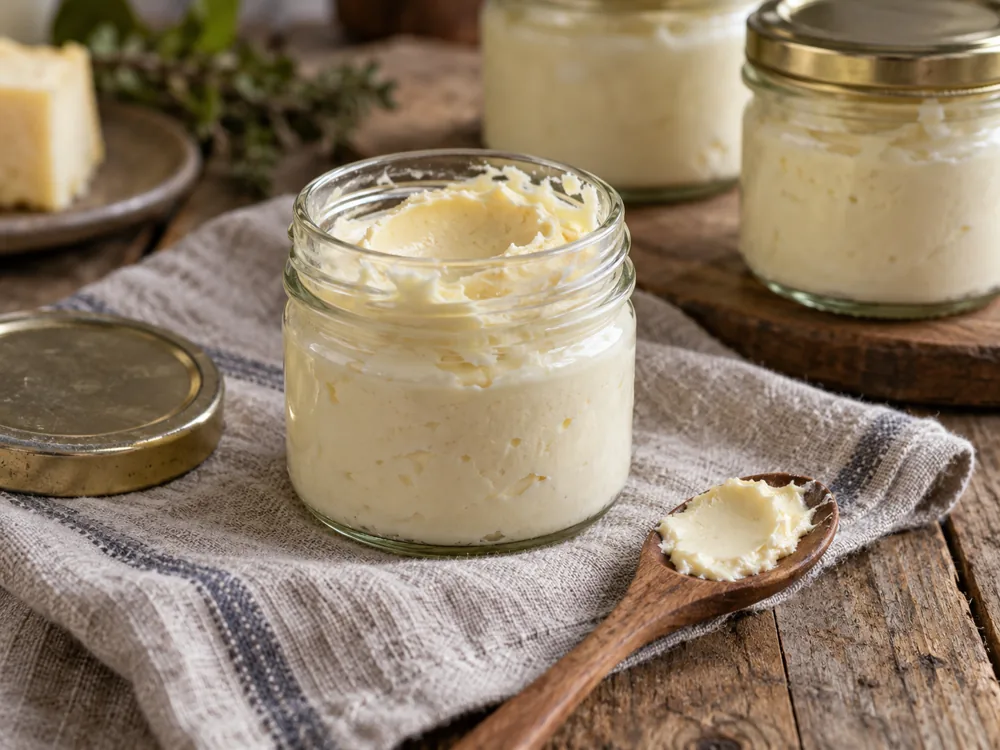
French Wikipedia calls it a typical regional product, easy to find at producers' markets in Provence and sold in glass jars that show off the paste.
Cheese.com marks it as not vegetarian and not vegan.
Is Cachaille Safe During Pregnancy?
The Observatoire describes cachaille as a mix of dairy products, so the milk treatment could differ from one jar to the next. Check the label for the milk used in yours.
The NHS advice for pregnancy says pasteurised or unpasteurised mould-ripened soft cheeses with a white coating, and soft blue-veined cheeses, must be thoroughly cooked. It lists hard cheeses as safe either way, and any cheese cooked until steaming hot, including soft or blue cheese, as safe.
The CDC lists soft cheese made from unpasteurized milk among the riskier choices. It says pregnant women are 10 times more likely to get a Listeria infection.
Spreading cachaille on hot toast melts it, according to the Observatoire, but melting on toast is not the same as cooking it until steaming hot all the way through.
Follow the maker's label for refrigeration time and storage after opening.
SOURCES & REFERENCES
The Observatoire defines it as a specialty made by mixing, fermenting, or both, using dairy products and other ingredients. The sources name different bases and additions, so it is a family of regional preparations.
French Wikipedia calls it a strong cheese, and Le Gourmeur says it is very creamy and slightly yellow, and that the uninitiated once found it far too strong.
No. The Observatoire separates versions made after a few weeks to several years of fermentation from unfermented ones eaten within days.
The Observatoire names hot toasted bread, with optional olive oil on the toast, and hot potatoes. French Wikipedia adds grilled bread and, in Provence, figs.
The sources give no salt level, acidity, temperature, or safety test, so this article offers no home method. French Wikipedia only describes adding an equal amount of cheese after each removal.