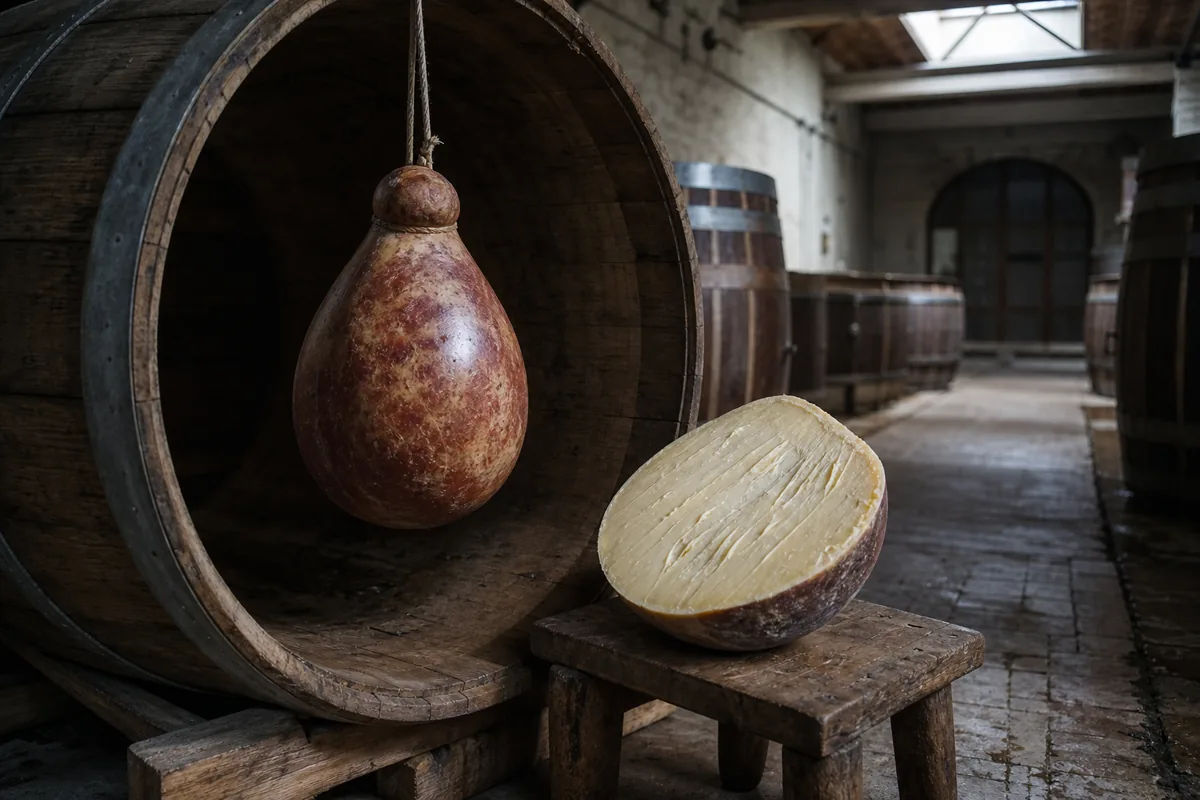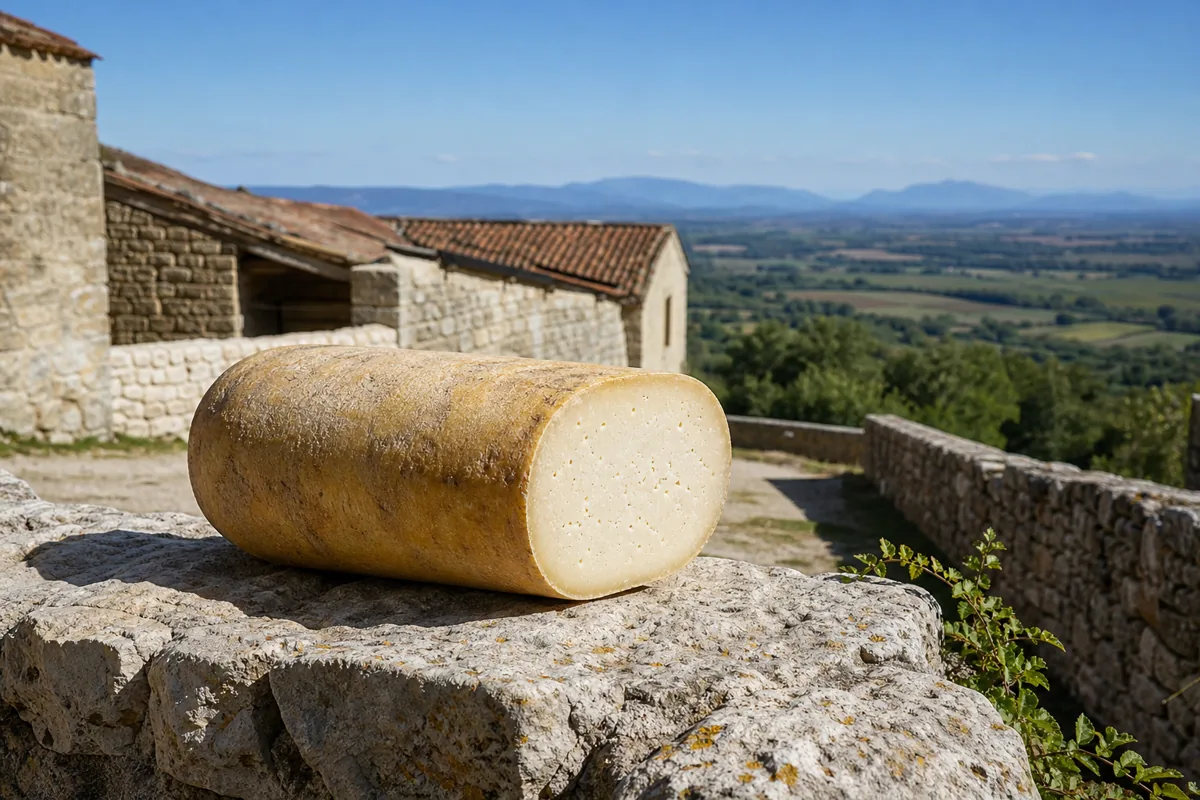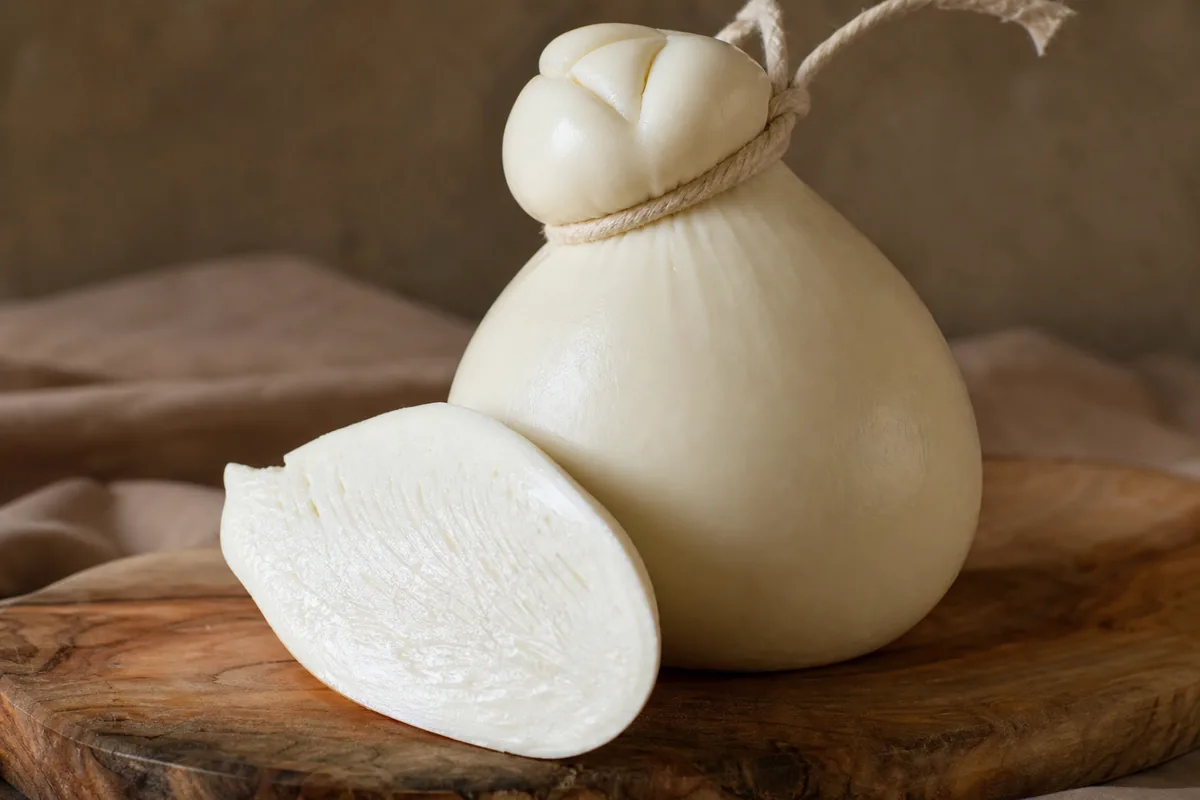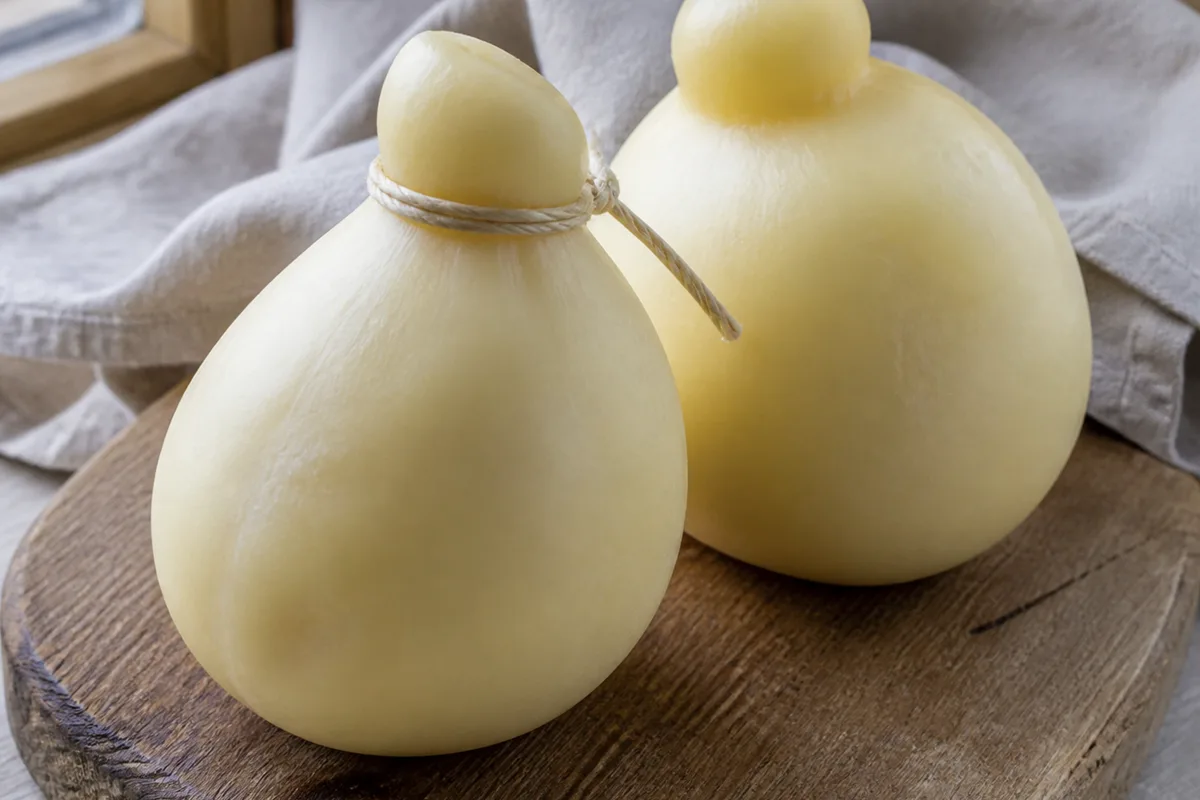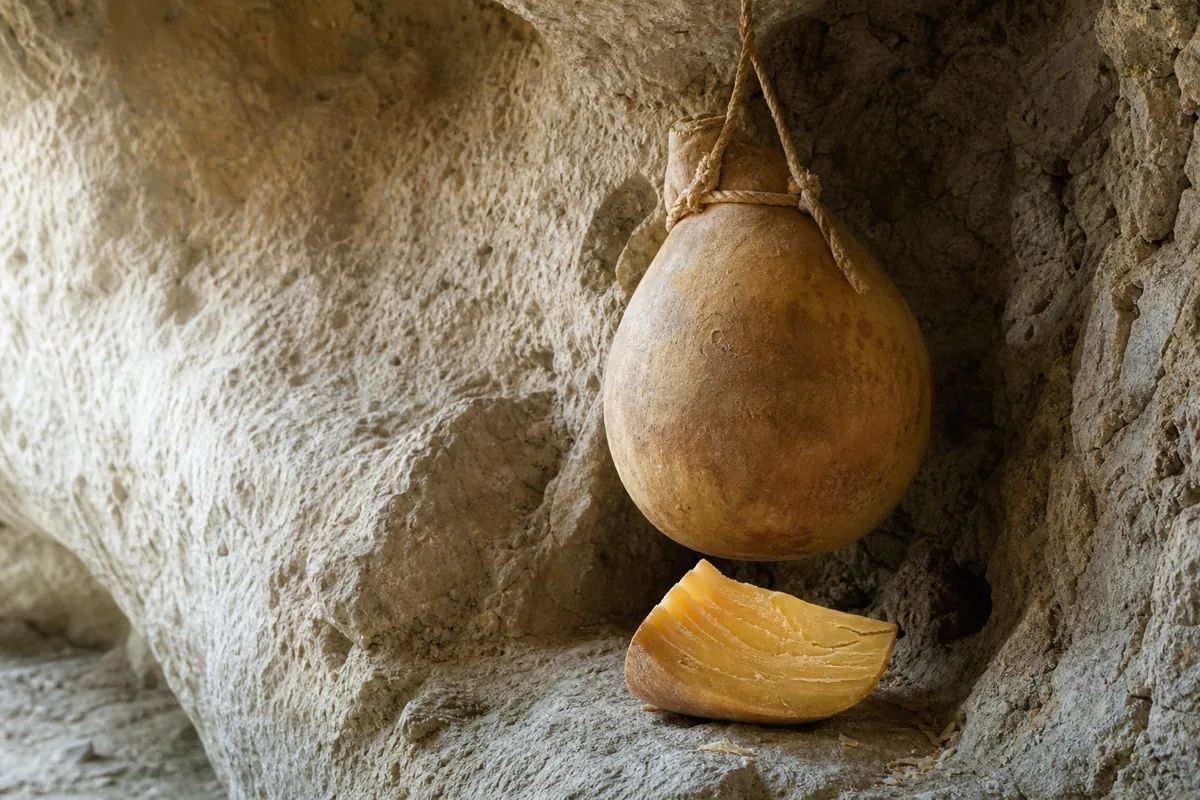
Caciocavallo Podolico Vetus is a cow's milk caciocavallo that Casa Madaio finishes for one to two years in natural caves at Castelcivita, in Campania, Italy.
In This Article
What Is Caciocavallo Podolico Vetus?
Casa Madaio selects young caciocavallo pieces that can keep seasoning in its natural caves at Castelcivita, and the result of that selection is Vetus, Latin for old. In Cheese.com's description, a select few matured Caciocavallo Podolico cheeses go on to that further maturation and become Vetus.
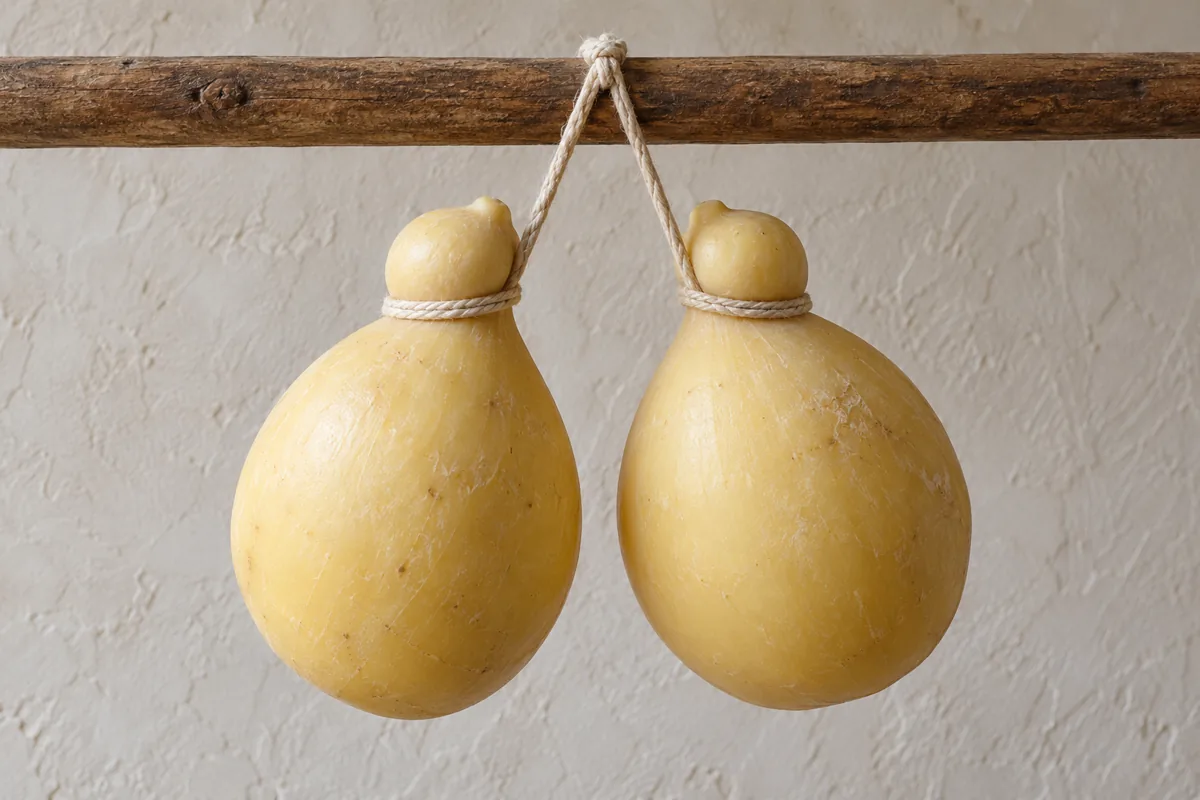
Caciocavallo itself is a stretched-curd cheese from southern Italy, made with sheep's or cow's milk. The name literally means horse cheese, and it is generally thought to come from two forms being bound with rope and left to mature astride a horizontal stick.
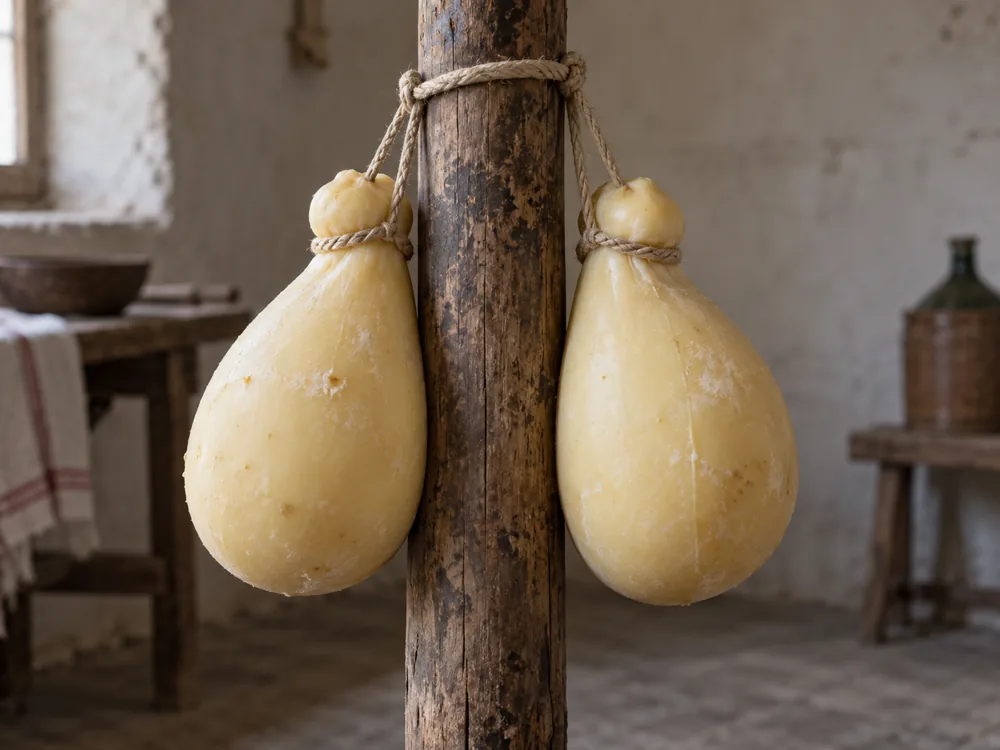
Wikipedia describes the teardrop-shaped style as tasting similar to aged provolone, with a hard, edible rind.
What Milk Is Caciocavallo Podolico Vetus Made From?
Vetus is made from cow's milk: Casa Madaio describes fresh milk from cows grazing in the Cilento area, and it makes its Caciocavallo Podolico with milk from the Podolica cattle breed at its dairy farm.
Podolica are grey cattle, lighter grey to white in females and darker in bulls. They graze shrub-covered land, stubble and bush areas, feeding on shrub leaves, tree shoots and grassy underbrush.
ANABIC credits the breed with an exceptional ability to adapt to difficult environments and calls its milk ideal for caciocavallo.
The breed was long kept mainly for work, with beef and dairy secondary, and mechanisation turned selection toward beef and, to a lesser extent, dairy.
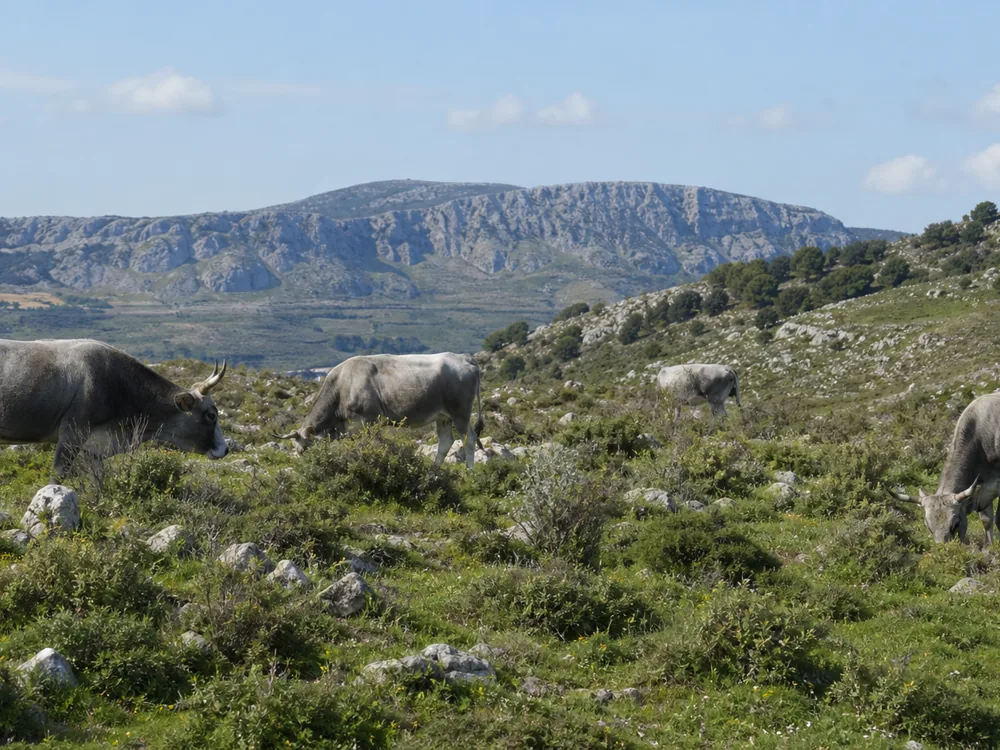
Casa Madaio traces the cheese's complex aroma to the volatile components in the herbs and shrubs its grazing animals choose.
The Podolico style as a whole uses only Podolica cow's milk and is made in the traditional way, only at certain times of the year. Italian Wikipedia credits the style with complex aromas of pasture and scrubland.
How Long Is Caciocavallo Podolico Vetus Aged?
Vetus spends 12 to 24 months in the caves: Casa Madaio gives one to two years in natural caves, and the Australian retailer Ocello lists 12 months, the low end of that range. Ask the seller where your piece falls.
| Question | Value or range | Given by |
|---|---|---|
| Time in natural caves | One to two years; 12 months | Casa Madaio (one to two years); Ocello, a retailer (12 months) |
| Wait attached to the selection of young pieces | At least about one year | Casa Madaio |
| How long Caciocavallo Podolico as a style can age | Up to five or six years | Italian Wikipedia, for the style as a whole, not Vetus |
Casa Madaio also attaches a wait of at least about one year to its selection of young pieces.
Cheese.com describes what longer ageing does to Caciocavallo Podolico in general: continuous humidity exposure develops sharp, spicy flavors, and prolonged ageing adds earthy undertones and fruity aromas. With age, Caciocavallo Podolico also moves from milky white to a darker yellow and becomes saltier.
What Are the Castelcivita Caves Where Vetus Ages?
They are Casa Madaio's natural caves at Castelcivita. In a 2012 profile of the dairy, Luciano Pignataro described them as caves of living stone in a small town on a rocky spur at the foot of the Alburni mountains, where Casa Madaio slowly aged its long-aged cheeses and the most prized pieces of its range.
At the time, the dairy's site at Eboli handled the fresh cheeses and the ageing of the medium-aged ones, and Pignataro called the Castelcivita caves ideal in temperature and humidity.
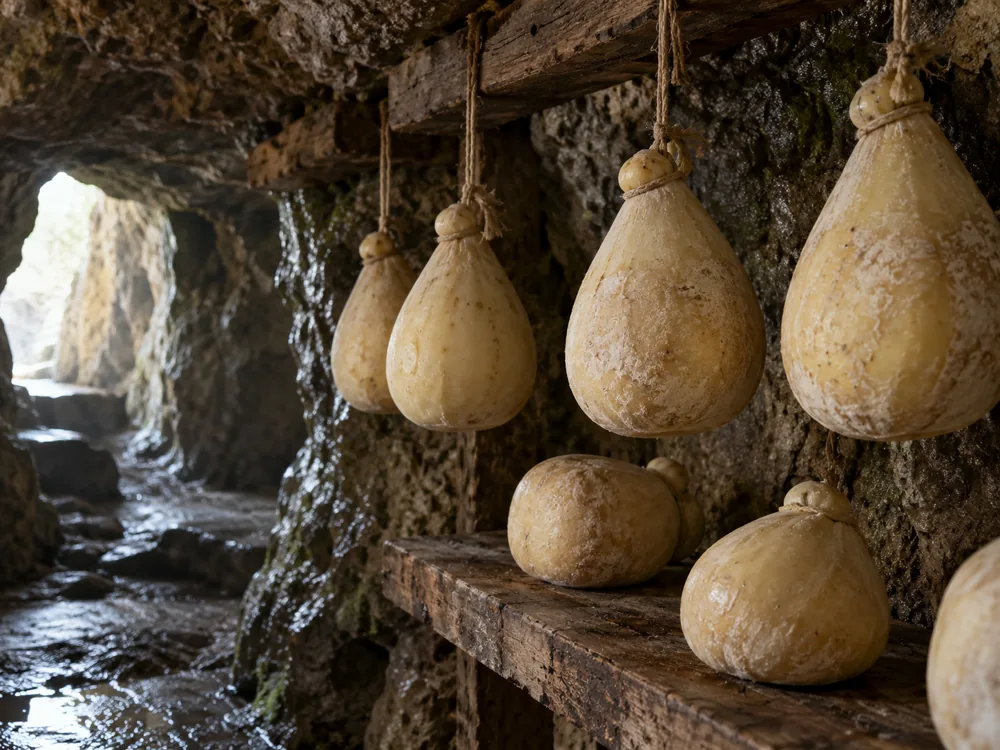
His tour of the range ran from buffalo yogurt, butter and Campanian buffalo mozzarella to Vetus.
What Are the Rind, Paste and Flavor of Vetus Like?
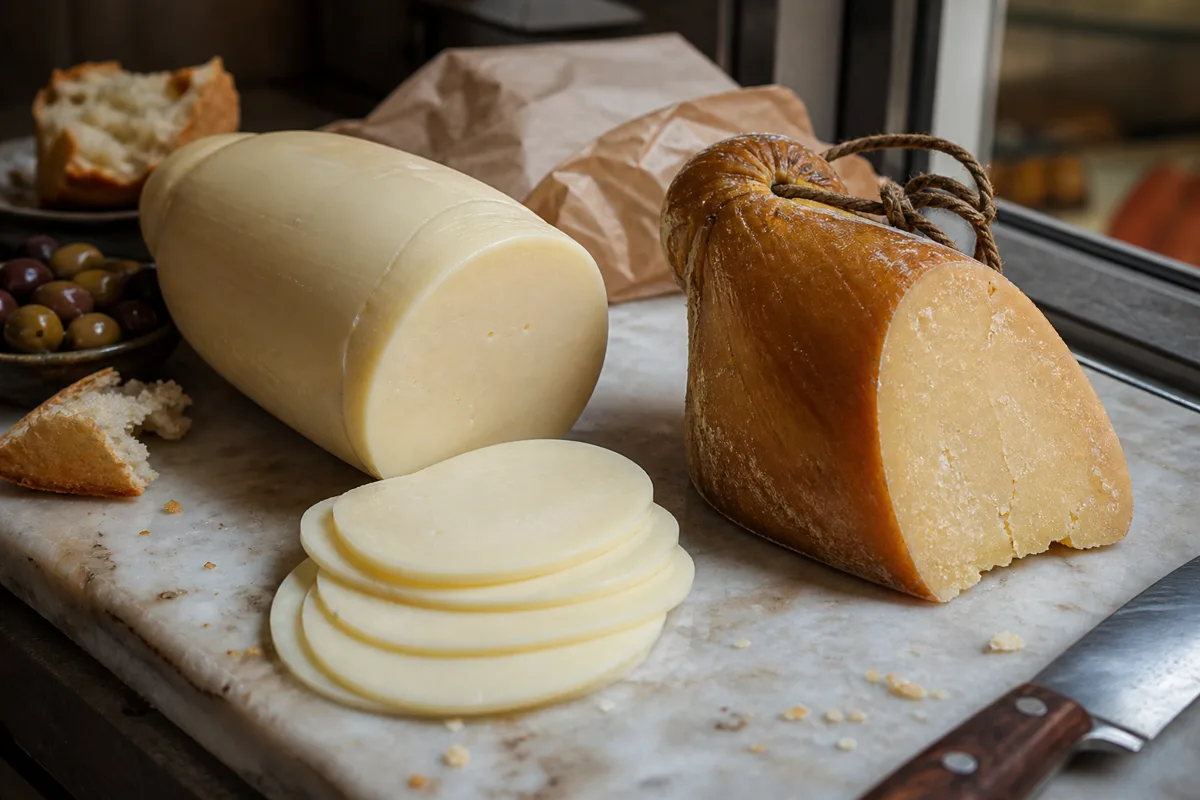
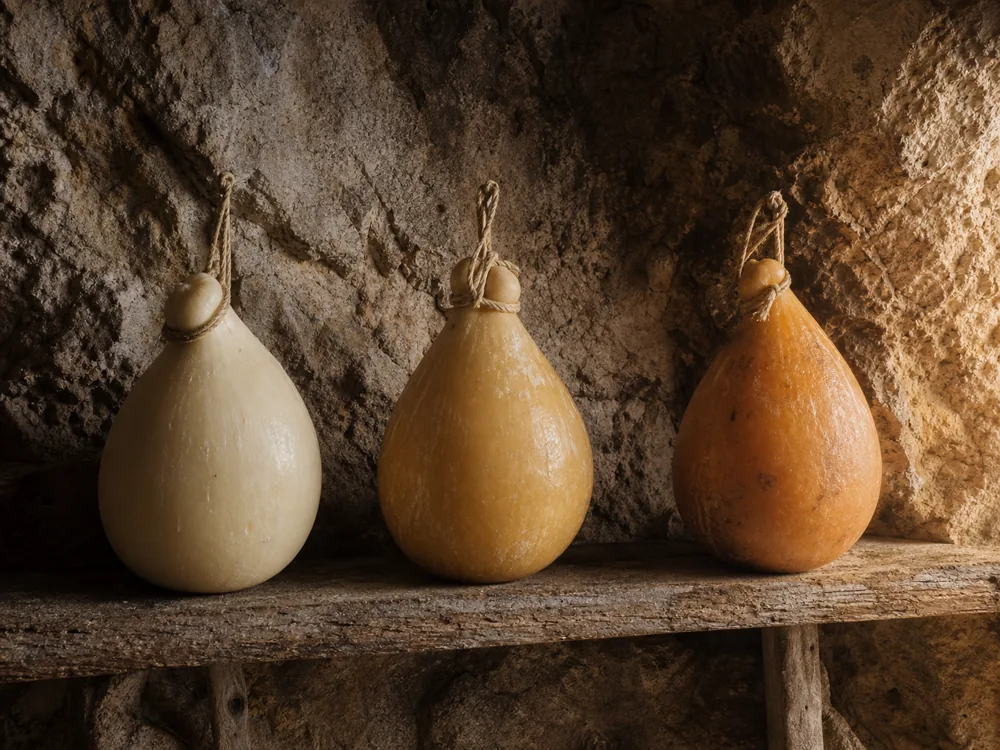
The rind is natural, thin and smooth, running from alabaster white to amber yellow, and Ocello calls it leathery.
Three of the four descriptions give a flaky or sheet-like paste, the maker's structure made of sheets among them, while CheeseRef lists it as springy and stringy.
| Question | Range of descriptions | Given by |
|---|---|---|
| Rind | Natural, thin and smooth, alabaster white to amber yellow; leathery | Casa Madaio (thin and smooth, alabaster white to amber yellow); Cheese.com (natural; thin and smooth, alabaster white to amber); Ocello (leathery natural rind); CheeseRef (natural, yellow) |
| Paste | Made of sheets, or firm and flaky; springy and stringy in one entry | Casa Madaio (structure made of sheets); Cheese.com (firm, with a classic flaky structure); Ocello (firm and flaky); CheeseRef (springy and stringy) |
| Type | Soft | Cheese.com and CheeseRef |
| Flavor | From sweet and medium-bodied to sharp, tangy, salty and spicy | Casa Madaio (sweet, medium-bodied, slight aftertaste of butter and hazelnut); Cheese.com (buttery and sweet, with a sweet and sharp combination); Ocello (full and slightly piccante, with a nutty, herbaceous finish); CheeseRef (sharp, tangy, salty and spicy) |
| Aroma | Earthy | Cheese.com (earthy); CheeseRef (earthy, strong) |
Cheese.com and CheeseRef both file Vetus under a soft type, while Cheese.com's own texture field says firm.
Casa Madaio calls Vetus sweet and medium-bodied, with a slight aftertaste of butter and hazelnut, and each of the other three descriptions includes sharp or slightly piccante.
How Does Vetus Differ from Caciocavallo Silano and Other Caciocavallo?
If your label reads Caciocavallo Silano DOP, it names a different, protected cheese, while the Vetus name comes from the maker's own selection in its caves.
Caciocavallo has several named types. Caciocavallo silano is made with cow's milk in designated areas of Basilicata, Calabria, Campania, Molise and Apulia and gained protected geographical status in 1993, while caciocavallo podolico is recognised as a traditional agri-food product (PAT).
| Name | Milk | What the name means | Other details |
|---|---|---|---|
| Caciocavallo | Sheep's or cow's | A style made across southern Italy | Teardrop shape, taste similar to aged provolone, hard edible rind |
| Caciocavallo Silano DOP | Cow's | Protected geographical status, designated areas in five regions | Gained protection in 1993 |
| Caciocavallo Podolico | Podolica cow's only | Traditional agri-food product, with Gargano, Lucanian and Campanian varieties | Made the traditional way and only at certain times of the year; advanced ageing can reach five or six years |
| Caciocavallo Podolico Vetus | Cow's | Casa Madaio's name for selected pieces finished in its caves | One to two years in natural caves per the producer |
The make of Vetus closely follows that of traditional caciocavallo.
The Campanian variety of caciocavallo podolico covers the whole region, with particular attention to Benevento, Salerno and Avellino.
How Do You Serve Caciocavallo Podolico Vetus?
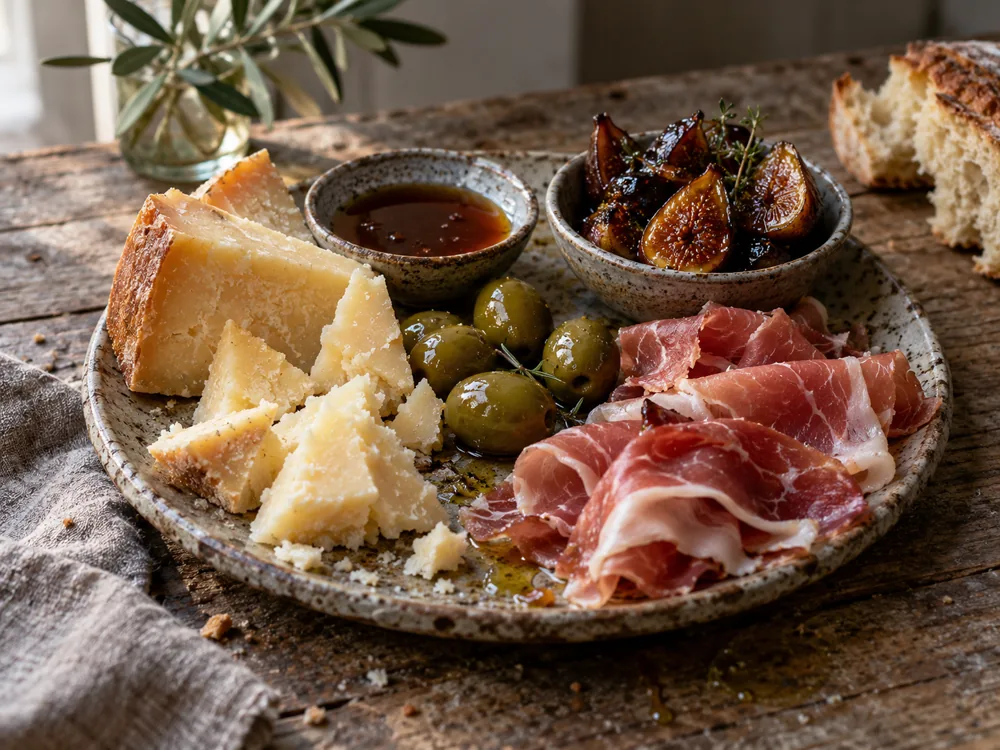
Caciocavallo podolico is eaten only at the table, usually at the end of a meal, while Ocello places Vetus on antipasti platters.
| Pairing | Why It Works |
|---|---|
| Olives and cured meats | Ocello suggests serving the mature, full-flavored cheese with olives and cured meats on antipasti platters. |
| Chestnut honey | Ocello suggests chestnut honey as a second option. |
| Caramelised figs in balsamic | Ocello suggests caramelised figs in balsamic as a third option. |
To drink with it, Ocello names fuller-bodied white wines such as Chardonnay and Catarratto, dry red varietals, and lager.
Where Can You Buy Vetus, and Under Which Names?
Casa Madaio, its producer, sells Vetus through its own e-shop, and the retailer Ocello lists it too, under one of the three names the cheese goes by.
- Caciocavallo Podolico Vetus: the name on Cheese.com and CheeseRef.
- Caciocavallo Vetus: the producer's English product title, listed as a synonym on Cheese.com.
- Caciocavallo di Grotta Casa Madaio Vetus: the title at Ocello, where di Grotta is Italian for of the cave.
On a shop label, look for one of these three names and for Casa Madaio as the maker.
Is Caciocavallo Podolico Vetus Pasteurized, and Is It Safe in Pregnancy?
Cheese.com and CheeseRef both list Vetus as made from pasteurized cow's milk, and Cheese.com gives it a firm texture. Check the milk line on the label of your own piece to confirm it.
The NHS lists pasteurised or unpasteurised hard cheeses, such as cheddar, gruyère and parmesan, as safe to eat, and it lists pasteurised soft cheeses as safe too.
Among foods to be careful with, the NHS says pasteurised or unpasteurised mould-ripened soft cheeses with a white coating on the outside, and pasteurised or unpasteurised soft blue-veined cheeses, must be thoroughly cooked.
The CDC lists soft cheese made from unpasteurized (raw) milk as a riskier choice. It says pregnant women are 10 times more likely to get a Listeria infection.
The CDC lists hard cheese made with pasteurized milk, such as Asiago, Cheddar, Parmesan, or Swiss/Gruyere/Emmental, as a safer choice, along with cottage cheese, cream cheese, string cheese, feta and mozzarella, when made with pasteurized milk, and pasteurized soft cheeses heated to an internal temperature of 165°F or until steaming hot.
Vetus is filed as a soft type but described as firm. Served cold, a pasteurized cheese filed as soft or described as firm is a type the CDC list does not cover, so ask a midwife or doctor whether Vetus counts as a hard cheese.
SOURCES & REFERENCES
What Else Do People Ask About Caciocavallo Podolico Vetus?
Casa Madaio ages it for one to two years in its natural caves, and the retailer Ocello lists 12 months, the low end of that range. Ask the seller for the age of the piece you are buying.
Cheese.com and CheeseRef list it as made from pasteurized cow's milk. Check the milk line on the label of your piece.
Vetus is Latin for old. Casa Madaio says the cheese takes that name after its stay in the natural caves.
The producer calls it sweet and medium-bodied with a slight aftertaste of butter and hazelnut. Ocello describes it as full and slightly piccante with a nutty, herbaceous finish.
No. Caciocavallo silano is a separate cow's milk cheese with protected geographical status, while Vetus is Casa Madaio's name for young caciocavallo pieces selected to finish in its natural caves.