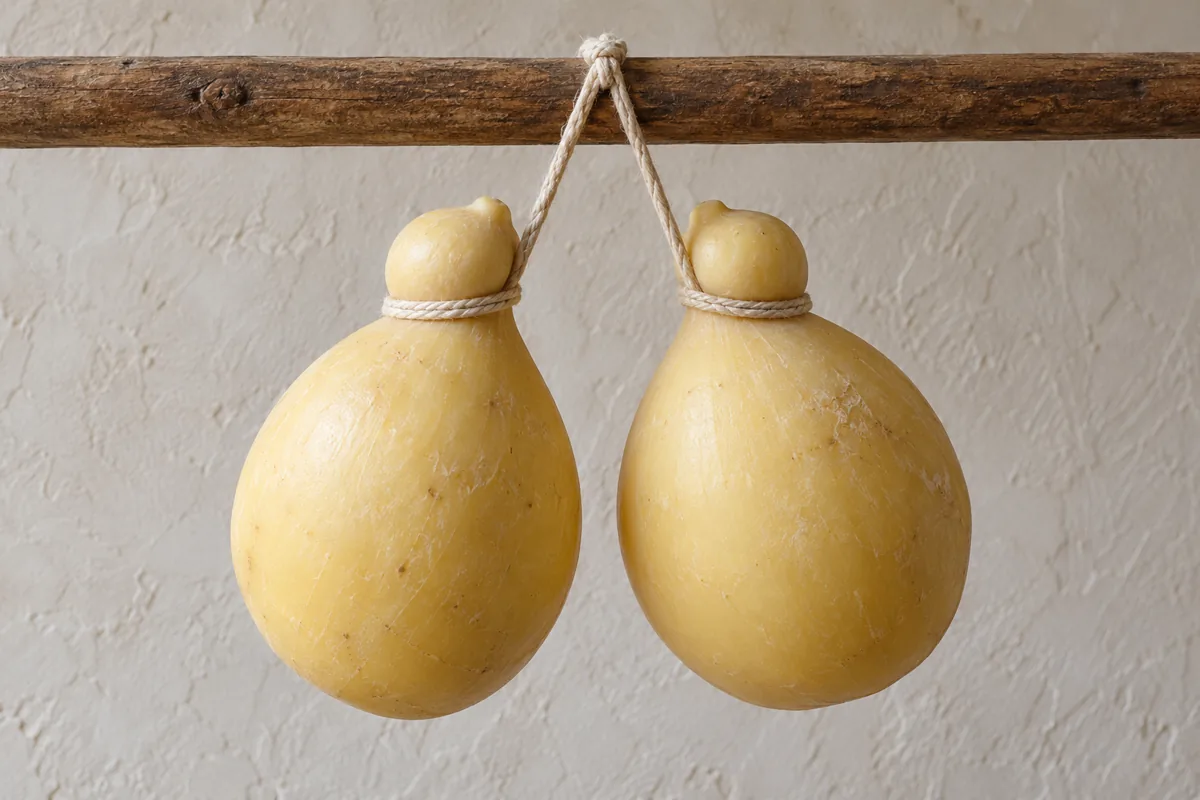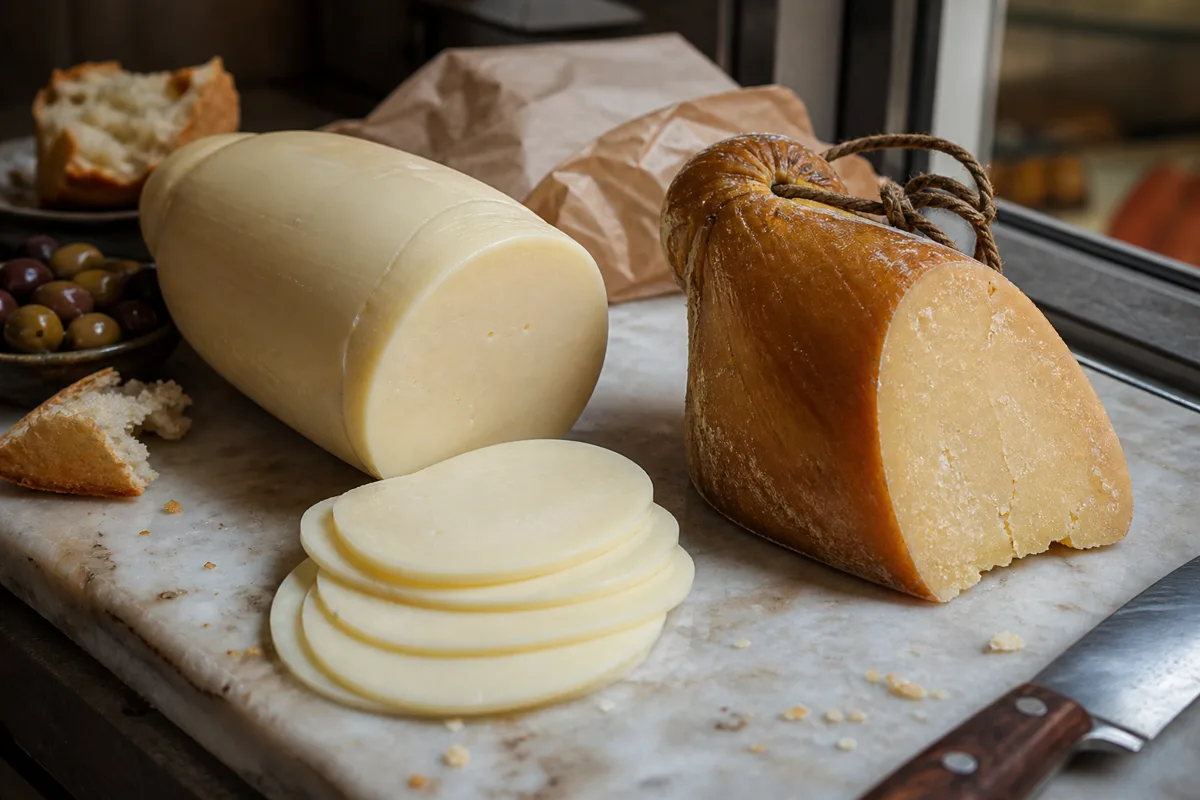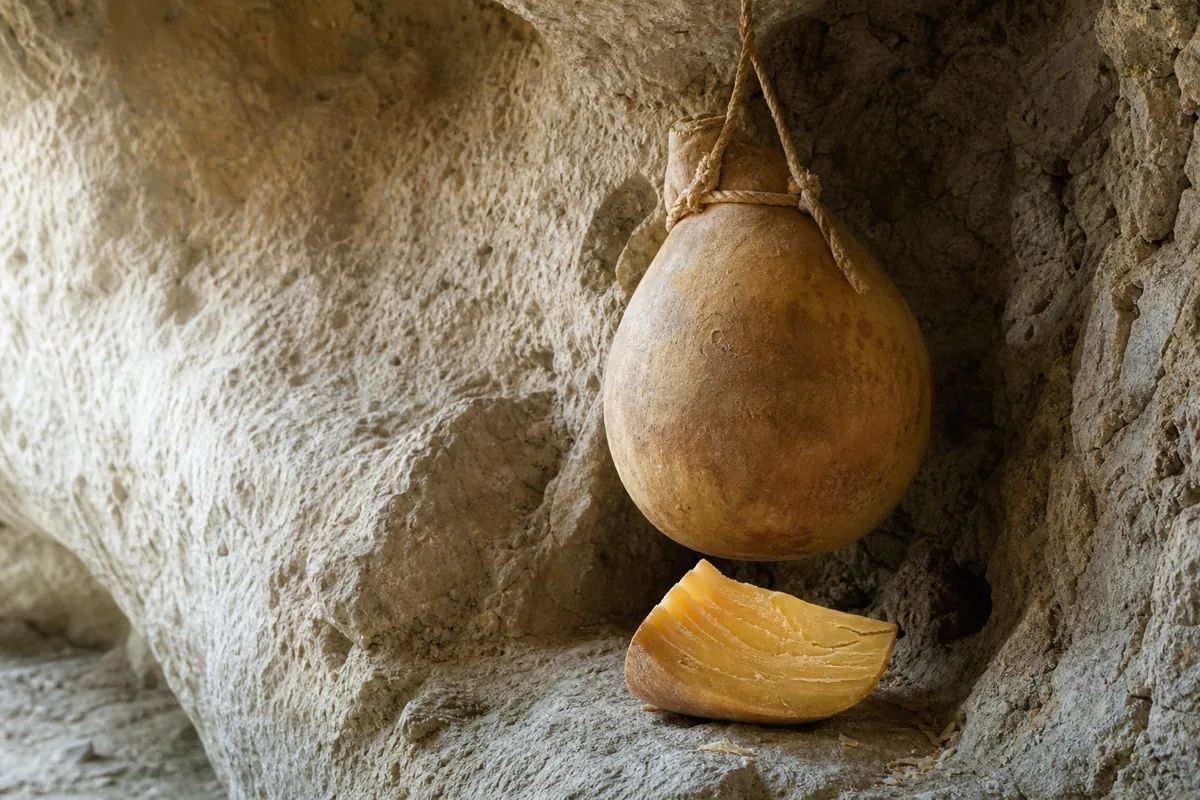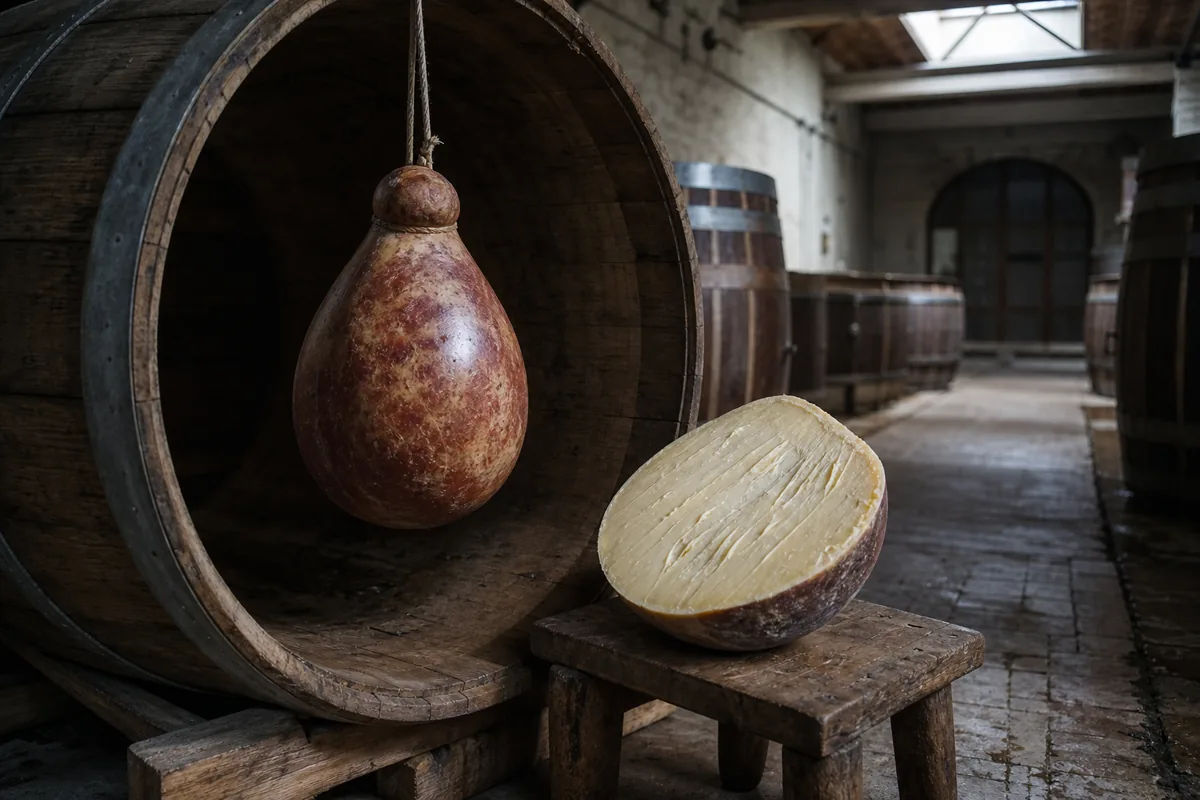
If you want a wine-treated cheese that still tastes clearly of aged milk, Caciobarricato gives you both sides. La Casearia Carpenedo begins with a pear-shaped raw-milk caciocavallo, then refines it in wine barriques through the company's UBRIACO® method.
The barrel stage leaves the rind wine-coloured and brings fruit, herbs, vanilla and spice to an aged table cheese you can shave, break into chunks or use in cooking without losing the milk flavour beneath the treatment.
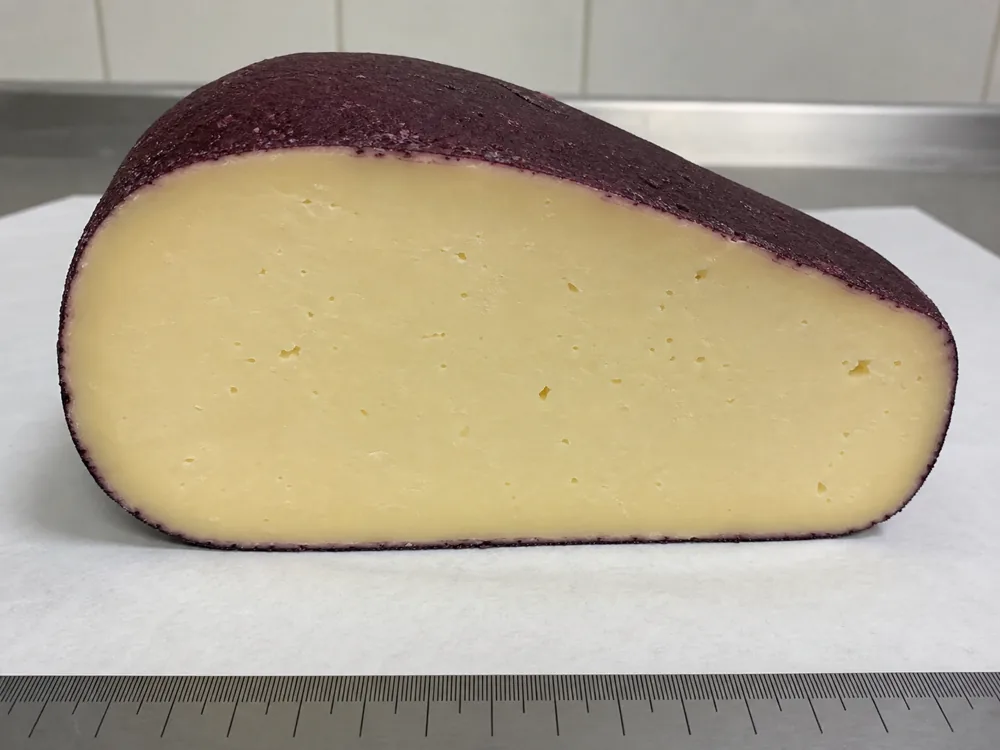
The maker publishes a minimum age of two months, while some retailers describe three months or more. Since a whole form weighs about 1.8 kilograms, you will usually meet it as a wedge with light-yellow paste, a wine-dark rind and the La Casearia Carpenedo name on the label.
In This Article
What Is Caciobarricato?
La Casearia Carpenedo makes the cheese in Camalò di Povegliano, Veneto, using a base from southern Italy's caciocavallo tradition. The curd is heated and stretched until elastic, shaped into a pear form and hung to settle before maturation.
This pasta filata technique is shared with cheeses such as scamorza, but stretching does not tell you how the finished cheese will feel. Months of ageing turn the once-elastic curd into the compact body you can shave at the table.
The name caciocavallo means “horse cheese” because the traditional explanation ties two cheeses together and hangs them astride a beam, not because horse's milk has any part in the recipe.
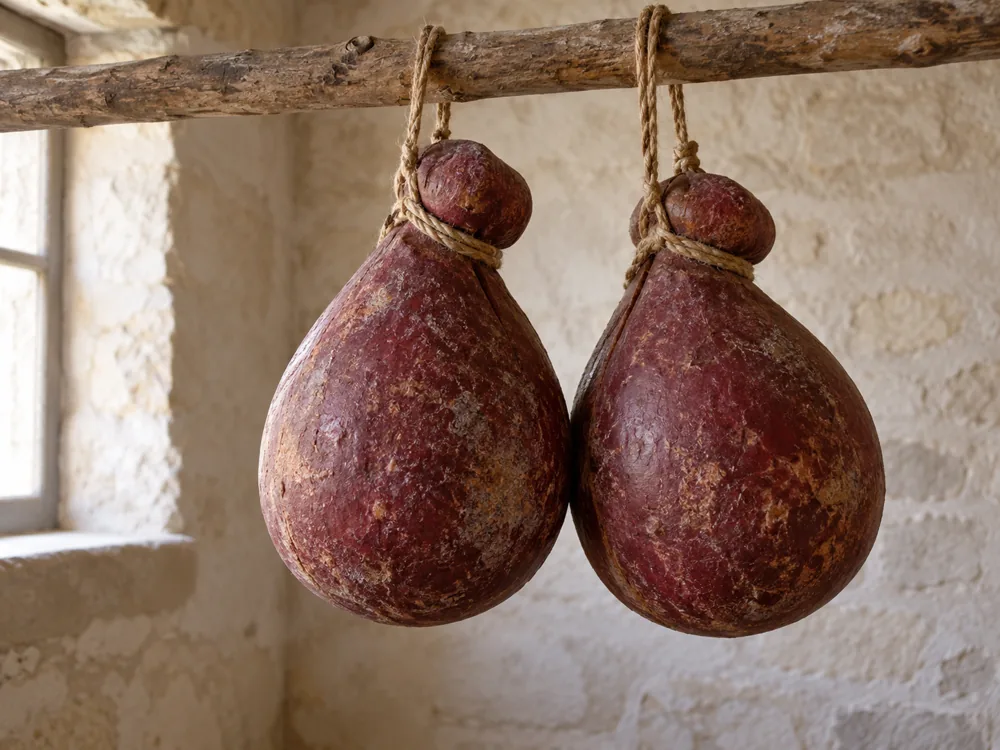
The pear shape shows you how the caciocavallo curd was formed and hung, while the wine-dark surface records the later work in Veneto. Once you separate those stages, it makes sense that Caciobarricato can resemble another caciocavallo at the centre and taste quite different near the rind.
Is Caciobarricato Made With Podolica Milk?
The milk comes mostly from freely grazing Podolica cows, and the word “mostly” sets the limit of the claim. You can expect a strong connection to the breed, but you cannot assume that every drop in every form is exclusively Podolica milk.
The current product specification identifies raw cow's milk, so the package label should settle the point when a retailer describes its cut as pasteurised or leaves the treatment blank.
Podolica cattle are concentrated in inland southern Italy, including Abruzzo, Basilicata, Calabria, Campania, Molise and Apulia. Their ability to use shrub-covered pasture, stubble and bush areas connects the milk to landscapes that many cattle use less efficiently.
Podolica milk has a long association with caciocavallo, although the cattle were historically valued for work and later selected more for beef than dairy. In your wedge, the milk connects the cheese to a pastoral southern tradition while the barrique refinement remains a Veneto step.
The product specification says mostly Podolica milk. The breed information explains that tradition but does not identify the individual supplying farms.
How Does Caciobarricato Differ From Other Caciocavallo?
Caciocavallo Silano PDO is protected in designated parts of Basilicata, Calabria, Campania, Molise and Apulia. Caciobarricato is refined in Veneto, so you should not carry the Silano designation over simply because both cheeses use a caciocavallo form.
Caciocavallo podolico makes a narrower milk claim because it uses only Podolica milk. Caciobarricato says “mostly Podolica,” which gives you a clear reason to keep the names separate.
The defining difference is the treatment after the pear-shaped caciocavallo form has been made. Caciobarricato receives the UBRIACO barrique stage that marks its rind with wine and grape must, so the full product name and La Casearia Carpenedo matter when you shop.
Silano, podolico, ubriaco and barricato describe different things: protected origin, the breed behind the milk or a wine-related refinement rather than a general quality grade.
How Long Is Caciobarricato Aged in Barrique?
| Published figure | What it appears to cover | Takeaway |
|---|---|---|
| Minimum 2 months | Producer product specification; stage not identified | This is the firmest official floor |
| At least 3 months | Retail description before the barrique treatment | The base cheese may already be three months old |
| Minimum 3 months | UK retail listing; stage not identified | Retail cuts may be older than the producer minimum |
A detailed retail description places three months before the barrique step, while the maker's two-month minimum does not identify the stage it counts. The useful reading is a range: two months is the official floor, while retail cuts may have a longer base maturation or total age.
That maturation separates Caciobarricato from fresh stretched-curd cheese such as mozzarella. Ageing removes moisture and concentrates the savoury milk flavour before the barrel leaves its strongest visual mark at the rind.
The barrique changes more than storage conditions: wine, wood and grape residue affect the surface aroma and colour while the centre remains recognisably aged caciocavallo. Taste from rind to centre and you should find the wine character strongest near the outside rather than replacing the dairy flavour throughout.
What Does Caciobarricato Look and Taste Like?
You should still recognise the caciocavallo shape, with a pear-like body and a small neck where the form was tied. The barrique treatment shows most clearly at the outside, where the rind turns wine-coloured and may retain traces of grape must.
| Shape | Pear-shaped caciocavallo form with a tied neck |
| Rind | Wine-coloured, with possible grape-must residue |
| Paste | Compact light yellow interior, sometimes with rare must infiltration |
| Texture | Dry and firm enough to shred or cut into small pieces |
Because stretching happens before shaping and ageing, pasta filata tells you how the curd was formed rather than how an older cut behaves in your hand. After months of maturation, you should expect a compact table cheese, not mozzarella-like softness or a long pull.
The flavour moves from milk and savoury salt into wine, fruit, cut grass, bitter flowers, vanilla and spice, with a light piquant finish that still lets you follow the cheese beneath the treatment.
If a seller offers only “red wine cheese,” ask for the maker and full name. Caciobarricato should give you both a compact caciocavallo centre and a must-marked rind, while a generic wine-treated cheese may use a different milk, shape or process.
Aged provolone gives you a useful reference for the firm, savoury stretched-curd base. Caciobarricato carries that idea toward fruit, wine and barrique aromas rather than copying provolone's flavour.
How Do You Serve Caciobarricato?
The firm paste works best when your cut exposes its aroma. Shavings bring the wine and herb notes forward, while larger chunks keep more of the savoury milk centre; small cubes also hold their shape in vegetable or legume salads.
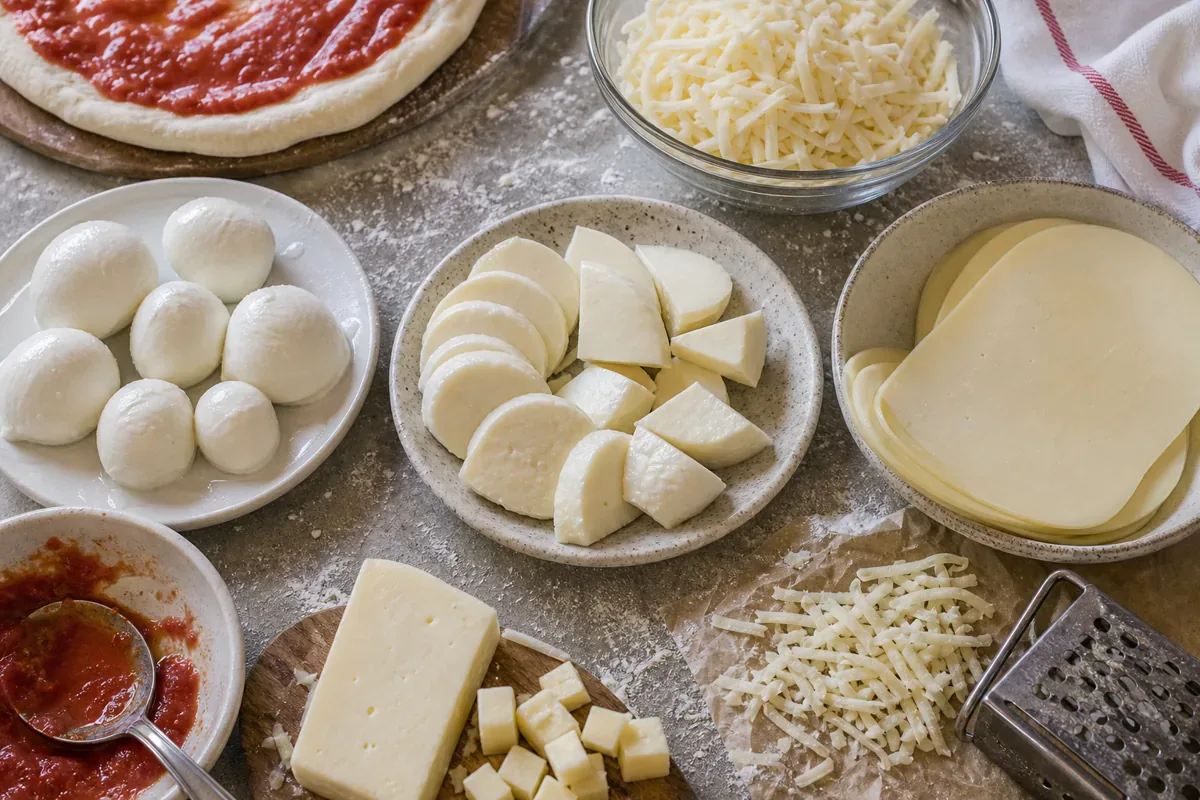
For a hot use, add small pieces to pizza with fresh tomato, whose acidity balances the cheese as it softens without losing all of its compact character.
| Pairing | Type | Why It Works |
|---|---|---|
| Full-bodied red wine | Wine | Tannin and dark fruit can meet the compact paste and echo the barrel treatment without adding sweetness. |
| Vegetable and legume salads | Food | Small cubes add salt, wine aroma and firm texture to mild beans or vegetables. |
| Pizza with fresh tomato | Food | Tomato supplies acidity while small pieces of cheese soften and keep their savoury flavour. |
| Shredded table cheese | Food | Irregular shavings expose more surface area, making the milk, herb and wine aromas easier to notice. |
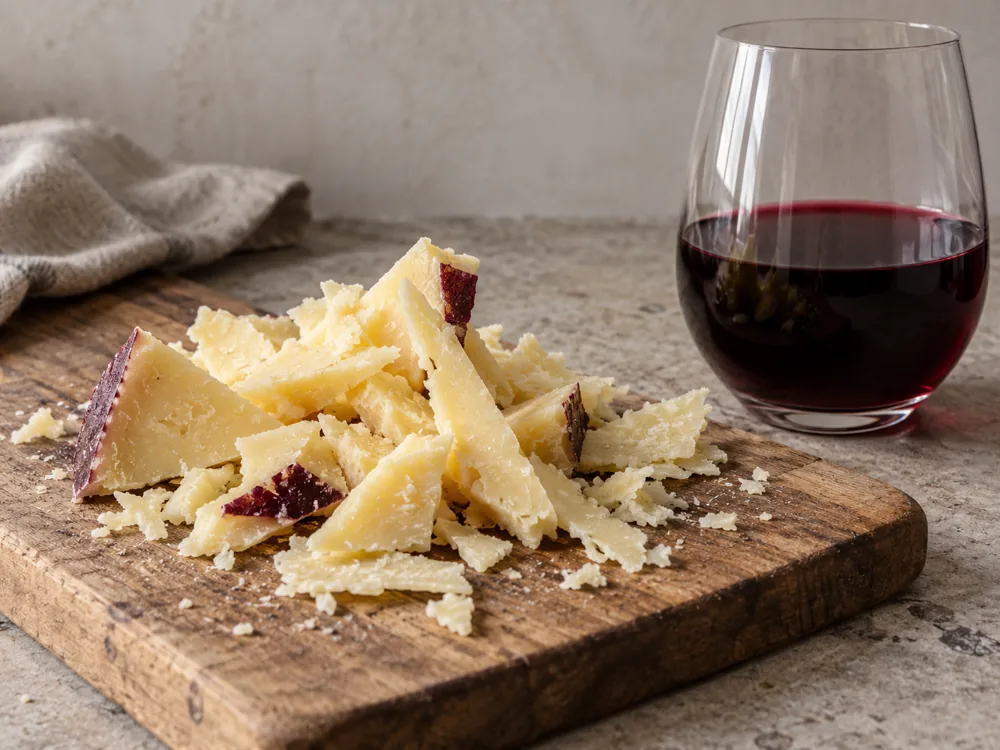
A dry, full-bodied red with enough fruit is our starting point. Tannin can meet the firm paste, while acidity keeps the cheese and wine from feeling flat together.
You do not need the same wine used in the barrel because balance on the plate matters more than a matching label.
Is Caciobarricato Safe During Pregnancy?
Caciobarricato is made from raw cow's milk, but major pregnancy guidance does not name the cheese. Your decision therefore depends on how a clinician classifies its compact aged paste and whether you plan to eat it cold or thoroughly heated.
NHS guidance permits pasteurised or unpasteurised hard cheese, including Parmesan, as well as any cheese cooked until steaming hot. It does not tell you directly whether Caciobarricato belongs in that hard-cheese category.
CDC guidance lists pasteurised hard cheese among safer choices and unpasteurised soft cheese among riskier ones. Caciobarricato's raw milk and unusual stretched-curd style do not fit neatly into either quoted example.
If you are pregnant, show your midwife or doctor the raw-milk label and product description rather than assigning the category yourself. Heating the cheese until it is steaming hot gives you a clearer route under NHS wording, but your clinician's advice should settle the choice.
Where Can You Buy Caciobarricato, and How Should You Store It?
A whole Caciobarricato weighs about 1.8 kg, so specialist shops commonly sell it in smaller wedges. Choose enough for your cheese board or cooking plan instead of letting a lower per-kilo price push you toward a whole form you cannot use.
On 7 October 2026, Spaghetti e Mandolino listed a 1.8 kg whole form at €43.57, but it was unavailable. Use that as a dated reference point, then compare a live offer by its actual weight, refrigerated delivery charge and whether the rind is included.
Your cut wedge needs close wrapping, refrigeration and the seller's use-by date to limit drying without trapping moisture against the rind.
Let only the portion you plan to eat lose its refrigerator chill, giving the serving more aroma without repeatedly warming the whole wedge.
Barricato means matured or refined in a barrique. The Italian dictionary definition applies the word to wine matured in small oak barrels; in this product name, it points to the cheese's wine-barrel treatment.
Do not assume it is, because a current Caciobarricato reference lists the cheese as non-vegetarian while the producer's public product page does not name the rennet. Check the ingredient label on your own cut if the coagulant determines what you buy.
The current maker page does not claim a DOP for Caciobarricato. It uses a caciocavallo base, but that does not make it Caciocavallo Silano DOP, whose production area and rules are separately protected.