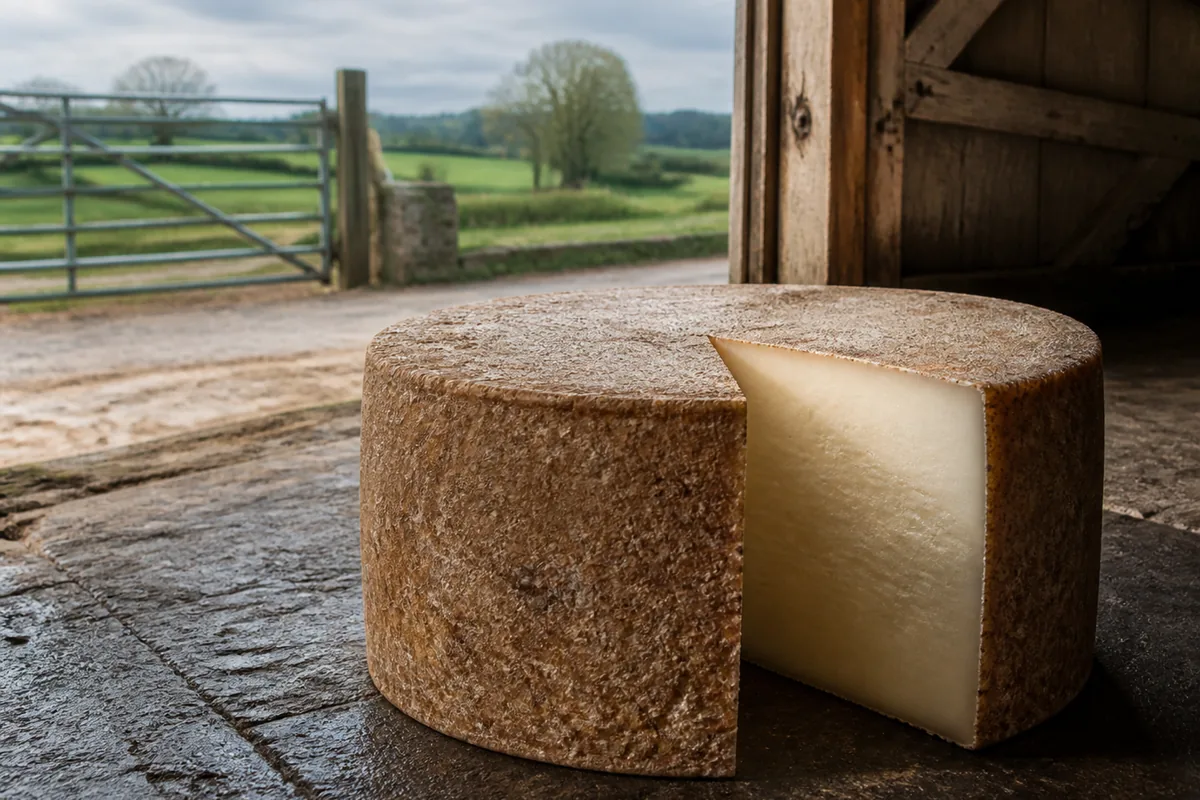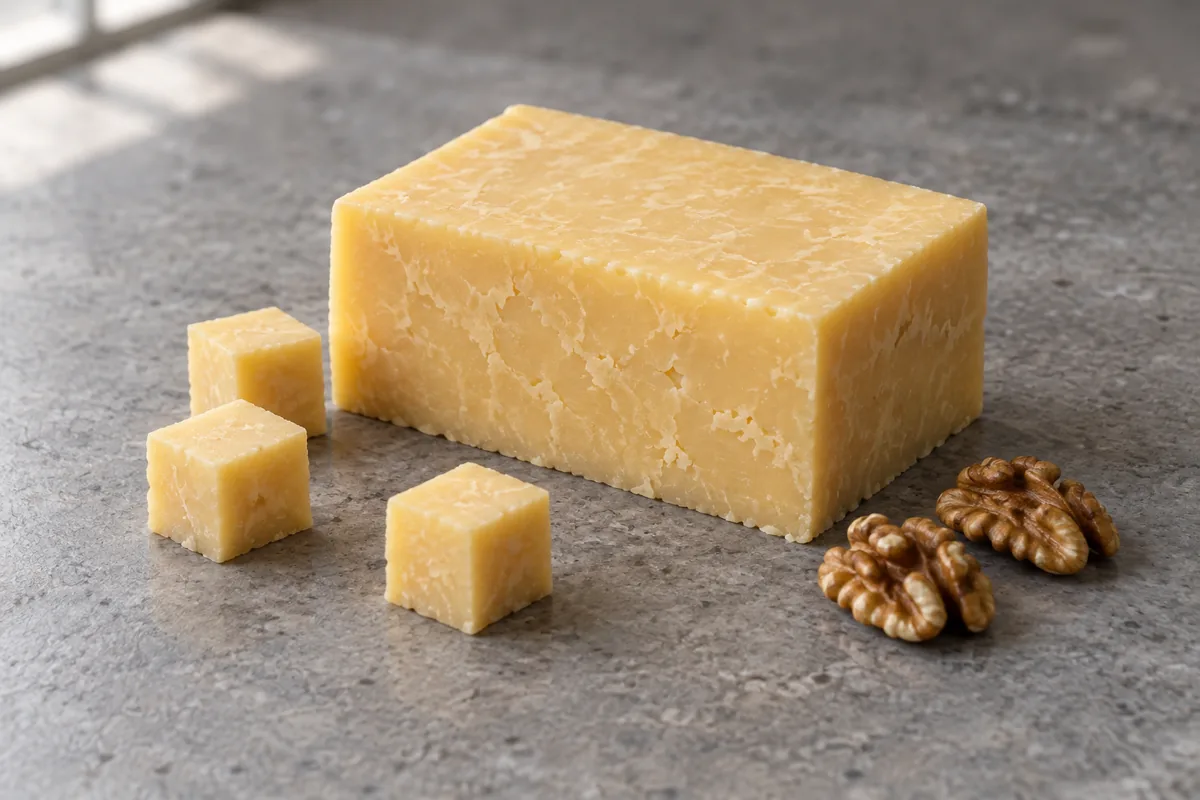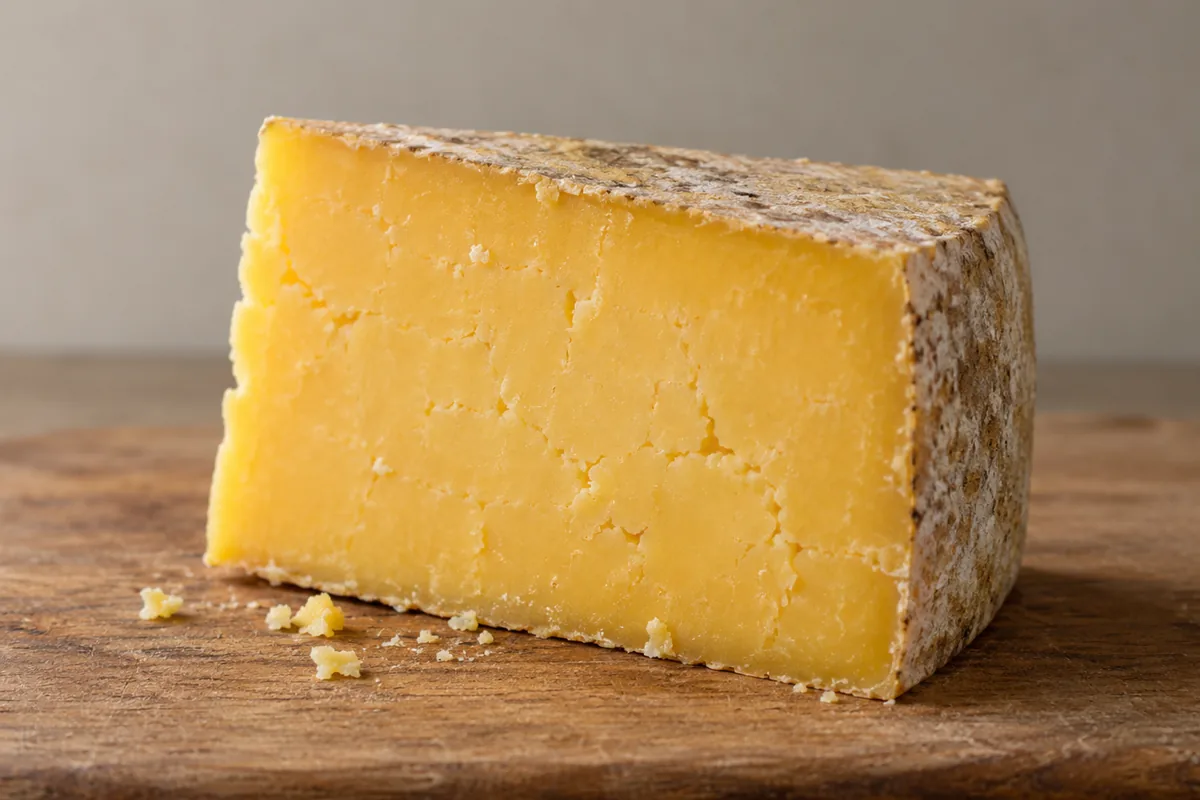
Hafod is a cheddar made at Holden Farm Dairy on the Bwlchwernen Fawr farm near Lampeter in Ceredigion, west Wales, from the milk of the farm's own Ayrshire cows. It is usually made with raw milk.
The farm describes its recipe as gentle, slower and cooler, inspired by early twentieth-century cheddar-making, and credits Dora Saker's 1917 book Practical Cheddar Cheese-making as one of its guides.
Culture magazine glosses the name as "a summer place, or pasture," which it ties to the farm's position beside the river Aeron.
In This Article
Where Is Hafod Cheese Made?
The farm at Bwlchwernen Fawr has been managed organically since 1973, Mons Cheesemongers says, and Culture magazine calls it the oldest continuously registered organic farm in Wales.
Culture says the farm began as an organic commune in 1973, and that Patrick Holden stayed on as a tenant after the commune dissolved and eventually bought the property.
The farm's cheese page says about 75 cows are in milk at any one time, which sits between the 80-cow herd that Neal's Yard Dairy and Mons Cheesemongers give and the 65 that The Fine Cheese Co. gives.
Counting only cows in milk may explain the gap with the 80-cow figure, and the farm adds that it sizes the herd to what the land can sustain, so the land limits how much cheese there is.
Mons Cheesemongers says the Ayrshires were chosen because they were hardy enough to cope with grazing a Welsh hillside, and that they give a rich milk with great cheesemaking potential. Culture magazine adds that Ayrshire milk is high in fat and protein.
Almost all of the cows' feed and bedding is produced on the farm's land, Neal's Yard Dairy says, so the milk comes from one holding's own fields. Mons Cheesemongers adds that half of the farm's 300 acres runs in rotation, with oats, barley and beans fed to the cows and then five or six years of pasture for silage sown with a herbal ley mix.
On grass, Mons says, the cows graze one area intensively for a short time, 24 hours for instance, and then move on before the area is depleted, fertilising each patch as they go.
Patrick Holden calls the milk "the fat of the land," according to Mons, which says the quality of the milk is key to the cheese.
Culture magazine says Patrick Holden persuaded his son Sam and Sam's wife Rachel to try cheesemaking in 2005 and dates the farm's own cheese to 2007, the year Neal's Yard Dairy says Sam returned to Bwlchwernen Fawr and cheesemaking began.
How Is Hafod Cheese Made?
The farm makes Hafod every other day from all of its milk, about 2,000 litres, which gives 18 to 20 wheels of 10kg per make.
The make starts with a yogurt starter culture, chosen for less aggressive strains of bacteria and added in less than the conventional amount, so the milk acidifies very slowly. The farm says that slow pace gives the curd time to expel moisture during cheddaring, which removes the need to cook the curds at a higher temperature.
The slow acidification also lets the cheesemaker wait for the texture they want before milling, the farm says, without the risk of over-acidifying the curd. Culture magazine ties the lower temperatures this allows to the springy texture and brown butter flavour of the finished cheese.
Mons Cheesemongers reports that the head cheesemaker lowered the make temperature by five degrees, so less butterfat is lost when the cheeses are pressed, and lengthened the setting time before the curd is cut, so more moisture stays in the curd.
Most cheddar makers fight to remove moisture, Mons says, because wet curd can develop swampy off flavours, whereas at Hafod the curd tightens as it acidifies and pushes the moisture out without so much manual draining.
Cheddaring, Mons explains, knits open-textured blocks of curd into long, tightly knitted sheets with a texture a little like cooked chicken breast. Many makers use the stage to drive out moisture, but at Hafod the blocks rest longer before stacking and are not stacked as high, so the pressure is lower.
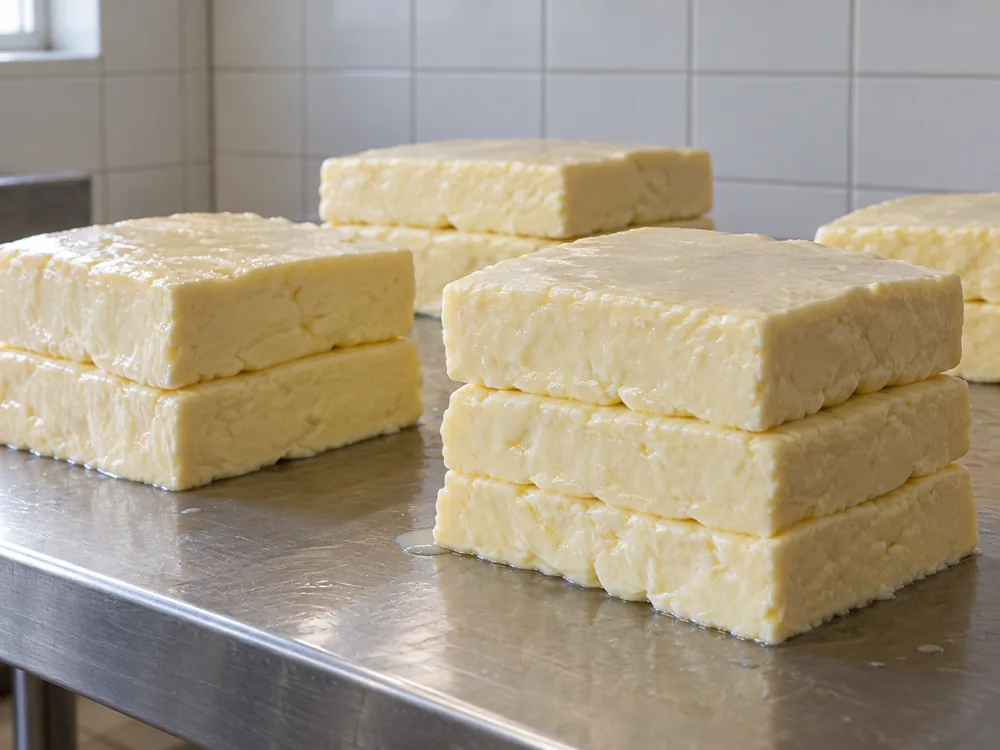
The farm says milling often begins after the afternoon milking has started, when the sheets of curd have a silky, slightly elastic quality "similar to chamois leather." Once salted, the curds turn dry and leafy with a deep buttery aroma.
According to Mons, the blocks lose their remaining moisture naturally once milled and salted, which fits its summary that the make is measured, documented and observed but never forced.
How Did a 1917 Cheddar Manual Shape Hafod?
Dora Saker's Practical Cheddar Cheese-making dates from 1917, and the farm says it has used that book and others from the early twentieth century to piece together how cheddar was made before cheesemaking was industrialised.
Mons Cheesemongers describes the base recipe as 100 years old, written down by Saker, and calling for a slow and gentle make. Beyond that, it says, the team adapts the recipe to how the milk reacts on the day, with changes that "fly in the face of traditional cheddar manufacture."
Culture magazine covers an earlier stage, saying Simon Jones of Lincolnshire Poacher taught the Holden family to make cheese with Swiss techniques he had learned from the late Dougal Campbell, a local cheesemaker.
Culture adds that the Holdens changed the recipe, which had picked up Swiss influences, to reflect how cheddars were made in their community fifty years ago.
The farm's page names Saker's book as its guide, while Culture's account covers how the recipe was first learned, and neither source dates the move toward the older approach.
Neal's Yard Dairy credits the cheese to Becky and Patrick Holden and the team at Holden Farm Dairy, and the Specialist Cheesemakers Association names Rob Howard of Holden Farm Dairy as the cheesemaker behind its 2019 award. Mons Cheesemongers, in a December 2025 post, names Jenn Kast as head cheesemaker, working with a team of five.
The farm says each cheesemaker has added to its understanding of the milk, and counts the move away from cloth binding among the recent changes. In recent years its focus has been texture and body.
The milk is naturally rich in butterfat, which the farm says is often seen as a challenge in cheddar-making. It now treats that fat as the carrier of flavour and strengthens the curd structure so the butterfat stays in while the whey drains freely.
Is Hafod Cheese Clothbound?
The producer's answer is no. Holden Farm Dairy covers each cheese in lard when it comes off the press and says it no longer wraps Hafod in cloth at that stage, which it says seems to give the cheese more opportunity to regulate itself as a living food.
Neal's Yard Dairy lists a natural larded rind, while Culture magazine's library entry still describes Hafod as cloth wrapped and says young cheeses are wrapped in cloth and covered with a thin layer of lard. The farm's page does not say when it stopped using cloth, so an older profile may describe the earlier practice.
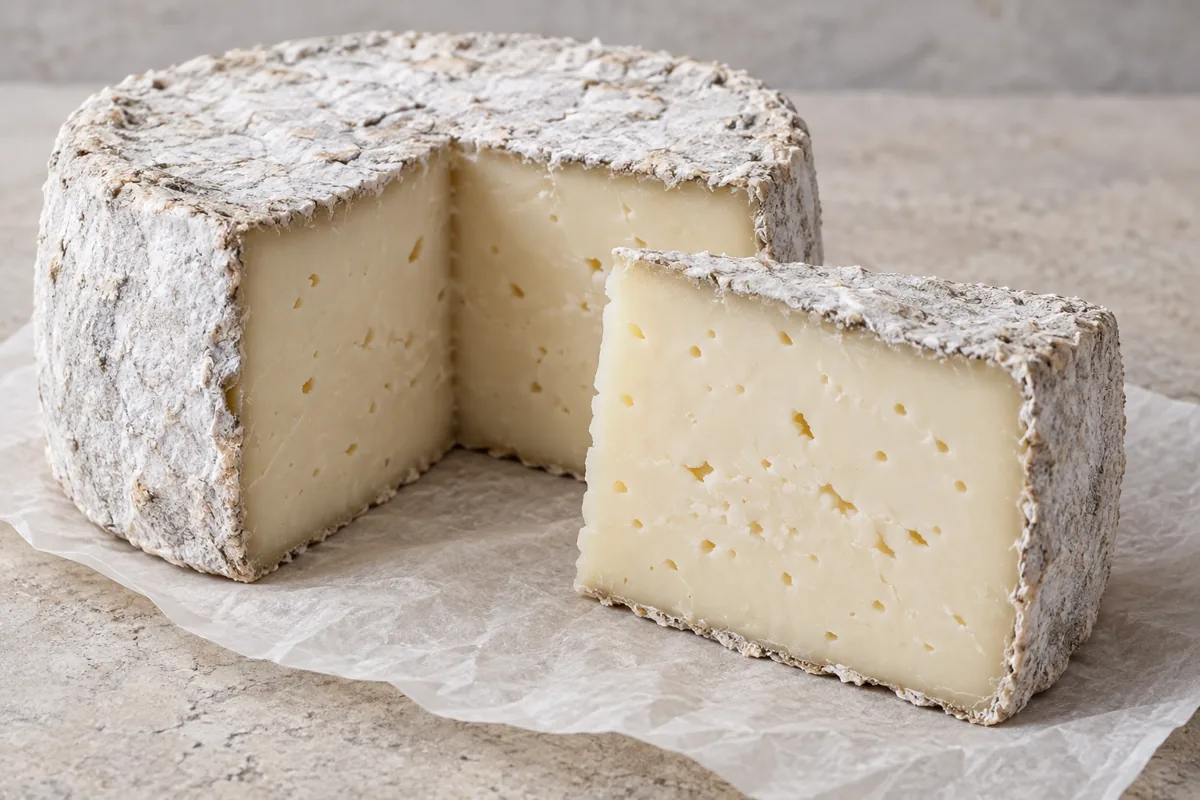
The lard protects each cheese during the long maturation while letting it breathe and develop what the farm calls a characteristic natural mould rind. Wheels are turned and rubbed regularly, and the farm says Hafod develops its complexity and depth of flavour during this time.
Neal's Yard Dairy gives an average age of 10 to 18 months, and the farm says it matures each cheese for about a year in its store, so a piece is likely to be close to a year old or older.
What Does Hafod Cheese Taste Like?
The sources agree on butter first. Neal's Yard Dairy describes rich, layered flavours and a supple texture, and The Fine Cheese Co. credits the Ayrshire milk and the traditional make for buttery, rich and nutty flavours.
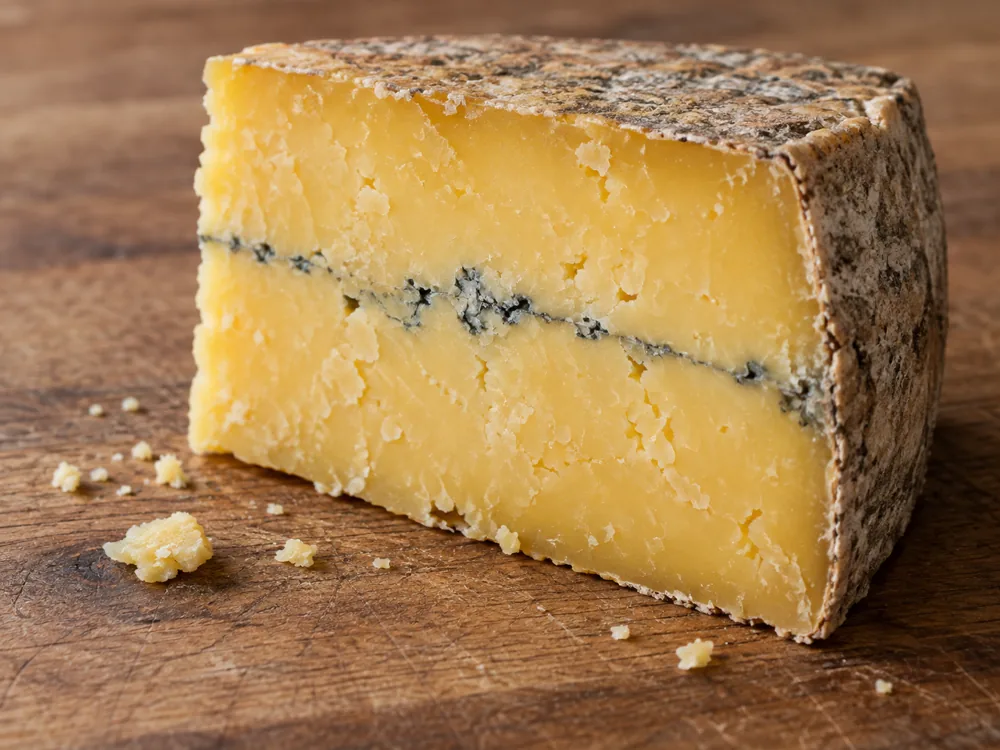
Culture magazine adds notes of grass and brown butter and calls the paste firm and deeply golden. Mons Cheesemongers says Hafod became its mongers' cheddar of choice in 2025 and calls it rich, buttery, savoury and deeply satisfying.
The farm describes today's cheese as having a slightly brighter acidity balanced by a full, rounded richness, with a texture that is firmer yet more succulent.
Neal's Yard Dairy describes a warmly golden paste with the occasional blue vein, and describes the vein as part of the cheese's interior.
Why Does Hafod Taste Different From Batch to Batch?
The milk changes from day to day and with the seasons, Mons Cheesemongers explains, so it does not behave the same way in the vat and the cheesemakers adapt the make to it.
The team measures pH, titratable acidity and moisture, and for every batch leaves a small sample of the milk to sour and set on its own with no starter culture added. Mons says it assesses that sample's gel, aromas, flavours and acidity, and the better the gel, the better the cheese has tended to be when graded.
Once the cheeses have matured, the farm samples each batch with a cheese iron, which it calls ironing, to taste the subtle variations, and it grades the batch before selecting cheeses to send to customers.
Neal's Yard Dairy says it visits Holden Farm Dairy three times a year and spends the time comparing the team's make notes with its own tasting notes, which it says helps shape the team's future experiments.
What Awards Has Hafod Won?
In 2019 the Specialist Cheesemakers Association gave its James Aldridge Memorial Award to Hafod. The award goes to a British cheese made only from raw milk, nominated by an association member, and cheesemakers cannot nominate their own cheese.
Every eligible cheese that receives a nomination is judged by a panel of association experts, and the winner keeps the trophy for one year. Because the award covers only raw-milk cheese, it speaks for the raw version of Hafod rather than the pasteurised one.
The association's list also shows Montgomery's Cheddar winning in 2002 and Lincolnshire Poacher in 2025.
How Do You Serve Hafod?
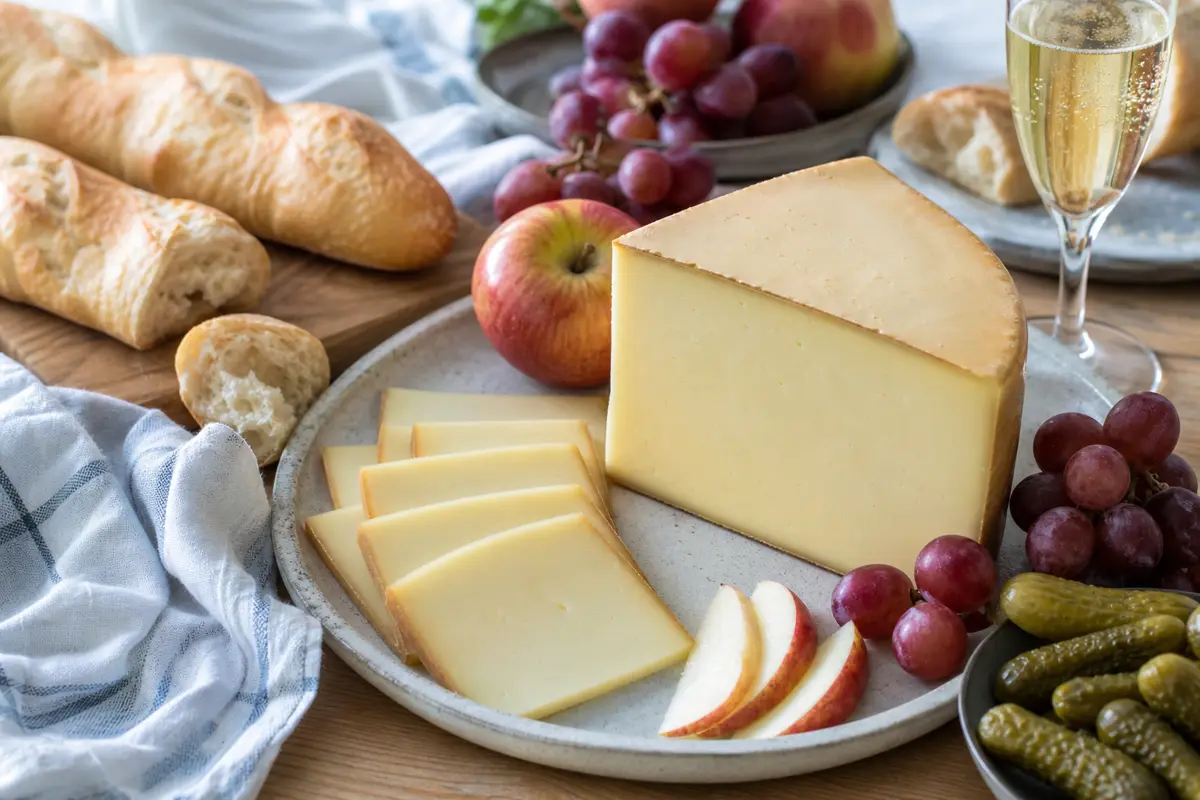
Culture magazine names a pale ale for Hafod and adds wine and fruit for the board.
| Pairing | Type | Why It Works |
|---|---|---|
| Pale ale | Drink | Culture magazine says Hafod suits a wide range of beers and calls Kernel Brewery's Pale Ale a particular favourite of the producers. |
| Oaked sauvignon blanc | Wine | Culture magazine lists it as a white wine for Hafod. |
| Pinot noir or Beaujolais | Wine | Culture magazine lists a light red such as these two. |
| Apples, pears and dates | Food | Culture magazine suggests fresh fruit of these three kinds on the board. |
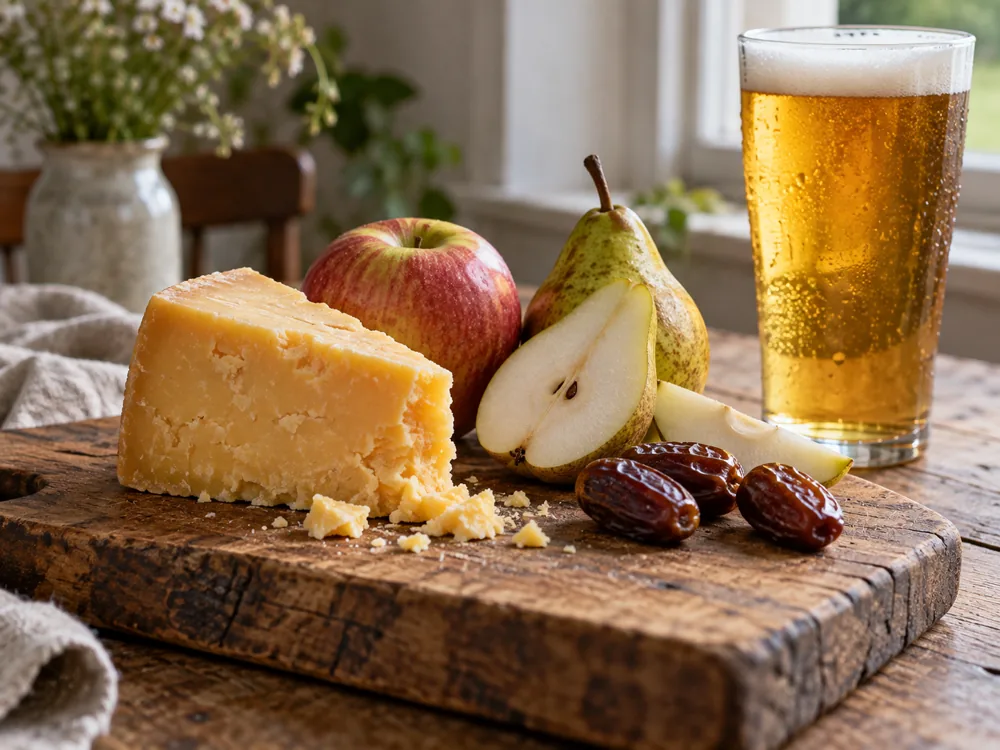
Culture also lists grating it over pasta, which it calls a refreshing twist, and calls Hafod excellent in fondue.
What Is in Hafod Cheese?
Hafod is not vegetarian, because it is set with animal rennet, which Neal's Yard Dairy and The Fine Cheese Co. both state. The Fine Cheese Co. lists the ingredients as organic Ayrshire cows' milk (98%), salt, starter culture, animal rennet and lard, with the lard used for the rind covering only.
The Fine Cheese Co. lists these figures per 100g, so a 30g piece carries about 0.6g of salt.
Can You Eat Hafod While Pregnant?
The NHS lists pasteurised or unpasteurised hard cheeses, such as cheddar, gruyère and parmesan, among the cheeses that are safe in pregnancy, so the NHS does not restrict Hafod's raw-milk version.
The CDC draws the line differently. Its safer-choice column lists hard cheese made with pasteurized milk, such as cheddar, while its riskier column lists unpasteurized milk and dairy products made from raw milk, and it notes that pregnant women are 10 times more likely to get a Listeria infection.
By the CDC's list only the pasteurised Hafod fits the safer column. Neal's Yard Dairy says the cheese it sends is labelled with its milk treatment, and The Fine Cheese Co. says the same of its pieces, so the label shows which version a buyer has.
What Cheese Is Similar to Hafod?
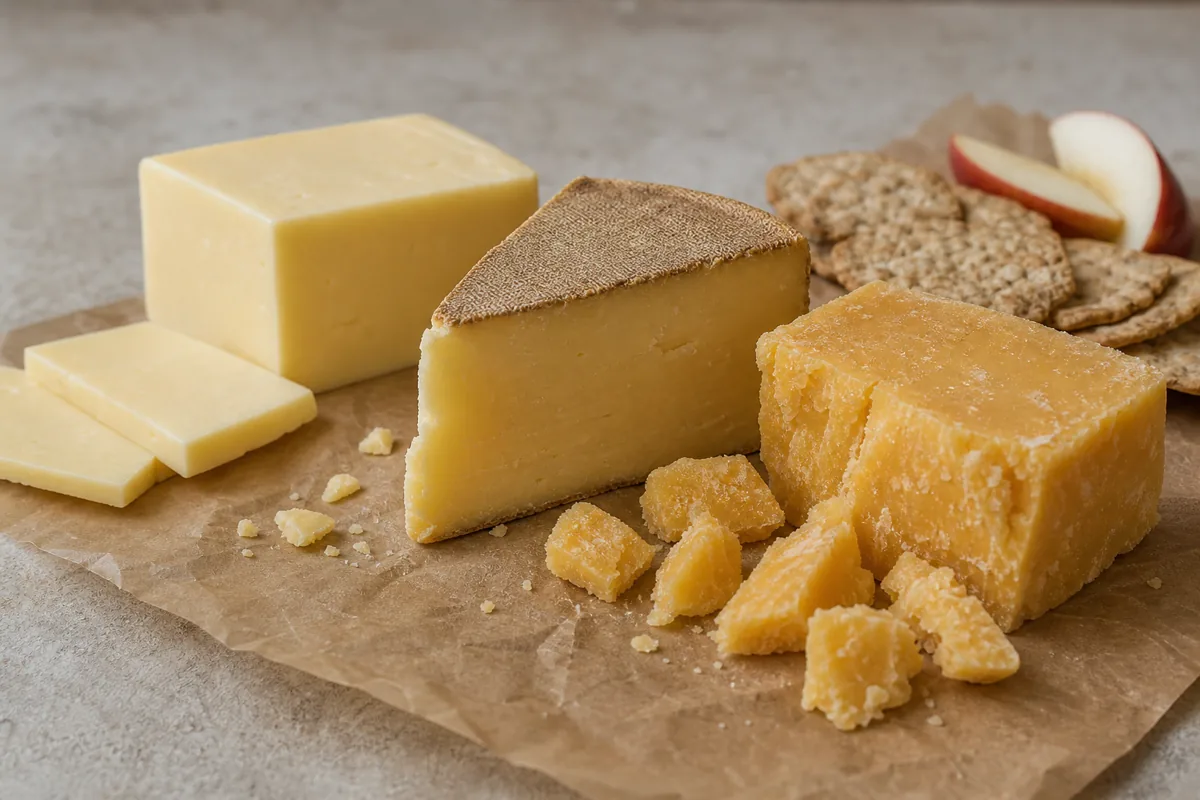
Neal's Yard Dairy sets Hafod beside Isle of Mull, Pitchfork, Westcombe and Lincolnshire Poacher in its Cheddar Selection, and the table gives the milk, rind and description it lists for each.
| Cheddar | Milk | Rind | How Neal's Yard Dairy describes it |
|---|---|---|---|
| Hafod | Raw or pasteurised | Natural larded rind | Rich, layered flavours, supple texture, warmly golden paste |
| Isle of Mull | Raw | Clothbound with lard | Firm, fondant-like and slightly more compact; juicy and zesty to boozy and deeply savoury |
| Pitchfork | Raw | Clothbound with lard | Full bodied, dense and nutty, with a juicy bite and creamy texture |
| Westcombe | Raw or pasteurised | Clothbound with lard | Smooth and well rounded, warm lingering flavours, creaminess balanced with acidity |
| Lincolnshire Poacher | Raw | Not stated | Smooth and densely creamy; rich, savoury and brothy to long, sweet and almost pineapple-like |
Two differences stand out in that list: Hafod and Westcombe are the two sold in both a raw and a pasteurised version, and Hafod is the only one listed with a natural larded rind instead of cloth.
Neal's Yard Dairy calls Pitchfork full-bodied, dense and nutty, and Lincolnshire Poacher a cheese where West Country cheddar meets Comté, smooth and densely creamy.
Where Can You Buy Hafod Cheese?
Neal's Yard Dairy sells Hafod from a smallest piece of about 280 to 301g up to a whole wheel of roughly 9 to 9.6kg, with sixteenth, eighth, quarter and half wheels in between. The Fine Cheese Co. sells 250g, 500g and 1kg pieces and says each is cut to order and wrapped.
The Fine Cheese Co.'s buying guide suggests 70g per person after a large meal or at a buffet, and at least 100g, up to 120g, when the cheese is the main part of the meal. The last column of the table divides each piece by that 70 to 120g range.
| Seller and piece | Weight | People served at 70 to 120g each |
|---|---|---|
| Neal's Yard Dairy smallest piece | 280 to 301g | 2 to 4 |
| Neal's Yard Dairy sixteenth wheel | 565 to 603g | 4 to 8 |
| Neal's Yard Dairy eighth wheel | 1,130 to 1,205g | 9 to 17 |
| Neal's Yard Dairy quarter wheel | 2,260 to 2,411g | 18 to 34 |
| The Fine Cheese Co. small piece | 250g | 2 to 3 |
| The Fine Cheese Co. medium piece | 500g | 4 to 7 |
| The Fine Cheese Co. large piece | 1kg | 8 to 14 |
Because batches differ, a small first piece lets a buyer judge the cheese before committing to a quarter or half wheel.
Start with a smaller piece because batches differ, and plan 70g per person after a large meal or at least 100g when the cheese is the main part of the meal.
Neal's Yard Dairy offers free collection from its London shops, and The Fine Cheese Co. is based in Bath.
How Long Does Hafod Keep?
The Fine Cheese Co. says to keep its Hafod refrigerated below 8°C and eat it within 14 days of receipt.
The CDC puts the general refrigerator limit at 40°F (4.4°C) or below, which is a lower ceiling than the retailer's 8°C.