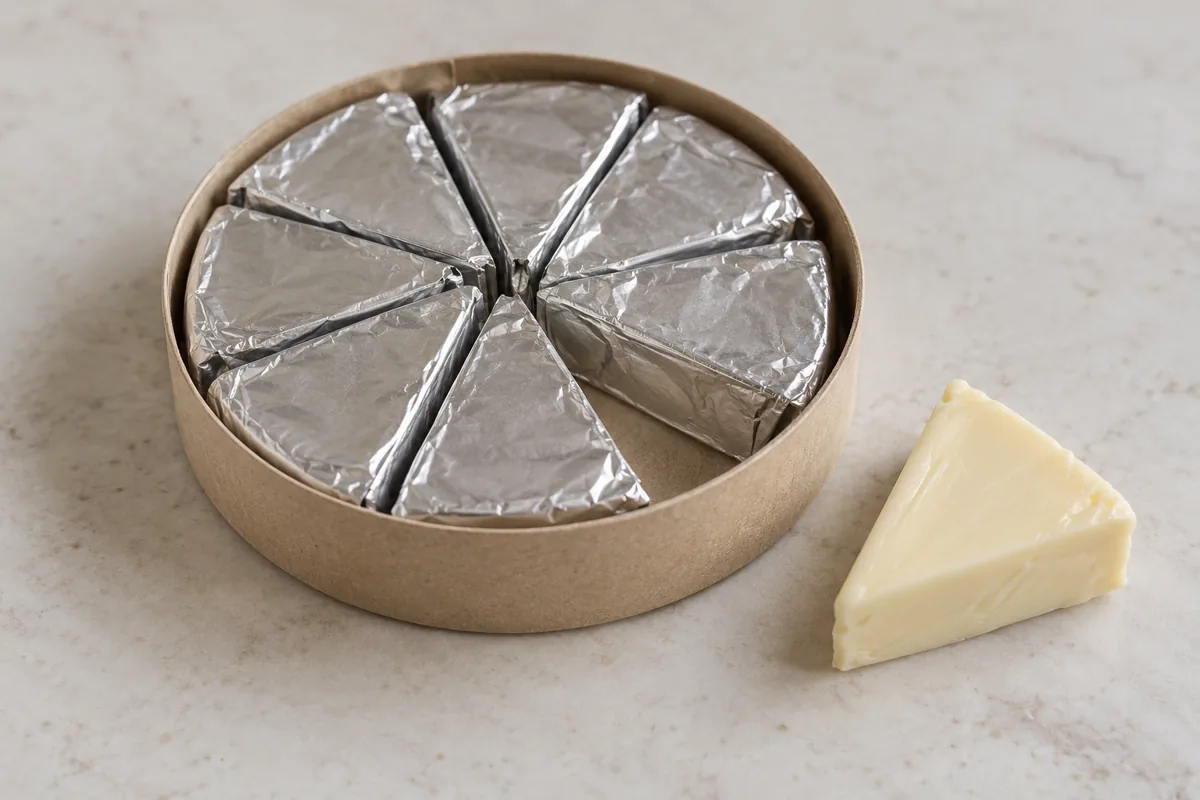
Kiri is Bel's brand of small, square portions of white processed cheese, first made at Sablé-sur-Sarthe in France in 1966, and its ingredients do change from pack to pack.
The French 18 g and 16.3 g portions share a short recipe of milk, cream, water, milk minerals, milk proteins, ferments and salt, while a 6 x 18 g pack listed for France and Australia adds melting salts and carrageenan.
In This Article
What Is Kiri Cheese Made Of?
The French 18 g portion is mostly milk and cream. It lists 53% pasteurised milk and 32% pasteurised cream, followed by water, milk mineral concentrates, milk proteins, lactic ferments and salt.
Bel's 16.3 g foodservice portion has the same base with vitamin D added.
| What to check | 18 g portion, France | 16.3 g foodservice portion | 6 x 18 g pack, France and Australia |
|---|---|---|---|
| Milk and cream | Pasteurised milk 53%, pasteurised cream 32% | Fresh pasteurised milk 53%, cream 32% | Cottage cheese (32% milk, as translated on the listing), cream 27% |
| Other ingredients | Water, milk mineral concentrates, milk proteins, lactic ferments, salt | Water, milk mineral concentrate, milk proteins, lactic ferments, salt | Water, milk proteins, salt |
| Melting salts | None | None | E452, E339, E331 |
| Gelling agent | None | None | Carrageenan |
| Added vitamins | None | Vitamin D | B2 and B12 |
| Listed by | Auchan | Bel Foodservice | Open Food Facts |
Kiri is sold around the globe, particularly in the Middle East, France and Japan, and its shape and flavour follow local tastes.
Both recipes have been listed for France: the 16.3 g panel is labelled for the French market, and the six-pack with additives is listed as sold in France and Australia. The country of sale alone does not tell you which recipe is inside.
Your pack's own ingredient list settles it: melting salts or carrageenan mark the longer recipe, and milk, cream, water, milk minerals, milk proteins, ferments and salt alone mark the short one.
If you are vegetarian and avoid animal rennet, ask Bel which coagulant Kiri uses before you buy.
Where Does the Milk in Kiri Come From?
Kiri's milk comes from partner farmers in the Loire region, collected for Bel's dairy at Sablé-sur-Sarthe. The farmers work under contract with an association, the APBO, and supply chilled raw milk that the dairy pasteurises.
The distance from farm to dairy is given four ways: within a 60 km radius on Bel's French foodservice page, 60 km on average in Bel's text on the Auchan listing, 50 km in French Wikipedia, and less than 200 km on Bel's English foodservice page.
A 60 km radius and a 60 km average promise different things, because an average leaves room for some farms farther out.
Bel describes the cream two ways: its text on the Auchan listing says the milk and cream both come from nearby partner farms, while its English foodservice page says the cream combines milk from partner farms with milk from other dairy producers that meet Bel's standards. The 60 km figures are given for the milk.
Bel also says the cows graze at least 150 days a year and eat feed without GMOs.
Is Kiri Processed Cheese?
Yes, by its French legal name: the 18 g pack is sold as fromage blanc fondu, which means melted white cheese.
Bel calls Kiri a fresh, smooth cheese, and the two descriptions fit one product: a white cheese that has been melted rather than aged.
Bel markets the 16.3 g portion as the only blanc fondu on the market with a simple recipe of dairy ingredients, salt and ferments.
The six-pack's longer recipe is where the additives come in. Sodium citrate (E331) is an acidity regulator and emulsifier that lets cheeses melt without becoming greasy, and carrageenan is a gelling, thickening and stabilising agent used notably in dairy and meat products.
Bel simplified the recipe in 2020, after five years of research, changing its manufacturing process with the aim of keeping the same texture and taste.
In 2021 a paediatric journal described Kiri as free of additives and of the melting salt E452. The parenting site Mpedia named Kiri Crème and La Vache qui rit as the only children's processed cheeses to have dropped additives and melting salts.
Is Kiri Ultra-Processed?
Open Food Facts puts the 6 x 18 g pack in the fourth and most processed group of the NOVA scale, which sorts foods into unprocessed or minimally processed foods, processed culinary ingredients, processed foods and ultra-processed foods.
The markers it names for that pack are carrageenan (E407), polyphosphates (E452), a gelling agent and milk proteins, and it sets the group from the product's category and its ingredients.
Milk proteins are also on the short French recipe, which has no additives. An additive-free Kiri can therefore still list one of the markers Open Food Facts names for the six-pack.
The milk-derived ingredients in the 2020 recipe come from the ultra-processing of milk, so if you choose food by how processed it is, look for milk proteins on the list as well as for additives.
What Does Kiri Taste Like?
Descriptions agree on a white, creamy cheese. Cheese.com calls Kiri creamy and mild with a fresh aroma, and Bel's own profile, which it calls Kiri-ness, gives a smooth mouthfeel and a creamy, milky aroma.
They part on the taste itself: Cheese.com says sweet, while Bel says slightly sour and salty and calls the saltiness balanced, a quality it says chefs prize.
Which Kiri Pack Should You Buy?
The packs differ in how many portions they hold and in the weight of each one, which is 18 g, 16.3 g or 16.66 g depending on the pack.
| Pack | Contents | Listed by |
|---|---|---|
| Kiri Crème portions | 24 x 18 g (432 g) | Auchan |
| Kiri portions, six-pack | 6 x 18 g (108 g), in aluminium and carton packaging | Open Food Facts |
| Kiri Portion | 80 x 18 g | Bel Foodservice (France) |
| Kiri Coffret | 32 x 18 g | Bel Foodservice (France) |
| Kiri Crème foodservice portion | 16.3 g each | Bel Foodservice (France) |
| Kiri Portion Bio and Kiri Malin Portion | 16.66 g each | Bel Foodservice (France) |
| Kiri Goûter tub | Breadsticks and one portion of cheese | French Wikipedia |
The 16.3 g and 18 g portions share the short French recipe, and a 16.3 g piece is about 9% less cheese than an 18 g piece.
An organic Kiri, certified AB, has been sold since 2022, made at Sablé-sur-Sarthe with the same ingredients but with pasteurised milk and cream from organic raw milk. Its portion is listed at 16.66 g, about 7% lighter than an 18 g piece.
The Kiri Goûter tub, with breadsticks beside the portion, dates from the 1990s.
In 2022 the consumer group Foodwatch accused Kiri, among other brands, of shrinking its products. In 2023 France's economy minister criticised Bel for cutting a portion from 20 g to 18 g, and Bel defended the change by pointing to a new recipe developed before the inflation.
A 20 g piece cut to 18 g is 10% less cheese, so at an unchanged price per portion the price per 100 g rises by about 11%. Compare prices per 100 g, using the weight printed on the pack.
Compare packs on the weight printed per portion (18 g, 16.3 g, or 16.66 g) and on the ingredient list, where melting salts or carrageenan mark the longer recipe.
How Much Is in One Kiri Portion?
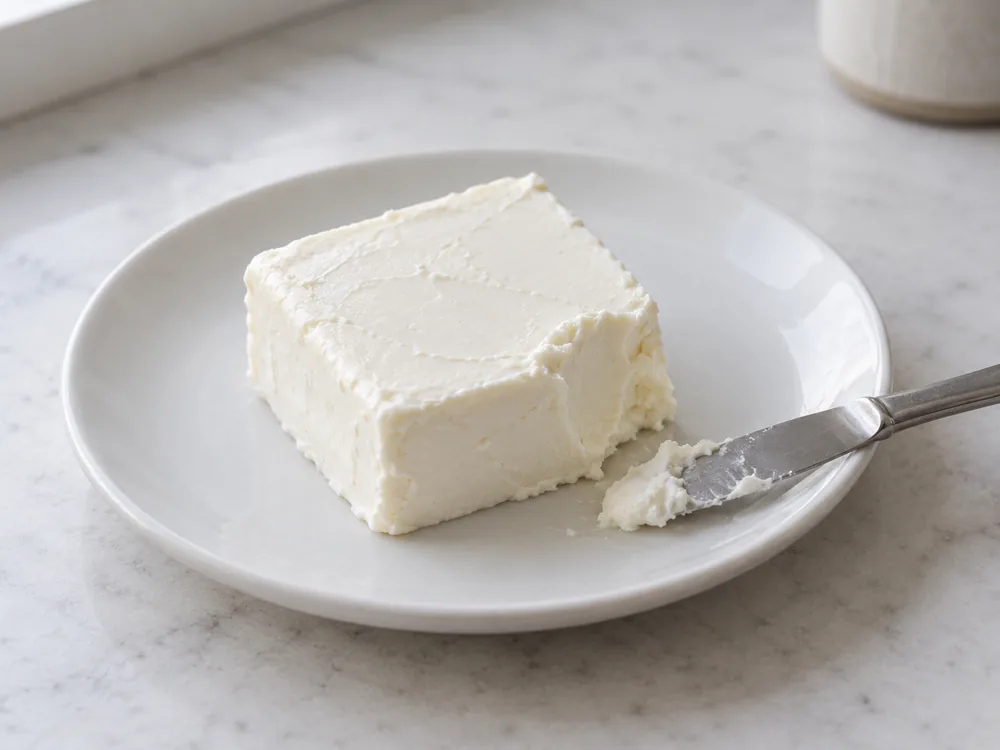
One 18 g portion holds 55 kcal and 5.2 g of fat, 3.5 g of it saturated, with 1.6 g of protein and 0.23 g of salt.
Per 100 g, the two French panels agree within about 3% on energy, fat, saturated fat, protein and salt, while the six-pack differs on energy, fat and saturated fat.
| Figure | 18 g portions (Auchan) | 16.3 g portion (Bel Foodservice) | 6 x 18 g pack (Open Food Facts) |
|---|---|---|---|
| Energy | 303 kcal | 300 kcal | 227 kcal |
| Fat | 29 g | 28.5 g | 20 g |
| Saturated fat | 19.5 g | 19 g | 13.3 g |
| Protein | 9 g | 9 g | 8.9 g |
| Salt | 1.3 g | 1.3 g | 1.46 g |
Calcium is where the French panels split. The 18 g portion gives 670 mg per 100 g, or 121 mg per portion, framed as 15% of a child's daily needs, and the 16.3 g portion gives 835 mg per 100 g, about 136 mg per portion.
Both lists include milk mineral concentrate, yet the figures differ, so a calcium figure holds only for the pack it was printed on.
The six-pack lists 20 g of fat per 100 g and 41 kcal per portion, against 29 g and 55 kcal for the French 18 g portion, about a quarter less energy.
Vitamin D depends on the pack too. Bel calls the 16.3 g portion rich in vitamin D and prints 10 µg per 100 g, while vitamin D is not among the 18 g portion's ingredients.
What Is Kiri Used For?
Bel set out to make Kiri the first cheese made specifically for children, and it was designed as part of a child's balanced meals, providing vitamins and calcium.
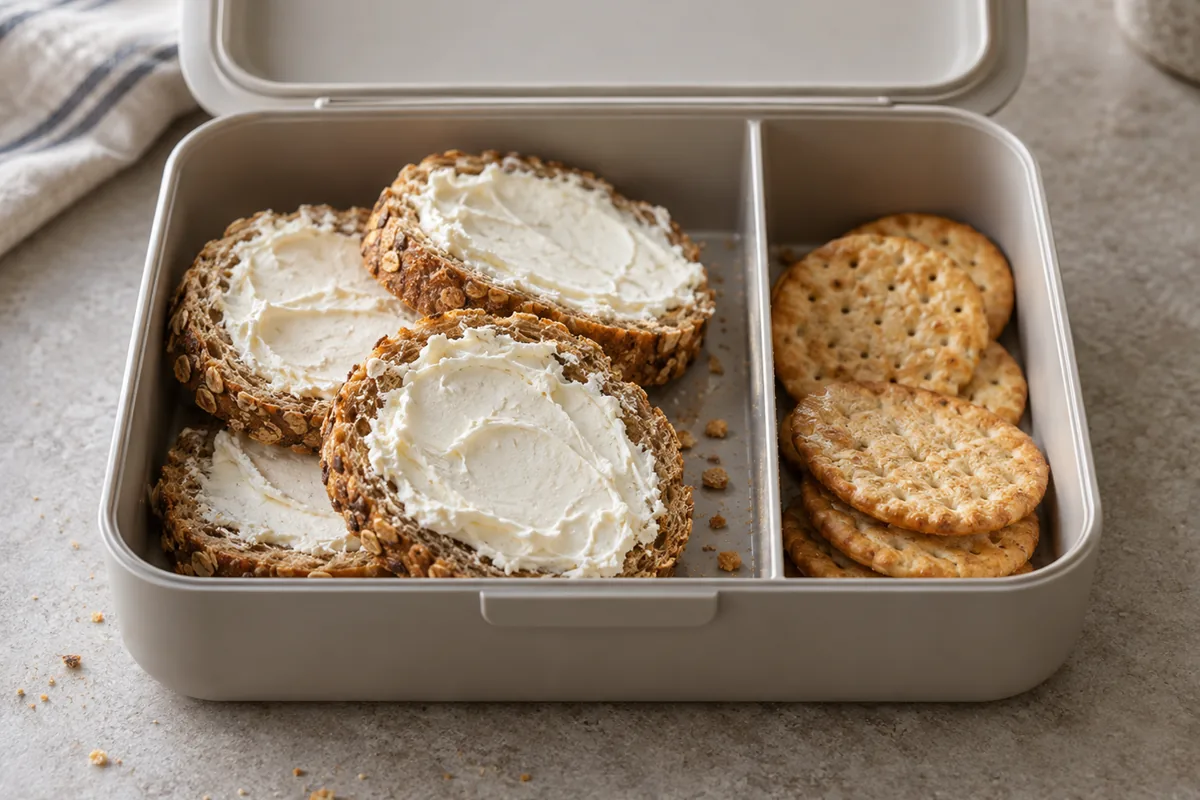
Cheese.com recommends it on bread, in lunch bags and at breakfast, and calls it mild and creamy enough for children to eat on its own. The single portion fits that use: Bel sells it as easy to carry and as supporting children's independence.
Can You Cook or Bake with Kiri?
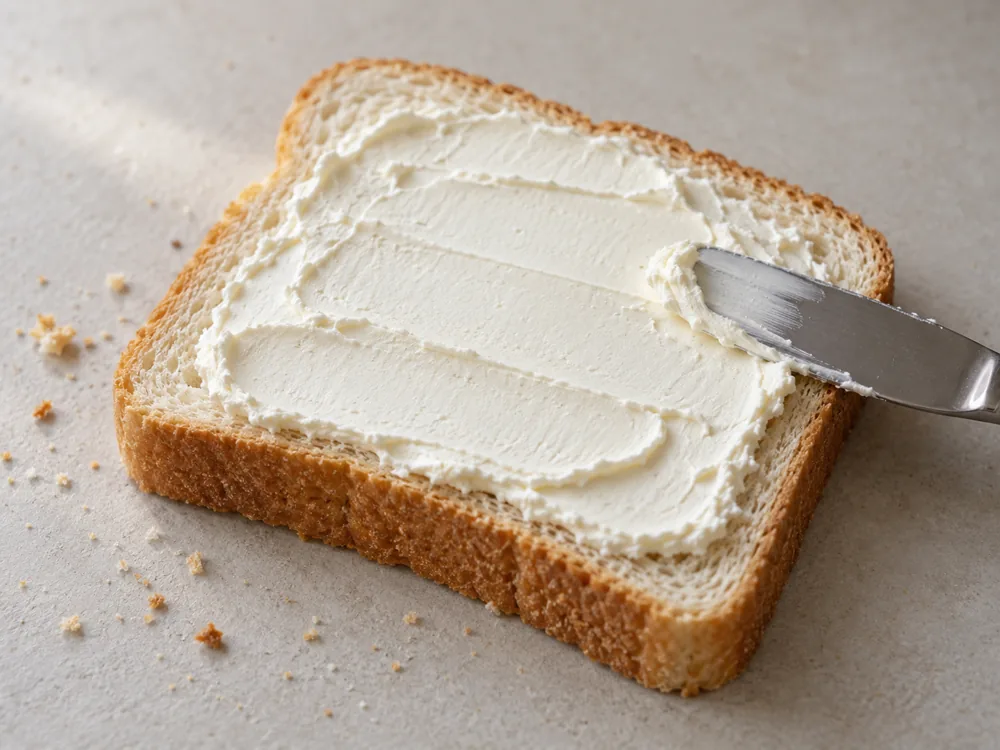
Bel suggests the 18 g portion for cooking as well as spreading: on bread or in soups, pasta, pastries and cheesecake. Its detailed uses are written for Kiri Professional, the chef range sold as a 1 kg block and a 500 g Cooking and Spreading format, and Bel ties them to different formats:
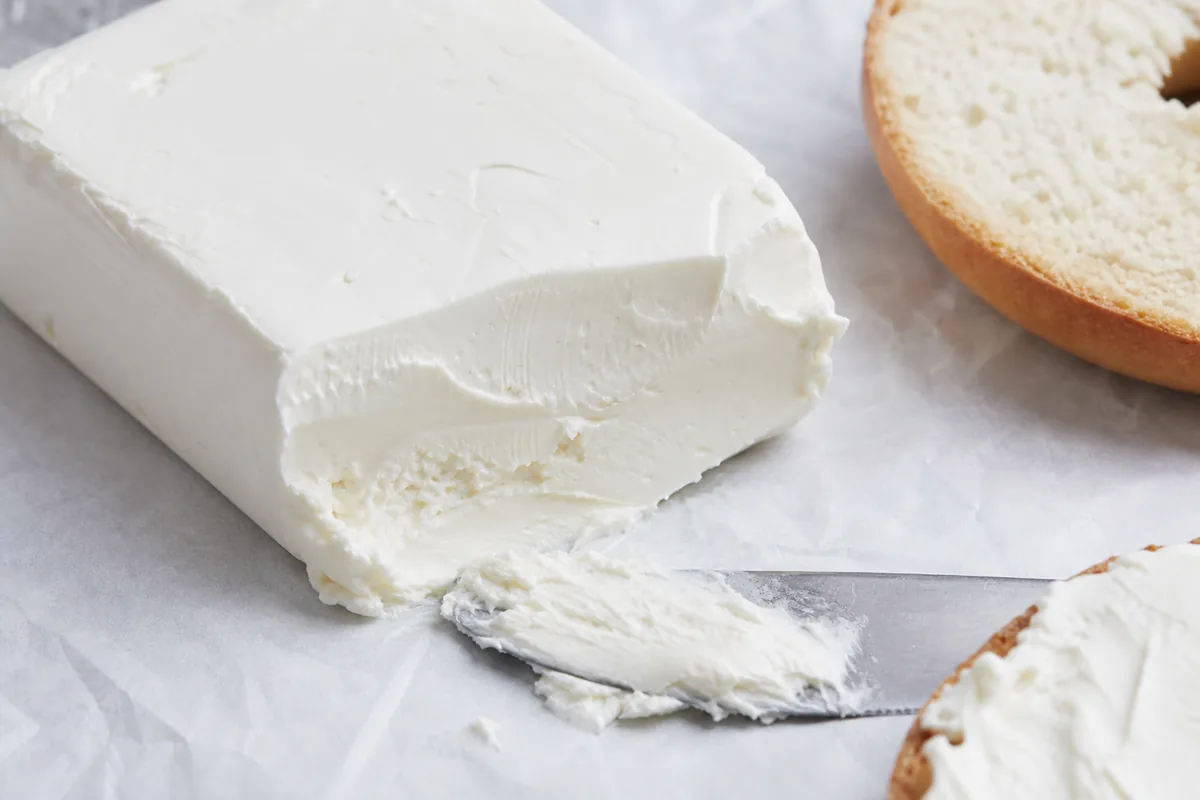
- Cooking and Spreading, 500 g: a base for mixing and incorporating ingredients, spreading on bagels, sandwiches, wraps, and stuffed breads, texture in soups and sauces, and low-temperature baking.
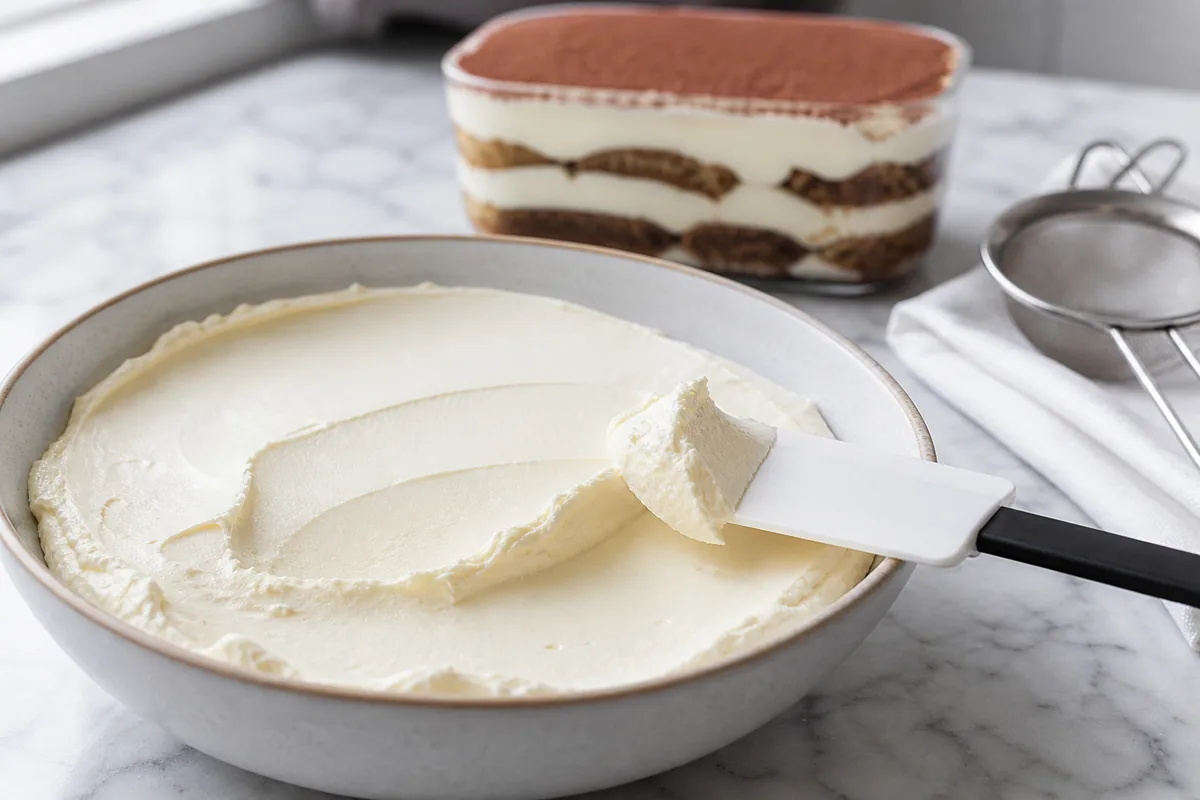
- Blocks, 1 kg listed: structure in cheesecakes, ice cream, and creamy toppings for drinks such as tea.
- Kiri Professional as a brand: whipped cream and icing, where Bel credits its taste and a high stabilising element.
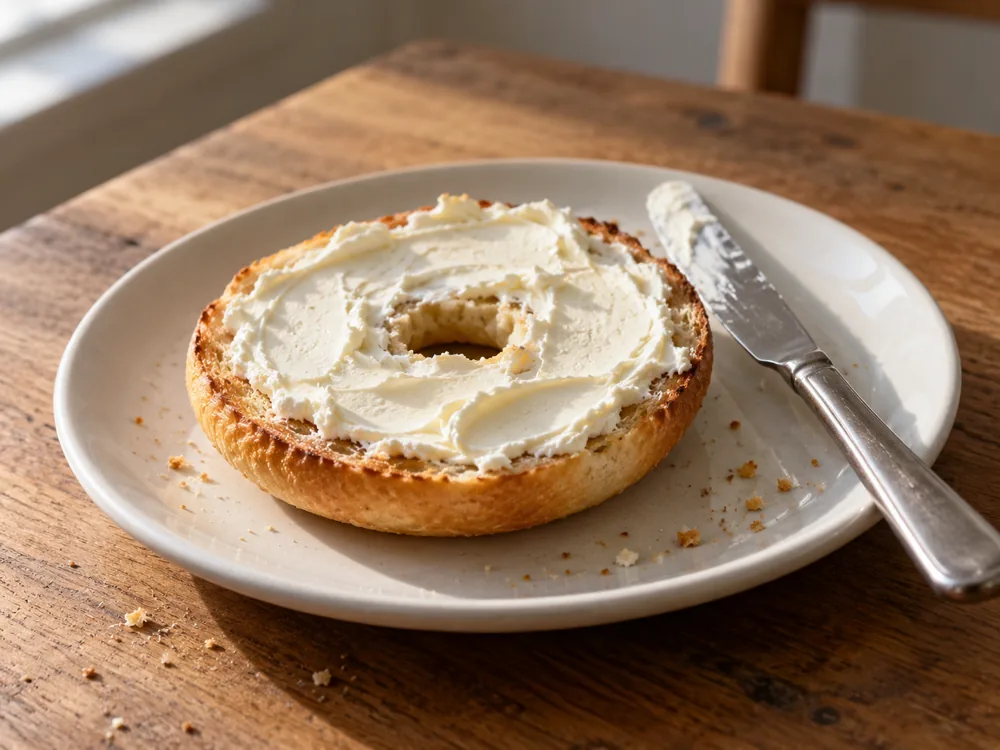
Soups and cheesecake appear on both of Bel's lists, and the jobs it gives Kiri there, texture in soups and structure in cheesecakes, are stated for the Professional formats.
Is Kiri the Same as Cream Cheese?
Bel itself calls Kiri and Kiri Professional cream cheese, although the French legal name is fromage blanc fondu.
Cheese.com describes Kiri and cream cheese in nearly the same words: soft, processed, creamy, mild and sweet.
| Attribute | Kiri | Cream cheese |
|---|---|---|
| Type (Cheese.com) | Soft, processed | Fresh soft, processed |
| Texture | Creamy | Creamy and spreadable |
| Flavour | Creamy, mild, sweet | Creamy, mild, sweet |
| Fat | 28.5 to 29 g per 100 g on French labels | At least 33% in the US (Cheese.com) |
| Named uses | Bread, lunch bags, breakfast (Cheese.com) | Cheesecakes, frostings, dips (Cheese.com) |
The measurable difference is fat. A US cream cheese carries at least 33% fat, and the French Kiri labels give 28.5 to 29 g per 100 g, a little below that.
For a British cream cheese, Cheese.com gives 45 to 65% fat, so to compare one with Kiri, use the fat per 100 g printed on each pack.
Cream cheese made the traditional way is more crumbly than spreadable, while stabilisers such as guar gum make it firmer. Guar gum is not among the ingredients of the short French Kiri recipe, which Bel describes as smooth.
Is Kiri Safe in Pregnancy?
The French Kiri labels give pasteurised milk and pasteurised cream, and pasteurisation is the condition in both agency lines below: the NHS line for pasteurised soft cheeses and the CDC line for cream cheese, when made with pasteurized milk.
If your pack was made for another market, check its label for the same words. Bel calls Kiri a cream cheese, the type in the CDC line, but its French legal name makes it a processed cheese, and eaten cold a processed cheese is a type the CDC list does not cover, so ask a midwife or doctor.
Does Kiri Need to Stay in the Fridge?
Yes. The 16.3 g portion is labelled to be kept refrigerated, and the 18 g pack to be kept cold after purchase.
The CDC counts dairy as perishable food and says never to leave perishable food out for more than 2 hours, or 1 hour if exposed to temperatures above 90°F. It also says to keep your refrigerator at 40°F or below.
That limit, 2 hours or 1 hour above 90°F, is the one to apply to a Kiri portion packed in a lunch bag, counted from when it leaves the fridge.