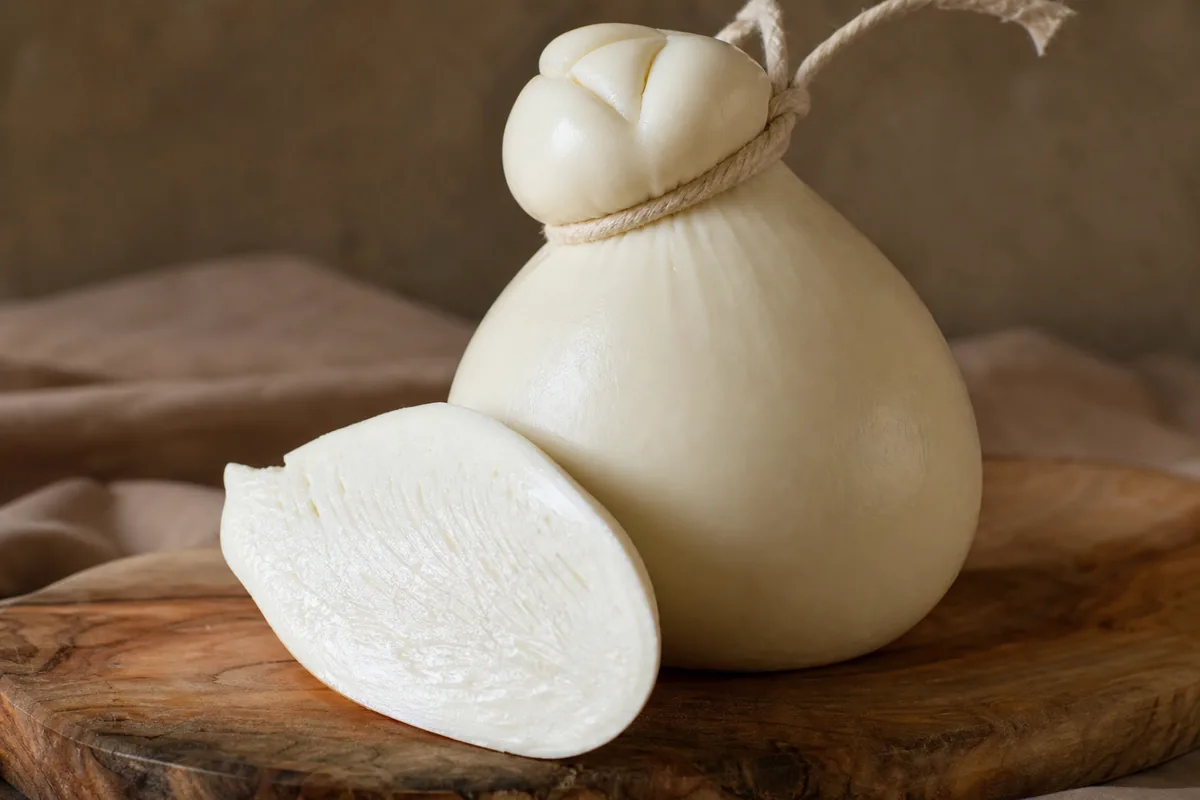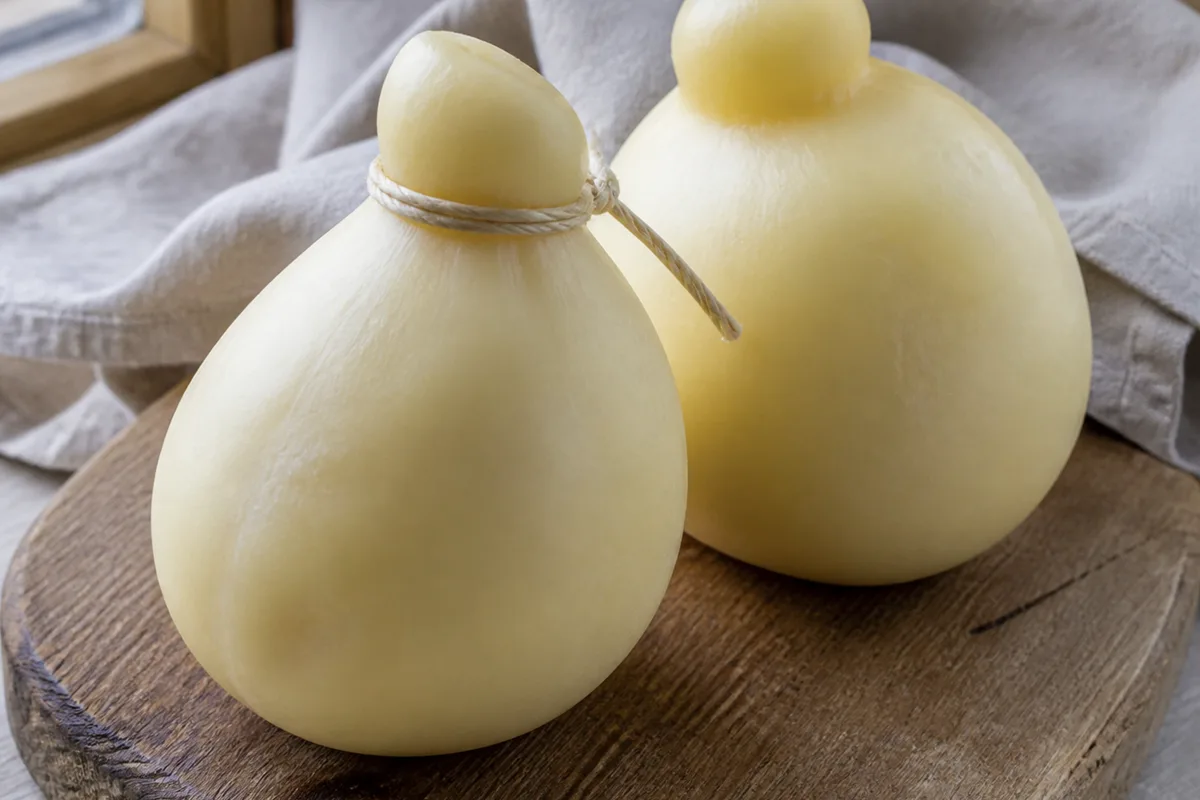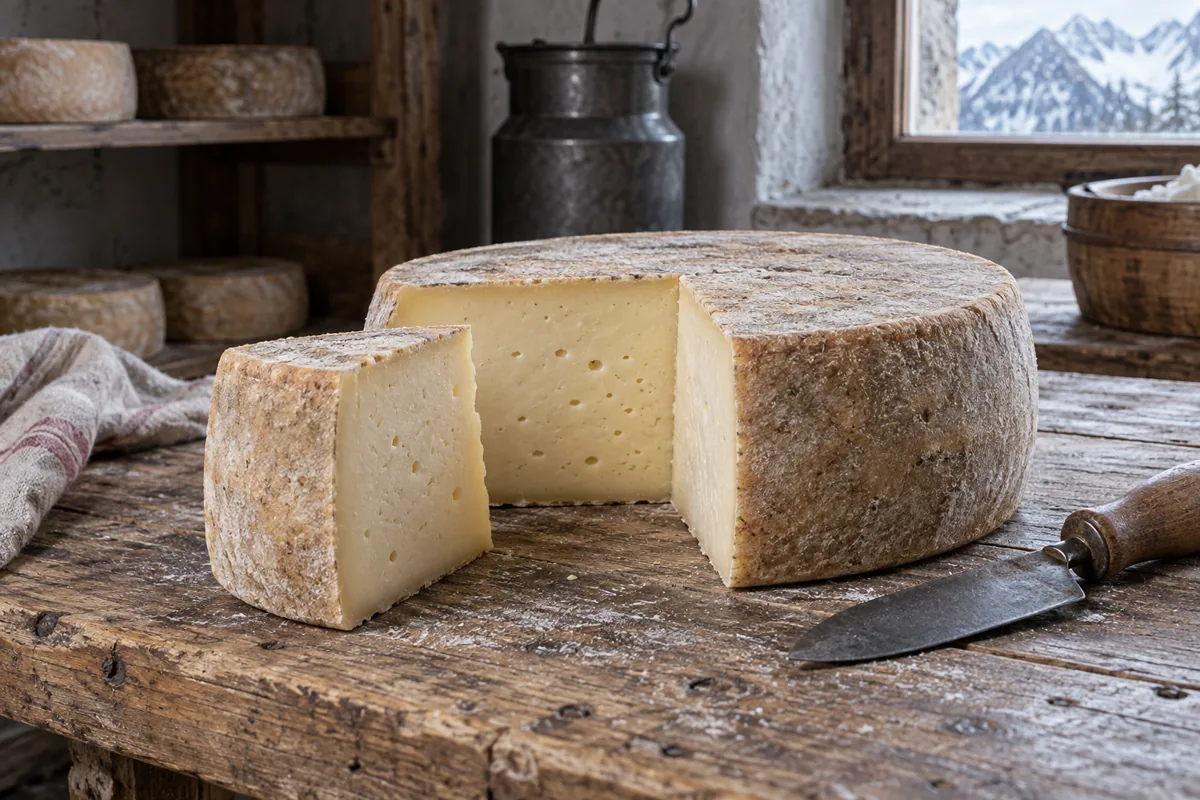
Montasio is a cooked-curd cheese made from cow's milk in Friuli-Venezia Giulia and part of the Veneto, in north-eastern Italy. It has held a protected designation of origin (PDO) since 1996, and the consortium that guards it describes it as semi-hard, with a soft, delicate flavour.
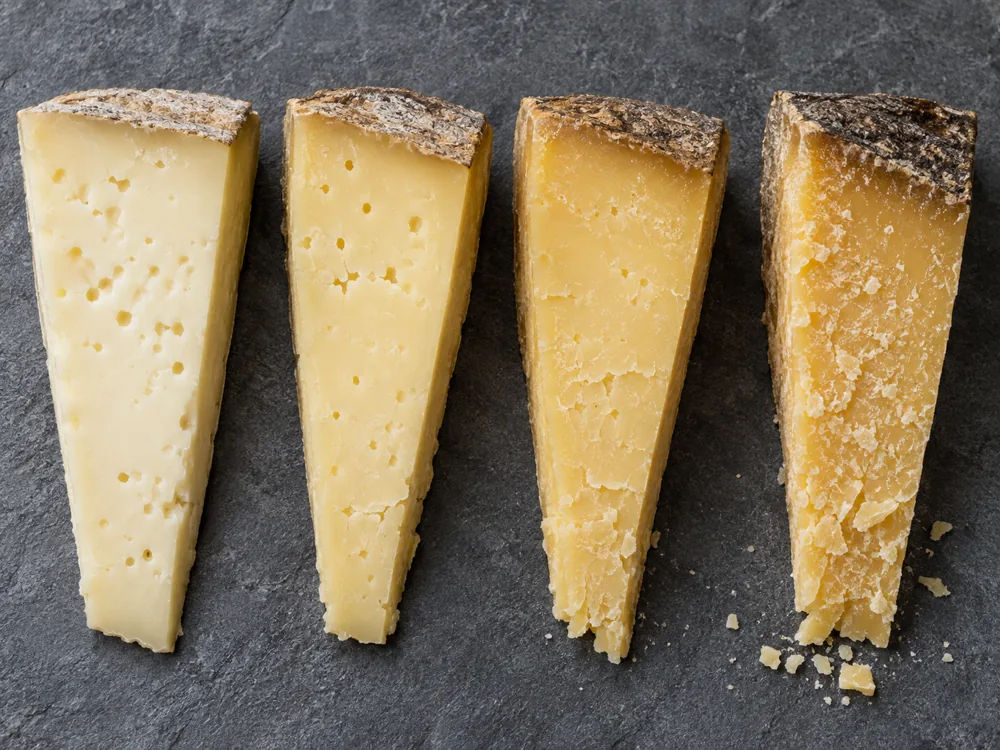
One name covers four ages, from a wheel matured for 60 days that slices to one matured past 18 months that grates, so the production date stamped on the rind says more about what you are buying than the name does.
In This Article
Which Montasio Age Should You Buy?
ONAF's summary of the specification lists four trade names, each with a minimum age: fresco above 60 days, mezzano from 4 months, stagionato from 10 months and stravecchio from 18 months. The consortium's own site lists only the first three and puts fresco at 60 to 120 days and mezzano at 4 to 10 months.
ONAF words this as a wheel that may be sold under these names, which leaves the name as a label option, whereas the production date is stamped on every wheel made to the specification.
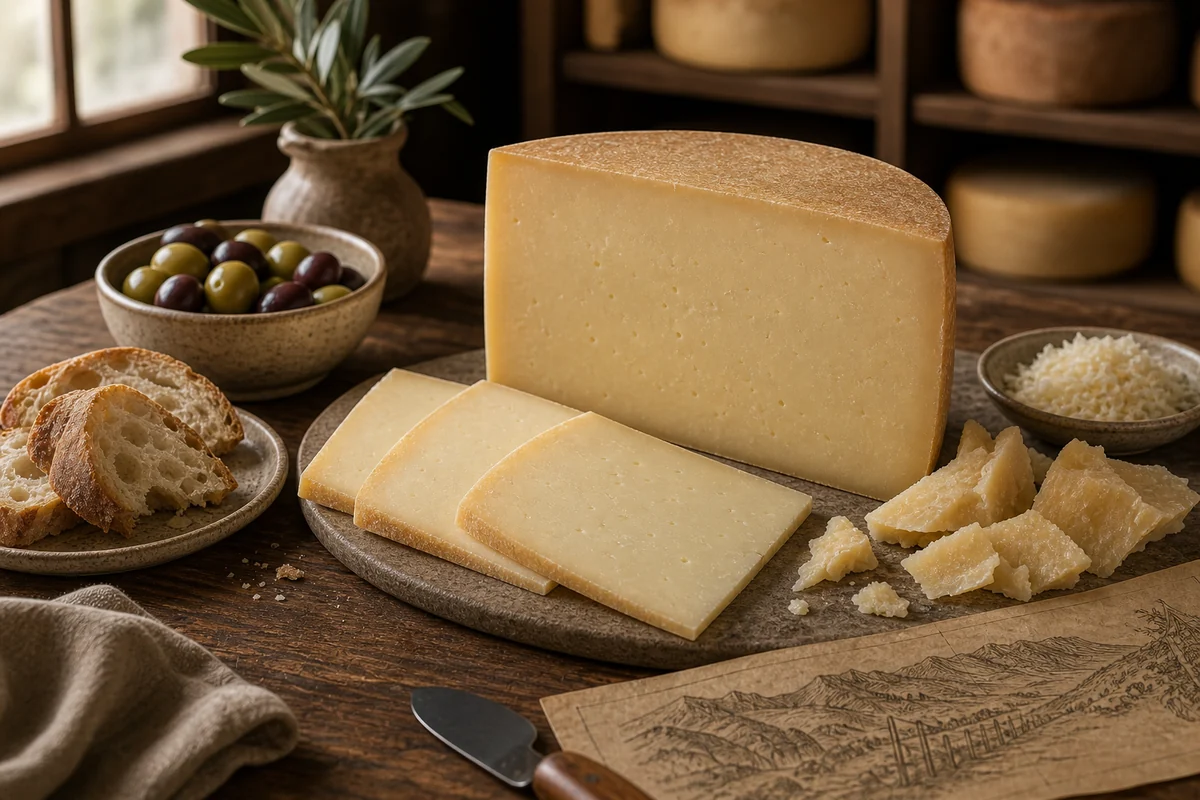
Young Montasio has a compact, slightly straw-coloured paste with small, regular, shiny eyes, which ONAF compares to a partridge's eye, and a smooth, thin, elastic rind that runs from straw to light brown. With age the rind dries and the paste darkens and turns crumbly.
| Class | Minimum age | Flavour and texture | Use named by the sources |
|---|---|---|---|
| Fresco | 60 days (consortium range 60 to 120 days) | Elastic paste, soft and delicate, with milk, yoghurt and cream notes | Sliced, with fresh vegetable salads |
| Mezzano | 4 months (consortium range 4 to 10 months) | Fuller taste with melted butter, cheese rind and hay notes | Sliced with salads, or beside polenta |
| Stagionato | 10 months | Fruity and vegetal, with dried fruit, hay and meat broth notes | Beside polenta or dishes of fine meats |
| Stravecchio | 18 months | Friable | Grated over dry pasta and soups |
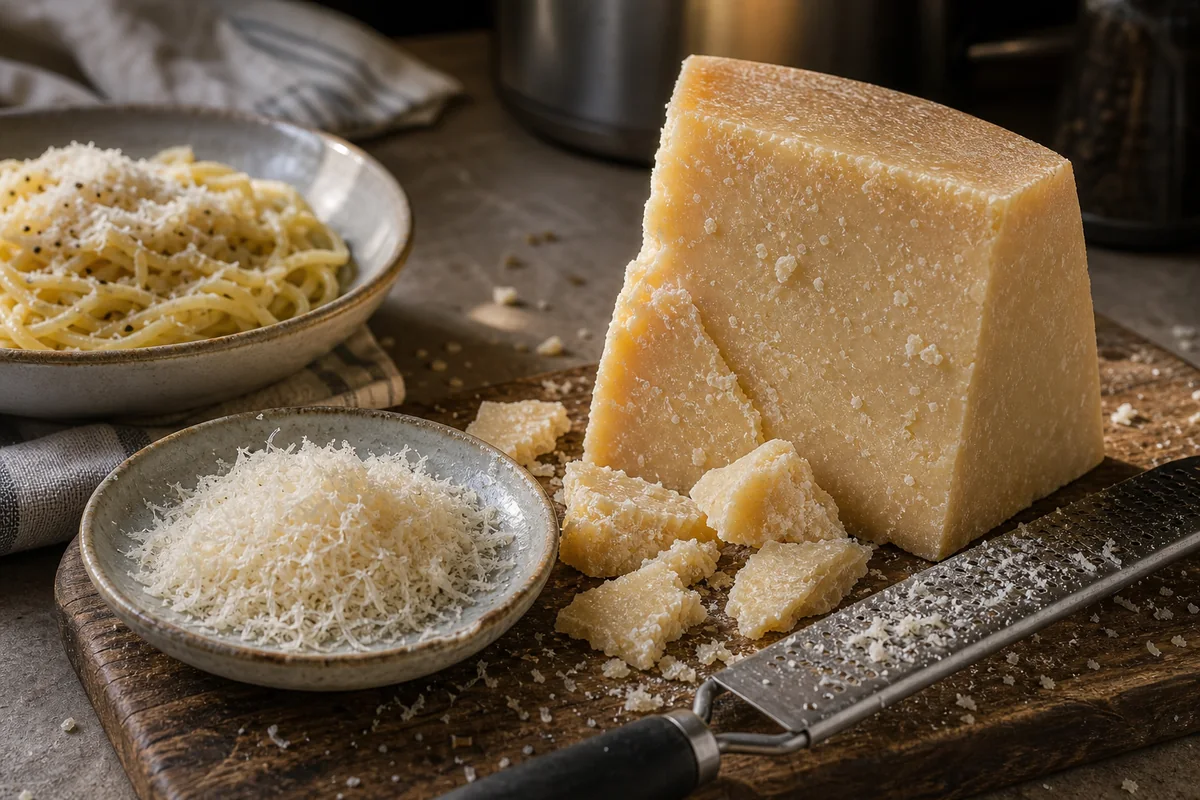
Mezzano is the one class ONAF lists for both slicing and serving with polenta. Grating starts later than the stagionato minimum, because ONAF says the cheese is grated once it has reached at least 12 months and turned friable, which it ties to stravecchio.
Whether Montasio counts as a hard cheese depends on the wheel, since ONAF describes the paste as semi-hard or hard according to age. The EU single document makes the same split, placing it among the semi-hard cheeses but also, because it can age for up to 36 months, among the very few long-aged hard ones.
Pick the age by the job: fresco or mezzano to slice, mezzano or stagionato beside polenta, and a friable wheel of at least 12 months to grate. The class name is optional on a label, so the production date on the heel is the age to trust.
What Does Montasio Taste Like?
The consortium describes fresco as soft and delicate, with milky notes that recall fresh milk, yoghurt and cream and a sweet dairy finish. Mezzano is fuller and more decided, with notes of melted butter, cheese rind and hay.
Stagionato turns fruity and vegetal, with dried fruit and hay, and the consortium adds animal notes such as meat broth. The specification says a long-aged wheel tends toward piquant.
The sources differ on how forceful aged wheels get. The consortium describes a balanced flavour without excess, while ONAF says stagionato suits consumers who prefer strong, decided flavours.
In the mouth ONAF describes the paste as fairly hard, not very sticky and fairly soluble, and it says the smell and aroma grow more intense and more lasting as the wheel ages.
The EU single document explains the shift as concentration: at two months the paste has a medium consistency and a delicate taste that recalls milk, and as ageing continues the substances concentrate, the paste firms, and the flavours turn decided and slightly piquant.
It credits the changes in smell, taste and texture over the years to bacteria that occur naturally in the area's meadows, pastures and forage.
How Is Montasio Made?
The consortium describes the method as soft processing, with cooking temperatures that stay moderate and no forced drying of the curd, so the milk's own bacteria keep working in the wheel.
The specification ties that gentleness to the cheese's range. Its single document says the soft technology, with about 1% starter, cooking at 42 to 48 °C and draining to roughly 36% moisture at two months, is what lets Montasio be eaten at two months or matured past 36 months.
The specification samples moisture at two points, capping it at 36.72% at day 60, and ONAF adds a looser first limit of 42.84% at day 10.
The classic method keeps the two daily milkings apart and skims the evening milk, so the cheese is made from partly skimmed milk. A 2013 amendment now lets the milk come from consecutive milkings collected within 48 hours of the first, because automatic milking allows more than four, and the applicant reported that this does not change the milk's fat or protein.
The cows are mainly Bruno Alpina, Pezzata Rossa Italiana and Pezzata Nera, and 75 to 85% of their ration is cereals, dry and fresh forage and silage, with at least 60% of the feed coming from the production area.
The specification bans forage from waterlogged ground or busy roadsides, which cheesemaking tradition holds harmful to cheesemaking, and also fresh vegetables, fruit, rapeseed, beet pulp and most silage other than hay-silage and maize silage.
Dairies use copper vats of 1 to 1.5 tonnes or steel multi-purpose vats of 3.5 to 8 tonnes, and the 2013 amendment says the two heat at very different speeds, so cooking and the stirring off the heat take different times. Each cheesemaker also decides when to unload the curd from daily readings and experience.
That is why the specification gives cooking as 42 to 48 °C with only a 10-minute minimum for the off-heat stirring, which replaced a fixed 20 to 30 minutes for both. ONAF's step list gives the narrower 44 to 46 °C used below.
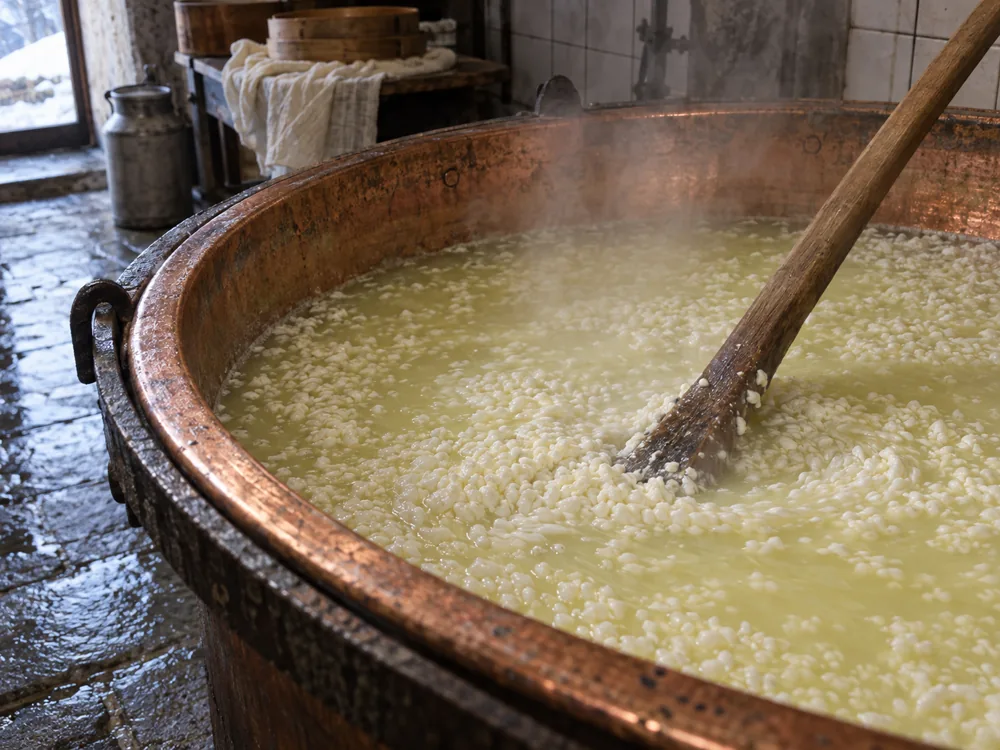
ONAF's summary of the specification gives the sequence from the vat to the store.
Where Is Montasio Made?
The production area covers all of Friuli-Venezia Giulia, all of the provinces of Belluno and Treviso, and parts of Padua and Venice. Every step has to happen inside it, from milk production through coagulation, pressing, salting and maturing.
At the end of 2024 the consortium counted 37 production plants, 13 maturing firms and one milk producers' association among its members.
The specification's own history records more than 650 active dairies in the 1960s and credits part of that spread to the turn-taking cooperative dairies and a school for dairy technicians. ONAF dates the first such cooperative to about 1880 in Cadore, and the consortium to 1878 at Collina di Forni Avoltri.
The consortium's report counts 764,799 wheels made in 2024, 1% fewer than the 772,542 of 2023, and 780,973 sold, 2.63% more than the 760,969 sold in 2023.
Those 37 are members only, because the origin mark goes on every wheel made to the specification, member or not.
A wheel can carry the label prodotto della montagna when the cows' feeding, the milking, the processing and the maturing all take place in areas the national law defines as mountain. The specification sets the maturing part of that rule at the 60-day minimum, and a PDM plate on the heel marks the wheel.
ONAF's summary gives a finished wheel as 5.5 to 8 kg and 27 to 35 cm across, while the EU single document gives 6 to 8 kg and 30 to 35 cm at day 60, and both allow a heel of 8 cm at most. At day 60 the paste must also hold at least 40% fat in dry matter.
How Can You Tell How Old a Montasio Is?
The heel, the flat side of the wheel, carries the information. The moulds imprint the word Montasio at a slant, the dairy's code, the province abbreviation and the production date as year, month and day.
Counting back from that date gives the age: a wheel stamped eleven months ago has reached stagionato, and one stamped five months ago is mezzano.
ONAF allows a protective coating on the rind only if it is transparent and colourless and respects the rind's colour, so the straw-to-light-brown rind a buyer sees is the wheel's own. Its description of a cut face also lists a thin, dark yellow layer just under the rind.
The consortium describes four selections that add further marks or conditions.
- Prodotto della montagna: a PDM plate on the heel for wheels made entirely in mountain territory.
- Quality Gold: a second mark burned in by the consortium on wheels over 100 days old that pass its checks and show no ripening defects.
- Pezzata Rossa: the letters PR on wheels made only from the milk of that breed.
- Biologico: wheels whose milk comes only from certified organic farms.
The EU single document says the Quality Gold mark is applied on voluntary request, from members and non-members alike, after the consortium's check, so a wheel without it may simply never have been submitted.
Portioning and prepacking are allowed only after the 60-day minimum, and firms outside the production area may do it after notifying the consortium. A packed wedge shows the stamps only if the cut kept part of the heel.
Is Montasio Lactose Free, Pasteurised or Vegetarian?
The consortium calls Montasio naturally lactose free and says its lab analyses show less than 0.01 g of lactose per 100 g once the wheel reaches 60 days, the minimum age for sale. That figure comes from the consortium's own 2024 sustainability report.
The report explains it as chemistry, saying the usual make and ageing convert lactose into glucose and galactose, and it puts the measured level at more than 10 times below the legal limit for a lactose-free claim.
The milk is never pasteurised. The specification forbids it, and the consortium says the milk is worked raw or thermised, with thermised milk required to test clearly positive for phosphatase, the check that confirms it was not pasteurised.
Montasio is not vegetarian. ONAF's summary of the specification lists calf rennet, liquid or powder, and the consortium describes the rennet as coming from the dried stomachs of calves past the colostrum stage.
The consortium's 2024 report describes Montasio as made only with fresh milk, rennet and salt. The specification also allows a starter culture made from local milk, and ONAF's summary adds that it permits lysozyme (E1105) in the vat to prevent late blowing in long-aged wheels.
Can You Eat Montasio While Pregnant?
Montasio is never pasteurised, and both agencies sort cheese by how hard it is and by whether the milk was pasteurised.
The NHS says pasteurised or unpasteurised hard cheeses, such as cheddar, gruyère and parmesan, are safe in pregnancy, and it lists pasteurised semi-hard cheeses, such as edam, as safe. It also says any cheese cooked until steaming hot is safe.
The CDC's safer list names hard cheese made with pasteurised milk, and it warns that pregnant women are 10 times more likely to get a Listeria infection. It puts unheated cheese sliced at a deli on its riskier list and deli-sliced cheese heated to 165°F or until steaming hot on the safer one, as it does for pasteurised soft cheese heated the same way.
The NHS also puts any food made from unpasteurised milk on its careful-with list and says it must be thoroughly cooked. The CDC lists dairy products made from raw milk as riskier, so neither agency clears an unpasteurised semi-hard cheese, and neither decides whether a given wheel counts as hard.
Montasio vs Asiago: How Do They Differ?
Both are cooked-curd cow's milk cheeses from north-eastern Italy, sold at several ages under names that overlap, and Wikipedia classes Asiago as an Alpine or Swiss-type cheese. Asiago began on the Asiago plateau and its designated area covers Vicenza, Trento and parts of Padua and Treviso, while Montasio's covers Friuli-Venezia Giulia and the provinces named above.
Asiago pressato is the fresh style, smooth and sliced for sandwiches or melted, and Montasio has no equivalent because its youngest wheel has already matured for 60 days. Aged Asiago, Asiago d'Allevo, splits into mezzano at 4 to 6 months, vecchio at 10 to 16 months and stravecchio from 15 months.
The make sets pressato apart: Wikipedia has its curd heated to about 45 °C, pressed for about four hours and brined for two days, then rested 20 to 40 days. Montasio is pressed for about 24 hours and brined for 48.
Asiago d'Allevo is closer. Wikipedia describes a mix of whole and skimmed milk, rice-grain curd heated in two steps to 40 and 47 °C, and at least 60 days of ageing, close to Montasio's partly skimmed milk, 44 to 46 °C and 60-day minimum.
Wikipedia gives a pressato wheel as 30 to 40 cm across and about 15 cm tall, weighing 11 to 15 kg. A Montasio wheel is lighter and a little narrower, by the figures above.
Both can carry a mountain label, on different tests. Wikipedia ties Asiago's to cheese made and matured in dairies above 600 m with milk from farms above 600 m, while Montasio's applies when feeding, milking, processing and maturing all fall in areas national law defines as mountain.
The flavour differs in the older classes. Wikipedia calls Asiago vecchio bitter and stravecchio bitter and spicy, while ONAF describes Montasio as not bitter, turning only slightly piquant at an advanced age.
What Is Frico, and Which Montasio Makes It?
Frico is the Friulian dish most tied to this cheese, and it comes in many versions. Frico croccante is grated aged cheese fried on its own until crisp, and the others add onions, potatoes, apples or herbs to the cheese, according to ONAF's regional record.
The same record (PAT, Friuli-Venezia Giulia) gives 6 to 12 months for the crisp version, using Montasio, Latteria or Malga cheese, which spans mezzano and the start of stagionato. The method is short.
- Grate the cheese fairly coarsely.
- Spread a thin, even handful over a lightly oiled iron pan to make a disc 10 to 15 cm across.
- Press it with a spatula to release the excess fat.
- Lift it carefully once one side is golden and brown the other side.
- Cool it on kitchen paper.
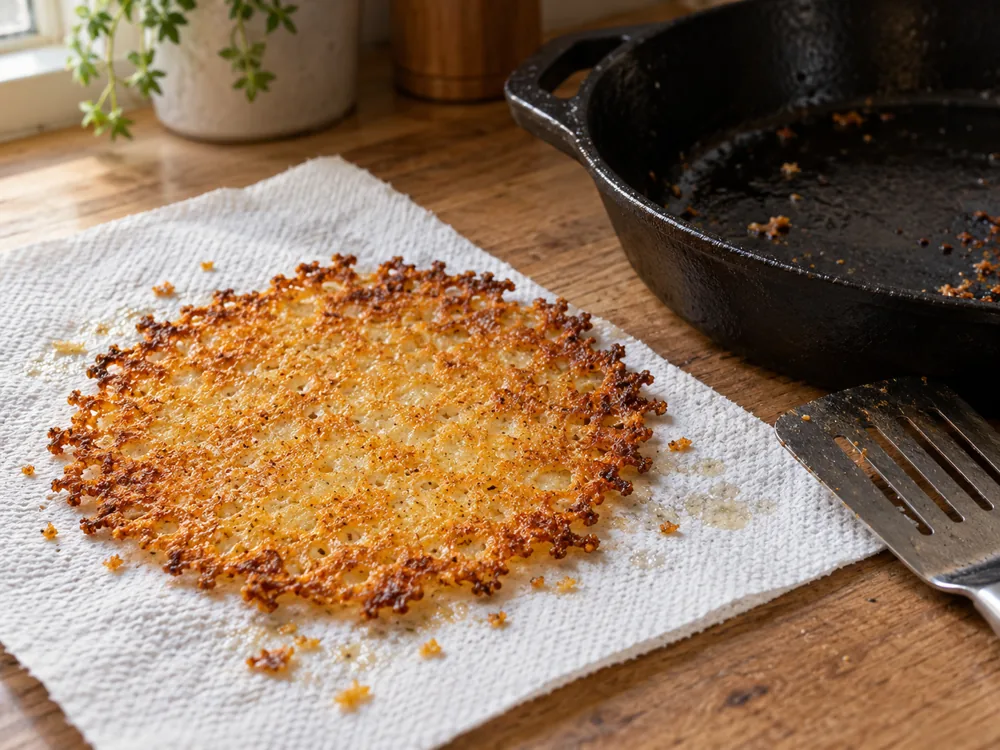
The record describes the result as a friable, well-toasted cheese biscuit that is lightly salty, and it allows a non-stick pan in place of the iron one. Frico is eaten as an appetiser, or as a main course with fried polenta or fried potatoes.
The record gives no storage instruction, says frico is eaten as soon as it is made, and notes that workshops now making it on a craft scale vacuum-pack it.
ONAF's Montasio summary names frico with potatoes and Montasio as the best-known traditional recipe.
The first written recipe, Caso in patellecte, appears in Maestro Martino's Libro de arte coquinaria in the second half of the 15th century. The same record adds that in mountain tradition crisp frico with cold, firm polenta was the food woodcutters carried in their rucksacks.
The recipe text the record quotes asks for fat cheese that is neither too old nor too salty, cut into thin slices, where today's crisp version grates a cheese of 6 to 12 months.
What Can You Use Instead of Montasio?
For crisp frico, ONAF's regional record treats Latteria and Malga cheese as alternatives to Montasio at the same ages.
For slicing, Wikipedia gives fresh Asiago pressato the job ONAF gives fresco, sliced for sandwiches or melted, though its paste is soft and buttery where fresco is elastic and the two are made differently, as described above.
For grating over pasta and soups, Wikipedia says aged Asiago is often grated into pastas, soups, salads and sauces, and the cost of the swap is the bitter note it gives vecchio and stravecchio, which ONAF says Montasio lacks.
What Goes With Montasio?
ONAF names no wine by age class, and its traditional match is a Friulian red. Its general guidance is dry, harmonious, full-bodied reds with good aromatic persistence, while its frico record asks for medium-bodied local reds that are fairly warm and moderately aromatic, so the fried dish gets a lighter pour than the wedge.
The consortium's home page lists three recipes that cook the cheese: frico with pears, cauliflower flans with a Montasio sauce and goose speck, and fillets of sole with Montasio and walnuts, though it names no age for any of them.
| Pairing | Type | Why It Works |
|---|---|---|
| Pears or dried fruit | Food | ONAF suggests them beside the cheese as a second course. |
| Polenta | Food | ONAF names corn polenta with mezzano and stagionato, and its frico record serves frico with polenta. |
| Friulian reds | Wine | ONAF gives Refosco dal Peduncolo Rosso and Schioppettino as the traditional regional match, among dry, harmonious, full-bodied reds. |
Where Does the Name Montasio Come From?
ONAF gives two possible origins for the name: the Jof del Montasio, mountain pastures at the foot of the Julian Alps, or Mont d'Asin at Vito d'Asio.
ONAF says the Benedictine monks of the abbey at Moggio Udinese probably refined the shepherds' alpine techniques from around 1200, and it dates the first production at the abbey's Montasio huts to the 13th century. The consortium's English home page places the monks' refinement in the 17th century, while its 2024 report agrees with ONAF on the 13th, so the consortium's own pages differ.
The first written trace is in the price lists of San Daniele and Udine from 1773 to 1775, which the specification cites. ONAF adds that those lists priced Montasio well above the similar cheeses of neighbouring areas, which it puts down to the flavour and above all to a cheese that keeps and matures and so can be traded.
The consortium says the cheese's typicality has been protected since 1955, that it became a DOC in 1986 and that the EU granted PDO status in 1996, which is why sources quote different protection dates. Its 2024 report ties the 1955 step to the Stresa agreement and dates the consortium's own founding to 1984.