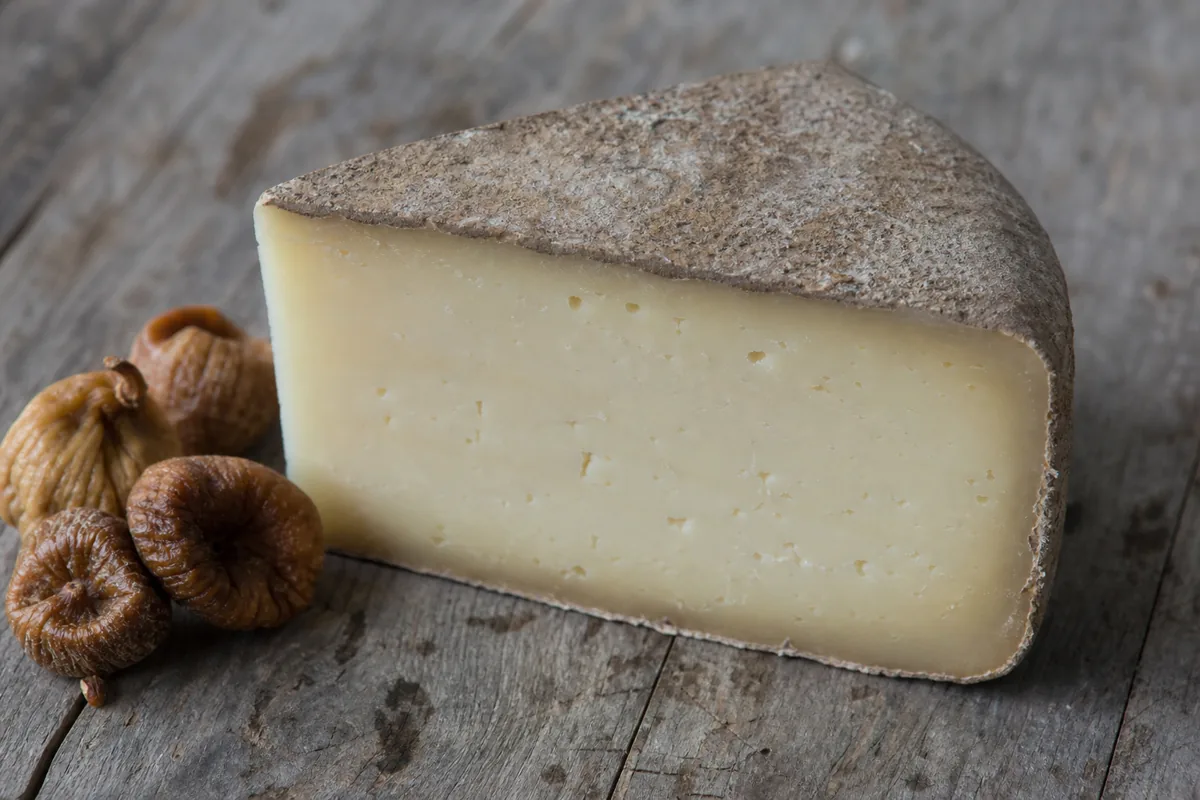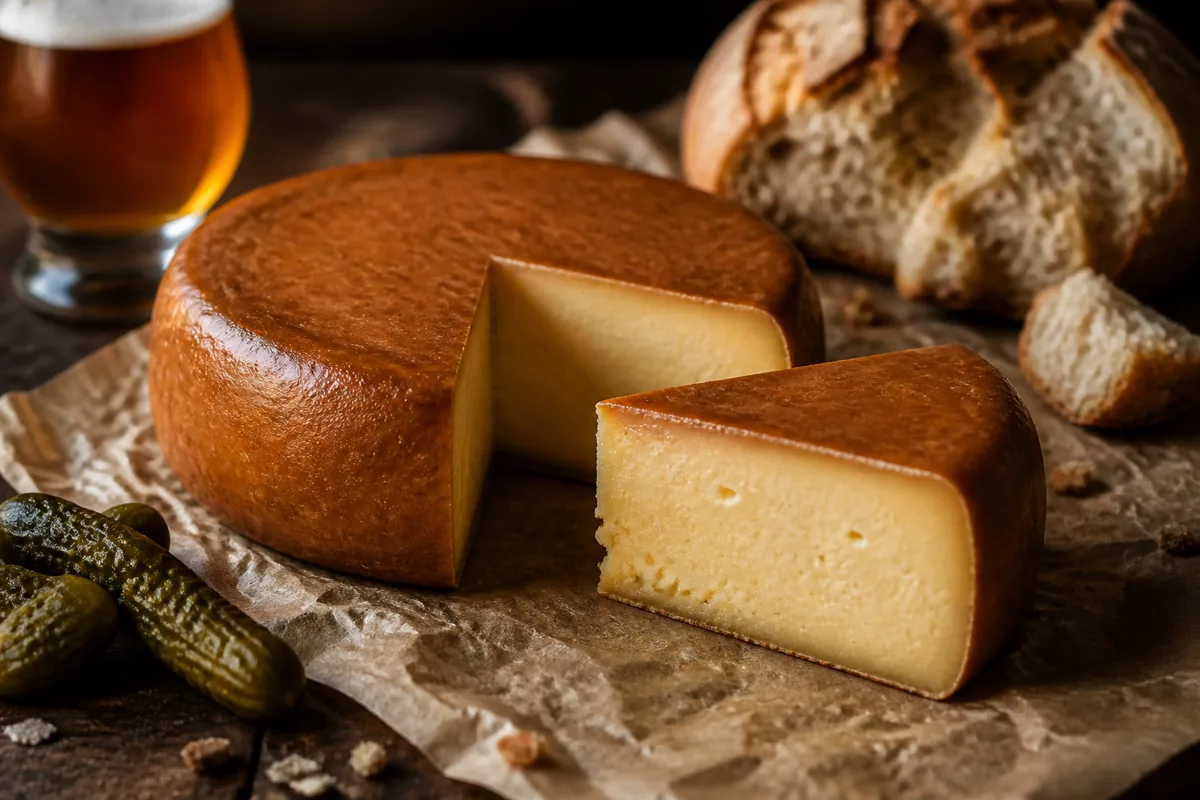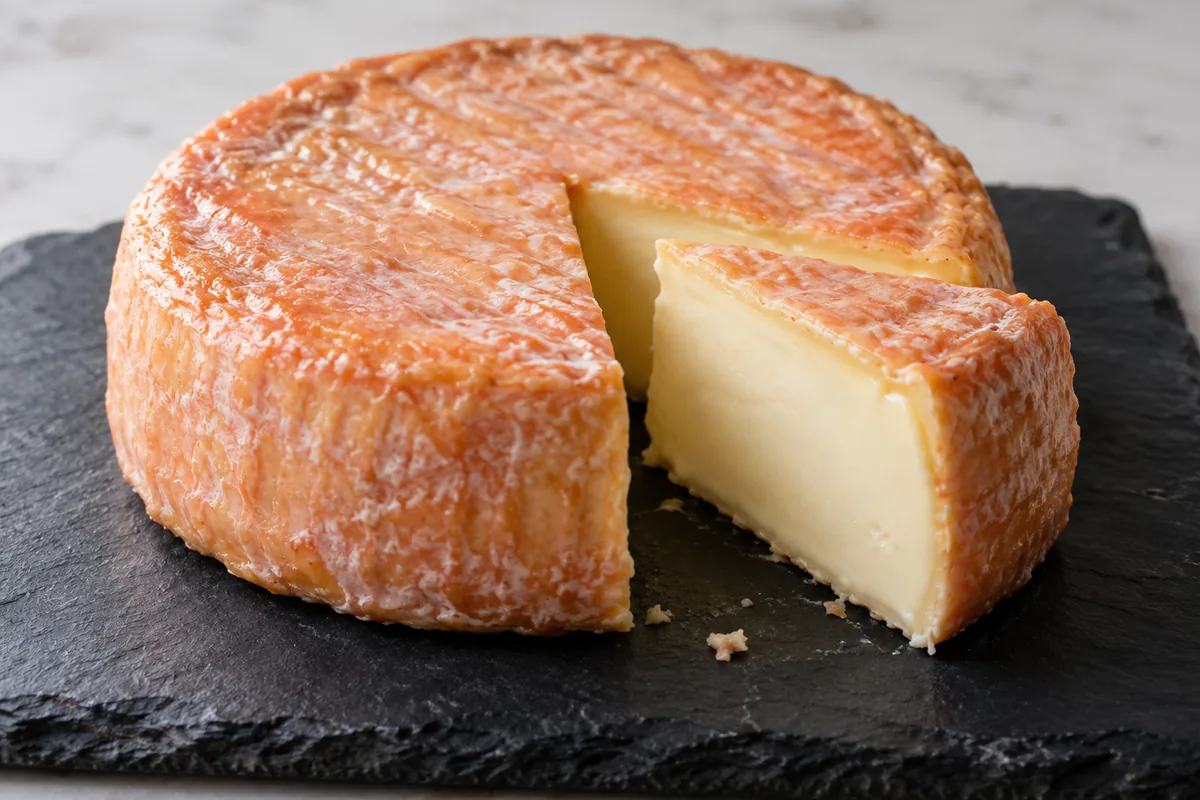
Ogleshield is a washed-rind cheese made from Jersey cows' milk at Manor Farm in North Cadbury, Somerset, the farm where Jamie Montgomery also makes his farmhouse cheddar. Montgomery's own page calls it a Westcountry equivalent to raclette that cooks and melts brilliantly.
Montgomery and Neal's Yard Dairy both say the wheels are washed in brine every three days, and Neal's Yard Dairy gives an average age of three months and names Tim Griffey as the maker.
Paxton & Whitfield lists a Gold Medal at the 2015 British Cheese Awards and a Silver at the 2024 awards.
In This Article
What Does Ogleshield Taste Like?
Neal's Yard Dairy describes a sweet and milky aroma over a warm, savoury flavour reminiscent of chicken broth, and calls the whole cheese gentle yet complex.
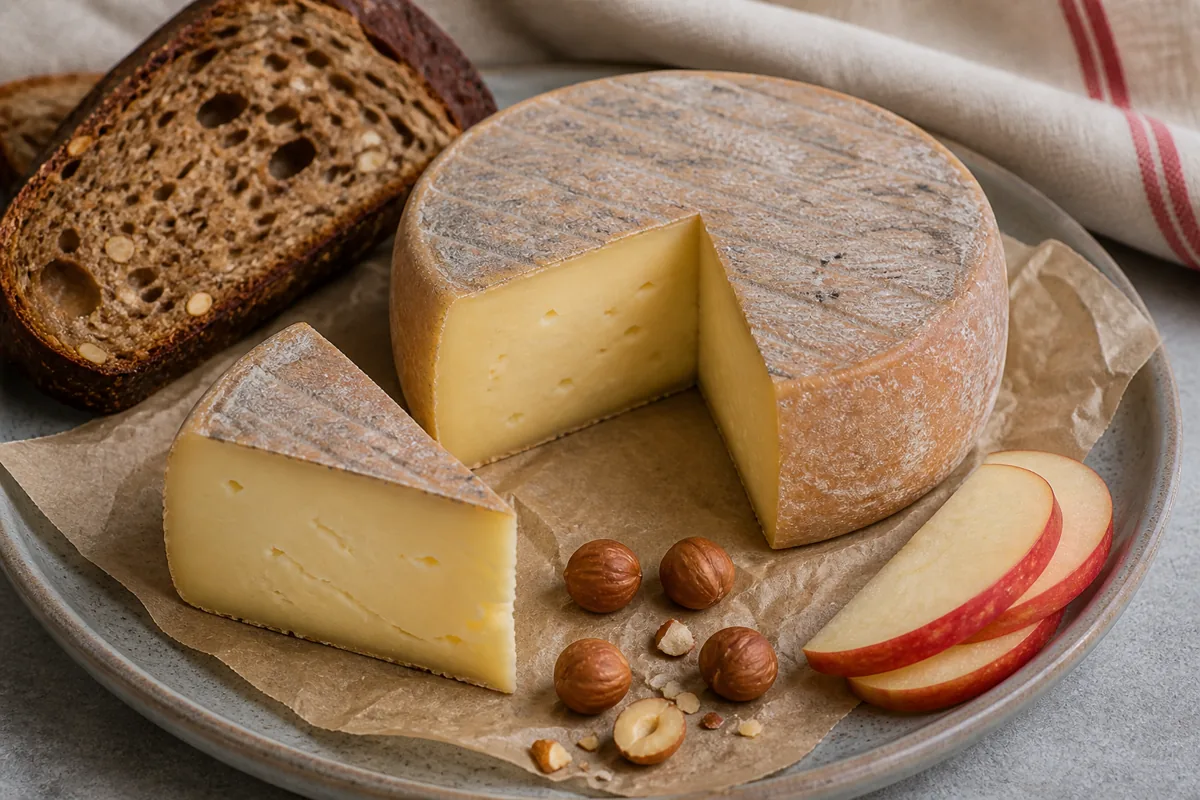
Under the pungent pink rind the texture is soft and pliant. Other sellers use different words for the same cheese.
| Source | Rind and aroma | Flavour | Texture |
|---|---|---|---|
| Neal's Yard Dairy | Pungent pink rind, sweet and milky aroma | Warm and savoury, like chicken broth | Soft and pliant |
| Paxton & Whitfield | Sticky orange rind | Rich, fruity, creamy and nutty | Not stated |
| The Cheeseboard | Orange rind, low pungency | Creamy and slightly meaty | Springy |
| Cheese.com | Washed rind, pungent aroma | Fruity and sweet | Creamy and supple |
Cheese.com lists the paste colour as cream.
The Cheese Atlas gives a fifth description, with a sweet and fruity aroma in place of the sweet and milky one and a soft and elastic texture in place of soft and pliant. It reads as Neal's Yard Dairy's tasting note with two words changed, so the table counts four separate descriptions rather than five.
Across all five the flavour words are gentle, rich, creamy, sweet, fruity, nutty, savoury and meaty, and none of them says sharp or tangy.
What Does the Brine Wash Do to Ogleshield?
Five sources say what the wash does, and they agree on the direction: the cheese keeps more moisture, the paste is softer and the rind is stickier.
| Moisture | Keeps more moisture in the wheel (Paxton & Whitfield, The Cheese Atlas, The Fine Cheese Co.) |
| Rind | A moist, slightly pungent rind (Montgomery, Neal's Yard Dairy) that turns sticky (Paxton & Whitfield, The Cheese Atlas) |
| Texture | Softens the cheese (Montgomery, Neal's Yard Dairy) and gives a more supple texture (The Fine Cheese Co.) |
| Flavour | Extra depth (Montgomery), an enriched milky and sometimes meaty flavour (Neal's Yard Dairy), more meaty, savoury and earthier notes (The Fine Cheese Co.) |
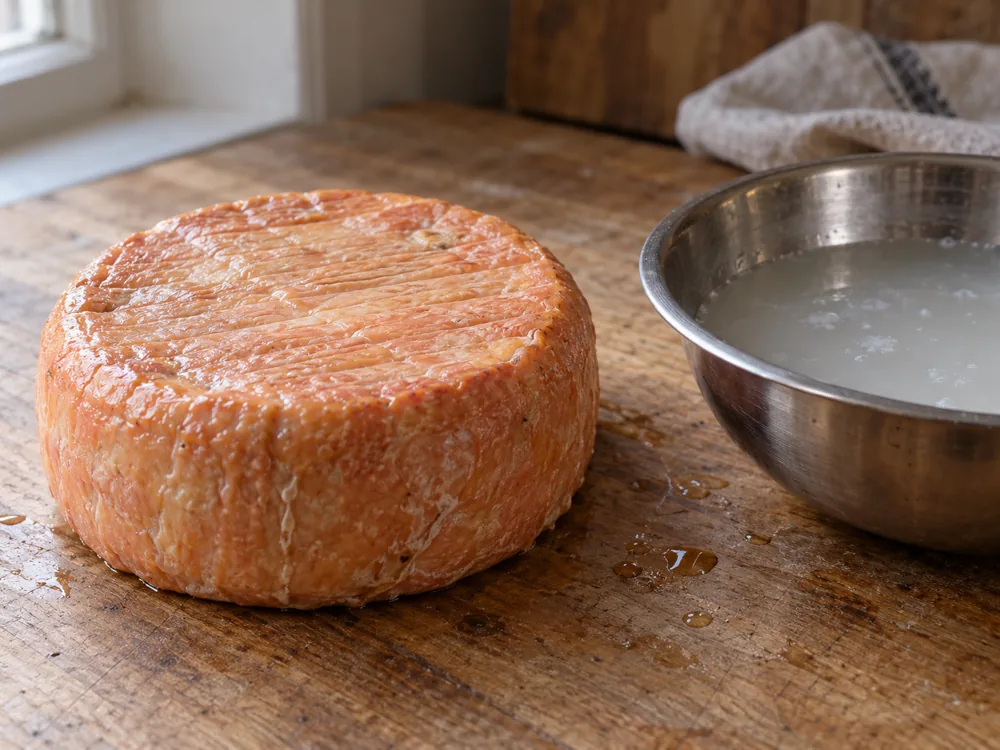
The meaty and savoury words in the tasting notes are the ones sellers tie to the wash. Neal's Yard Dairy and The Fine Cheese Co. credit the wash with them, and The Cheeseboard calls the slightly meaty taste typical of rind-washed cheeses, while no source explains the fruity, nutty and sweet notes.
No maker or seller gives the strength of the brine or says whether the wash changes as the cheese ages.
Does Ogleshield Melt Like Raclette?
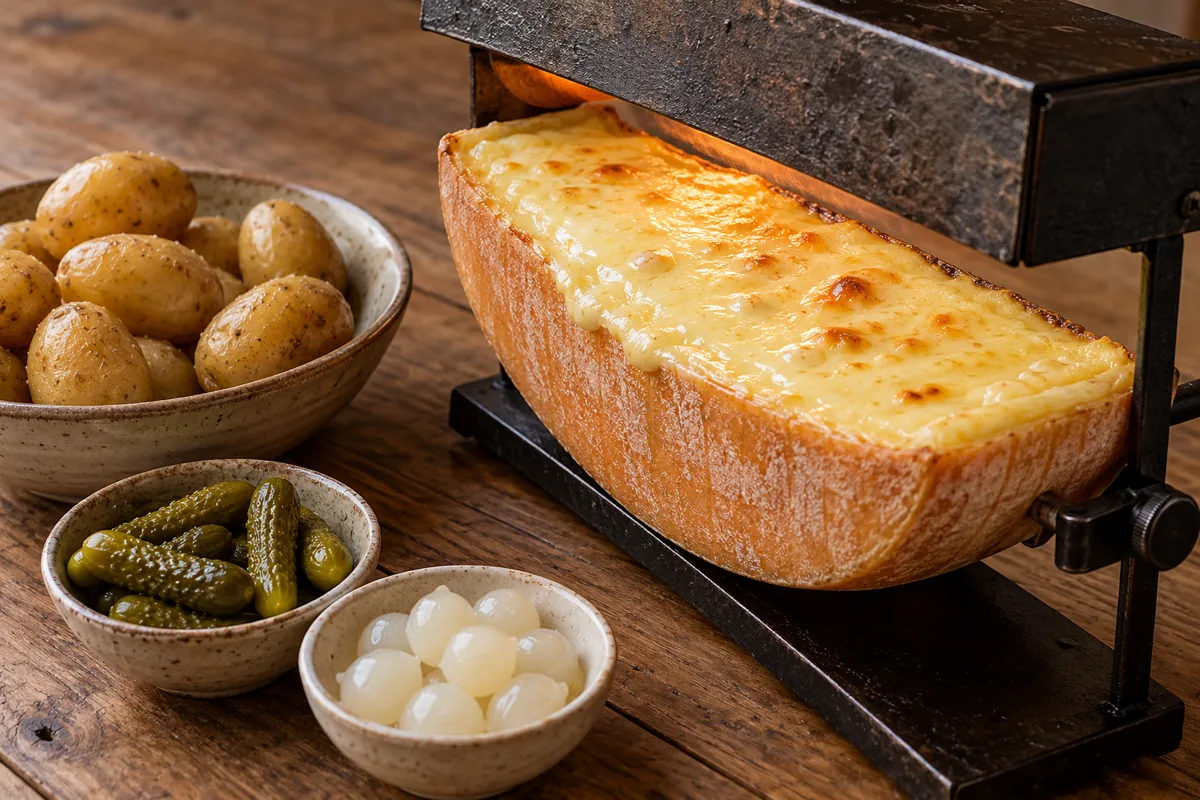
Neal's Yard Dairy says it melts beautifully, and Montgomery, who makes it, calls it a Westcountry equivalent to raclette. Paxton & Whitfield suggests a raclette grill or melting it in a sandwich.
The Cheese Atlas says it can go on a cheese board but comes into its own when melted, whether on a raclette grill or sliced into a sandwich.
The Cheeseboard, written by Justin Tunstall of Town Mill Cheesemonger in Lyme Regis, says it can be served grilled as a raclette or eaten as a table cheese, and that it always seems at its best in the colder months. Tunstall calls it his favourite cheese for toasting.
These are the dishes sellers and writers name for it.
- Raclette-style: grilled and served with new potatoes, ham and cornichons (The Cheeseboard).
- Sandwiches: sliced and melted in a sandwich (The Cheese Atlas, Paxton & Whitfield).
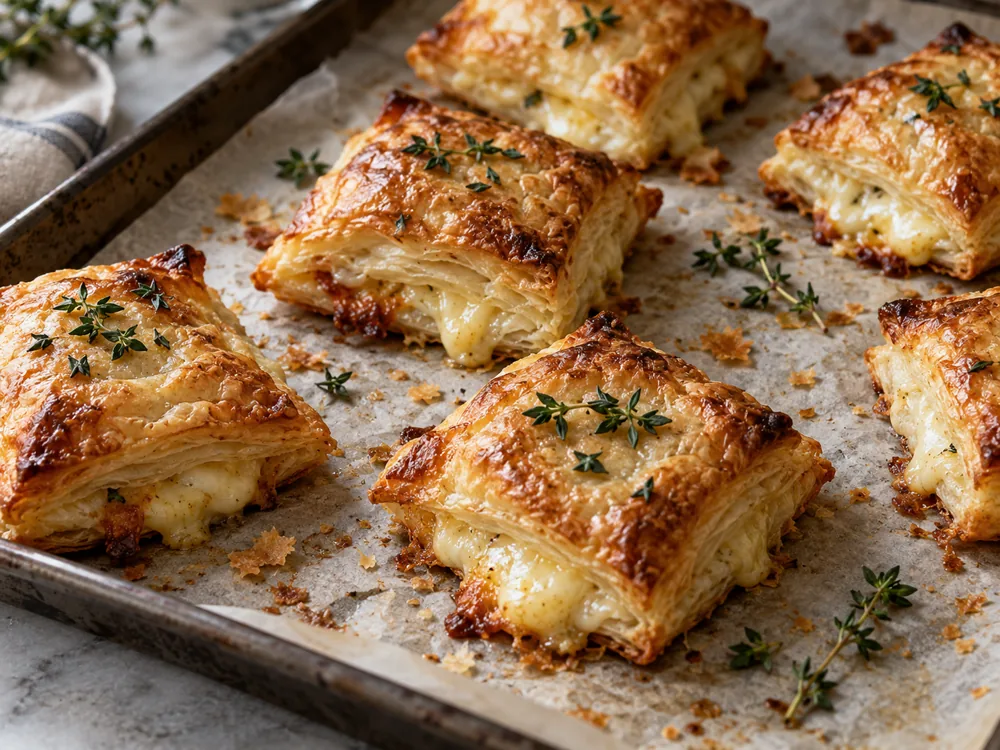
- Soup and bakes: on French onion soup, in tartiflette and in pastries (The Cheeseboard).
- Toasties and fondue: the uses Cheese.com lists.
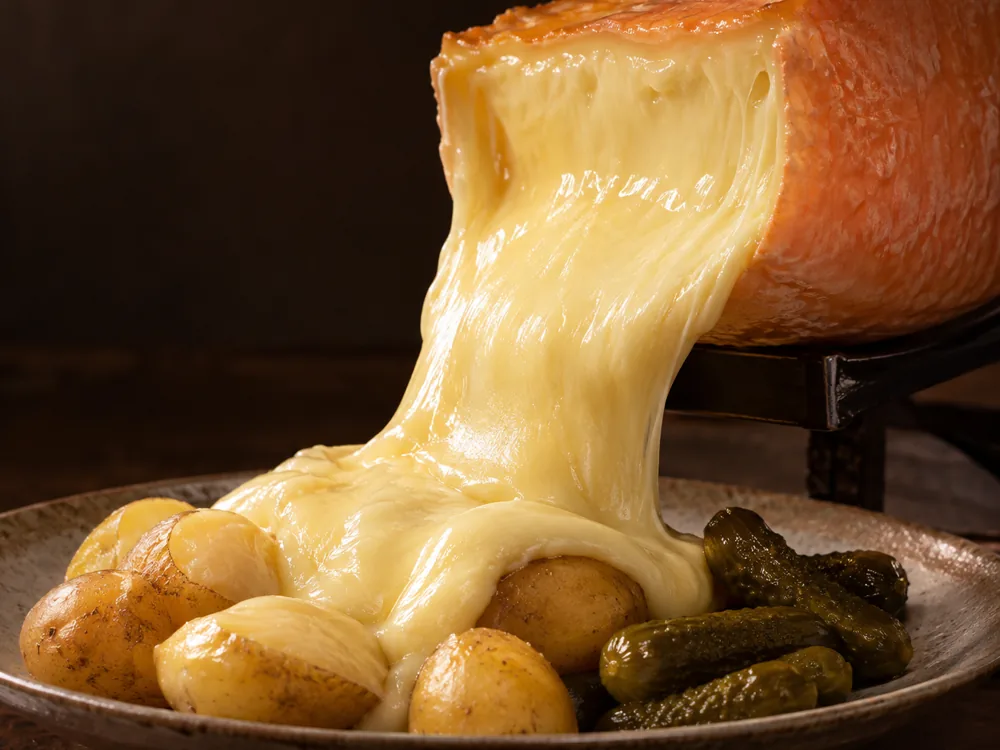
The pastry is the simplest of these: The Cheeseboard describes Rose Prince's recipe in The Telegraph as little more than puff pastry, Ogleshield, a sprig of thyme and egg for glazing.
What Pairs With Ogleshield?
The Cheese Atlas pairs it with damson paste and Orkney oatcakes, and Cheese.com suggests dry white wine.
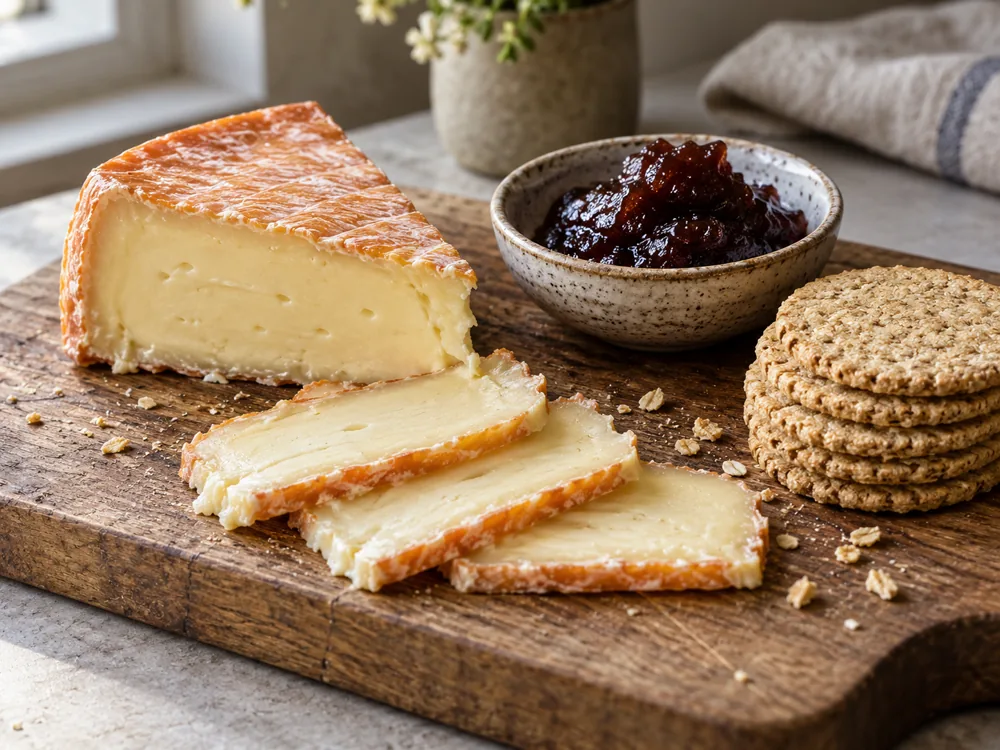
Paxton & Whitfield's page lists cornichons and its raclette heater among the items that go with it, the same cornichons The Cheeseboard serves with the grilled version.
Paxton & Whitfield's general serving advice, which covers all its cheeses, is to offer good bread or crackers with pickles and chutneys, and to serve cheese before dessert so the wine from the main course carries over.
The wine is the only drink any of the sources names for it, and Cheese.com does not say which dry white.
Is Ogleshield Vegetarian?
No. Neal's Yard Dairy's ingredient list ends with animal rennet, and Paxton & Whitfield lists traditional rennet.
Cheese.com marks it as not vegetarian, so every page that states a rennet or a vegetarian status agrees.
Can You Eat Ogleshield When Pregnant?
Pregnancy guidance turns on the milk and on the type of cheese, and for Ogleshield neither is settled. Sellers disagree about pasteurisation, and Montgomery's own page does not state it.
| Source | Milk stated |
|---|---|
| Neal's Yard Dairy | Pasteurised Jersey cow's milk |
| Paxton & Whitfield | Pasteurised |
| Fine Cheese Co. | Pasteurised |
| The Cheeseboard | Unpasteurised |
| The Cheese Atlas | Raw Jersey cow's milk |
| Cheese.com | Unpasteurized cow's milk |
The NHS says pasteurised or unpasteurised hard cheeses such as cheddar, gruyère and parmesan are safe, as are pasteurised semi-hard cheeses such as edam and pasteurised soft cheeses without a white coating, such as cottage cheese, mozzarella and feta.
It also says any cheese cooked until steaming hot is safe, and it names no washed-rind cheese.
Sellers call Ogleshield semi-soft (Cheese.com), semi-hard (The Cheese Atlas) and hard (Paxton & Whitfield), so a cold slice cannot be placed in one of the NHS groups with confidence.
The CDC lists soft cheese made from unpasteurized milk as riskier, and hard cheese made with pasteurized milk as safer. It adds that pasteurized soft cheese heated to an internal 165°F or until steaming hot is safer too, and that pregnant women are 10 times more likely to get a Listeria infection.
The NHS clears any cheese cooked until steaming hot whatever the milk, while the CDC names that step for pasteurized soft cheese, so the milk question still matters under US guidance.
Can You Eat Ogleshield's Rind?
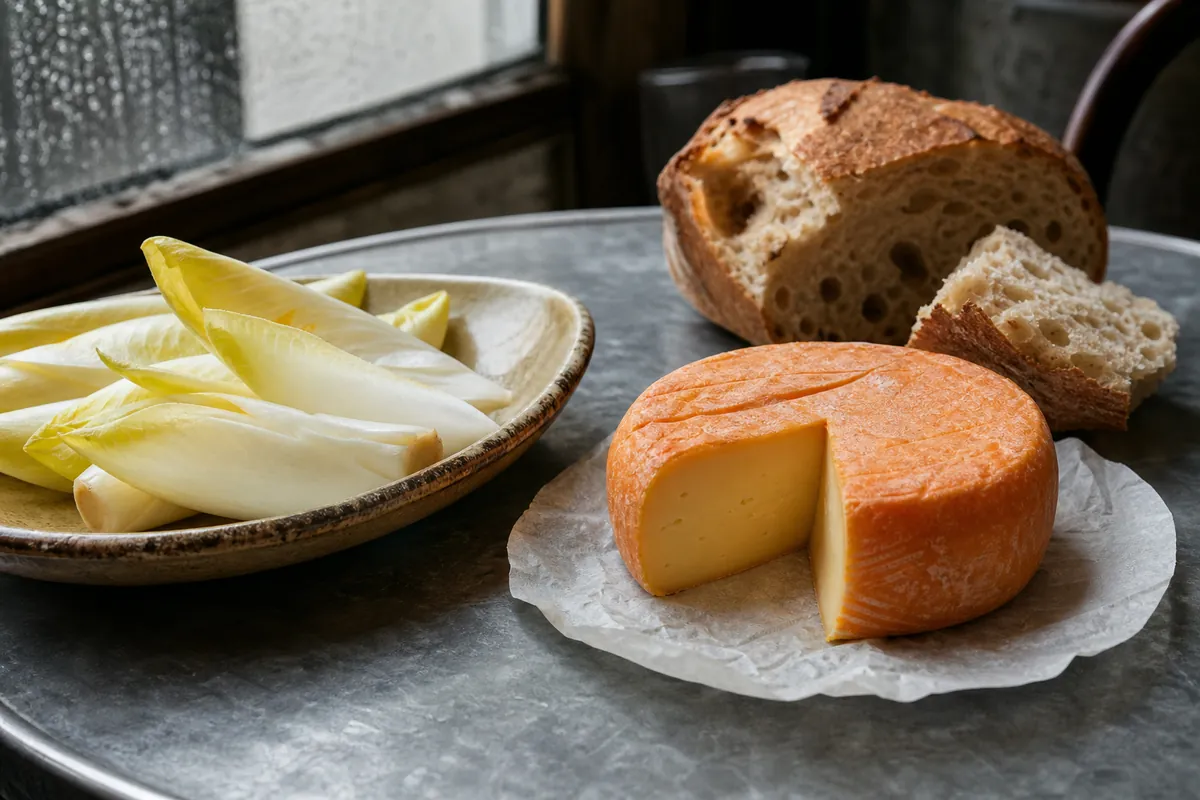
Neal's Yard Dairy calls it a pungent pink rind, while Paxton & Whitfield and The Cheese Atlas call it sticky and orange.
The colour words split further: pink at Neal's Yard Dairy, orange at Paxton & Whitfield and The Cheeseboard, and both at The Cheese Atlas, with no source saying what accounts for the difference.
Strength of smell varies as well. Montgomery and Neal's Yard Dairy call the rind slightly pungent and Cheese.com lists a pungent aroma, while The Cheeseboard says it is not as sticky as one might fear and rates low on the pungency scale.
The wash changed the rind. Neal's Yard Dairy says the original Jersey Shield had a natural rind of greyish-green moulds before the cheese was washed in brine.
The Cheeseboard says the saltiness of the rind gives a delicate crispiness under the grill, which it calls “cheese crackling”. No maker or seller page says whether to eat the rind cold or cut it away.
Is Ogleshield a Cheddar?
No, although both cheeses come from Manor Farm. Paxton & Whitfield places Ogleshield somewhere between Montgomery Cheddar and a tomme, and The Cheese Atlas calls it a hybrid of cheddar and French tomme.
The milk differs too. Neal's Yard Dairy says Jersey milk had been sold only for drinking before Jamie Montgomery turned it into cheese, while The Cheese Atlas says the family makes its cheddar from the milk of its Friesian-Holsteins.
Paxton & Whitfield dates the recipe to 1998 and says it was built for Jersey milk that was unsuitable for making Montgomery Cheddar, and The Fine Cheese Co. describes that milk as rich and buttery.
Neal's Yard Dairy adds that Ogleshield is relatively quick to produce compared with cheddar. Its team visits Manor Farm every month to select the cheddar, and tastes through the Ogleshield and gives feedback while there.
Why Is It Called Ogleshield?
The cheese began as Jersey Shield. The Cheeseboard says it came from two visiting Americans who experimented with Jersey milk, and that Jamie Montgomery refined their prototypes into a tomme-like cheese.
The Shield half comes from the farm, where The Fine Cheese Co. names a bronze shield unearthed nearby and The Cheeseboard places the find in the excavations of Cadbury Castle.
Neal's Yard Dairy says the cheese was renamed Ogleshield in recognition of William Oglethorpe, who came up with washing it in brine to mature it better and whom it calls its then senior cheese maturer. The Cheeseboard calls him the storeman, and The Cheese Atlas prints his surname as Ogleshield and calls him a senior cheese affineur.
By Paxton & Whitfield's account the 1998 recipe came first and the brine wash was added later, and The Fine Cheese Co. says the early cheese was good but still seemed to lack a little something. Jersey Shield is therefore the version before the wash.
The Cheeseboard places the wash and ripening at Neal's Yard Dairy in Borough Market and says the result was an instant hit with urban foodies and, for a while, unavailable elsewhere.
The Cheeseboard says customers pronounce it either Oh-gleshield or Ogg-leshield, and that Jamie Montgomery told its writer the first is right.
Buying and Keeping Ogleshield
Neal's Yard Dairy names its pieces by fraction of the wheel. Dividing its whole-wheel range of 4,850 to 5,603 g by 16, 8, 4 and 2 gives, within a few grams, its listed sixteenth, eighth, quarter and half weights, so each range follows the wheel it is cut from.
| Source | Cut pieces | Whole wheel |
|---|---|---|
| Montgomery | 250 g, 500 g, 1 kg, 1.5 kg and 2 kg wedges from whole rounds | Not listed |
| Neal's Yard Dairy | Sixteenth 300 to 350 g, eighth 605 to 700 g, quarter 1,210 to 1,401 g, half 2,425 to 2,802 g | 4,850 to 5,603 g |
| The Fine Cheese Co. | 310 g, 640 g and 1.275 kg packs | Approximately 6 kg |
| The Cheeseboard (2014) | Half wheel suggested as a party centrepiece | 5 kg |
The Fine Cheese Co. suggests 70 to 120 g per person, the lower figure after a large meal and the higher when cheese is the main course.
On those figures, our arithmetic gives a 300 to 350 g sixteenth from Neal's Yard Dairy between about 2.5 and 5 portions, and a 1 kg wedge from Montgomery between about 8 and 14.
Paxton & Whitfield's general storage advice is that larger pieces of cheese keep better than small ones, and its online cut pieces carry about 12 days of shelf life from the date of despatch. It wraps them in waxed paper and says cling film, if used, should cover only the cut surface so the rind can breathe.
Paxton & Whitfield's product page says to serve it at room temperature, and its general serving advice puts that at 18 to 23°C for an hour or so before serving.
The CDC says to keep a refrigerator at 40°F or below, which is about 4°C.
Compare sellers by grams rather than by fraction names, and allow 70 to 120 g per person. A bigger piece keeps better, and Paxton & Whitfield gives a cut piece about 12 days from despatch.
What Can You Use Instead of Ogleshield?
Raclette is the replacement sellers name. Montgomery, Neal's Yard Dairy and Paxton & Whitfield all compare Ogleshield to raclette.
The comparison also runs the other way, since The Fine Cheese Co. sells Ogleshield as a British alternative to raclette.
The label carries the comparison: Paxton & Whitfield sells it as a raclette-style cheese that is most similar to raclette in style, with rich, fruity flavours, and says it lends itself to melting just as well. Cheese.com lists Ogleshield Raclette as an alternative spelling.
The Cheeseboard adds the origin of the role, saying the brine washing and ripening at Neal's Yard Dairy was done so the cheese could be used as a raclette.
Those sources compare the two by style and use. None of them reports cooking the same dish with each cheese.