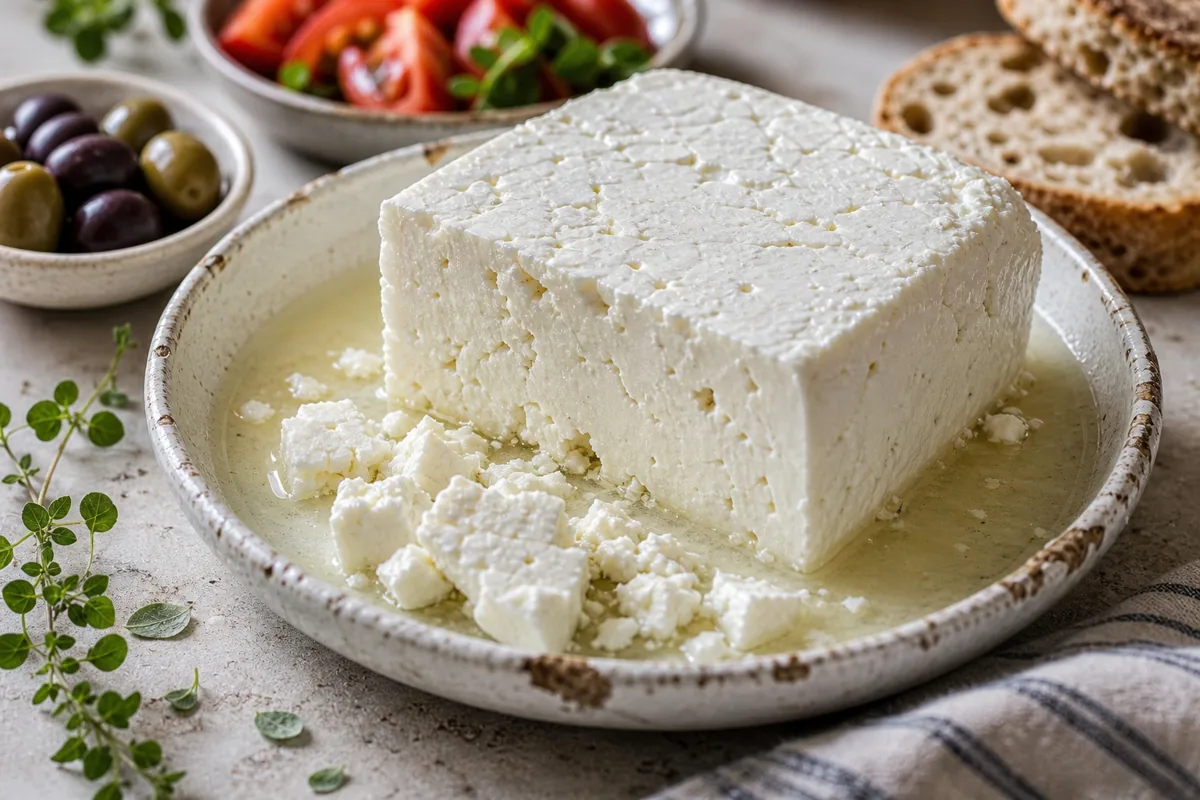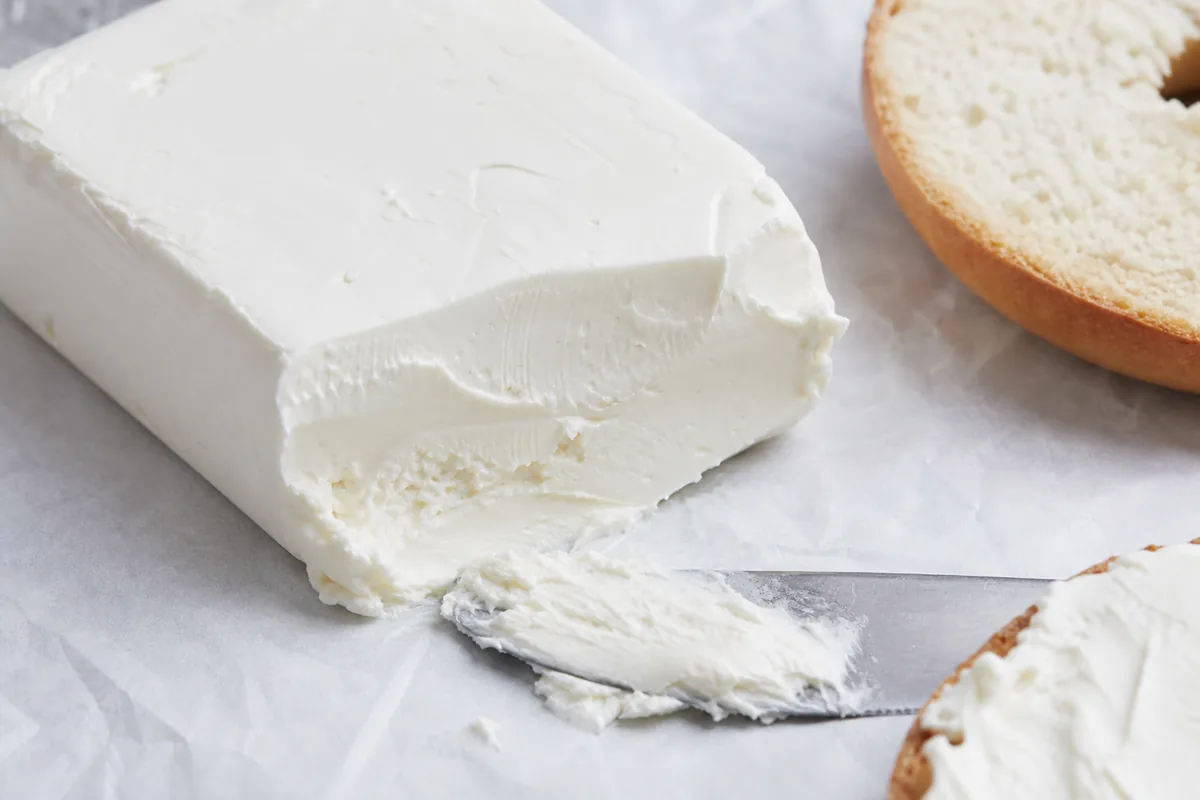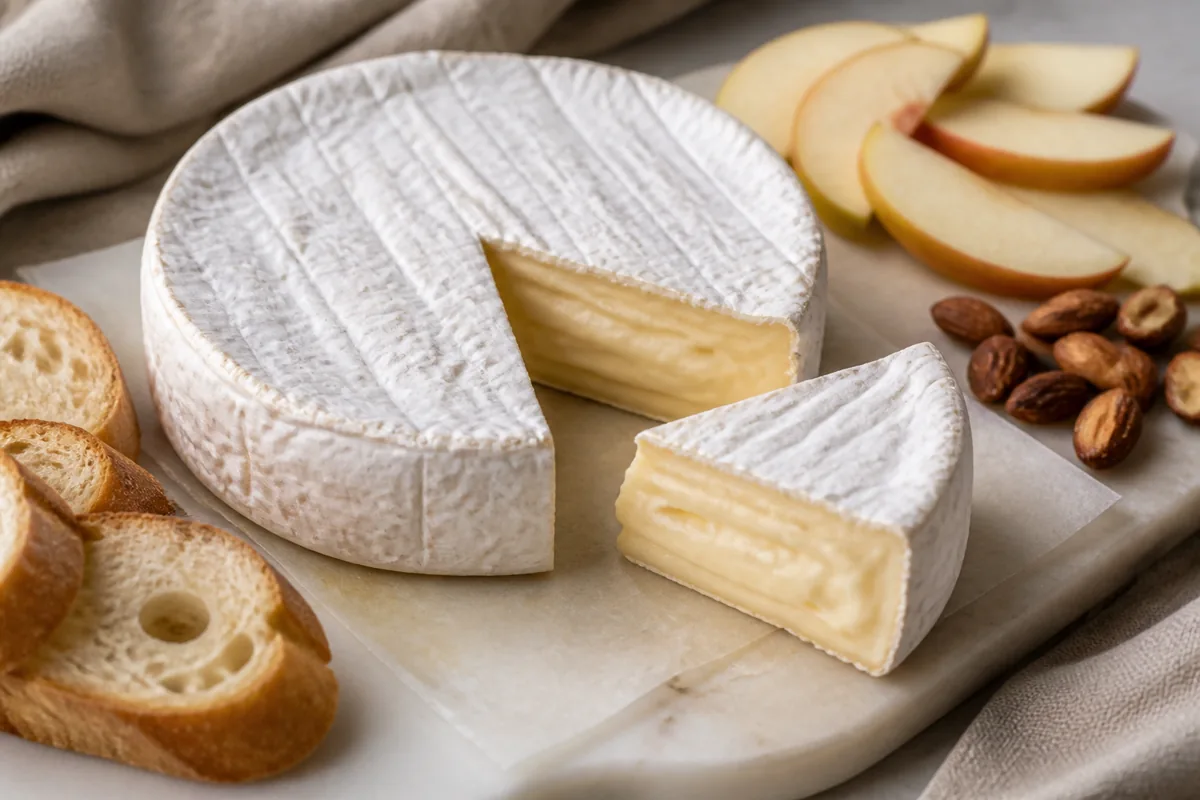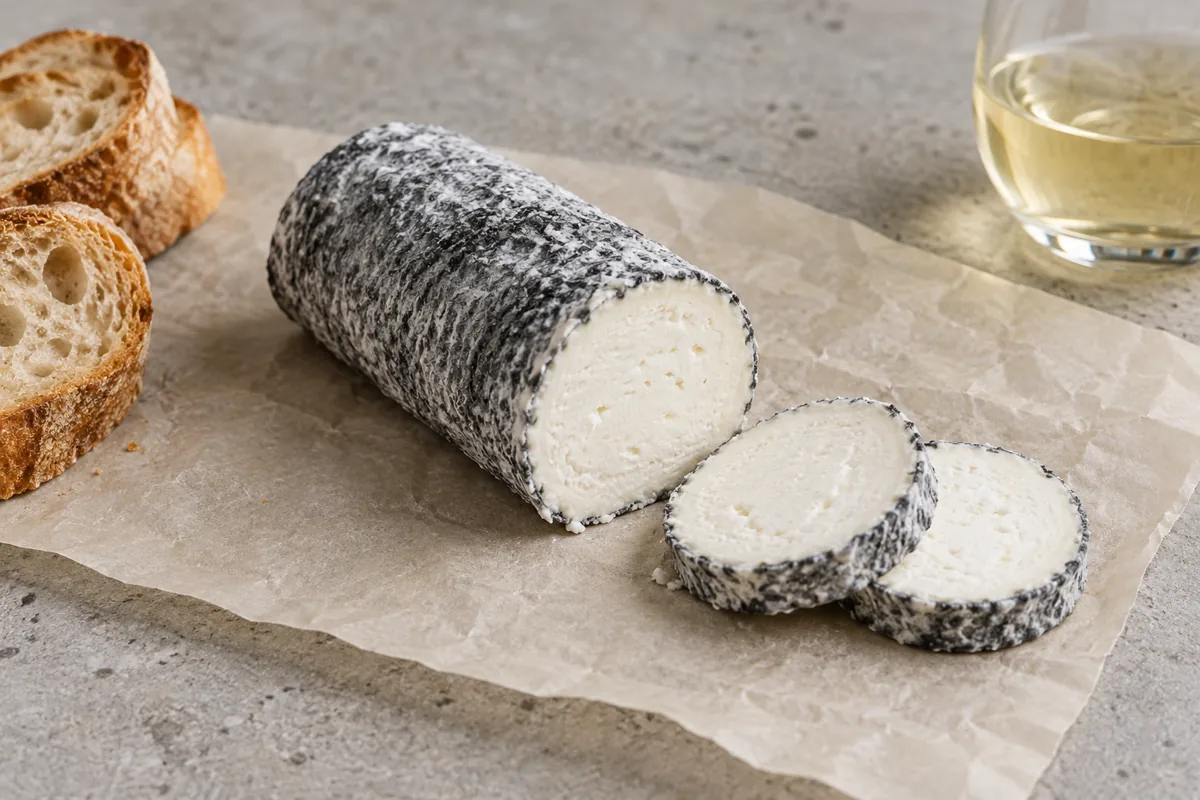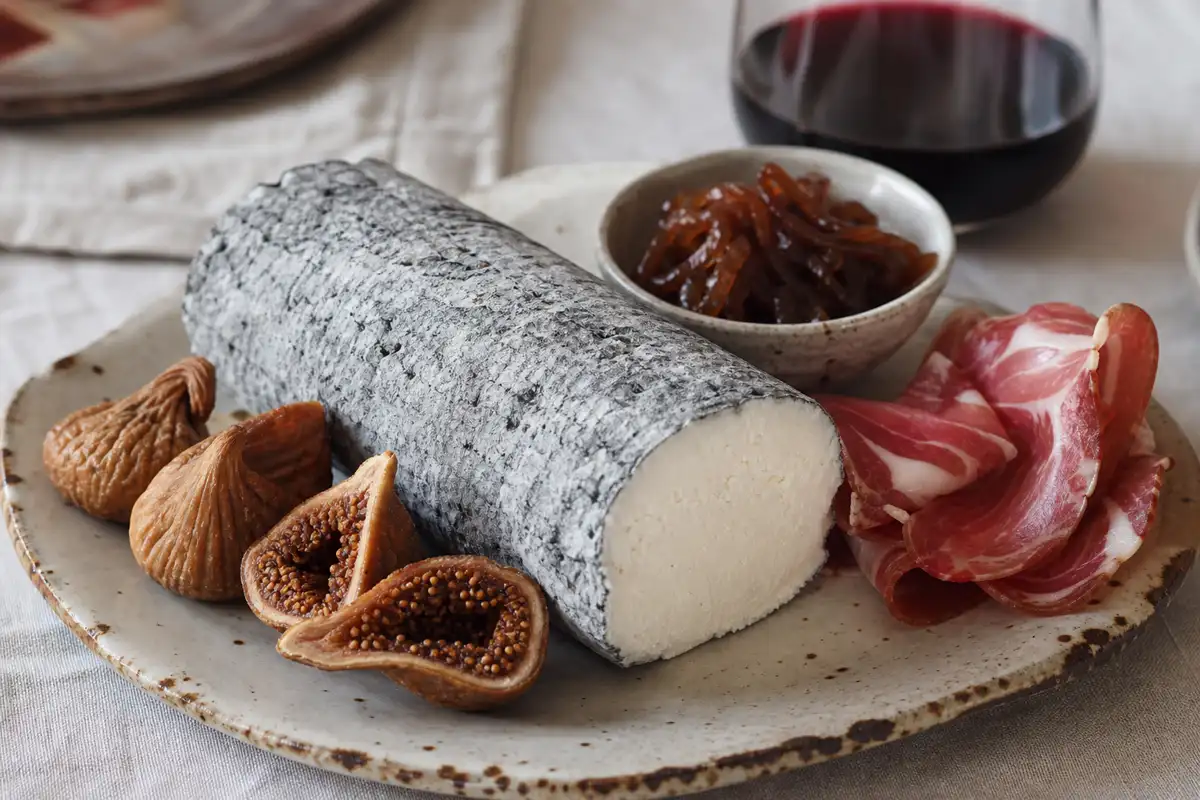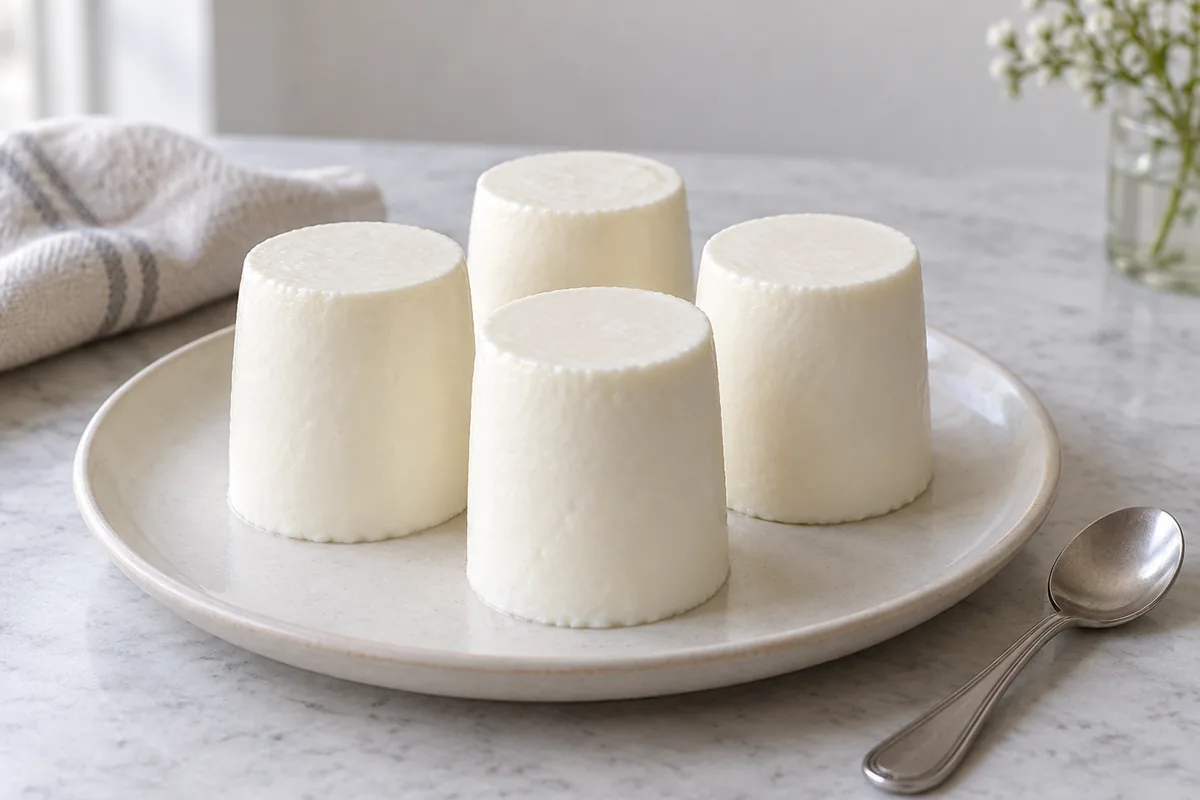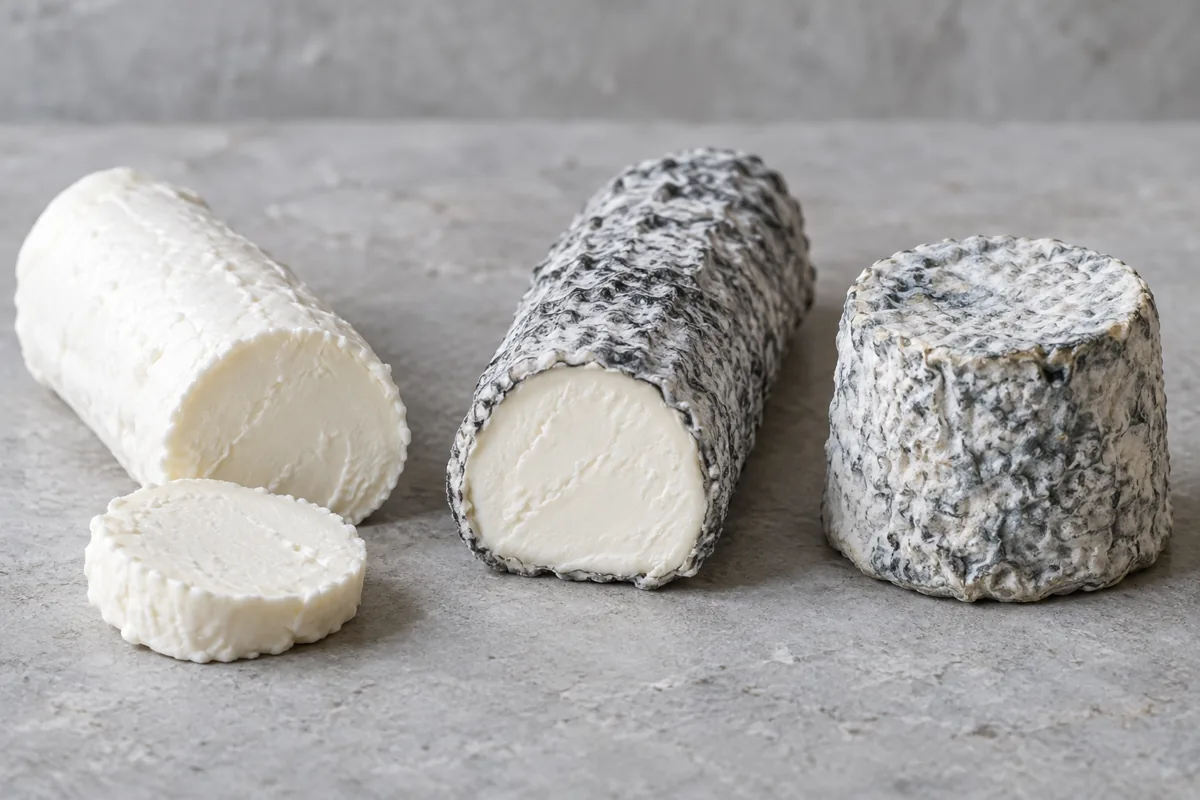
Goat cheese is any cheese made from goat's milk, and the many recipes used around the world give it styles that run from fresh and soft to aged and hard.
A tub of White Lake's fresh goat curd sold at 2 to 7 days old, an ash-rolled Sainte-Maure de Touraine log and a Crottin de Chavignol aged at least 4 weeks all carry the name. The style, the rind and the milk decide how you use the cheese and which pregnancy advice applies.
In This Article
Where Does Goat Cheese Come from and What Styles Does It Take?
Goat cheese is made worldwide, and France makes a great number of goat's milk cheeses, especially in the Loire Valley and Poitou.
Cheese.com lists Amalthée as a French soft-ripened cheese made from raw goat's milk, and a historical Profession Fromager trade listing for GLAC Charentes Poitou names square and hexagonal Amalthée.
Spain has Majorero from the Canary Island of Fuerteventura and Garrotxa from northern Catalonia, which Wikipedia calls firm, while Italy's caprino covers at least 33 goat's milk cheeses.
Not every goat cheese is made from curd alone. Norway's geitost is brown and made from goat milk and whey.
In most of the Netherlands, goat cheese is made in the Gouda style, and the brie-like exceptions, Machedoux and Quiorio, come from farms west of Groningen.
When a label says chèvre, you are buying the same thing under its French name: the word comes from fromage de chèvre, which means goat cheese.
Goat cheese dates to at least 5,000 BC, and goats thrive in arid or mountainous country where cattle and sheep cannot survive.
Six named cheeses mark out the range from fresh to firm.
| Style | Example | Age at sale | Rind and paste |
|---|---|---|---|
| Fresh curd | White Lake English Goat Curd, England, made with thermised milk | 2 to 7 days | No rind; soft and creamy (Academy of Cheese) |
| Wrinkled geotrichum rind | Bonne Bouche, Vermont | 10 days at the creamery, then up to 80 days in stores in Wikipedia's text, or up to 90 days in its infobox | Poplar ash under a wrinkled rind; creamy interior (Vermont Creamery, Wikipedia) |
| Ash-rolled log | Sainte-Maure de Touraine, France | 10 to 28 days | Greyish mould rind over white, soft paste (Wikipedia) |
| Charcoal-dusted pyramid | Valençay, France | About 3 weeks | Blue-grey mould rind darkened with charcoal (Wikipedia) |
| Small ripened cylinder | Crottin de Chavignol, France | At least 4 weeks | White rind when young, bluish mould when fully ripe (Wikipedia) |
| Firm cheese | Garrotxa, Spain | Not stated | Firm (Wikipedia) |
Do Feta and Halloumi Contain Goat's Milk?
Both can. Greek feta is made mainly from ewe's milk with up to 30% goat's milk, and Cypriot halloumi is made from a mixture of goat's and sheep's milk, sometimes with cow's milk as well.
An "up to" share is a ceiling, so it does not promise any goat's milk in the cheese. Kasseri has a ceiling too: it is made from sheep's milk and at most 20% goat's milk.
A minimum does promise some, and the Turkish white cheese Ezine has one: it must include at least 40% goat's milk under its geographical protection rules.
With Robiola, from Piedmont, the proportions of cow's, goat's and sheep's milk vary, so the name alone does not tell you how much goat's milk is in the cheese.
Why Does the Loire Valley Dominate French Goat Cheese?
Culture magazine puts the Loire's share at 70 percent of France's goat cheese, and says France makes more goat cheese than any other country, with over 110,000 tons in 2011.
Culture traces that lead to the eighth century, when Umayyad armies pushing into France from Spain brought goats for food and left them behind. In that account, Loire farmers tended the goats and made cheese from their milk, building over a thousand years the goat cheese trade the region still runs.
Four French goat cheeses with AOC status differ in shape and size as well as in age.
| Cheese | AOC since | Shape and size |
|---|---|---|
| Selles-sur-Cher | 1975 | Flat cylinder, about 8 cm across the base and 2 to 3 cm high, about 150 g |
| Crottin de Chavignol | 1976 | Small cylinder; weight not stated |
| Sainte-Maure de Touraine | 1990 | Log 16 to 17 cm long, at least 250 g |
| Valençay | 1998 | Truncated pyramid, 200 to 250 g, about 7 cm tall |
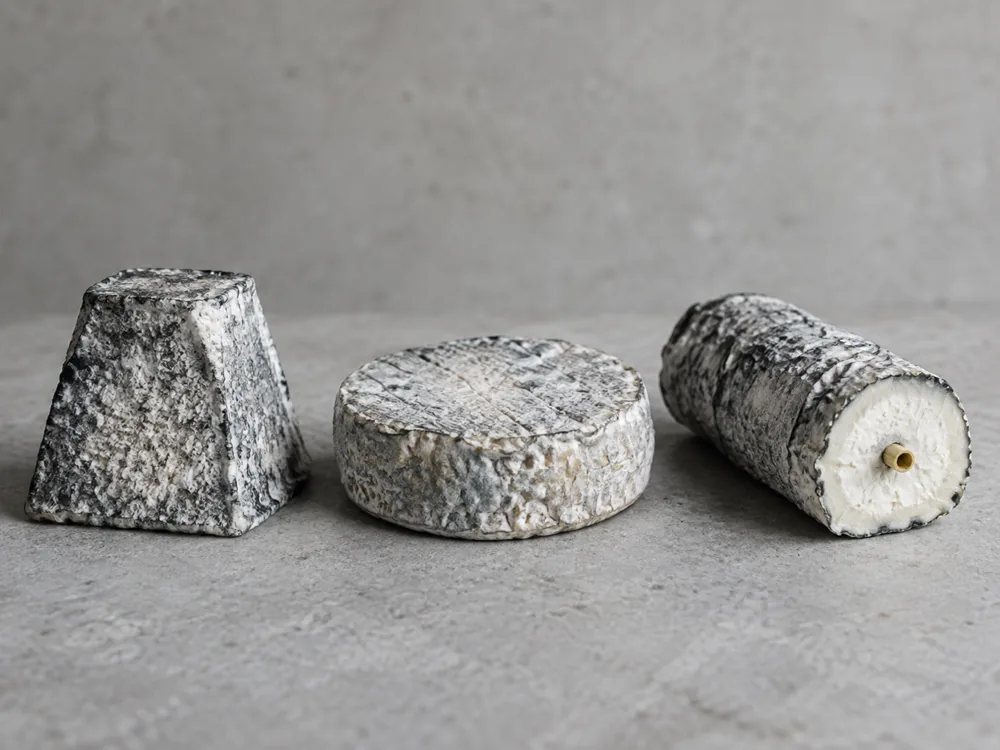
Wikipedia ranks Sainte-Maure de Touraine as the second-largest goat AOC in France, just behind Crottin de Chavignol, and gives 1,065 tons of it for 2003. Its Selles-sur-Cher entry gives 747 tons for 2005.
The AOC name covers farm and factory cheese alike, so it will not tell you whether a cheese is farm-made. Farm production makes up 36% of Selles-sur-Cher (fermier) and 42% of Sainte-Maure de Touraine, and dairies, cooperatives and industrial makers produce the rest.
Why Does Goat Cheese Taste Tangy?
Goat's milk holds higher proportions of medium-chain fatty acids such as caproic and caprylic acid, and they give goat cheese its tart, goaty flavour. Both names come from capra, the Latin word for goat.
4-ethyl octanoic and 4-methyl octanoic acid belong on that list too. These fatty acids have no flavour while they stay bound in the milk fat, and they reach your nose only after enzymes called lipases break them loose.
The Cheese Science Toolkit says goat cheese is often described as waxy, tangy or animalic, and that the goaty note is almost always prominent, runs across the whole range of goat cheeses and is sometimes easier to pick up in fresh chèvre.
Vermont Creamery's FAQ answers whether goat cheese is funkier than cow's milk cheese with "Not necessarily" and describes a range from delightfully mild to adventurously complex.
In Vermont Creamery's explanation, goats take on their surroundings, so the environment often shows up in the flavour of the milk. The milk also follows what the goats eat, including many bitter plants that cows and horses avoid.
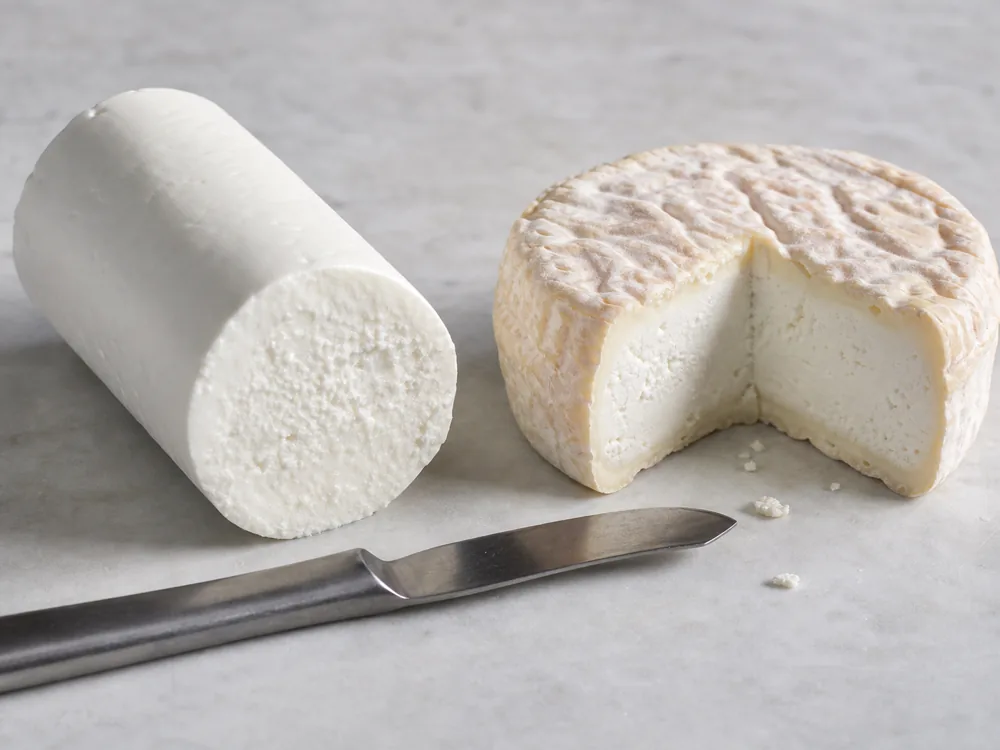
The Academy of Cheese describes White Lake's goat curd as clean and lemony, and Culture magazine calls fresh chèvre creamy and tangy.
Wikipedia describes young Valençay as fresh and citric and says age gives it a nutty taste. On Vermont Creamery's Bonne Bouche, it says the rind of a young cheese has a pleasant yeast flavour and the creamy interior becomes more piquant with time.
On Selles-sur-Cher, Wikipedia describes the paste as lightly salty with a persistent aftertaste and the grey-blue mould rind, which is often eaten, as considerably stronger in flavour.
How Is Goat Cheese Made and What Does Ageing Change?
To make goat cheese, the milk is filtered and set with rennet or starter bacteria such as Lactococcus lactis and Streptococcus thermophilus, and the curd is drained, moulded, dried, flavoured and cured.
The type of starter, how long or how hard the curd drains, and the temperature and length of curing decide whether the cheese ends up soft, semi-hard or hard. The milk matters too: Portugal's Castelo Branco typically matures in 40 days when made with goat's milk and 50 days when made with ewe's milk.
In the Academy of Cheese's category for fresh cheeses, either a lactic or a rennet set is allowed. White Lake gives its fresh curd the lactic one, in which bacteria turn lactose into lactic acid, and ladles it straight into tubs.
In Culture magazine's outline, fresh chèvre takes the rennet set: rennet goes in with the cultures, the curds and whey are separated, the curd is dusted with salt, and the cheese is ready almost as soon as the curds set.
For one ripened cheese, Selles-sur-Cher, about 1.3 litres of unpasteurised milk make a single 150 g cheese, and the soured milk sits with a little rennet at about 20°C for 24 hours.
Unlike most other cheeses, the curd is then ladled straight into moulds with tiny holes so the whey runs off on its own. The cheeses dry for 10 to 30 days at 80% humidity while mould forms on the outside, helped by an initial coat of charcoal.
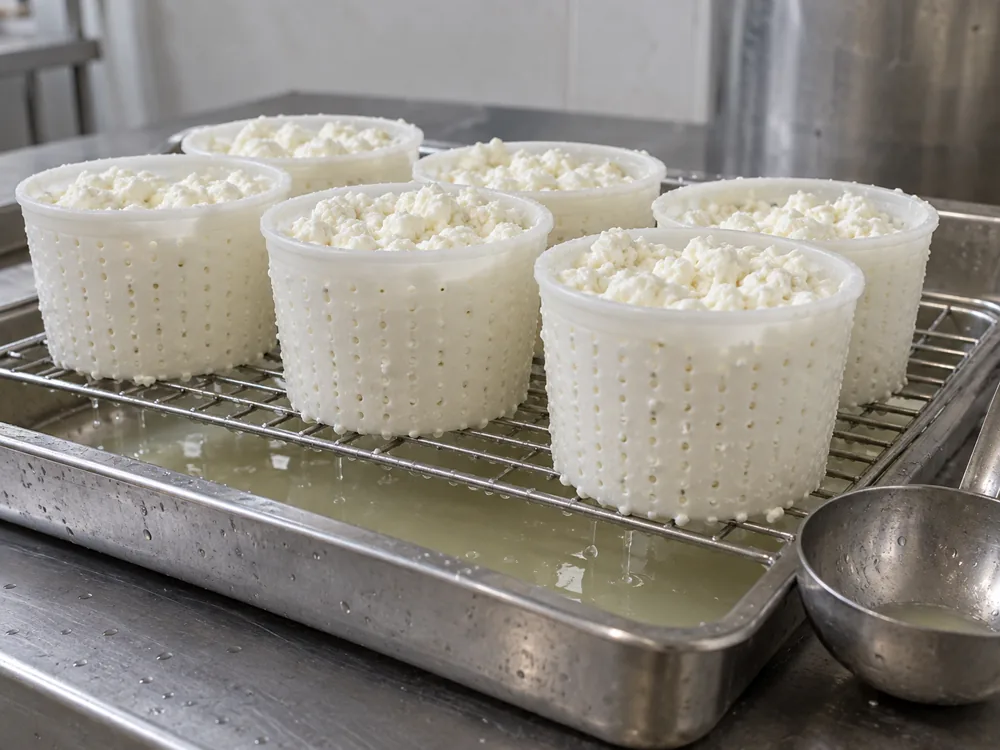
That 80% is dry beside the 90 to 100% humidity of a typical cellar. Wikipedia describes the finished paste as rigid and heavy at first, then moist and softening as it melts in the mouth.
Valençay is covered in charcoal dust and ripened for about three weeks in a humid, ventilated room. During that time its outer mould forms and its centre, crumbly at first, softens.
Vermont Creamery sprinkles poplar ash on Bonne Bouche before it ages and uses a culture called Geotrichum candidum, which grows the brain-like wrinkles on its rinds.
The ash also explains the colour. Vermont Creamery says Bonne Bouche may look a bit blue but is not a blue cheese, because its colour comes from the poplar ash.
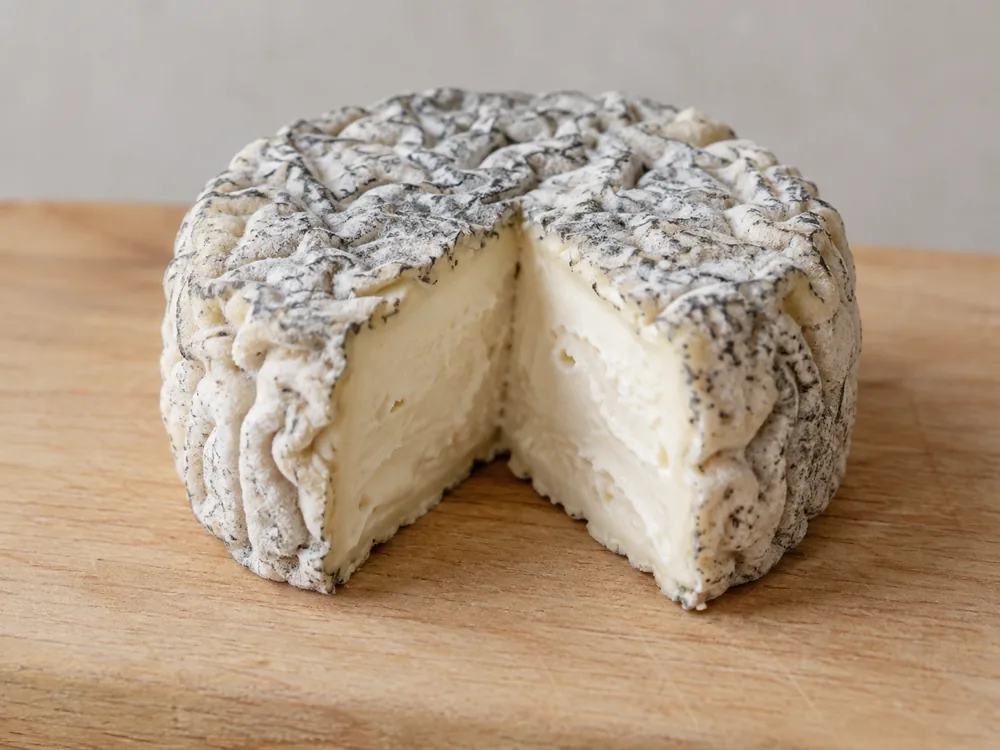
Ash does not always stay on the surface: California's Humboldt Fog is a mould-ripened goat cheese with a central line of edible white ash.
You can buy Crottin de Chavignol at any of its three stages of ripeness, each with its own name.
- Chavignol jeune: solid, compact paste and a white rind
- Chavignol bleuté: a stronger flavour and a harder rind
- Chavignol affiné: crumbly paste, with the rind mould turned bluish
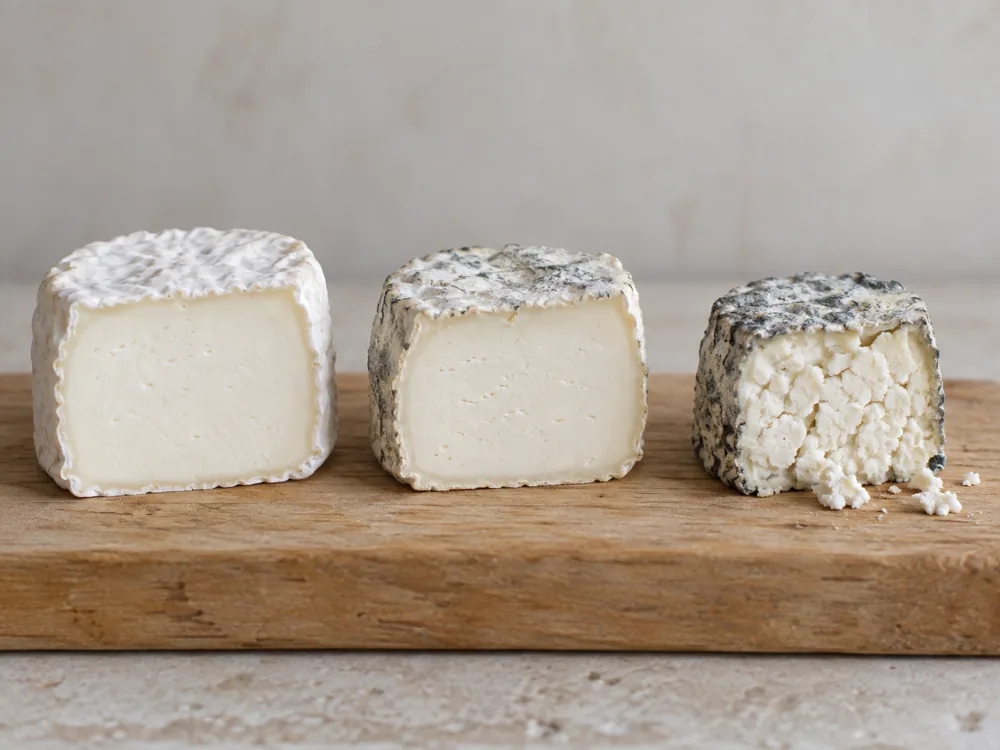
Ripening does not push every goat cheese the same way. Wikipedia says Bonne Bouche's creamy interior becomes softer with time, while Crottin de Chavignol firms from solid and compact to crumbly and old Crottin also gets harder and browner.
How Can You Cook with Goat Cheese?
Culture magazine's uses for fresh chèvre run from a pizza topping and steak to dips and desserts, and include layering the cheese with fruit and coating it in breadcrumbs to serve over greens.
The breadcrumb version dates to 1981, when Alice Waters began ordering 50 pounds a week of Laura Chenel's fresh goat cheese for her restaurant Chez Panisse. Goat cheese was virtually unknown in the United States before the 1970s, when Chenel began making it in California.
The French dish chèvre chaud means hot goat cheese. It is usually made by broiling chèvre on French bread and is often served with a green salad and vinaigrette, olive oil or balsamic vinegar.
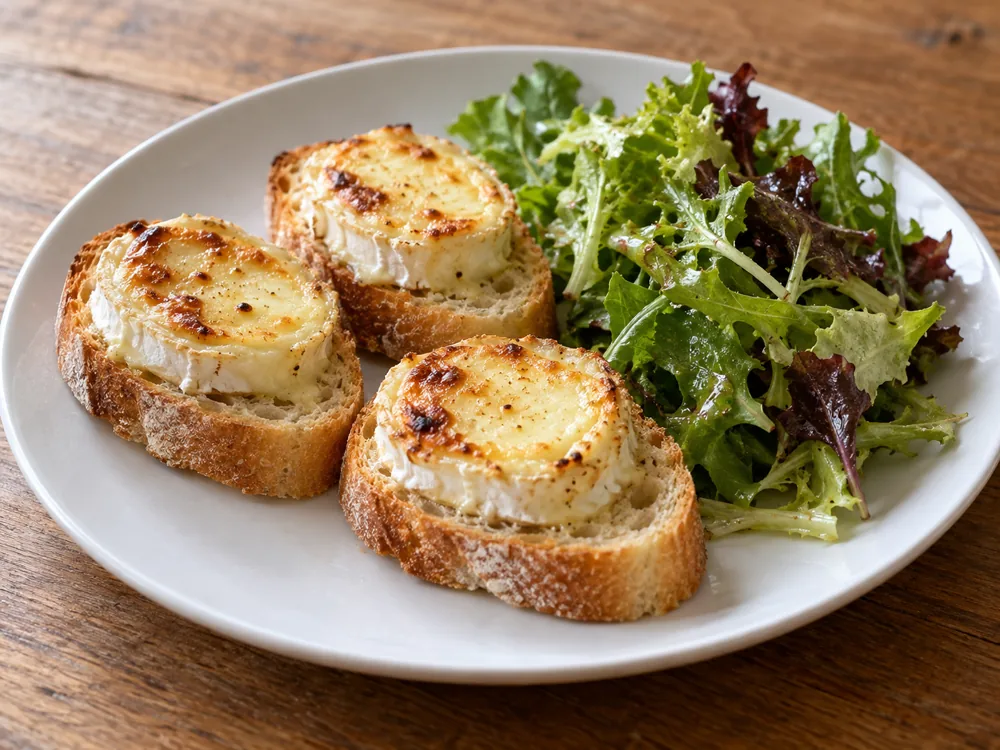
Crottin de Chavignol has a classic dish of its own, baked and served on a green salad, and Wikipedia notes that it also turns up cold on a cheese board.
Vermont Creamery recommends leaving both its fresh and aged goat cheeses at room temperature for 30 minutes to 1 hour before serving, and says to serve its cup-packed products, such as spreadable goat cheese, cold, straight from the refrigerator.
What Should You Drink with Goat Cheese?
Culture magazine says almost any white wine suits fresh chèvre, and both goat cheese pairings on the Academy of Cheese's page for White Lake's curd are white wines.
If you would rather pour a beer, Culture also puts wheat beers and Pilsners alongside fresh chèvre.
In Wikipedia's Crottin de Chavignol entry, the baked salad is said to go well with Sancerre from the same part of the Loire. White Sancerre is made from the Sauvignon Blanc grape.
| Pairing | Why It Works |
|---|---|
| Sancerre | Named on Wikipedia for baked Crottin de Chavignol on a green salad. |
| Chardonnay | White Lake, the maker, recommends it with its English Goat Curd, according to the Academy of Cheese. |
| Sparkling Vouvray | The Academy of Cheese's own suggestion; its note says the wine's delicate honey notes contrast with the curd's acidity. |
How Should You Buy and Store Goat Cheese?
On the label, read the milk treatment first. Vermont Creamery says US law requires pasteurised milk for all fresh cheeses aged less than 60 days, and that all the milk it uses is pasteurised.
Vermont Creamery packs its aged cheeses in a "Micro-Cave", a wooden crate wrapped in micro-perforated film or a ventilated plastic clamshell, so the cheese can breathe and keep ripening on its way to market.
Vermont Creamery recommends eating its fresh goat cheese within seven days of opening. It says to wrap leftovers in plastic wrap and store the cheese in the refrigerator.
The same FAQ warns that, depending on handling, mould may appear about seven days after the package is opened.
Vermont Creamery's seven-day window covers its own fresh goat and cow's milk products. For aged goat cheese, check the label or ask the shop how long an opened piece keeps.
How Does Goat Cheese Nutrition Differ by Texture?
Firmer goat cheese holds less water and more energy, protein, fat and calcium per 100 g in USDA FoodData Central's figures. The soft type holds 60.8 g of water per 100 g, against 29.0 g in the hard type.
| Nutrient | Soft | Semisoft | Hard |
|---|---|---|---|
| Water | 60.8 g | 45.5 g | 29.0 g |
| Energy | 264 kcal | 364 kcal | 452 kcal |
| Protein | 18.5 g | 21.6 g | 30.5 g |
| Fat | 21.1 g | 29.8 g | 35.6 g |
| Saturated fat | 14.6 g | 20.6 g | 24.6 g |
| Calcium | 140 mg | 298 mg | 895 mg |
| Sodium | 459 mg | 415 mg | 423 mg |
Calcium rises more than sixfold, from 140 mg in the soft type to 895 mg in the hard type. Sodium does not follow: the soft type carries slightly more per 100 g than either firmer type, so if you are watching salt, USDA's firmer types are no saltier.
For one ounce (28 g) of the soft type, the same USDA figures work out to about 75 kcal, 5 g of protein and 130 mg of sodium.
Wikipedia gives fat for two named goat cheeses as a percentage, 21% milk fat for Bonne Bouche and 45% for Sainte-Maure de Touraine, and neither figure can be set beside USDA's grams per 100 g.
On lactose, Vermont Creamery says the culture added to its milk consumes almost all of it.
Is Goat Cheese Safe During Pregnancy?
Whether a goat cheese is safe in pregnancy turns on its rind, its milk and whether it is cooked. The NHS lists pasteurised soft cheeses, such as goats' cheese that does not have a white coating (rind) on the outside, as safe to eat.
Chèvre with a white coating is a different case. The NHS says pasteurised or unpasteurised mould-ripened soft cheeses with a white coating on the outside, such as brie, camembert and chèvre, must be thoroughly cooked.
Raw milk changes the answer too: Valençay, Selles-sur-Cher, Crottin de Chavignol and Amalthée are listed as unpasteurised, and Sainte-Maure de Touraine as traditionally unpasteurised. The NHS says any foods made from unpasteurised milk, such as soft ripened goats' cheese with a white coating on the outside, must be thoroughly cooked.
White Lake's goat curd is made with thermised milk, which is not pasteurised milk, so the same NHS line covers it: it must be thoroughly cooked. The CDC lines below for unpasteurized (raw) milk and for soft cheese made from unpasteurized (raw) milk cover it too.
The NHS lists any cheese that's been cooked until steaming hot as safe to eat. For an aged goat cheese described as hard, it also lists pasteurised or unpasteurised hard cheeses, such as cheddar, gruyère and parmesan, as safe to eat.
The CDC says pregnant women are 10 times more likely to get a Listeria infection. It lists unpasteurized (raw) milk and dairy products made from raw milk, and soft cheese made from unpasteurized (raw) milk, as riskier choices.
For an aged goat cheese described as hard, the CDC lists hard cheese, when made with pasteurized milk, as safer. It also lists pasteurized soft cheeses heated to an internal temperature of 165°F or until steaming hot as safer.
Served cold, a goat cheese described as a pasteurized fresh, soft, semisoft, semi-hard or firm cheese is a type the CDC list does not cover, so ask a midwife or doctor.
The CDC also explains the moisture link: soft cheeses, which are high in moisture, are more likely to be contaminated than hard cheeses.
SOURCES & REFERENCES
What Else Do People Ask About Goat Cheese?
The Academy of Cheese describes White Lake's fresh goat curd as clean and lemony, and Culture magazine calls fresh chèvre creamy and tangy. Wikipedia says age gives Valençay a nutty taste and gives Crottin de Chavignol a stronger flavour at its bleuté stage.
Yes. Chèvre comes from the French fromage de chèvre, which means goat cheese, and English uses both names for cheese made from goat's milk.
Goat's milk carries more medium-chain fatty acids such as caproic and caprylic acid. Lipases free them from the milk fat, and once free they carry the goaty aroma.
Vermont Creamery recommends eating its fresh goat cheese within seven days of opening. For aged goat cheese, check the label or ask the shop how long an opened piece keeps.
Not by default. Greek feta is made mainly from ewe's milk with up to 30% goat's milk, so the goat share is capped rather than guaranteed.
The NHS lists pasteurised soft cheeses such as goats' cheese that does not have a white coating (rind) on the outside, and any cheese that's been cooked until steaming hot, as safe to eat. It says pasteurised or unpasteurised mould-ripened soft cheeses with a white coating on the outside, such as chèvre, and any foods made from unpasteurised milk must be thoroughly cooked.
The CDC lists unpasteurized (raw) milk and dairy products made from raw milk, and soft cheese made from unpasteurized (raw) milk, as riskier. Served cold, a goat cheese described as a pasteurized fresh, soft, semisoft, semi-hard or firm cheese is a type the CDC list does not cover, so ask a midwife or doctor.