If you are pouring wine for Spain's famous sheep's-milk wheel, start with Spanish bottles. The same regional pairing logic works because the wines share Manchego's dry, savory table language.
Manchego is firm, oily, and gently sheepy rather than buttery or bloomy. That profile likes bright acid, moderate tannin, and the saline edge you get from Fino and Manzanilla.
The best pairings feel clean and nutty at once. The worst ones feel thick, hot, or too sweet.
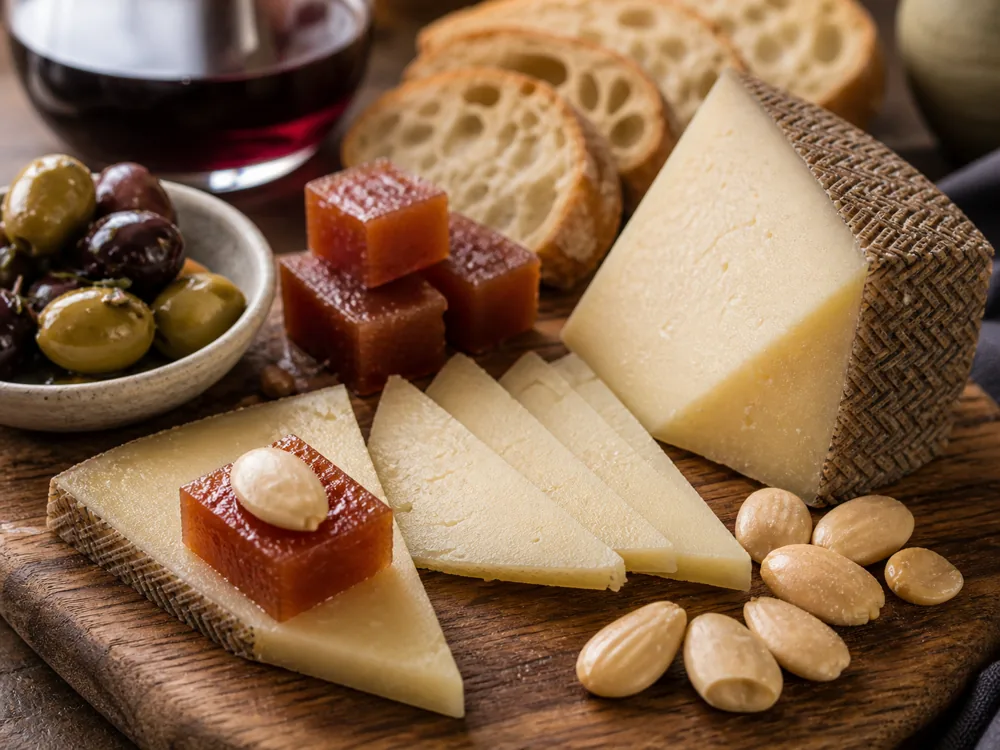
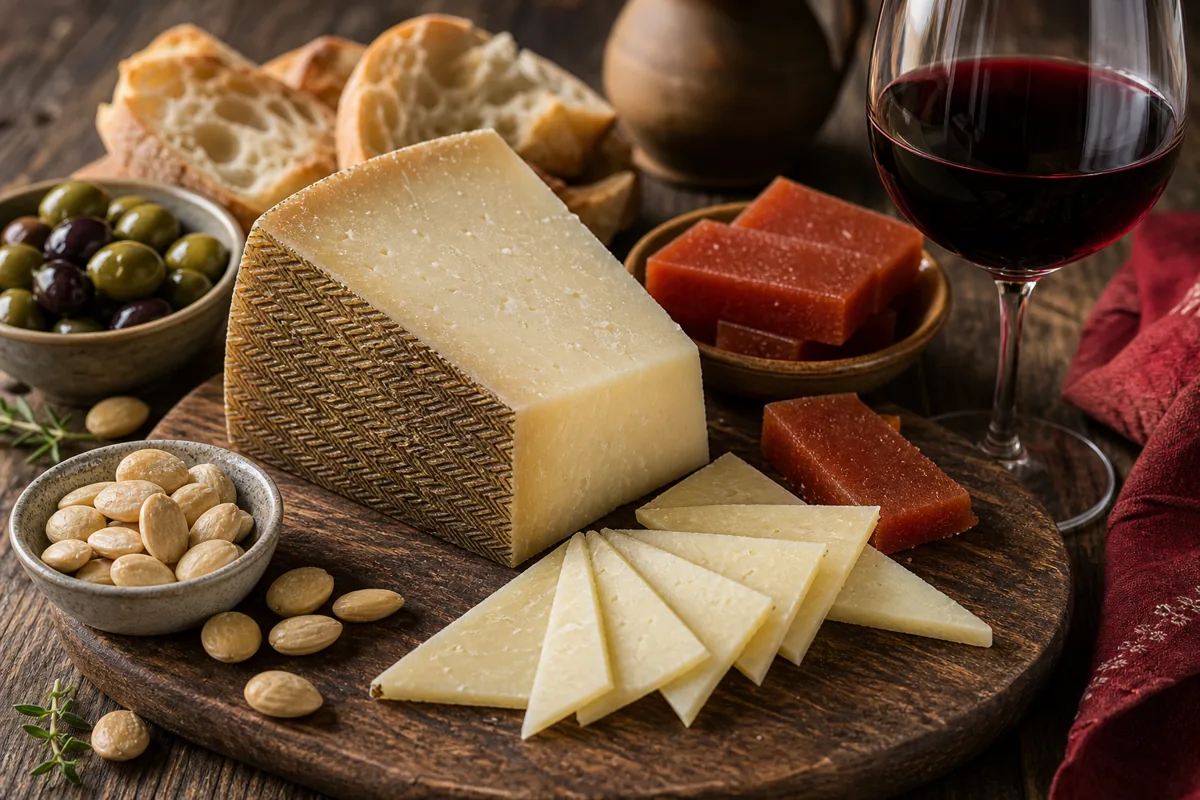
Authentic Manchego carries DOP protection and uses Manchega sheep's milk from La Mancha. Generic manchego-style cheese can still pair well, but it usually tastes flatter and less woolly.
In This Article
Start With Rioja, Fino, Cava, or Verdejo
Rioja Crianza is the best all-around answer because it handles several age stages well. Fino Sherry is the sharpest traditional match when the board leans tapas instead of dinner.
Fresh whites work with young wheels. Oak-aged reds step in once the paste gets firmer and more nutty.
Rioja Crianza is the safe center because it brings red fruit, moderate tannin, and enough acidity for semicurado and curado. It does not need to be the biggest Rioja on the shelf.
Too much oak can hide the cheese's sheep's-milk detail.
Fino and Manzanilla work when the table leans tapas. Their saline edge mirrors Manchego's salt without making the bite sweet.
Cava works when you want bubbles and lift, especially with younger slices or salty snacks.
Verdejo and Albariño are useful when the board starts with young cheese, tomatoes, or seafood tapas. They keep the pairing bright without dragging the cheese into a dessert lane.
If the wedge is older and darker, move from white wine back toward Rioja or Amontillado.
| Pairing | Type | Why It Works |
|---|---|---|
| Rioja Crianza | Red wine | The safest all-purpose bottle. Tempranillo brings cherry fruit, light oak, and enough acid to suit semicurado and curado Manchego. |
| Fino Sherry | Fortified wine | Dry, saline, and almond-like. Fino works especially well with thinner slices of young to medium Manchego on a tapas board. |
| Cava Brut | Sparkling wine | Fine bubbles and citrus lift make Cava a smart aperitif choice for younger wheels and warm-weather service. |
| Verdejo | White wine | Verdejo gives you green citrus, herbs, and enough edge for fresher Manchego without turning the pairing severe. |
| Garnacha | Red wine | Riper Garnacha works once the cheese turns toastier and more rounded. Choose dry, savory examples, not jammy ones. |
| Amontillado | Fortified wine | For older Manchego, Amontillado gives you nut, salt, and deeper oxidative notes that echo the cheese's longer finish. |
- Best everyday bottle: Rioja Crianza covers the most situations with the least risk.
- Best tapas choice: Fino Sherry feels sharp, dry, and very Spanish beside thin slices.
- Best warm-weather pick: Cava keeps the board lively when served as an aperitif.
- Best white option: Verdejo handles young wheels better than soft, low-acid whites do.
All six bottles respect Manchego's nutty sheep's-milk core. None of them try to smother it with sweetness or oak.
If you want the larger framework, regional acid and weight matter more than color alone.
Use Acid and Salinity to Keep the Sheep's Milk Clear
Manchego has more tang and oil than many cow's-milk hard cheeses. That gives it lift, but it also means the wine has to clean the palate between bites.
Spanish wine does that well because the best examples balance fruit with herbs, acid, and a dry finish. That matters more here than raw power.
The cheese has oil and nuttiness, but it is not as sweet as aged Gouda or as salty as Pecorino Romano. A good bottle should sharpen that middle lane.
Bright red fruit, dry Sherry, citrus, herbs, or bubbles all help.
Salinity is especially useful. Fino can make the cheese taste more precise because it echoes salt while cleaning the palate.
A soft low-acid white does the opposite and makes the paste feel heavier.
- Sheep's-milk tang: the cheese likes wines with savor, not only fruit.
- Firm oily paste: acidity keeps the mouthfeel from turning heavy.
- Nutty finish: flor-aged Sherry and light oak can echo that note cleanly.
- Moderate dryness: overt sweetness blurs the salty edge instead of sharpening it.
This is why Manchego behaves differently from crystalline Italian grating cheese. It also lands in a softer place than the saltier Roman sheep's-milk benchmark.
The result is a pairing approach with more flexibility than blue cheese and more tension than bloomy rind cheese.
Choose the Bottle by Age and Tapas Weight
Age changes Manchego quickly. Fresher wheels taste milky and elastic, while viejo wheels taste drier, toastier, and more concentrated.
Once you know the age, the bottle choice gets much easier.
Fresco and semicurado need lighter bottles. Verdejo, Albariño, Cava, or Fino keeps the cheese fresh and lets olives, almonds, and tomatoes stay lively.
Heavy red wine can make these younger slices taste waxy.
Curado is the most flexible stage. Rioja Crianza, Garnacha, Fino, or Cava can all work depending on the plate.
If the board has chorizo or roasted peppers, move toward red wine. If it has olives and almonds, stay with Sherry or bubbles.
Viejo needs smaller pieces and more structure. Rioja Reserva, dry Sherry, or a savory Spanish red works better than a soft easy-drinking bottle because the cheese is drier and more concentrated.
Do not treat the age names as decoration. They tell you how much moisture, oil, and nutty depth the wine has to answer.
When the label is missing, use texture: flexible and pale means lighter wine. Dry and darker means more structure.
| Manchego stage | Best wine lane | Serving cue |
|---|---|---|
| Fresco or semicurado | Cava, Verdejo, Albariño, or Fino | Serve thin slices with olives, tomatoes, or almonds. |
| Curado | Rioja Crianza, Garnacha, or Fino | Use with tapas that include ham, peppers, or membrillo. |
| Viejo | Rioja Reserva, Amontillado, or savory red wine | Cut small pieces because the cheese is drier and more concentrated. |
- Fresco: use Verdejo or Cava because the cheese is light, moist, and still close to milk.
- Semicurado: Rioja Crianza and Fino both work because the nutty side starts to show.
- Curado: Garnacha or a firmer Rioja makes sense once the paste turns denser and toastier.
- Viejo: Amontillado or older Rioja handles the driest, saltiest, most concentrated slices.
The same age logic appears when you cut the cheese. Thin-triangle cutting suits Manchego better than thick slabs because each bite stays nutty, oily, and controlled.
If your Spanish board also includes Mahon-Menorca, keep Rioja with the Manchego and shift the island cheese toward fresher whites or tapas-style pours. Mahon's buttery salt behaves differently from Manchego's sheep's-milk tang.
If you only have one bottle, buy Rioja Crianza and serve semicurado or curado Manchego. That middle zone is where the pairing feels most forgiving and most classic.
That pairing also works well on a mixed board because it stays expressive without tiring the palate too early.
Avoid Jammy Reds, Sweet Whites, and Heavy Oak
Heavy jammy reds bury Manchego's sheep's-milk detail. Sweet easy-drinking wines make the cheese feel flatter and less precise.
The biggest mistake is choosing weight without freshness. Manchego wants shape, not bulk.
Jammy reds blur the sheep's-milk tang and make the cheese taste less Spanish. Sweet whites can do the same thing because they push the plate toward dessert, while Manchego usually wants savory balance.
Heavy oak is risky even when the wine is Spanish. Too much vanilla and toast can cover the cheese's nuttiness.
If the bottle smells like oak first, use it with grilled meat rather than a clean Manchego board.
Avoid syrupy reds, soft low-acid whites, and heavily oaked Chardonnay with most Manchego boards. They blur the cheese's nutty tang and make the finish feel clumsy.
- Jammy Cabernet: too much fruit weight and too little refreshment.
- Soft Pinot Grigio: often too thin to register beside the cheese.
- Sweet Moscato: sugar muddies the nutty, savory edge that makes Manchego work.
- Big oaky Chardonnay: vanilla and wood sit on top of the cheese instead of linking with it.
If your board also includes softer cheeses, board order keeps Manchego from getting lost after louder flavors.
That order matters because this cheese tastes clearer when guests meet it before blue or washed-rind wedges.
Let Tomatoes, Quince, Ham, or Olives Steer the Pour
Manchego works year-round, but the side items change the bottle choice. Bright tomatoes and olives pull you toward Sherry or Cava, while quince paste and nuts pull you toward Rioja.
The cheese stays constant. The table around it decides the mood.
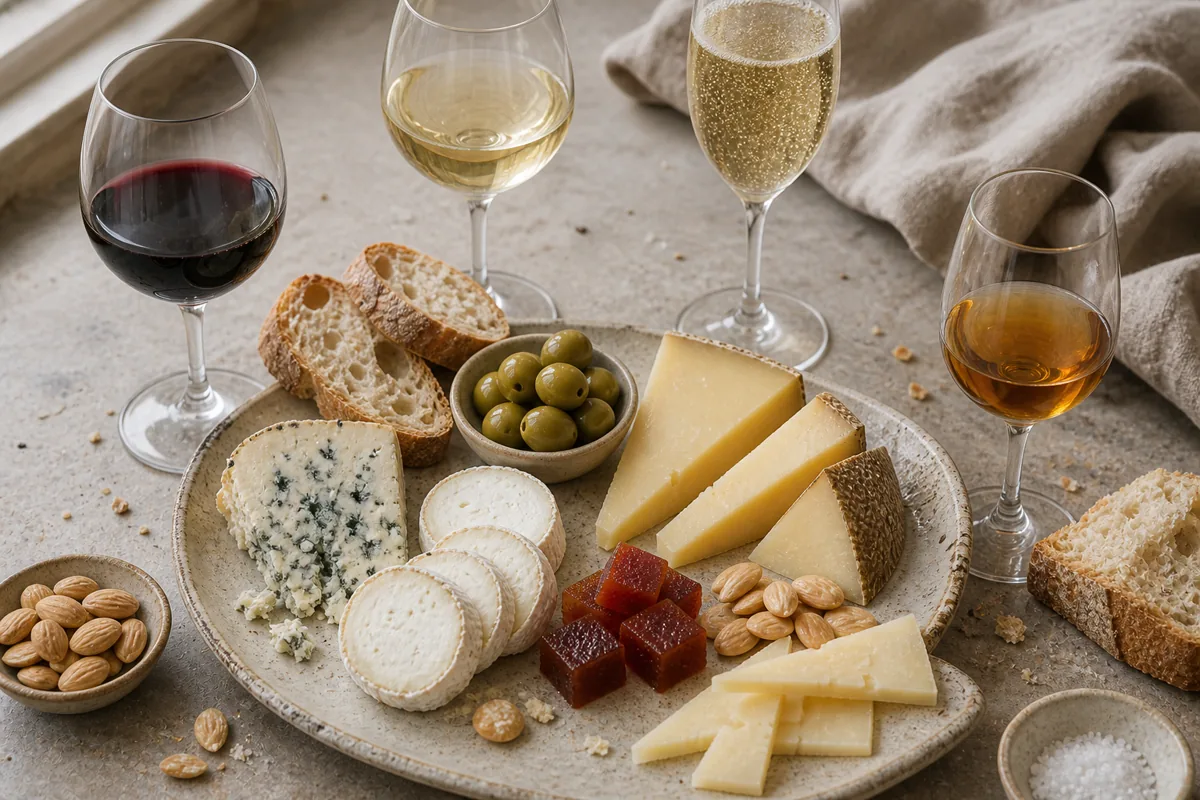
Tomatoes, olives, and Marcona almonds pull the bottle toward Fino, Cava, Verdejo, or Albariño. The food is salty and bright, so the wine should stay sharp.
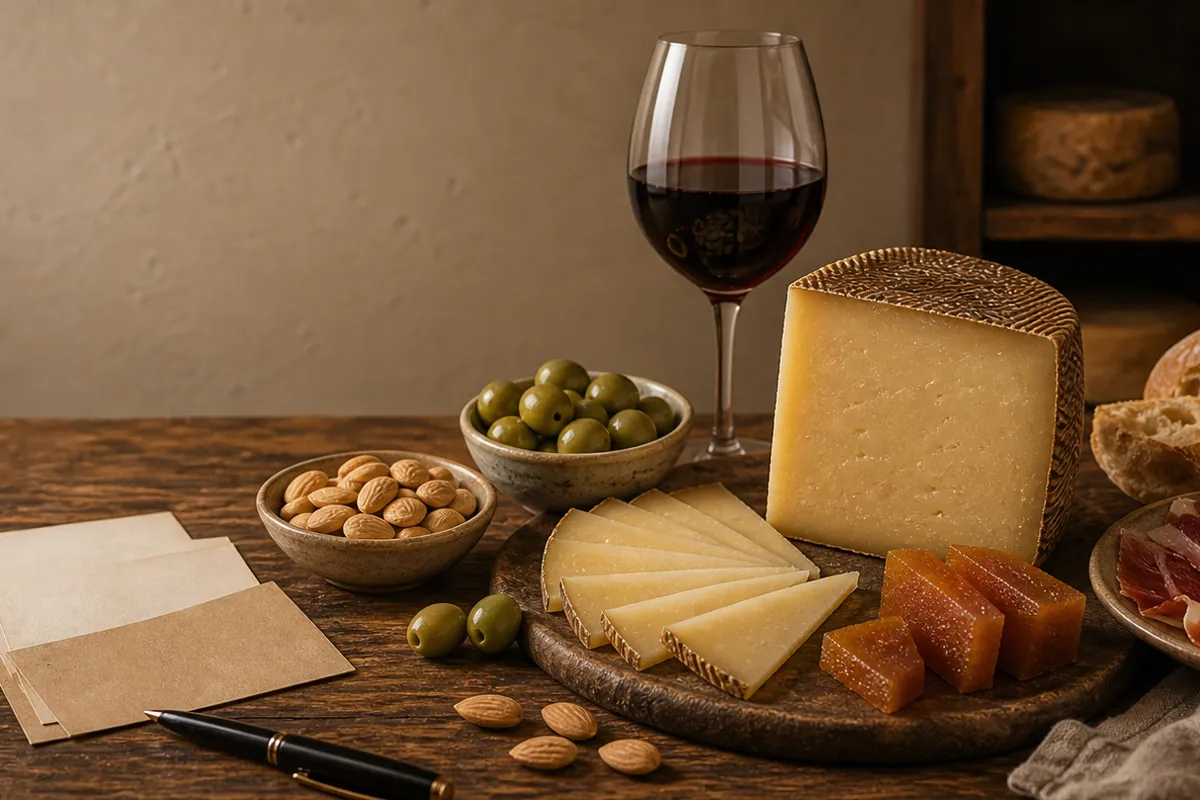
Quince paste, Serrano ham, roasted peppers, and chorizo pull the bottle toward Rioja or Garnacha. The food is sweeter, fattier, or smokier, so the wine needs more red-fruit shape.
For entertaining, middle-cheese reliability is where Manchego shines. It slices cleanly and pairs with both meat and fruit.
Keep one eye on leftovers too. Sheep's-milk cut-face care keeps the cut wedge supple instead of dry before a later pour.
Serve Thin Cuts So Wine Reaches the Nutty Finish
Serve Manchego slightly cool room temperature, not ice-cold. The nutty aroma shows up much better once the paste warms a little.
Cut thin triangles or batons, not thick hunks. The cheese tastes more elegant when each bite stays proportioned.
Thick cubes make Manchego feel waxier and can mute wine. Thin triangles, small batons, or shaved pieces expose more aroma and keep each bite balanced.
Serve the cheese slightly cool, then let it warm on the board. If it gets too warm, the oil comes forward and the wine has to work harder.
If it is too cold, the sheep's milk tang stays hidden.
Put the wine and food in the same order.
Start with Fino, Cava, or white wine beside younger cuts, then move toward Rioja with curado and viejo. That order keeps the board from feeling heavy too soon.
If the pairing tastes flat, add a Spanish reset before changing bottles. A few olives, Marcona almonds, tomato bread, or a thin slice of membrillo can make the same wine feel more precise because the food brings salt, oil, acid, or fruit back into the bite.
SOURCES & REFERENCES
Manchego Wine Pairing FAQ
These are the questions we hear most when people want something more useful than just red versus white.
Rioja Crianza is the best all-around match for Manchego. It has enough cherry fruit and acidity for semicurado, curado, and even some older wheels.
Yes. Fino Sherry is one of the most traditional Manchego pairings.
Its dry saline edge works especially well with younger to medium-aged slices.
Yes, especially with young Manchego. Verdejo and Cava both work better than soft low-acid whites because they keep the cheese tasting lively.
Avoid jammy heavy reds, sweet Moscato, and buttery oaked Chardonnay. They blur the sheep's-milk tang and make the pairing feel heavy.
Olives, Marcona almonds, quince paste, tomatoes, and dark bread all work well. They support the cheese without fighting its nutty finish.