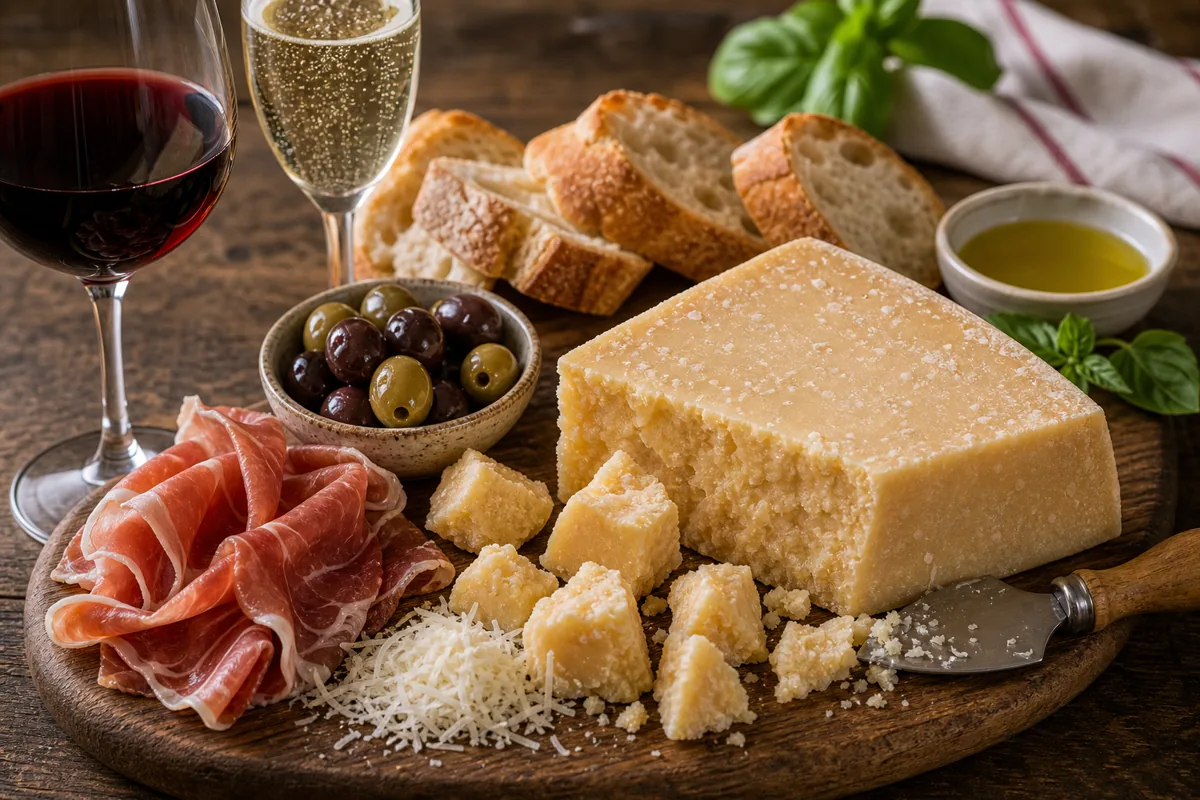
If you are opening a wedge of aged Italian grating cheese, choose a bottle with lift before softness. The same wine-and-cheese matching rule keeps Parmesan from tasting heavy.
Real Parmesan, especially the protected Emilia-Romagna original, tastes salty, brittle, and deeply savory. That profile rewards bright acidity, dry bubbles, and mature tannin more than plush fruit.
The best matches feel cleaner after each bite. The wrong ones feel sweet, heavy, or oddly dull.
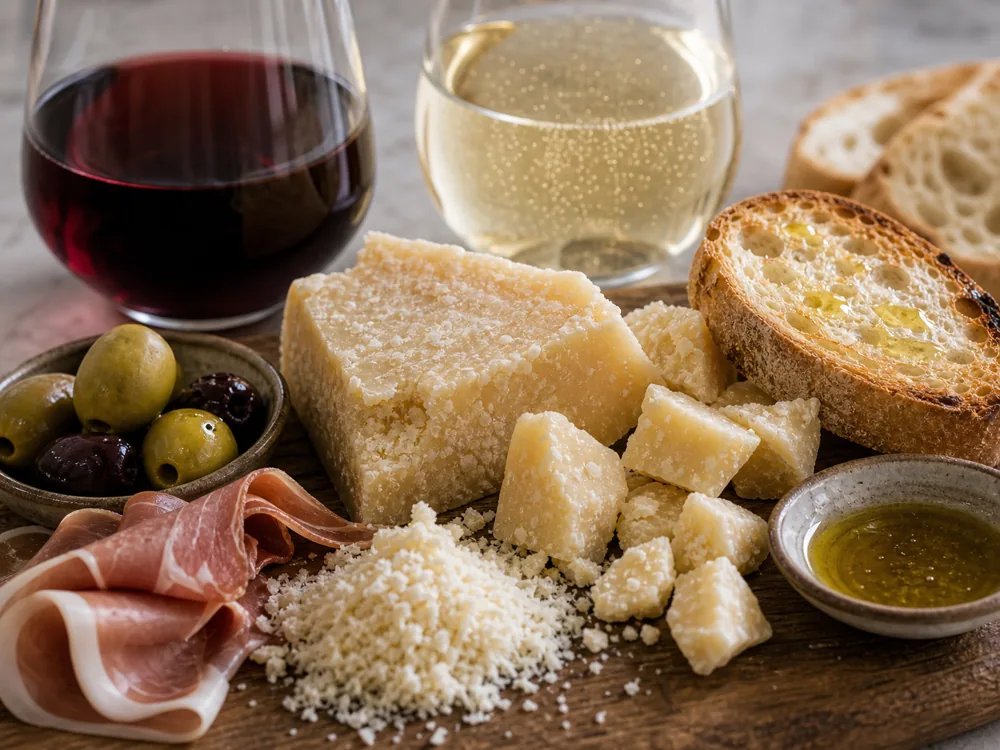
These pairings work best with a wedge, not a shaker can. Pre-grated Parmesan loses aroma fast and behaves more like a salty seasoning than a board cheese.
In This Article
Start With Lambrusco, Chianti, or Nebbiolo
Parmesan likes wines that keep the palate moving. That usually means Italian reds with bright acidity, dry sparkling wine, or a firm white with a nutty edge.
The safest first bottle is Chianti Classico. The most traditional everyday match is dry Lambrusco.
Lambrusco works because bubbles and tart fruit clear salt without making the cheese taste sweet. It is the relaxed table bottle for chunks, cured meat, and casual boards.
Chianti Classico is the safer red when the board has tomato, salami, or a broader Italian spread. Nebbiolo belongs with older shards because its tannin needs serious umami, not a young grating cheese.
Barbera is the useful middle choice. It has high acid and softer tannin, so it can handle a 24-month wedge without demanding the intensity of Barolo.
Use it when the cheese is mature but the board is still casual.
| Pairing | Type | Why It Works |
|---|---|---|
| Lambrusco Secco | Sparkling red | The local answer. Dry Lambrusco has tart red fruit, brisk bubbles, and enough snap to clear Parmesan's salt without fighting its umami. |
| Chianti Classico | Red wine | Sangiovese brings sour cherry, herbs, and bright acidity. That profile fits 24 to 30 month wedges especially well. |
| Barbera d'Asti | Red wine | Barbera gives you high acid with softer tannin than Nebbiolo. It is an easy weeknight match when you want freshness over power. |
| Barolo | Red wine | Older Nebbiolo works with mature Parmesan because the cheese can absorb firm tannin once the paste turns drier and more crystalline. |
| Franciacorta Brut | Sparkling wine | Fine bubbles and sharp acidity make Franciacorta a strong aperitif option for shaved or broken Parmesan on a board. |
| Verdicchio | White wine | A structured white with almond bitterness and citrus lift can handle Parmesan better than soft, neutral whites can. |
- Everyday red: Chianti Classico or Barbera keeps enough acid for 24-month wedges.
- Regional classic: Dry Lambrusco feels lively and never too heavy.
- Special bottle: Barolo makes sense once the cheese is older and drier.
- Best white choice: Verdicchio beats soft Pinot Grigio by a wide margin.
All six bottles do the same core job. They cut salt without erasing the crystal crunch.
Acid-first pairing explains why hard aged cheese likes structure more than soft fruit.
Use Acid, Bubbles, and Grip Against Umami
Parmesan is dry and concentrated. That changes the job compared with creamy cheeses that need low tannin and softer edges.
Its salt makes fruit taste brighter in the glass, while its low moisture lets moderate tannin stay useful instead of turning metallic.
Acid is the first tool. It resets the mouth after salt and fat.
Bubbles add a second reset, which is why dry Lambrusco and sparkling wines can feel more useful than still wines with the same fruit.
Tannin can work, but only when the wedge is mature enough. A 36-month shard has enough umami and texture for Nebbiolo or older Sangiovese.
A young grated cheese does not.
Bitterness can help too when it is controlled. Verdicchio, Franciacorta, and some dry Italian whites bring almond or citrus peel notes that echo the rind and crystals.
Bitter without acid is a problem. Bitter with lift can be useful.
- Salt sharpens fruit: cherry and berry notes taste clearer after a bite of Parmesan.
- Low moisture helps: the brittle paste handles tannin better than soft-ripened cheese does.
- Umami needs lift: acidity keeps the palate from feeling flat or coated.
- Crystal crunch matters: wines with some tension feel better beside a cheese that breaks, not smears.
The chemistry is simple at the table. Parmesan gives you salt, savor, and dryness, so the wine must answer with refreshment.
Match Wine to Shards, Shavings, or Grated Parmesan
Age matters almost as much as grape. A 24-month wedge still tastes nutty and sweet, while a 36-month piece tastes drier, brothy, and more brittle.
Pick the wine for that stage, not only for the cheese name on the label.
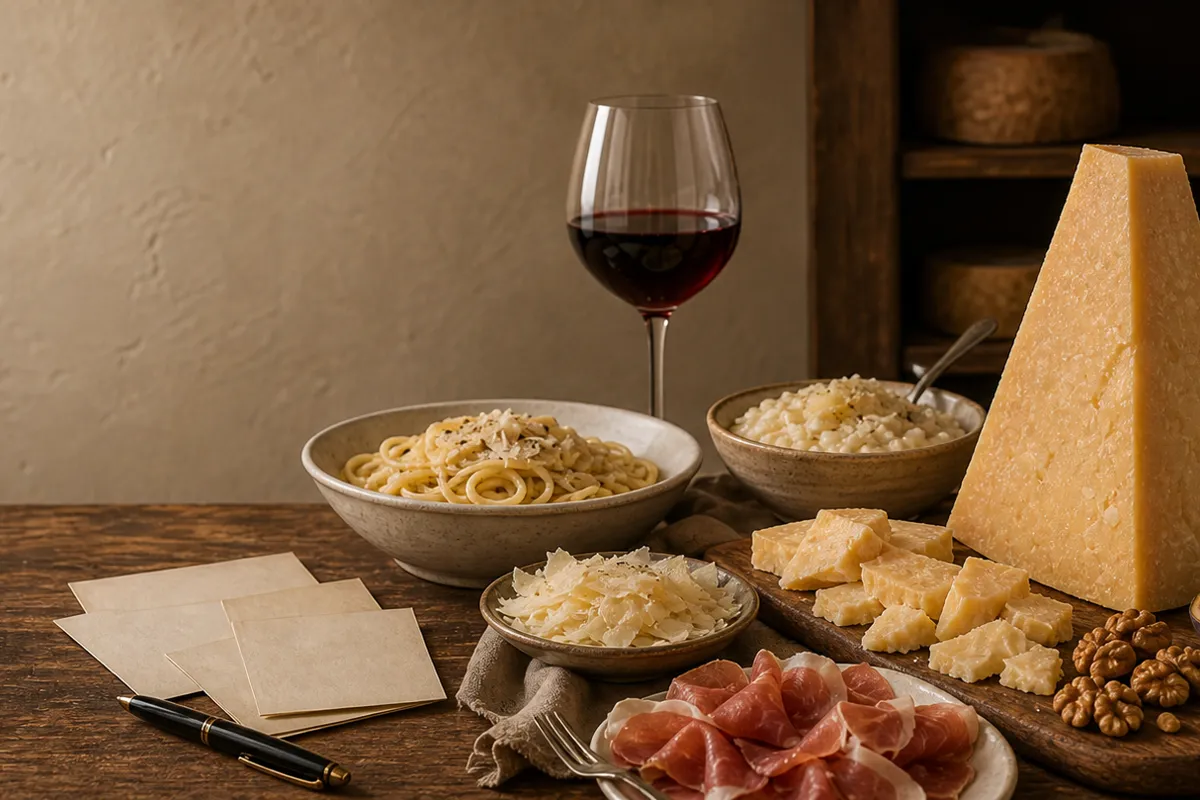
Shards are the board format. They need Lambrusco, Chianti, Nebbiolo, or a structured white because the cheese is the main bite.
Broken edges show the crystals and release aroma.
Shavings are the salad and appetizer format. They need acid, greens, pear, fennel, or citrus, so Verdicchio, Prosecco, or a crisp Italian white can work better than a serious red.
Grated Parmesan is usually a dish ingredient. Pair the wine to the pasta sauce, soup, or risotto first.
The cheese adds salt and umami, but it does not own the whole glass.
Frico sits between board cheese and cooked food. It is browned, salty, and crisp, so bubbles or high-acid whites often beat big reds.
The more the cheese is cooked, the more you need refreshment.
| Parmesan format | Best wine lane | Why it works |
|---|---|---|
| Board shards | Lambrusco, Chianti Classico, or Nebbiolo | The cheese is the main bite, so the wine needs acid, grip, or bubbles. |
| Salad shavings | Verdicchio, Prosecco, or crisp white wine | The plate needs freshness around salt and dry texture. |
| Grated over pasta | Match the sauce first | Parmesan adds salt and umami, but tomato, cream, or mushroom owns the glass. |
| Frico crisps | Dry sparkling wine or bright white wine | Bubbles and acid reset the browned, salty crunch. |
- 18 to 24 months: Chianti Classico, Barbera, and Franciacorta keep the pairing bright.
- 24 to 30 months: Lambrusco and Verdicchio still work, but the cheese starts asking for more depth.
- 30 to 36 months: Barolo and older Chianti Riserva make more sense once the crystals show clearly.
- 40 months plus: use small shards and more serious bottles because the cheese becomes a tasting piece, not an everyday grating cheese.
If your wedge is sold as a broader market Parmesan, the protected-versus-generic difference matters. A flatter cheese usually pairs better with simpler wine.
Break mature Parmesan into rough shards instead of slicing it thin. The broken face releases more aroma and makes the wine taste cleaner beside each bite.
That serving move matters on a board. Thin slices warm fast and feel leathery sooner.
Avoid Sweet Bottles and Soft Low-Acid Whites
Sweetness is the main mistake here. Parmesan is salty and intense, but it is not creamy enough to absorb dessert wine the way blue cheese can.
Soft low-acid whites also disappear beside it. They leave the cheese tasting harder and saltier than it really is.
Sweet Moscato is the classic wrong turn. It can work with blue cheese because blue has salt, mold, and cream, but Parmesan is drier and more savory.
Sugar makes the wedge taste awkward instead of balanced.
Buttery Chardonnay can miss too. Oak and cream fight the cheese's dry texture, and low acid makes the finish feel salty.
If you want white wine, choose freshness and a slight bitter edge.
Skip sweet Moscato, soft Pinot Grigio, and buttery oaked Chardonnay with most Parmesan boards. They make the cheese feel heavier and the wine feel flatter.
- Sweet Moscato: too much sugar for a cheese that needs cut, not candy.
- Pinot Grigio: often too neutral to survive Parmesan's salt and umami.
- Buttery Chardonnay: oak and fat pile up instead of refreshing the palate.
- Jammy Cabernet: heavy fruit and firm tannin can dominate a modest wedge.
If budget pushes you toward a lower-intensity cheese, backup grating-cheese logic is more useful than forcing an expensive bottle beside a basic wedge.
Parmesan rewards clarity, not excess. That is why crisp structure wins more often than sheer power.
Shift From Fresh Aperitif Boards to Deeper Red-Wine Boards
Parmesan works in every season because it can act like a nibbling cheese or a finishing cheese. The side items change the best bottle more than the cheese does.
Use fruit and bubbles in warm weather. Use deeper reds once nuts, dried fruit, and balsamic come out.
Warm-weather Parmesan should feel like an aperitif. Use small shards, pear, fennel, arugula, almonds, and sparkling or crisp white wine.
Keep the cheese from dominating the first plate.
Cold-weather Parmesan can move toward walnuts, aged balsamic, prosciutto, mushroom dishes, and deeper reds. At that point the wine can carry more tannin because the board has more savory weight.
For mixed platters, the balanced board playbook helps place Parmesan after softer cheeses instead of starting the tasting with the saltiest bite.
Break Shards, Avoid Thin Slices, and Pour Smaller Reds
Serve Parmesan cool room temperature, not fridge-cold. Give it enough time to release aroma, but not enough time to sweat.
The cheese should feel dry and firm, never waxy or chalky. That texture is part of the pairing.
Once cut, firm-cheese wrapping protects the exact aroma you paired the wine for.
That last step matters more than many people expect. A dry cut face makes even a good bottle work harder than it should.
Break Parmesan into rough shards instead of slicing it thin. Thin slices can feel leathery, while shards show the granular texture that makes the wine choice clear.
Pour tannic reds in smaller amounts with older shards. The cheese is intense, and the wine is intense too.
Smaller pours keep the pairing focused instead of turning the board into a salt-and-tannin contest.
If the cheese is already grated, protect the wine by using it in a dish. A loose pile of grated Parmesan dries fast and tastes saltier.
Shards or shavings are better for tasting because they keep aroma, texture, and portion size under control.
Watch the age claim on the package too. A young supermarket Parmesan may not have enough crystal crunch for Nebbiolo or aged Sangiovese.
It usually pairs better with Barbera, Lambrusco, or a crisp white because those bottles give lift without demanding too much depth from the cheese.
When the wedge is real Parmigiano-Reggiano and clearly mature, you can pour more serious wine. The cheese has enough salt, tyrosine crunch, and broth-like umami to make firm tannin useful.
That is the narrow lane where Barolo or structured Chianti makes sense.
SOURCES & REFERENCES
Parmesan Wine Pairing FAQ
These are the pairing questions we hear most when Parmesan moves from pasta topping to tasting cheese.
Chianti Classico is the best all-around bottle for Parmesan. Dry Lambrusco is the easiest traditional match if you want a fresher, more relaxed pairing.
Yes. Structured whites like Verdicchio can work very well because they bring acidity and a slight bitter edge.
Soft neutral whites usually disappear beside the cheese.
Lambrusco gives you bubbles, tart fruit, and enough acidity to clear Parmesan's salt. It also comes from the same broader food culture as Parmigiano-Reggiano.
Use rough chunks or shards for mature Parmesan. Broken pieces show more aroma and a better crystal texture than thin slices do.
Avoid sweet Moscato, bland Pinot Grigio, and buttery oaked Chardonnay. Those bottles make the cheese feel harder, saltier, and less balanced.