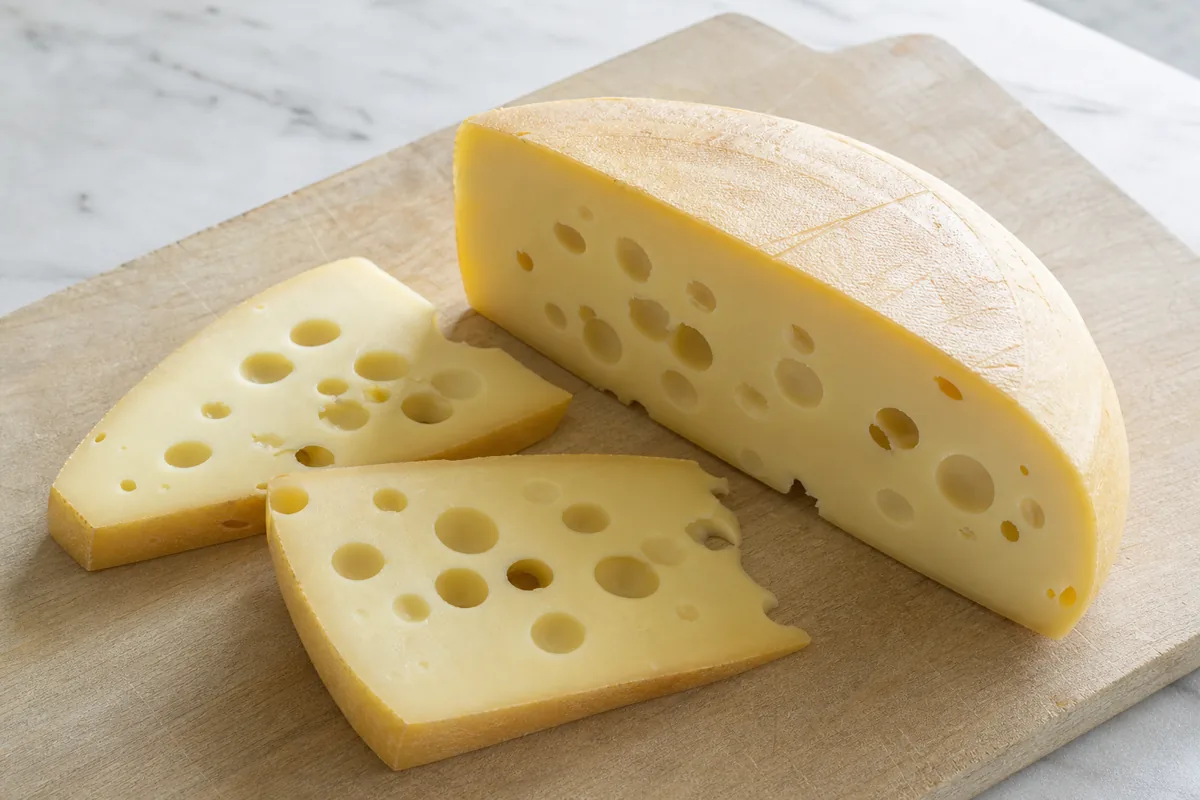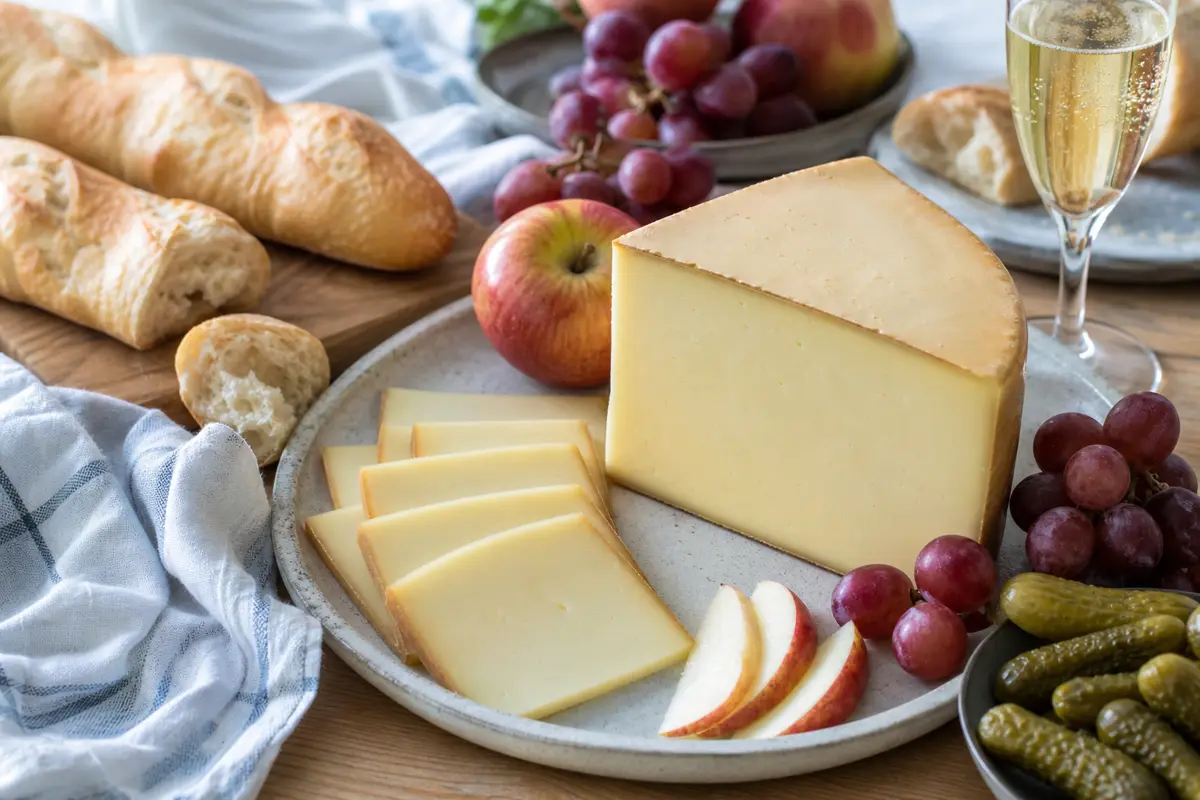
Amsterdammer is Natural Pastures' mild, buttery cow's-milk cheese from British Columbia. It suits sliced sandwiches and melted dishes, while its firm body makes it easy to portion for a cheese plate.
The Dutch-sounding name can be misleading: this is a Vancouver Island product, distinct from Old Amsterdam aged Gouda.
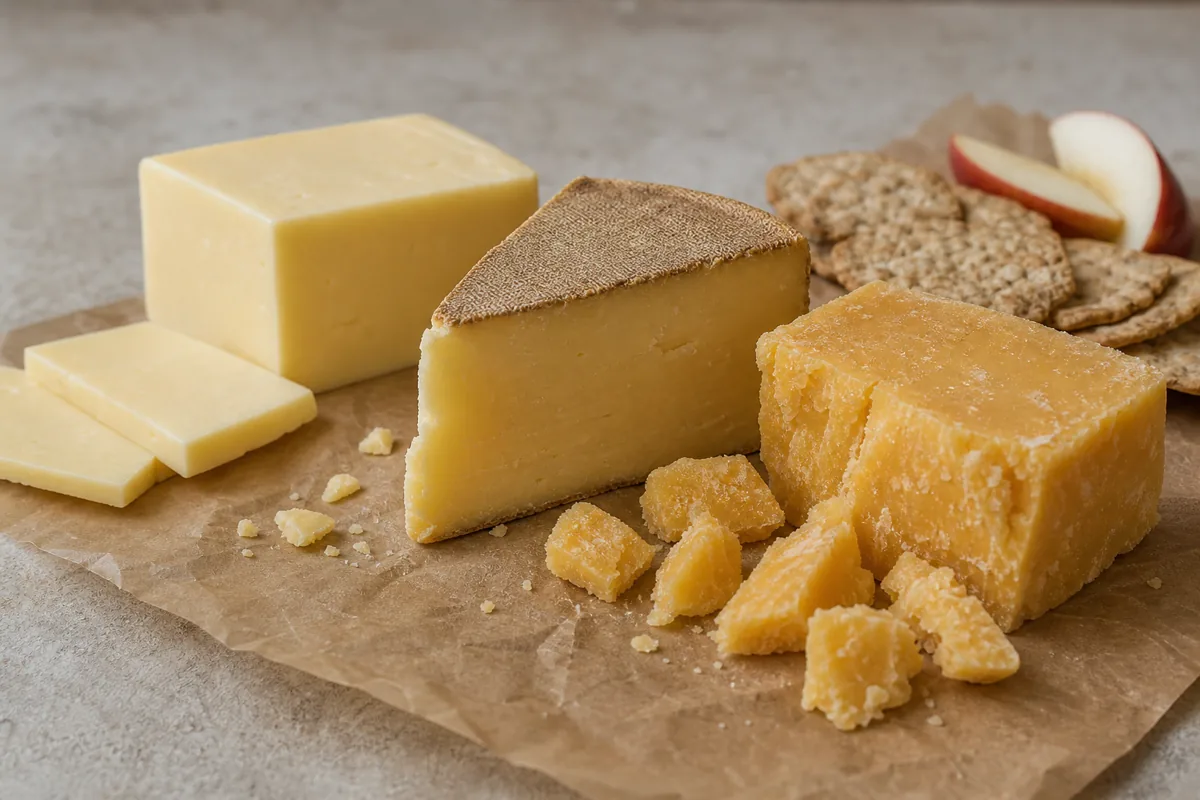
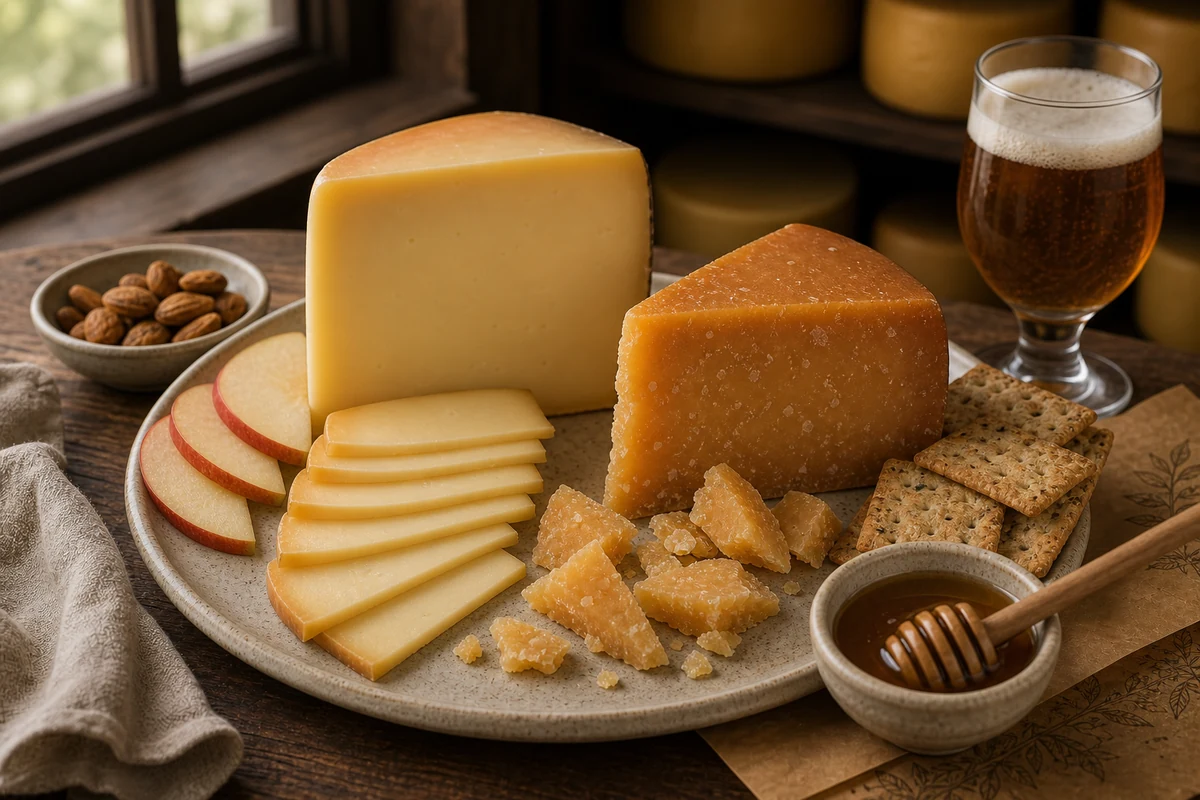
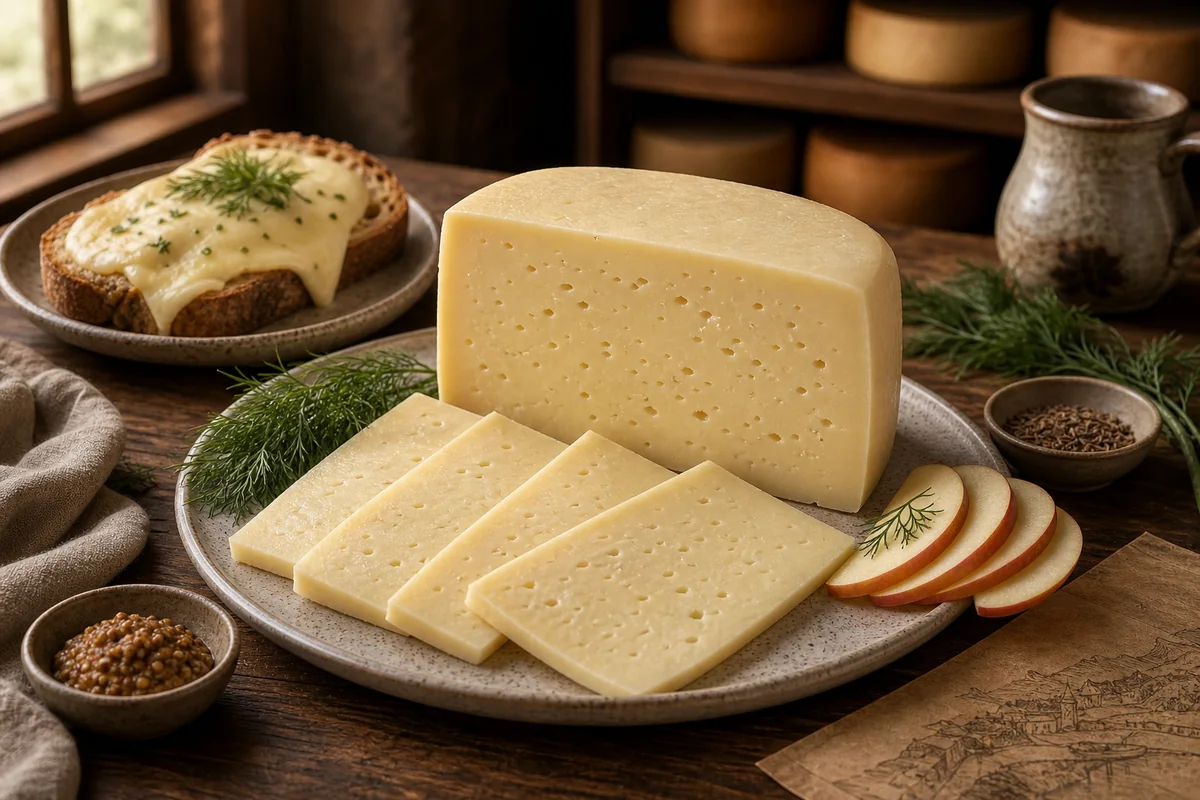
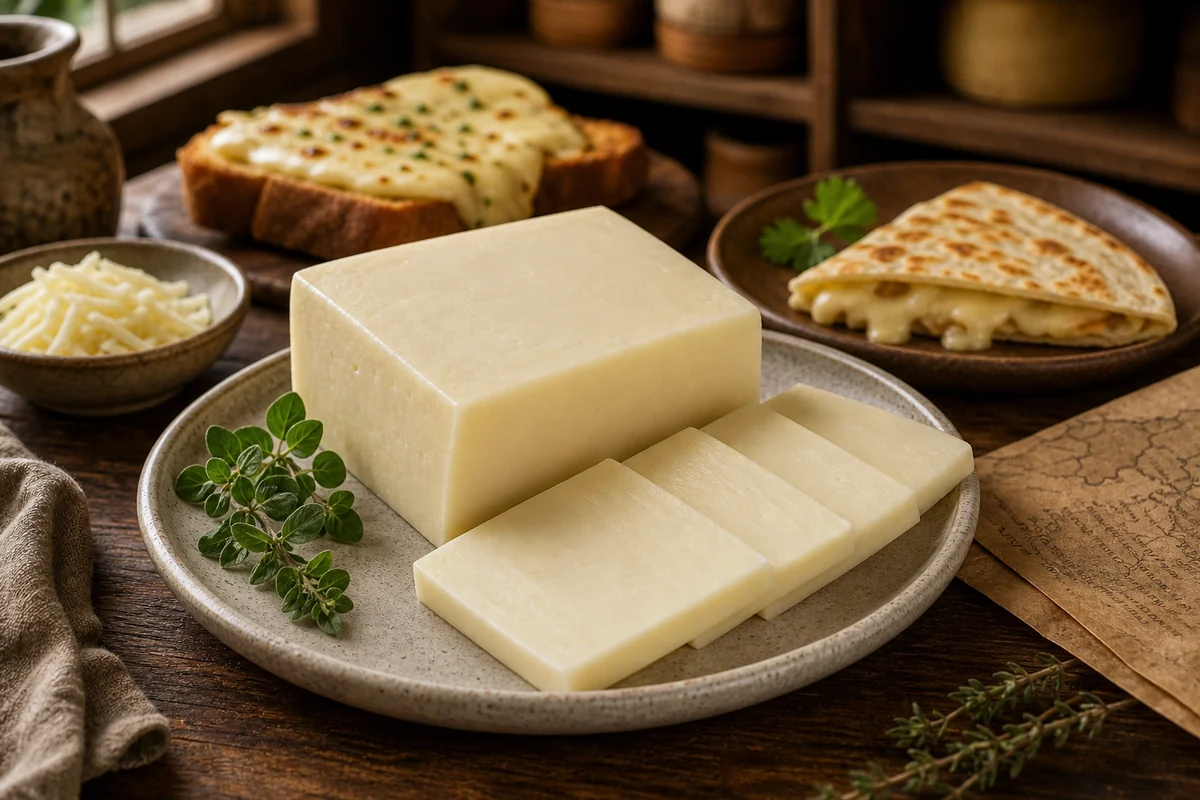
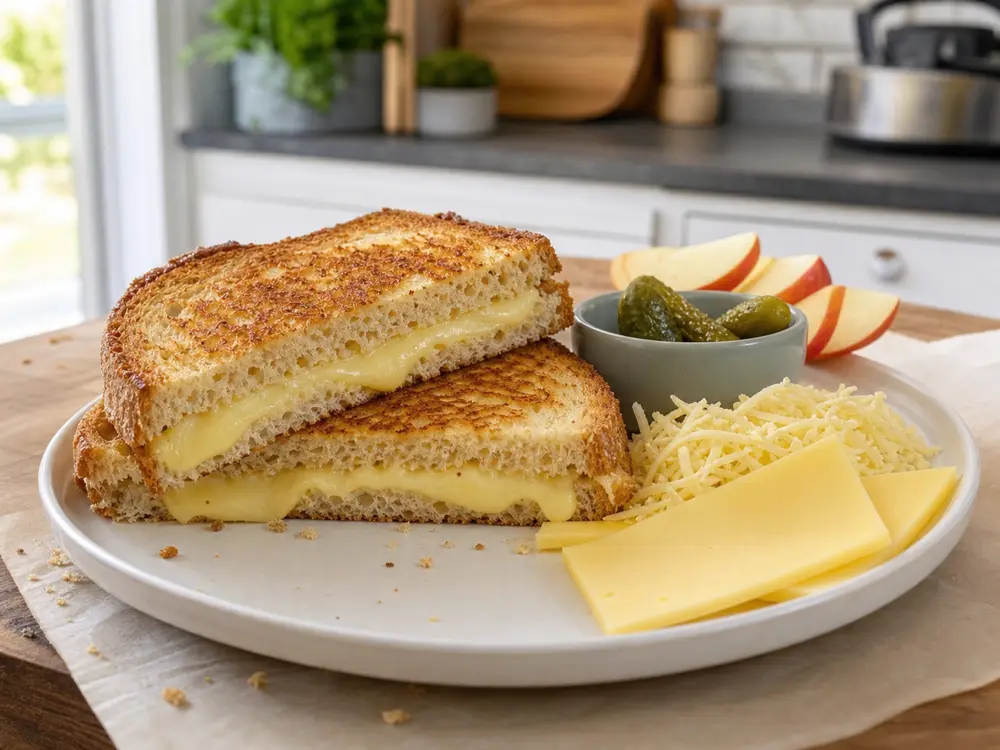
The images are serving illustrations, not photographs of Natural Pastures products.
In This Article
Which Amsterdammer Are You Buying?
Natural Pastures is the producer name to match on the wrapper. Its current description identifies milk from Vancouver Island dairy farms, and BC Dairy identifies Amsterdammer as a pasteurized cow's-milk cheese made in British Columbia.
Dairy Farmers of Canada's product directory records a 180 g pack, UPC 850553000060. That gives a shopper a specific retail product to match, though a cheesemonger may also cut portions from a larger piece.
The directory also records the Blue Cow logo for Canadian milk. That is an origin cue; it does not tell you the age of a wheel or make another cheese with an Amsterdam-related name the same product.
What Does Amsterdammer Taste Like?
Natural Pastures describes Amsterdammer as smooth, creamy and buttery, with inspiration from European butter-style cheeses. Its May 2026 article narrows that comparison to German-style butter cheese; the description refers to the style and eating character, not a declaration that butter is added.
BC Dairy adds nutty overtones and a tangy finish to the description of a firm, ripened cheese. Firmness describes a cheese you can handle and slice; it does not contradict the maker's description of a smooth texture in the mouth or its recommendation for melting.
No verified aging schedule accompanies these descriptions. Buying Amsterdammer by an assumed Gouda age category would therefore add a precision that the maker's information does not supply.
For a cold plate, the maker's apple, pear and grape suggestions suit that mild character: fruit adds a juicy contrast to the creamy bite. Mustard or pickles give a sharper accompaniment, while BC Dairy suggests ale for a drink pairing.
How Do You Cook with Amsterdammer?
Grilled sandwiches and mac and cheese are two uses recommended by Natural Pastures. For a sandwich, thin slices spread across the bread give the filling a more even thickness than a wedge left whole; moderate heat gives that filling time to melt before the bread darkens.
The producer also gives a more specific example in its apple-and-parsnip soup: one cup of shredded Amsterdammer with four cups of vegetable broth. Its instructions cook the vegetables first, blend the soup smooth, then stir in the cheese until melted.
That sequence makes the cheese a finishing ingredient rather than something that cooks through the whole vegetable-simmering stage. It also shows why a cup of shredded cheese in a soup is a different preparation from laying slices inside bread.
For a cheese sauce, finely cutting or grating the cheese similarly lets it be added gradually to the warm liquid. These are preparation choices, not measured Amsterdammer melting times or a guarantee of a long mozzarella-style stretch.
A cheese that melts into soup is not automatically suitable for frying as a freestanding slice. The producer's examples support a melted filling or finish, so choose another cheese specifically intended for direct frying if the slice must hold its shape.
Amsterdammer or Gouda?
A young Gouda is a practical alternative for a mild sliced sandwich, because that is one of the uses the two cheeses share. It is a substitute for the meal, not another name for Natural Pastures' product.
Old Amsterdam Classic is a different choice: its maker identifies it as an aged Gouda with a savoury flavour, sweetness and ripening crystals. Those details describe a stronger-flavoured cheese than the mild butter-style product you may have intended to buy.
If you replace Amsterdammer with an aged Gouda, expect the filling or sauce to taste more assertive. That does not mean the older cheese cannot melt; it means matching the name alone will not preserve the original flavour choice.
What Are Amsterdammer's Ingredients and Nutrition?
Natural Pastures' older technical sales sheet lists pasteurized milk, microbial culture and enzyme, calcium chloride, and salt. It provides an ingredient record for the product, but a current pack is needed to confirm the formula or a dietary certification for the portion being sold.
The manufacturer's published Amsterdammer nutrition image gives the following amounts for 30 g. These are the named product's figures, rather than a generic Gouda estimate.
| Nutrient | Per 30 g, as published by the maker |
|---|---|
| Energy | 110 kcal |
| Total fat | 8 g |
| Saturated fat | 6 g |
| Carbohydrate | 1 g |
| Protein | 7 g |
| Sodium | 260 mg |
| Calcium | 230 mg |
A 180 g retail pack contains six portions of 30 g by weight. If you divide that pack into two equal pieces, each 90 g piece is three of the listed portions, not one.
The older sheet also carries a separate 32% M.F. specification that does not reconcile with 8 g fat per 30 g in its nutrition panel. For portion calculations, use the nutrition panel on the actual pack rather than treating those two figures as interchangeable or inventing an explanation for the difference.
Mild flavour does not establish low sodium, and the information above does not certify that a particular pack is lactose-free or vegetarian. Those are separate product claims, not consequences of how gentle the cheese tastes.
How Should You Buy and Store an Amsterdammer Portion?
The manufacturer's trade sheet specifies refrigeration at 2-4 degrees C and advises against freezing. A cut wedge still needs its own wrapper, date and handling instructions; the original wheel's trade specification does not establish how long a repacked piece will keep.
In particular, the sheet's 150-day shelf-life entry is not an instruction to keep opened cheese for five months. It appears in a wholesale product specification, without an opened-household-storage promise.
Keep the portion wrapped in a covered container in the refrigerator, and retain the seller's label. For a picnic or cheese plate, take out only what will be served and keep the remainder cold.
FDA guidance for foods needing refrigeration limits time outside cold storage to two hours, or one hour above 32 degrees C / 90 degrees F. A recommendation to serve cheese less cold for flavour does not remove that handling limit.