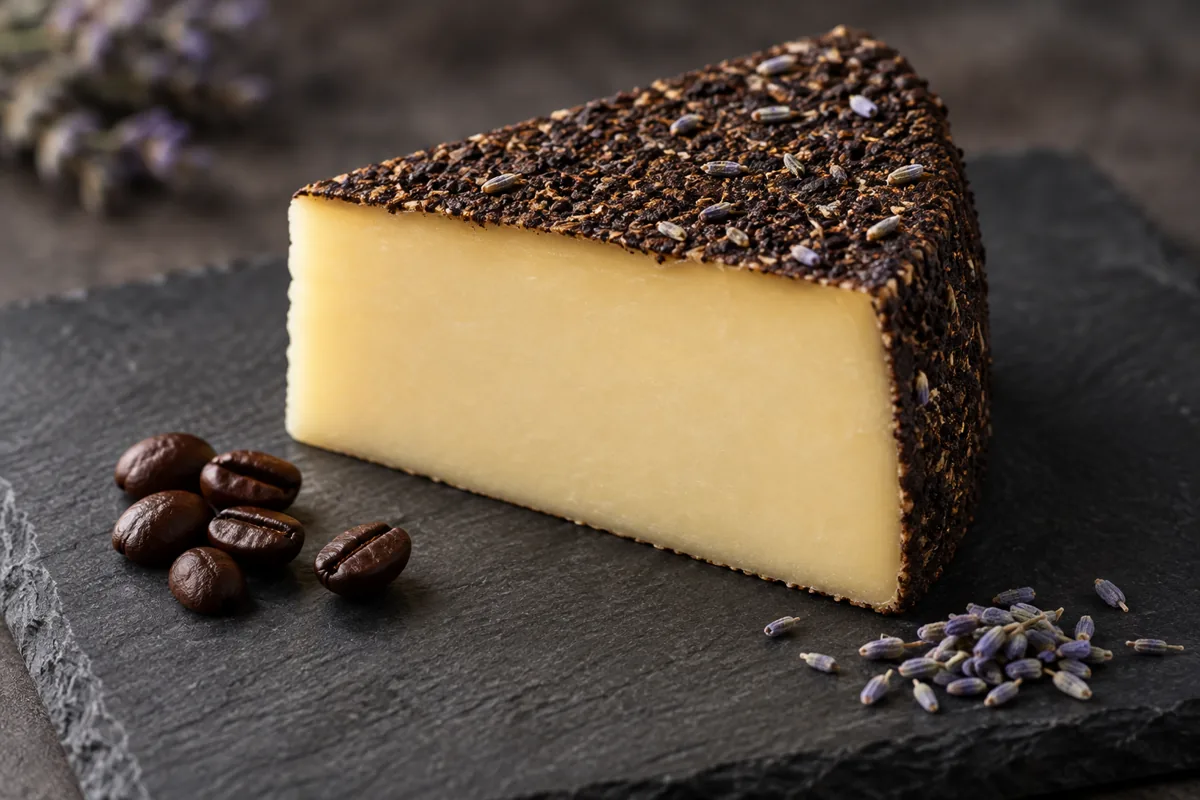
Barely Buzzed is a cheddar-style cheese from Beehive Cheese Company in Uintah, Utah, made with pasteurized cow's milk and rubbed with coffee and lavender.
The sweetness question in the title has a plain answer: Beehive and Cheese.com describe butterscotch and caramel notes, and no ingredient list we read includes sugar. Beehive's ingredient list, as a retailer prints it, reads pasteurized cow's milk, salt, organic coffee, organic non-GMO canola oil, cheese cultures, vegetarian rennet, and organic dried lavender flowers.
In This Article
What Is Barely Buzzed Cheese?
Culture magazine dates the cheese to 2006, one of Beehive's earliest releases, with one-day-old wheels rubbed by hand. Beehive's own story page says Tim Welsh, who founded the company with Pat Ford in 2005, pioneered the idea of rubbing cheddar with coffee and lavender.
Beehive sells the cheese as two 12 oz wedges or a quarter wheel of about 5 lb, and its care sheet also mentions 4 oz retail wedges.
Cheese.com files it as a cheddar-style artisan cheese, and Culture lists it as cheddar-like and firm. Beehive markets it as a party cheese that stands out on a cheese board.
Does the Coffee Rub Make Barely Buzzed Taste Sweet?
Beehive says the butterscotch and caramel notes start near the rind and reach the center of the wheel. Those words describe flavor, not added sweetener, because the label ingredients above contain coffee, lavender, and canola oil but no sugar.
| Beehive Cheese | Butterscotch and caramel near the rind that reach the center; full-bodied, nutty, smooth. |
| Cheese.com | Butterscotch, buttery, caramel, nutty; creamy and smooth texture; pale yellow colour. |
| Culture magazine | Rich, full-bodied, and smooth texture with notes of butterscotch and caramel. |
How strong the coffee edge reads is something to judge from your own wedge.

What Goes Into the Rub, and Does It Contain Caffeine?
Beehive's product page says the coffee came from Colorado Legacy Fine Coffee, the roasting business run by Tim Welsh's brother Dan. The ThinkUSAdairy profile calls it an espresso blend and adds French Superior lavender buds, ground on site.
Culture says the beans come from South America, Central America, and Indonesia.
A 2024 report says the canola oil on the ingredient list is spread over the wheels at the Idaho plant before they travel to Utah for the hand rub.
Coffee is a listed ingredient, so ask Beehive or check the label for a caffeine figure.
| Nutrient | Per 1 oz |
|---|---|
| Calories | 113 |
| Total fat | 9 g |
| Saturated fat | 6 g |
| Protein | 7 g |
| Sodium | 185 mg |
| Cholesterol | 29 mg |
That listing comes from a foodservice distributor, so a retail wedge may carry a different label. Decant Napa's listing flags milk as the allergen.
Where Do Milk, Wheel Size, and Ageing Sources Disagree?
Every source agrees on pasteurized cow's milk, but they name different farms and different ageing times. Some of the gap may be timing, because Beehive moved the cheesemaking step to Gossner Foods in Heyburn, Idaho, in summer 2024.
| Source | Milk | Wheel size | Ageing |
|---|---|---|---|
| Culture magazine | Pasteurized cow's milk from Wade's dairy, 10 miles away | Not stated | About 8 months after the one-day-old wheels are rubbed |
| GFI Foods listing | Pasteurized cow's milk | 20 lb | 6 to 8 months after the rub |
| Chew and Chat, 2024 | Made at Gossner's Heyburn, Idaho plant | 40 lb at Gossner | 3 to 6 months, depending on the variety (Beehive marketing director) |
| Beehive story page | Jersey cow milk from Gossner Foods | Not stated | No duration given |
The Cheese Professor names Wadeland South, a fourth-generation family farm, as the milk source, and ThinkUSAdairy says Jersey milk from northern Utah.
The 2024 ageing range covers Beehive's flavored varieties in general.
ThinkUSAdairy adds that the cheese ages in humidity-controlled rooms through two temperature stages and lists a 180-day shelf life for the vacuum-packed retail format.
Which Awards Has Barely Buzzed Won?
Beehive's awards page lists first place in flavored cheddar at the American Cheese Society in 2007, 2008, 2009, and 2011. Its story page says the early wins led the society to create a rubbed-rind category.
| Year | Competition and placing |
|---|---|
| 2012 | American Cheese Society, 3rd in flavored cheddar |
| 2015 | American Cheese Society, 1st in rubbed cheese |
| 2016 | American Cheese Society, 3rd in rubbed rind |
| 2023 | American Cheese Society, 1st in rubbed rind with flavor added; IMPA Grand Champion |
| 2024 | American Cheese Society, 3rd in rubbed rind; ICDA Gold, Best Cheese in USA; LA Dairy Competition Gold and Best in Class |
The same page also lists World Cheese Awards, Utah Cheese Awards, and IMPA results across other years.
Is Barely Buzzed Safe During Pregnancy?
The NHS lists pasteurised or unpasteurised hard cheeses, pasteurised semi-hard cheeses and pasteurised soft cheeses as safe to eat in pregnancy, and Culture gives Barely Buzzed's texture as firm. Served cold, Barely Buzzed is described as a pasteurized firm, cheddar-style cheese, a type the CDC list does not cover, so ask a midwife or doctor.
How Should You Store Barely Buzzed and Handle Mold?
The care sheet is titled as cheesemonger information, so it speaks to shops rather than home cooks. It says to store the cheese between 33 and 40 degrees Fahrenheit and to avoid swings outside that range, which can make the cheese gas off.
Beehive says tight plastic wrap is the best way to hold back mold on Barely Buzzed.
Beehive's care sheet says to brush off white, blue, or green mold spots and cover the bare patch with the surrounding rub. For orange, red, or black mold it says to discard the cheese and contact your distributor.
Whether to eat the rind or trim it comes down to your own taste.
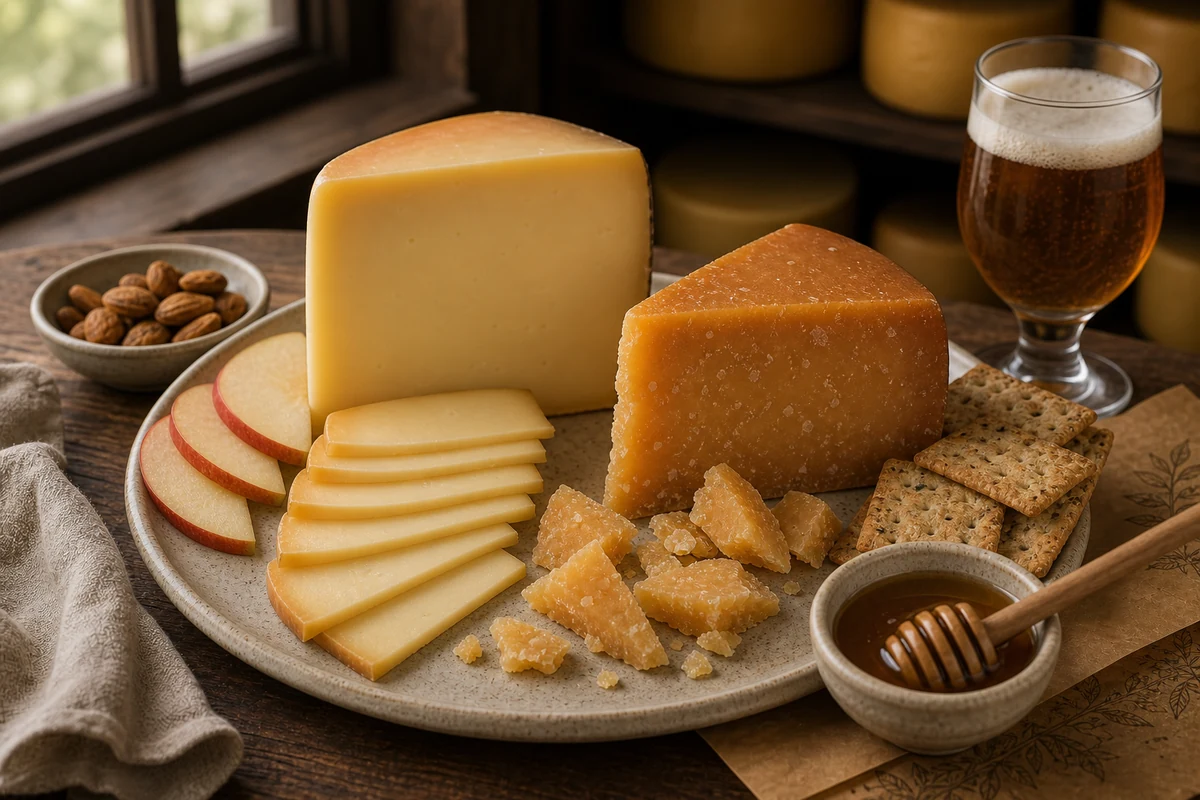
What Beehive, Culture, and Cheese.com Suggest Pairing With It
Three sources give pairing lists. Red wine is the one item on all three, with Cheese.com naming Syrah and Cabernet Sauvignon.
| Pairing | Type | Why It Works |
|---|---|---|
| Stout, porter, and ale | Drink | Beehive lists stout, porter, and ales, and Culture names oatmeal stout. |
| Cabernet, Syrah, and Zinfandel | Wine | Beehive lists Cabs, Syrah, and Zin; Culture says medium to full-bodied reds; Cheese.com names Syrah and Cabernet Sauvignon. |
| Toasted nuts | Food | Named by both Beehive and Cheese.com. |
| Chocolate | Food | Named by both Beehive and Cheese.com. |
| Toffee-coated items | Food | Culture's pairing suggestion. |
| Coffee, port, and cider | Drink | Culture names coffee, and Cheese.com names ports and ciders. |
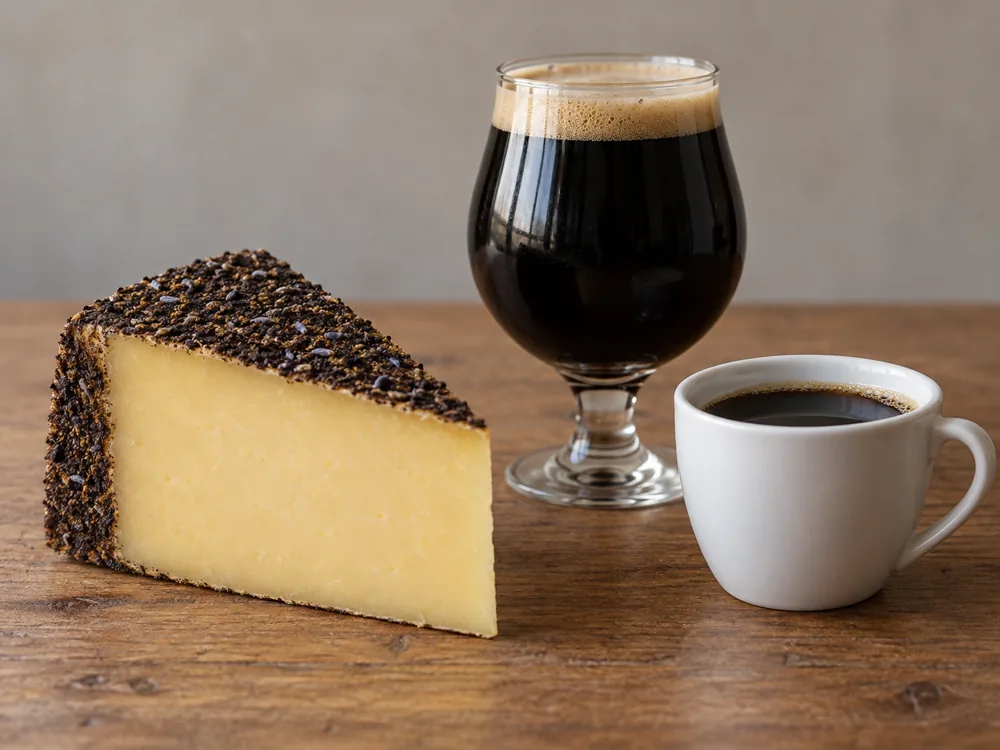
Beehive and Culture both name stout among the beers that suit the cheese. Culture also names coffee, the same ingredient that goes into the rub.
Beehive and Cheese.com both list chocolate next to toasted nuts, which sits alongside the butterscotch and caramel notes they describe.
SOURCES & REFERENCES
Beehive and Cheese.com describe butterscotch and caramel notes, but the ingredient list has no sugar. Those are flavor descriptions, not added sweetener.
Organic coffee is on the ingredient list. Ask Beehive or check the label for a caffeine figure.
Yes. Beehive's care sheet, Culture, and Cheese.com all list pasteurized cow's milk.
The NHS lists pasteurised or unpasteurised hard cheeses, pasteurised semi-hard cheeses and pasteurised soft cheeses as safe to eat. Served cold, Barely Buzzed is described as a pasteurized firm, cheddar-style cheese, a type the CDC list does not cover, so ask a midwife or doctor.
Sources differ: Culture says about 8 months, GFI Foods says 6 to 8 months, and a 2024 report gives 3 to 6 months for Beehive's varieties.
Beehive's care sheet says to keep it between 33 and 40 degrees Fahrenheit and to use tight plastic wrap to hold back mold.