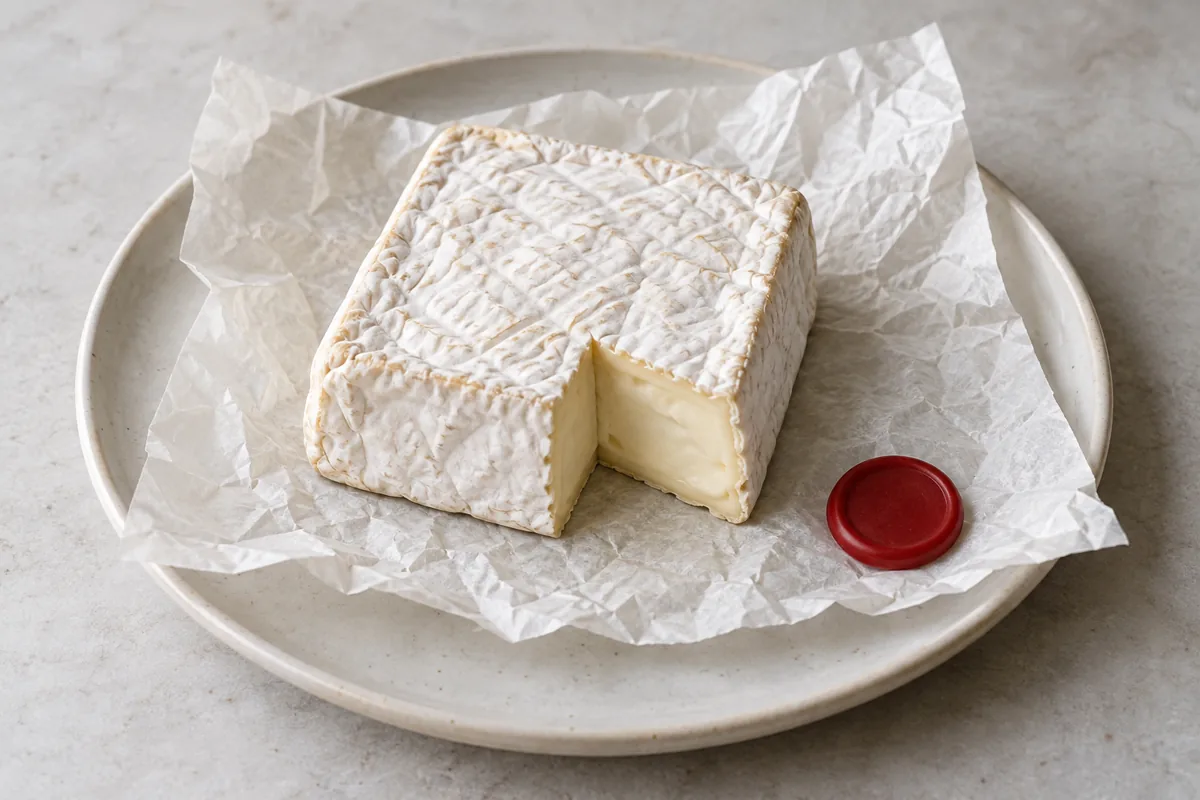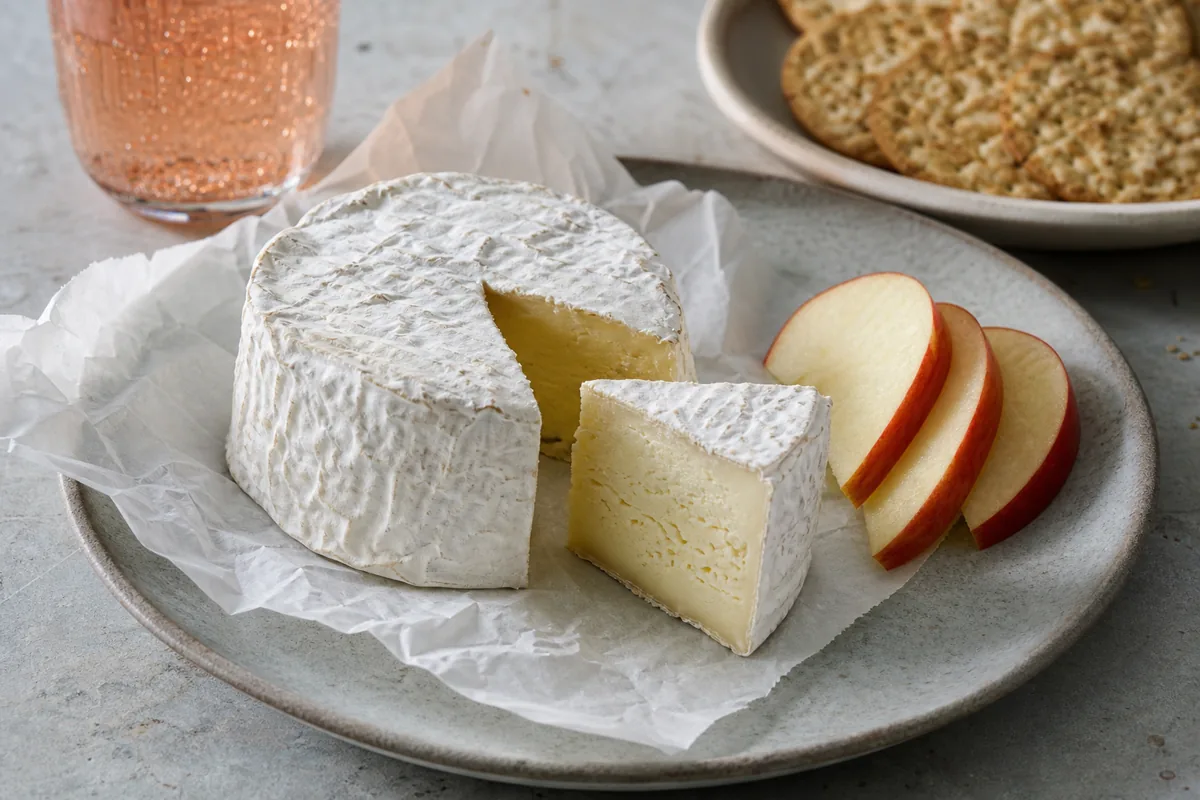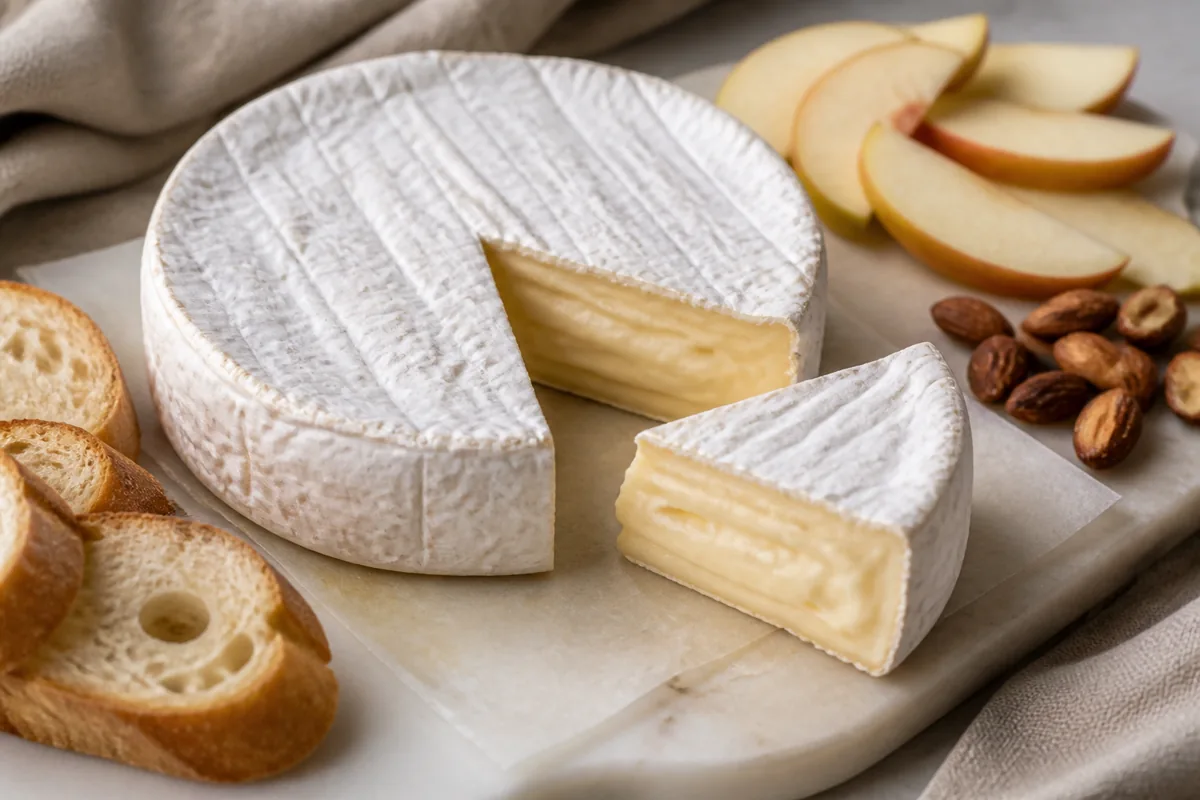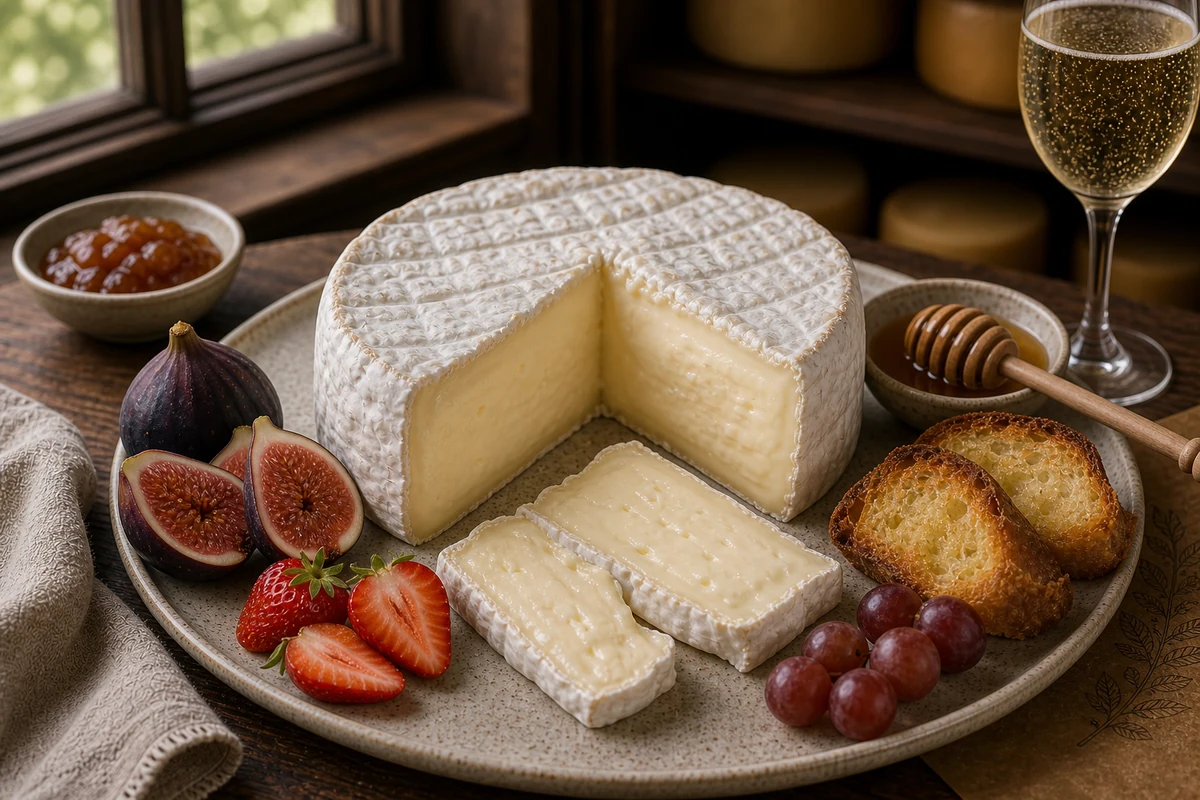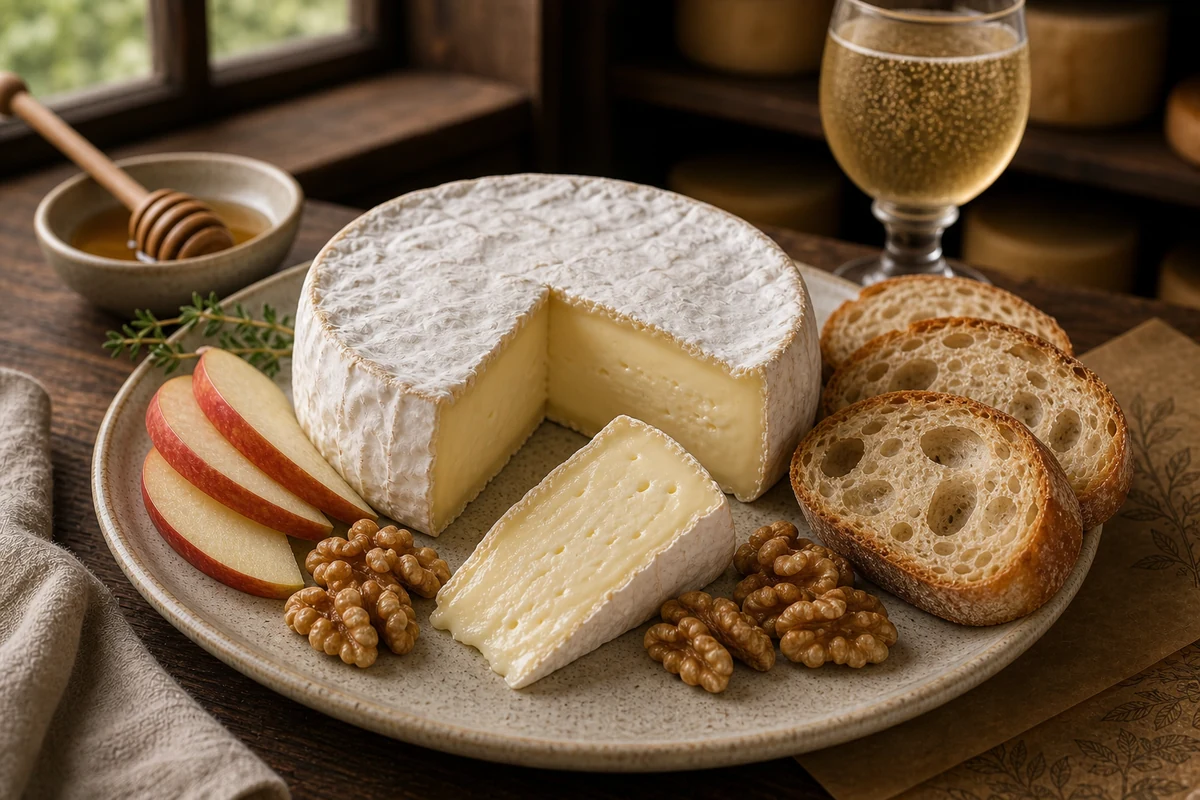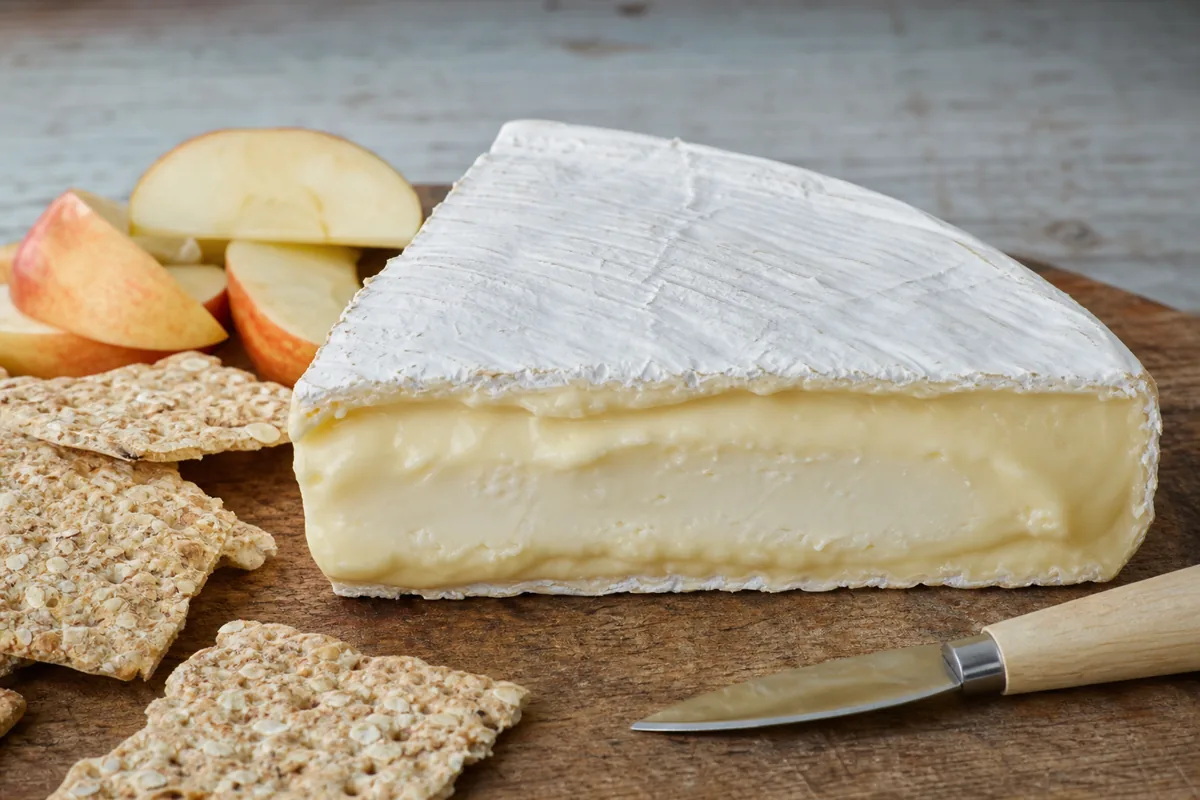
Baron Bigod is Fen Farm Dairy's farmhouse Brie-style cheese from Suffolk. The current 1 kg product is made with pasteurised milk from the farm's Montbéliarde cows, then wrapped in wax paper and packed in a wooden box.
Because Fen Farm sells other sizes and variants, this profile uses the current plain 1 kg product as its record and directs buyers to the exact package for weight, ingredients, nutrition, and use-by information.
In This Article
What Baron Bigod Is
After a 2012 research tour and the purchase of 72 Montbéliarde cows from the Jura, Fen Farm put its first Baron Bigod on sale in 2013.
The cheese is a named British farmhouse product, not a generic name for any British Brie. Fen Farm controls the milk and makes the cheese on the same Suffolk farm, which gives buyers a clear producer and product to verify.
What Are the Current 1 kg Product Facts?
The current 1 kg listing gives a short ingredient list: pasteurised cow's milk, salt, and animal rennet. It also says that handmade weights can vary slightly, so 1 kg is the product format rather than a promise that every wheel weighs exactly the same.
| Item | Producer information |
|---|---|
| Ingredients | Pasteurised cow's milk, salt, animal rennet |
| Energy | 1501 kJ / 365 kcal per 100 g |
| Fat | 31 g per 100 g, including 22 g saturates |
| Other nutrition | 2 g carbohydrate, less than 0.5 g sugars, 21 g protein, and 1.6 g salt per 100 g |
Those figures belong to that current listing, while a retailer's cut wedge, a smaller Baron Bigod, or a flavoured version may have a different label that should be used when nutrition matters.
How Baron Bigod Is Made
Fen Farm says warm morning milk moves by gravity from the milking parlour into the cheesemaking vats. The team gently heat-treats it, adds selected lactic bacteria, monitors acidity, adds rennet, cuts the curd, removes whey, and hand-ladles the curd into hoop moulds.
The cheeses are turned in their hoops, salted on the second day, and turned as a white mould rind develops before each covered cheese is wrapped in waxed paper and placed in a poplar box to continue ripening.
How Baron Bigod Ripens
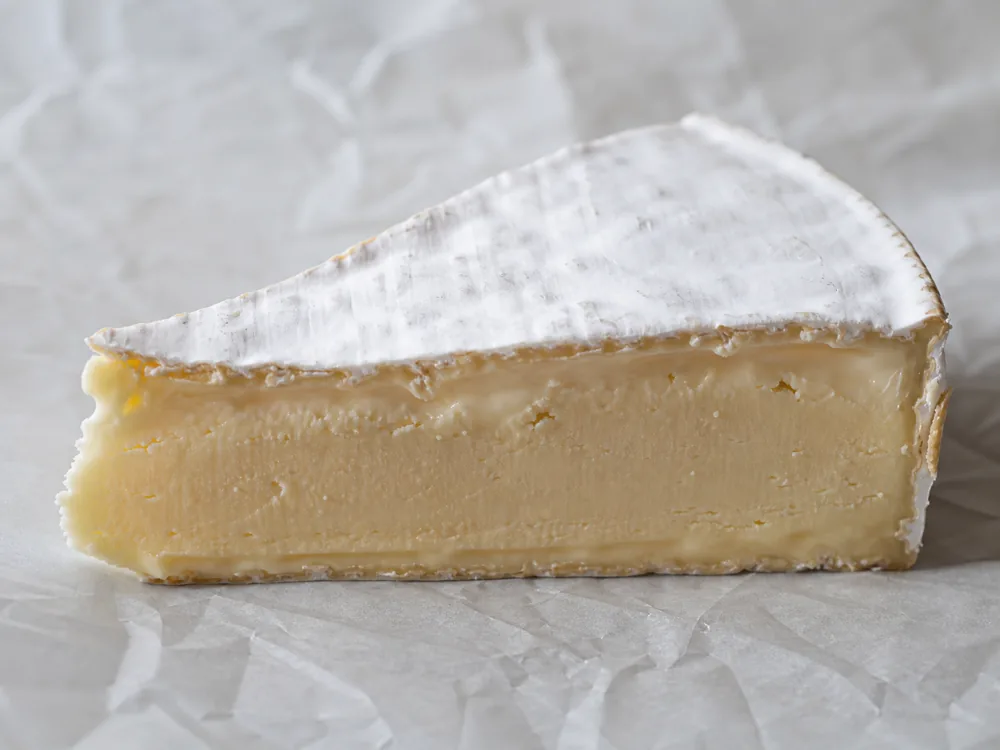
Fen Farm's FAQ gives a useful age choice rather than one mandatory ideal. It describes cheese at 3 to 4 weeks as firm with lemony, lactic flavours, at 4 to 5 weeks as firm in the centre with gooier edges, and at 5 weeks or older as gooier and more pungent.
Use the firmer stage for cleaner slices or follow the older stage for a softer wheel, then confirm the batch and use-by dates on the actual package.
The age guide describes the producer's intended ripening stages. It is not a substitute for the use-by date or for checking a damaged, leaking, or improperly stored package.
Is Baron Bigod the Same as Brie?
The word Brie describes a broad family in many shops, while Baron Bigod identifies one Fen Farm product. Its white rind and outside-in softening explain why learning how Brie ripens can help with the format, but a generic Brie listing cannot supply Baron Bigod's ingredients or nutrition.
INAO defines Brie de Meaux AOP as a protected French cheese made exclusively from raw cow's milk in a specified production area and matured for at least four weeks. The reviewed Baron Bigod product is a pasteurised Suffolk cheese.
| Name | What it identifies |
|---|---|
| Baron Bigod | A named Fen Farm Dairy farmhouse Brie-style cheese from Suffolk |
| Generic Brie | A broad retail style whose producer, milk treatment, ingredients, and format can vary |
| Brie de Meaux AOP | A protected French raw cow's-milk cheese with a defined area and specification |
For a broader size and style decision, compare Brie with Camembert. Keep Baron Bigod's product facts tied to Fen Farm.
What Does Baron Bigod Taste Like, and How Should You Serve It?
Fen Farm describes warm milky flavours with mushroom, earth, farmyard notes, and a nutty rind, which are producer tasting notes rather than a claim that every wheel or every stage tastes identical.
The current product page says to bring the cheese to room temperature for one hour before serving. The producer pairs it with apples, pears, medlar, quince, walnuts, cider, perry, or brandy, and the site's board method can help you balance those choices around a soft cheese.
Cut a narrow wedge from rind to centre so one serving includes the surface, the softer layer beneath it, and the centre. Keep the wrapper and label until the cheese is finished.
How Do You Buy Baron Bigod, and What Can Replace It?
Look for the Fen Farm Dairy name, the Baron Bigod product name, a readable use-by date, and an intact chilled package. For the 1 kg format, Fen Farm says the batch date is under the lid.
If Baron Bigod is unavailable, a plain pasteurised farmhouse Brie-style cheese is the closest general board substitute, while Brie de Meaux changes both legal identity and milk treatment and should be bought for its own character.
How Should You Store and Freeze Baron Bigod?
Fen Farm directs buyers to keep the current 1 kg product in the fridge and eat it before the use-by date. That label-led rule is more reliable than assigning every cut wedge an invented number of days after opening.
If freezing, the product page says to freeze it on the day of delivery, thaw it in the refrigerator, and never refreeze it. The FAQ adds that a large wheel can be portioned before freezing and that frozen cheese stops ripening, so let it reach the stage you want in the fridge first.
Discard a package that has been left outside safe refrigeration, is damaged, or conflicts with the seller's handling instructions. This article cannot verify the cold chain of an individual order.
Can You Eat Baron Bigod During Pregnancy?
The current plain 1 kg Baron Bigod uses pasteurised milk. That fact alone does not clear it for cold serving during pregnancy.
The NHS says pasteurised or unpasteurised mould-ripened soft cheese with a white outer coating must be thoroughly cooked during pregnancy.
For UK guidance, cook Baron Bigod until steaming hot throughout before eating it during pregnancy. The broader guide can help you choose cheese during pregnancy and understand why advice may differ by country.
SOURCES & REFERENCES
Baron Bigod is Fen Farm Dairy's farmhouse Brie-style cow's-milk cheese from Suffolk. The current plain 1 kg product uses pasteurised milk.
No. Baron Bigod is a named Suffolk product, while Brie de Meaux AOP is a protected French raw cow's-milk cheese made within a defined area and specification.
The current Fen Farm product page says to bring it to room temperature for one hour before serving. Keep it refrigerated until that planned serving period.
Keep it in the refrigerator and eat it before the package use-by date. If freezing, Fen Farm says to freeze on delivery day, thaw in the fridge, and never refreeze.
Under current UK NHS guidance, mould-ripened soft cheese with a white rind should be thoroughly cooked until steaming hot during pregnancy, even when made with pasteurised milk.