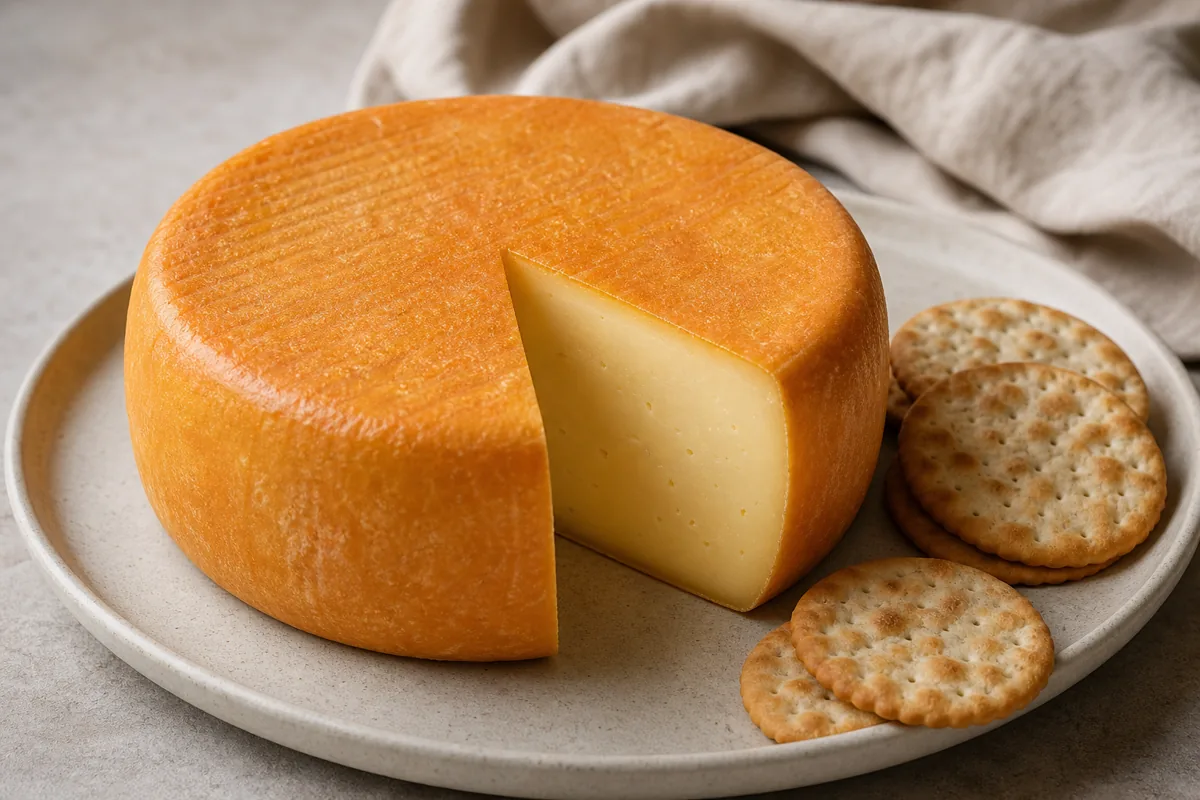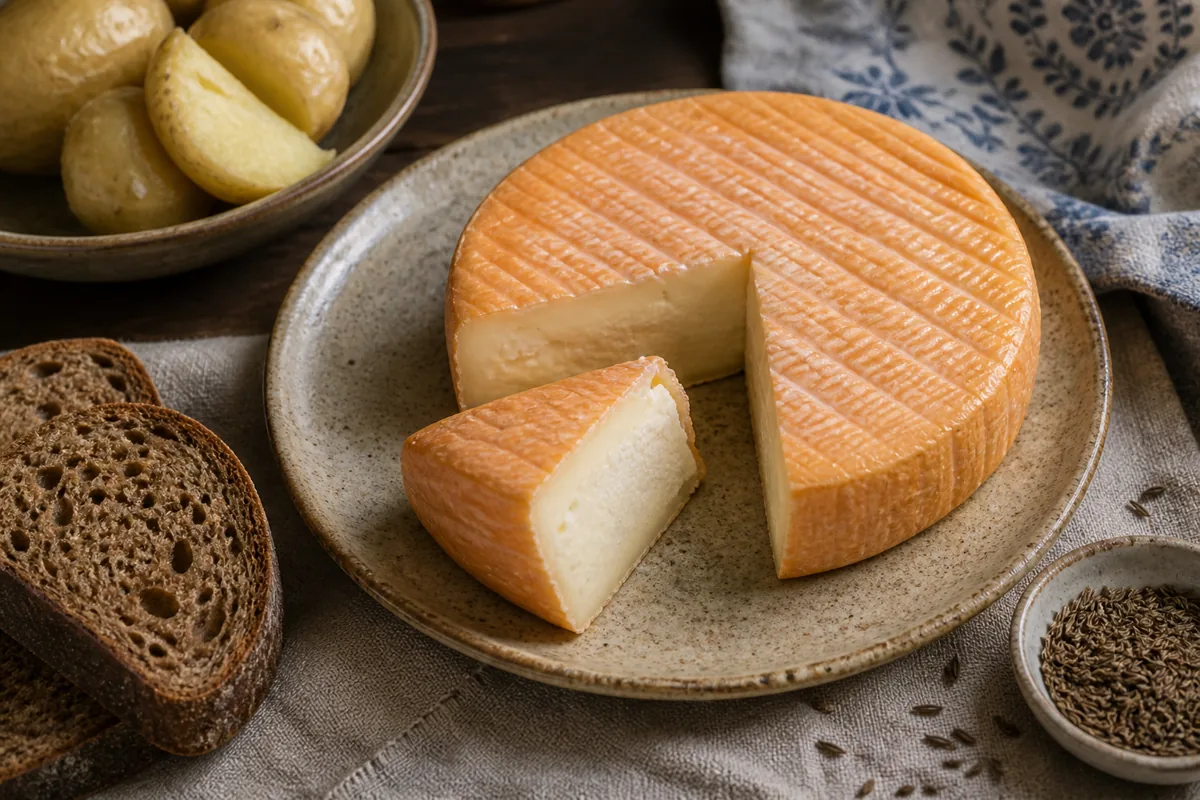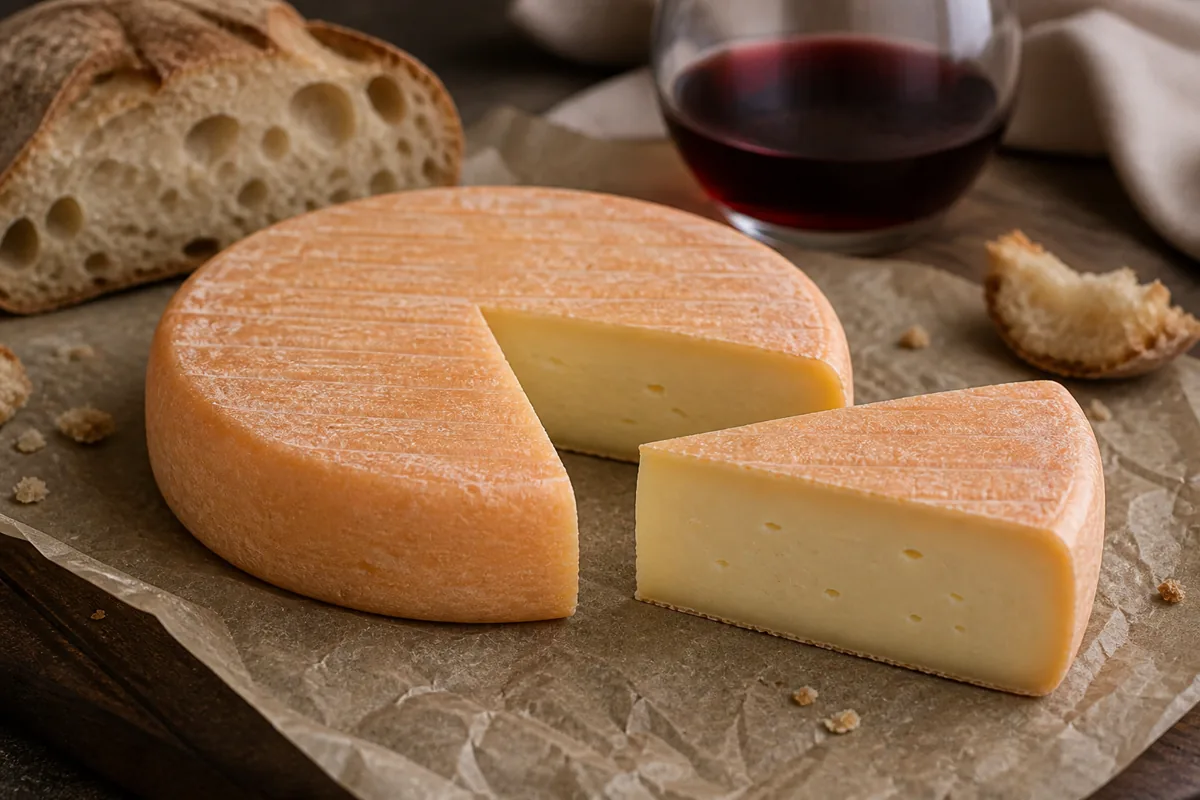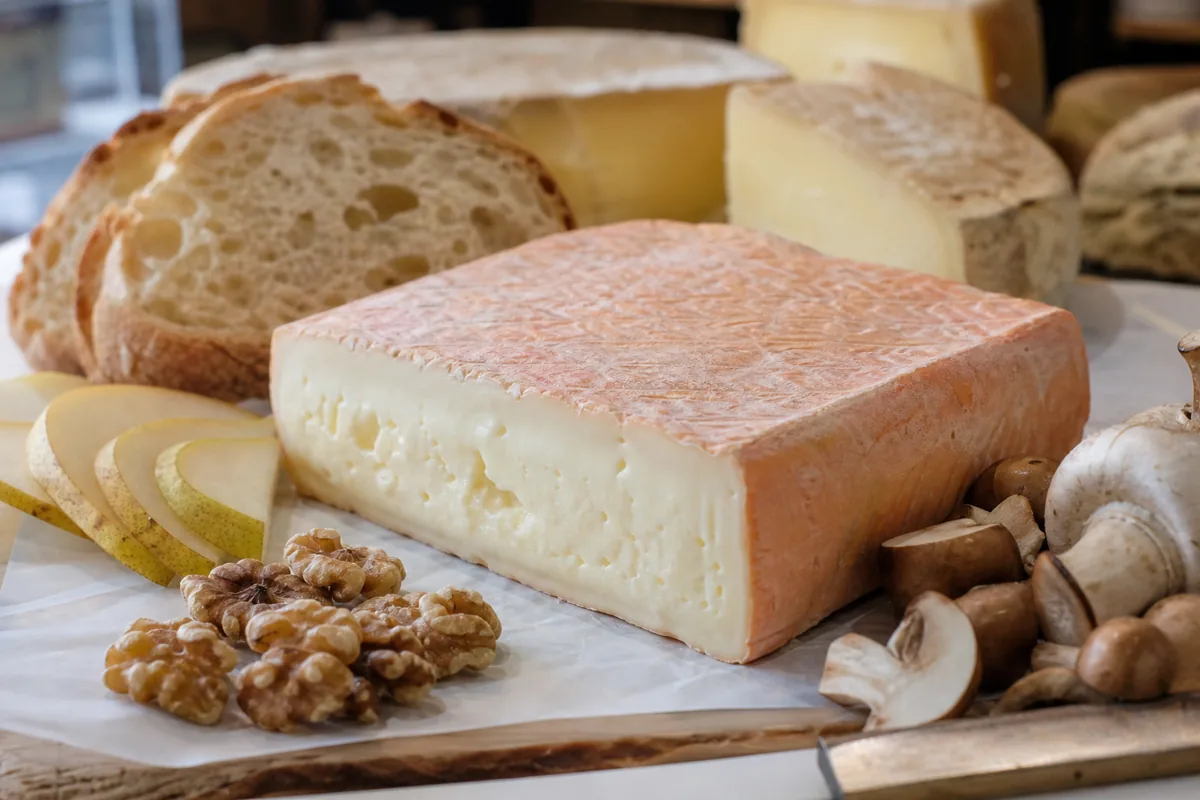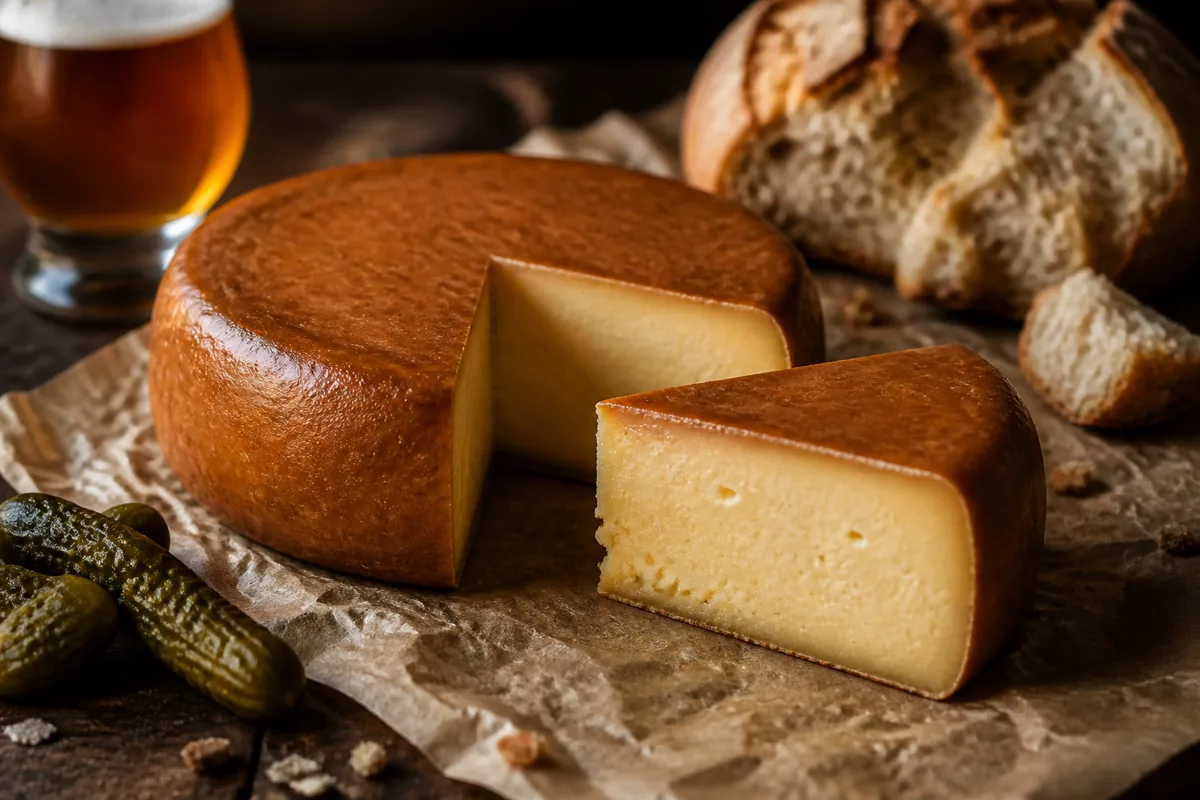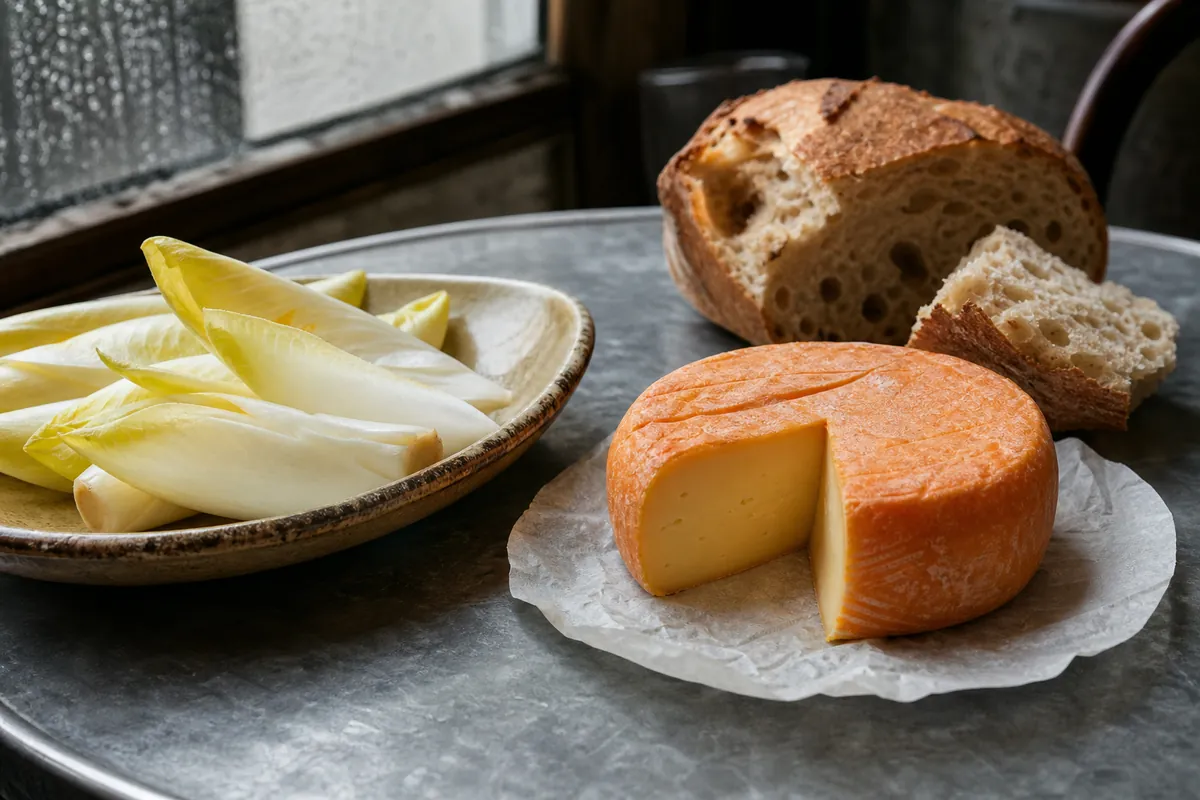
Chaumes is a washed-rind cow's milk cheese made at Saint-Antoine-de-Breuilh in the Dordogne region of France, with a bright orange rind and a pale paste. Its flavour is described anywhere from mild and lactic to powerful.
Chaumes is a brand of the dairy group Savencia, sold in several sizes and formats. The label on your piece settles the ingredients, the weight and whether the rind is meant to be eaten.
In This Article
What Is Chaumes Cheese?
Fromagerie des Chaumes, a dairy of the group Savencia, makes the cheese in the Périgord from pasteurized cow's milk, and the milk is 100% French.
Chaumes dates from the early 1970s: it has been on the market only since 1971, made to an unchanged recipe, and Saint-Antoine-de-Breuilh has made it since 1977. The Fromagerie des Chaumes itself goes back to 1960.
It belongs to the family of soft cheeses with a washed rind, in the Trappist style of cheesemaking, and its recipe took the cheeses of the region's Trappist monks as its inspiration.
Whether that makes it a traditional cheese depends on the description. Cheese.com says it is made with ancestral methods, while Supertoinette calls it an industrially made cheese and Épices Review, a French food site, says it is produced in a purely industrial way despite a fairly rustic image.
The name is the French word for stubble, and the wheel pictures a figure harvesting a field of grasses.
Two explanations tie the name to the colour. Supertoinette says the orange crust evokes stubble and a burning sun, while Épices Review, citing the group, says the golden colour recalled the wheat fields of the original master cheesemaker's home region.
Descriptions of the paste run from semi-firm to soft. The La Fromagerie technical sheet uses both words, semi-firm in its text and soft in its table, while Cheese.com calls it creamy, smooth, springy and supple, and Épices Review soft and creamy with a slightly rubbery consistency.
How Is Chaumes Made?
About 190 producers in the region supply the milk, and Épices Review says a 2 kg wheel takes about 15 litres of it.
GFI Foods gives a different yield, saying each pound of its Chaumes wheel takes nearly half a gallon of milk. Per kilogram, that is about 4 litres against 7.5.
The milk is curdled with rennet and lactic ferments, and the curd is cut and stirred to drive out as much whey as it can. It then goes into perforated round moulds to be pressed, which removes still more whey.
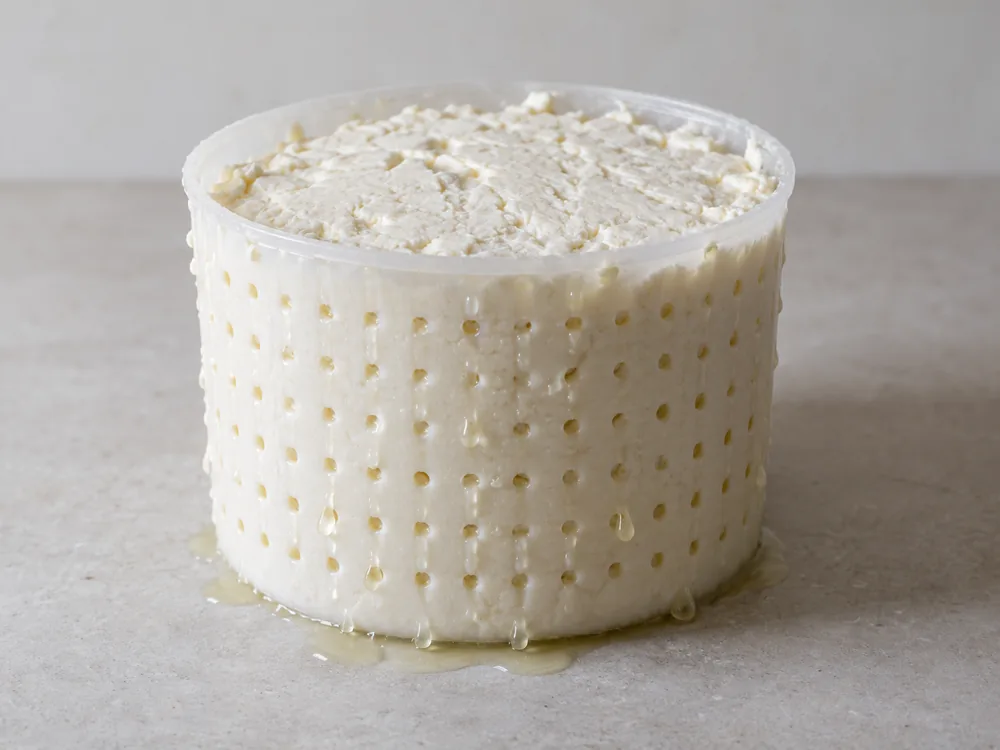
After unmoulding, the cheese is salted and coated with red ferments, Brevibacterium linens, and only then does its ageing start.
Why Is the Rind Orange?
The rind turns orange as the cheese is brushed and washed with brine during ageing, the treatment the La Fromagerie technical sheet credits for the bright orange rind and a nutty, almost meaty taste.
How long that ageing lasts varies by account: three to four weeks of washing with salt water for Qui veut du fromage, a French cheese site that carries Savencia's Chaumes material, about four weeks for Cheese.com and Épices Review, and at least four for Supertoinette.
During those weeks each wheel is turned by hand several times and coated again with salt water and red ferments. Qui veut du fromage says the salt-water washing gives the cheese its distinctive taste and soft texture, and that brushing and washing the crust through ageing release the richness of its aromas.
Two ingredient lists also name a colour: Supertoinette lists a rind colouring, E160a, and the GFI list names carotene as a colour.
The shade runs from golden to red-orange in the descriptions: Cheese.com calls the rind soft golden, Qui veut du fromage orange with copper highlights, and Épices Review a characteristic reddish orange.
What Does Chaumes Taste Like?
Most descriptions mention nuts in Chaumes, but they split on strength: the flavour runs from mild and lactic on the La Fromagerie sheet to powerful for Épices Review, and the smell from mild to strong.
| Question | Range | Words and who uses them |
|---|---|---|
| How strong is the flavour? | Mild to powerful | La Fromagerie technical sheet (mild and lactic); Supertoinette (aromatic, intense and gentle); Qui veut du fromage (frank and generous); Cheese.com (full-flavoured); Épices Review (powerful) |
| Is it nutty? | Nuts in four descriptions | La Fromagerie (nutty, almost meaty); Cheese.com (nutty, with a smooth hazelnut aftertaste); GFI Foods listing (toasted nuts); Épices Review (discreet nut notes) |
| What other notes are named? | Butter, sweetness, dried fruit, malt | Qui veut du fromage (cooked and ageing notes, slightly buttery and sweet); GFI Foods listing (dried fruit and malt) |
| How strong is the smell? | Mild to strong | La Fromagerie (mild); Cheese.com (aromatic, strong); Supertoinette (smell fairly strong); Épices Review (fairly pronounced) |
Can You Eat Chaumes Rind?
The 150 g sliced pack says yes: its product name includes croûte comestible, edible rind. Épices Review goes further and says the rind can and should be eaten with the cheese, because it gives the cheese its unique taste.
For a wheel or a wedge, look for the same words on its own label.
The muslin around Chaumes protects the washed crust and the supple texture until tasting, so check the pack for whether to remove it before serving.
What Should You Serve with Chaumes?
Supertoinette calls Chaumes above all a cheese for the board, and Qui veut du fromage adds that it can be eaten cold there or warm in dishes.
For bread, Qui veut du fromage picks country bread, because the two soft textures suit each other. Cheese.com suggests crusty bread instead, and Épices Review a baguette or a crisp dark loaf.
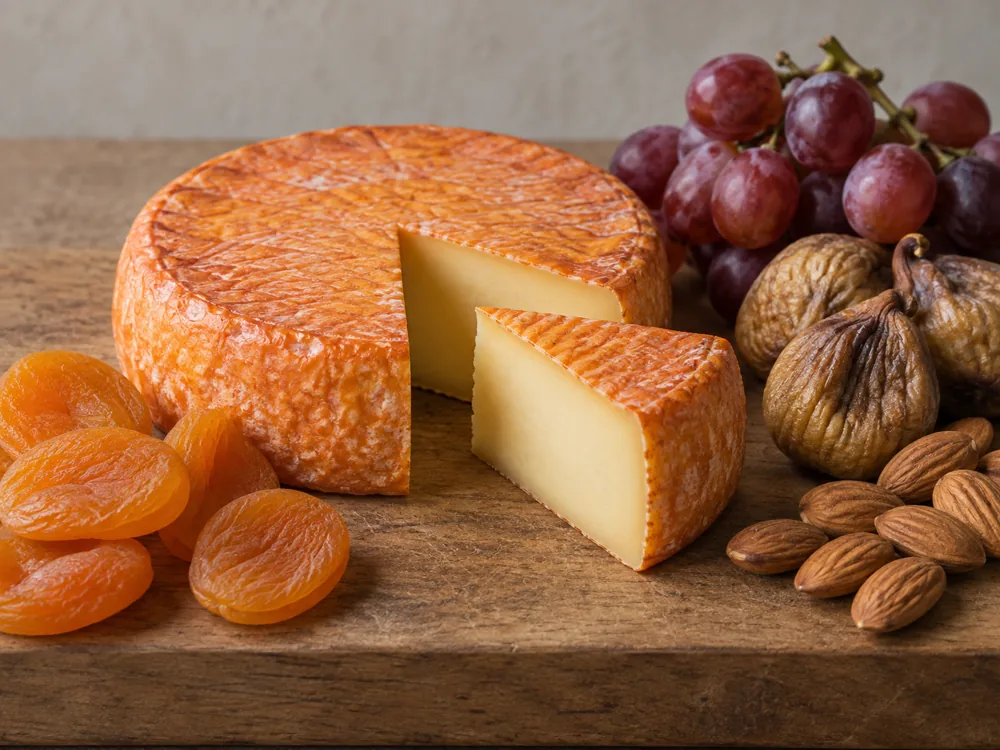
For fruit and nuts, the La Fromagerie sheet lists dried apricots or figs, fresh grapes and almonds, Épices Review adds fresh figs and fig mustard, and Supertoinette names apples. These sit close to the toasted nuts and dried fruit that the GFI listing finds in the cheese itself.
For wine, the La Fromagerie sheet suggests a solid red and Épices Review a bold red such as Bordeaux. Qui veut du fromage picks a red Bergerac or a sweet white Monbazillac, two wines it calls close neighbours of the dairy, which stands near Bergerac.
If you would rather drink beer, Épices Review suggests a bitter beer.
| Pairing | Why It Works |
|---|---|
| Wine | Solid red or Bordeaux, red Bergerac, sweet white Monbazillac |
| Beer | Bitter beer |
| Fruit | Dried apricots, dried or fresh figs, fresh grapes, apples |
| Extras | Almonds, crusty bread |
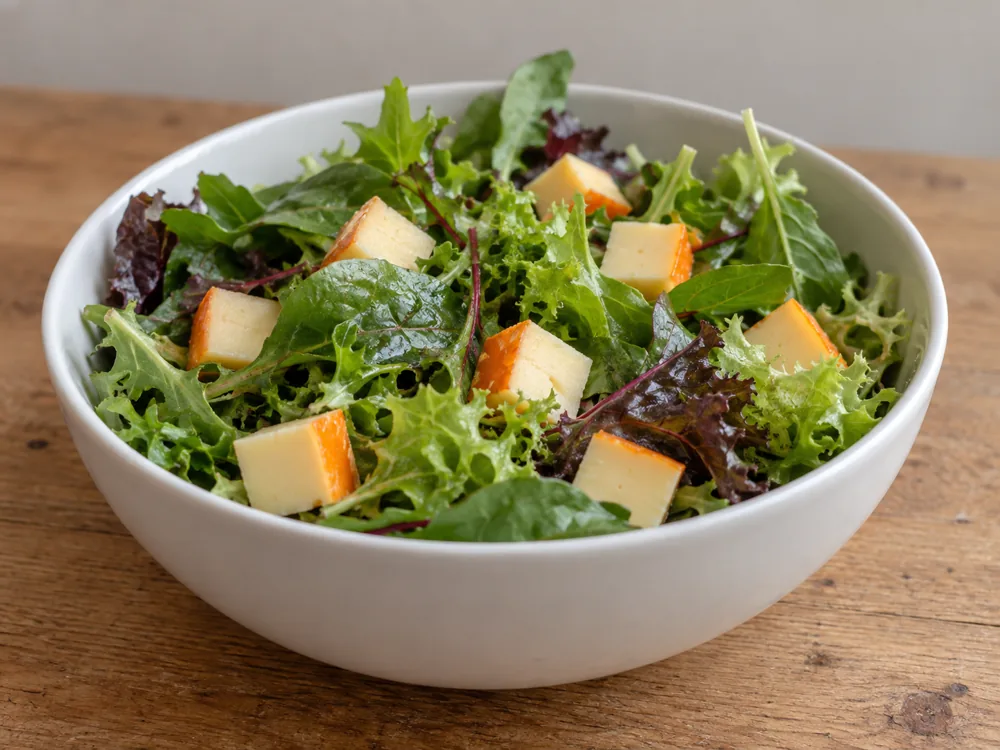
For a cold dish, Supertoinette puts Chaumes in a salad in pieces, for colour and taste, or in a sandwich in thin slices.
Does Chaumes Melt Well in Hot Dishes?
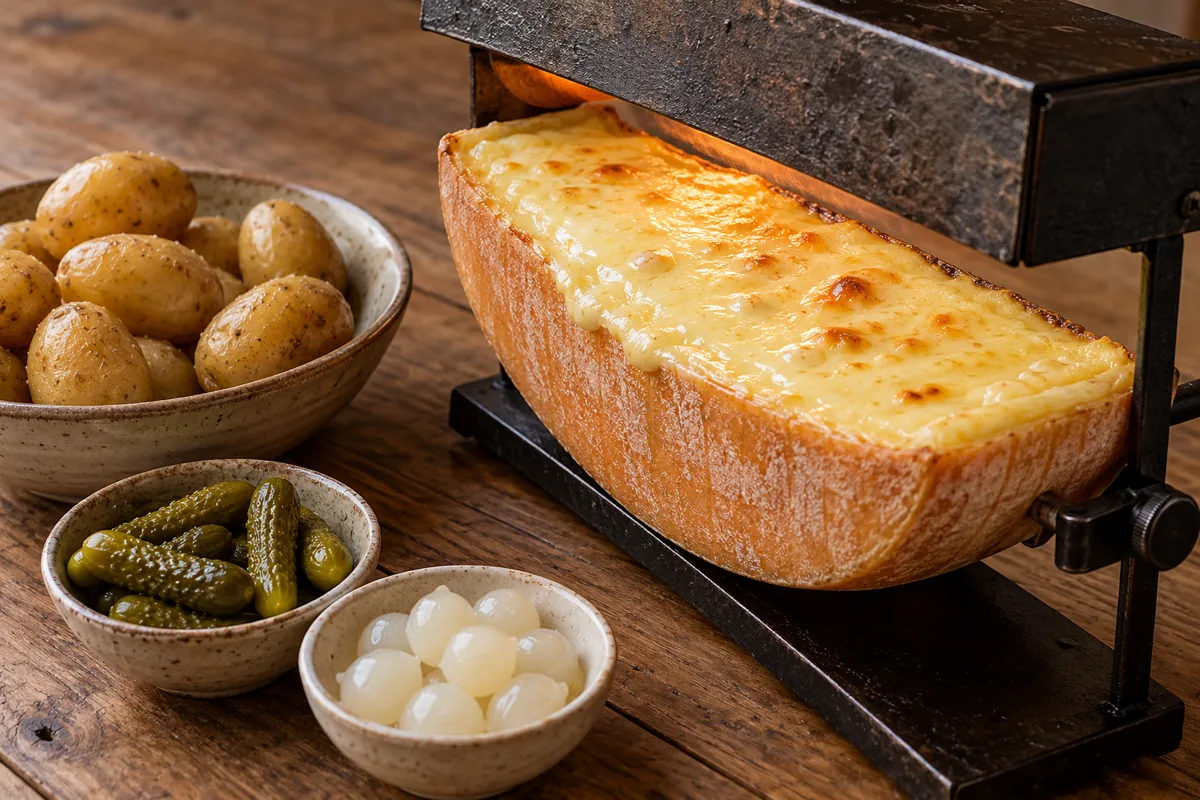
Yes: Chaumes melts well enough to work in hot dishes, and Cheese.com lists grilling among its uses.
Chaumes also comes in hot boxes (boîtes chaudes) that Qui veut du fromage calls ideal for warm recipes, and in that context it describes the cheese as melting and coating (fondant et nappant).
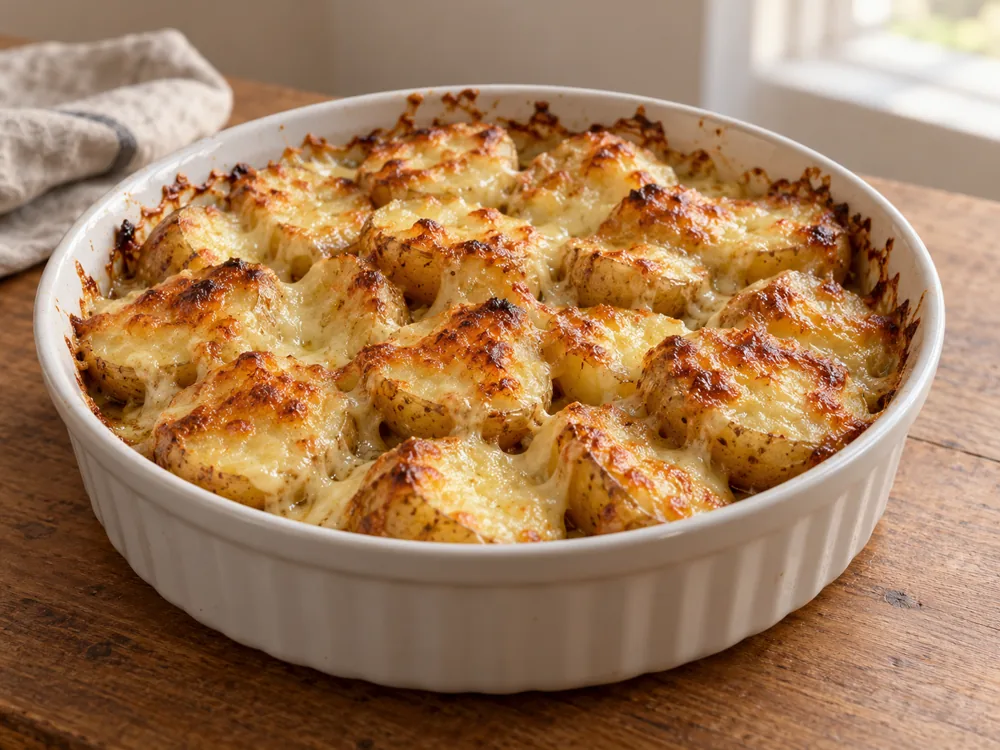
Qui veut du fromage puts it in everyday dishes such as potatoes in their skins, raclettes, gratins and salads. Supertoinette adds tartiflettes, gratins, creamy soups (veloutés), soufflés, stuffed potatoes or vegetables and mash.
| Use |
|---|
| Melt it over potatoes in their skins, a dish Qui veut du fromage names. |
| Bake it in a gratin or a tartiflette, as Qui veut du fromage and Supertoinette suggest. |
| Grill it, the use Cheese.com lists. |
| Add it to a salad or a soufflé, as Qui veut du fromage and Supertoinette suggest. |
How Does Chaumes Compare with Port-Salut?
Like Chaumes, Port-Salut is a pasteurized cow's milk cheese with an orange rind, made in discs of about 2 kg, the weight of a large Chaumes wheel. Both belong to the Trappist tradition.
| Detail | Chaumes | Port-Salut |
|---|---|---|
| Milk | Pasteurized cow | Pasteurized cow |
| Rind | Washed, golden to orange | Washed, orange |
| Ageing | About 4 weeks | Not stated; flavour grows the longer it is kept |
| Texture | Creamy, smooth, springy | Creamy, smooth |
| Flavour | Full-flavoured and nutty (mild and lactic per La Fromagerie) | Acidic, mellow, mild at first |
| Whole size | About 2 kg wheel | About 2 kg disc |
| Maker | A Savencia dairy at Saint-Antoine-de-Breuilh | Big factories, with handmade versions from monasteries |
They part on flavour: Cheese.com calls Port-Salut acidic and mellow, mild at first and stronger the longer it is kept, and gives Chaumes a full, nutty flavour and an ageing time of about four weeks. If you want Port-Salut mild, ask for a young piece.
Port-Salut takes its name from the abbey of Notre Dame du Port du Salut in Entrammes, and Trappist monks made it in the 19th century. Chaumes dates only from the early 1970s.
What Is in Chaumes, and Does It Contain Egg?
Both Chaumes ingredient lists name an egg-derived preservative, which matters if you avoid egg.
| Ingredient | As printed | Listed by |
|---|---|---|
| Milk and salt | Pasteurized milk, salt | Both: the Supertoinette product sheet and the GFI Foods US listing for Chaumes Véritable |
| Cultures and enzymes | Cheese cultures, enzymes | GFI Foods US listing |
| Egg-derived preservative | Preservative E1105 (egg white extract); egg white lysozyme (preservative) | Supertoinette; GFI Foods US listing |
| Colour | Rind colouring E160a; carotene (colour) | Supertoinette; GFI Foods US listing |
The GFI listing includes egg white lysozyme and Supertoinette lists E1105, an egg white extract, so egg can be present. Read the printed label on your own piece.
Cheese.com marks Chaumes as not vegetarian, and the US list names only "enzymes", so if you avoid animal rennet, ask the seller which enzymes your pack uses.
GFI's US listing gives these values for a 1 oz (28 g) serving. Supertoinette's average per 100 g is higher in energy and fat, at 345 kcal, 29 g fat and 19 g protein.
Scaled to 100 g, that serving works out to roughly 25 g of fat and 21 g of protein. That fat is in line with the 25% printed for the 2 kg Véritable cut and the 24% for the 250 g Crémier, while Supertoinette's 29 g is higher.
Cheese.com and Épices Review list 50% fat for Chaumes, which does not match fat as a share of the whole cheese, so compare versions by the figure on the pack itself.
Can You Eat Chaumes While Pregnant?
Chaumes is made from pasteurized milk and has a washed orange rind rather than a white coating. Served cold, pasteurized washed-rind cheese is a type the CDC lists do not cover, so for an uncooked slice, ask your midwife or doctor.
The NHS lists pasteurised soft cheeses such as cottage cheese, cream cheese, mozzarella and feta as safe, and says mould-ripened soft cheeses with a white coating and soft blue-veined cheeses, pasteurised or not, must be thoroughly cooked. It also says any cheese cooked until steaming hot is safe, soft cheese included.
The CDC lists pasteurized soft cheeses heated to an internal temperature of 165°F or until steaming hot as safer.
Which Chaumes Formats Can You Buy?
Chaumes is sold as Le Véritable in a 2 kg cut, Le Crémier at 250 g, Le Crémeux at 400 g and a 150 g sliced pack. In the US, GFI Foods lists a pack of two 4.4 lb wheels.
Chaumes began as a wheel cut to order at the counter, reached self-service in 200 g pieces in 1996 and came in slices in 2007.
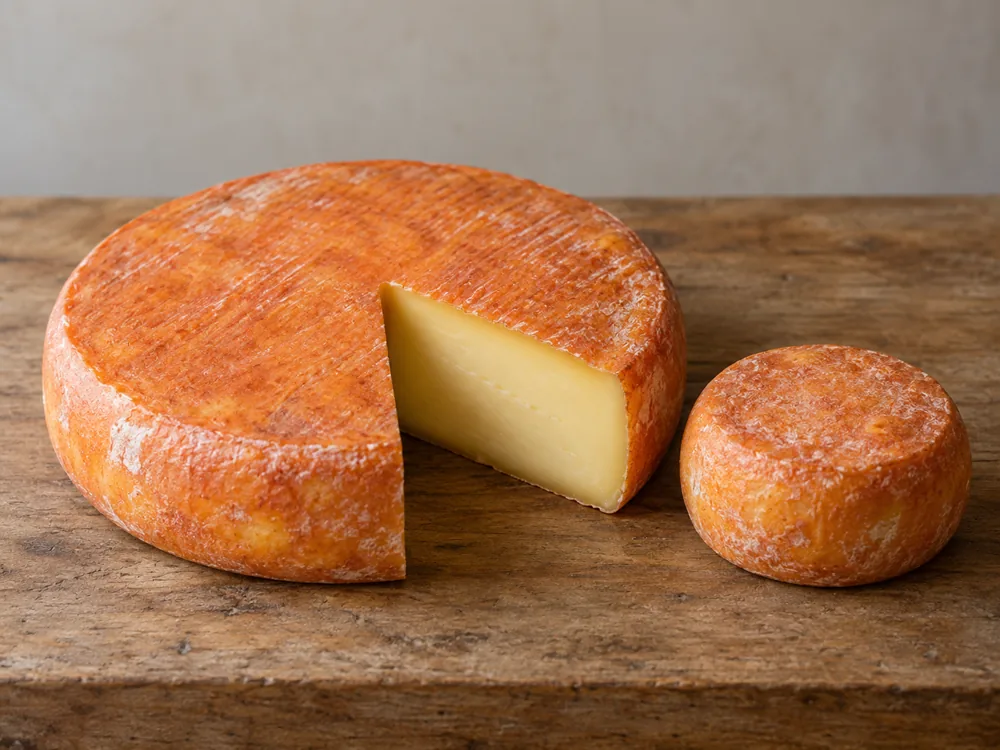
The large wheel is 20 to 23 cm across and about 2 kg in Épices Review's account, usually sold in pie-shaped pieces, while Supertoinette describes a flat cylinder about 24 cm across and 4 cm thick.
Smaller wheels of about 10 cm are sold whole, like Camembert, and a 200 g "Petit Chaumes" is also listed.
Crémier, Gourmelin, Crémoulin and Peyrigoux are among the products that grew out of Chaumes. At the 2026 Concours Général Agricole, Le Véritable won a silver medal and Le Crémeux a bronze.
Three things to compare on a Chaumes pack are the weight, the fat percentage (25% on the Véritable cut, 24% on the Crémier) and the words croûte comestible, which the 150 g sliced pack carries in its name.
How Should You Store Chaumes?
The CDC says to keep a refrigerator at 40°F (4°C) or below, and Supertoinette recommends an airtight box for Chaumes because the smell is fairly strong.
The CDC also lists dairy among the perishable foods to refrigerate within 2 hours, or within 1 hour above 90°F, so a piece served on a board belongs back in the refrigerator within that window.
SOURCES & REFERENCES
What Other Questions Come Up About Chaumes?
Chaumes is a Savencia brand of soft, washed-rind cheese made from pasteurized cow's milk at Saint-Antoine-de-Breuilh in the Dordogne.
Descriptions disagree. The La Fromagerie sheet calls it mild and lactic, while Cheese.com lists a strong aroma and a full flavour.
The Chaumes 150 g sliced pack is sold as having an edible rind, and Épices Review says the rind can be eaten with the cheese. Check the label on a wheel or wedge.
Yes, it melts well enough for hot dishes, and Cheese.com lists grilling as a use.
Yes. Chaumes is made from pasteurized cow's milk.
It can. A US distributor lists egg white lysozyme and Supertoinette lists E1105 (egg white extract), so read your own label.