Dauphin is the name of two different French cow's milk cheeses, and the word alone does not tell you which one is on the plate.
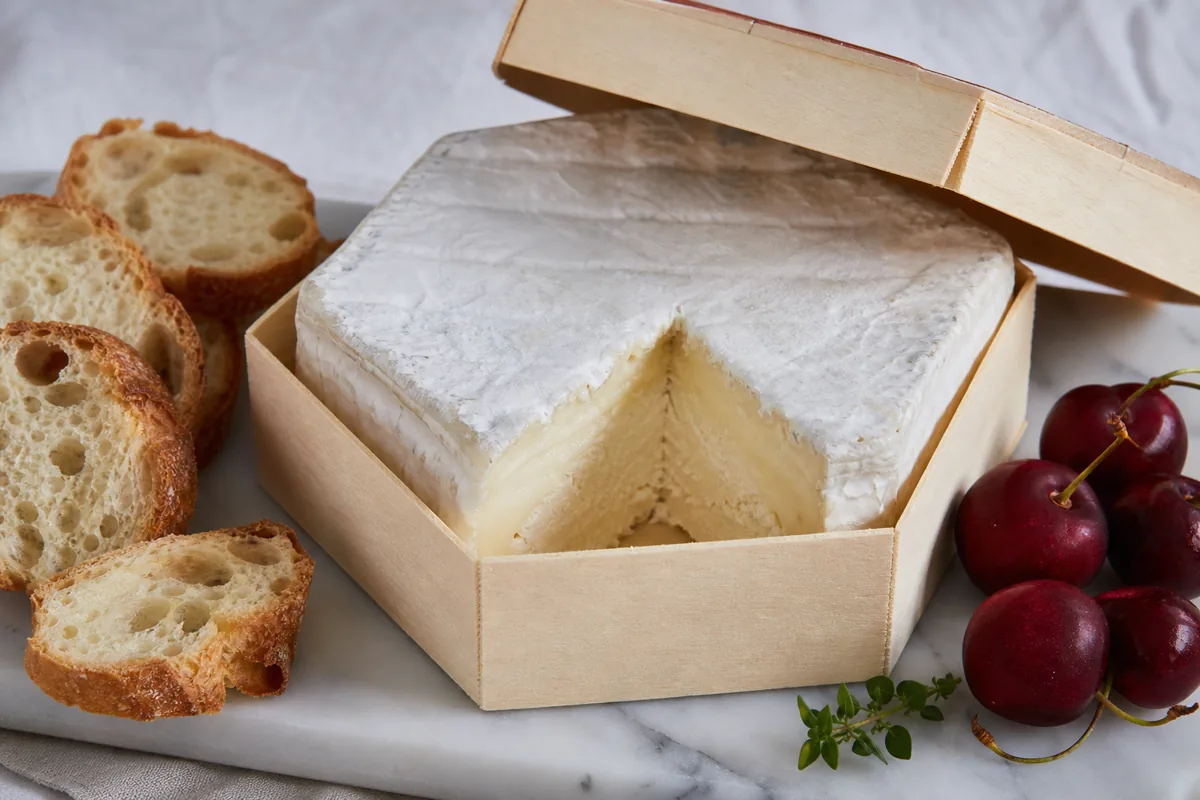
One is Le Dauphin, a soft-ripened double cream with a white bloomy rind that is sold in a lidded wooden box under Will Studd's name. The other is a washed-rind cheese from the Maroilles family in northern France, flavoured with tarragon and pepper.
In This Article
What Is Dauphin Cheese?
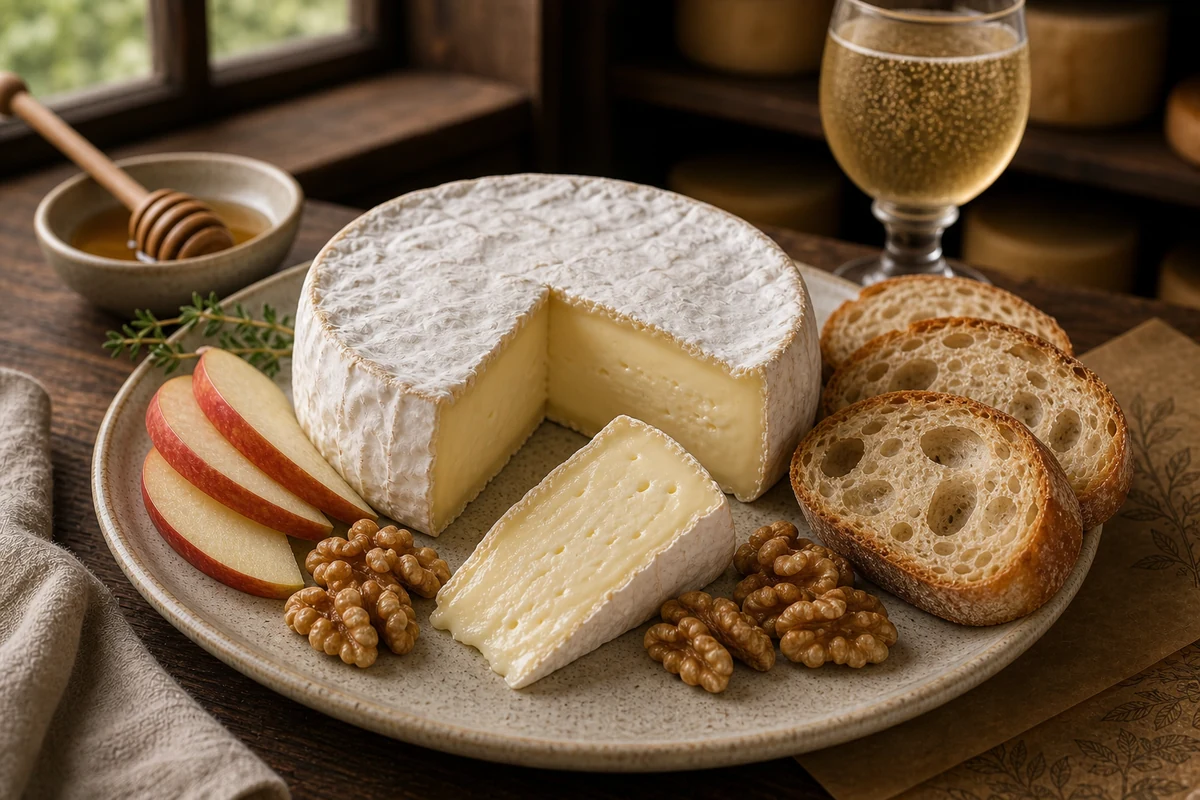
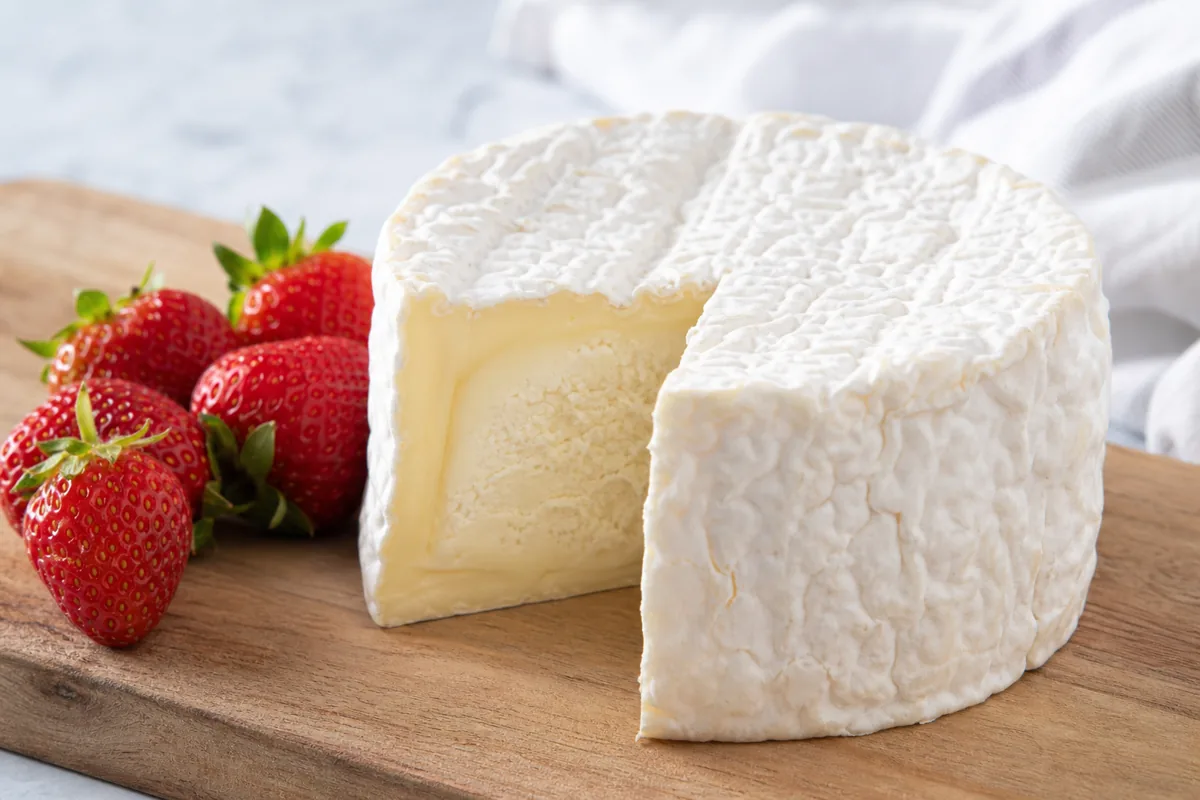
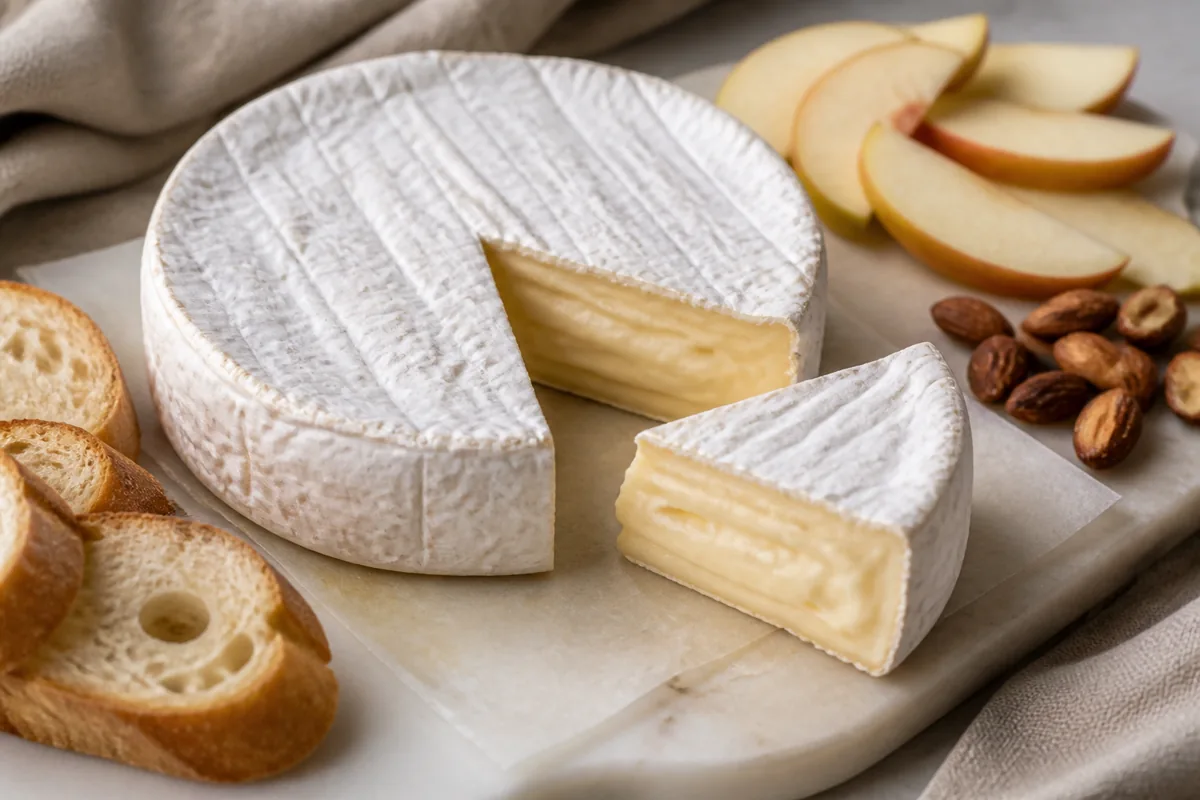
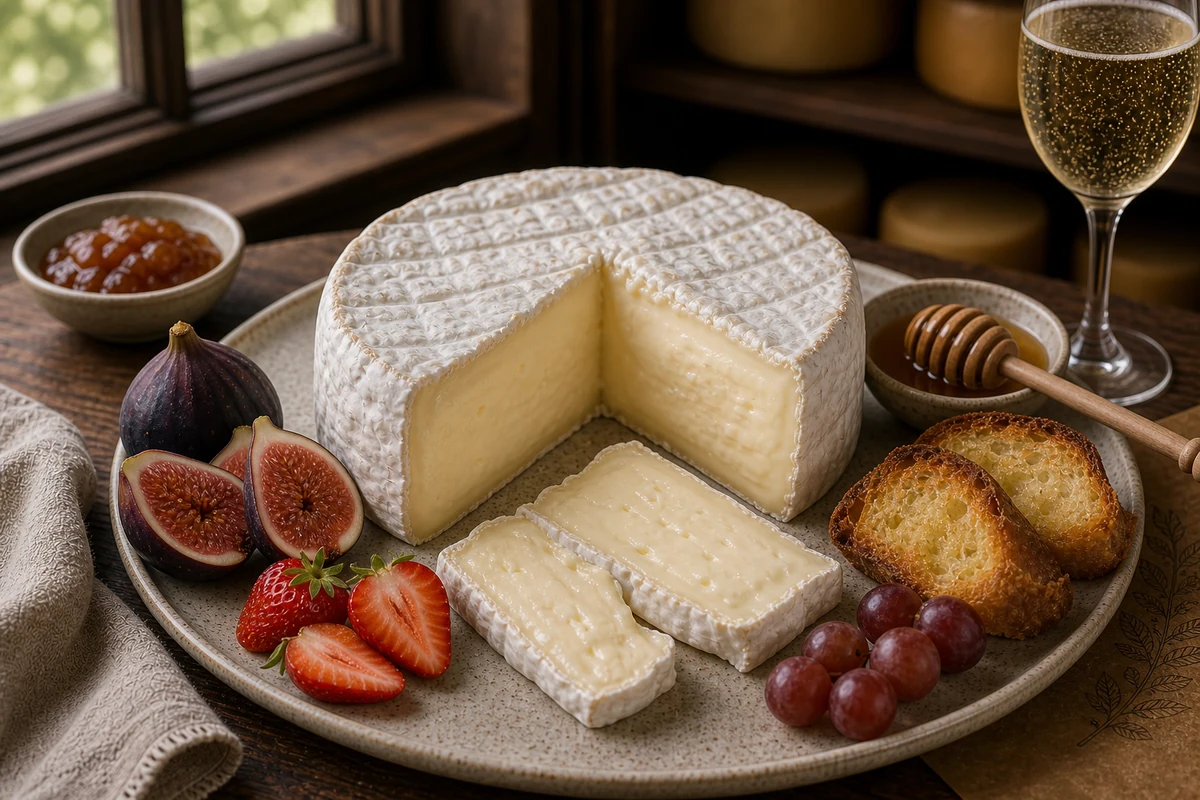
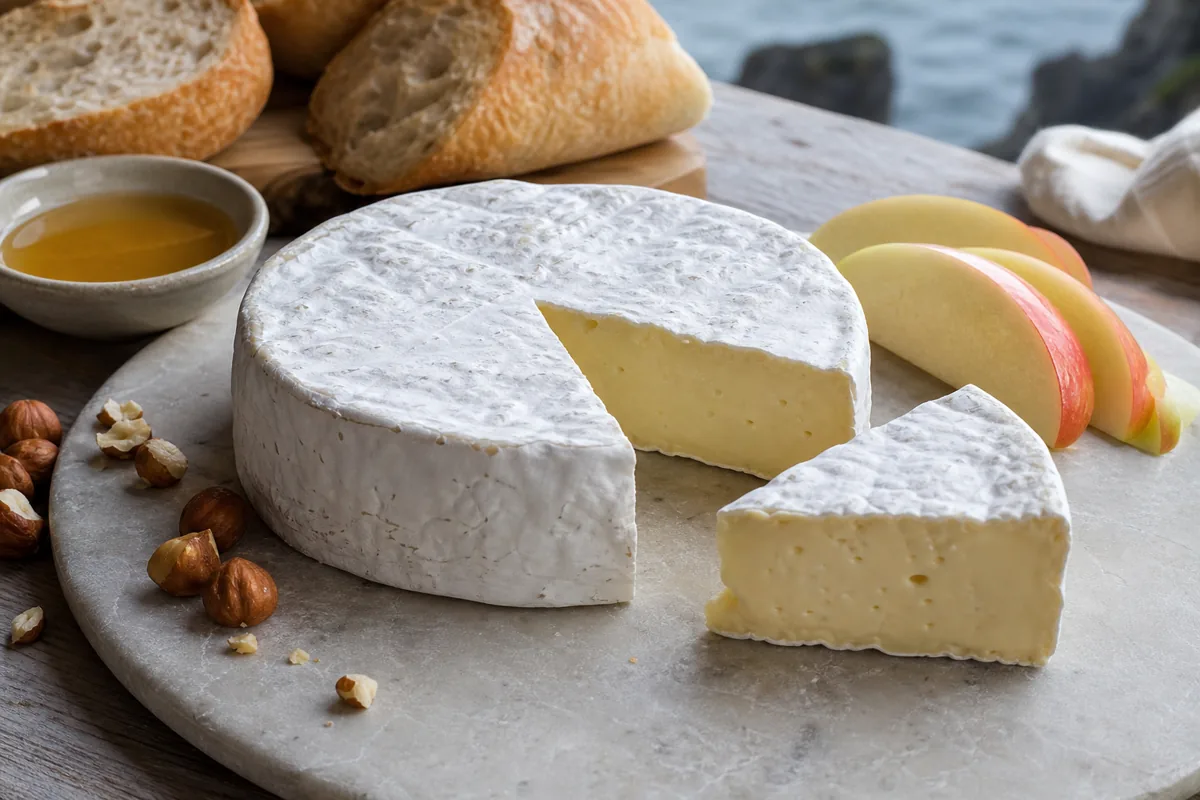
The boxed Le Dauphin is a soft double-cream cheese with a white mould rind, made from pasteurized cow's milk, and Will Studd calls it soft-ripened, with added cream.
The older Dauphin is a soft washed-rind cheese tied to the Maroilles family of northern France, with herbs and pepper in the paste.
| Attribute | Le Dauphin (boxed) | Dauphin (Maroilles family) |
|---|---|---|
| Rind | White bloomy rind | Washed rind that turns orange |
| Shape | Hexagon in a lidded wooden box | Rectangular block, or dolphin-shaped |
| Milk | Cow's milk with added cream; pasteurized per Cheese.com | Cow's milk; raw, thermised or pasteurised per Le Guide du Fromage |
| Flavour | Creamy and lactic | Tarragon and pepper in the paste |
| Ripening | 3 to 4 weeks | 2 to 4 months, by account |
| Region | Bourgogne on one Will Studd page, Rhône Valley on another | Thiérache and Avesnois, or a wider Hauts-de-France zone |
How Is Le Dauphin Made and Ripened?
Will Studd's Extra Crémeux page describes Le Dauphin as hand-made from local cow's milk and added cream, with the milk curdled by an overnight lactic fermentation that dates back to monastic times.
The wooden box you buy it in is part of the ripening in Will Studd's account. The lidded box and wax-paper wrap create the conditions in which selected surface moulds ripen a fine, chalky interior over 3 to 4 weeks, and the box protects the cheese and sets up a small environment for maturation.
Cheese.com describes the same box and wax paper as preserving the cheese's freshness and quality, and it lists Will Studd Enterprizes Pty Ltd as the producer.
Le Dauphin is made to Will Studd's order, but where is less settled. The Extra Crémeux page has it produced in Bourgogne for Will, while the Double-Crème page names milk from mountain pastures around the Rhône Valley and says it was specially created for Will with modern techniques and a careful selection of traditional surface moulds.
The label on the box you buy is where to check the place of making and the milk treatment.
How Does Le Dauphin Taste and When Is It Ready?
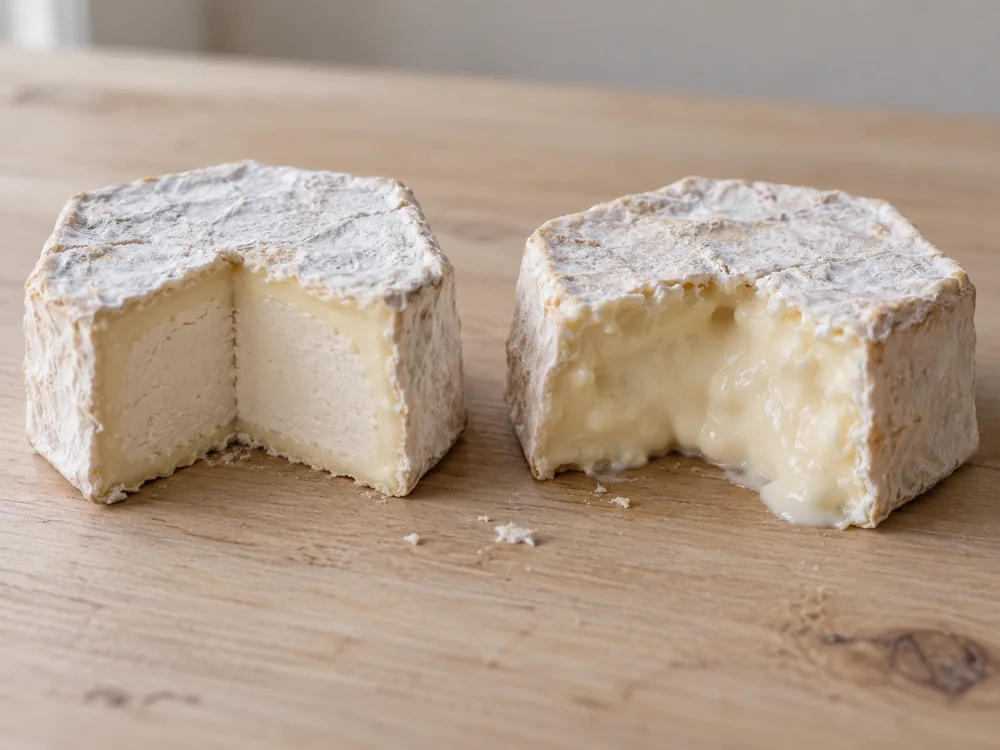
Will Studd and Cheese.com both describe a creamy, lactic cheese. Studd gives a ripe centre that is soft and unctuous, with a distinctive creamy lactic finish, and Cheese.com a buttery, creamy flavour, a mild lactic aroma and a mild taste with a slight tang.
Cheese.com calls the texture creamy, soft and spreadable, and says the flavour deepens and intensifies as the cheese ripens.
Will Studd's advice is that it is ideally eaten at room temperature close to its use-by date, when the centre has broken down. The Double-Crème page asks for it fully ripened, exceptionally soft, silky and creamy.
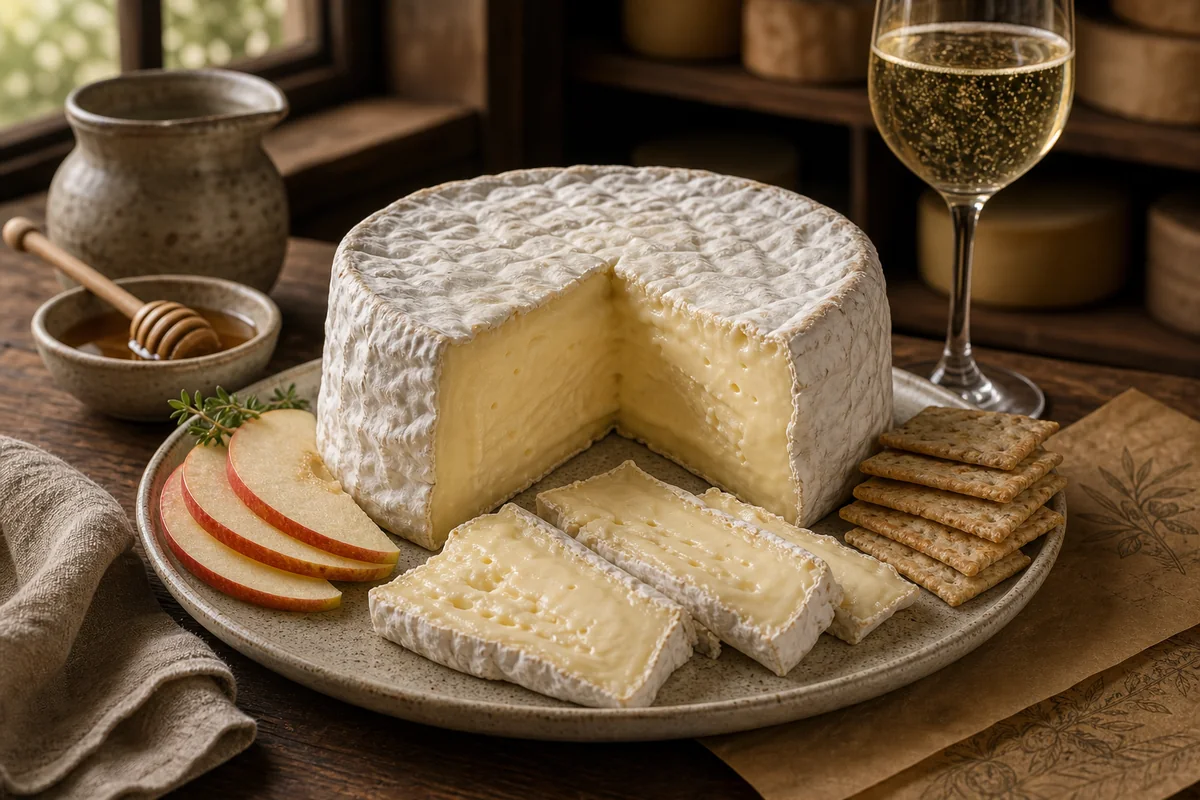
To serve it, Will Studd's Double-Crème page links to Le Dauphin Extra Crémeux as a perfect Champagne partner, and Harris Farm Markets' listing for its 200 g Le Dauphin Double Crème recommends it for a cheese board or a dish.
Studd's Extra Crémeux page also lists Brillat Savarin as a related cheese, which it calls soft, rich and creamy and an ideal match for berries, honey and champagne.
What Goes into the Maroilles-Family Dauphin?
Accounts of the older Dauphin differ on when the herbs go in. French Wikipedia and Le Guide du Fromage start from fresh Maroilles, while English Wikipedia and Produits-Laitiers.com add them at the curd.
In French Wikipedia's method, producers take the Maroilles paste barely out of the mould and mix and knead it quickly with tarragon, pepper and sometimes cloves. Le Guide du Fromage names white Maroilles as the base, with tarragon, parsley, pepper, paprika and clove.
In English Wikipedia's account, black pepper and tarragon go into the milk curd before moulding, and in Produits-Laitiers.com's, the tarragon is caught as the milk curdles.
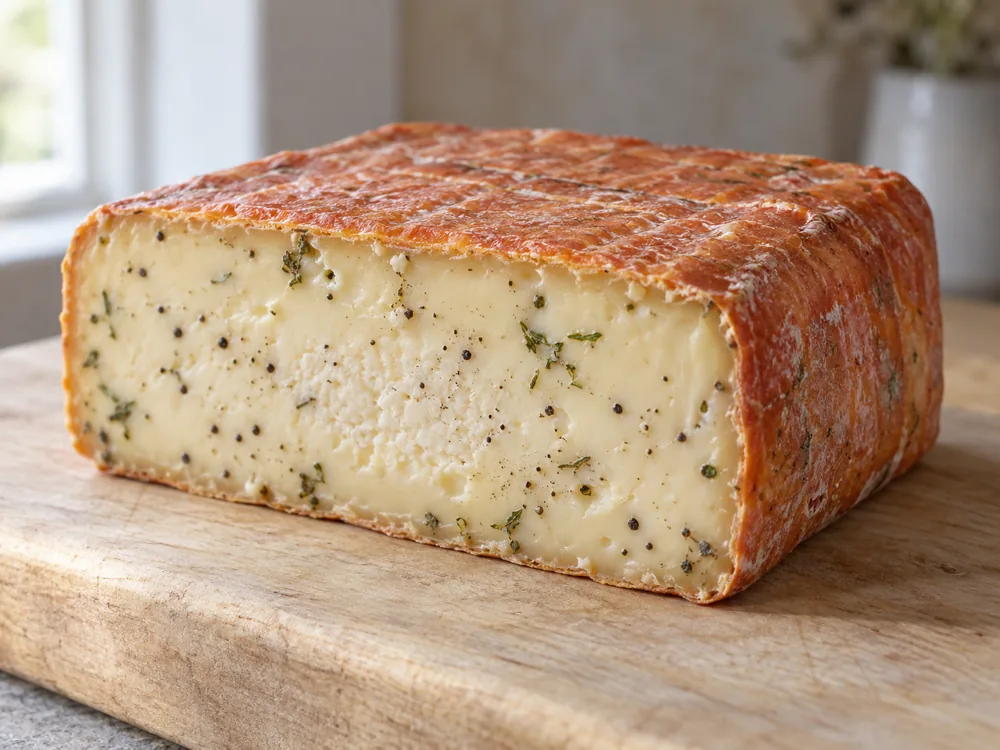
Le Guide du Fromage says the Maroilles-family recipe is not protected, so producers choose their own herbs and quantities.
Le Guide du Fromage describes the paste as ivory and decorated with visible herbs and spices, fairly supple and chalky at the centre, under a smooth rind that runs from orange to brick-red.
Its ingredients are cow's milk, lactic ferments, rennet, salt, herbs, spices and sometimes annatto, and the herb and spice flavours infuse and spread through the paste over the whole ripening.
In French Wikipedia's account the cheese rests in a cellar for 2 to 3 months while its rind is washed with salt water, which browns it before it turns orange. Le Guide du Fromage puts the orange to brick colour down to paprika or annatto, with annatto sometimes added to the wash water.
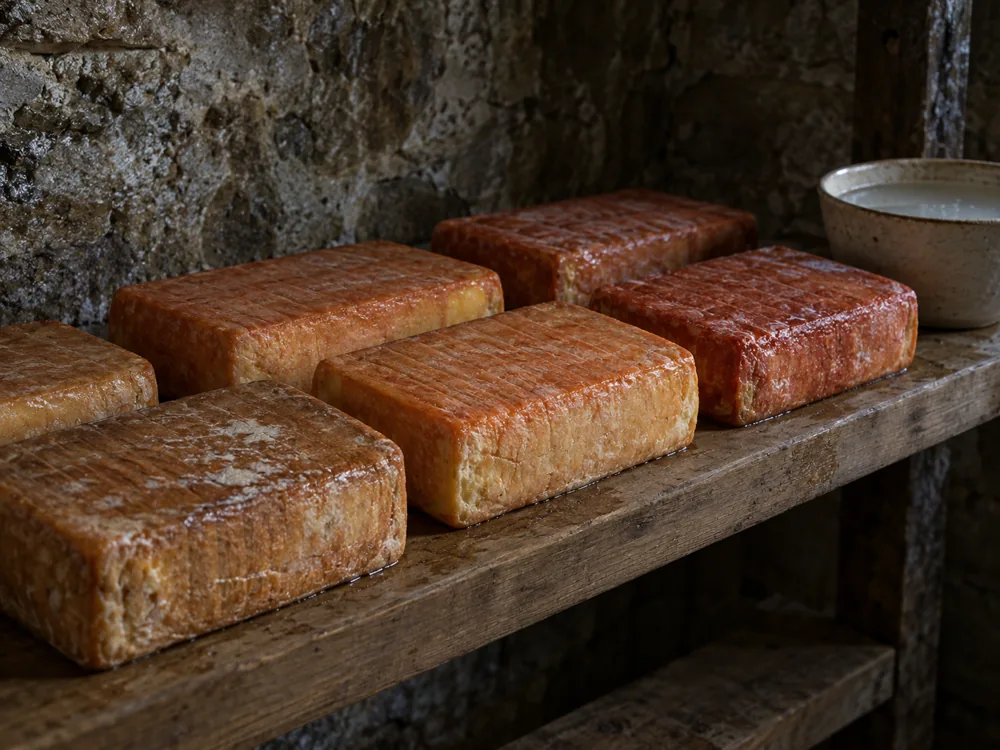
With the colour put down to the salt-water wash by French Wikipedia and to paprika or annatto by Le Guide du Fromage, ask the seller how long a slab has ripened rather than judging it by the shade of the rind.
| Question | Value or range | Given by |
|---|---|---|
| Weight | 180 g to 500 g | Le Guide du Fromage (180 to 320 g); Produits-Laitiers.com (180 to 400 g); English Wikipedia, for the baguette laonnaise (500 g) |
| Size | 12 to 16 cm long and 3 to 4 cm thick, or about 15 cm long with a 6 cm square section | Produits-Laitiers.com (12 cm industrial, 16 cm farmhouse (fermier), 3 to 4 cm thick); English Wikipedia, for the baguette laonnaise (about 15 cm, 6 cm square section) |
| Fat | 28% (27.25 g per 100 g) or 45% | Le Guide du Fromage (28%, 27.25 g per 100 g); Produits-Laitiers.com (45% MG); English Wikipedia (45%) |
| Ripening | 2 to 3 months, 3 to 4 months, or a minimum of 2 to 4 months | French Wikipedia (2 to 3 months); English Wikipedia (3 to 4 months); Le Guide du Fromage (2 to 4 months minimum) |
| Herbs and spices | Tarragon and pepper in every account; parsley, paprika or cloves in some | French Wikipedia (tarragon, pepper, sometimes cloves); Le Guide du Fromage (tarragon, parsley, pepper, paprika, clove); Produits-Laitiers.com (tarragon, parsley, pepper); English Wikipedia (black pepper, tarragon) |
| Per 100 g | 319 kcal, 21 g protein, 1.97 g salt, 17.84 g saturated fat | Le Guide du Fromage |
Fat is given as 28% by Le Guide du Fromage and as 45% by Produits-Laitiers.com and English Wikipedia. Le Guide du Fromage states its figure as 27.25 g per 100 g of cheese, so it is the one to set beside a per-100 g fat line on a pack.
Is Dauphin the Same as Baguette Laonnaise or Losange?
For the Maroilles-family cheese, yes: dauphin, baguette laonnoise, baguette de Thiérache and losange are names for one Maroilles-family cheese, and the baguette laonnaise also goes by losange, dauphin and baguette Thiérache.
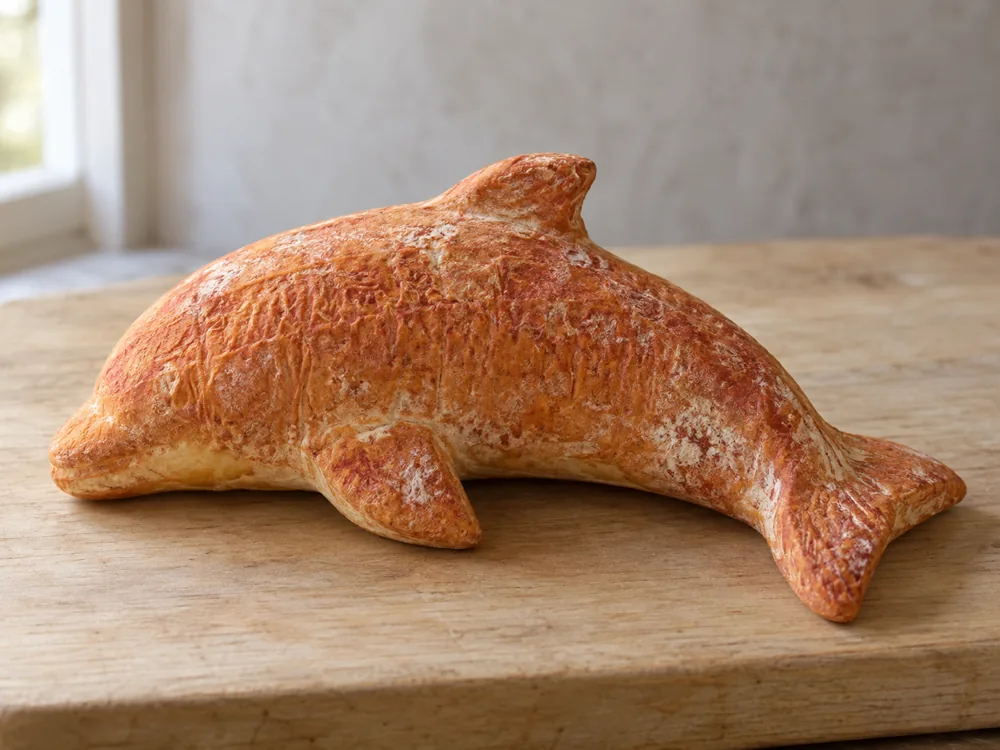
The names follow the shapes. The baguette name comes from a rectangular loaf, dauphin is French for dolphin, and losange is French for diamond.
Le Guide du Fromage and Produits-Laitiers.com describe the cheese as a rectangular slab (pavé) or a dolphin, and Produits-Laitiers.com gives it a thickness of 3 to 4 cm and a length that depends on the maker: 16 cm for a farmhouse (fermier) cheese, against 12 cm for an industrial one.
The dolphin form came from wooden moulds and declined as hygiene standards were imposed and no matching metal moulds existed. French Wikipedia says farms today mostly use square, rectangular or diamond forms for cost, and often only industrial makers can afford to have metal dolphin moulds made.
The area differs by account. English Wikipedia ties the baguette to the city of Laon as well as Thiérache, French Wikipedia places it in the historic Thiérache (Avesnois) area of the Nord and Aisne, and Le Guide du Fromage lists a wider Hauts-de-France zone that adds the Oise, Pas-de-Calais and Somme.
How Does the Maroilles-Family Dauphin Smell and Taste?
Le Guide du Fromage gives it a powerful, fairly penetrating and slightly ammonia-scented aroma and a distinctive, flavoured taste, and says the strength in the mouth varies with the ripening stage. Produits-Laitiers.com adds that the tarragon gives the cheese a pleasant note.
English Wikipedia says a long stay in the fridge can dry the rind of the baguette form, turn the taste sour and leave an unpleasant bitter aftertaste.
Le Guide du Fromage names Maroilles, Boulette d'Avesnes, Boulette de Papleux and Le Rouchi with shallots as cheeses a Dauphin lover will probably like.
Where Does the Name Dauphin Come From?
Le Dauphin takes its name from the title of the heir to the French throne, and each story told about the older cheese also involves a dauphin.
French Wikipedia's first story has King Charles VII freeing Maroilles carters from a toll in 1400 under the "Droits du Dauphin", after which a dolphin-shaped cheese was made in thanks.
Le Guide du Fromage tells the same toll story with Charles VI as the king and a March 1400 text, and adds that carts from Hainaut passing through Cambrai paid one denier for the prince, a charge the Maroilles carters were spared.
In French Wikipedia's second story, Maroilles monks made a milder cheese with herbs and spices for a visit by the dauphin, then a child, in the 17th century, and English Wikipedia names him as the son of Louis XIV.
Le Guide du Fromage and Produits-Laitiers.com tell a third version: the cheese was offered to the party of Louis XIV when he came to take possession of Hainaut, and his son the dauphin liked it so much that it took his name.
English Wikipedia also cites a source that dates the cheese to about 1930, so the dates on offer run from 1400 through the 17th century to about 1930.
Is Dauphin Cheese Safe During Pregnancy?
Le Dauphin is a soft cheese ripened by surface moulds under a white mould rind, and the NHS says pasteurised or unpasteurised mould-ripened soft cheeses with a white coating on the outside, such as brie, camembert and chèvre, must be thoroughly cooked.
That line says "pasteurised or unpasteurised", so the pasteurized milk listed for Le Dauphin does not change it. The NHS lists any cheese that's been cooked until steaming hot, including soft or blue cheese, as safe to eat.
The Maroilles-family Dauphin is a soft washed-rind cheese that can be made from raw, thermised or pasteurised milk. The NHS lists pasteurised soft cheeses as safe to eat and says any foods made from unpasteurised milk, which includes a raw or thermised Maroilles-family Dauphin, must be thoroughly cooked, so check the label of your piece for the milk.
The CDC lists unpasteurized (raw) milk and dairy products made from raw milk, and soft cheese made from unpasteurized (raw) milk, as riskier choices, and pasteurized soft cheeses heated to an internal temperature of 165°F or until steaming hot as safer. It also says pregnant women are 10 times more likely to get a Listeria infection.
Served cold, Le Dauphin is described as a pasteurized soft, soft-ripened and spreadable cheese with a chalky interior, and a pasteurized Maroilles-family Dauphin as a soft washed-rind cheese with a supple paste that is chalky at the centre, types the CDC list does not cover, so ask a midwife or doctor.
The CDC's riskier rows for unpasteurized (raw) milk cover a raw or thermised Maroilles-family Dauphin. Its heated safer line names pasteurized soft cheeses only, so if you follow US advice, ask a midwife or doctor about such a piece even when it is cooked.
How Do You Tell the Two Dauphin Cheeses Apart?
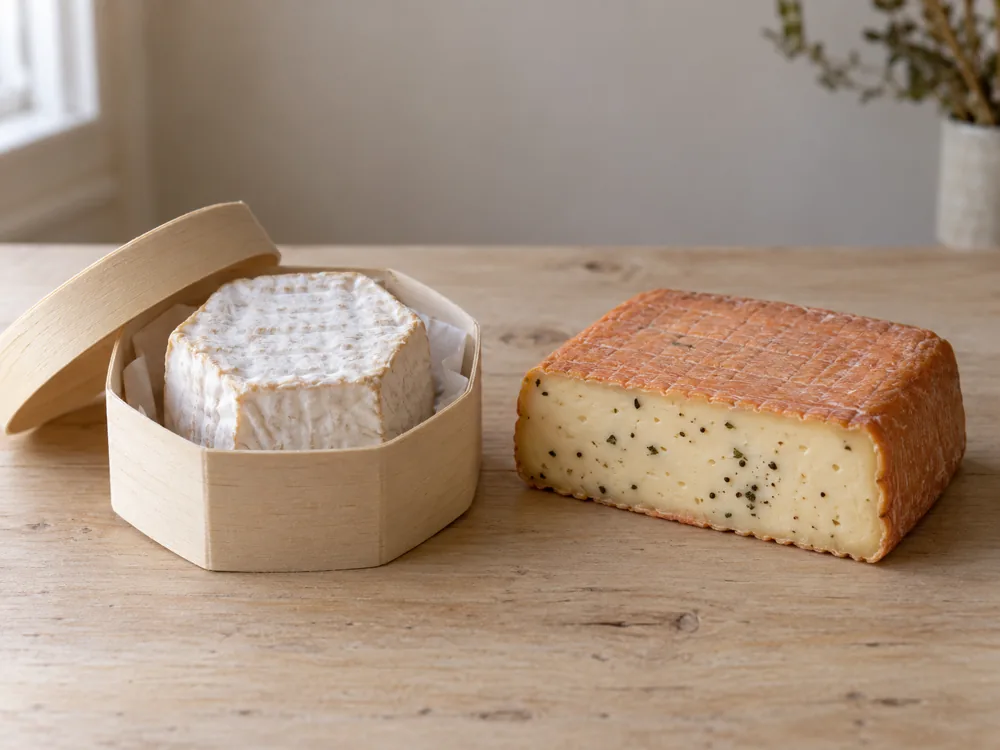
At the counter, the shape and the rind tell them apart. A white-rind hexagon in a lidded wooden box is Le Dauphin, and an orange-rind slab, loaf or dolphin with herbs in the paste is the Maroilles-family cheese.
In Australia, Harris Farm Markets, a grocer, lists Le Dauphin, and Studd's pages carry an AU Stockists link.
Trust the shape you see over a listing's wording. Harris Farm calls its 200 g Le Dauphin Double Crème a wheel, although Cheese.com and Studd describe a hexagon.
SOURCES & REFERENCES
What Else Do People Ask About Dauphin Cheese?
No. Le Dauphin has a white mould rind like mould-ripened brie, but it is a hexagonal double cream made with added cream and sold in a lidded wooden box.
The older Dauphin is: French Wikipedia describes it as tied to the Maroilles family and says it is made from fresh Maroilles paste with tarragon and pepper.
The Maroilles-family cheese is: baguette laonnaise, losange and baguette de Thiérache are other names for it, names that follow the mould shape.
Le Dauphin takes its name from the title of the heir to the French throne. The Maroilles-family stories also involve a dauphin but disagree on the king, the century and the date.
Le Dauphin ripens over 3 to 4 weeks. French Wikipedia gives 2 to 3 months for the Maroilles-family cheese, English Wikipedia gives 3 to 4 months and Le Guide du Fromage gives a minimum of 2 to 4 months.