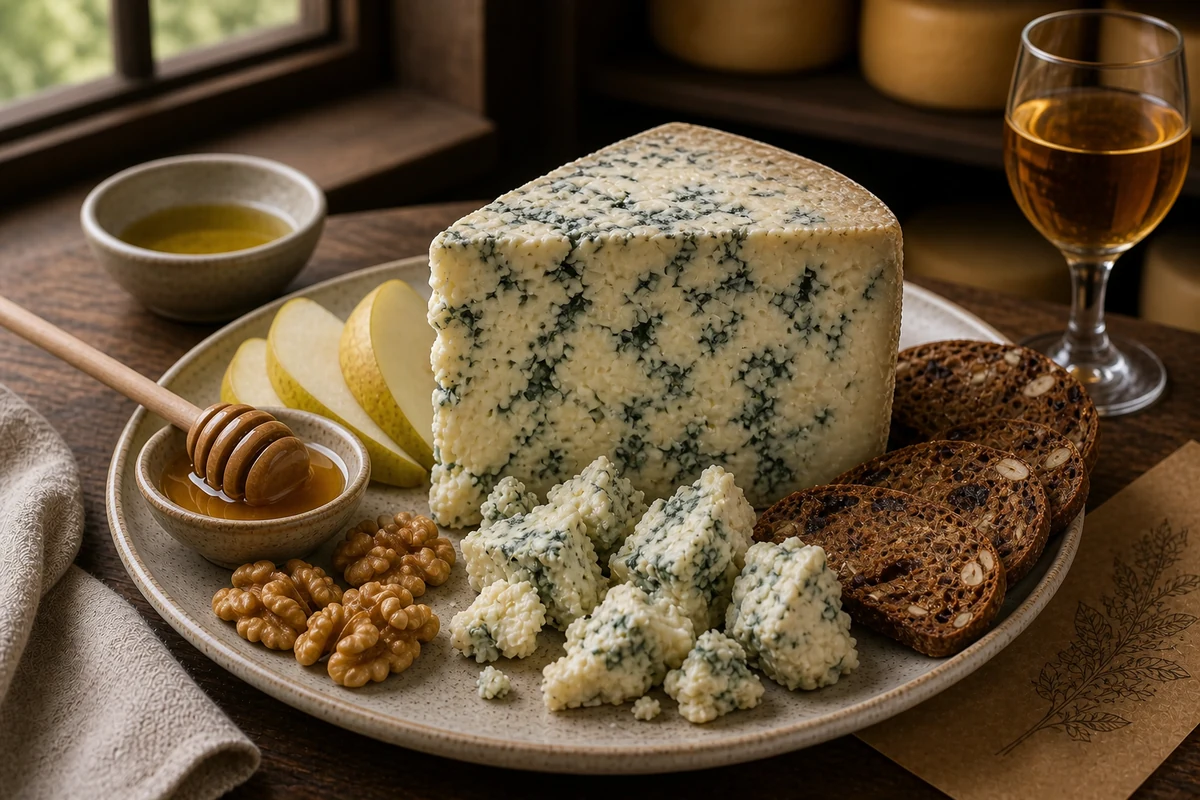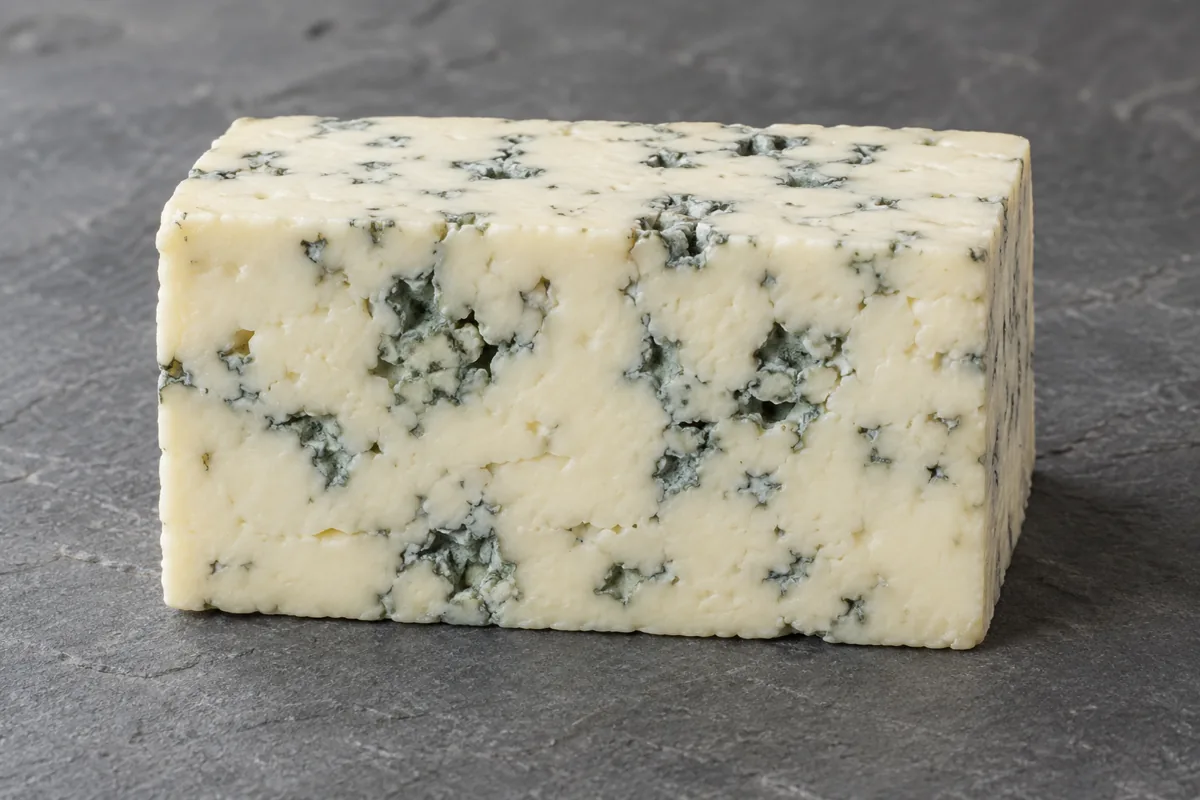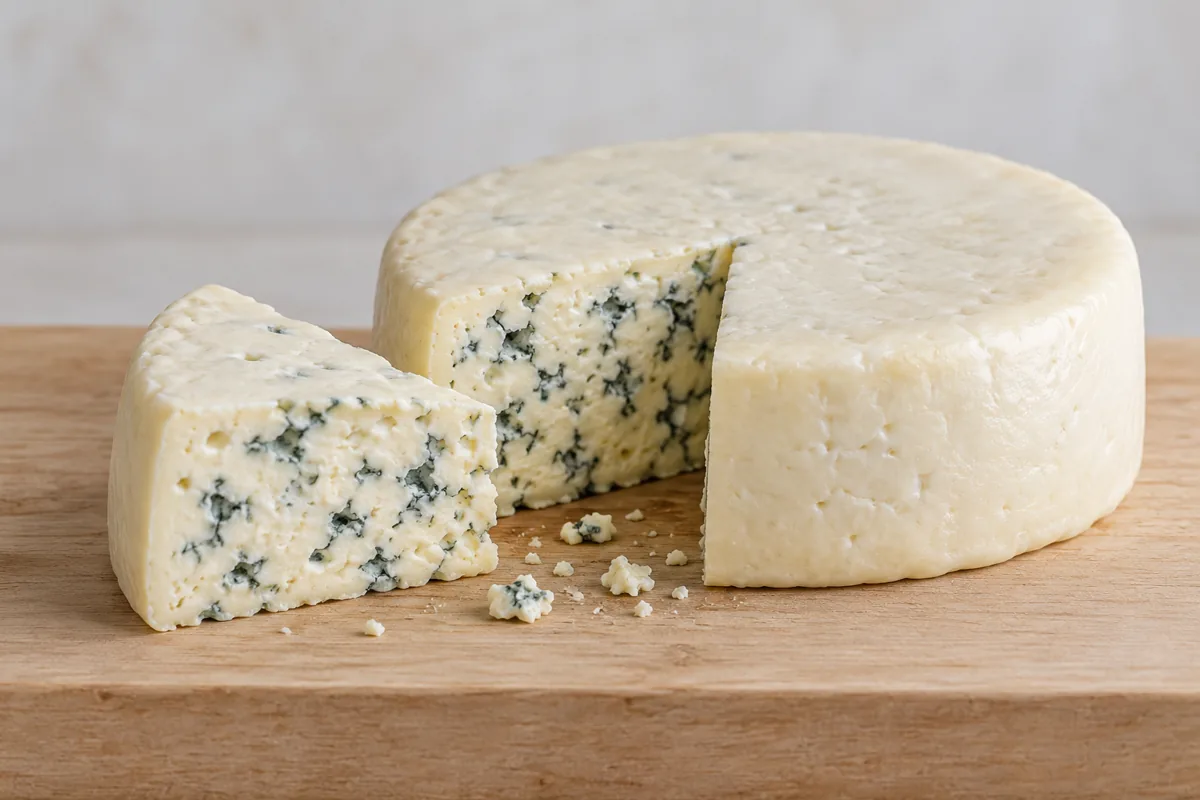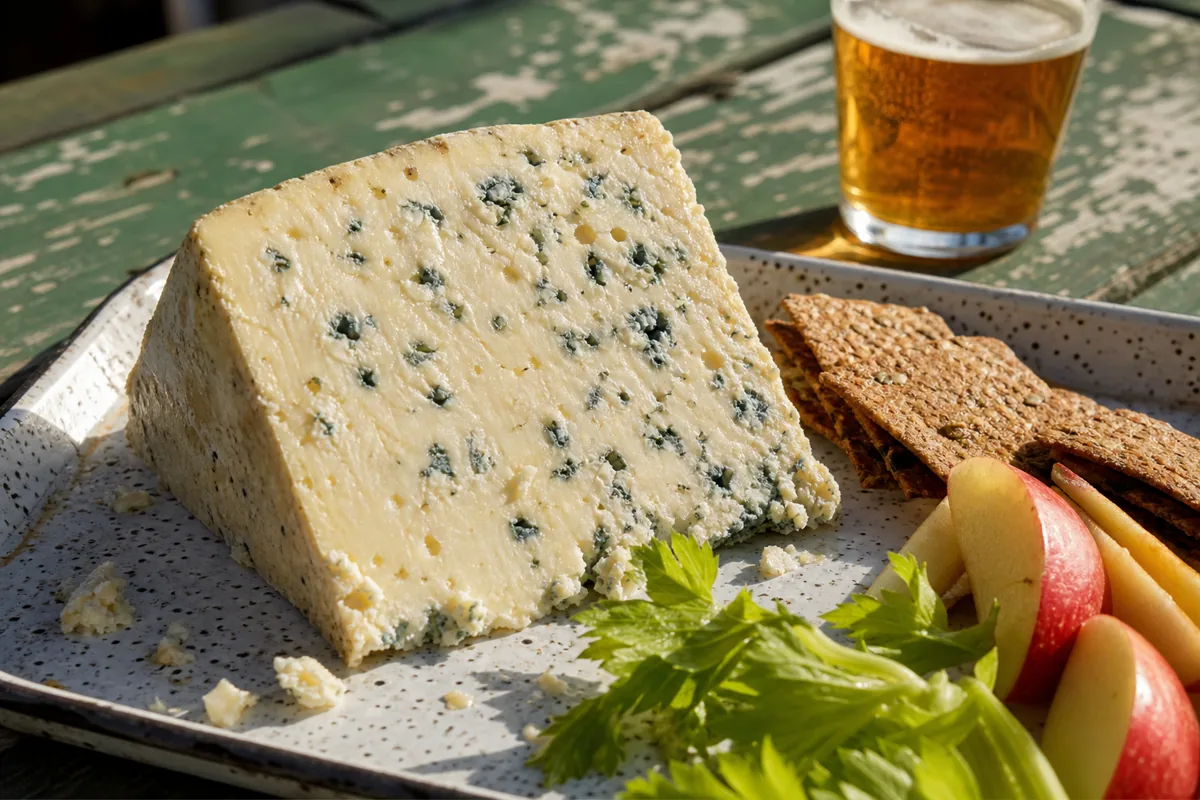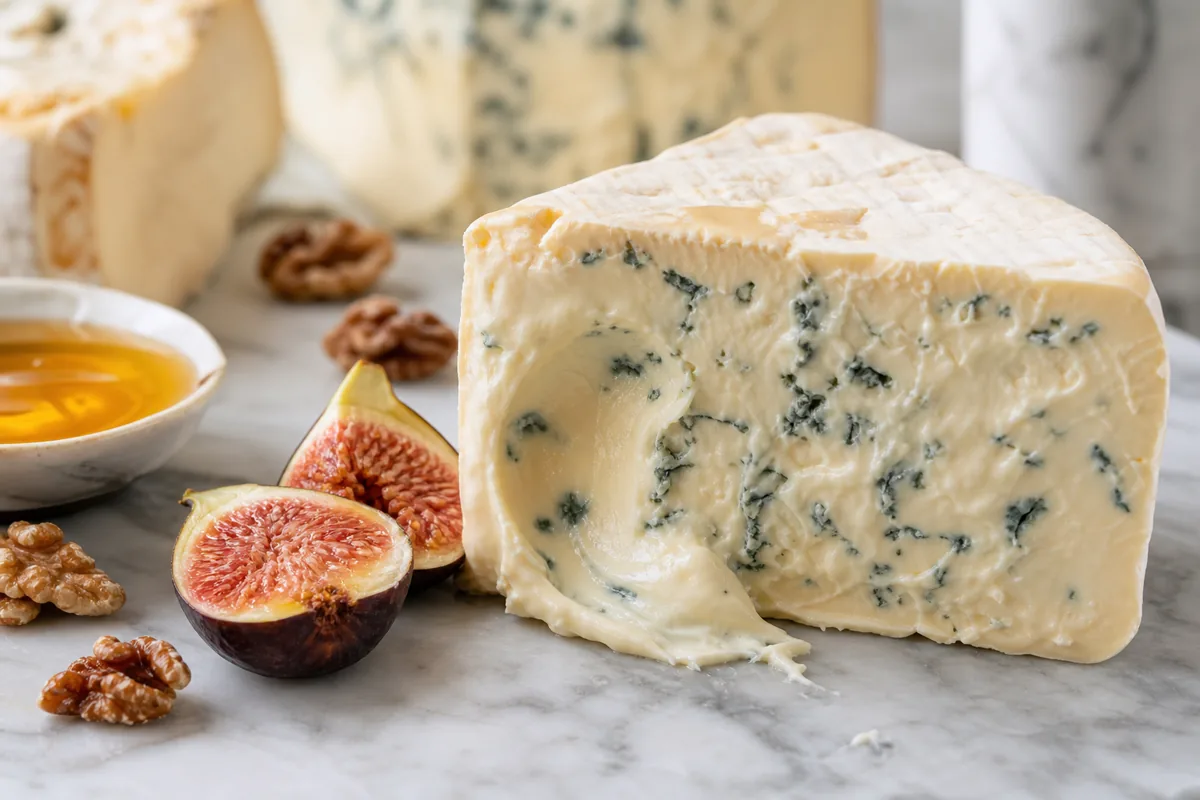
Dolcelatte is a soft, blue-veined Italian cheese made from pasteurized cow's milk, and Galbani sells it as a milder alternative to powerful blue cheeses.
It is mild and sweet in most descriptions, while its firmness, its age and whether it is vegetarian vary, so the pack in your hand answers more than the name does.
In This Article
What Is Dolcelatte Cheese?
Dolcelatte means "sweet milk" in Italian.
The brand dates to 1967, going by Galbani's own April 2007 press release headed "Buon 40th Compleanno!". CooksInfo mentions a story that Galbani made Dolcelatte milder for the British market and calls it "implausible, or someone at Galbani was misinformed", since British palates were used to Stilton, a robust blue.
Dolcelatte is made in the Pavia region of Lombardy by Galbani, which is owned by Groupe Lactalis.
Its milk is pasteurized cow's milk according to Cheese.com and Cheese Etc, a UK cheese shop.
CooksInfo says one Galbani product, sold as "Galbani Gorgonzola D.O.P Dolcelatte", is an official Gorgonzola, and that the Classico and Piccante versions are not. Cheese writer Janet Fletcher describes Dolcelatte as a mild, moist Italian blue with a trademark registered to Galbani.
What Does Dolcelatte Taste Like?
Dolcelatte is sweet and soft in Galbani's, Cheese Etc's and Cheese.com's descriptions, and firmer than Gorgonzola Dolce in The Cheese Lady's.
| Source | Texture | Flavor |
|---|---|---|
| Galbani UK | Soft and creamy | Sweet and delicate; a milder alternative to powerful blue cheeses |
| Cheese Etc | Soft, almost spreadable when perfectly ripe | Sweet cream and butter first, then gentle saltiness, tang and blue spice |
| Cheese.com | Soft, creamy and blue-veined, with a slightly crumbly texture | Mild and sweet |
| CooksInfo, DOP Gorgonzola version | Semi-soft with blue veins, creamy enough to melt in the mouth | A mild Gorgonzola |
| The Cheese Lady | Firmer than Gorgonzola Dolce | Less flavor than Gorgonzola Dolce |
Cheese Etc ties the softness to ripeness, saying the cheese is almost spreadable when perfectly ripe. It also gives the flavor in order: sweet cream and butter first, then gentle saltiness, tang and blue spice.
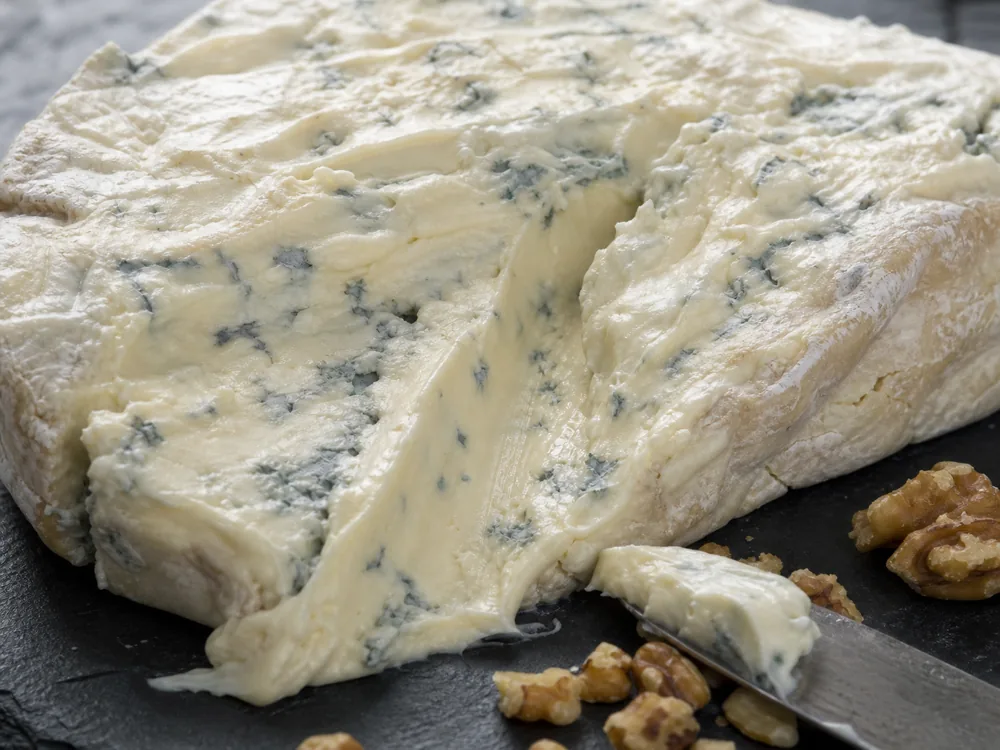
UK retailer The Cheese Lady gives a reason for the firmer view: a shorter ageing period than Gorgonzola Dolce, and what it calls less complex milk.
Several different cheeses are also sold under the Dolcelatte name, which may account for some of the spread.
How Is Dolcelatte Made and Aged?
Cheese.com says Dolcelatte follows Gorgonzola's method but uses curd from only one milking, which it says makes the cheese hard.
Fletcher explains Gorgonzola Dolce's softness the other way round: a different Penicillium strain, more moisture left in the curd and less maturation, with a 50-day minimum against 80 for Piccante, leave it almost custardlike when ripe.
The blue comes from mold cultures added during production, and the cheese is pierced as it matures so oxygen reaches the paste and the blue-green veins develop.
| Source | Ageing | Rennet or coagulant |
|---|---|---|
| Cheese.com | Two to three months; develops a thin rind | Listed as not vegetarian |
| CooksInfo, DOP Gorgonzola version | Wheels aged 40 days | Calf's rennet; its Classico version uses vegetarian rennet |
| The Cheese Lady | A shorter period than Gorgonzola Dolce, no figure given | Not stated |
| Cheese Etc | Not stated | Animal rennet |
| Galbani UK, 150 g pack | Not stated | Vegetarian coagulant; the page says suitable for vegetarians |
Galbani's UK ingredient list reads milk, cream, salt and vegetarian coagulant. For a piece from another supplier, the label is the only reliable check if you avoid animal rennet.
How Much Fat and Salt Is in Dolcelatte?
For a Galbani pack, the UK label gives the fat and salt per 100 g.
| Nutrient | Per 100 g |
|---|---|
| Energy | 1467 kJ / 354 kcal |
| Fat | 31 g |
| Saturated fat | 22 g |
| Carbohydrate | 1.8 g (sugars 0.5 g) |
| Protein | 17 g |
| Salt | 1.5 g |
Cheese.com and CooksInfo describe the cheese as about 50% fat, and CooksInfo pairs that figure with 27 g of fat per 100 g. The Galbani label's 31 g is 31 percent of the pack's weight, so the label figure, not the 50%, describes a Galbani pack.
CooksInfo's per 100 g figures of 315 kcal, 27 g fat and 18 g protein sit within one kilocalorie of the Gorgonzola Consortium's table for Gorgonzola DOP (314 kcal, 27 g, 18 g), which suggests they describe the DOP version. Galbani's pack label shows 40 kcal, 4 g of fat and 3 g of saturated fat more than that table.
Lactalis also prints per-serving figures for its recipes, and the soup's do not add up with Galbani's label: 50 g of Dolcelatte at 354 kcal and 31 g of fat per 100 g already carries 177 kcal and 15.5 g of fat, yet the soup is listed at 195 kcal and 11.5 g. The recipe panels are therefore not a reliable stand-in for the label.
How Do You Cook with Dolcelatte?
Dolcelatte goes into hot or cold dishes, and two of Galbani's three top recipes are pasta dishes, pumpkin ravioli with a Dolcelatte sauce and penne with peas and pancetta; the third is a Venetian rice salad.
| Use | How It Works |
|---|---|
| Risotto | Named by Cheese Etc. |
| Mashed potato | Cheese Etc's suggestion, alongside pasta, pizza and risotto. |
| Bread | Galbani says to spread it over crusty bread; Cheese Etc says to spread it onto warm bread. |
| Pear and walnut salad | One of two recipes on Lactalis UK's Galbani Dolcelatte page. |
| Tomato soup | The other Lactalis recipe: a warming tomato soup with Dolcelatte and croutons. |
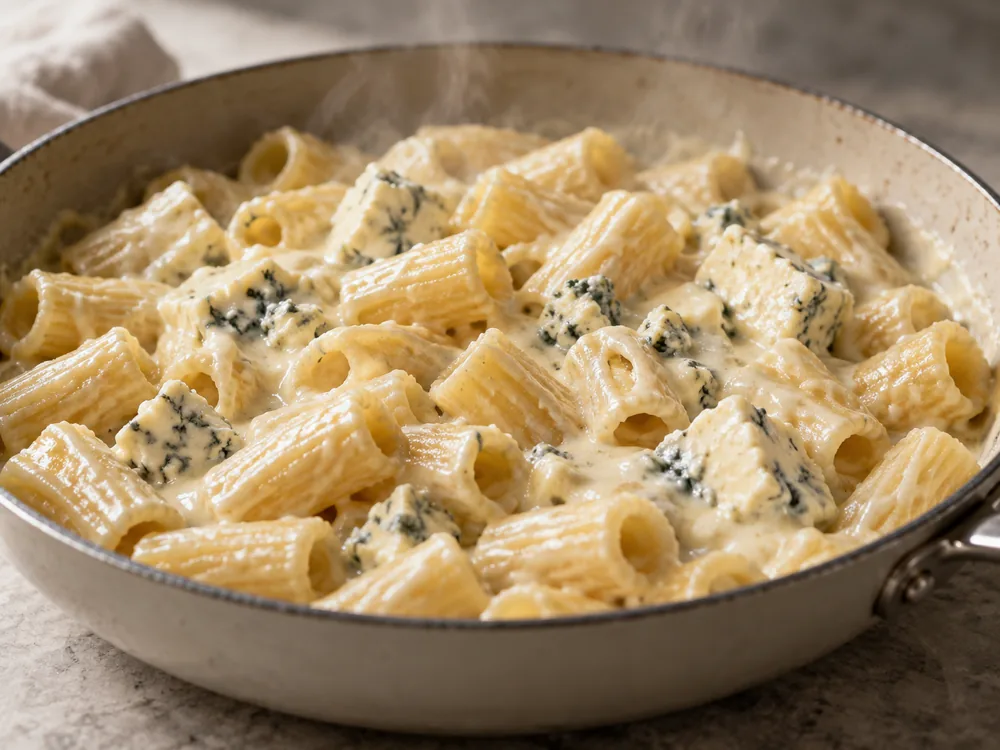
Lactalis UK's Galbani page calls the cheese a perfect addition to salads and pizzas.
Both Lactalis recipes serve one: the pear salad uses 50 g of crumbled Dolcelatte with one sliced pear, 20 g of crumbled walnuts and a handful of mixed leaves, and the soup uses 50 g with 25 g of croutons and half a tin of cream of tomato soup.
For the soup, Lactalis heats the tomato soup until bubbling, moves it to a bowl and only then sprinkles over the Dolcelatte and croutons and stirs, so the cheese goes into the bowl rather than the pan. At 50 g a serving, a 150 g pack covers three servings of either recipe.
What Goes with Dolcelatte?
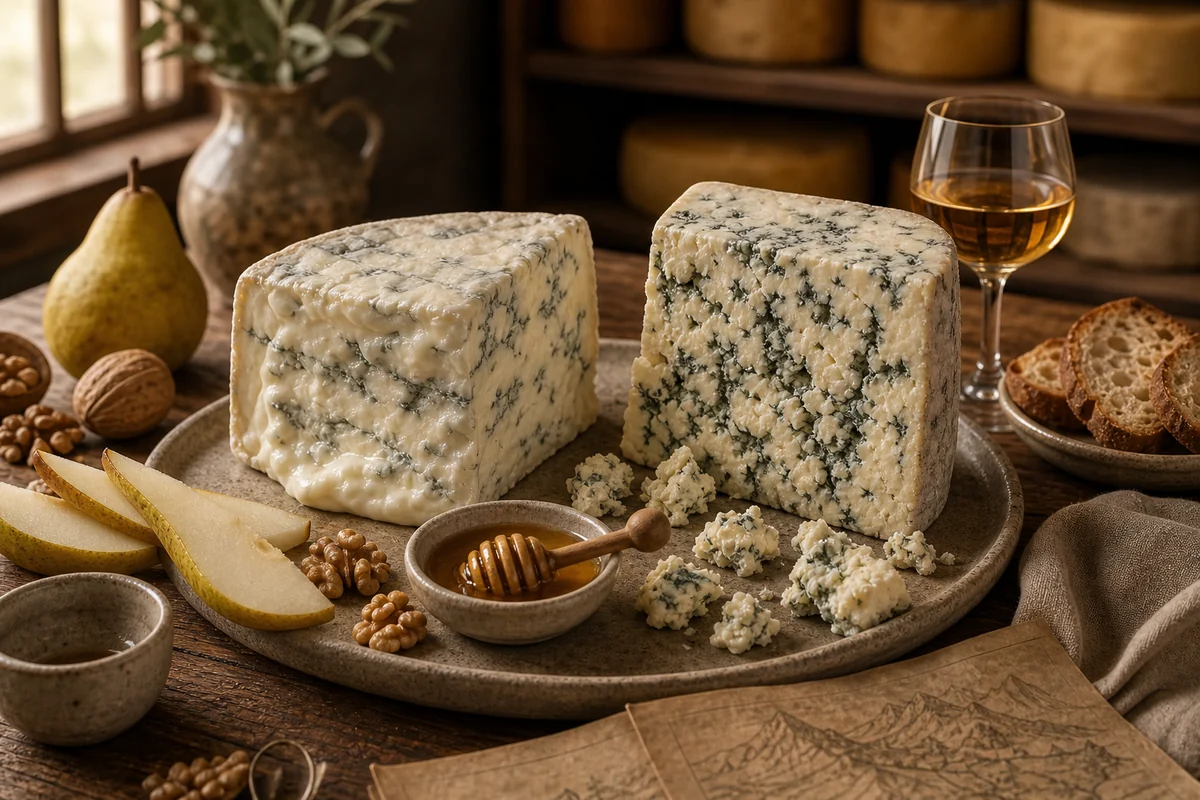
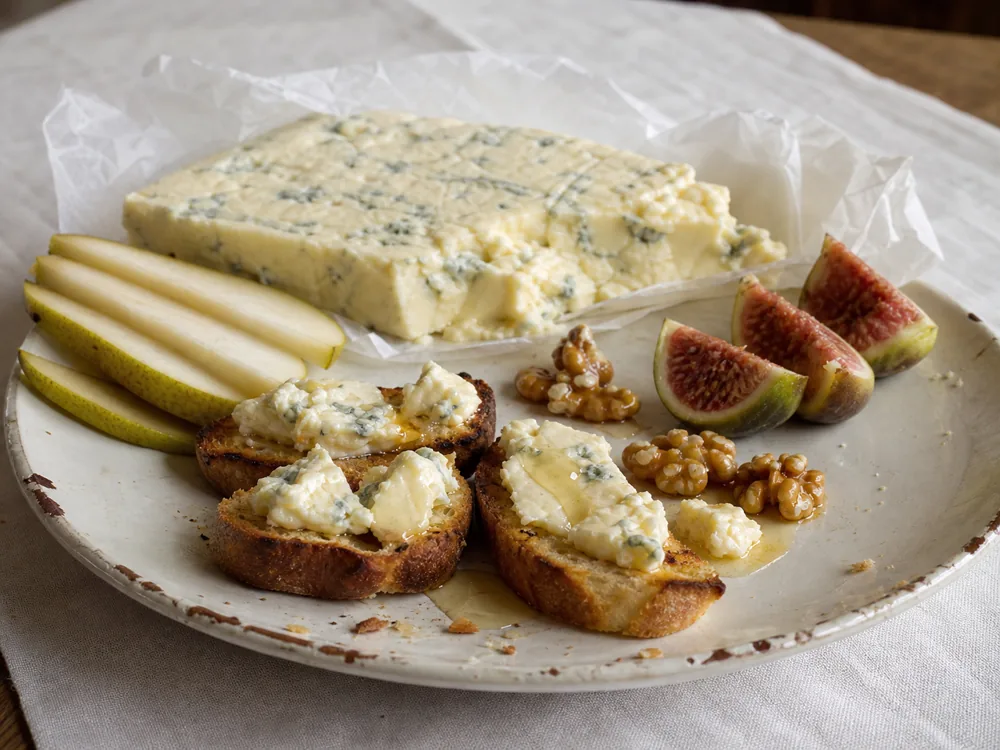
Cheese Etc and Cheese.com both pair Dolcelatte with fruit: pear or figs with toasted walnuts and honey for Cheese Etc, grapes for Cheese.com.
| Pairing | Type | Why It Works |
|---|---|---|
| Pear or figs with walnuts and honey | Food | Cheese Etc: fresh fruit, toasted walnuts and a little drizzle of honey. |
| Grapes | Food | Cheese.com lists grapes. |
| Rich pasta sauces | Food | Cheese.com lists rich pasta sauces as a match. |
| Moscato d'Asti | Wine | Cheese Etc calls it the classic pairing. |
| Malty brown ale | Drink | Cheese Etc's alternative to Moscato d'Asti. |
| Rosé or juicy red wine | Wine | Cheese.com's wine suggestions. |
The Cheese Lady, by contrast, calls Dolcelatte a popular cooking cheese that is less favored for cheeseboards. She says anyone who wants a more refined, complex flavor on a cheeseboard may prefer Gorgonzola Dolce.
For Gorgonzola Dolce she names crackers, salads and Moscato d'Asti, the same wine Cheese Etc calls the classic for Dolcelatte, while Fletcher uses it on toasted bread such as a walnut loaf, on steamy polenta and stirred into risotto.
Is Dolcelatte the Same as Gorgonzola Dolce?
Janet Fletcher says no: Dolcelatte is not Gorgonzola Dolce. CooksInfo calls it the brand name of Gorgonzola-type blue cheeses in Italy, which links the two names more closely.
| Attribute | Dolcelatte | Gorgonzola Dolce |
|---|---|---|
| Name | Galbani trademark | Gorgonzola DOP |
| Milk | Pasteurized cow's milk (Cheese.com, Cheese Etc) | Pasteurized milk from stables in the area of origin (Consortium) |
| Ageing | Two to three months (Cheese.com); 40 days for the DOP version CooksInfo describes | Minimum 50 days, maximum 150 days (Consortium) |
| Texture | Soft to slightly crumbly, by source | Creamy and soft (Consortium) |
| Scale | Industrially produced on a much larger scale (The Cheese Lady) | Artisan cheese made on a small scale (The Cheese Lady) |
Two to three months is roughly 60 to 90 days, which falls inside the Consortium's range for Dolce, so Cheese.com's figure does not on its own show the shorter ageing The Cheese Lady describes. CooksInfo's 40 days for a Galbani product it calls an official Gorgonzola is 10 days under the Consortium's Dolce minimum.
Fletcher's cue for good Gorgonzola Dolce is obvious creamy pockets, and she passes over a piece that looks firm. Whether that test applies to Dolcelatte is unclear, since The Cheese Lady and Cheese.com describe it as firmer or slightly crumbly.
The other Gorgonzola style is Gorgonzola Piccante, which the Consortium ages for at least 80 days and describes as firm and crumbly with a stronger flavor. Fletcher says Dolce makes up 90 percent of Gorgonzola volume and calls Piccante firmer, drier and much bolder.
The Cheese Lady groups Dolcelatte with Cambozola, a German cheese that combines Camembert and Gorgonzola styles, as industrially produced, and says that scale brings consistent flavor and texture.
How Can You Tell Which Dolcelatte You Are Buying?
Start with the ingredient list: CooksInfo says calf's rennet is one of Gorgonzola's specifications, which is why Dolcelatte Classico, made with vegetarian rennet, cannot officially be called Gorgonzola. By that rule Galbani's UK pack, which lists a vegetarian coagulant, is not an official Gorgonzola either.
For the official version, the Consortium says authenticity shows in its mark printed on the foil around the cheese, granted only to companies it authorizes; at origin the wheels are also branded on both flat sides.
Size does not separate the versions: the official one is made in thin 5½ kg wheels and often sold in 1⅓ kg wedges or 150 g sealed packs, and Galbani's UK pack is also 150 g.
Piccante also names a Galbani product: CooksInfo says Dolcelatte Piccante is a tangier blue introduced around 2010 and not legally Gorgonzola, so it is a different product from the Consortium's Gorgonzola Piccante.
Fletcher wrote in 2023 that, as far as she can tell, Dolcelatte is not sold in the U.S., although she believes it used to be. Galbani's ingredient and nutrition details are for its UK 150 g pack, so outside the UK, go by the pack in your hand.
A vegetarian coagulant on the ingredient list rules out official Gorgonzola by CooksInfo's reading. The Consortium's mark printed on the foil is its sign of an official Gorgonzola.
How Long Does Dolcelatte Keep?
Cheese Etc says to keep it refrigerated, wrap it in waxed paper or cling film, and eat it within 10 to 14 days of opening.
Galbani adds one serving step: take it out of the fridge 20 minutes before serving to appreciate its subtle flavor. For Gorgonzola Dolce the Consortium gives longer, at least half an hour out of the refrigerator.
For an unopened shelf life or freezing advice, check the pack itself.
Can You Eat Dolcelatte While Pregnant?
Dolcelatte is a soft blue-veined cheese, so the NHS rule for pregnant women eating soft cheese applies: pasteurised or unpasteurised soft blue-veined cheeses, such as Danish blue, gorgonzola and roquefort, must be thoroughly cooked.
The CDC lists soft cheese made from unpasteurized milk, including blue-veined cheese, as a riskier choice. It lists pasteurized soft cheeses heated to an internal temperature of 165°F or until steaming hot as safer, and says pregnant women are 10 times more likely to get a Listeria infection.
Served cold, Dolcelatte is described as a pasteurized soft or semi-soft blue-veined cheese, a type the CDC list does not cover, so ask a midwife or doctor.
Neither agency names Dolcelatte, and Cheese Etc's product table lists "Suitable for pregnancy: No" for its Dolcelatte, so ask a midwife or doctor about a specific piece.
SOURCES & REFERENCES
What Do People Ask About Dolcelatte?
Yes. Cheese.com lists it as a soft, blue-veined cheese in the blue family, and Cheese Etc describes delicate blue-green veining.
It depends on the label. Galbani's UK pack lists a vegetarian coagulant, while Cheese Etc says animal rennet and Cheese.com lists the cheese as not vegetarian.
Janet Fletcher says Dolcelatte is not Gorgonzola Dolce, while CooksInfo links the two names more closely.