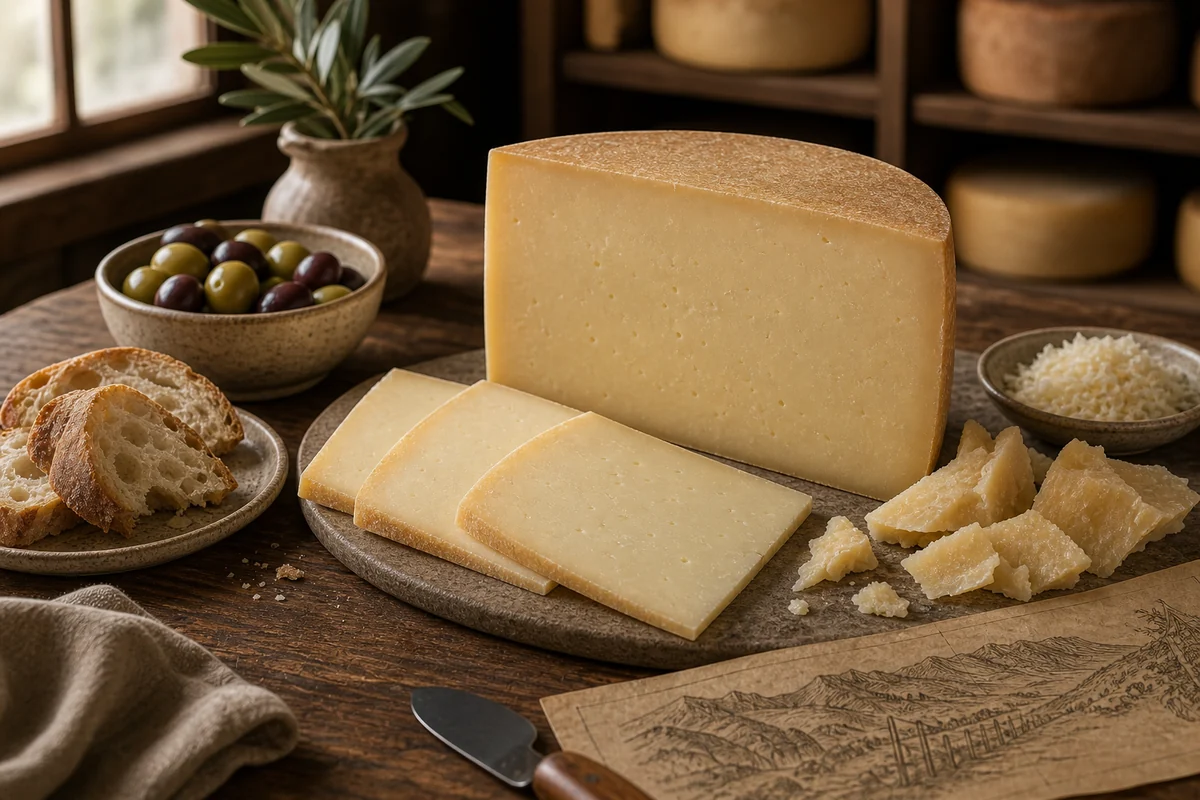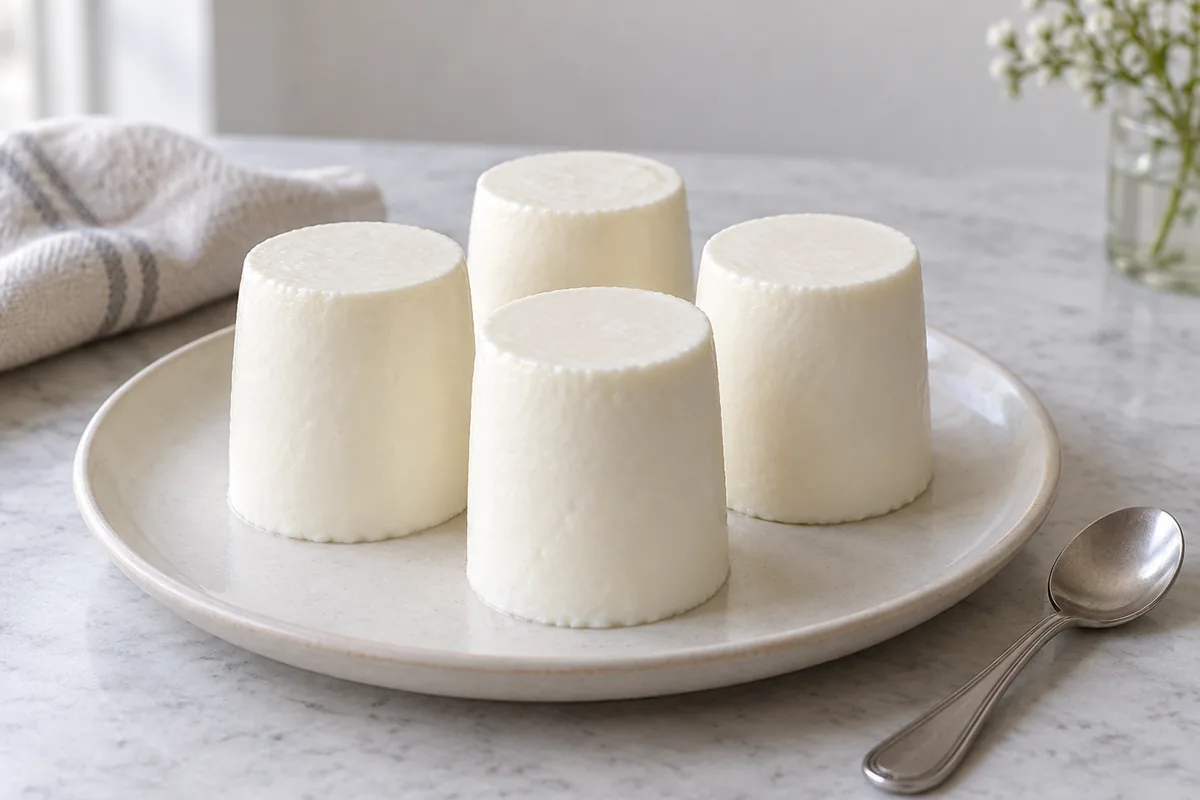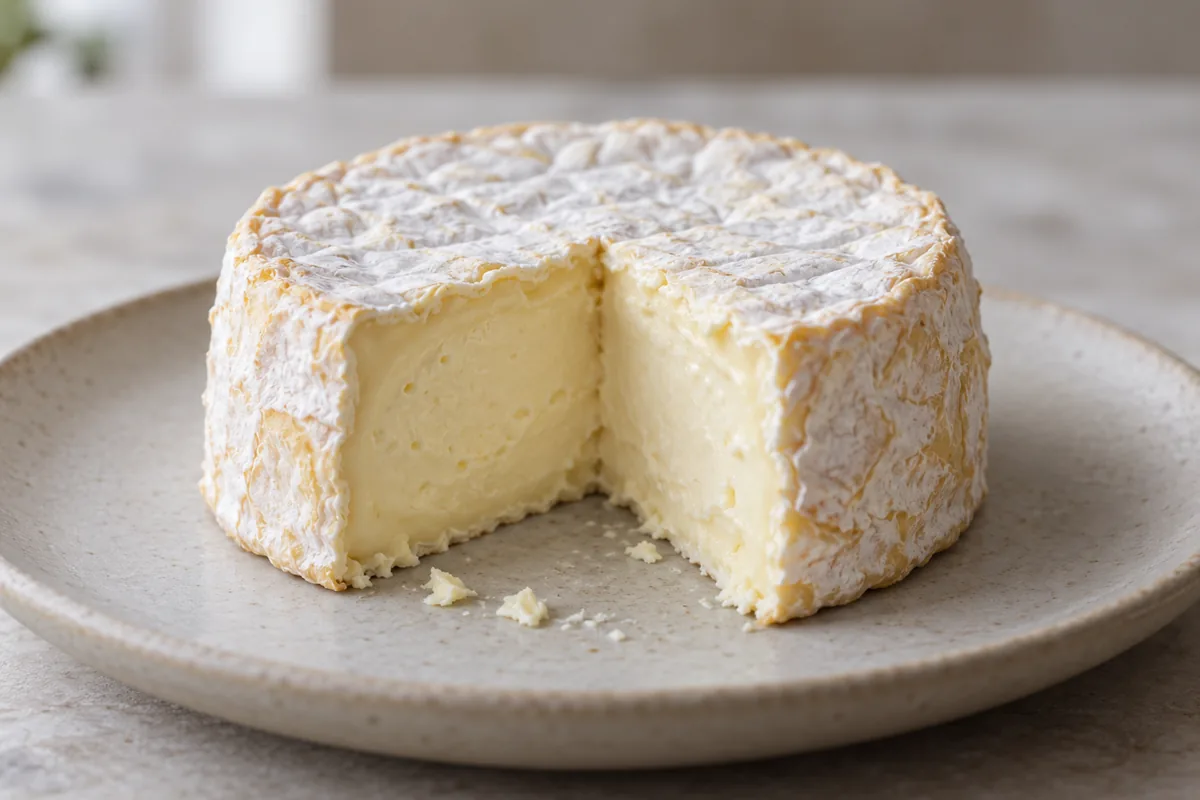
La Tur is a small, soft cheese from Caseificio dell'Alta Langa in Bosia, Piedmont, made from cow, sheep, and goat milk plus cream. The dairy calls it semi-aged, with an edible wrinkled rind around a paste that tastes of melted butter and cream with a light tangy finish.
It sits in the robiola family of young, soft-ripened cheeses, and the dairy's CEO describes the three-milk mix as a reworking of an old local habit of mixing different milks.
In This Article
What Milks Go Into La Tur?
The producer's product page lists the milk as cow, sheep, goat, and cream. Cheese.com and Culture magazine's cheese library name the three milks without the cream.
Nicola Merlo, CEO of Caseificio dell'Alta Langa, told Culture magazine that the cow's milk is the base, the sheep's milk adds sweetness, and the goat's milk adds sharpness.
She also explained why the dairy mixes milks. In the Alta Langa, cheese was traditionally made on small farms that kept several kinds of animals, so the milk changed with the seasons, and the dairy wanted to reinterpret that old habit.
The dairy's process page says each wheel reflects the season and the animals' diet, and that its mixed milk comes from selected farms.
Culture magazine says the dairy brought La Tur to the United States in the early 2000s, when a mixed-milk, soft-ripened cheese from Italy was uncommon, and importer orders soon gave it a cult following.
How Is La Tur Made?
The dairy's process page puts Tur in its lactic group, where the milk coagulates slowly through natural acidification with only a small addition of animal rennet. Culture's cheese library also lists the rennet as animal, which matters to anyone avoiding it.
The cheesemaker gathers the curd by hand with a paddle in 100-liter vats and pours it into the molds in several passes, a technique the dairy calls moulage à la louche. Culture's library adds that this gentle handling keeps the curd's high moisture.
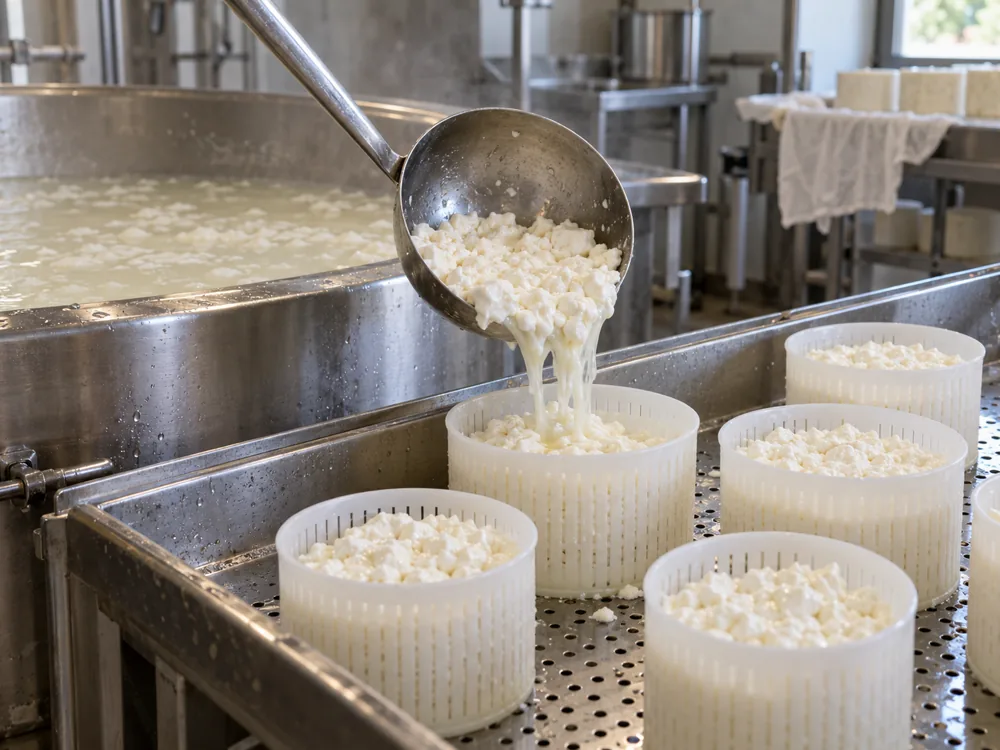
After molding, the cheeses are turned by hand while still in their molds so the whey drains, then rest for 12 to 32 hours, a range the dairy gives for all its cheeses depending on season, type, and size. A brine bath follows, which the page says slows fermentation and forms the rind.
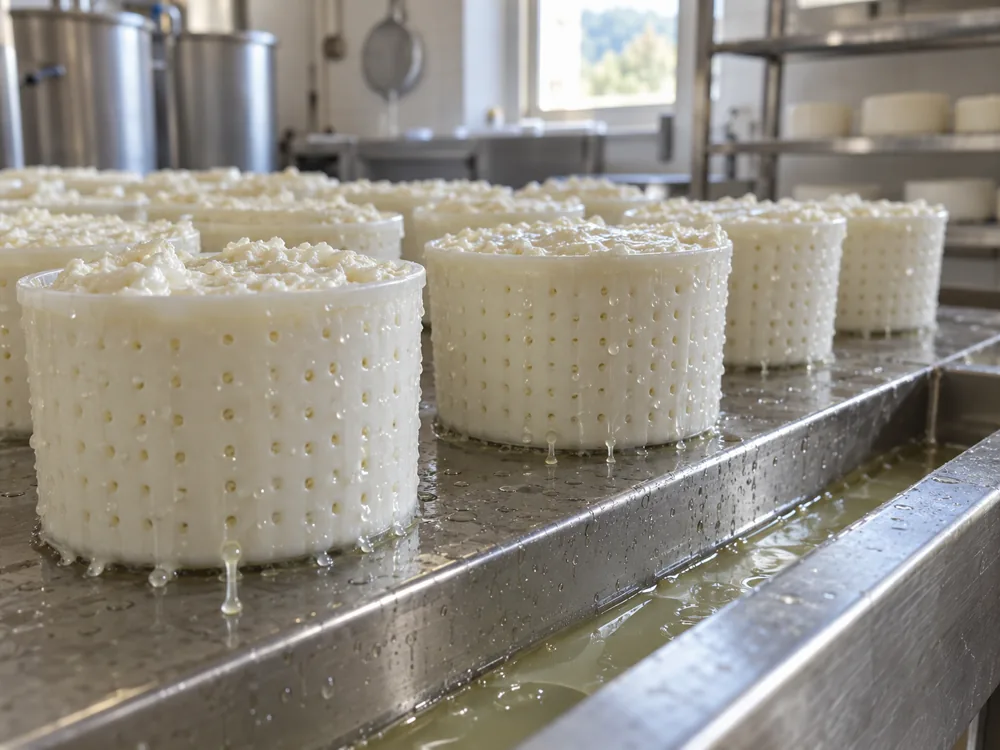
The dairy keeps separate brine vats, one for fresh cheeses and another for semi-aged and aged ones, and it sets the immersion time by the type of milk and the size of the wheel.
In the aging rooms the wheels are inspected and turned by hand so mold grows evenly on every surface. The dairy gives 7 to 10 days for its semi-aged cheeses, the same figure printed on La Tur's product page.
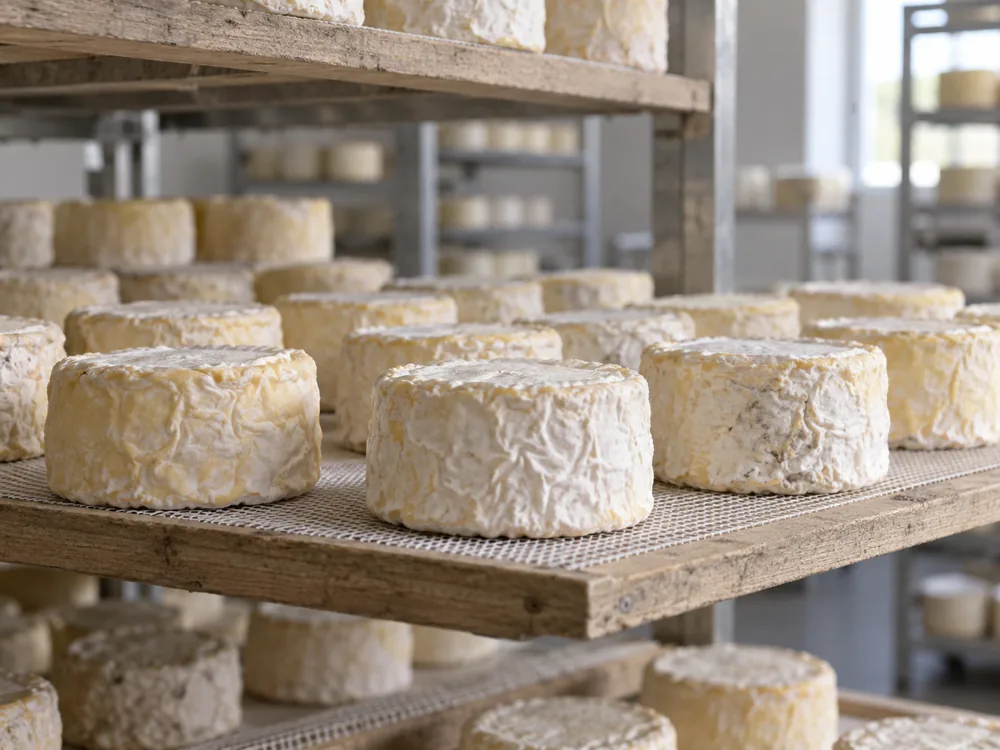
The process page sorts the dairy's cheeses into bands: 2 to 5 days for fresh cheeses, 7 to 10 for semi-aged ones, and up to 45 days for aged cheeses such as Toma di Capra. It adds that the season changes temperature and humidity in the rooms and moves these times, so they are ranges rather than a fixed schedule.
Culture's cheese library gives a longer figure, 15 days of maturing before release, which the producer's page does not repeat.
The dairy's 7 to 10 days is the time in the aging rooms, which come after the 12 to 32 hours of draining and the brine bath, so the total time from molding runs longer.
Why Is La Tur So Soft and Spreadable?
The softness starts with how the milk sets. In the dairy's lactic method the milk coagulates slowly through natural acidification, and the dairy says that curd is delicate and needs a firm but light hand.
The dairy's rennet cheeses, Bosina, Castelbelbo, and Carboncino among them, coagulate with animal rennet and end up with a structured body, a firm paste, and a more pronounced flavor that develops over time. Tur and Rocchetta, the lactic pair, are the ones the dairy describes with a creamy paste and a fine, elegant aroma.
Packing follows the same split, with the dairy's rennet cheeses going through automatic machines that are fed by hand.
Softness is not even through the cheese. Culture's library puts the softest paste just under the rind and says the texture keeps breaking down as the cheese matures, until a large part of it is entirely soft, while Scout's editor finds the outer edges gooiest and the middle still a bit fluffier.
Read together, the two descriptions suggest a younger La Tur has the larger fluffy core and an older one is mostly soft paste, though no days are given for that change.
What Does La Tur Taste and Feel Like?
Five descriptions agree on butter or cream with a light tang, and they differ in the savory note that comes last.
| Source | Paste | Taste and aroma |
|---|---|---|
| Caseificio dell'Alta Langa | Soft, melting, almost weightless | Melted butter and cream, a slight tang, a medium-long finish of delicate yeast |
| Culture cheese library | Ivory, light, fluffy, and mousse-like, extremely soft and creamy under the rind | Creme fraiche, mushrooms, and grass with a slight tang |
| Culture feature (Molly McDonough, 2019) | Mousse-like and spreadable | Mild and creamy, with sour cream, butter, and mushrooms on a closer sniff, and a lasting fatty finish |
| Cheese.com | Light and delicate under a creamy, soft rind | Creamy and buttery, with a subtle earthy flavor, acidic notes, and a yeasty aroma |
| Market Hall Foods (retailer) | A core like loosely packed snow that turns creamy and oozes from the center as it warms | Buttery and rich with a lactic tang |
The savory end is where they split: the producer lists yeast, Culture's library lists mushrooms and grass, and Culture's feature lists mushrooms and sour cream. Cheese.com pairs a yeasty aroma with a subtle earthy flavor, so it lands on both sides of that split.
Scout's editor compares the sourness to what a younger goat cheese gives, which matches Merlo's account of the goat's milk adding sharpness.
Can You Eat La Tur's Rind?
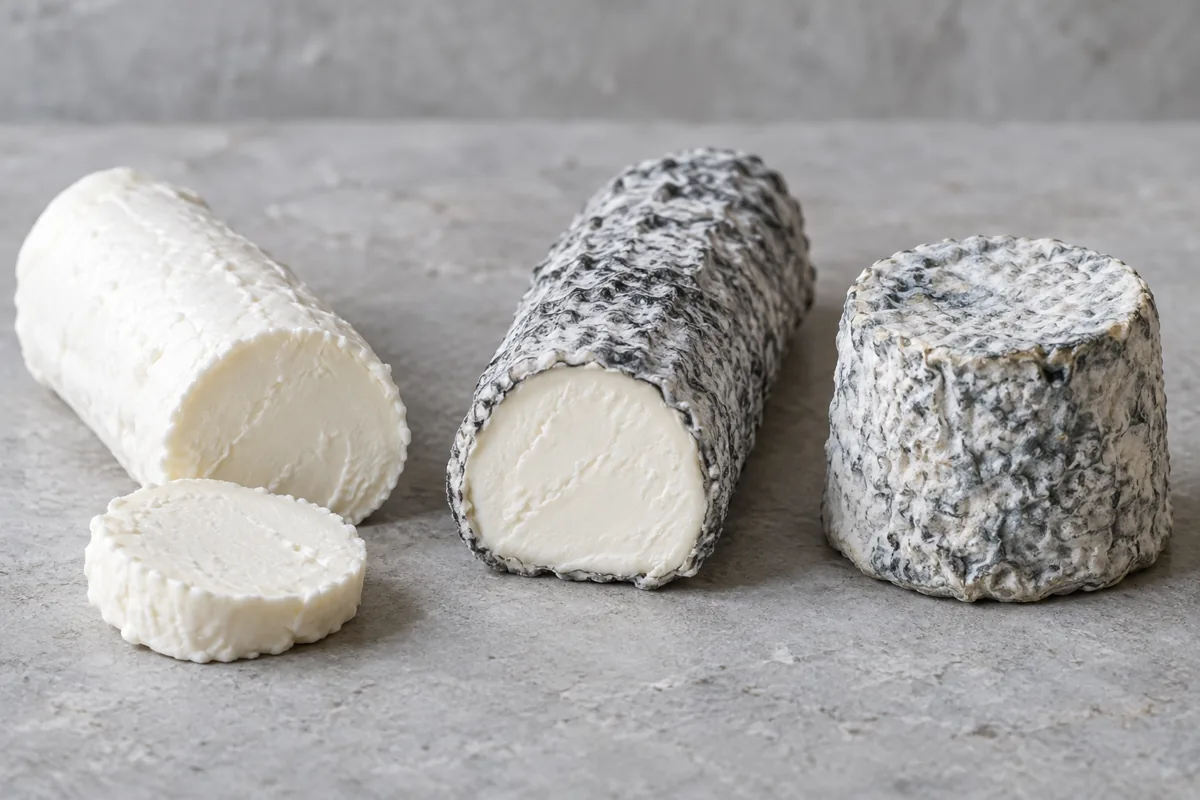
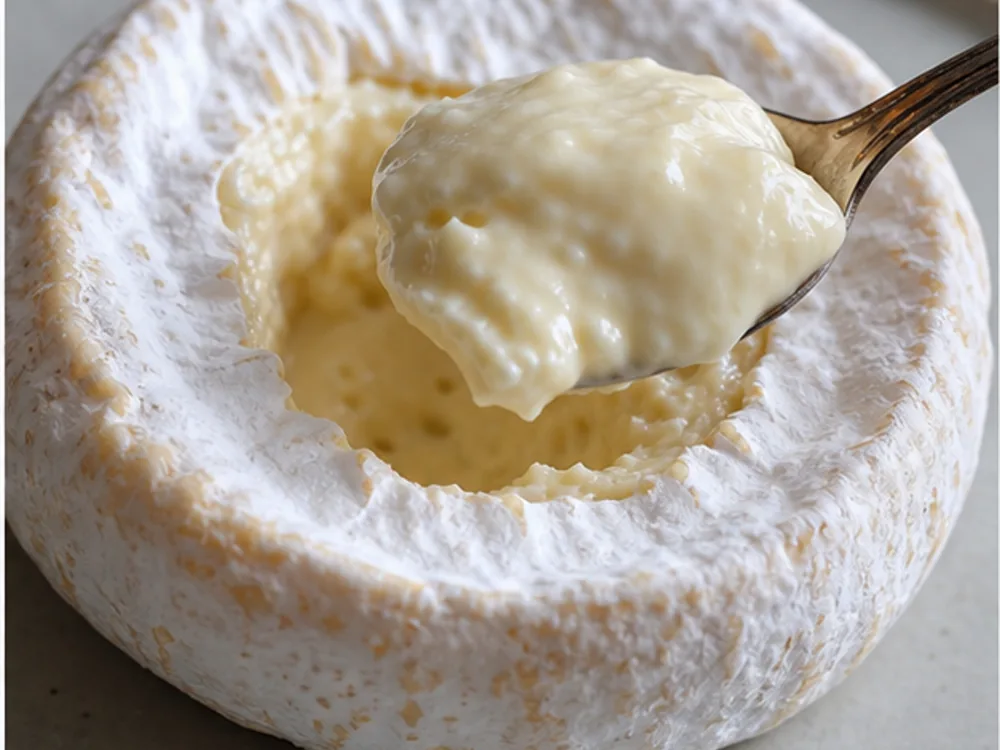
The producer lists the rind as edible, soft, and wrinkled, and Cheese.com describes it as creamy, soft, and wrinkled.
Culture's cheese library classes La Tur as mold-ripened and says the wrinkles reflect Geotrichum mold introduced during production, leaving a thin, delicate rind that is pale yellow and white.
The dairy says turning each wheel by hand in the aging rooms also keeps it from sticking to the racks, which preserves the rind.
La Tur vs Brie and Other Robiolas
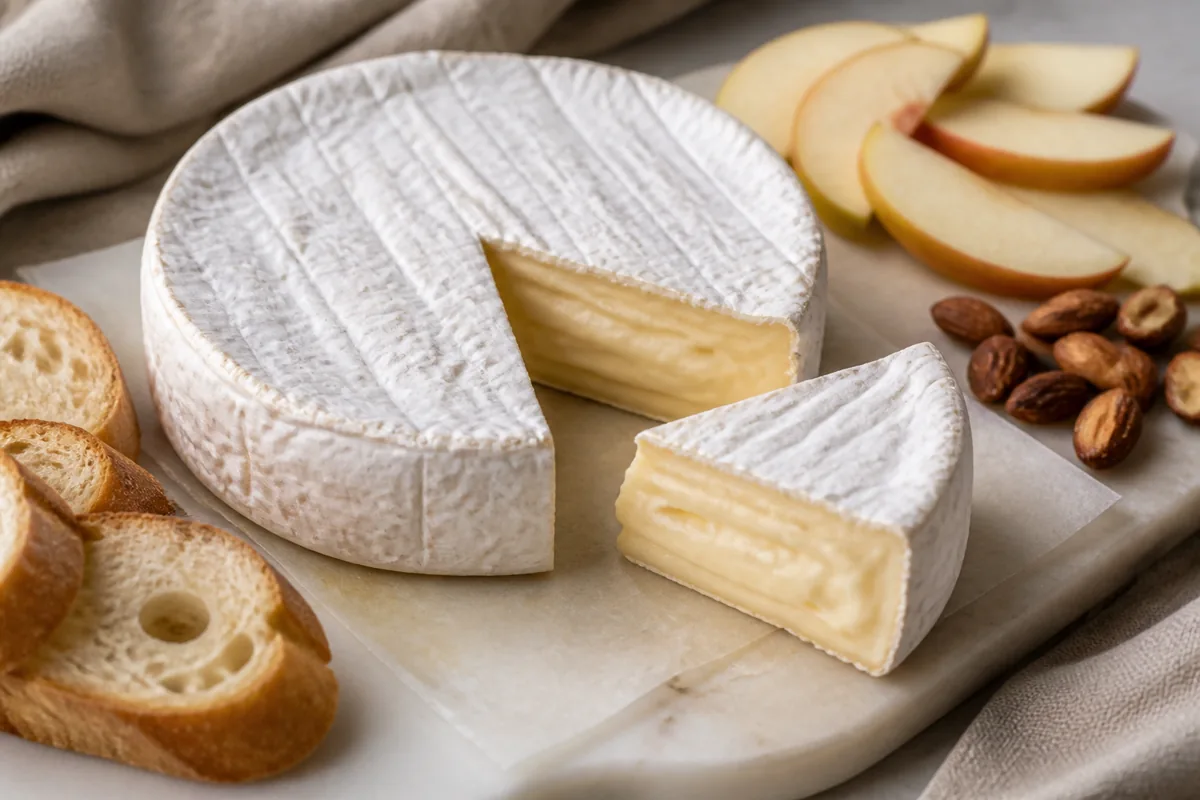
Culture's 2019 feature says La Tur's mousse-like paste is as crowd-pleasing and spreadable as supermarket Brie, but it lacks Brie's chewy, obtrusive rind.
Cheese.com files La Tur in the Brie family, while the dairy and Culture place it among robiolas, a name Merlo describes as general for a soft-ripened cheese that is not aged for long.
Within the dairy's own range, milk and method separate the robiolas. Culture describes Rocchetta as a fresh cow, sheep, and goat milk mix and Robiola Bosina as a cow and sheep blend, and the dairy's process page sorts them by how the milk coagulates.
| Cheese | Milk | Method on the dairy's process page |
|---|---|---|
| La Tur | Cow, sheep, goat, and cream | Lactic, with a small addition of animal rennet |
| Rocchetta | Cow, sheep, and goat (fresh) | Lactic |
| Robiola Bosina | Cow and sheep | Animal rennet |
Culture calls Rocchetta fresh, so it sits in the dairy's shorter aging band while La Tur sits in the semi-aged one: the two share a method but not a ripeness.
Robiola di Roccaverano, the PDO robiola, is a separate cheese, though Culture's 2019 feature says the dairy also makes a PDO version for its non-US customers. Culture describes the PDO cheese as made from raw goat's milk or goat's milk with up to 50 percent cow's milk, a recipe that leaves out La Tur's sheep's milk.
How Big Is One La Tur?
The producer lists the format as a cylinder 80 mm across and 60 mm tall, about 230 g.
Retail listings use other weights: Culture's library gives 3 inches across, 1.5 inches high, and 6 oz (about 170 g), while Market Hall Foods lists 8 ounces (about 227 g), so the weight on your pack is the figure to trust.
The producer's 230 g is within a few grams of Market Hall's 8 ounces, but Culture's 1.5 inches (about 38 mm) is well below the producer's 60 mm height.
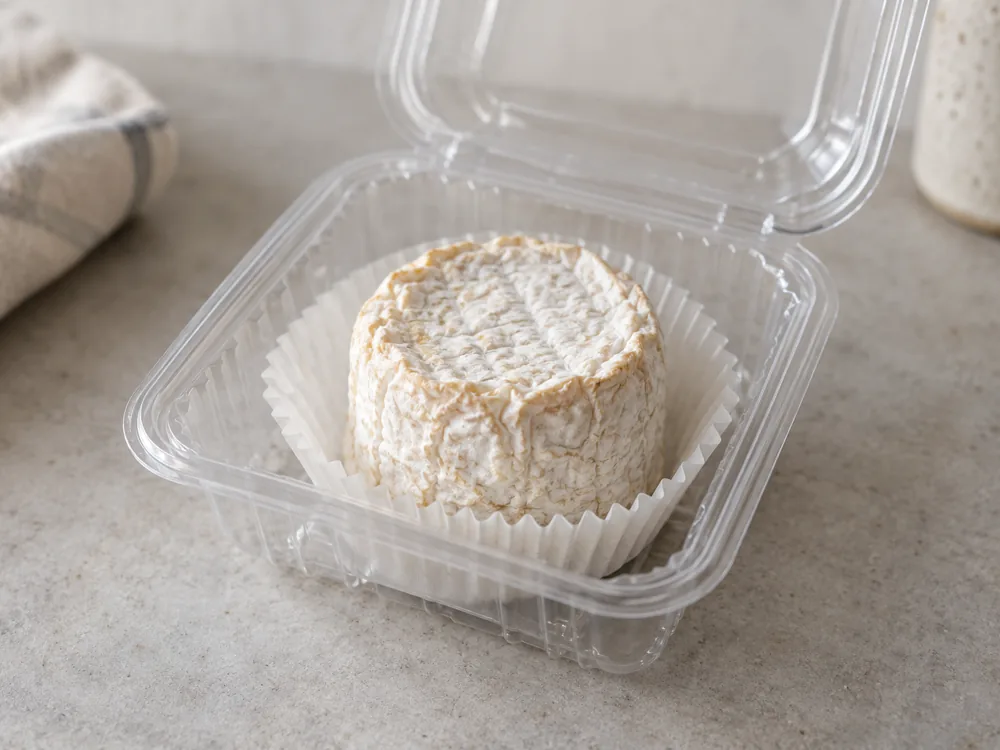
The dairy packs each La Tur by hand in its own cup with a label, and Culture says the cup sits in a plastic container that lets the cheese breathe and keep maturing.
How Long Does La Tur Keep?
The producer's page gives a 45-day shelf life and a storage range of +4 to +8°C.
The CDC advises keeping a refrigerator at 40°F (about 4°C) or below, so only the cold end of the producer's range matches that figure.
The 45 days on La Tur's page is a shelf life, while the 45 days on the dairy's process page is the longest aging time, given for aged cheeses such as Toma di Capra.
Scout Magazine's cheese editor wrote in 2011 that La Tur becomes almost liquid with age, and Culture says the packaging lets the cheese keep maturing, so a cheese late in its 45 days has had more time to soften.
The paste softens with age, so ask your cheesemonger how far along the wheel is when you buy it.
How Do You Serve La Tur?
Set La Tur out 45 minutes before you serve it, as the producer recommends. Scout Magazine's editor agrees on room temperature.
That rest matches the warming in Market Hall's description in the taste table, where the core turns creamy as it warms. Scout's editor compares the paste to room-temperature butter or a perfect custard and says little of it is left on a cheese plate.
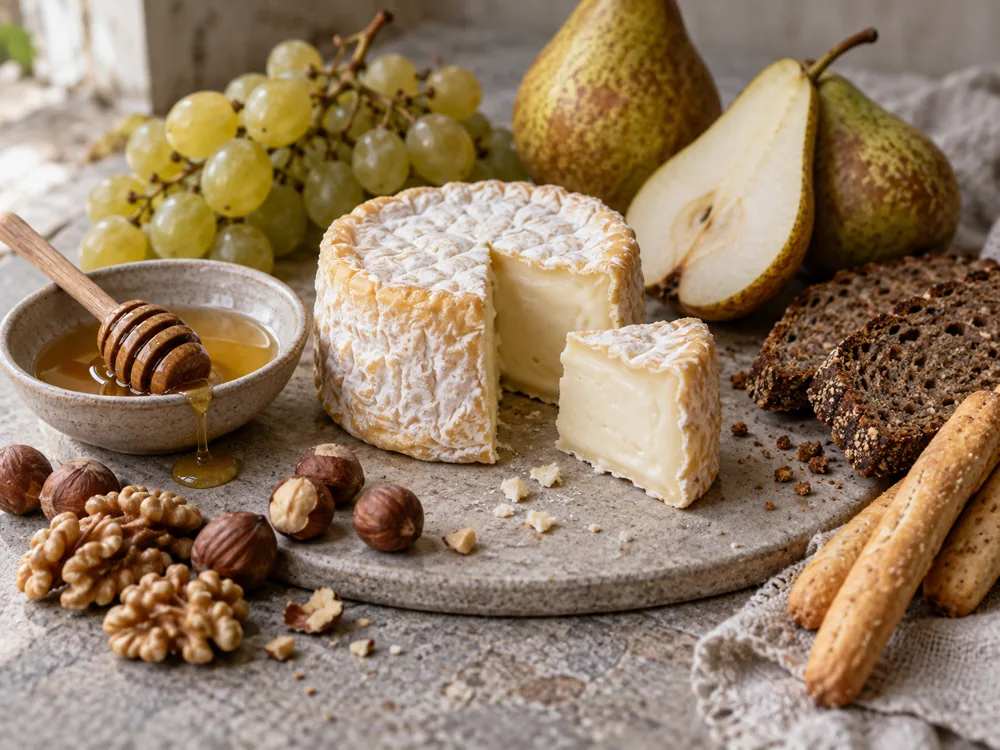
Market Hall Foods says the runny texture calls for bread or crackers, suggests dusting the top with wild fennel pollen for parties, and advises against cooking it because the flavors are delicate and best fresh.
| Pairing | Caseificio dell'Alta Langa | Other named sources |
|---|---|---|
| Wine | Alta Langa DOCG, Arneis, Barbaresco | Market Hall Foods: Champagne and other sparkling wines. Scout Magazine: a German Spätlese or an older Bordeaux-style red |
| Beer | Belgian Tripel, Saison | - |
| Honey | Wildflower, acacia | Scout Magazine: Italian acacia or truffle honey |
| Fruit and nuts | Pears, white grapes, hazelnuts, walnuts | - |
| Bread and preserves | Rye bread, breadsticks, onions with balsamic vinegar, cugnà | Scout Magazine: pecan and fruit bread. Market Hall Foods: bread or crackers |
Acacia honey is the one pairing both the producer and Scout Magazine name, while sparkling wine comes only from the retailer, whose stated reason is that the bubbles cut through the creamy richness. Culture's library points to wines with honey or floral notes without naming a bottle.
Serve La Tur after 45 minutes at room temperature with bread or crackers. Acacia honey is the pairing both the producer and Scout Magazine name, and Market Hall Foods advises against cooking it.
Is La Tur Safe During Pregnancy?
Whether La Tur counts as pasteurized depends on which account you read. Culture's 2019 feature, Cheese.com, and Market Hall Foods call it pasteurized, Scout Magazine says the milk is pasteurized at very low temperatures, and Culture's cheese library says the dairy thermalizes its milk.
Neither the NHS nor the CDC names La Tur. Culture's library classes it as a mold-ripened soft cheese and Cheese.com files it in the Brie family, which puts it closest to the NHS group of mould-ripened soft cheeses with a white coating.
For that NHS group the wording covers pasteurised and unpasteurised cheese alike, so a pasteurized label does not settle the question. The CDC adds that pregnant women are 10 times more likely to get a Listeria infection.
Market Hall Foods advises against cooking La Tur. The NHS says any cheese cooked until steaming hot is safe, and the CDC gives that route only for pasteurized soft cheese.