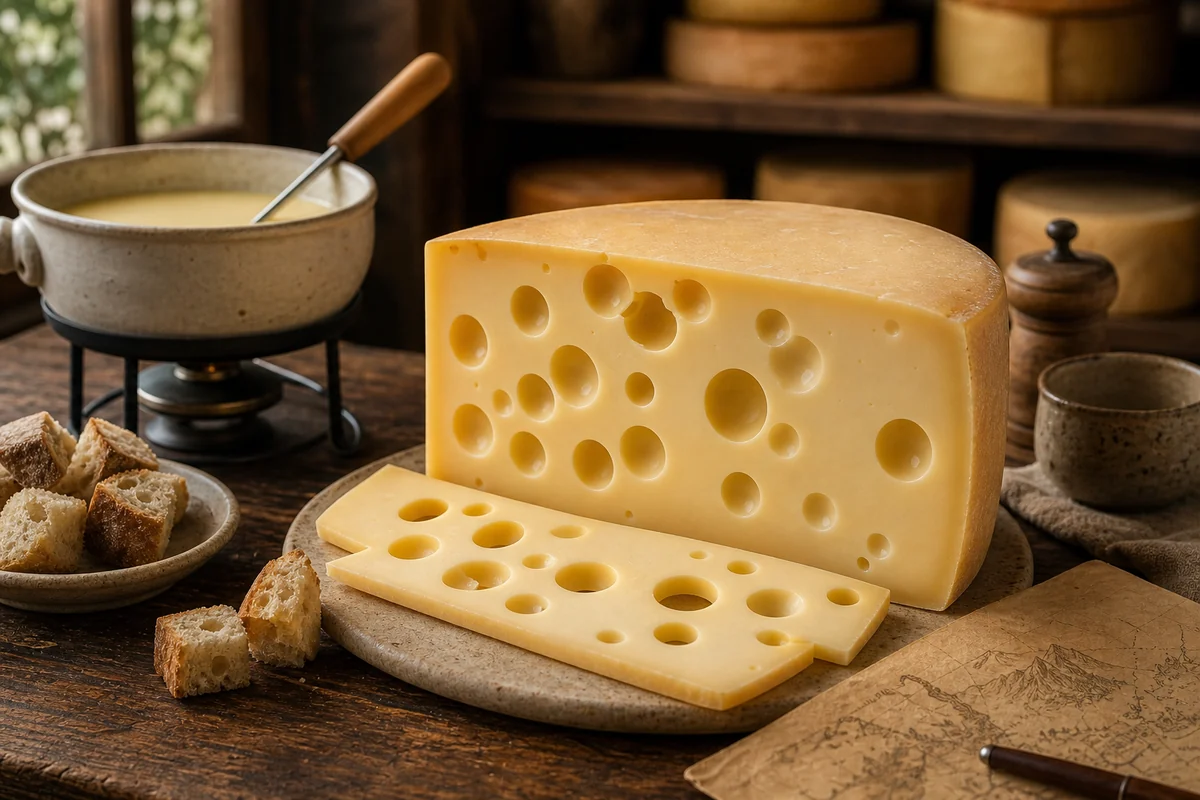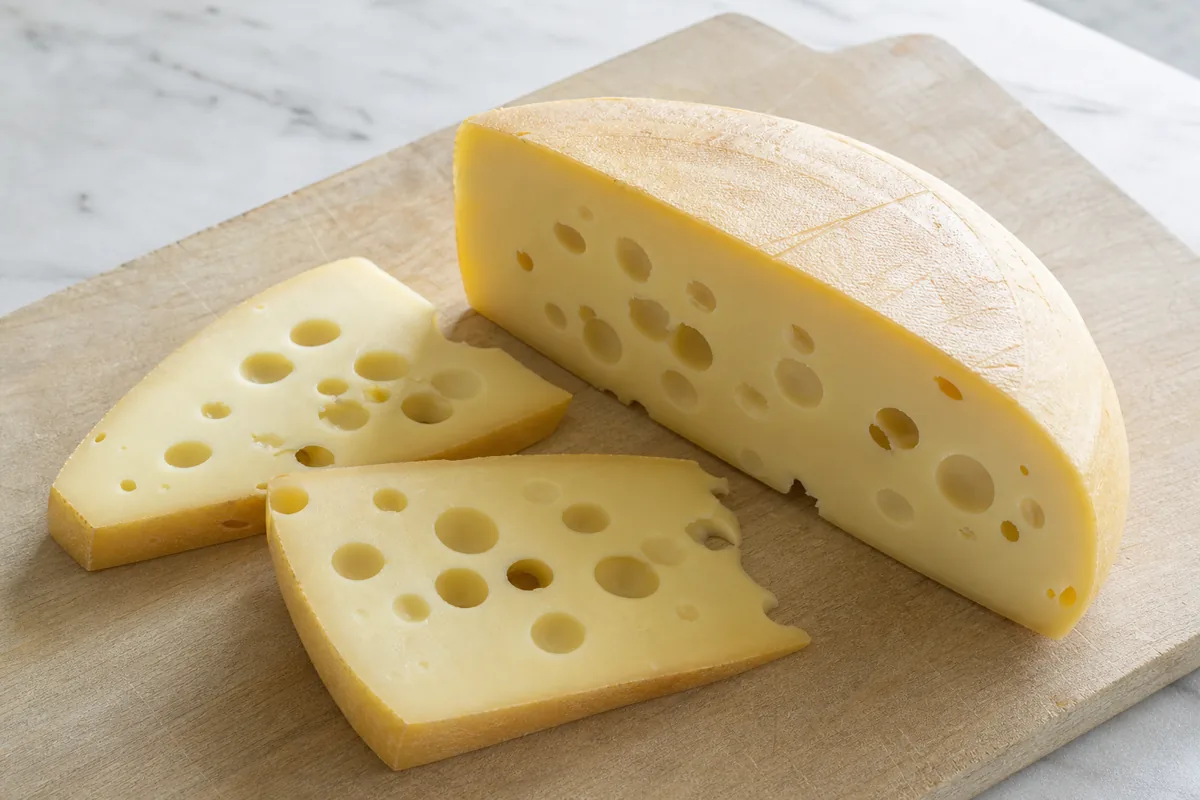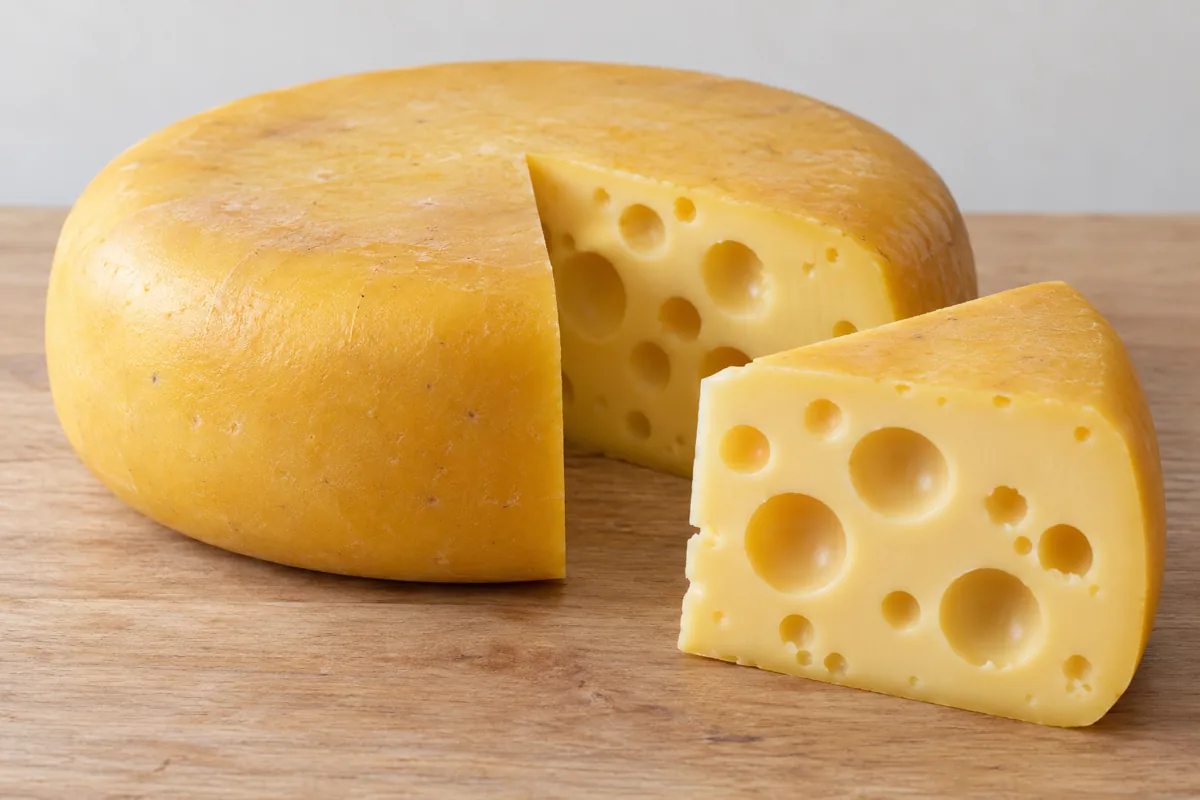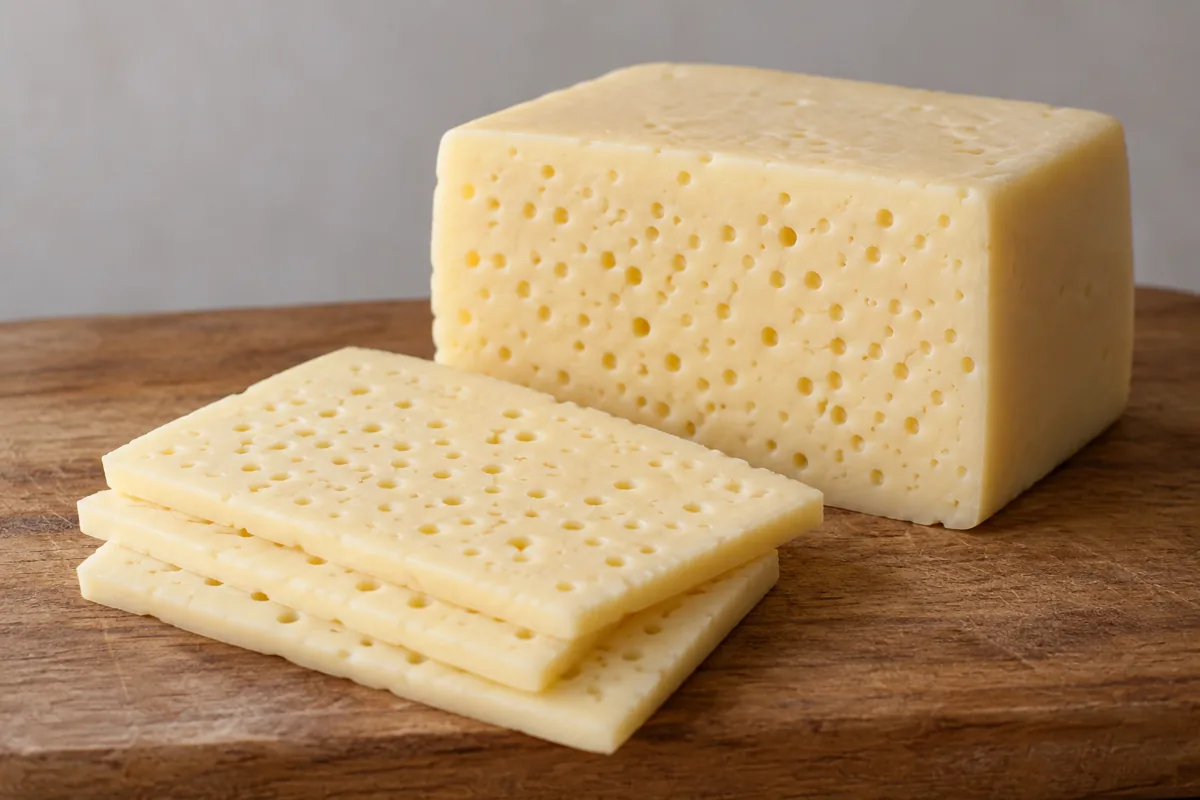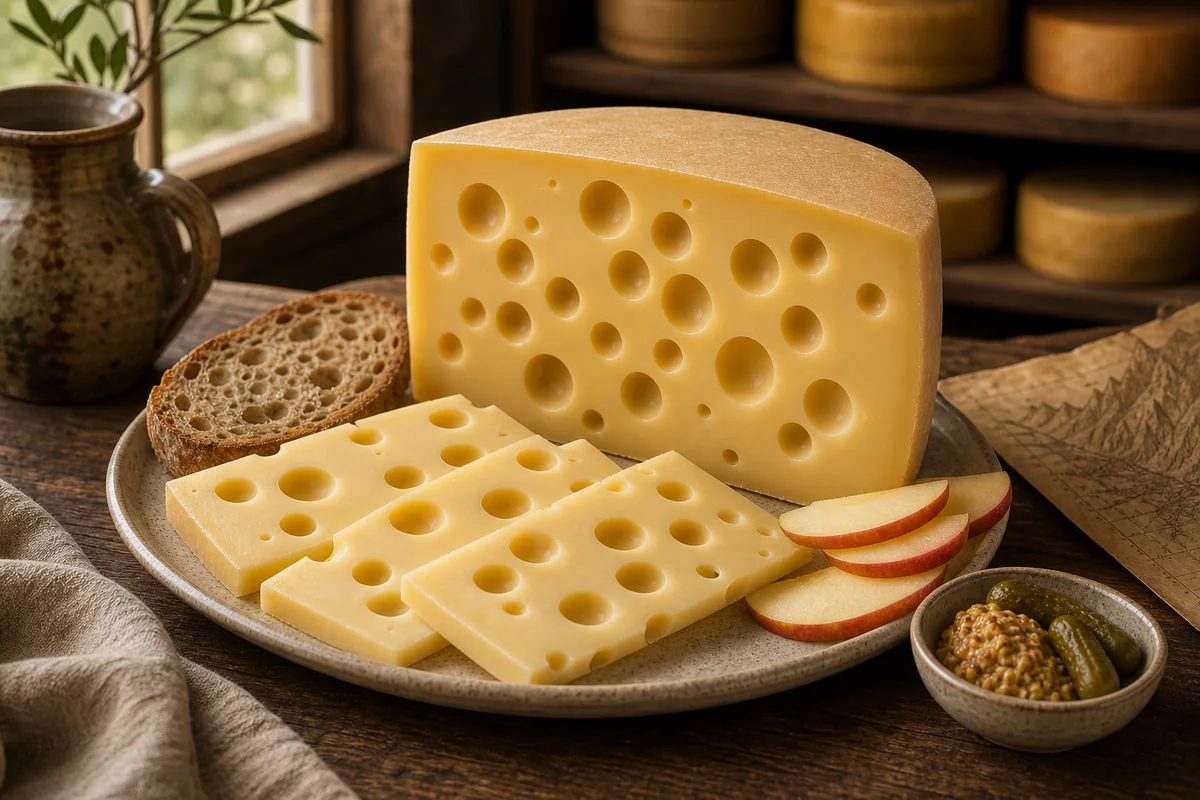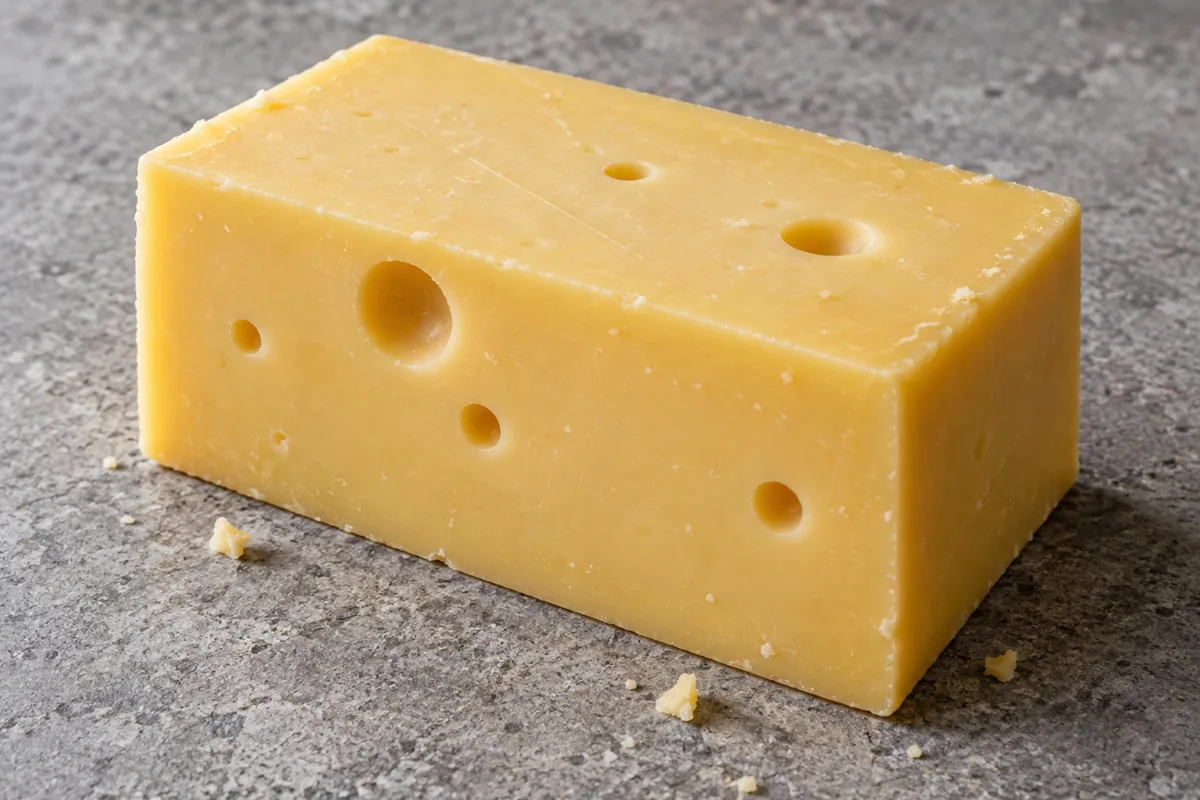
Grevé (pronounced grə-VAY) is a Swedish semi-hard cheese made from pasteurised cow's milk. It has a nutty, slightly sweet taste and round holes, and Swedish dairies built it in the 1960s as an Emmental-style cheese.
In Sweden it is a sandwich staple, and the newspaper Göteborgs-Posten calls it one of the country's favourite sandwich toppings. Grevé® has been a registered trademark since 2004, and several Swedish dairies sell their own versions, from mild to 18 months old.
In This Article
What Does Grevé Taste Like?
Wikipedia describes the taste as nut-like and slightly sweet, and the Swedish cheese blog Ostbiten words it almost the same way, so the two count as one description.
Göteborgs-Posten ran a blind test in 2011 with eight panelists and eight Grevé cheeses, all at 28 percent fat, four mild and four medium-aged. Several panelists usually buy a stronger Grevé, and Hans Emanuelsson wants a cheese that bites back, but the panel agreed the cheeses had more flavor than they expected.
The cheeses were cut into squares, set out at room temperature for a little over an hour and served anonymously, and the panel compared the mild cheeses with each other and the medium-aged ones with each other, so a mark measures a cheese against others of its own tier.
Miriam Norén wanted a clear nutty taste and good holes in a Grevé. Giovanni Salaris looked for the likeness to Emmentaler, and his favorite, the Falbygdens cheese, had a slightly dry texture with some resistance to chewing.
Ostbiten calls Grevé a little more compact and springy than the Swiss cheese that inspired it. The panel's notes on single packs vary: slightly dry for Skånemejerier's medium-aged cheese, creamy in the protocols for Falbygdens' (though Salaris found it dry) and rubbery for Garant's mild one.
The panel's color notes were golden yellow for Milbona's mild cheese and deep yellow for Skånemejerier's medium-aged one.
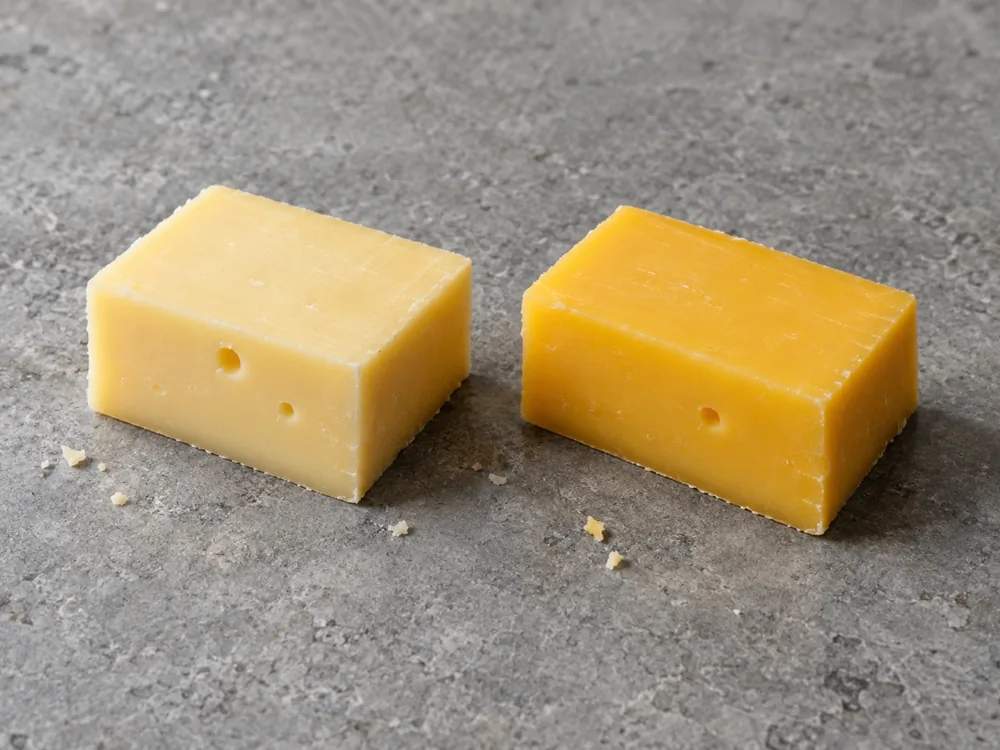
Göteborgs-Posten says Grevé is sold in four strengths, with stronger ones giving a clearer bitterness of umami character, high acidity and a longer aftertaste. Arla's text for its 12-month Grevé lists nutty and sweet notes with fresh acidity and some bitterness and calls the cheese full-bodied.
A 2021 student literature review by Sandra Carlsson at the Swedish University of Agricultural Sciences traces the umami note in propionic acid cheeses to succinic acid, glutamic acid and propionic acid.
The same review says that proline released during ripening adds to the sweet flavor, and that in general a longer ripening raises the intensity of flavor, aroma and aftertaste.
In 2014 the local newspaper 7 put Grevé fourth on a top-ten cheese list, and the background box to Göteborgs-Posten's test also ranks it fourth among the best-selling cheeses.
Why Does Grevé Have Holes?
Grevé's holes come from propionic acid bacteria, added as a secondary starter culture. During ripening they ferment lactate into propionic acid, acetic acid and carbon dioxide, and the gas gathers into round holes that cheesemakers call eyes.
The same fermentation gives the cheese its sweet, nutty flavor, according to Carlsson's review, which names Grevé, Emmentaler and Maasdamer as examples.
Carlsson describes how Swiss-type cheeses are made to suit these bacteria: they grow best at a relatively high pH, so water is added to the milk to lower the lactose and with it the lactic acid, and the curd is cooked at 40 to 50 °C.
The bacteria start to grow only in the warm room: ripening of Swiss-type cheeses generally begins with about three weeks of drying at 4 to 12 °C, continues for some further weeks at 20 °C, where the propionic bacteria begin to develop, and ends with cooling. The review gives these figures for Swiss-type cheeses in general, not for Grevé itself.
Gouda and Edam get their small eyes by a different route: citrate-fermenting bacteria in their mesophilic starters make the carbon dioxide, according to the same review.
In Carlsson's account, strains of propionic bacteria that make more carbon dioxide give more numerous and larger eyes and raise the risk of split defects, so the culture a maker picks shapes the holes.
Carlsson adds that a selected propionic culture in pasteurised milk gives a more controlled fermentation and more regular eyes than the spontaneous fermentation of raw milk. She notes that Grevé, Emmentaler and Jarlsberg are now usually made from pasteurised milk.
Ostbiten, the one source here that compares hole counts, says Grevé has fewer and smaller round holes than its Swiss counterpart. A wedge with a handful of round holes therefore matches that description, and a wheel full of Emmental-sized eyes would not.
Where Does Grevé Come From?
The groundwork dates to 1944, when the Swedish dairies' association SMR built a dairy research station beside the new cooperative dairy in Örnsköldsvik. Together with the state dairy trials at Alnarp in Skåne, the station became the center of cheese development in Sweden, according to the local newspaper 7, which drew on ostforum.se.
Göteborgs-Posten says the inspiration is thought to come from Emmentaler and from Norwegian Jarlsberg: in the 1950s the Norwegians showed Jarlsberg at a cheese exhibition in Oslo, where the Swedish dairy engineers Åke Berglöf and Yngve Johansson were present.
At the research station in Örnsköldsvik they started project Alpost, the cheese's working name, and after countless trials a cheese with the right qualities appeared in 1963.
Full-scale production started at the Örnsköldsvik dairy in May 1963. At a final tasting that October the cheese was shown to outside producers and cheese judges for the first time, and in November 1963 the dairies in Bollnäs and Hudiksvall began making it too.
The dairy control authority KMÄ cleared the quality mark on 1 October 1964, which is the year English Wikipedia gives for first production. The cheese then spread south through Sweden and was at its peak made at 17 dairies, though the Örnsköldsvik dairy stopped making it in 2001.
Göteborgs-Posten gives 1964 as the year the name was registered as a trademark, so sources that date the cheese to 1964 seem to be counting the approval and registration, not the first batches made in 1963.
The background box to Göteborgs-Posten's test counts three places making Grevé in 2011, Norrmejerier in Umeå, Skånemejerier in Kristianstad and Arla in Kalmar, and the 7an article names Vetlanda and Arvika among the dairies that stopped.
Why Is It Called Grevé?
Åke Berglöf came up with the name during a coffee break on a car trip from Örnsköldsvik to Stockholm, and he wanted it to sound French and recall Gruyère.
Grué and Grivé were among the candidates, but the sports commentator Bengt Grive would not agree to Grivé, so Grevé it became.
The word means nothing in Swedish, and Wikipedia notes that it resembles greve, a word for duke or count in the North Germanic languages. Wikipedia lists Svenska Ostklassiker AB as owner of the trademark since 2004.
The background box to Göteborgs-Posten's test names Svensk Mjölk as the trademark's holder and defines Grevé as a round-eyed Swedish hard cheese with a slightly sweet taste and a hint of nuts, made from Swedish milk.
The Arla Ko pack text says the brand guarantees 100 percent Swedish milk, and Falbygdens' ICA record lists Sweden as the country of origin.
How Big Is a Grevé Wheel?
According to Göteborgs-Posten, a Grevé wheel is round, about 35 cm across and 10 to 14 cm high, and it weighs 12 to 14 kg.
Like other traditional hard cheeses, it carries a coating of wax or paraffin so that it does not dry out or mold, which makes the 510 g and 700 g packs in the table below small cuts from a much larger wheel.
Mild, Medium or Aged: Choosing a Grevé
Swedish packs state the age: mild, medium-aged, or aged for 12 or 18 months. Arla's aged Grevé is stored for 12 months and Falbygdens' oldest for 18 months.
Göteborgs-Posten gives four months as the minimum ripening and says Grevé comes in two fat levels, 17 and 28 percent, and every pack in the table below is 28 percent.
Arla makes its Grevé at its Kalmar dairy from milk from farms on Öland and in Småland. Falbygdens, Skånemejerier and Wernersson sell their own, and the 2011 test also covered store brands from Ica and Garant and the Lidl brand Milbona.
| Age on the pack | Example | What the source says |
|---|---|---|
| Mild | Arla, Garant, Milbona and Wernersson, tested in 2011 | The panel noted a nutty smell and taste in all four, a slightly creamy texture in Milbona's and a rubbery one in Garant's. |
| Medium-aged | Falbygdens and Skånemejerier, tested in 2011 | Falbygdens: creamy, nutty, long aftertaste. Skånemejerier: slightly grainy taste that grows, slightly dry texture, top mark. |
| 12 months | Arla Ko Lagrad Grevé 28%, about 700 g | Arla: nutty and sweet with fresh acidity and bitterness. |
| 18 months | Falbygdens Grevé, about 510 g | The pack record lists pasteurised milk and 28 g fat per 100 g and gives no tasting description. |
Price did not decide the 2011 panel's favorites. Falbygdens' medium-aged cheese cost 120 kr/kg and drew the most praise for flavor, but Skånemejerier's medium-aged cheese at 79.90 kr/kg and Wernersson's mild one at 79 kr/kg also got top marks, and Milbona's mild cheese from Lidl, the cheapest at 54.90 kr/kg, scored a four.
The larger brands did worse: Garant's mild Grevé and Ica's medium-aged one only passed, and the panel found Arla's mild cheese slightly weak, bordering on bland. Skånemejerier's organic version, made to the same recipe as its regular one, drew comments that it tasted somewhat plastic.
The age on the pack did not sort the cheeses by strength: the panel called Wernersson's mild cheese incredibly flavorful for a mild one, while Ica's medium-aged cheese felt mild to them despite its label.
Salt set the cheeses apart as well: the panel found good saltiness in Wernersson's mild cheese and just the right amount in Arla's, but Garant's mild cheese had no saltiness at all.
Price did not decide the 2011 panel's favorites: the cheapest cheese scored a four and two store brands only passed. A mild or medium-aged label told the panel the ripening tier, not how much flavor a cheese had.
Is Grevé Safe in Pregnancy?
The Arla and Falbygdens packs list pasteurised milk, and sources call Grevé a semi-hard or hard cheese. The NHS lists pasteurised semi-hard cheeses such as edam, while the CDC lists only hard cheese made with pasteurized milk and has no semi-hard entry.
Neither agency names Grevé, so the lists do not settle it: the NHS fit rests on the cheese type and the pasteurised milk on the pack, and the CDC fit depends on counting Grevé as hard cheese. CDC adds that pregnant women are 10 times more likely to get a Listeria infection.
Packs from makers other than Arla and Falbygdens were not checked, so the milk treatment printed on their label is worth reading first.
Grevé Nutrition: Fat, Salt and Protein per 100 g
Two Swedish pack records from the retailer ICA give nearly the same figures at 12 and 18 months.
| Pack | Energy | Fat (saturated) | Protein | Salt | Calcium |
|---|---|---|---|---|---|
| Arla Ko Grevé aged 12 months | 365 kcal | 28 g (18 g) | 27 g | 1.2 g | 815 mg |
| Falbygdens Grevé aged 18 months | 365 kcal | 28 g (18 g) | 27 g | 1.2 g | Not listed |
Both list 0 g carbohydrate. The salt figure is 1.2 g per 100 g.
English Wikipedia gives Grevé a fat content of 30 to 45 percent without saying what it is measured against, a range that sits above the 28 g per 100 g on both pack records.
The ingredient lists of the Arla 12-month and Falbygdens packs read pasteurised milk, salt, culture, rennet and calcium chloride, plus the preservative E202. Arla's 12-month record also lists 1.5 µg of vitamin B12 per 100 g, a figure the Falbygdens record does not give.
What Can You Use Instead of Grevé?
Jarlsberg is the closest in how it is made: Carlsson's review names Grevé and Jarlsberg together as the semi-hard Swiss-type cheeses that use a mesophilic starter, and Göteborgs-Posten says Grevé's inspiration is thought to come from Jarlsberg as well as Emmentaler.
Emmental is the other match. English Wikipedia calls Grevé similar to Emmental, but Ostbiten says Grevé is a little more compact and springy with fewer and smaller round holes, and Carlsson classes Emmentaler as a hard cheese made with thermophilic cultures.
Maasdamer belongs to the same propionic acid group, and Carlsson's review names it with Grevé and Emmentaler as cheeses whose sweet, nutty flavor comes from that fermentation.
Serving Grevé
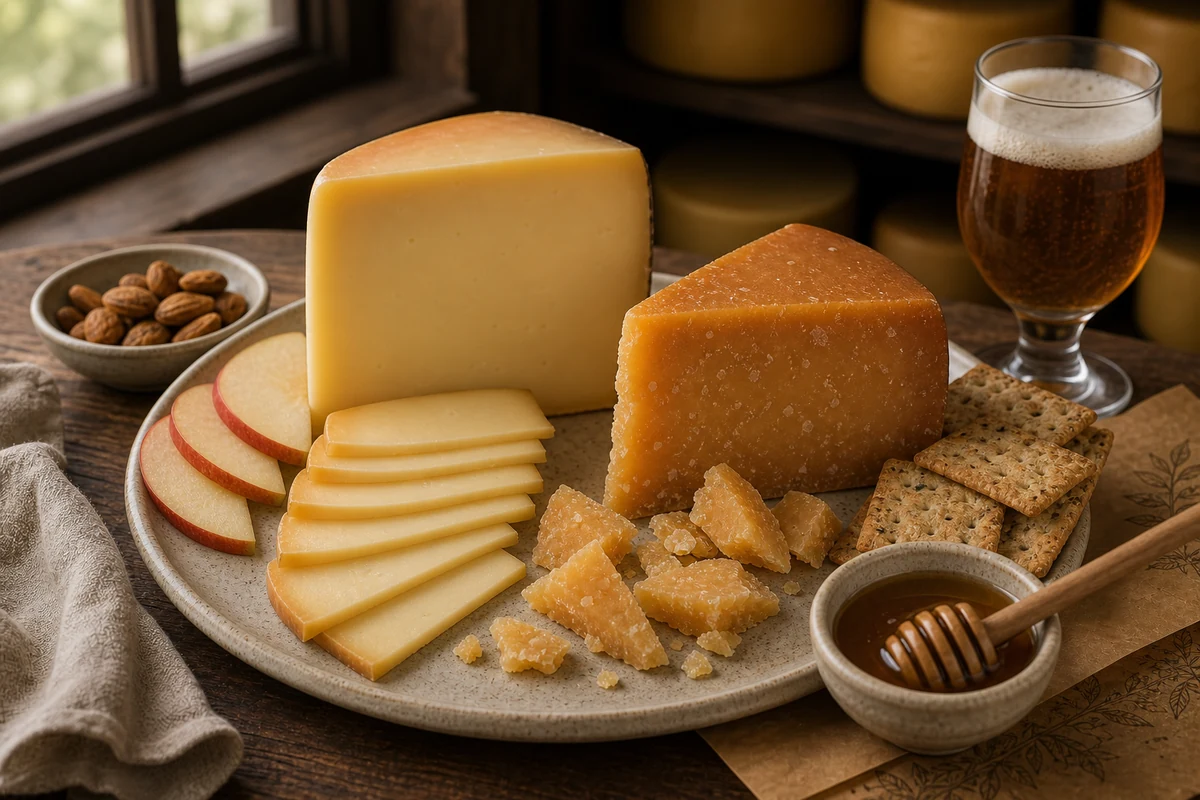
Ostbiten's list of uses runs from cheese boards, grating over pasta, gratins, hot dishes and cheese pies to sandwiches.
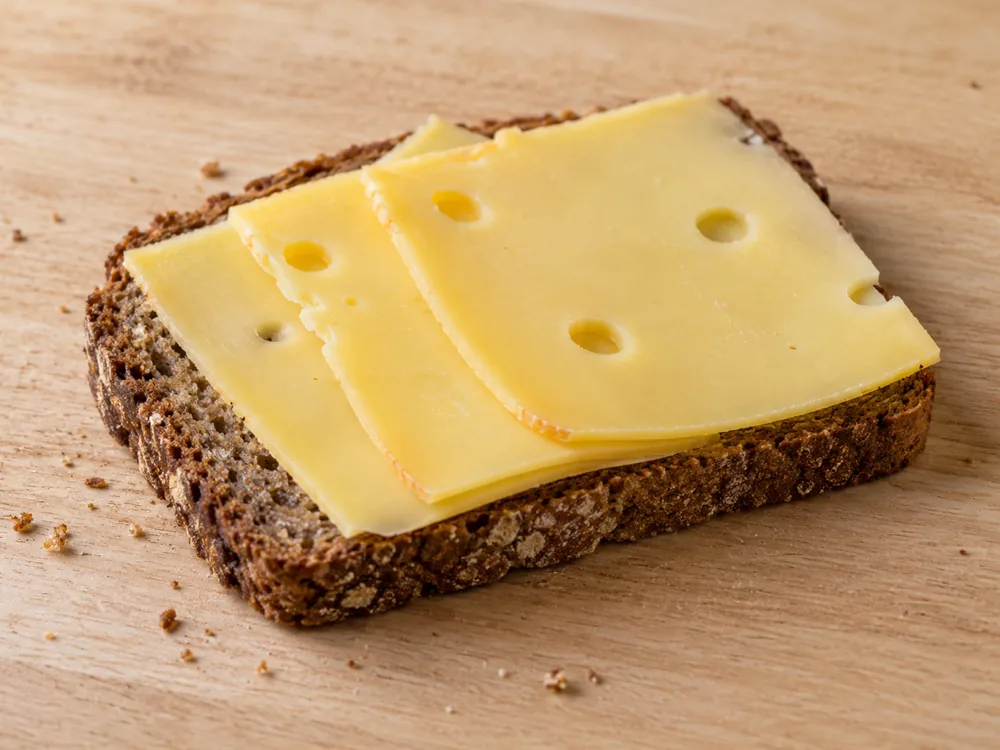
Arla's text for its 12-month Grevé says it slices easily and suits rye bread or kale pie. One panelist in the 2011 test wrote that Falbygdens' medium-aged cheese was as good on a sandwich as on a cheese board.
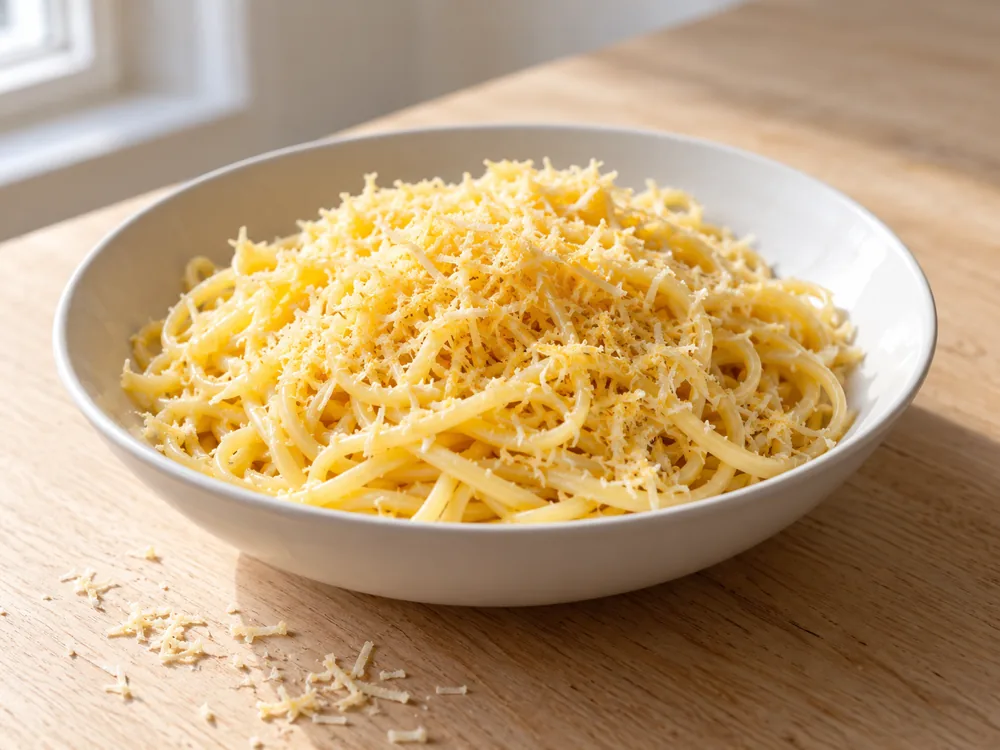
Ostbiten adds that Grevé melts well, which makes it a regular choice for gratinated dishes, and that in Sweden it is often used in cheese pies and smörgåstårta, a layered sandwich cake, because its flavor comes through without overwhelming the other flavors.
Storing Grevé
The Arla and Falbygdens packs give a storage range of 2 to 10 °C, with 10 °C as the maximum.
CDC advises keeping a refrigerator at 40°F (about 4 °C) or below, so the cold end of the label range is the one that matches the agency's advice. The retailer records give no keeping time once a pack is opened.