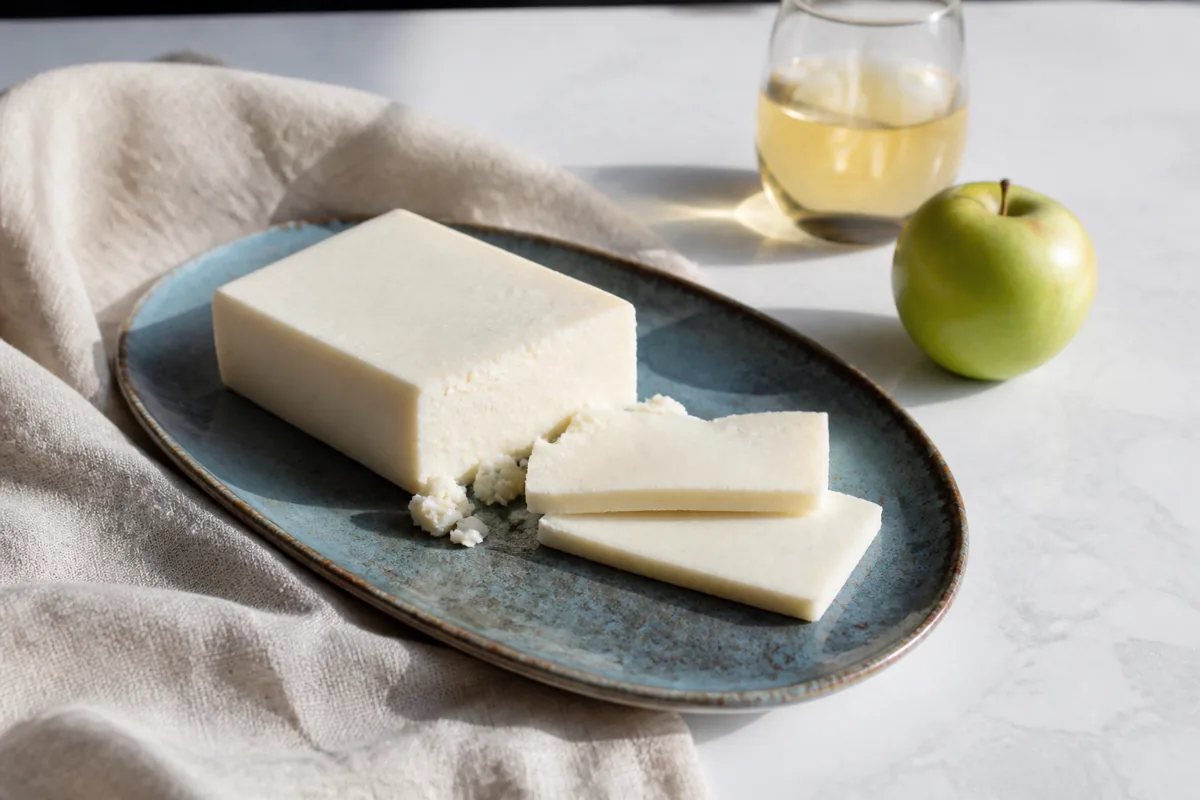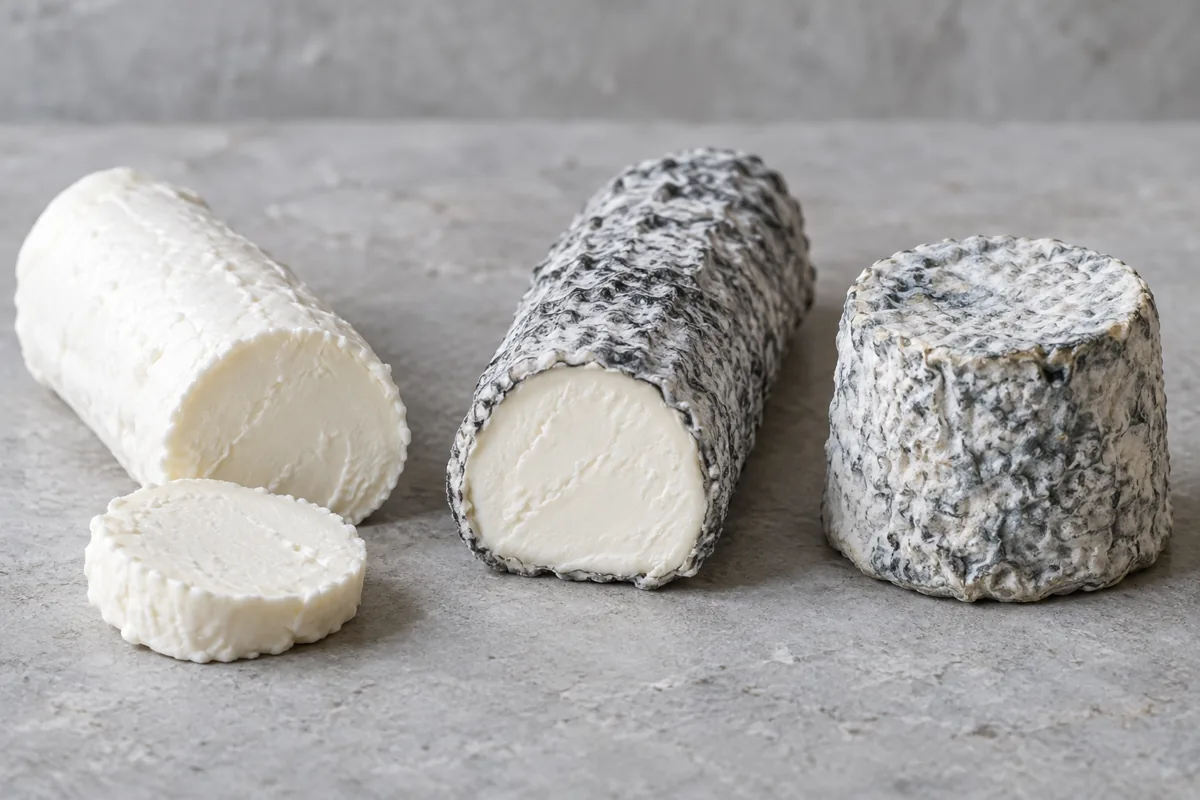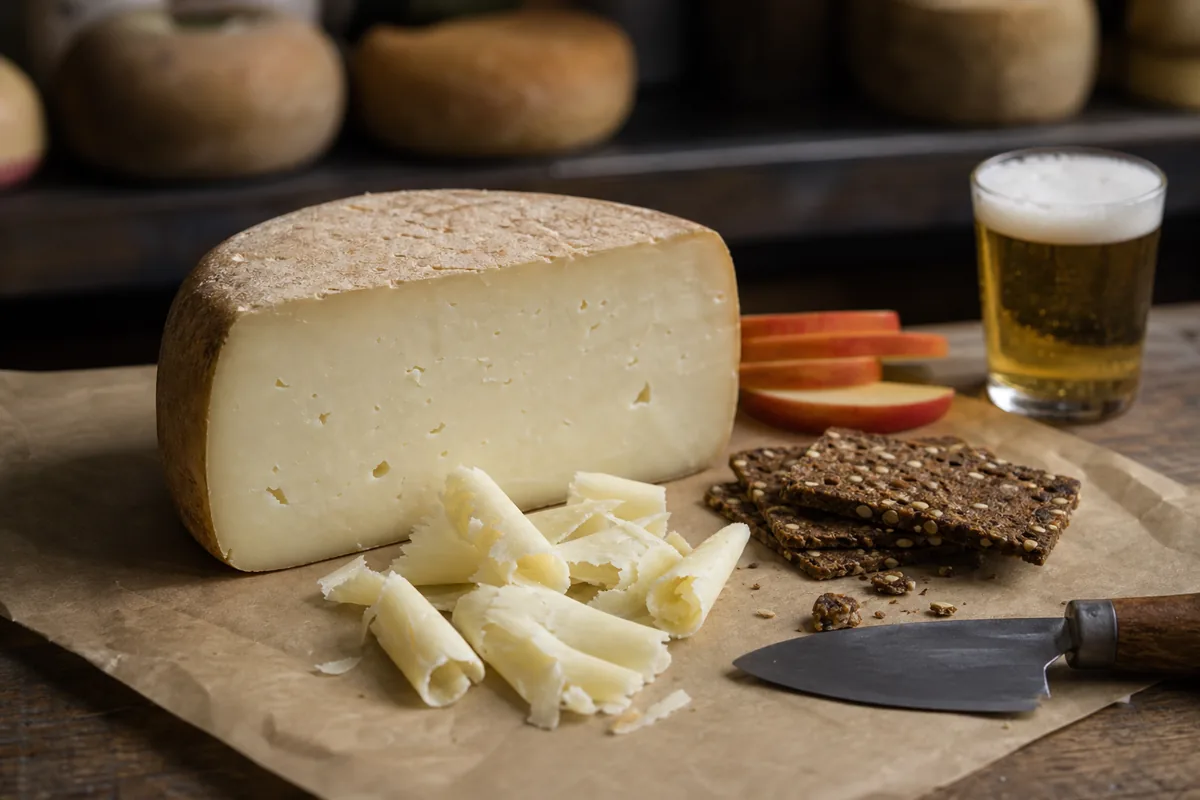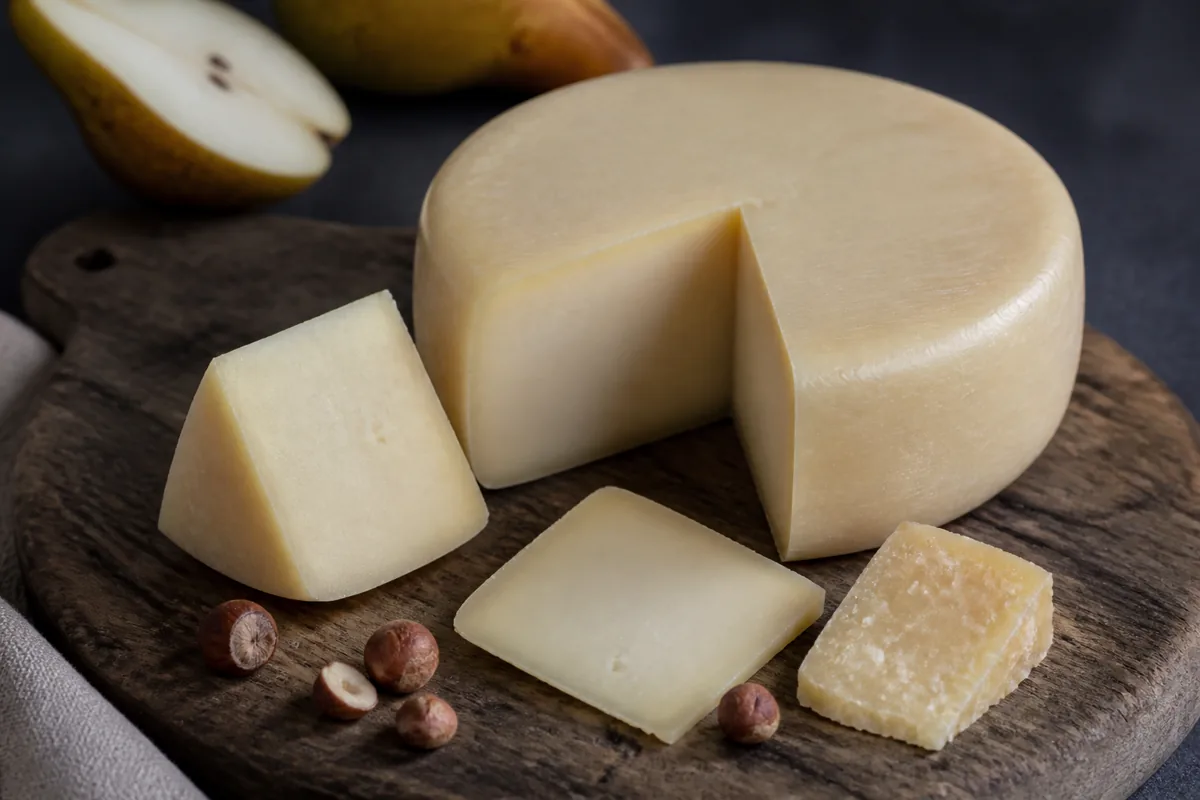
Goat Gouda is a Gouda-style cheese made with goat milk, and it cannot use the protected name Gouda Holland, which the European Commission ties to the milk of cows on Dutch dairy farms.
Goat Gouda is made from raw or pasteurised milk in the Academy of Cheese's account, which says that goat's milk versions of Gouda, a cheese typically made with cow's milk, are becoming more prevalent, while Cheese.com lists goat Gouda as a semi-hard Dutch cheese made with pasteurized goat's milk.
In This Article
How Does Goat Gouda Differ from Cow Gouda?
The first difference is legal. The European Commission describes Gouda Holland PGI as a naturally matured semi-hard cheese made from the milk of cows that graze on Dutch dairy farms, so a goat-milk wheel cannot carry that name.
The second is flavour. Cheese.com describes goat Gouda as tangy, and Williamson Wines credits one aged Dutch goat Gouda with an extra tang of goat's milk on top of caramel and butterscotch.
The Academy of Cheese lists sweet caramel, butterscotch and toasted nuts for aged Gouda in general, so in these descriptions the caramel and nut notes overlap and the tang is what goat milk adds.
| Name | Milk | Status |
|---|---|---|
| Goat Gouda | Goat milk, raw or pasteurised depending on the maker | Not one of the EU's protected Gouda names |
| Gouda Holland PGI | Cows on Dutch dairy farms | EU protected geographical indication |
| Hollandse geitenkaas PGI | Goat milk from Dutch holdings | EU protected geographical indication for a semi-hard cheese prepared in a way comparable to Gouda |
A card that says Dutch goat Gouda names an origin and a style, and only the name Hollandse geitenkaas signals the protected goat-cheese specification.
What Does Hollandse Geitenkaas Require?
Hollandse geitenkaas is the Dutch goat cheese that the EU protects as a PGI, and its specification describes a semi-hard cheese prepared in a way comparable to Gouda.
The milk must be pasteurised whole, semi-skimmed or skimmed goat's milk or goat's cream from Dutch dairy goat holdings, heated to at least 71.8 °C for at least 15 seconds. Milk from other animals is not allowed.
Curdling takes place at 28 to 32 °C with animal or microbial rennet, so if you are vegetarian, the protected name alone does not tell you which was used.
The specification also permits herbs, spices and vegetables such as nettle, fenugreek, thyme and tomato, provided their taste is discernible in the finished cheese.
The finished cheese is defined by these limits:
- Ripening: at least 25 days, described as four weeks
- Fat: 50 to 60 % of dry matter
- Moisture: at most 44 % fourteen days after curdling
- Salt: at most 4.1 % of dry matter
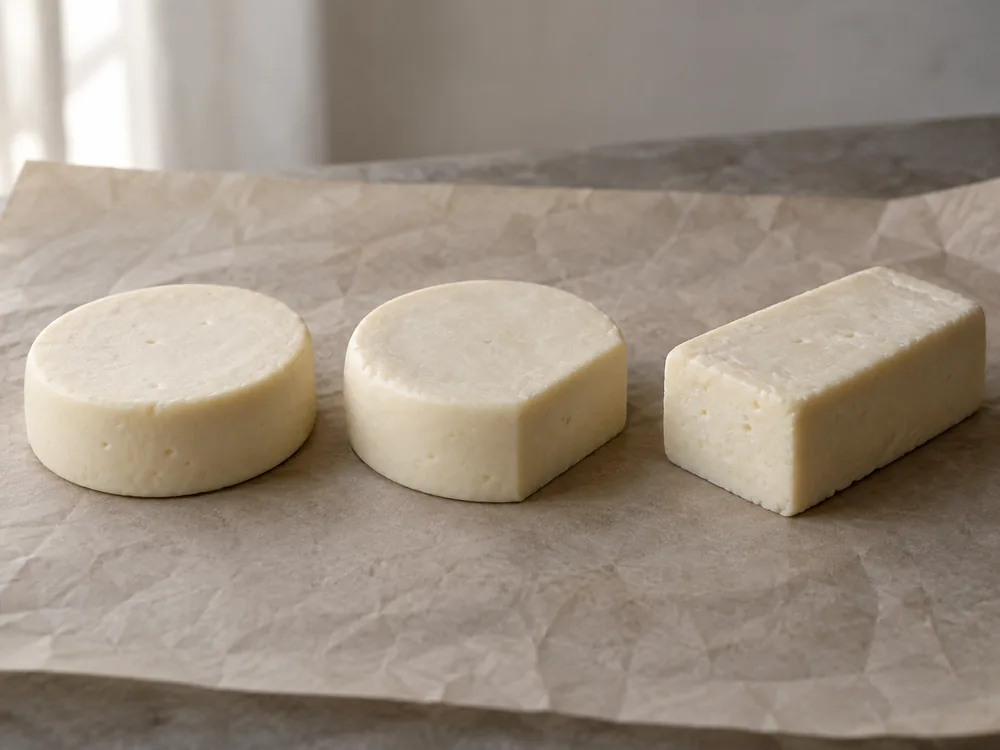
- Weight: 1.5 to 20 kg, as a flat cylinder, an angular wheel or a loaf or block
- Cross section: closed, or holes spread evenly or unevenly
A 25-day minimum is far below the six months or year on many aged labels, so a protected wheel can be much younger than a typical aged goat Gouda.
How Is Goat Gouda Made?
A Hollandse geitenkaas is made with the steps it shares with Gouda: mesophilic starter cultures, curdling the milk, pressing the cheese into shape and salting it in a conditioned brine bath.
The temperatures sit close to those the European Commission gives for Gouda Holland PGI, which is pasteurised at least 72 °C for 15 seconds and curdled at approximately 30 °C. The goat cheese therefore follows the same heat and curdling steps with goat milk in place of cow milk.
After pressing, the wheel soaks in a brine bath kept at 10 to 16 °C with a salt content of 17 to 20 °Baumé and a pH below 4.8, and the soaking time depends on the diameter and shape of the cheese.
Gouda itself is a washed-curd cheese, in which warm water replaces some of the whey and raises the curd to about 36 °C so that more whey is driven out and the paste turns firm and elastic.
The Hollandse geitenkaas specification says the whey is removed after curdling. If you want to know whether a given goat wheel's curd was also washed, ask its maker.
Before any of this, the specification says the milk stays in cooled farm tanks at no more than 6 °C for a maximum of eight milkings, and every delivery to the dairy is sampled for fat and protein.
It also says the semi-hard cheese comes from Dutch White goats or their crosses, and that the goats are not given feed liable to affect the smell or mild flavour of the milk, onion being its example.
From the beginning of the 1980s, Dutch dairy cow farmers began switching to goats because of high milk quota costs, which moved production from very small farms to dairies. Goat cheese output rose from 3 700 tonnes in 2000 to 19 780 tonnes in 2012, in Dutch Dairy Board figures cited in the specification.
The specification traces the basic recipe to 1946 instructions and says goat rearing and cheese making are still based on them.
What Does Goat Gouda Taste Like?
Young goat Gouda is mild. The Hollandse geitenkaas specification calls the taste soft, mild and clean, and Beemster describes its four-month Goat as refreshing and sweet.
Cheese.com lists goat Gouda as tangy with a grassy aroma and describes the ivory paste as carrying tart apple and fresh grass flavours.
With age the flavour changes: the specification says flavour and smell grow stronger as the cheese ripens, Cheese.com says hints of caramel and nuts develop as it ages, and Old Amsterdam lists caramel and nuts for its aged Goat.
Texture moves from pliable to firm. The specification calls a four-week Hollandse geitenkaas slightly soft to pliable and says it firms as moisture falls, while Cheese.com describes the goat Gouda paste as firm, crumbly and slightly chalky.
The Academy of Cheese describes the cause for Gouda in general: moisture falls during maturation, which intensifies the texture, and fats slowly develop deeper nutty and caramel flavours.
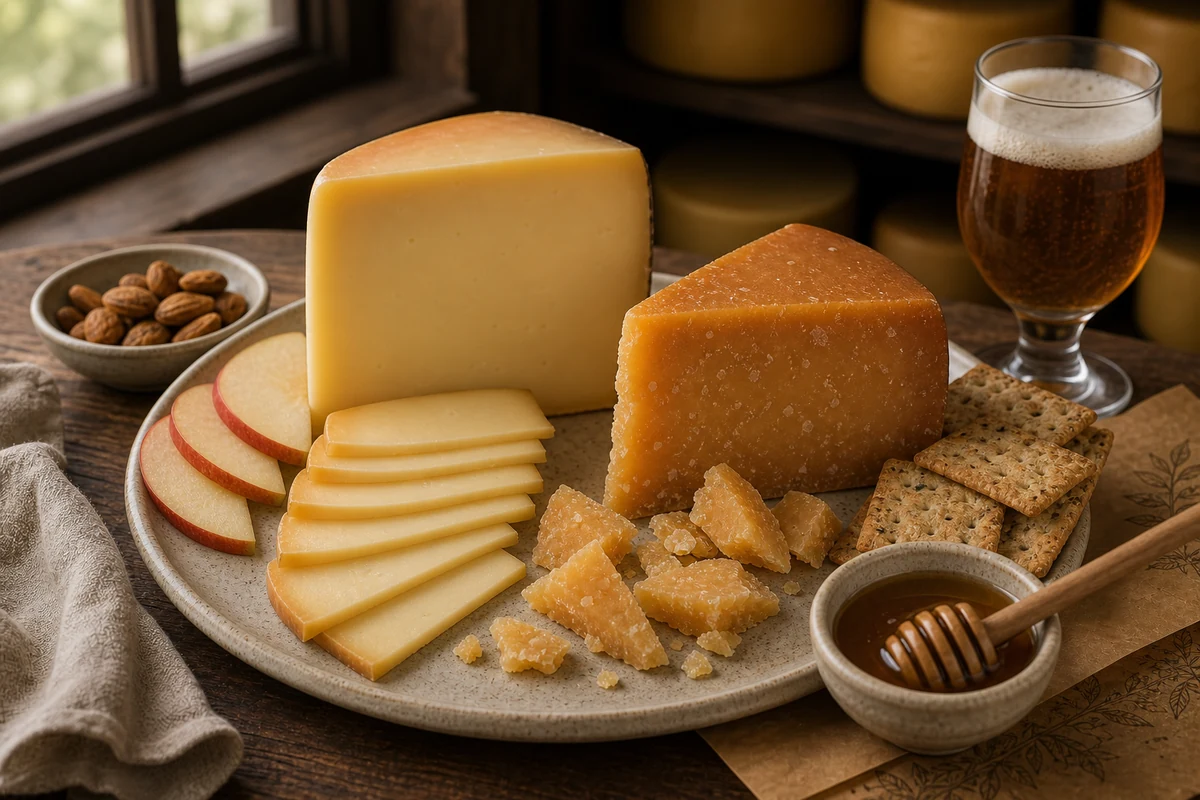
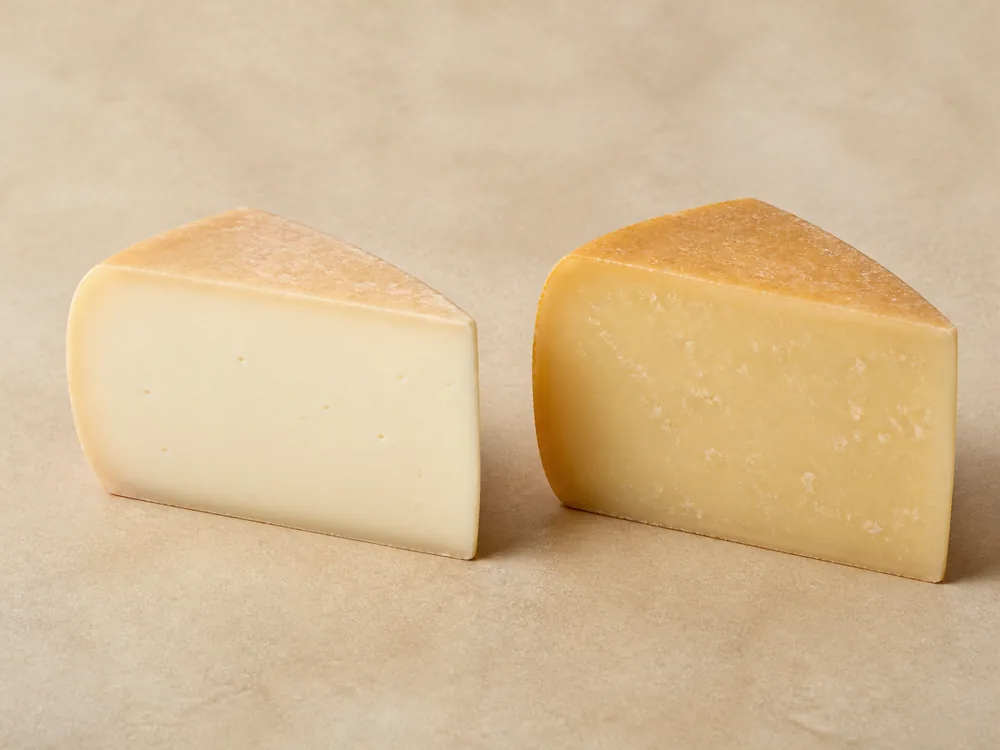
The oldest wheels add crunch. The Academy says proteins break down into amino acids that form tyrosine crystals, which it calls a hallmark of maturity in Gouda, and Williamson Wines describes an aged goat wheel with a deep toffee-coloured interior dabbled with white patches it calls crystalline minerals.
Colour follows the same path. An old wheel of Hollandse geitenkaas is ivory under the specification, which gives white for young and matured wheels, while Williamson Wines contrasts the snow-white paste of young Dutch goat Goudas with the toffee interior of its wheel held at least a year.
Cow Gouda darkens too, with the Academy of Cheese describing aged paste as rich amber or burnished caramel and the European Commission saying Gouda Holland PGI takes on a deeper golden colour as it ages.
What Should You Check on a Goat Gouda Label?
Age is the first line to read. The Hollandse geitenkaas specification sets a 25-day minimum, while the Academy of Cheese puts young Gouda at four to six months and aged Gouda at twelve months or longer.
| Example | Milk | Stated age | Described as |
|---|---|---|---|
| Hollandse geitenkaas PGI | Pasteurised goat milk from Dutch holdings | At least 25 days | Semi-hard, comparable to Gouda |
| Beemster Goat | Pasteurized goat's milk | 4 months | Smooth and semi-firm with a pale ivory interior |
| Ballerina Goat Gouda | Goat milk; pasteurisation not stated on the label | At least 1 year | Firm and crunchy, with a deep toffee-coloured interior |
Read in that order, the examples show goat Gouda at 25 days, four months and a year or more, so the month count on your label says more than the word young or aged.
Williamson Wines says that in the Netherlands most goat Gouda is aged for only a few months, and it sells a wheel held for at least a year as the aged version.
At the young end, the specification describes the mild, tart flavour of a four-week natural wheel as not soapy with little or no bitterness, and Beemster presents its four-month Goat as a great introduction to goat cheese.
At the aged end, Williamson says its goat wheel has the texture of older Goudas at one to two years. The Academy of Cheese gives 18, 24 or 36 months as common ages for long-matured Gouda, so a year or two on a goat label can already mean a firm, crunchy cheese.
Rennet is the second check. Cheese.com lists goat Gouda as vegetarian and Beemster and Old Amsterdam name microbial rennet, but if you buy a protected Hollandse geitenkaas wheel, check its own ingredient line.
Months on the label decide the style: a few months for the mild end, one to two years for a firm, crunchy wheel, and the 25-day minimum is only the floor for Hollandse geitenkaas. Rennet is settled only by the ingredient line, since the protected name allows animal or microbial.
Does Goat Gouda Have a Rind or Wax?
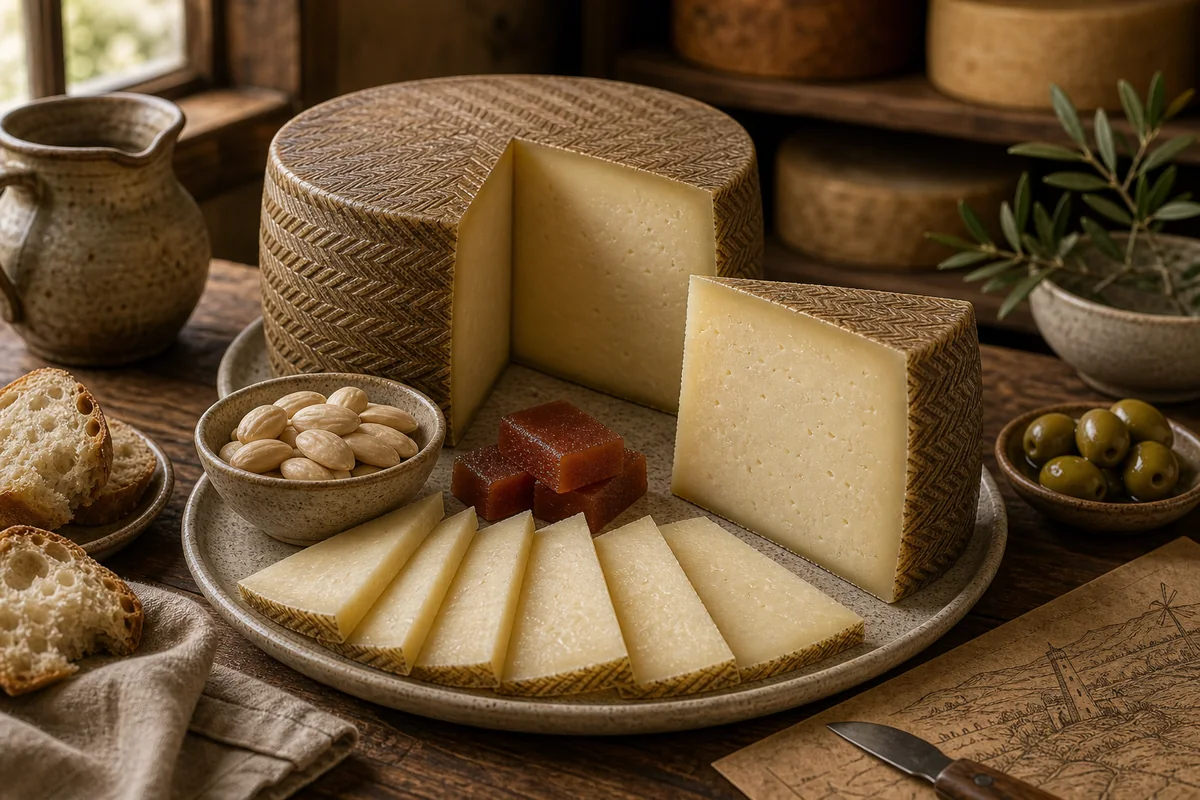
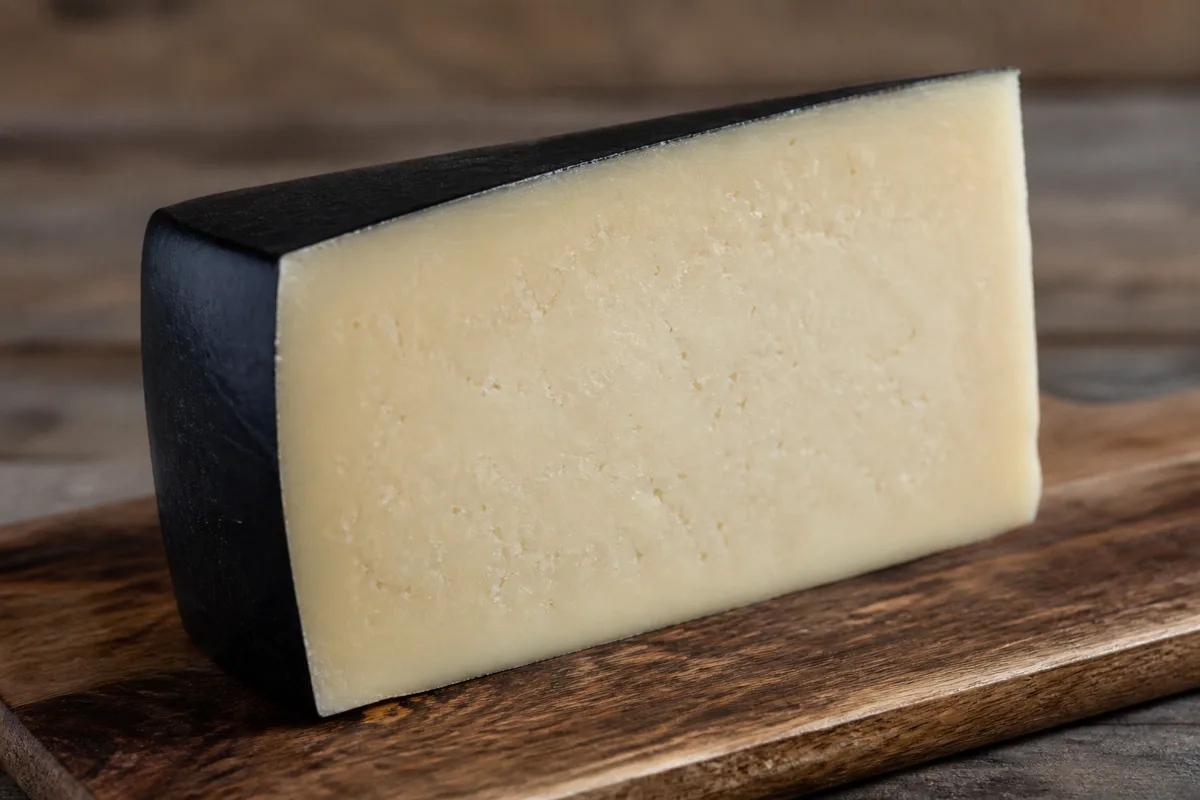
The Academy of Cheese says Gouda wheels are commonly coated in wax or plastic to prevent excessive moisture loss.
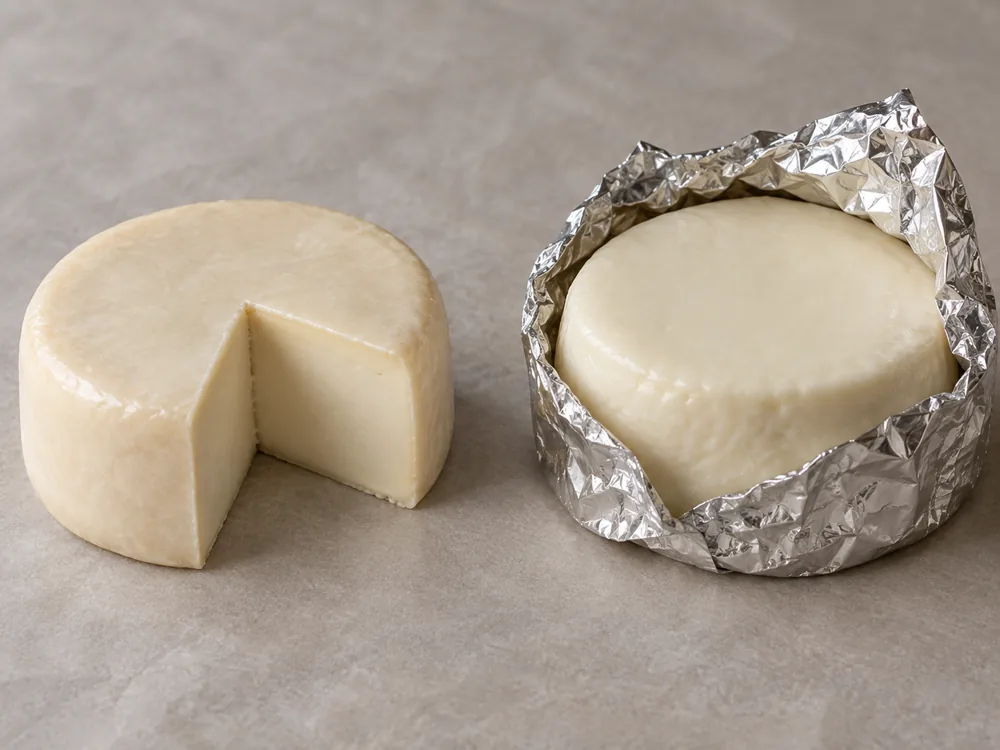
Hollandse geitenkaas allows two finishes. A naturally ripened wheel has a firm, smooth, dry, clean rind with no fungal flora, and the maker applies a food coating during ripening to prevent mould, while a foil-ripened wheel has no hard rind but is still pressed and brined.
The ripening conditions differ too. Natural ripening runs at 10 to 14 °C and must take place in the Netherlands, which the specification says ensures a dry rind, whereas foil ripening runs at 4 to 7 °C and can happen outside it because only the temperature needs monitoring.
The finishes also change how flavour develops. A naturally ripened wheel reaches the specification's mild, tart flavour after four weeks and then firms and strengthens as moisture falls, while a foil-ripened wheel takes longer to reach it.
The specification says foil packaging and cold ripening leave no hard rind and keep the mild flavour of young goat cheese for longer. If you want that mild flavour, a foil wheel keeps it longer, while a natural wheel develops firmer, stronger flavour.
Naturally ripened wheels carry a Hollandse geitenkaas casein mark and foil-ripened wheels carry none, so a foil wheel without the mark follows the specification.
What Should You Serve with Goat Gouda?
Cheese.com pairs goat Gouda with fruit, nuts, Chardonnay, Sauvignon Blanc and Pinot Noir.
Old Amsterdam suggests Sauvignon Blanc and Saison with its aged Goat, plus salads, fruit, nuts and honey, and Beemster lists wildflower honey and crushed cashews with crisp white wines and pale lagers.
Whether you pick a four-month wheel or an aged one, crisp white wine, fruit, and nuts or honey recur in the suggestions from Cheese.com, Old Amsterdam and Beemster.
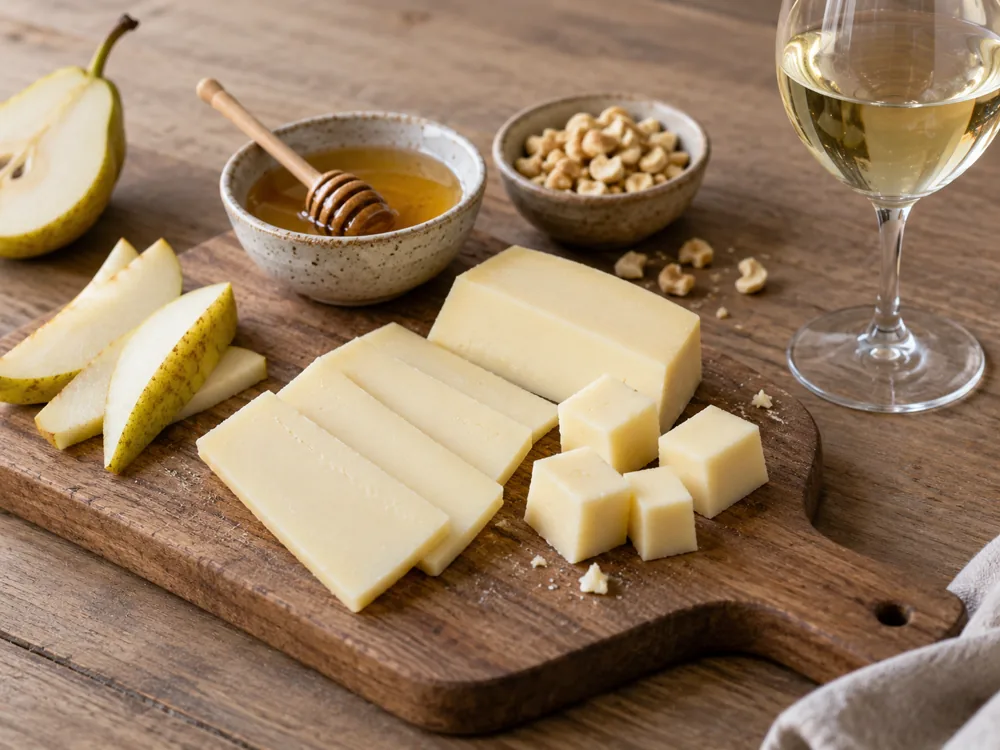
Williamson Wines pairs its aged goat wheel with a Sauvignon Blanc from its own range, saying the sharp, salty flavours and the extra tang of goat's milk work with it.
For aged Gouda in general, the Academy of Cheese's pairings lean toward robust reds such as Barolo and aged Rioja, tawny port, stouts and porters.
Beemster also suggests melting its goat Gouda on whole wheat bread.
Williamson says its goat wheel has the texture of other older Goudas, and the Academy of Cheese says aged Gouda is very dry and suits melting into sauces or shredding for topping better than large unmelted chunks. If you cook with an aged goat wheel, that is the advice to start from.
The Academy singles out mac and cheese as a dish worth making with aged Gouda and adds that aged Gouda can replace Parmesan when a rich, intense flavour is wanted.
Does Goat Gouda Have Lactose?
Old Amsterdam's own product page states that its Goat is lactose free at under 0.01 %, which is one brand's claim and does not describe goat Gouda in general.
The Academy of Cheese says washing the curd in Gouda replaces some whey with warm water to reduce lactose and acidity.
Old Amsterdam lists these values per 100 g for its aged Goat, which is one brand and not a figure for all goat Gouda:
- Energy: 443 kcal (1834 kJ)
- Fat: 38.3 g, of which 24.9 g saturated
- Protein: 24.5 g
- Salt: 2.50 g
- Carbohydrate: 0 g
The fat and salt limits in the Hollandse geitenkaas specification are measured on dry matter, so they cannot be compared with per-100 g label values.
Is Goat Gouda Safe During Pregnancy?
Goat Gouda can be made from raw or pasteurised milk according to the Academy of Cheese, so check the milk line on your pack against the NHS and CDC wording below for pregnancy.
Cheese.com and the Hollandse geitenkaas specification both call the cheese semi-hard, the specification requires pasteurised milk, and the Beemster entry states pasteurized milk.
Gouda is a hard cheese in the Academy of Cheese's make model, while Cheese.com lists goat Gouda as semi-hard, and neither agency names a raw-milk semi-hard goat cheese.
If you have a raw-milk wheel, that difference matters: the NHS lists unpasteurised hard cheeses as safe but puts other foods made from unpasteurised milk under the thoroughly cooked rule, and neither agency decides which label fits this cheese, so ask a midwife or doctor about that wheel.
The CDC adds that pregnant women are 10 times more likely to get a Listeria infection.
How Long Does Goat Gouda Keep?
The Hollandse geitenkaas specification gives a shelf life from a minimum of 28 days after manufacture to more than one year.
Keep your refrigerator at 40°F or below, the CDC advises, and refrigerate perishable food, cheese included, within 2 hours, or within 1 hour when it has been above 90°F.