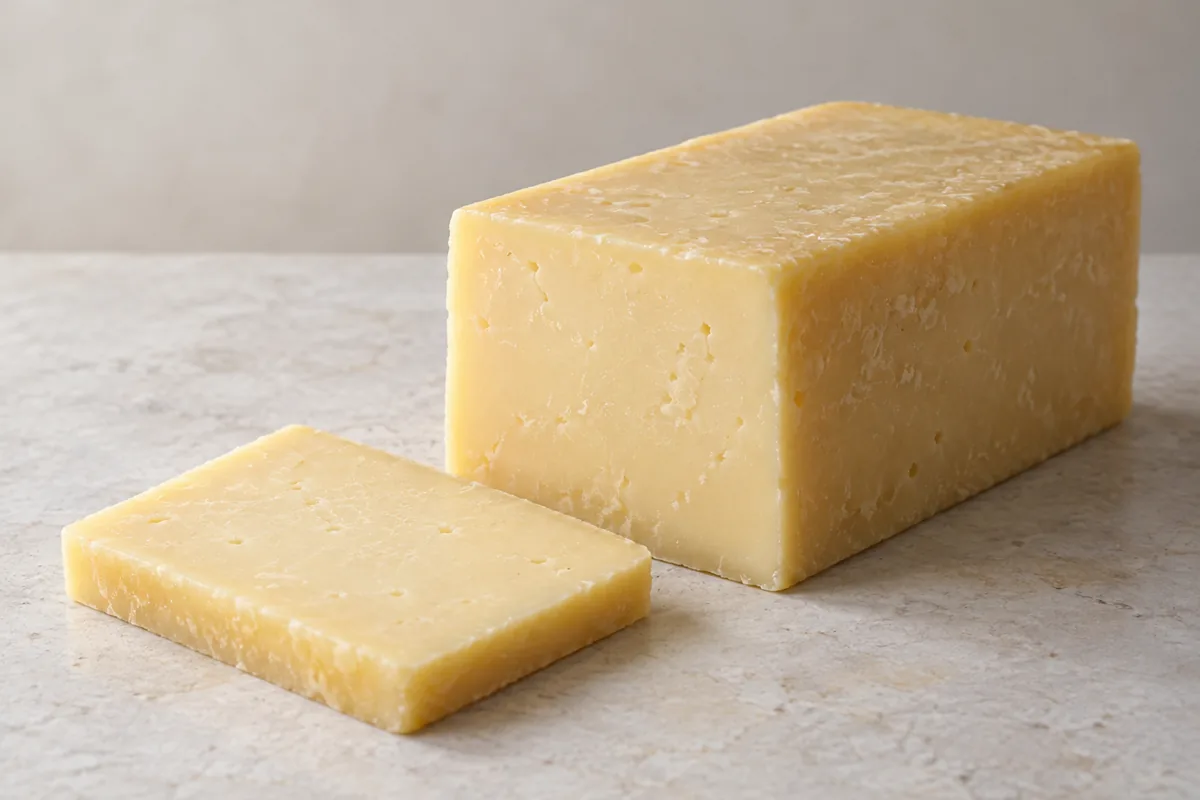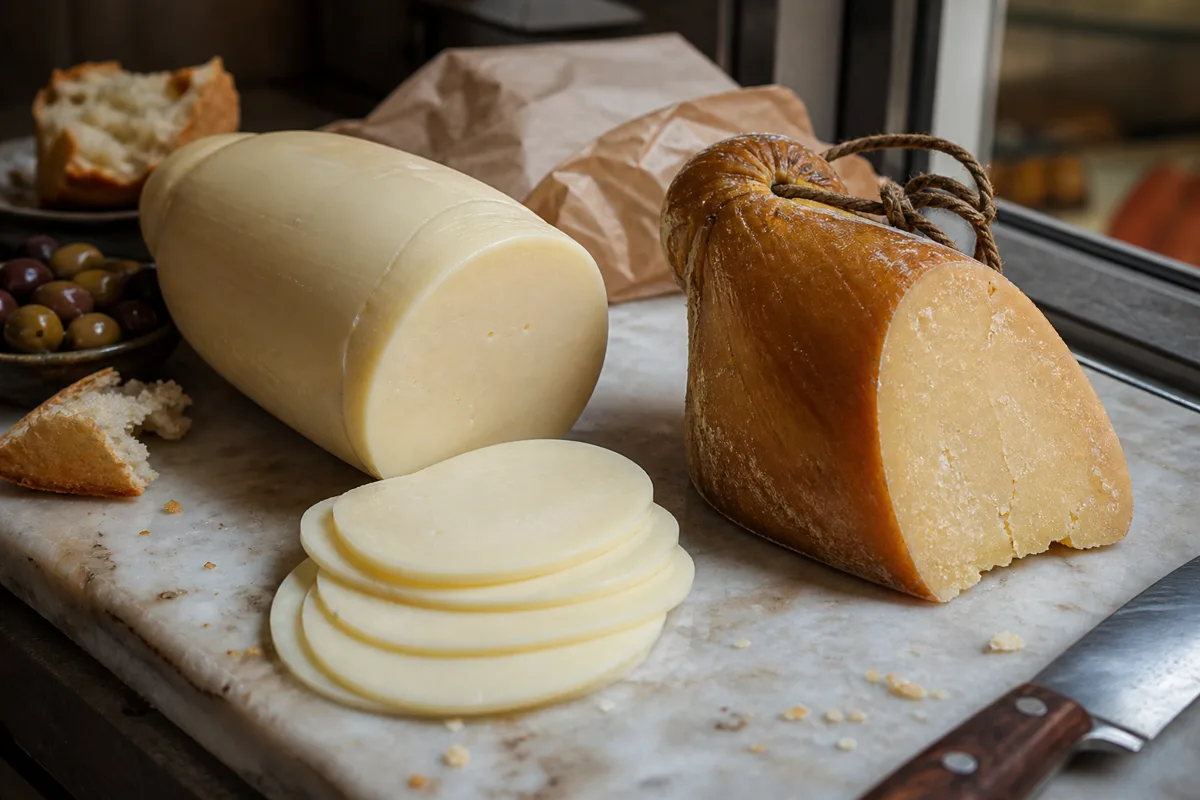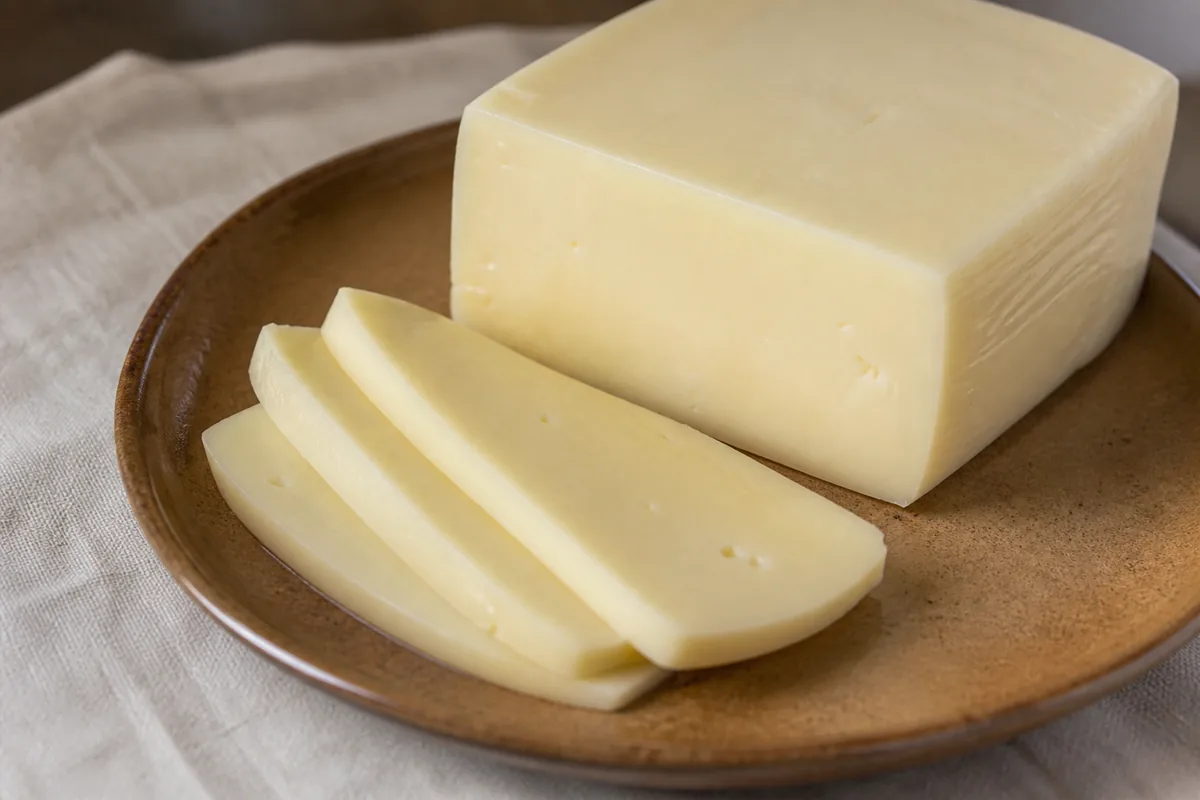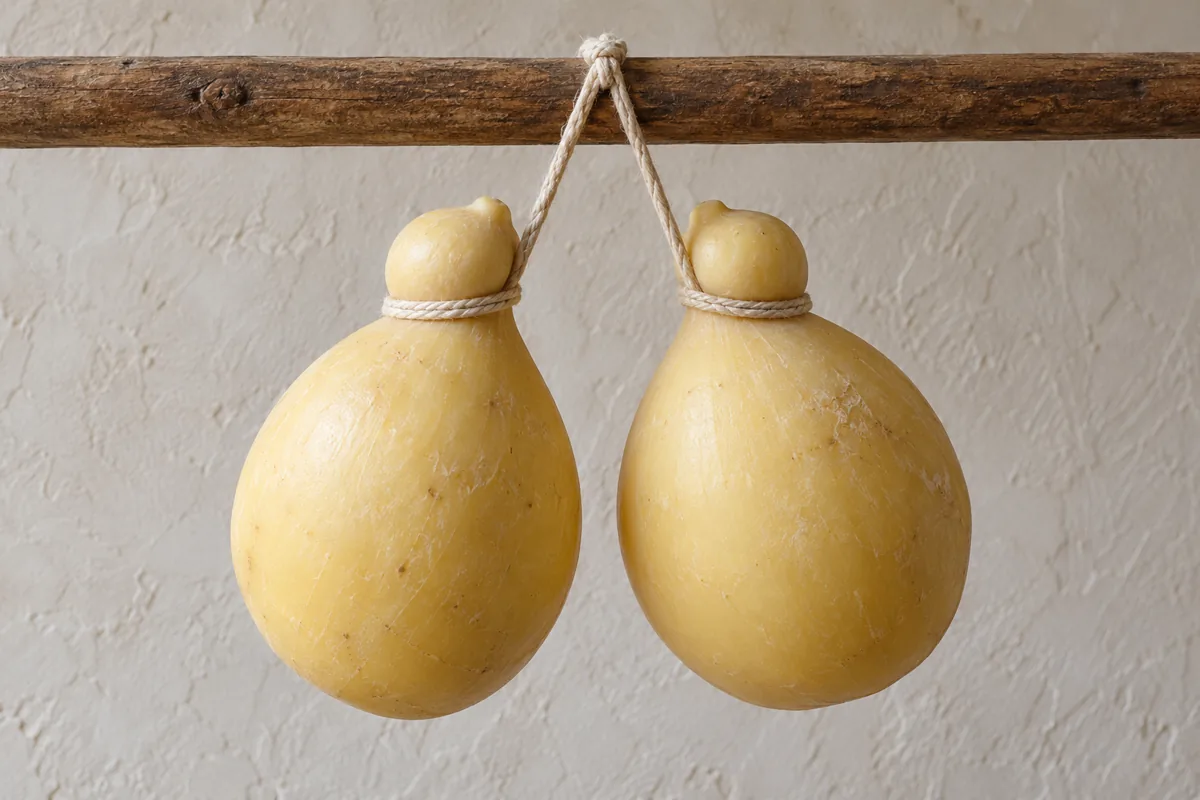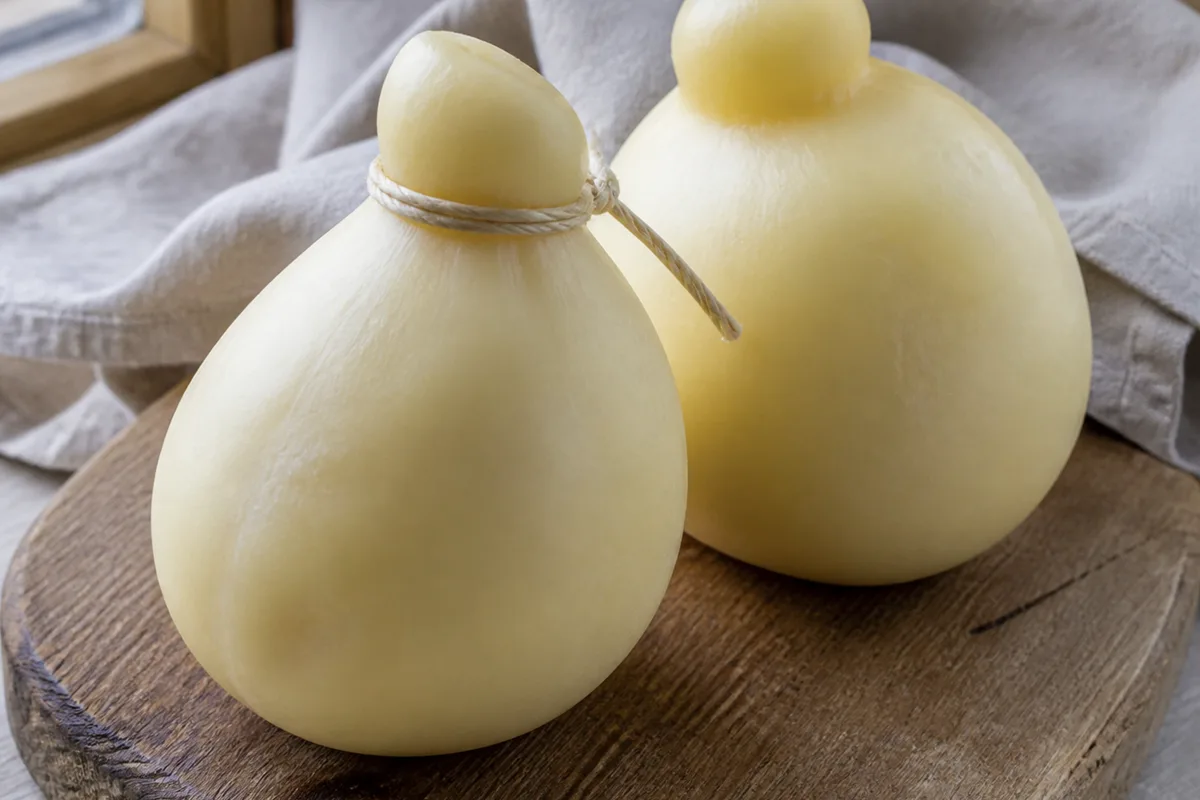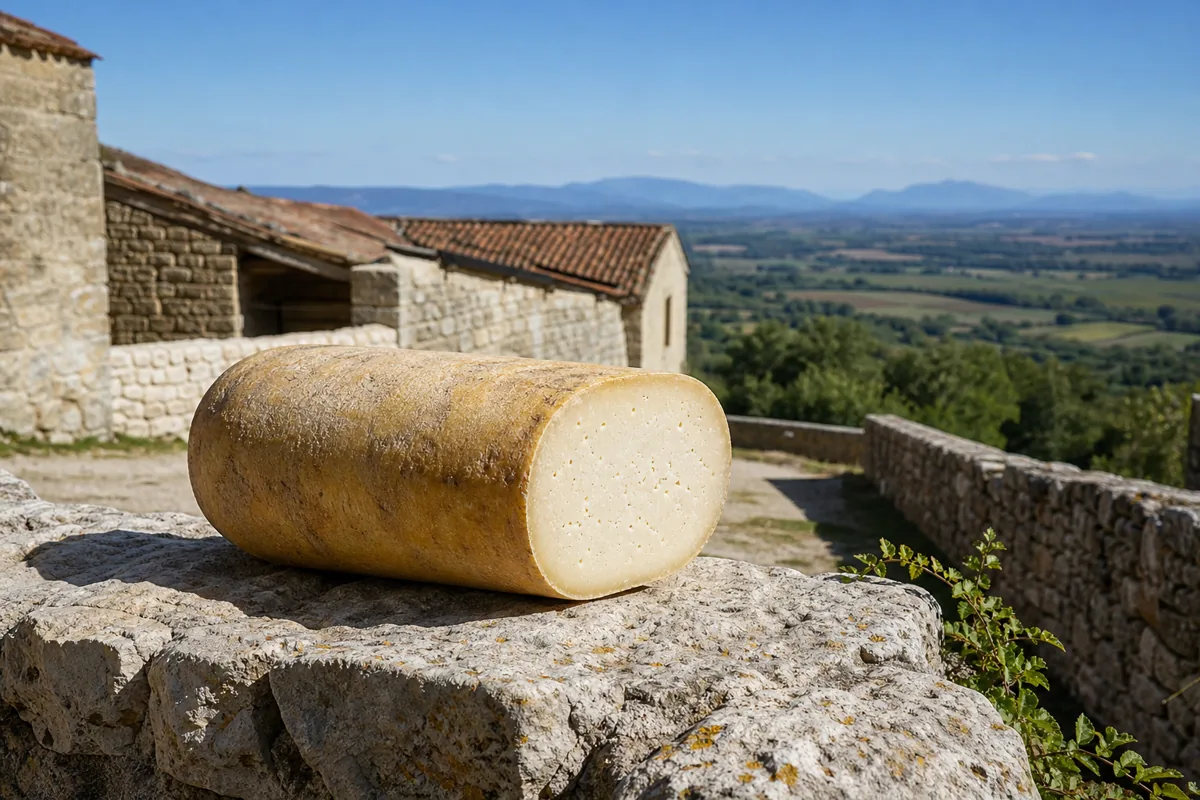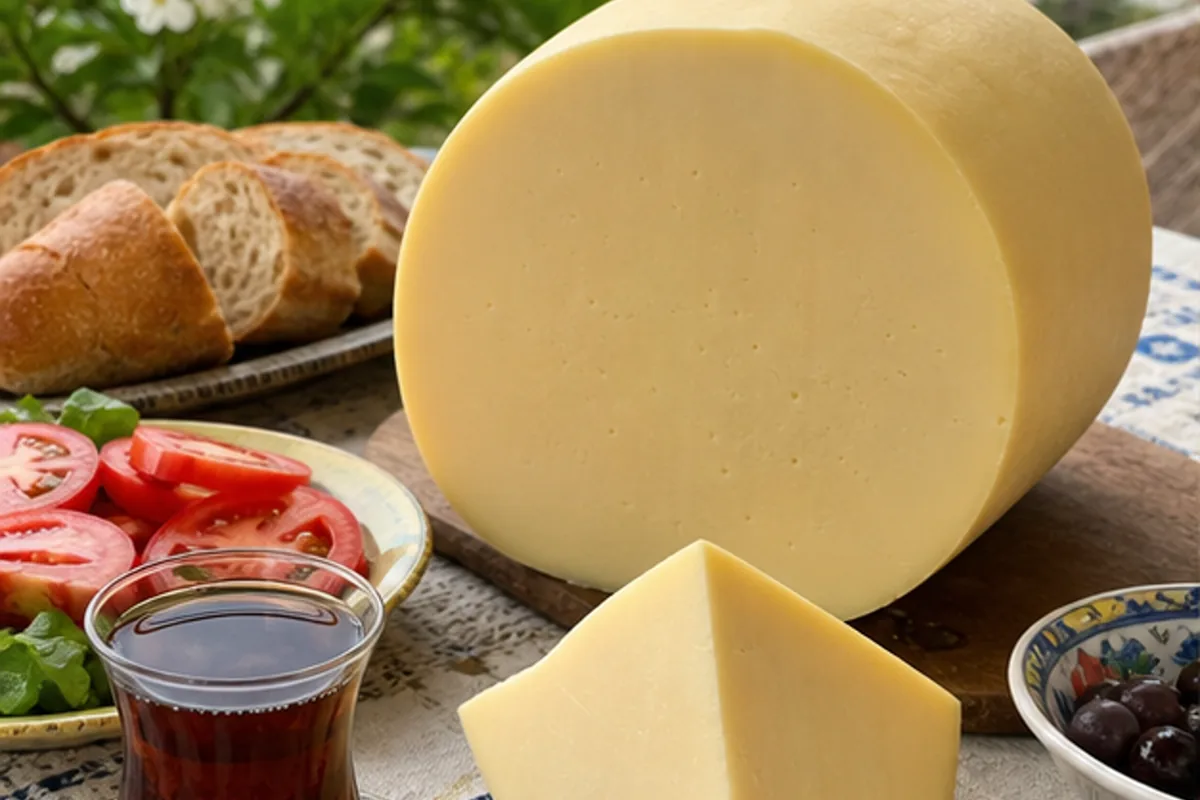
Kaşar is a Turkish cheese made by heating curd in hot salted water, kneading it and molding it, then selling it fresh or aged. Turkey's cheese rules allow a pack to say “eski” (old) only after at least 120 days of maturing, so that one word separates the two products.
The age statement predicts more than age, because one maker's fresh and aged Kaşar can differ in milk blend, salt and fat.
In This Article
What Is Kaşar Cheese?
Kaşar is a scalded-curd cheese. The Kars Kaşarı registration describes dipping ripened curd in hot salted water until it stretches like chewing gum, then kneading and shaping it by hand, and the Kırklareli registration describes a machine that scalds, kneads and portions the curd.
Milk varies by product. Kars Kaşarı is generally cow's milk, sometimes blended with sheep and goat milk.
Kashkaval is the wider name, and Wikipedia gives kaşkaval or kaşar as the Turkish forms. It places the cheese across the Balkans, Turkey and the Levant, made from cow's, sheep's or goat's milk or a mixture.
Wikipedia adds that in most of that region the word is often used for all yellow cheeses, so the name alone does not fix a recipe, and that Bulgaria separates kashkaval vitosha (cow), balkan (ewe) and preslav (mixed milk).
What Does “Eski” Kaşar Mean on a Label?
Eski means old, and Turkey's Food Codex cheese communiqué (Official Gazette no. 29261, 8 February 2015) lets a kaşar use the word only when it matured for at least 120 days. A matured cheese must also state its maturing time on the pack as a minimum number of days counted from production.
The same communiqué caps moisture in fresh kaşar at 45%.
One maker's two packs show how far the label can move. Sütaş's plain Kaşar lists pasteurized cow's milk, while its Eski Kaşar lists thermized cow's, sheep's and goat's milk and at least 360 days of maturing.
| Label detail | Kaşar (600 g pack) | Eski Kaşar (350 g pack) |
|---|---|---|
| Milk | Pasteurized cow's milk | Thermized cow's, sheep's and goat's milk |
| Age on the product page | None stated | At least 360 days from production |
| Energy | 325 kcal | 373 kcal |
| Fat (saturated) | 25 g (16 g) | 29 g (19 g) |
| Protein | 24 g | 27 g |
| Salt | 1.6 g | 2.3 g |
| Calcium | 700 mg | 750 mg |
The aged pack carries about 15% more energy, 4 g more fat, 3 g more protein and 0.7 g more salt per 100 g. It also uses a different milk blend, so age alone does not explain the gap.
What Else Should You Read on a Kaşar Pack?
The communiqué requires a matured cheese to show its production date in day, month and year form beside the last consumption date. Added to the minimum-days statement, that date shows the earliest day a given cheese could have counted as eski: production date plus 120 days.
The milk line is the second thing to read. When milks of different species are mixed, the communiqué requires the species to be named beside the product name, and it bars pictures of cows, sheep or goats from those labels.
Sütaş's Eski Kaşar, made from cow, sheep and goat milk, is a case that rule covers, while its plain Kaşar names only cow's milk.
Village, traditional, natural and farm wording is barred from cheese labels under the same communiqué, so those words cannot stand in for an age statement or a milk line.
What Does Kaşar Taste Like?
The Kars Kaşarı registration gives the clearest fresh-versus-aged contrast. Fresh Kars cheese is whitish when it leaves the mold and forms a yellowish crust within a week, with a whitish cut face and a lightly salty, bland taste that recalls milk.
Aged Kars cheese has a grayish rind and a cream-yellow cut face, and the registration ties its dense aroma to protein, sugar and fat breakdown during ripening.
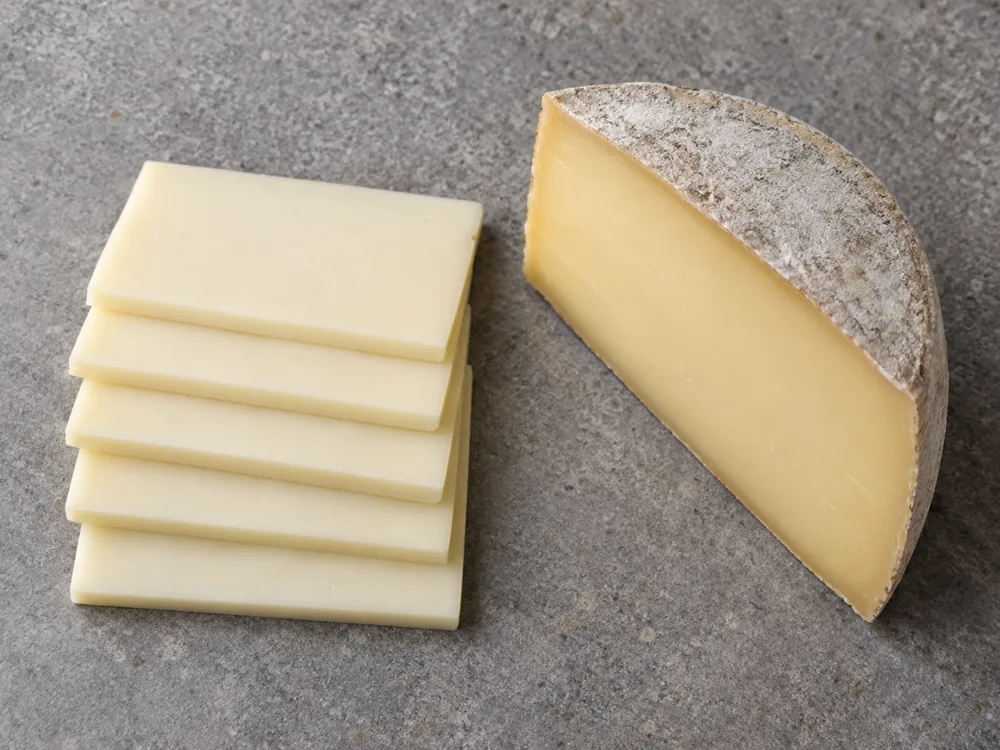
The registration calls aged Kars cheese lightly salty and quick to break up in the mouth, and describes its body as rather hard because the water content is low.
Sütaş credits the aroma of its Eski Kaşar to at least 12 months of resting, without describing it.
Texture is where sources part. The registration says the structure firms as maturing lengthens, yet a 2020 study of kaşar from several Turkish producers (Şimşek and Çelebi) found hardness fell over 90 days.
In that study fresh kaşar was hard and elastic, while the matured cheese softened, lost elasticity and stickiness and became easier to chew.
Neither source measures firmness on a retail pack sold as eski: the study stops at 90 days, before the 120 days that “eski” requires, and the registration offers a description, not a measurement. The days printed on the pack are a more reliable age cue than firmness at the counter.
What Changes Inside Kaşar as It Ages?
The Kars registration tabulates Kars Kaşarı at 3, 30, 60, 120 and 180 days of ripening, and every measure climbs. Dry matter rises from 54.5–58 to 60–63.5 g per 100 g, so the aged cheese holds less water, and salt rises from 2.3–3.1 to 3.4–3.5 g.
| Measure | Day 3 | Day 30 | Day 60 | Day 120 | Day 180 |
|---|---|---|---|---|---|
| Dry matter (g per 100 g) | 54.5–58 | 57–61 | 58.5–63 | 59.5–63 | 60–63.5 |
| Salt (g per 100 g) | 2.3–3.1 | 2.7–3.5 | 2.8–3.5 | 3.3–3.5 | 3.4–3.5 |
| Lactic acid (g per 100 g) | 0.83–1.35 | 1.05–1.61 | 1.16–1.94 | 1.42–2.29 | 1.65–2.29 |
| Protein (g per 100 g) | 24.8–27 | 25.5–28 | 26.5–28.5 | 26.5–28.5 | 26.5–29 |
| Fat in dry matter (%) | 43.1–46.86 | 47.27–50.86 | 48.1–51.3 | 48.1–51.3 | 48.1–52.35 |
| Soluble nitrogen (% of total nitrogen) | 2.77–3.66 | 2.99–6.46 | 3.37–7.95 | 3.55–8.06 | 3.59–10.50 |
The widest spread sits in the last row. At day 180 the soluble-nitrogen share, a measure of how much protein has broken down, runs from 3.59% to 10.50%, while salt varies by only 0.1 g, so cheeses of the same age can differ far more in ripeness than in saltiness.
Fat in dry matter climbs as well, from 43.1–46.86% to 48.1–52.35%. Sütaş prints only a minimum of 45%, the floor of the communiqué's full-fat class, on both of its packs, so the printed figure cannot show that rise.
The Sütaş pair in the label table above points the same way, with the aged pack listing more salt and protein per 100 g.
The Kırklareli registration lists 63–65% dry matter for cheese aged at least six months, in line with the Kars climb. Its protein figure, 17–20%, sits well below the 26.5–29 g Kars lists at 180 days and the 27 g on Sütaş's aged pack.
A 2020 study (Şimşek and Çelebi) saw dry matter move the other way: over 90 days of ripening, dry matter, water activity and pH generally fell while lactic acid and soluble nitrogen rose.
Does Kaşar Melt?
Turkish food writing treats kaşar as a melting cheese.
Yemek.com lists it beside mozzarella, cheddar, gouda and provolone, and calls it one of the cheeses used most often in Turkish kitchens.
| Use | How It Works |
|---|---|
| Toast and hot sandwiches | Named by Yemek.com as classic uses for kaşar. |
| Pide and börek | Baked dishes Yemek.com lists for kaşar. |
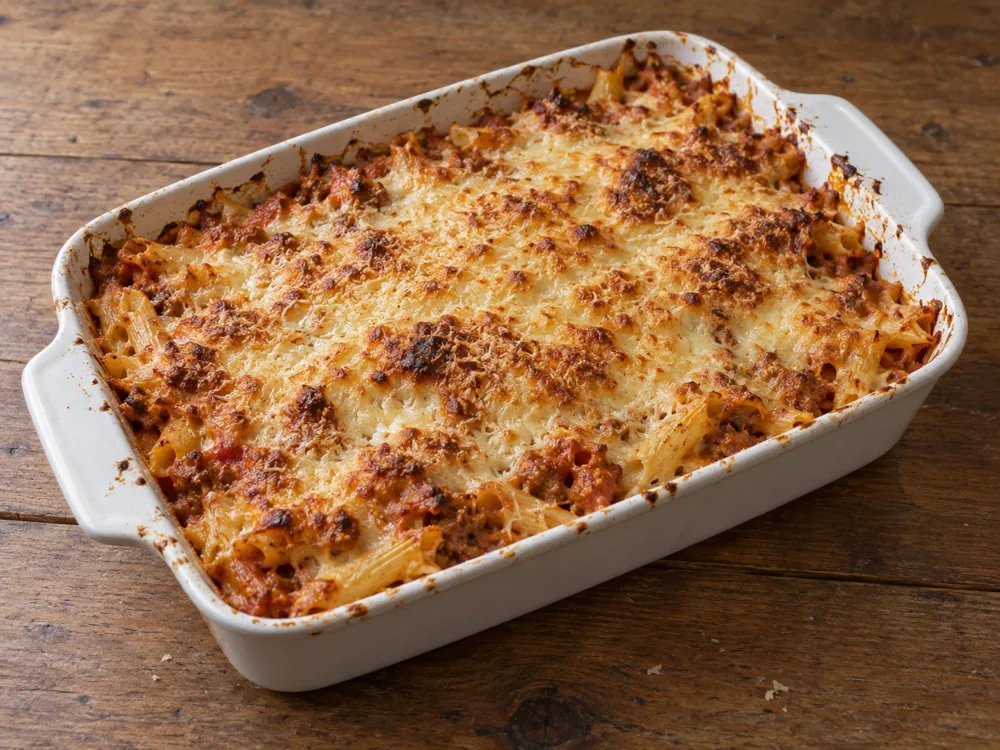
| Oven pasta | A third baked use on the same list. |
| Grated and browned | Yemek.com says grated kaşar can be sprinkled over dishes and baked until browned. |
On toast, Yemek.com says kaşar gives the more classic taste, while cheddar gives a more intense one and gouda a softer one.
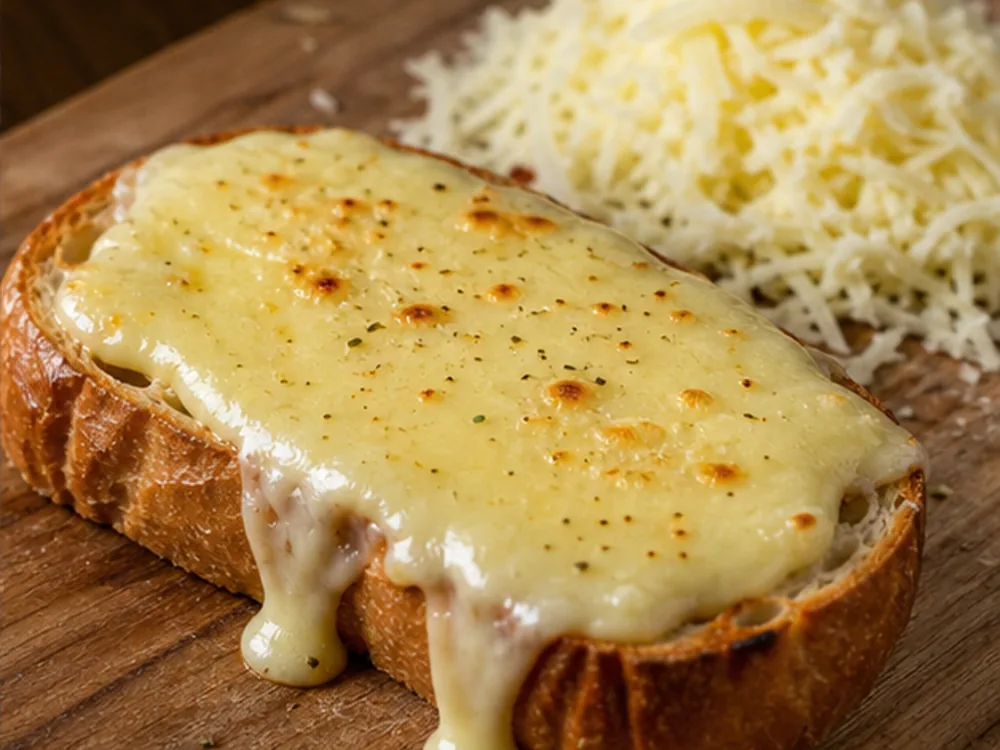
The same site says fresh kaşar melts more easily and flows, while aged kaşar may behave differently, without saying how.
Its general advice names the variables: a cheese's melt depends on its fat and moisture, its ripening time and how it is heated, and long exposure to high heat can make fat and water separate.
Yemek.com draws the same fresh-versus-ripe line for other cheeses, saying young gouda is softer and melts more easily while mature gouda has the denser aroma.
It also says fresh mozzarella, with more moisture, behaves differently from the lower-moisture kind used on pizza.
Şimşek and Çelebi's 90-day study reports one meltability value, 22.63 at day 90, with no fresh value beside it, so that figure cannot show how an aged wedge flows or browns under heat.
That single value has no fresh baseline beside it, so the moisture figures above are not tied to melt behavior.
Should You Buy Fresh or Aged Kaşar?
Sütaş points its plain Kaşar at breakfast, snacks, sandwiches and toasts, which fits the melting evidence, where fresh is the form Yemek.com says melts more easily.
It points its Eski Kaşar at breakfast, cheese boards and table service, which hints at the intended jobs without testing a melt.
Pack sizes differ as well: Sütaş lists its plain Kaşar in eight sizes from 200 g to 2 kg and its Eski Kaşar in only 250 g and 350 g.
Pick fresh kaşar for toast and baked dishes and an aged pack for the table, and check that the pack states at least 120 days of maturing before trusting the word eski. Read the milk line and the production date as well, because age does not show the milk blend.
How Is Kaşar Made?
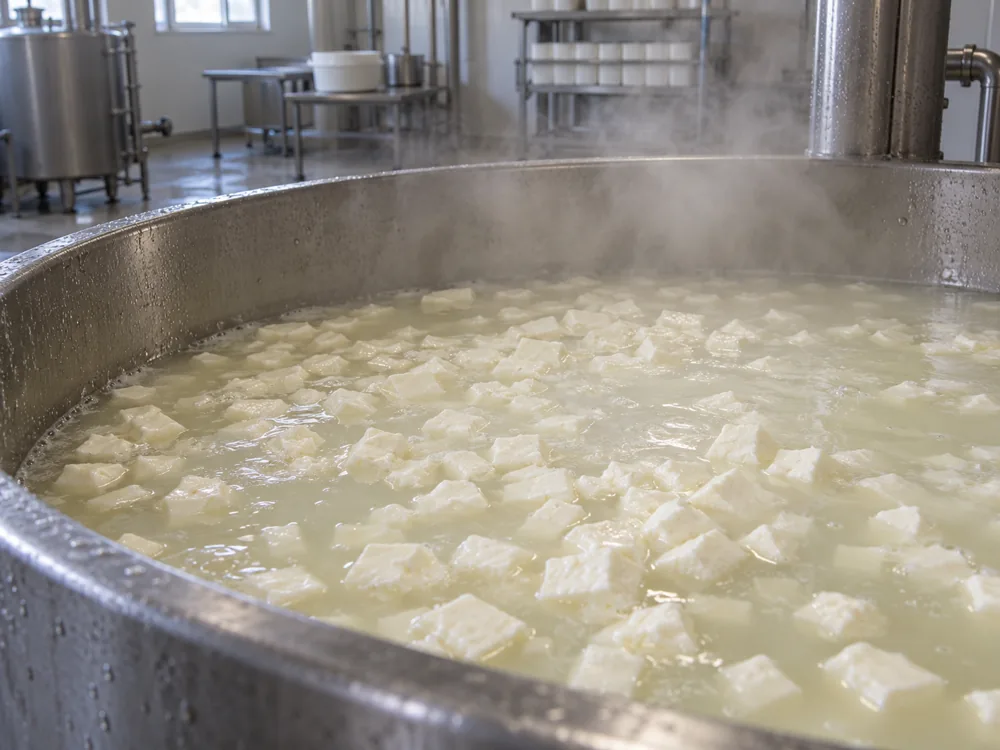
Both registered methods run the same sequence: set the milk, drain the curd, let it ripen until it will stretch, cut it small, scald it in hot water, knead it and mold it. They differ in the numbers and in who does the work.
| Step | Kars Kaşarı | Kırklareli Eski Kaşar |
|---|---|---|
| Curd before the hot water | Milk at 32–35 °C, rennet for about 1 hour, curd pressed 1 hour, then rested 3–6 hours to pH 5–5.2 | Rennet for 60 minutes at 35 °C; curd cut to 1 cm, heated at 38–40 °C for 20–30 minutes, then fermented to pH 5.20–5.10 |
| Hot water and kneading | 72–78 °C for 2–3 minutes, then kneaded 4–5 minutes | 65–75 °C for 10 minutes, with rock salt kneaded in |
| After molding | 30–40 days at 12–18 °C; aged wheels 3–6 months at 2–8 °C | 12 kg wheels rest 20–30 days, then at least 6 months in sacks at 2–4 °C |
The wait before the hot water is one of the steps the Kars registration stresses: it says this first ripening is what lets the curd be worked once scalded, and counts it among the stages where the cheese's basic structure forms.
Masters test readiness by scalding a small piece of curd in the scald brine and checking that it stretches smooth without tearing, and modern dairies read the curd's pH instead.
Kırklareli ferments its curd after shredding it two or three times, so that it processes easily in the scald and the paste comes out smooth.
Cut size sets how much the scald costs. The Kars registration says thick pieces scald slowly and let more fat and protein escape into the water, so it has the ripened curd cut to 0.5 cm at most before scalding.
It also wants the whey out of the vat within about half an hour, since longer standing raises losses and turns the cheese sour.
Salt is managed in the scald water: Kars sets the brine at 8–10 °Bé, and its masters salt the curd by hand while kneading only when the brine is nearer 3 °Bé.
The registration contrasts this wet scalding (sulu haşlama) with a dry-scald technique (kuru haşlama) and says kaşar made the dry way and sold as plain Kaşar lacks many Kars qualities. A plain label cannot show which method was used.
Kneading drives the leftover scald water and gas out of the curd and evens the mass, and Kars wheels go into the mold once the surface turns glossy and the curd feels about as firm as an earlobe.
That step is hand work at Kars, where masters trained through apprenticeship scald, knead and shape each wheel, and machine work at Kırklareli, where one machine scalds, kneads and portions the curd.
Both methods heat the curd in hot water and then work it into a mass, which is why that step, not a single recipe, defines the cheese.
Kars's pre-ripening room has no equipment, and the registration says north-facing windows are opened before dawn and again in the late afternoon so the north wind reaches the wheels, which it credits with stopping them from slackening, cracking or drying too fast. It requires the dairy to stand at 1,700 m or higher.
Which Kaşars Have Protected Regional Names?
Kars Kaşarı and Kırklareli Eski Kaşar Peyniri are regional names registered as origin designations (menşe adı). Kars Kaşarı is registration number 190, protected from 14 February 2014 and announced in the Official Gazette on 11 March 2015, and Kırklareli Eski Kaşar Peyniri is registration number 1408, registered on 11 July 2023 for the Kırklareli Chamber of Commerce and Industry.
| Detail | Kars Kaşarı | Kırklareli Eski Kaşar |
|---|---|---|
| Milk | Generally cow's milk, sometimes with sheep and goat milk | Cow's milk alone, or a blend of 30–45% sheep, 25–40% goat and 15–30% cow |
| Animals and season | Made May to August from pasture-grazing animals | Milk from animals raised in Kırklareli province |
| Aged form | Sold as eski after the third month, at least 90 days | At least 6 months in sacks, crust cut off at the end |
| Wheel | 12–12.5 kg, or 2–2.5 kg in smaller molds | 12 kg |
The registration explains what sets Kars Kaşarı apart: milk from animals grazing Kars and Ardahan pasture between May and August, which it credits, along with cool summers, for 32 aroma and flavor compounds that it says separate the cheese from its counterparts.
Kars sets its aged form at 90 days, below the 120 days the national communiqué requires before a kaşar label may say “eski”.
The registration says Kars Kaşarı is made in line with the Turkish Food Codex, and which figure governs a Kars wheel sold as eski is unresolved.
Both names come with inspection: a five-member commission coordinated by Kafkas University covers Kars producers from production to sale, and a body of at least three people inspects Kırklareli producers twice a year and on complaint.
Kars producers must also write the production date, with month, day and year, on the pack, and Kırklareli's inspectors check milk origin, milk ratios, maturing time, packing and use of the name.
Only the full regional name signals either method. The Kırklareli registration requires that name and the origin emblem on the product or its packaging, so a pack that says only Eski Kaşar does not claim it.
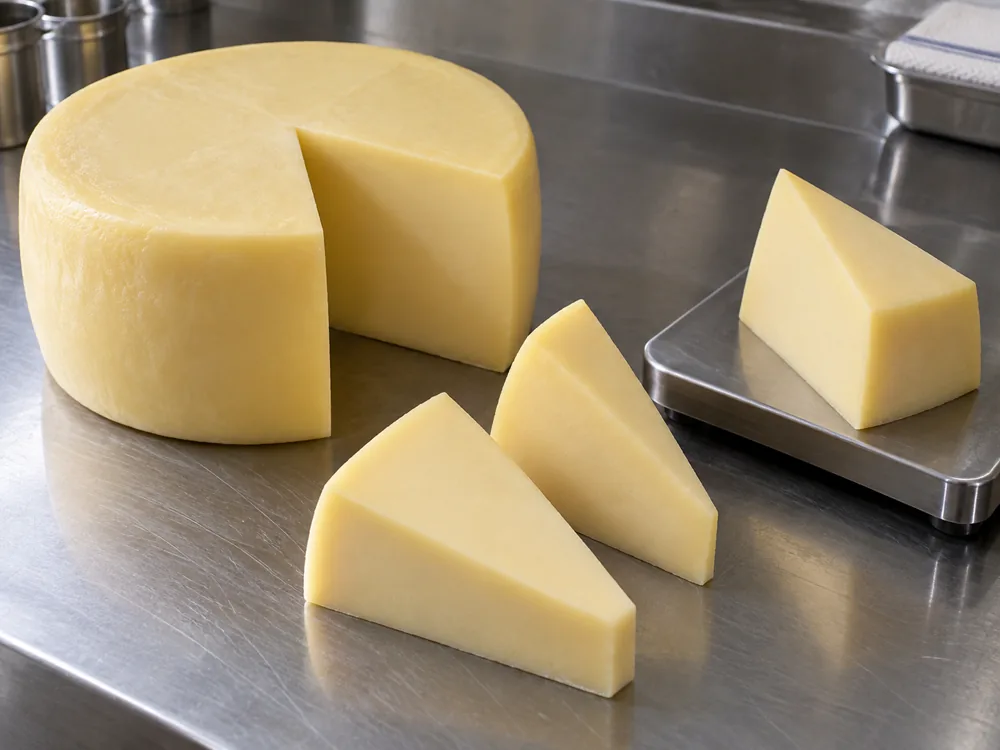
Kırklareli sells wheels and sacks wholesale, while at retail it cuts the cheese into triangular wedges and sells it by weight.
How Long Does Kaşar Keep?
The Kırklareli registration is the only source with shelf-life figures, counted to the printed date on the pack and kept at 4–6 °C.
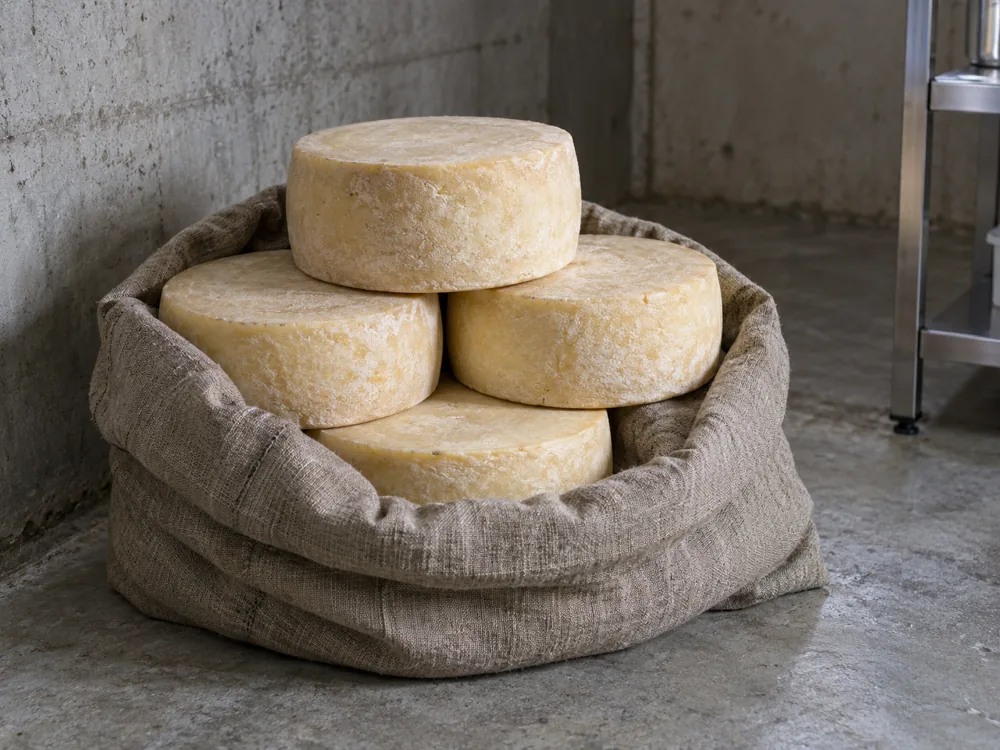
The Kars registration explains why its wheels travel five to a sack: it says grouping five 12–12.5 kg wheels extends shelf life and prevents drying, cracking and souring.
No limit for an opened pack or cut wedge is documented, so the printed date on a sealed pack is the only established limit.
Is Kaşar Vegetarian?
Not by default. The Kars registration says Kars Kaşarı is set with commercially produced animal rennet containing chymosin and pepsin, and the Kırklareli registration specifies natural abomasum rennet (şirden mayası), also an animal rennet.
Sütaş lists only “peynir mayası” (cheese rennet) on both its Kaşar and Eski Kaşar packs, and neither Kars, Kırklareli nor Sütaş states a microbial rennet. A vegetarian would need a pack that says so.
Can You Eat Kaşar While Pregnant?
Neither the NHS nor the CDC names Kaşar, so the answer depends on what the pack says about milk treatment.
Sütaş's plain Kaşar lists pasteurized cow's milk. The CDC attaches pasteurized milk to its safer hard cheese and the NHS to its safe semi-hard cheese, but neither names Kaşar or says which group it falls in.
Sütaş's Eski Kaşar lists thermized milk and states that it is made from raw milk, so the pasteurized-milk condition does not apply to it. The NHS accepts unpasteurised hard cheeses, but neither agency says whether an aged Kaşar counts as hard.
The CDC lists unpasteurized (raw) milk and dairy products made from raw milk as the riskier choice, and names hard cheese as safer only when made with pasteurized milk.