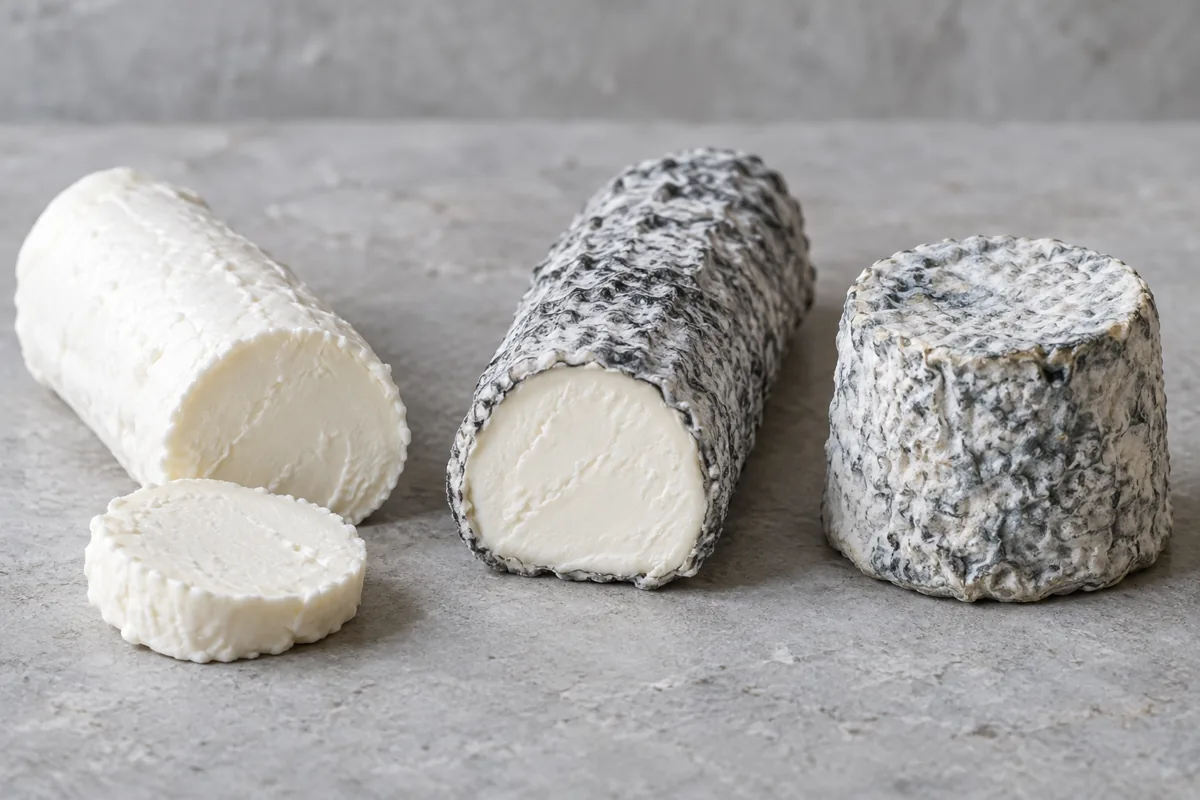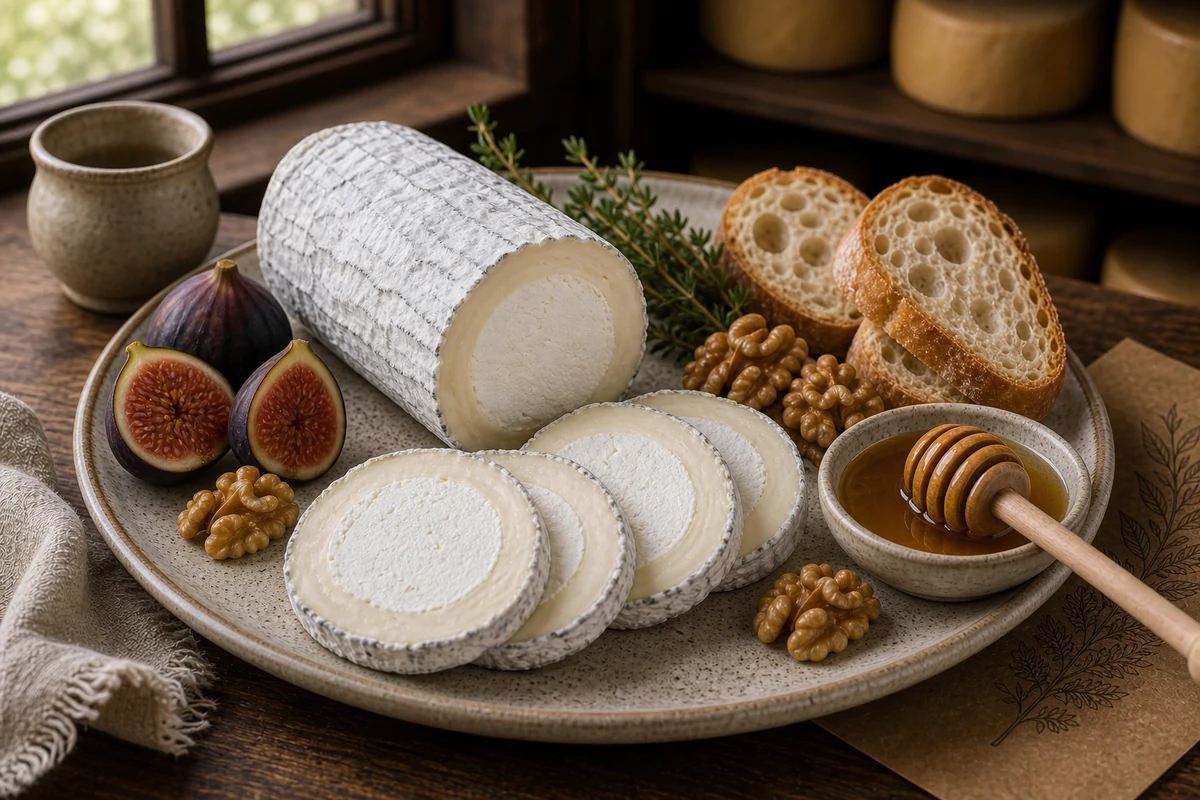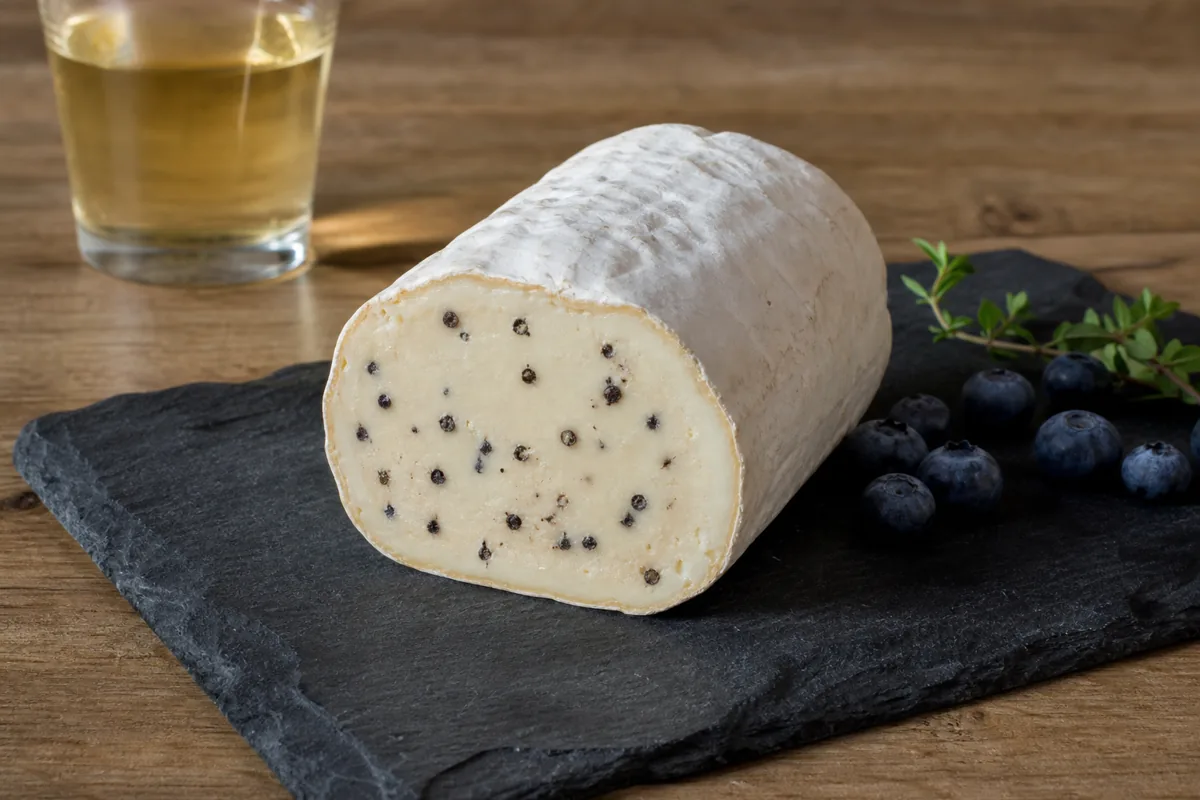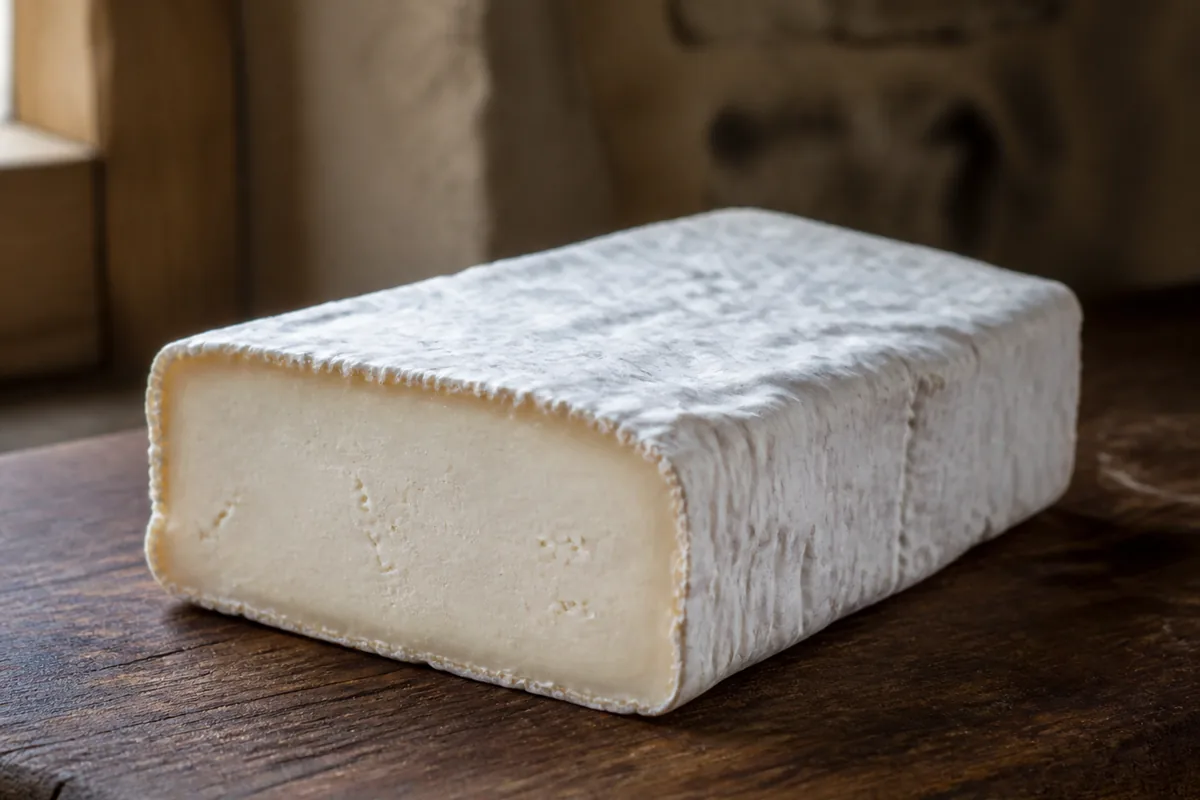
Leonora is a soft-ripened, brick-shaped goat's milk cheese made in Castilla y León, Spain, by Oscar Fernando Marcos Gonzalez. Its importer, Forever Cheese, lists pasteurized milk and 40 days of aging.
Under a white bloomy rind the paste is fudgy and slightly crumbly with a lemony tang, and a mushroomy creamline develops beneath the rind as the cheese ripens.
In This Article
Who Makes Leonora Cheese and Where Is It From?
Oscar Fernando Marcos Gonzalez makes Leonora in northern Castilla y León, the region where he grew up.
Laura Werlin writes for Foods and Wines from Spain that Castile-León is Spain's largest autonomous region and that more than half of its land is agricultural, which partly drew Oscar to cheesemaking even though he had worked in mining, not agriculture.
Forever Cheese's product page says the milk comes from two farms and always from Murciana goats, yet it lists the breeds as Alpina and Murciana, and its blog names Murciana and Alpina goats. A Foods and Wines from Spain profile says the milk comes from the Murciana goats that Oscar and his wife Patricia own.
Oscar first worked as a mechanic at a mine. A government-subsidized class that taught local residents a trade turned him toward cheesemaking, and he learned mostly from local women who had learned from their mothers and grandmothers.
Werlin says the government offered the course to stop the accelerating exodus of local residents to cities, and Forever Cheese adds that Oscar also traveled to other European countries to learn techniques he could bring back to Spain.
Michele Buster, whom Werlin identifies as a co-owner of Forever Cheese, recalls in the importer's 2021 blog that more than 20 years earlier she saw an oblong white cheese in a refrigerated case at the Alimentaria trade show, cut into it and loved it. She promptly phoned Oscar and asked whether he would sell cheese in the U.S., and he said yes.
Forever Cheese says it named the cheese Leonora for the U.S. market, after Oscar's home region, and sells it under its Mitica brand as an exclusive product. Foods and Wines from Spain instead says Oscar and Patricia christened the cheese.
Oscar's company, Quesos Facendera, takes its name from an old village custom in which all the inhabitants worked together for a common good.
Why Is Leonora Shaped Like a Brick?
Oscar based Leonora on Babia y Laciana, a traditional goat's milk wheel that Forever Cheese's blog places in León and its product page in Galicia. The blog calls it very acidic and made with lactic fermentation, with a harsh, spicy flavor that kept it from being an immediate success, though it did help Oscar and Patricia establish their first cheese plant.
The blog sets Oscar's work against a wider loss of rustic cheeses in the region. It says farms once turned milk into cheese to preserve it, but industrial cheese flourished under Francisco Franco, whose minimum production quotas put most artisanal producers, who could not keep up, out of business, so many traditional cheeses were lost.
After a lot of work on the recipe, Oscar arrived at a cheese that was less acidic and more appealing to a wide range of palates. He also changed the shape so it would stand apart from the original, choosing a lingote, the adobe brick used locally to build houses.
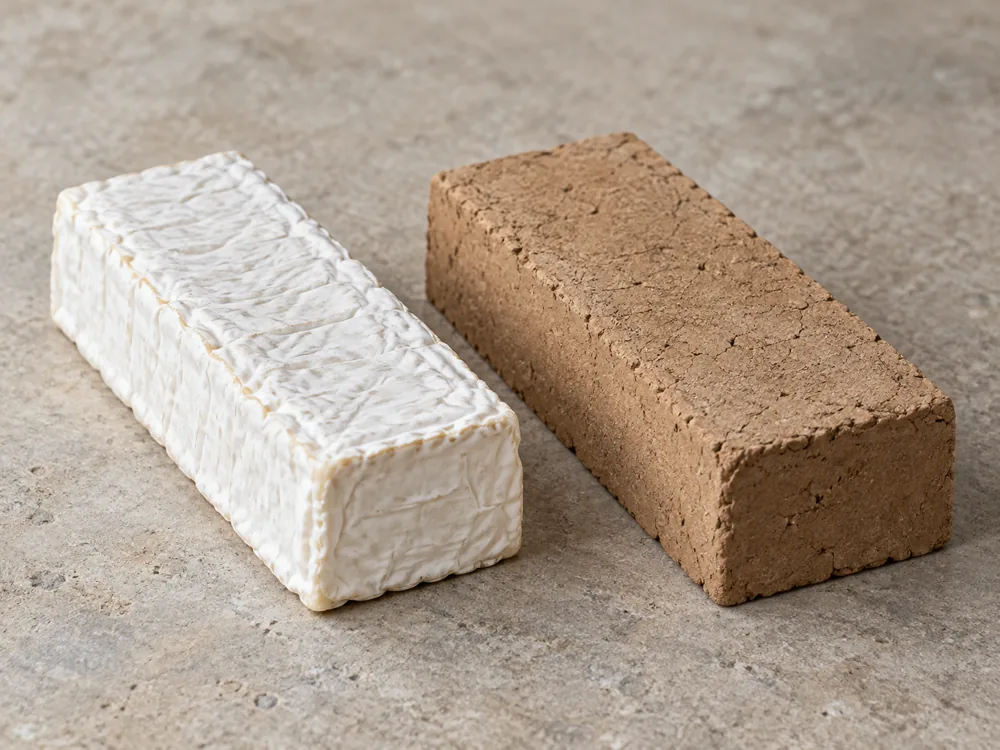
Foods and Wines from Spain describes the rectangular form the same way, as a nod to the bricks used in the area to build houses. Babia y Laciana is a wheel, so the brick belongs to Leonora alone.
What Does Leonora Taste Like?
Forever Cheese describes a signature bright, lemony flavor that comes from lactic fermentation, in a lush cheese that balances acidity with richness. Its blog adds a sour cream tang.
The blog calls Oscar's model, Babia y Laciana, very acidic and harsh, so the lemon note reads as the acidity that stayed after he made the recipe less acidic.
Writer Laura Werlin, in a Foods and Wines from Spain article, suggests retailers embraced the cheese likely because of its “lemony yet balanced savory and buttery flavors.” Forever Cheese describes the interior as fudgy and slightly crumbly.
Forever Cheese says mushroomy notes develop as the cheese ages further, on top of the lemony base.
Asked how he likes to enjoy his cheese most, Oscar told Werlin “with great company,” instead of naming bread or wine. Neither Forever Cheese page nor Werlin's article names a food or wine to serve with Leonora, so no pairing is offered here.
How Does Leonora's Creamline Develop?
Leonora's rind carries Penicillium candidum, the white mold behind bloomy rinds. Culture magazine says surface-ripened cheeses ripen from the rind inward to the interior paste, and that a bloomy-rind cheese starts semi-firm and softens from the rind inward as earthy, mushroomy flavors arrive.
Culture adds that bloomy-rind cheeses such as Brie get their white rind from Penicillium candidum added to the milk, and that bacteria need air to grow, so their growth stays on the rind and out of the interior paste.
Forever Cheese reports the same pattern for Leonora: a fudgy, slightly crumbly interior surrounded by a creamline that grows in intensity as the cheese ages past its initial 40 days of aging.
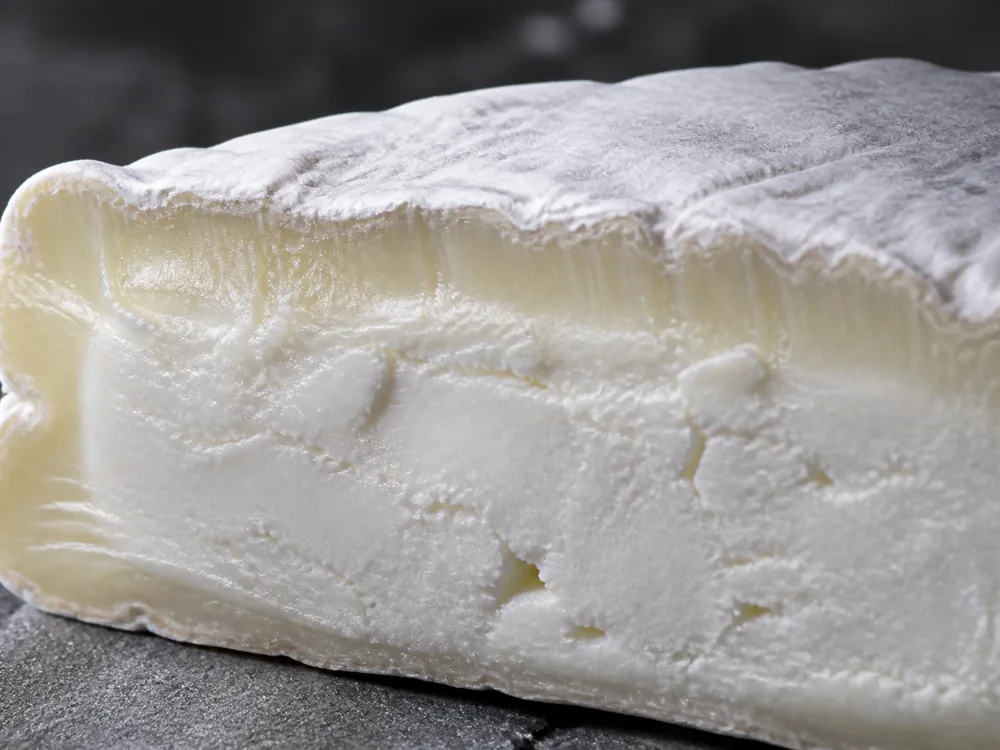
Forever Cheese's wording treats the 40 days as the initial period of aging. Neither Forever Cheese page says how long the creamline takes to reach any particular width.
Buster says the rest of the cheese she tasted at the trade show went home in one of Forever Cheese's containers and arrived at the warehouse mottled gray instead of bone-white. She liked it that way, but the gray could not be reproduced consistently, and she says uncontrolled mold takes over a cheese plant and becomes impossible to eradicate.
After much trial and error the team settled on a version with the white mold on the rind. Foods and Wines from Spain describes the finished rind as slightly wrinkled and “rustic yet uniform in thickness and intention.”
Wrinkles alone do not name the mold. Culture ties wrinkly rinds on goat cheeses such as crottin and Bijou to Geotrichum candidum, with a chalky center and a creamy line just under the rind, while Forever Cheese names Penicillium candidum for Leonora.
How Is Leonora a Fuego Different From Leonora?
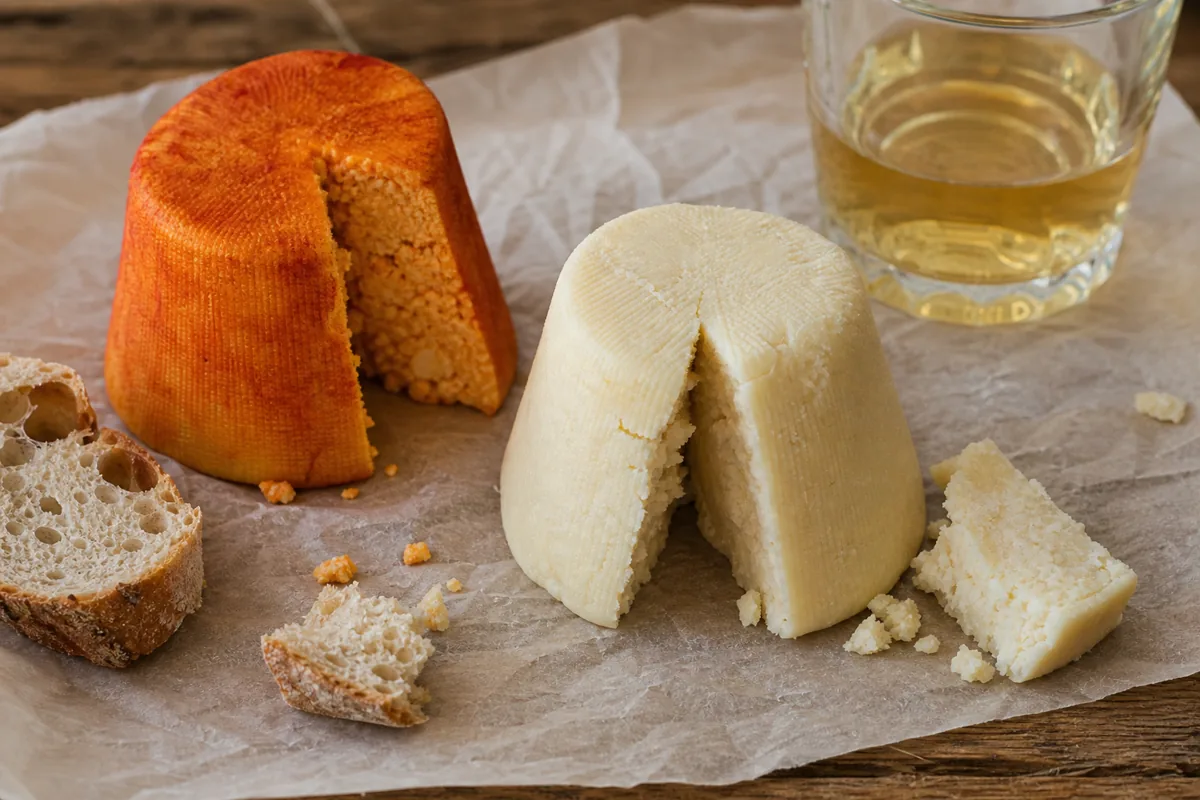
Leonora a Fuego uses the same recipe as the original, with a coating of Pimentón de la Vera, a smoked Spanish paprika, applied before aging. The white rind then grows over the paprika.
Werlin says Oscar showers the cheese with a copious amount of paprika and describes a rich brick-red color, while Forever Cheese's blog describes a thin rust-colored layer visible in the cut. Both can be accurate, because the rind grows on top of the paprika and the cut face shows what remains beneath it.
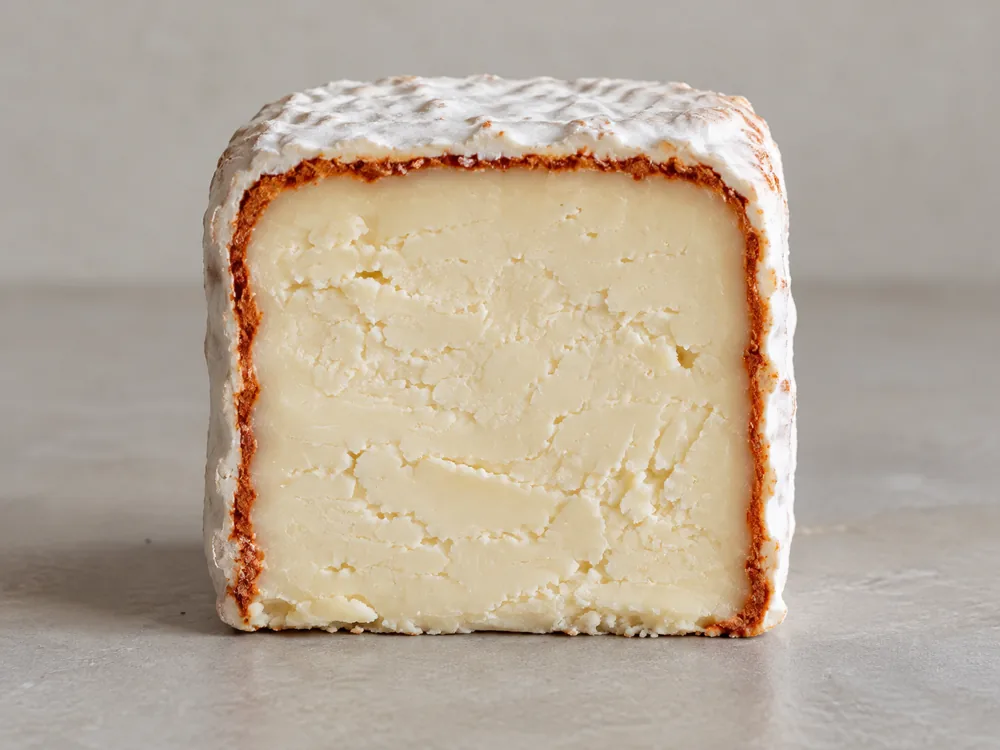
| Feature | Leonora | Leonora a Fuego |
|---|---|---|
| Coating before aging | No coating described | Pimentón de la Vera, a smoked paprika |
| Cut face | White rind around a fudgy, slightly crumbly paste with a creamline | Thin rust-colored paprika layer under the white rind, around a light ivory paste |
| Flavor | Lemony, with a sour cream tang and mushroomy notes as it ages | Lemon, smokiness and a subtle spiciness in the finish |
How Does Leonora Compare With Other Spanish Goat Cheeses?
In the same article that covers Leonora, Werlin describes Garrotxa and Monte Enebro, two goat cheeses she places in the 1980s, when she says Spain's political rebirth opened an era of experimentation in goat cheesemaking.
Garrotxa reached a mold rind by a different route. Werlin says two couples near Garrotxa, helped by cheese expert Enric Canut, set out to make a soft, approachable goat cheese that instead grew mold quickly and had a short shelf life.
They introduced a specific mold strain and ended with a thin, protective rind and a sweet, creamy cheese instead of the more acidic fresh style. Leonora went the other way and kept a lemony acidity under its mold rind.
Werlin says Canut also co-created Monte Enebro with cheesemaker Rafael Báez in Ávila, and that its rectangular shape is sometimes called “Pata de Mulo,” or mule leg. Like Leonora it is rectangular and lemony, but its gray and deep blue shades set it apart from Leonora's white rind.
Werlin also names Drunken Goat, known in Spain as Queso de Murcia al Vino, as the ever-popular Spanish goat cheese in the U.S., and says its Denomination of Origin requires production in Murcia province with the pasteurized milk of Murciana-Granadina goats.
Leonora's goats are described as Murciana, but its milk comes from Castilla y León, and none of the pages cited here mentions a designation of origin for it, so the breed name alone does not make it a Murcia cheese.
| Cheese | Region | Form and rind | Flavor words |
|---|---|---|---|
| Leonora | Castilla y León | Brick with a white bloomy rind | Lemony, sour cream tang |
| Garrotxa | Girona, Catalonia | Two-pound (0.9 kg) wheel with a thin, protective rind | Sweet, creamy |
| Monte Enebro | Ávila | Rectangular, gray and deep blue shades with a white mold dusting | Lemony paste, earthy blue-cheese hints on the finish |
Choose by flavor first: Leonora is lemony with a sour cream tang, Garrotxa is sweet and creamy, and Monte Enebro adds earthy blue-cheese hints on the finish. Leonora's rind is described as white, while Monte Enebro's carries gray and deep blue shades.
Can You Eat Leonora's Rind?
Forever Cheese says the fluffy white mold on Leonora's rind gives the cheese a singular, texturally perfect bite, so the importer treats the rind as part of the cheese. That is a product description, not safety advice; the pregnancy section below applies to the cheese including the rind.
Can You Eat Leonora Cheese While Pregnant?
Forever Cheese lists Leonora as made with pasteurized goat's milk, but for this style that does not settle the question under UK guidance. The NHS says pasteurised or unpasteurised mould-ripened soft cheeses with a white coating on the outside, such as brie, camembert and chèvre, must be thoroughly cooked.
Leonora, a soft-ripened goat's milk cheese with a white bloomy rind, matches that description, so under NHS guidance it belongs with the cheeses that need cooking. The NHS counts any cheese cooked until steaming hot as safe.
The CDC lists pasteurized soft cheese heated to an internal temperature of 165°F or until steaming hot as a safer choice, and soft cheese made from unpasteurized milk as riskier.
Neither CDC list names an unheated, pasteurized soft-ripened cheese. The agency also notes that pregnant women are 10 times more likely to get a Listeria infection.
Forever Cheese says Leonora a Fuego uses the same recipe, but the pasteurization statement here comes from the plain cheese's product page.
Where Can You Buy Leonora, and How Should You Keep It?
Leonora is exclusive to Forever Cheese, and the importer's site has a Where to Buy page.
Forever Cheese says Oscar's production process and special packaging, which includes a wooden box and a straw-like mat, let the cheese keep growing its soft-ripened rind during the Atlantic crossing. The blog adds that local people with disabilities build the box and mat.
Refrigerate it at 40°F or below, the CDC's figure for a home refrigerator. Forever Cheese publishes no shelf life or wrapping method for Leonora, and a ripening cheese keeps changing while it waits.