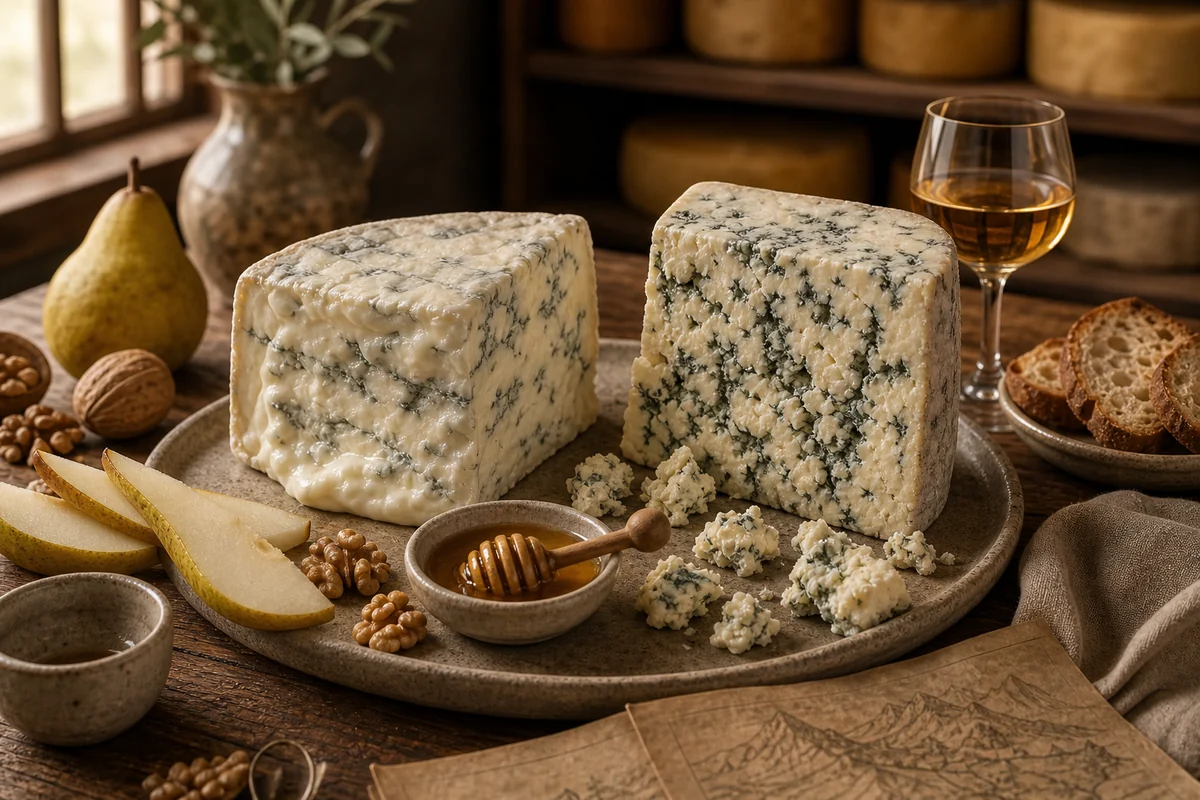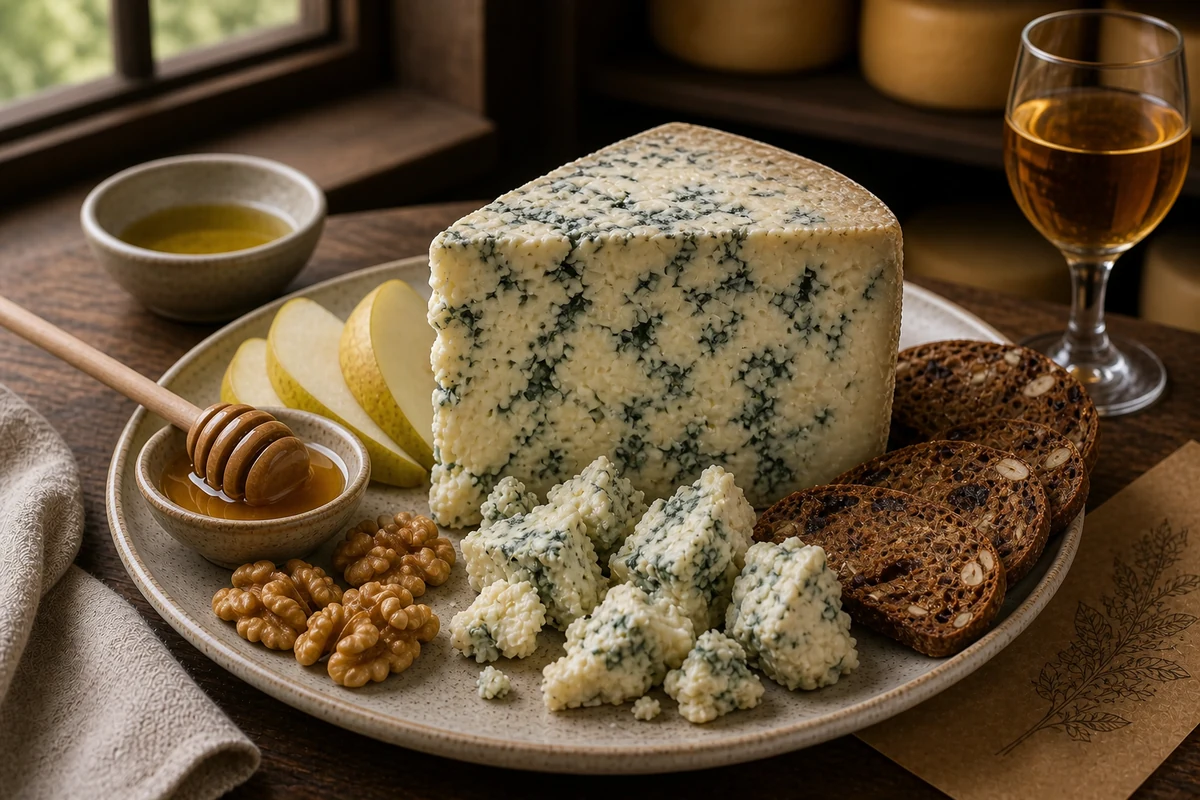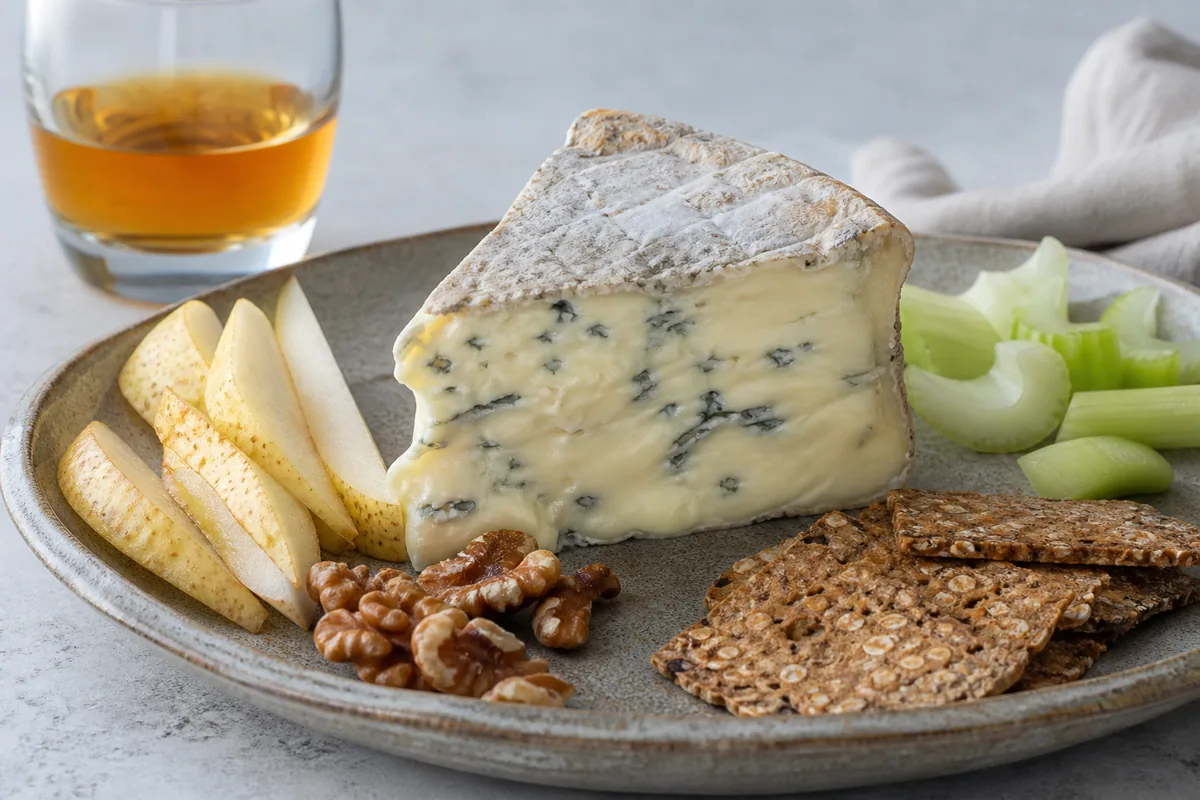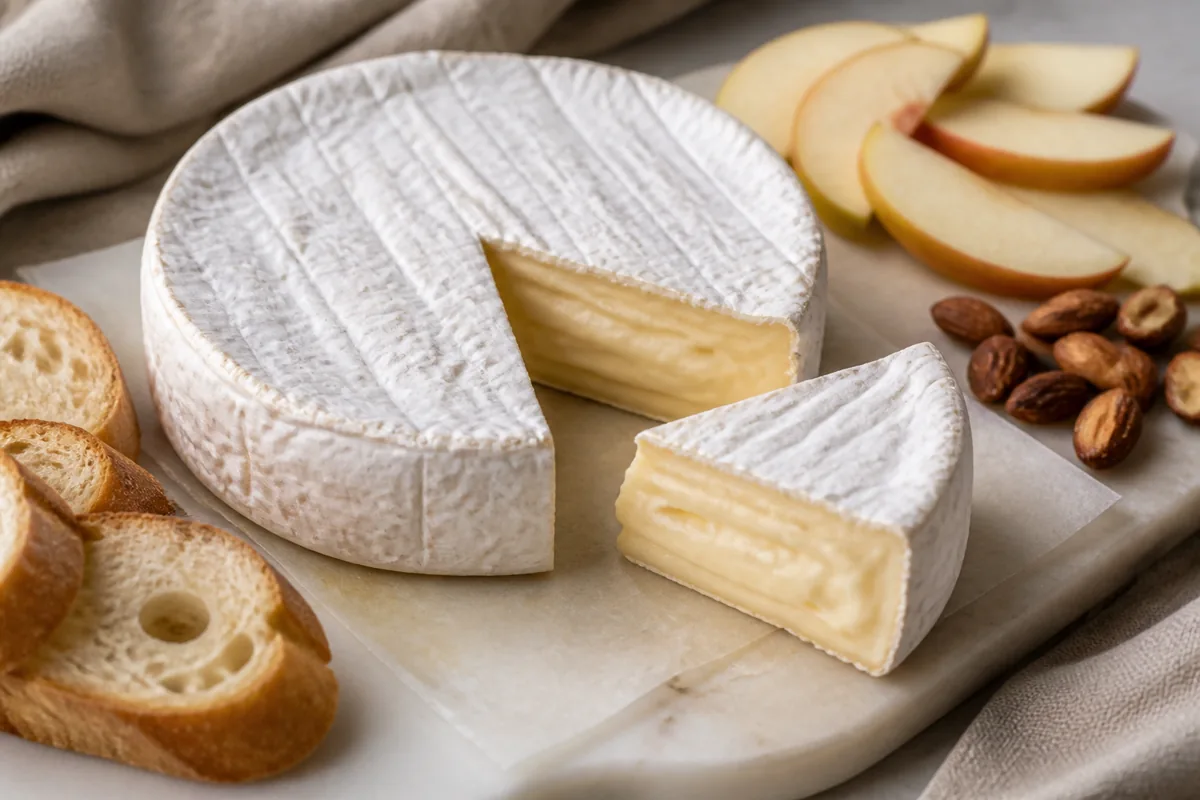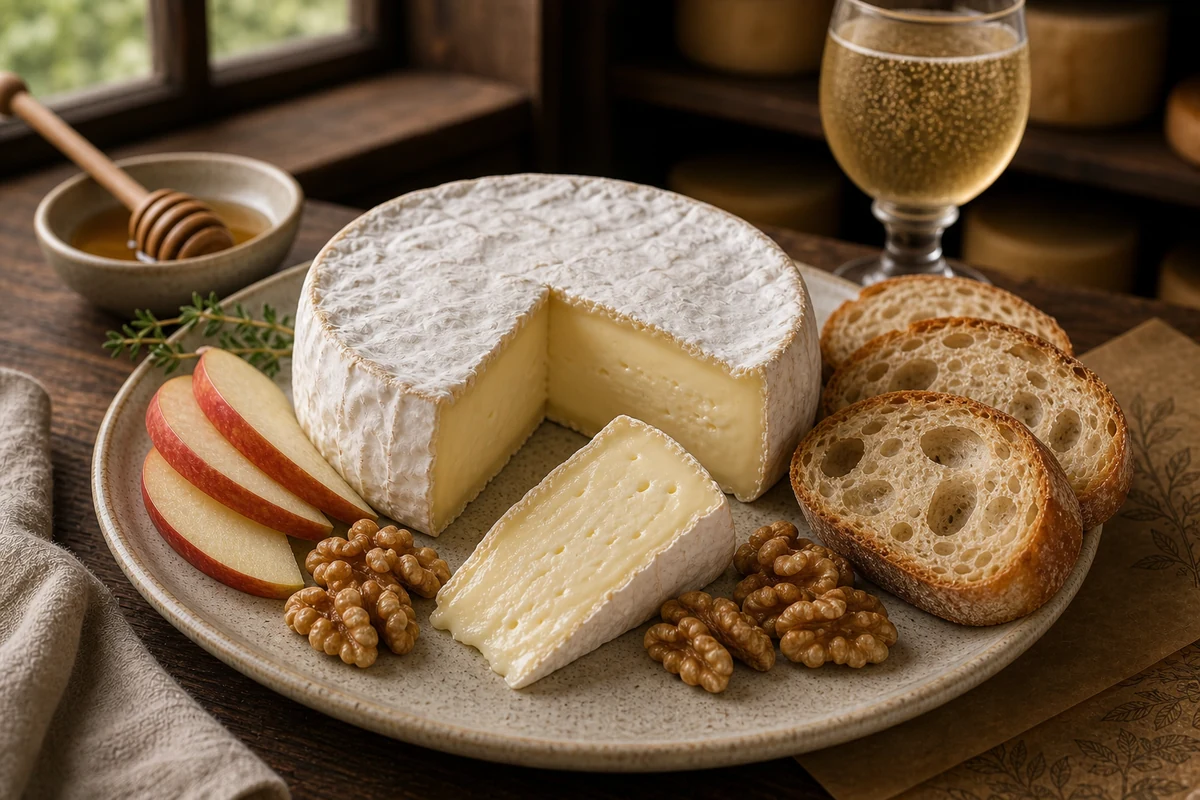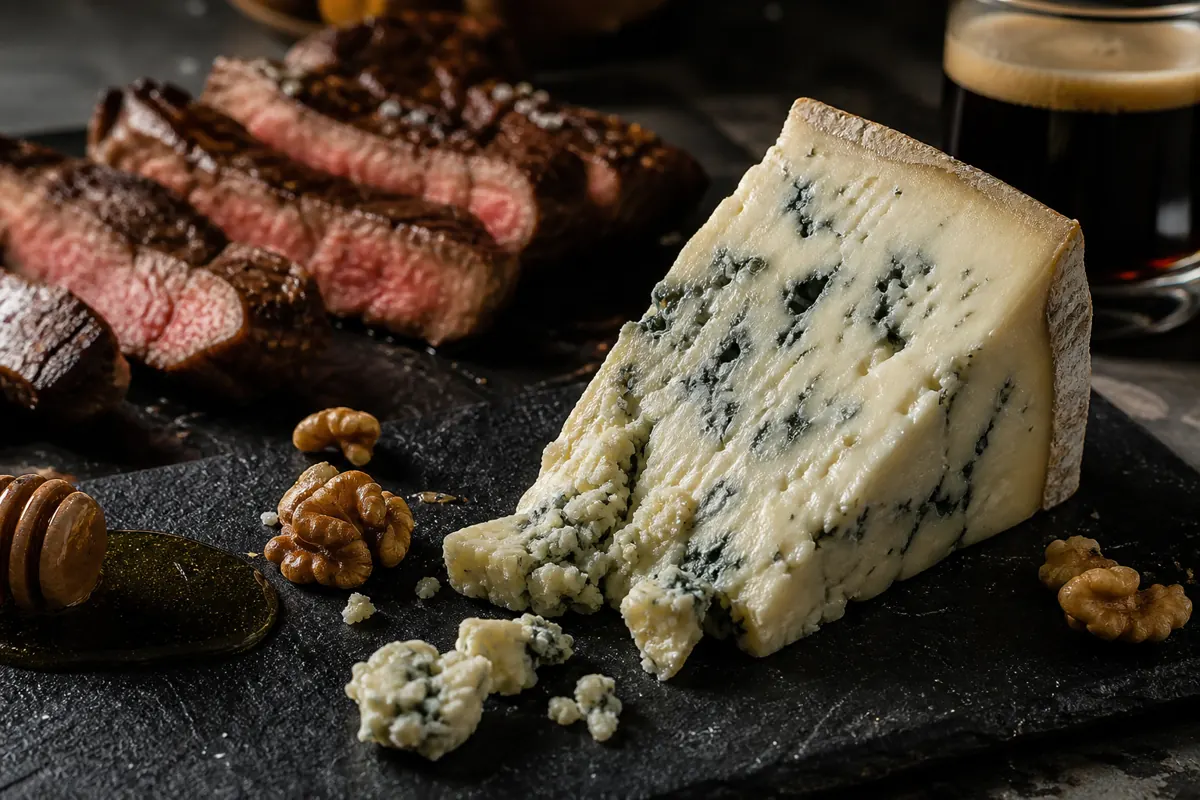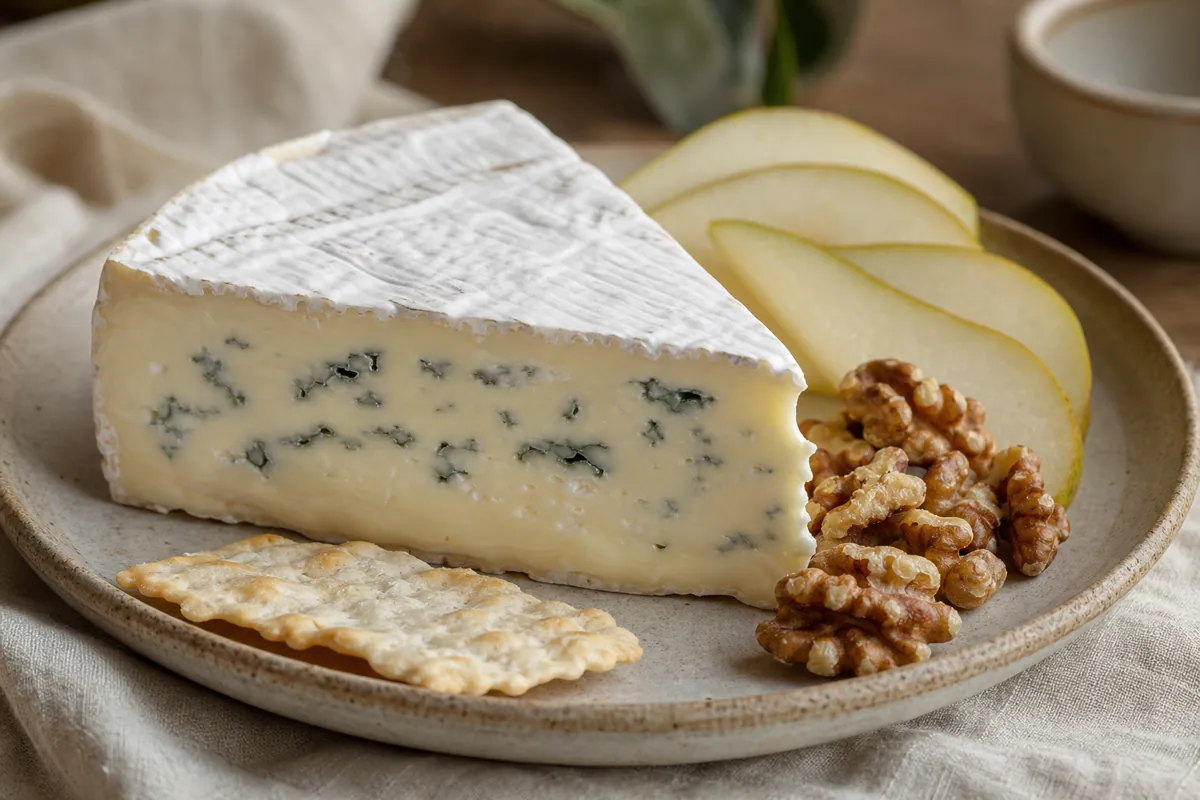
Cambozola gives you a creamy soft-ripened body with blue veining inside. It is a useful starting point when you enjoy Brie-like softness but find many crumbly blue cheeses too sharp or salty.
The choice becomes more specific once you see the variant name.
Classic keeps the blue character restrained, while Black Label develops a darker natural exterior and a stronger blue presence.
In This Article
Why Cambozola Feels Familiar to Brie Buyers
Käserei Champignon introduced Cambozola in southern Germany in 1980, building the brand around creaminess and blue mould. The current range develops that idea through distinct products, with Classic and Black Label giving the balance a different emphasis.
When you cut Classic, the white soft-ripened surface and yielding paste resemble the visual language of Brie. Fine blue veins then add an earthy, peppery finish that a plain bloomy-rind cheese does not have.
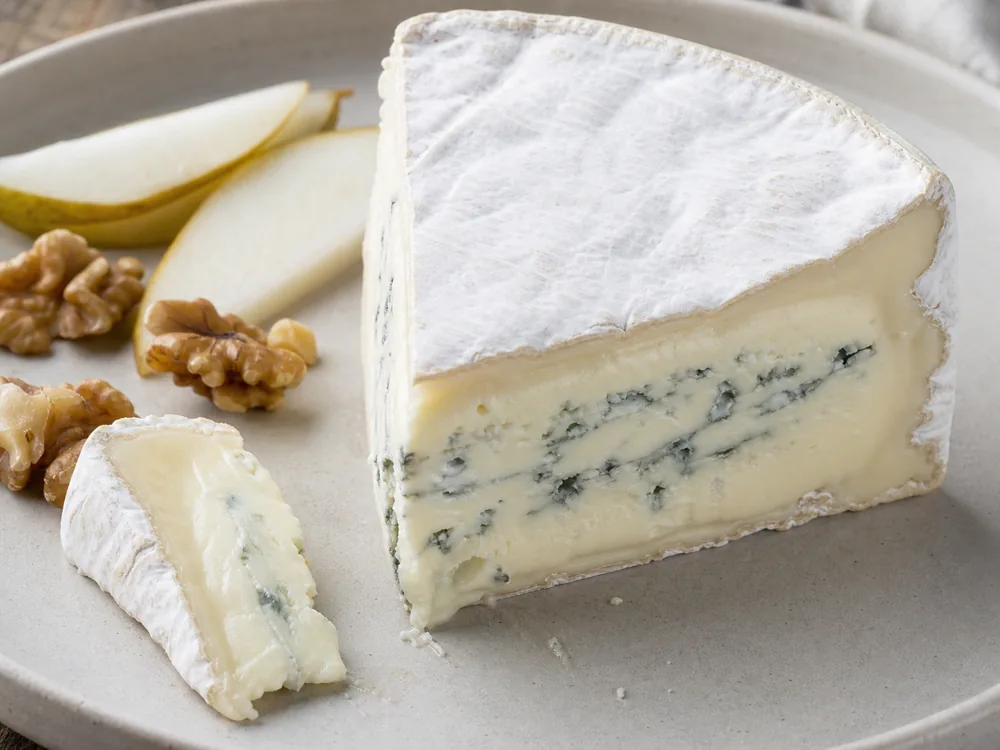
That texture changes how the blue reaches you.
A dry, crumbly blue can release a concentrated salty bite, while Cambozola's creamy paste spreads the flavour across your mouth and lets it arrive more gradually.
How One Cheese Develops Two Kinds of Ripening
Cambozola's identity comes from reading the outside and inside together.
The surface ripens as a soft cheese, while blue cultures develop through the paste and bring a second aromatic layer.
Added cream makes the body richer and more yielding, cushioning the blue so it arrives gradually. As the wedge warms for service, that fat softens and lets the mould character spread more evenly across each bite.
This helps explain why a cold sample can taste quieter than the same cheese after half an hour on the table. It also explains why the maker's serving direction changes texture as well as aroma.
The two ripening paths create useful visual checks. Compare the rind with the variant description, then look for a paste that remains creamy around the blue veins and has not dried into a hard edge.
Classic or Black Label?
The maker's current range gives Classic and Black Label different surfaces, maturation descriptions and blue intensity. Choose between them by deciding whether cream or mould character should lead.
| Variant | What You See and Taste | Best Fit |
|---|---|---|
| Cambozola Classic | White soft-ripened surface, fine blue grain, gentle blue notes that develop with age | A first soft blue, a mild board, sandwiches, burgers and creamy sauces |
| Cambozola Black Label | Natural grey exterior, fine blue veins, stronger blue notes and longer low-temperature maturation | A more aromatic board or a step up when Classic feels too restrained |
Black Label's natural grey surface belongs to that variant. Classic should show the white surface described for Classic, so use its package as your baseline whenever the rind develops an unfamiliar colour.
How ripeness changes Classic
Age shifts the balance within Classic even when the variant name stays the same. A younger wedge keeps cream at the front, while the maker says its blue character becomes more noticeable as it matures.
You can read some of that change in the cut face. A fresh-looking, cohesive paste points toward the smooth style most first-time buyers expect, while a wedge nearer its date may feel softer and carry the mould character more clearly.
The printed date gives that visual check a useful frame, especially when two wedges at the counter look similar. Ask when a counter piece was cut as well, because surface drying can make an exposed wedge seem firmer without telling you how the unopened cheese matured.
Serving temperature changes the balance again. Give the portion the maker's suggested 30 minutes and the fat will soften, allowing both cream and blue aroma to register more clearly than they did straight from the refrigerator.
If you want Cambozola mainly for its gentle entry into blue cheese, choose a wedge whose paste still looks even and creamy. A more developed Classic suits you when you already enjoy the texture and want the blue to take a larger share of each bite.
This progression also helps you plan quantity. A young, mild wedge can sit comfortably among several cheeses, while a more mature one needs less competition and may be more satisfying in smaller portions.
If you are serving people with mixed tolerance for blue cheese, Classic gives you more room because fruit and bread can soften an already gentle finish. Black Label makes sense when everyone at the table expects the cheese itself to provide the aromatic contrast.
How Does Cambozola Differ From Brie and Gorgonzola?
Cambozola sits between familiar reference points while keeping its own product identity. Brie supplies the soft white-rind comparison, while Gorgonzola is a protected Italian blue with its own milk, production and aging rules.
If you want buttery softness with only a measured blue finish, Classic makes sense. If you want the mould character to carry the bite, Black Label moves closer, while a stronger Gorgonzola may take you farther still.
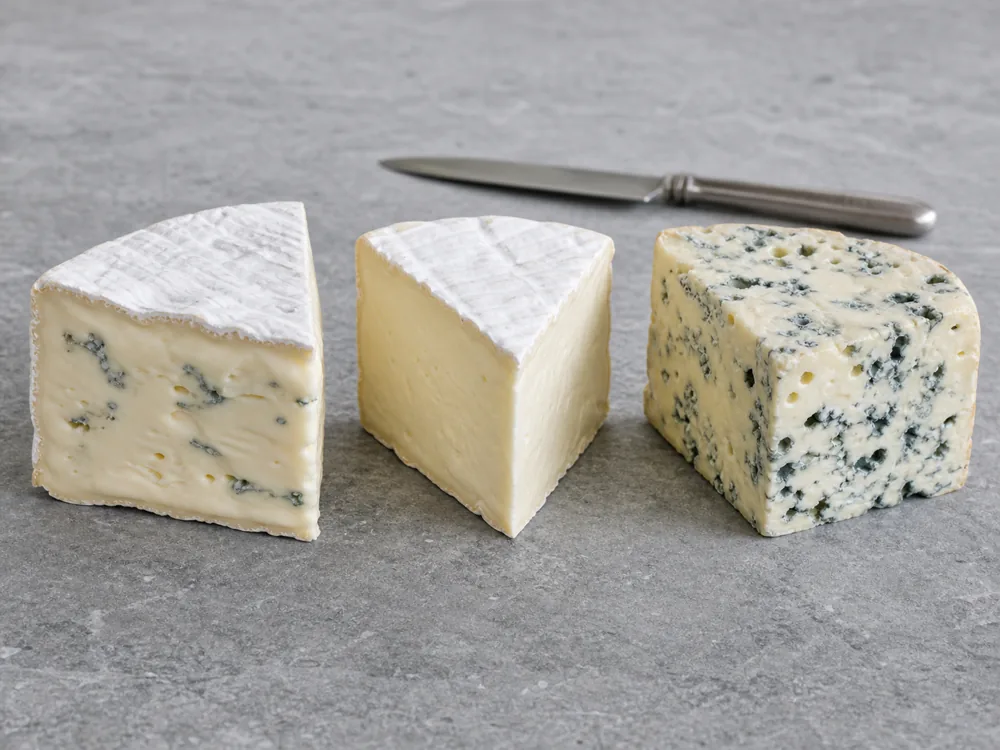
Texture matters as much as intensity. Cambozola stays cohesive and spreadable, whereas many blues break into crumbs and distribute through a salad or sauce in smaller, saltier pockets.
That difference changes portioning. A broad Cambozola slice can cover bread or a burger, while a crumbly blue usually works in smaller pieces scattered through the dish.
When Classic Is Too Gentle
Classic can disappear beside smoked meat, a very sweet preserve or a strongly roasted beer. If the rest of your plate already has that much intensity, Black Label gives the cheese a better chance to remain recognisable.
Black Label still keeps a soft, cohesive body, so the change is more controlled than moving directly to a dry, salty blue. You gain aroma and blue character while preserving the spreadable texture that brought you to Cambozola.
Cambozola reaches its limit when your dish needs dry crumbles or a sharp, salty pocket in every bite. A firmer blue will distribute through a salad more cleanly and give you the texture you were looking for from the start.
For a mixed group, serving Classic and Black Label side by side turns the variant decision into an easy progression. Start with Classic, keep the accompaniments the same, then move to Black Label so the change in rind and blue intensity remains clear.
This is one place where a small board can teach you more than a crowded one. Bread, pear and the two variants are enough to show whether your preference follows creaminess, mould character or the balance between them.
How Do You Build a Board Around Cambozola?
On a cheese board, Cambozola already supplies richness and a gentle savoury edge. Pear, fig or grape adds clean sweetness, while walnuts bring crunch without burying the blue.
The brand's pairing suggestions also include semi-dry Riesling, sweet wine and dark beer. Choose one fruit, plain bread and one drink if you want the cheese's own balance to remain clear.
The maker advises leaving the portion unwrapped for at least 30 minutes before serving. Put out only what you expect to eat, because the goal is to soften the paste without warming the unopened remainder.
Use a perforated soft-cheese knife or wipe a plain blade between cuts. A clean slice preserves the rind-to-paste view and keeps blue streaks from being dragged across every piece.
Place Cambozola near the point where guests move from mild bloomy cheeses toward stronger blues. Its transition is easiest to notice before a very salty blue has set the reference for everything that follows.
How Should You Cook With Cambozola?
Cambozola loosens readily into toast, pasta, quiche, polenta and dips because the paste is already soft and cohesive. Start with a modest amount, let it dissolve, then decide whether the dish needs more blue flavour.
Classic works well when a burger or hot sandwich needs creaminess before intensity. Black Label suits a smaller, more deliberate layer when you want the blue to stay recognisable beside meat, mushrooms or onions.
Direct heat can split a very rich sauce, so gentle melting gives you more control. When pregnancy guidance calls for thorough cooking, continue until the cheese is steaming hot throughout; soft edges only tell you that melting has begun.
For pasta or polenta, loosen the cheese with some of the dish's warm liquid rather than exposing it to hard heat in an empty pan. You preserve more of the creamy texture and can stop before the blue overwhelms the rest of the sauce.
In a cold filling, Classic behaves more like a spreadable soft cheese and needs less balancing sweetness. Black Label can carry a sharper fruit preserve, though the pairing should still leave room for its grey-rind aroma.
What Should You Check on the Cambozola Package?
Look for the full variant name, an intact seal, a readable use-by date and a surface that matches the maker's description. On a counter-cut wedge, the exposed face should remain creamy instead of forming a dry, dark rim.
- Variant: Classic and Black Label set different rind and flavour expectations.
- Milk and market: use the package for milk treatment and product-specific ingredients.
- Cut face: avoid severe drying, uncontrolled wet breakdown or unexpected coloured growth.
- Date and temperature: retain the original label when a shop wraps a smaller piece.
The naturally ripened rind is edible when it is clean and matches the expected product. If you dislike its flavour, leaving it behind is a preference decision; an unexpected surface change calls for the package guidance or the seller's advice.
Counter-cut wedges lose the original seal and often lose part of the label as well. Ask the seller to transfer the variant name, use-by date and storage temperature to the new wrap so you can judge later changes against the correct baseline.
How Should You Store Cambozola?
The maker recommends cheese paper and a cool refrigerator compartment for a cut piece, allowing some air exchange instead of sealing it tightly in a plastic box. Its serving and storage tips are most useful alongside the exact package's temperature and use-by directions.
General Food Standards Agency guidance keeps a domestic refrigerator between 0 and 5°C (32 and 41°F). For a counter-cut wedge, cheese paper protects the exposed paste while allowing more air exchange than a tightly sealed plastic box.
Classic and Black Label need different visual baselines, which is why a generic “mould is normal” rule is too broad. Use the product you bought as the reference point and discard it when you know the seal or cold chain has failed.
Freezing may leave the cheese usable in a cooked sauce, but it can damage the smooth body that makes Cambozola distinctive on a board. If texture is the reason you bought it, refrigerating a smaller portion is the better plan.
How to Read the Nutrition Numbers
On the current U.S. Classic page, 70% fat in dry matter and 42 g fat per 100 g describe two different calculations. The first removes water from the denominator, while the second tells you how much fat sits in the food as sold.
| Cambozola Classic per 100 g | Current Product Value |
|---|---|
| Energy | 436 kcal |
| Fat | 42 g |
| Saturated fat | 28 g |
| Carbohydrate | Less than 0.5 g |
| Protein | 14 g |
| Salt | 1.7 g |
The brand also describes its Cambozola products as lactose-free through maturation. If you manage a medical threshold, keep the exact package and use your clinician's advice because product claims and individual tolerance answer different questions.
A per-100-gram panel is useful for comparing products, but it is larger than many board portions. We would use the printed panel to calculate the amount you actually serve rather than treating the table as a suggested portion.
Can You Eat Cambozola During Pregnancy?
Current U.S. importer material identifies Cambozola as pasteurized, yet the cheese remains a soft blue with a ripened surface. Under current UK NHS guidance, that combination should be cooked until steaming hot during pregnancy.
The U.S. CDC lists pasteurized soft cheeses heated to an internal temperature of 165°F (74°C) or until steaming hot as safer, and deli-sliced cheeses heated to 165°F or until steaming hot as safer too. Served cold, Cambozola is described as a pasteurized soft-ripened, creamy blue-veined cheese, a type the CDC list does not cover, so ask a midwife or doctor.
Follow the current public-health advice for your country and any more specific direction from your clinician. A cold wedge and a sauce heated all the way through are different serving conditions, even when they begin with the same package.
SOURCES & REFERENCES
What Else Do People Ask About Cambozola?
Classic is creamy with mild blue notes that become more noticeable with age. Black Label has a stronger blue character, a natural grey exterior and longer low-temperature maturation.
Its soft, creamy texture feels closer to Brie, while the interior veins bring blue-cheese flavour. Classic stays gentler; Black Label moves farther toward the aromatic blue side.
The maker identifies its naturally ripened rind as edible. Make sure the surface matches the exact variant, because Classic is white and Black Label has a natural grey exterior.
Use the after-opening directions and use-by date on your package. Keep a counter-cut piece refrigerated in cheese paper and retain the original label whenever possible.
The current brand page describes its Cambozola products as lactose-free through maturation. Check the exact package and seek clinical advice when you need to stay below a medical threshold.
The NHS says pasteurised or unpasteurised soft blue-veined cheeses, and mould-ripened soft cheeses with a white coating on the outside, must be thoroughly cooked. The CDC lists pasteurized soft cheeses heated to an internal temperature of 165°F (74°C) or until steaming hot as safer, and a cold pasteurized soft-ripened blue-veined cheese is a type its list does not cover, so ask a midwife or doctor.