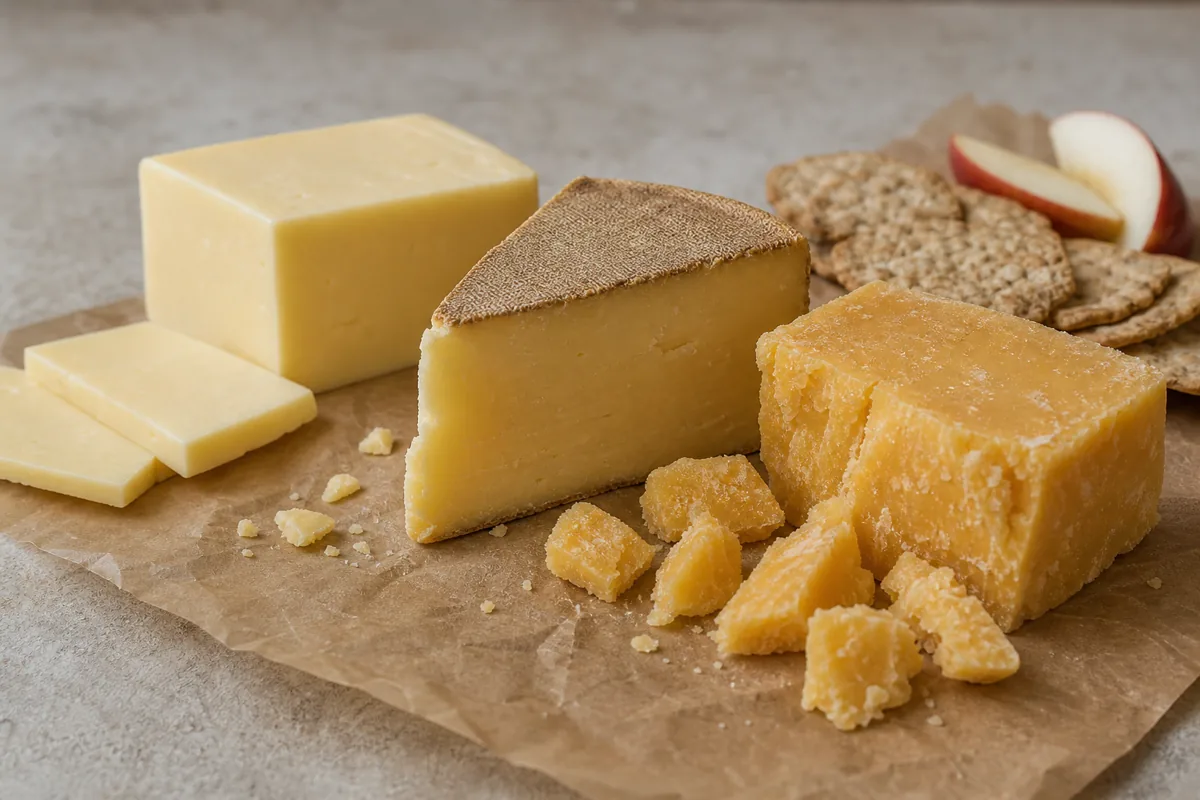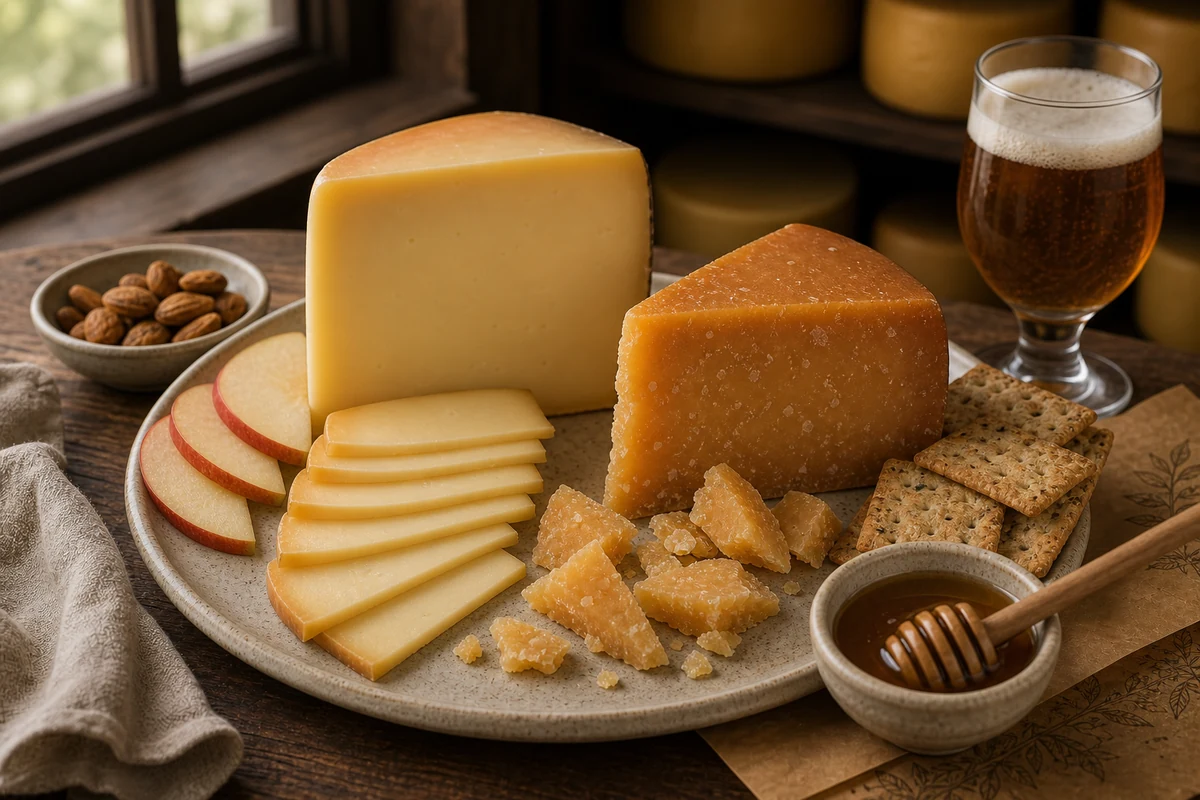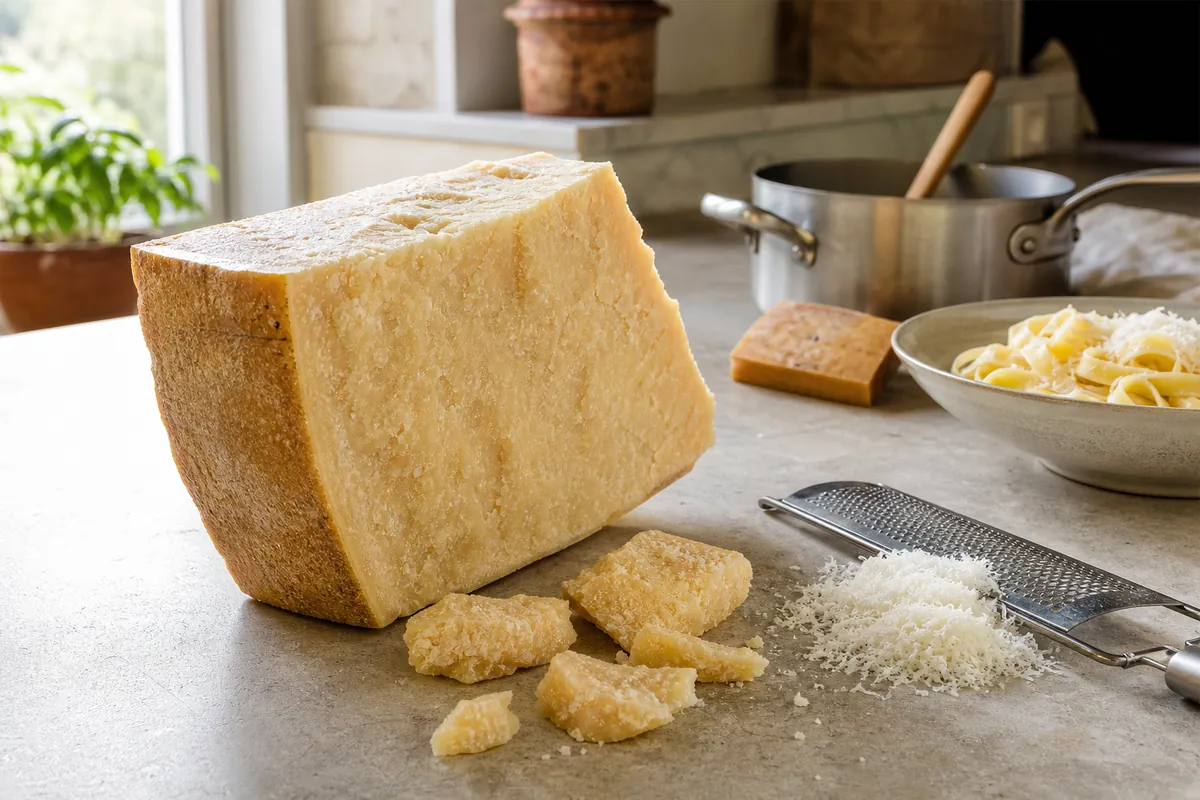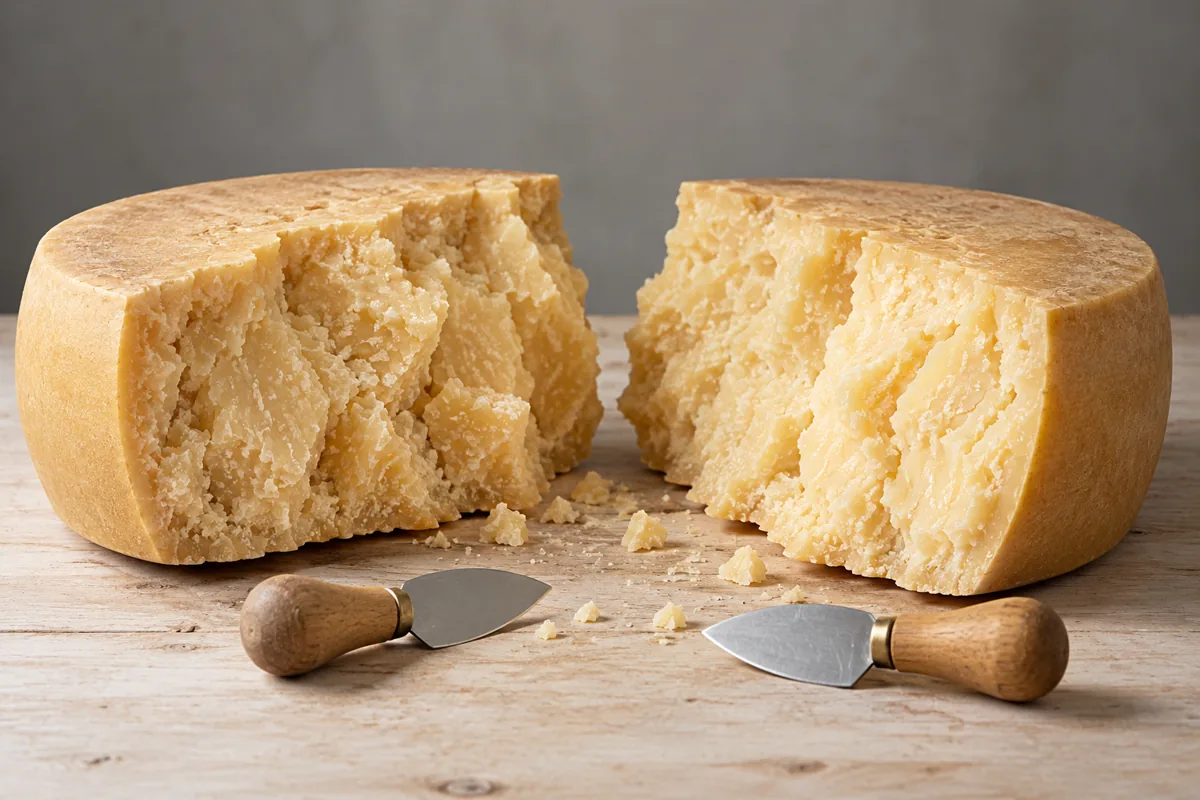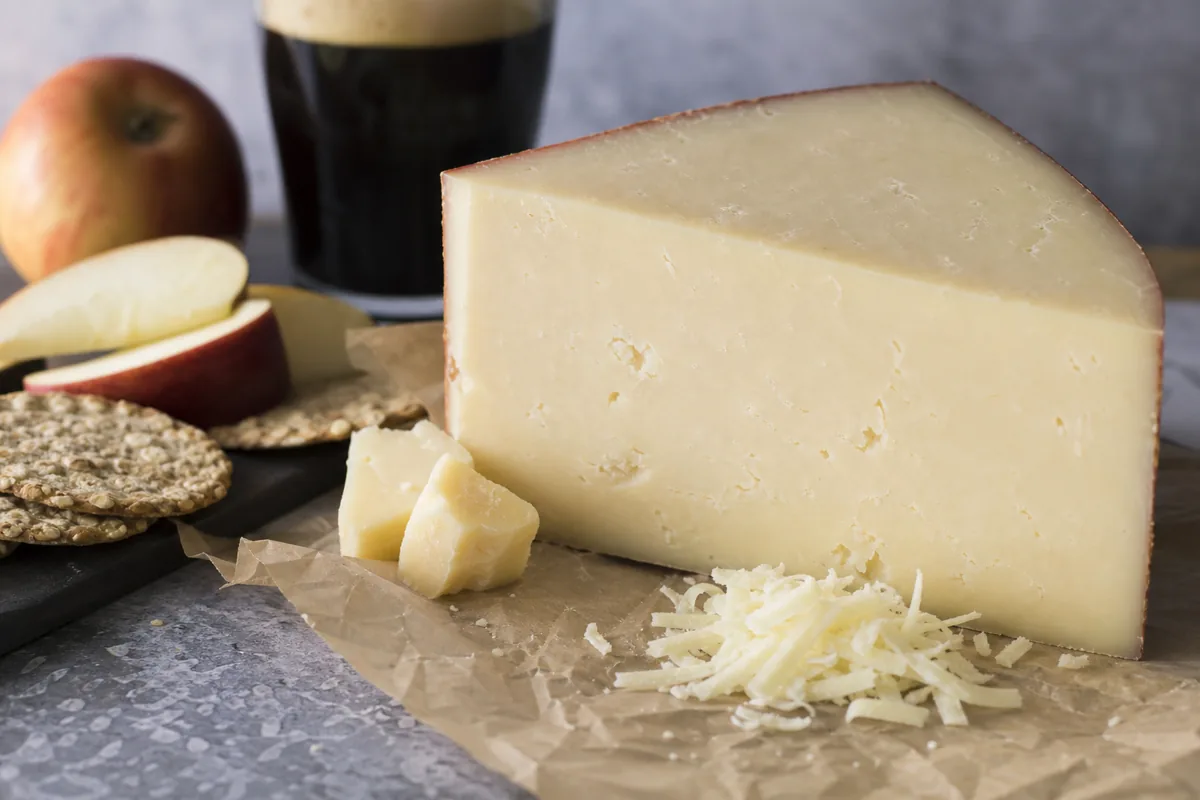
Old Winchester is a hard cow's milk cheese made at Lyburn Farm on the northern edge of the New Forest and sold at about 18 months old. Its maker says menus often call it a cheddar and that this is incorrect.
In This Article
Is Old Winchester a Cheddar?
Lyburn's own page calls Old Winchester a "hybrid" cheese, "much closer to a northern European cheese," though "regarded as 'British Modern'." It says the cheese is often referred to as a cheddar on menus and that this is incorrect.
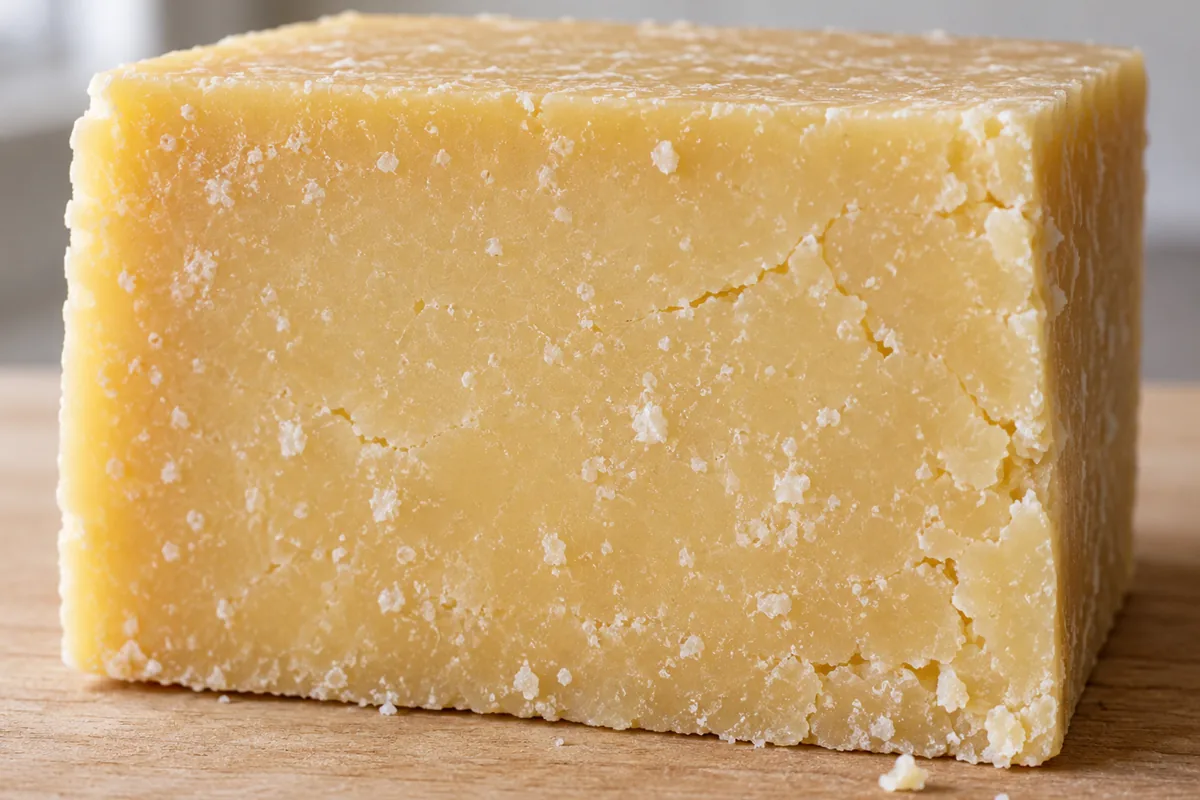
The farm describes the cheese as "much dryer harder and crystalline," becoming "more reminiscent of an old gouda with a distinctive nuttiness in flavour." Cheese.com files it in the Gouda family.
Culture classes the style as Gouda-like and says Old Winchester is similar to the farm's Winchester, which is "somewhere between a cheddar and a gouda."
Lyburn's page on its cheesemaking draws one line between its cheeses and cheddar: a cheddar would have all its whey drained away and be dry salted, which is not what happens here.
Lyburn does not say why menus call Old Winchester a cheddar. Culture says the Smales family began making cheese to get better value for their milk and to bring a non-cheddar, northern European inspired hard cheese to south-central England.
Lyburn calls the result "a product of evolution and need," describes it as an older version of its Winchester, and also knows it as Old Smales.
How Is Old Winchester Made?
Culture lists the milk as pasteurised cow's milk from a herd of 170 pedigree Holstein-Friesians that the farm has milked twice a day, every day, since 1969, and Lyburn says the cheese is set with vegetarian rennet.
Lyburn's page on its cheesemaking describes the farm's cheeses in general rather than Old Winchester alone. It starts the day at 6 am after milking, when 3,000 litres of milk are pasteurised over about two hours and cooled to around 28°C before the starter goes in.
Rennet then sets the milk into a soft curd that Lyburn compares to blancmange, and the cheesemaker cuts the curd at the right moment to release the whey. The make finishes by about 1:30 pm, so milk that was still in the cow at 6 am is cheese by lunchtime.
Lyburn's Gold page describes Gold as a washed curd cheese, more continental and closer to a Gouda, and Mousetrap Cheese says Old Winchester is a washed curd cheese that is brine washed after pressing.
The curd goes into moulds that take about 6 kg each, and the moulds are stacked five or six high under pneumatic rams that press overnight to shape the cheese, knit the curd together and drain the remaining whey.
Next morning the cheeses, normally 54 of them, go into a brine tank for about 24 hours and take up about 1.5% salt of their own accord. Lyburn adds that another 24 hours in the tank would not add much more.
The cheeses are then dried, given a batch number and ripened on racks with plenty of air flow, in rooms kept at a constant temperature and humidity. They are turned regularly so they ripen evenly and do not dry out at the top.
Lyburn says about 10,000 cheeses are maturing at any one time, and that two months after a make the batches are graded on smell, dry matter, shape and taste, with the make sheet used to adjust later makes.
Culture says the cheese is handmade, and Lyburn says the finished wheels average about 4.5 kg.
What Does Old Winchester Taste Like?
Lyburn, Culture and Mousetrap Cheese all call it nutty. Lyburn names "a distinctive nuttiness," and Culture describes "a rich creaminess with notes of nuts and caramelization" and sweetness "offset by a slight tang."
Culture says the creaminess "can be surprising for a cheese of its age." Mousetrap Cheese rates its flavour strong and quotes a reviewer who found it "really tangy and tasty but has a creamy finish."
Culture classes the texture as firm, and Lyburn calls it dryer, harder and crystalline.
Mousetrap Cheese names a drink, robust fruity red wines or Herefordshire cider, and says it often serves the cheese at its charity cheese and wine nights.
Has Old Winchester Won Any Awards?
Lyburn lists a 3 Star Gold at the Great Taste Awards in 2025 and again in 2026, and in 2024 a 2 Star Gold at Great Taste and a Bronze at the World Cheese Awards.
At the British Cheese Awards, Lyburn records a Bronze in the Export class in 2022 and a Silver and a Gold (Export) in 2024, and Culture adds a Gold at the 2016 awards.
Older honours on Lyburn's page are Best Modern British Cheese in 2006 and Reserve Champion Cheese at the Bath and West in 2007, and Cheese.com lists a Gold and a Silver at the Artisan Cheese Awards Melton in 2021.
What Are the Crystals in Old Winchester?
Sellers describe the crunch the same way: Lyburn calls the cheese crystalline, and Mousetrap Cheese attributes it to amino acid crystals.
Culture's guide to cheese crystals names two kinds, tyrosine and calcium lactate. They form as protein chains unravel with age, and the guide says they are neither sugar nor sodium, so they are not salt.
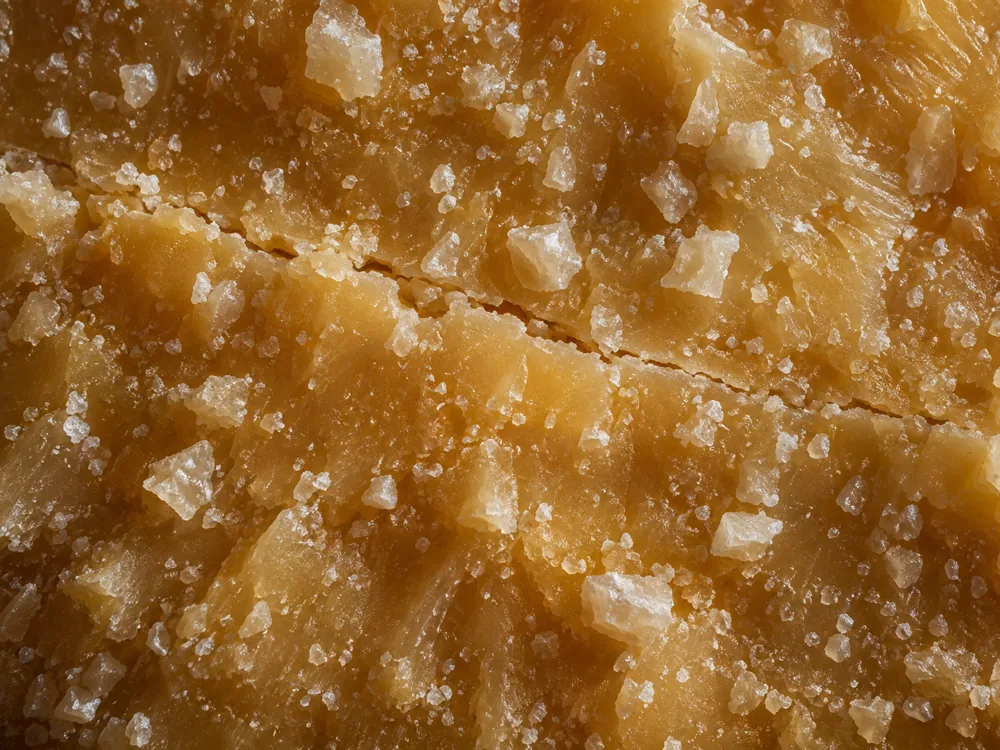
Whether a cheese grows crystals depends on the kinds of protein in it and how concentrated they are. Culture says the process starts when proteins moving through the paste collide and form a nucleation site that attracts more proteins, and that not every aged cheese develops crystals.
Tyrosine crystals form only inside the cheese and are firm and bright white, which Culture says are found in Swiss and Romano cheeses. Calcium lactate crystals form inside and on the surface, are softer and paler, appear more often, and typically turn up in cheddar and Colby.
Both kinds can sit side by side in aged Gouda or Parmigiano-Reggiano, and Culture says a crystal that is softer, paler and matches those on the surface is calcium lactate.
Culture says cheesemakers once tried to avoid crystallisation because customers might think the cheese looked unusually mouldy, and that crystals are now trendy.
Culture says crystals "indicate that the cheese will have a hearty and complex flavor," and that the American Cheese Society is educating its judges to look for an even distribution of crystals and a pleasant crunch. No source ties Old Winchester's crunch to tyrosine or calcium lactate, so which type it has is not stated.
Does the Age on the Label Change What You Get?
Lyburn tries to sell Old Winchester at about 18 months but says the age comes and goes, because it is impossible to get the stock level right all the time. It also says every batch can be slightly different from the previous one.
Lyburn says about 18 months, Mousetrap Cheese says 18 months or more and Culture says 18 to 24 months, so none of the three states less than 18 months.
Culture says the cheese becomes drier and harder with age, and its crystal guide says crystals form over a long period, so a piece nearer 24 months would be expected to be drier and crunchier than one near 18, though no source measures that difference.
Mousetrap Cheese calls it reminiscent of a Gouda when young and says ageing is what creates its crystals.
Which Lyburn Cheese Should You Buy?
Lyburn also makes a Winchester, the younger cheese that Old Winchester is the older version of, so a retailer page titled Winchester describes a less aged cheese than the one here.
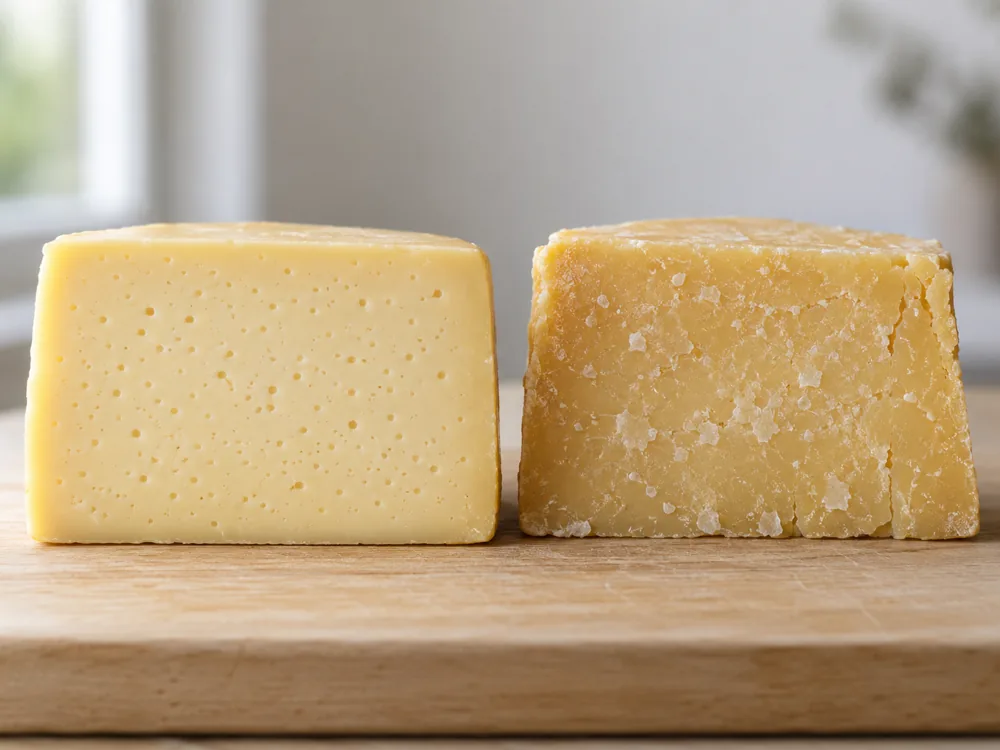
Lyburn describes Gold as generally semi-hard because at 10 weeks it still has some movement in it, and as a 5 kg round about 9 inches across.
| Cheese | Age | How Lyburn describes it |
|---|---|---|
| Lyburn Gold | About 8 to 12 weeks | Creamy smooth texture with very small holes evenly distributed, and great for melting |
| Old Winchester | About 18 months | Much dryer, harder and crystalline, and still usable as a table cheese |
Is Old Winchester Vegetarian?
Yes. Lyburn says it is made with vegetarian rennet, and Culture lists the rennet as vegetable.
The recipe also contained egg until recently. Lyburn says the cheese previously contained egg white as lysozyme and that, from 1 April 2026, it has stopped using lysozyme derived from egg.
Lyburn gives the style as the reason, saying that because this is a Gouda style cheese there were traces of egg white in the form of lysozyme.
That matters to vegans and to anyone avoiding egg, and not to vegetarians who eat eggs.
A wheel is sold at about 18 months, so wheels made before 1 April 2026 are still on sale after that date. Lyburn does not say how its stock is dated, so a seller is the one to ask about a specific piece.
Is Old Winchester Pasteurised, and Can You Eat It When Pregnant?
Culture, Mousetrap Cheese and Cheese.com all list the milk as pasteurised. Lyburn's own Old Winchester page does not state it.
Mousetrap Cheese calls Old Winchester a "very hard cheese," and Cheese.com lists it as hard with a firm texture. Culture classes it as firm, and Lyburn's page on Gold, a pressed washed curd cheese, says "Technically it is a hard cheese because it has been pressed."
The NHS lists "pasteurised or unpasteurised hard cheeses, such as cheddar, gruyère and parmesan" among the cheeses that are safe in pregnancy, and it also lists "pasteurised semi-hard cheeses, such as edam."
The CDC puts hard cheese made with pasteurized milk, such as cheddar, parmesan and Swiss, among the safer choices, and it says pregnant women are 10 times more likely to get a Listeria infection.
Neither the NHS nor the CDC names Old Winchester, so their lists do not settle it. Sellers class it as hard, which the NHS counts as safe pasteurised or not; if it were counted as semi-hard, the NHS asks for pasteurised, which Culture, Mousetrap Cheese and Cheese.com give.
Can You Use Old Winchester Instead of Parmesan?
Lyburn ties the role to its vegetarian rennet, saying the cheese is sold and used as a vegetarian replacement for a hard Italian cheese. Mousetrap Cheese calls it quite a good substitute for parmesan when a vegetarian option is needed.
Culture suggests using it as you might use Parmigiano Reggiano, and says that because it is both pasteurized and vegetarian-friendly it makes a good stand-in for hard Italian table cheeses.
Culture also calls it versatile, great on a cheese board but also perfect to cook with.
No seller claims the two taste alike. Lyburn's own comparison is to an old gouda, and Culture classes the style as Gouda-like.
Where to Buy Old Winchester
Lyburn's Old Winchester page links to its online sales, its national online sales and a list of stockists, and Mousetrap Cheese lists sizes from 200 g to a 4 kg whole wheel.
Lyburn gives only an average of about 4.5 kg per wheel, so wheels vary in weight, and Mousetrap Cheese's 4 kg whole wheel is lighter than that average.
The stated age depends on the seller.
| Seller | Stated age |
|---|---|
| Lyburn Farm | About 18 months |
| Mousetrap Cheese | 18 months or more |
| Culture | 18 to 24 months |
Culture's range runs to 24 months, so the age on a listing is the figure to read before buying.
Lyburn's page said supply was still tight in March 2026, that it was making cheese on some Saturdays to gain ground, and that it hoped to be back on top of the job by June 2026. Mousetrap Cheese's page shows every size as sold out.
Readers often ask about supermarkets, and none of the seller or producer pages names one that stocks it, so Lyburn's stockist pages, which let a visitor find the nearest provider, are the place to look.
Read the stated age and the weight on a listing before buying: sellers give 18 months to 24 months, and Lyburn's average wheel is about 4.5 kg.
Storing Old Winchester
The CDC says to keep a refrigerator at 40°F (about 4°C) or below.
It also lists dairy among the perishable foods to refrigerate within 2 hours, or within 1 hour if the food is exposed to temperatures above 90°F, without singling out hard cheese.
Neither Lyburn's Old Winchester page nor Mousetrap Cheese's listing gives a storage method or a shelf life for the cheese.