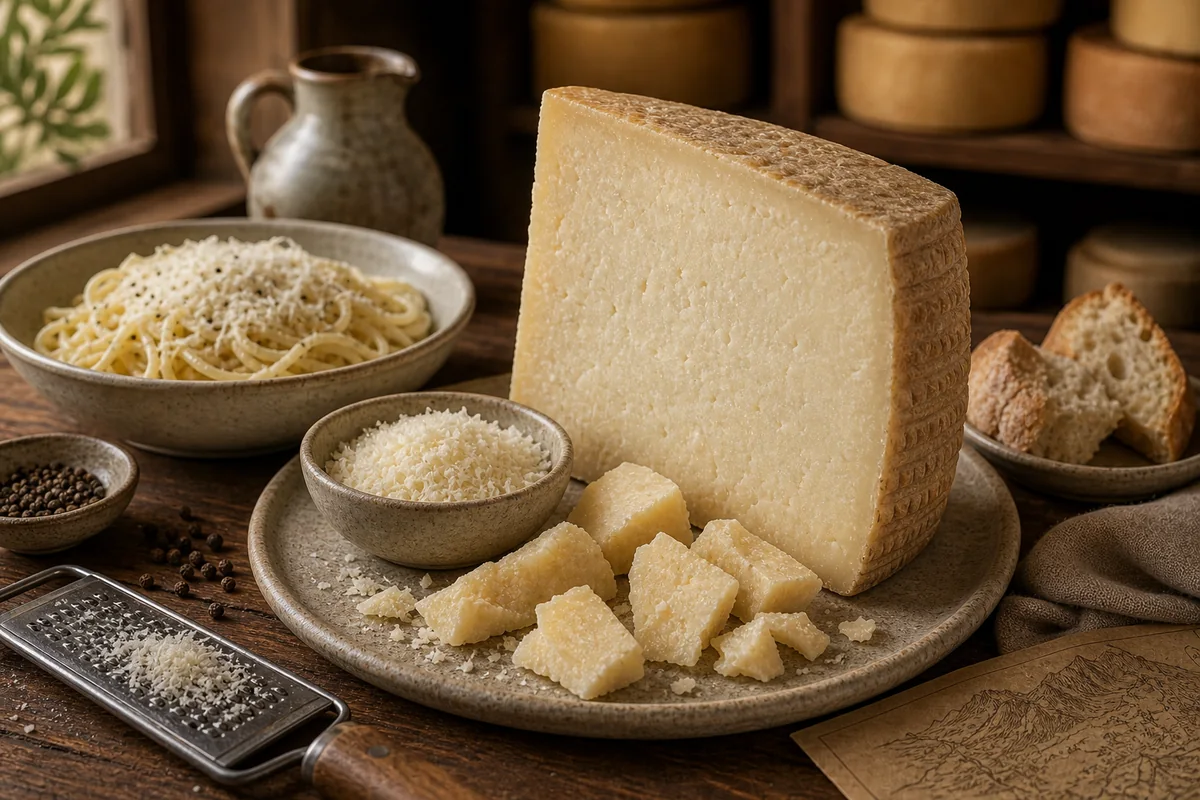
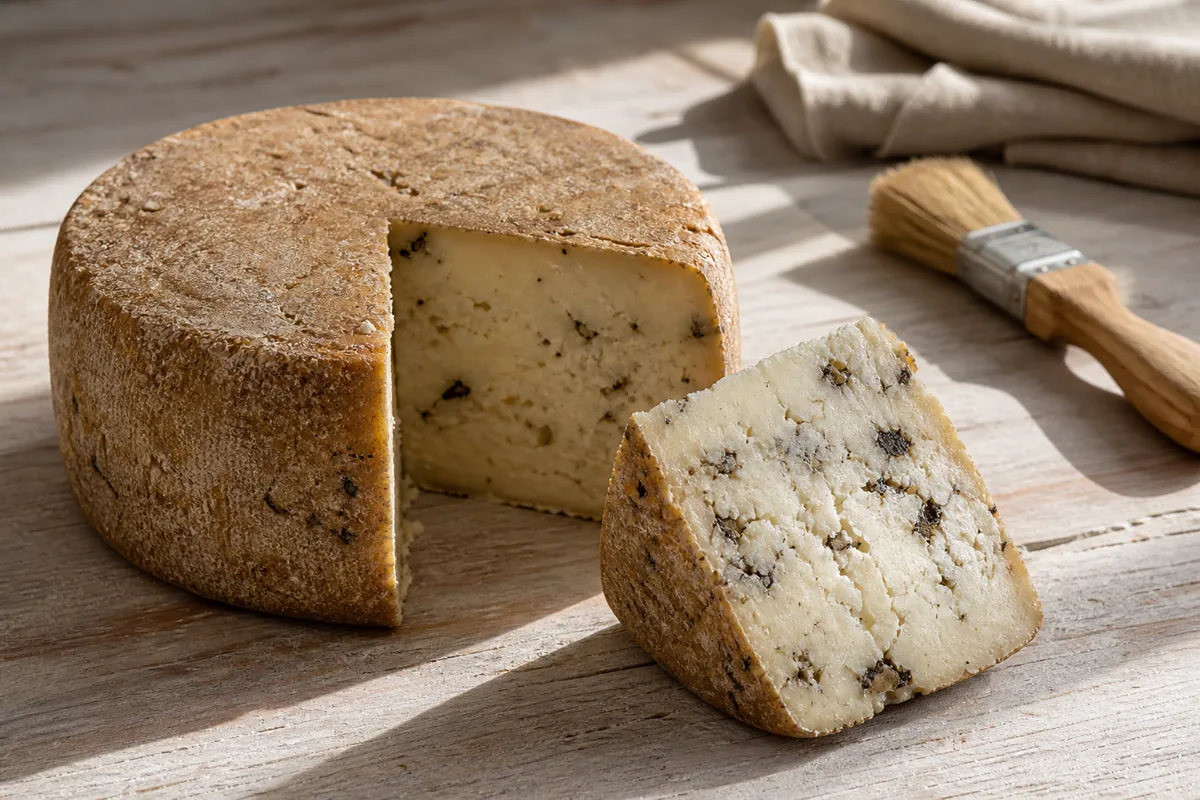
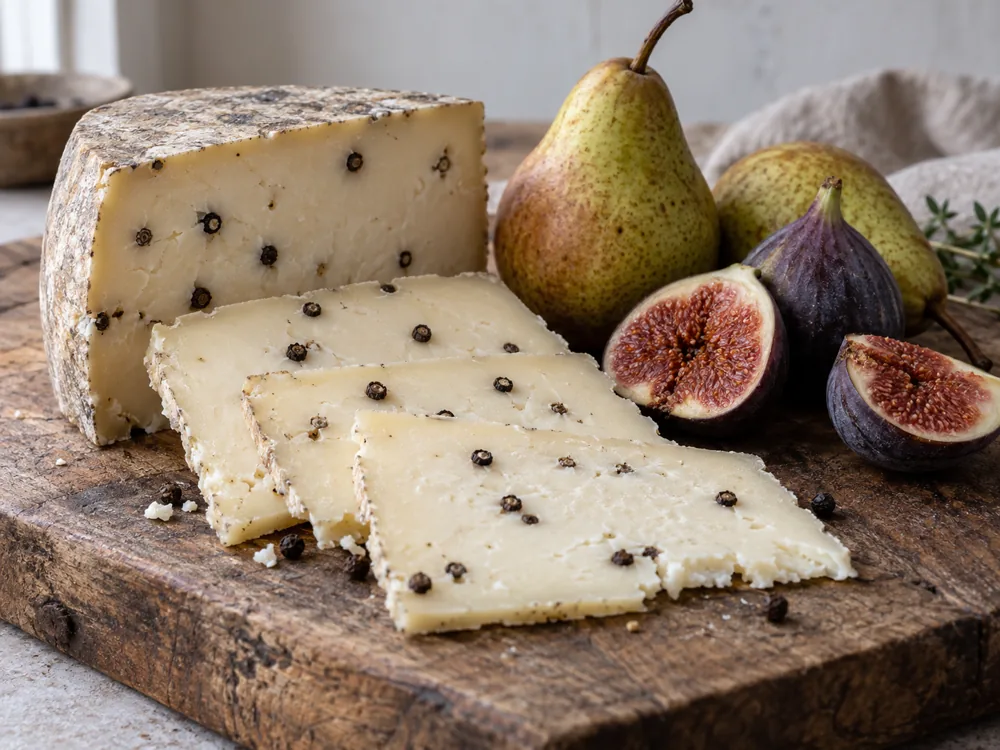
Pepato is a Sicilian sheep's-milk pecorino with black peppercorns worked into the paste, and its name is the Italian word for "peppered".
Under the Pecorino Siciliano DOP, pepper is allowed only in the fresh and semi-aged types, so a pepato made to that specification is a young cheese ripened for 20 to 30 days or 60 to 90 days. The same rules fix raw milk and lamb rennet, so a DOP pepato is neither pasteurised nor vegetarian.
In This Article
What Is Pepato Cheese?
Sicily is pepato's main home, and the peppercorns go in while the whey is drained from the curd. The cheese is also called pecorino pepato in Italian, and tumazzu di piecura ccu pepi in Sicilian.
Descriptions of the paste differ: Wikipedia calls pepato semi-hard, while Gazzetta del Gusto describes Pecorino Siciliano DOP as a semi-cooked cheese with a hard paste.
The name also travels beyond Sicily's protected cheese. Variations turn up across southern Italy: some makers use a heavier hand with the pepper or different curing times, and red pepper flakes or other sheep breeds are occasionally used.
There is a Sardinian pepato too, the Pecorino Pepato Mitica Aged, made from pasteurised milk.
So two wheels sold as pepato can differ in milk, rennet and ripening. The DOP marks tell you which kind you have, because the Pecorino Siciliano specification fixes all three.
Is Pepato the Same as Pecorino Siciliano DOP?
In part: Pecorino Siciliano DOP is made in three types, and whole black peppercorns are permitted in two of them, which is where the protected cheese and pepato overlap.
A Pecorino Siciliano wheel can be plain, then, and a pepato from elsewhere in Italy is not Pecorino Siciliano DOP. The types and their rules come from the amended specification published in the EU Official Journal on 18 May 2020.
| Type | Ripening | Black peppercorns | Wheel weight |
|---|---|---|---|
| Fresco | 20 to 30 days | Allowed | 3 to 5 kg |
| Semistagionato | 60 to 90 days | Allowed | 3 to 5 kg |
| Stagionato | At least 120 days | Not provided for | 6 to 14 kg |
Pepper therefore belongs to the young end of the range, and the Stagionato, the type that ripens longest, is made without it.
Pecorino Siciliano received its protected designation in 1996, and CoRFiLaC, a research consortium for the dairy and agri-food sector, checks that the cheese conforms to the specification. A protection consortium formed in 2001 oversees the whole production chain, the ageing and the marking.
Where in Sicily Is Pepato Made?
Anywhere in Sicily: the Pecorino Siciliano DOP production area is the whole island.
Its soils run from clay formations rich in gypsum and sulphur in the centre to volcanic soils on the Aeolian Islands and clay-sandy soils in the west and the Egadi Islands. The climate is Mediterranean, with local microclimates that come from the contrast between sea and mountains.
The milk comes from sheep of different breeds kept in traditional sheepfolds. Because the designation covers the whole island rather than one district or flock, the DOP name fixes the method and the ripening type, but not the soil or the breed behind a given wheel.
The first records of Pecorino Siciliano go back to the Greek landing in Sicily around 753 BC, and the cheese appears in Pliny the Elder's Naturalis Historia.
How Is Pepato Made?
DOP pepato starts as whole raw sheep's milk from one or two milkings, filtered and warmed to no more than 40°C, then poured into a wooden vat. Lamb rennet paste goes in at 36 to 40°C, and the curd sets in 40 to 50 minutes.
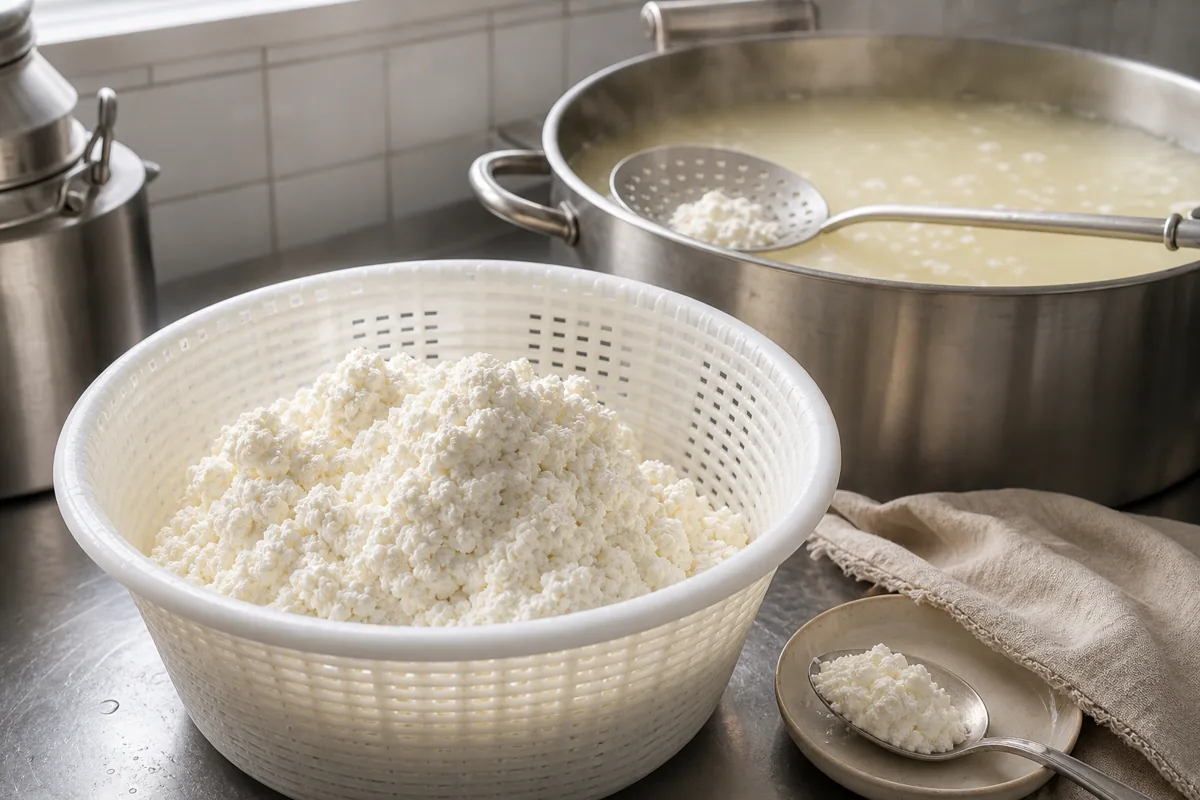
A wooden stick with a knob at its tip breaks the curd into grains the size of a grain of rice, helped by hot water at 70 to 90°C. After 5 to 10 minutes of rest, the curd is lifted out and pressed by hand into rush baskets.
In the fresh and semi-aged types this is the moment the black peppercorns go in, after a few seconds in water above 80°C.
A pepato can also be made with whole or cracked peppercorns, mixed in by hand before the cheese is salted and pressed into molds. Under the DOP rules the peppercorns go in whole, so if you see cracked pepper in the paste, you are looking at a pepato made outside the DOP.
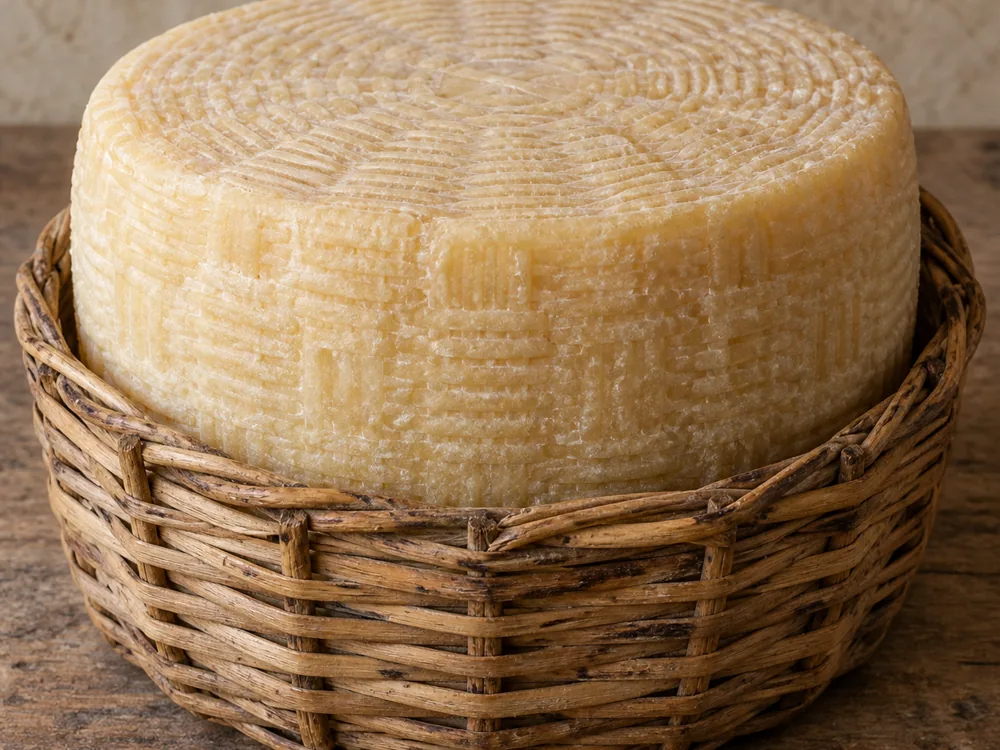
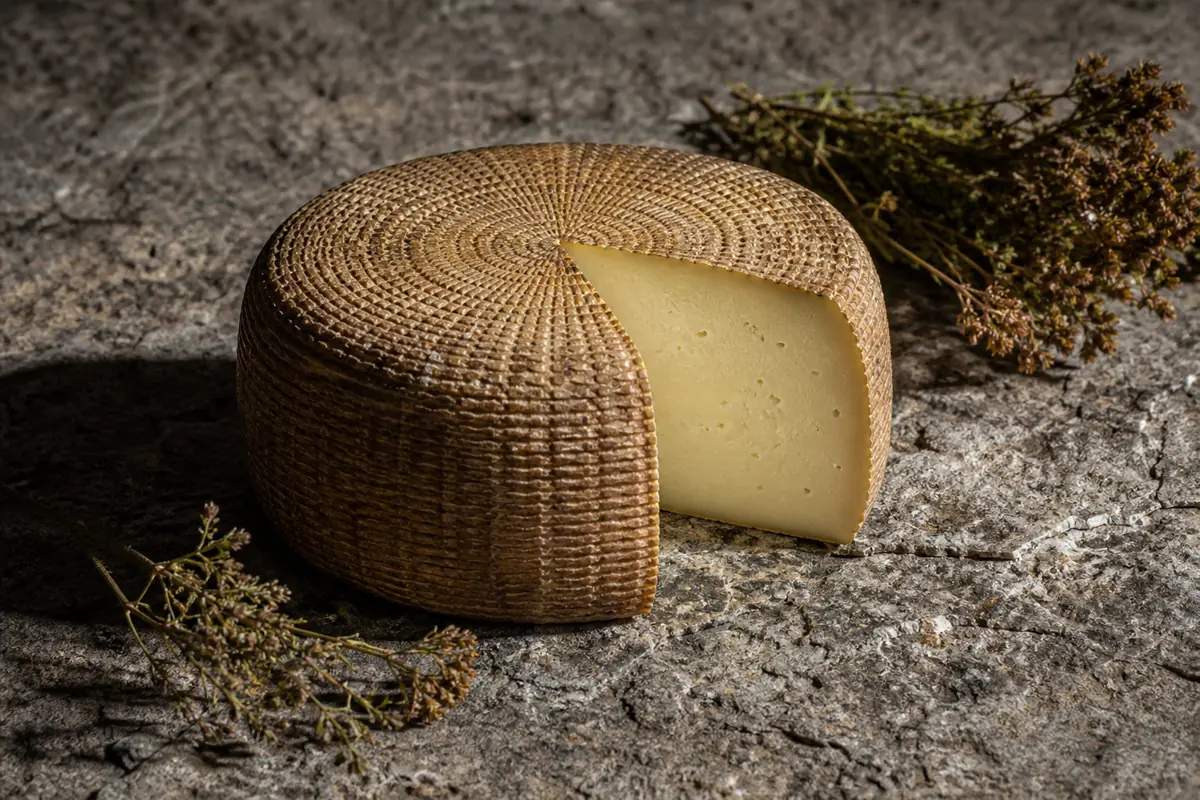
The curd stays in the baskets for 1 to 2 hours while ricotta is made, and the leftover whey then cooks the wheels in the wooden vat for 3 to 4 hours. Turned out of the baskets afterwards, the wheels keep the pattern the basket pressed into their surface.
Each wheel receives a casein tag at turning so it can be traced. After 24 to 48 hours at room temperature the wheels are salted dry, in brine or both, then ripen at 14 to 18°C and above 75% humidity on untreated wooden shelves for the time their type requires.
What Does Pepato Taste Like?
Pecorino Siciliano is sweet, with strong pasture aromas and a paste of white to pale straw-yellow in the fresh type and straw-yellow to deeper yellow in the semi-aged one, in the specification's description. The rind tells you which type you have: the fresh type has no rind, only an edible surface printed with the basket pattern, while the semi-aged type has a rind.
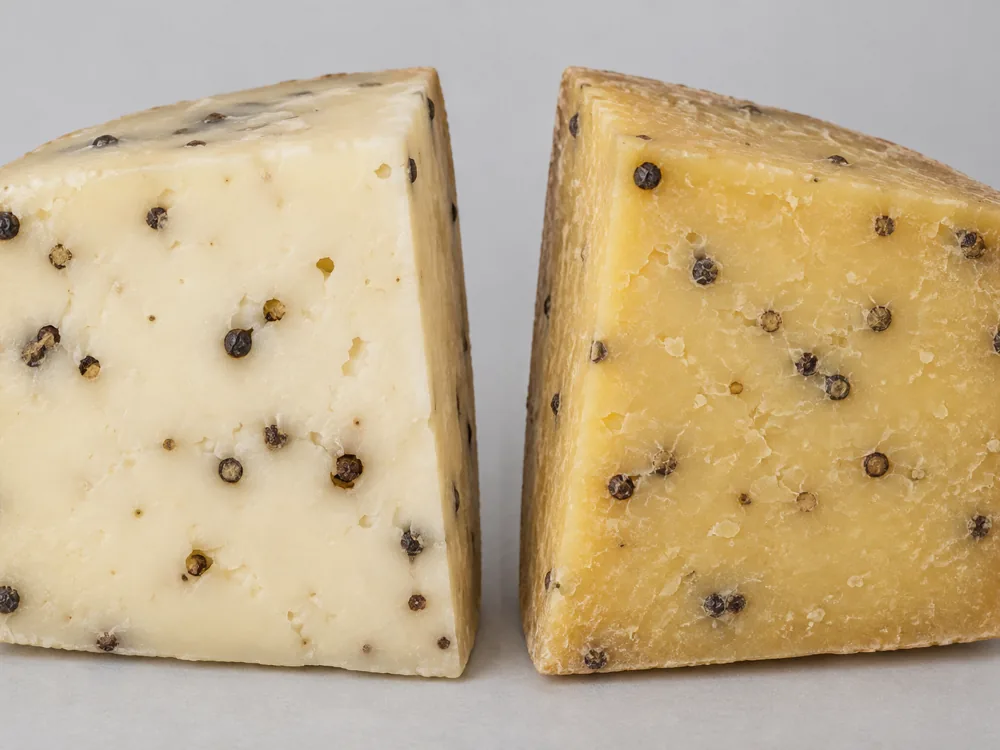
Pecorino Siciliano turns piquant in the aged Stagionato, the type made without peppercorns, as Gazzetta del Gusto describes it. If that is the cheese you want, buy a Stagionato rather than a pepato.
A pepato has gentle spice from the pepper over a savoury, tangy base, with a texture that moves from firm in young wheels to denser and crumblier in aged ones, in We Are Italy's description.
Which Age of Pepato Should You Buy?
A peppered DOP wheel is at most 90 days old, because pepper is allowed only in the fresh and semi-aged types and the ripening ranges leave 90 to 120 days without a type.
| Age | Milk treatment | Description |
|---|---|---|
| 10 days | Not stated | A mild younger version found in Italian stores, in Wikipedia's account |
| 2 to 4 months | Not stated | The usual age for pepato |
| About 6 months | Pasteurised | The Pecorino Pepato Mitica Aged from Sardinia, flaky yet creamy, with salty, tangy flavours and spicy peppercorns, in Cheese.com's description |
| Almost a year | Sheep's milk, treatment not stated | Stronger and more complex, in We Are Italy's account |
That usual 2 to 4 months overlaps the semi-aged type only up to 90 days, and wheels of 6 months or a year are past the pepper rule altogether, so their milk and rennet are the maker's choice.
For the DOP cheese with pepper through it, buy a young wheel. If you want a pepato aged past 90 days, you are buying from outside the DOP, so look to the pack or the seller for its milk and rennet.
Is Pepato Vegetarian?
Not when it is Pecorino Siciliano DOP, which is coagulated with lamb rennet paste taken from the abomasum of suckling lambs.
If you are vegetarian and the pepato is not DOP, ask the producer which rennet it uses.
Is Pepato Pasteurised, and Can You Eat It While Pregnant?
If you are pregnant, check the label for the milk: the specification makes every Pecorino Siciliano DOP from whole raw sheep's milk, and Cheese.com lists the Sardinian Pecorino Pepato Mitica Aged as pasteurised.
Under NHS advice, cook a DOP pepato thoroughly before you eat it: Wikipedia calls pepato semi-hard, and the NHS says any foods made from unpasteurised milk must be thoroughly cooked.
If a pepato without the DOP marks has no label, or its label does not say pasteurised milk, cook it until it is steaming hot before you eat it: the NHS says any foods made from unpasteurised milk must be thoroughly cooked and lists any cheese that's been cooked until steaming hot as safe to eat.
In the US, a DOP pepato, or any pepato without a label that says pasteurised milk, is a riskier choice with no heated safer route, even cooked: the CDC lists unpasteurized (raw) milk and dairy products made from raw milk as riskier.
Under NHS advice, if the label says pasteurised milk, you can eat pasteurised pepato: Wikipedia calls pepato semi-hard, and the NHS lists pasteurised or unpasteurised hard cheeses, pasteurised semi-hard cheeses and pasteurised soft cheeses as safe to eat.
In the US, the CDC table does not list a pasteurised semi-hard or firm pepato eaten cold in either column, and its safer column names hard cheese, when made with pasteurized milk, cottage cheese, cream cheese, string cheese, feta and mozzarella, when made with pasteurized milk, and pasteurized soft cheeses heated to an internal temperature of 165°F or until steaming hot.
How Do You Serve and Cook with Pepato?
Pepato is traditionally sliced thin for antipasti platters, grated over pasta or baked into casseroles.
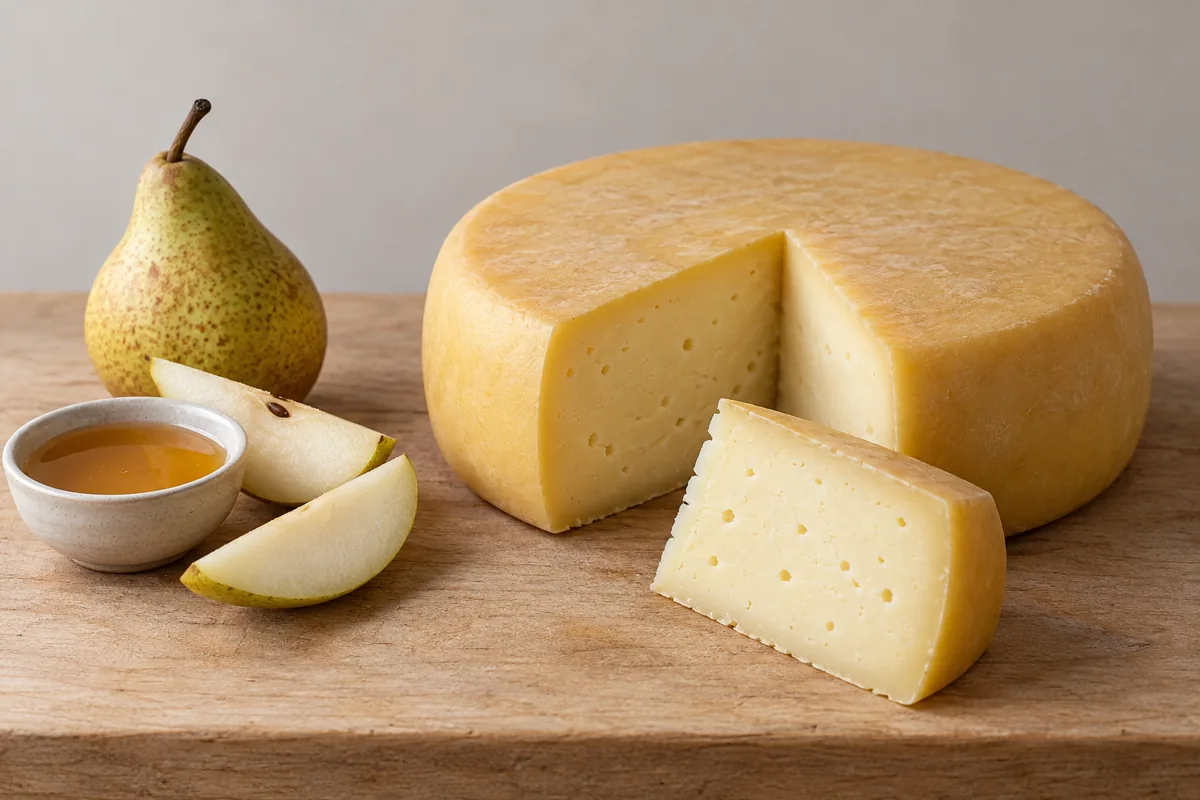
On a platter, set it beside cured meats, olives, rustic bread and seasonal fruit, especially pears and figs. Let the cheese reach room temperature before you serve it.
That warming has a limit: the CDC, which counts dairy as perishable food, says never to leave perishable food out for more than 2 hours (or 1 hour if exposed to temperatures above 90°F), and to keep your refrigerator at 40°F or below.
For wine, try big, earthy reds such as Nero d'Avola or Frappato.
| Pairing | Type | Why It Works |
|---|---|---|
| Full-bodied reds | Wine | Try Nerello Mascalese, Nero d'Avola, Perricone, Syrah or Frappato. |
| Sweet and fortified wines | Wine | Try Marsala, Zibibbo or Passito di Pantelleria with the cheese on a dessert plate. |
| Honey and citrus jams | Fruit | Set honey or citrus jams beside the cheese as a dessert. |
Pepato also goes into pasta dishes such as Sicilian macaroni. The aged Sardinian Mitica can be shaved over salads, fresh beans or pasta, or grated into polenta or over risotto.
What Should You Check on a Pepato Label?
A peppered DOP wheel weighs 3 to 5 kg, so you are likely to buy pepato as a cut piece. Under the DOP rules, pre-packed pieces must include part of the edge or face that shows where the cheese comes from.
A wheel is cylindrical with flat or slightly concave faces and has a rim 10 to 25 cm high.
On genuine Pecorino Siciliano DOP, look for these marks:
- An oval casein tag on each wheel, reading Pecorino Siciliano, D.O.P., the type (Fresco, Semistagionato or Stagionato) and an identification number.
- The EC mark of the dairy; the Stagionato type also carries a hot-iron brand.
- A pack label with the Pecorino Siciliano DOP logo.
- The basket pattern on the surface of the wheel.
The specification also bans qualifiers such as extra, superior, fine or selected next to the name, so a DOP pack should not carry them.
A pepato without these marks is not Pecorino Siciliano DOP, so the specification does not fix its milk treatment or rennet, and you need the pack or the seller to tell you both.
What Can You Use Instead of Pepato?
For grating, Pecorino Romano is another sheep's-milk option. It is a hard cooked-paste cheese made from fresh whole sheep's milk and lamb rennet in its consortium's description, aged at least five months for table use and at least eight months for grating.
It has no peppercorns, and because it is also made with lamb rennet, it is no better than DOP pepato if you are vegetarian.
Pecorino Toscano, in Wikipedia's account, is a firm sheep's-milk cheese made from pasteurised milk, with PDO status since 1996. Check the pack of the piece you buy for its milk treatment.
If you grind fresh black pepper over either one, you get the pepper back, but not the whole peppercorns that the DOP puts through the paste.
For peppercorns with pasteurised milk, look to the Sardinian Mitica Aged: it is aged about 6 months, with black peppercorns in the paste.