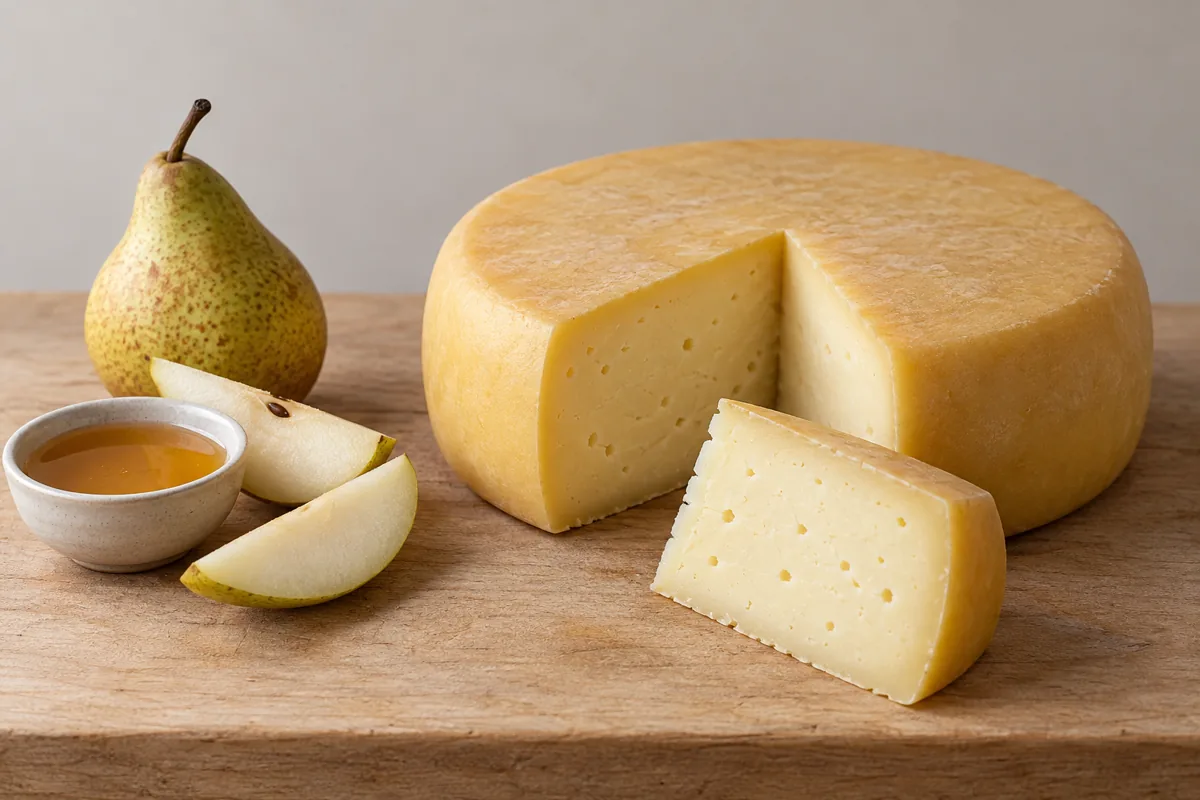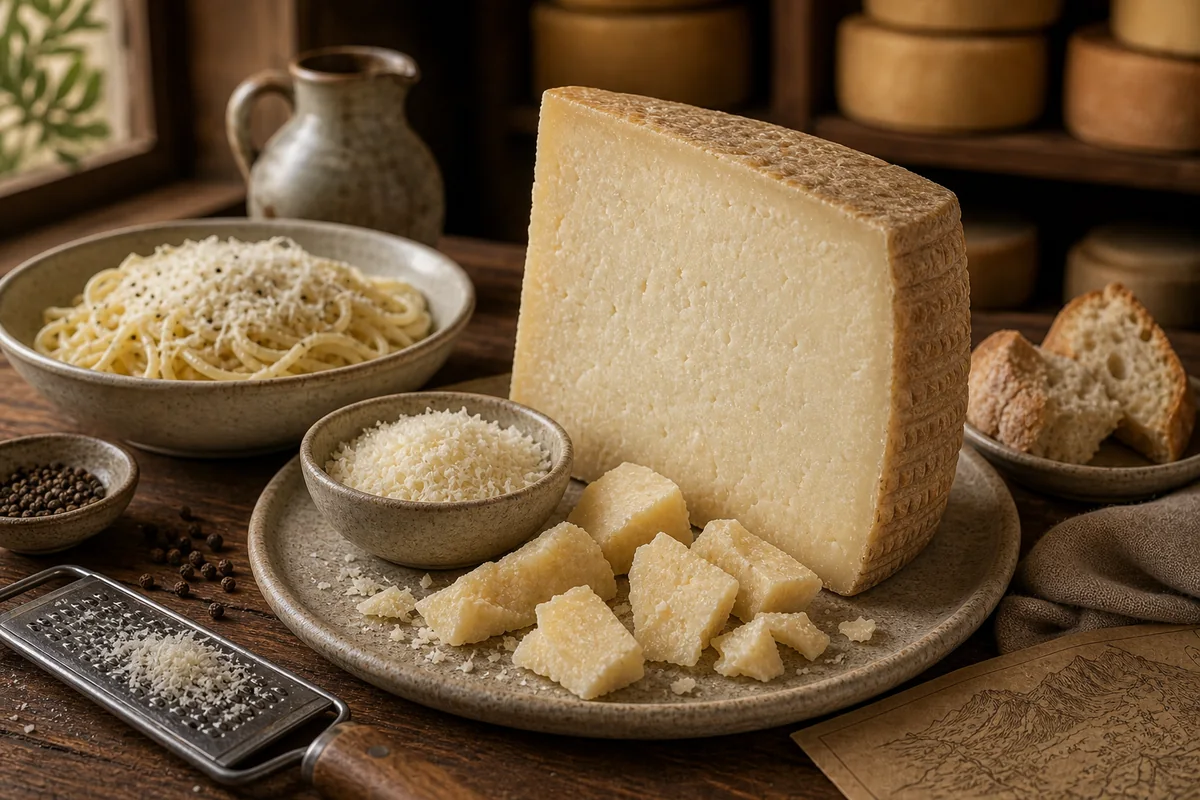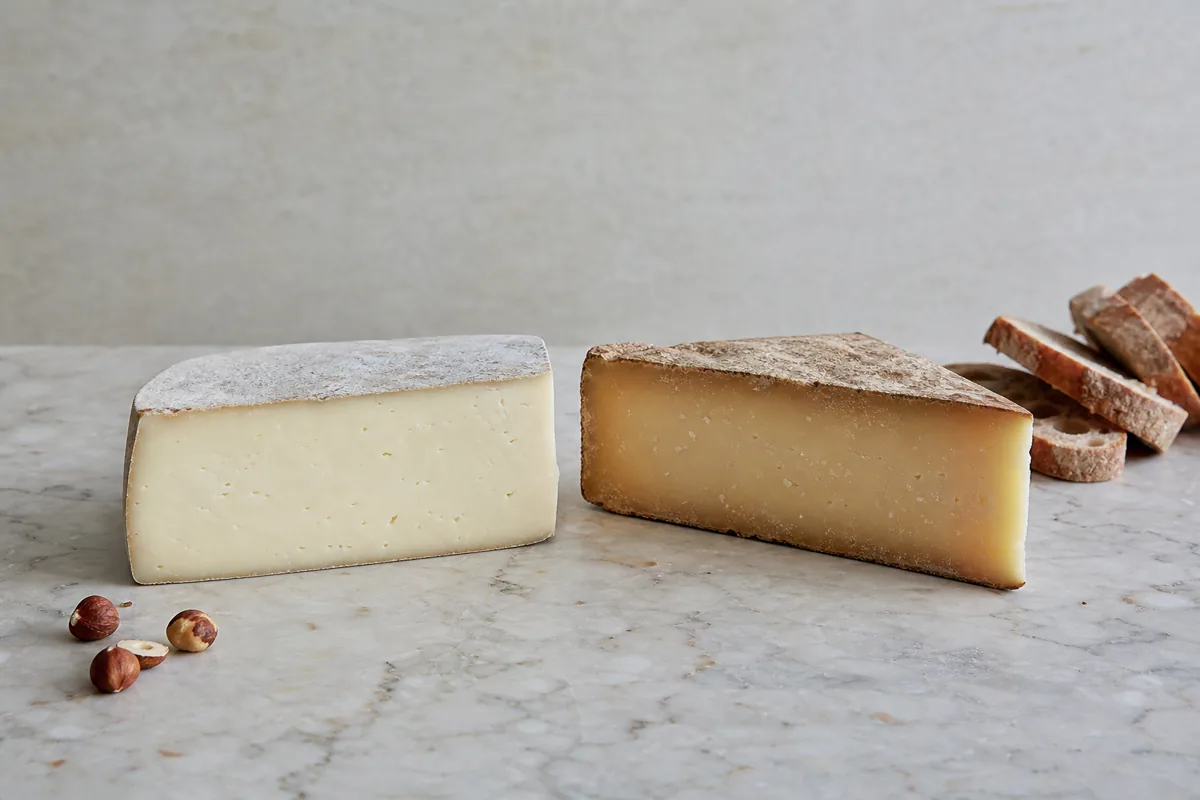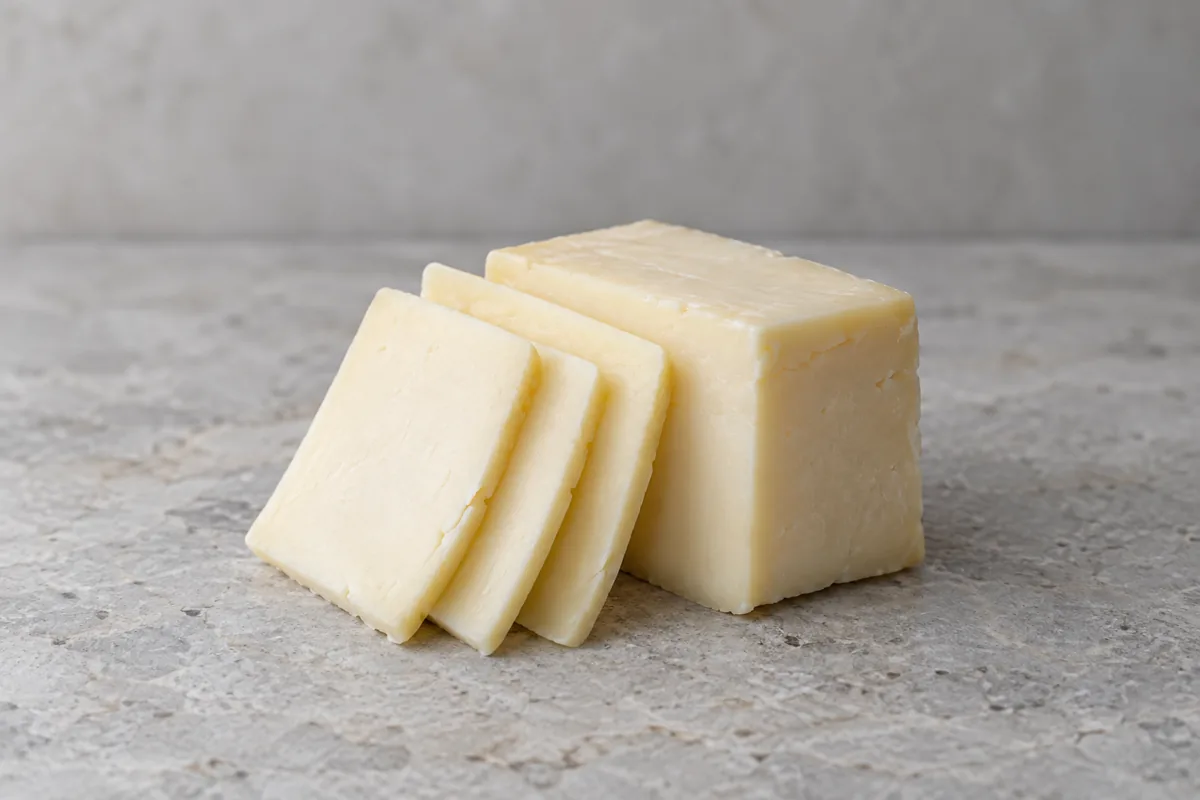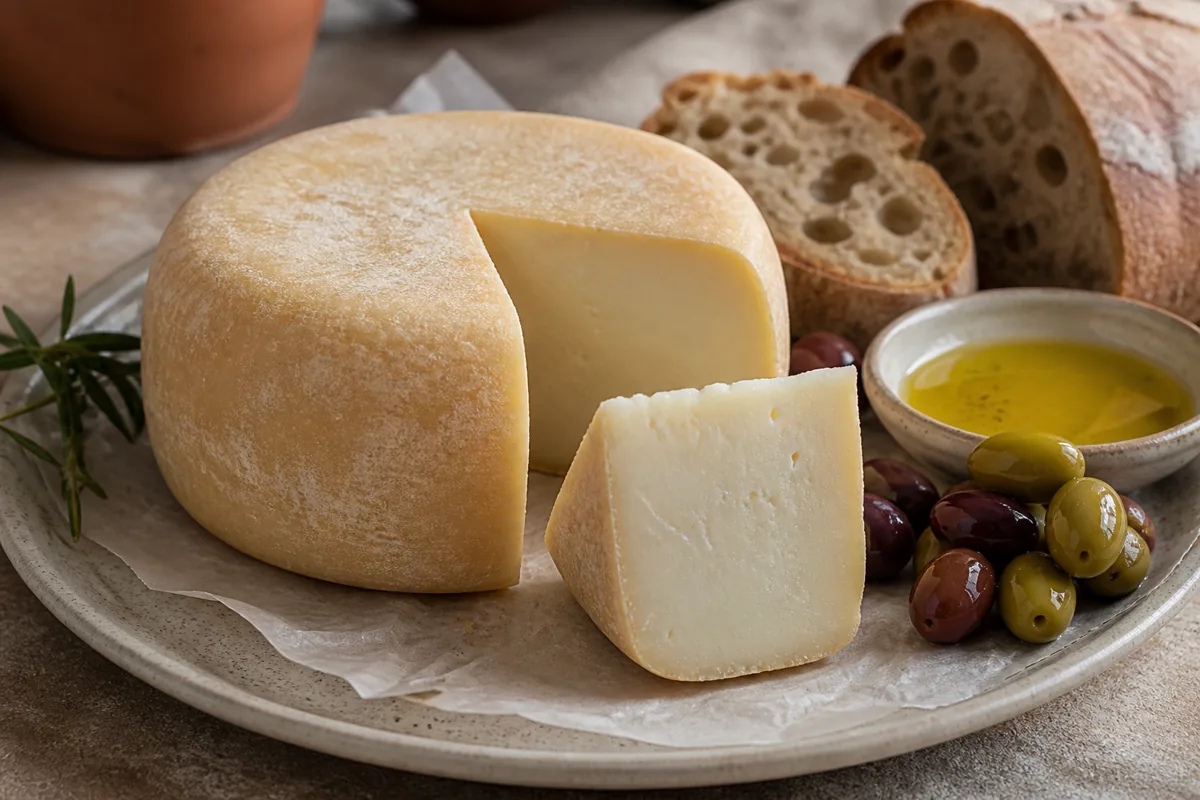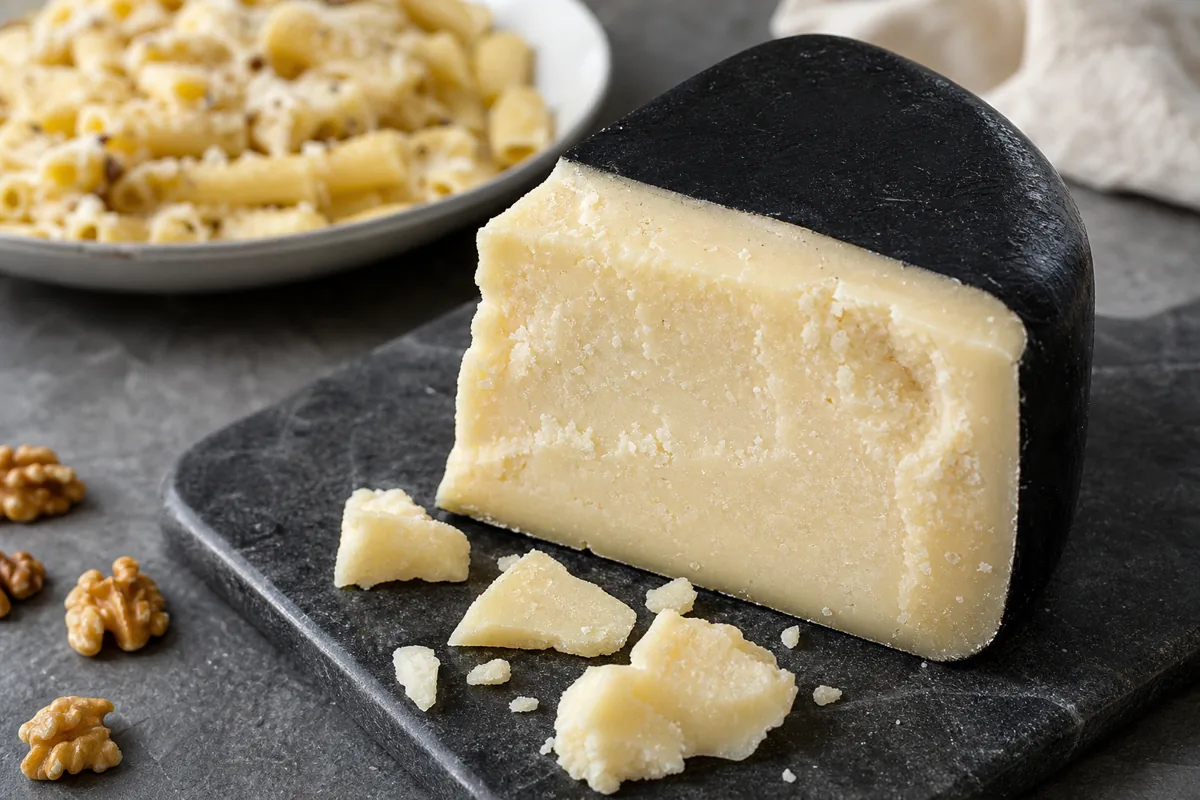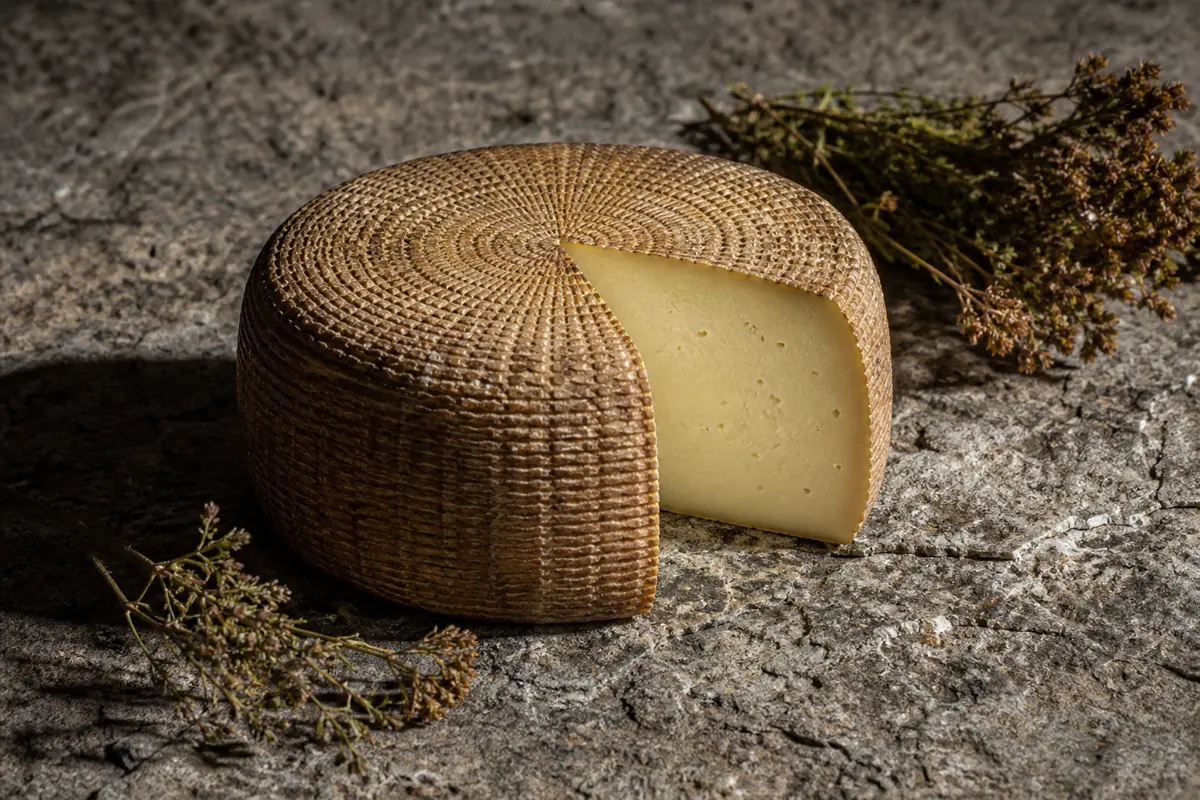
Pecorino Crotonese PDO is a whole sheep's milk cheese from the Marchesato area of Calabria, sold fresh, semi-hard, or aged.
Age separates semi-hard from aged: the protected specification gives semi-hard wheels 60 to 90 days and aged wheels more than 90 days.
Producers may use raw, thermised, or pasteurised milk, so check the label for the PDO wording and the producer's name rather than trusting the basket pattern on the rind.
In This Article
What Is Pecorino Crotonese?
The name is reserved for cheese made from whole sheep's milk from ewes raised in a defined zone of Calabria that covers the province of Crotone and named communes in the provinces of Catanzaro and Cosenza. That zone is the historic Marchesato di Crotone.
Only cheese that meets the specification's rules may carry the name, and this Italian cheese became a PDO in 2014.
The PDO supply chain is 50 livestock farms and 3 dairies, which process about 3,000,000 liters of milk a year into an average of 600 tons of cheese.
A wheel is a cylinder with flat faces and a straight or slightly convex side, and it comes in two protected size bands.
| Weight | Side height | Face diameter |
|---|---|---|
| 0.5 to 5 kg | 6 to 15 cm | 10 to 20 cm |
| More than 5 kg, up to 10 kg | 15 to 20 cm | 20 to 30 cm |
Fat must make up at least 40% of the dry matter.
How Do You Recognize Real Pecorino Crotonese?
On a PDO wheel, the label must show the Pecorino Crotonese logo, followed by the words Protected Designation of Origin or the acronym PDO, the European Union symbols, and the producer's name and address. The Consortium describes the European symbol as red and yellow.
The Consortium puts the logo first: it says a pecorino labelled Crotonese without the official Consortium logo is not authentic Pecorino Crotonese, and that the PDO wording is essential as well.
The logo is a sheep's head drawn from the letter C inside an ellipse, in black, gold, and a green-brown, and it is impressed on the wheels by hot branding or die stamping, with the lettering on the side.
Each wheel also carries a unique producer code so it can be traced through every production stage, and the cheese may be sold whole or in portions.
Only the dairies on the Consortium's published list may make the PDO cheese, and some of them also make conventional pecorino that is not PDO.
A label can therefore name a listed dairy and still sit on a non-PDO wheel, so look for the logo and the PDO wording rather than the producer's name alone.
A dairy may put its own brand on the label only in smaller type than the logo, and optional claims that praise the product or mislead the buyer are ruled out.
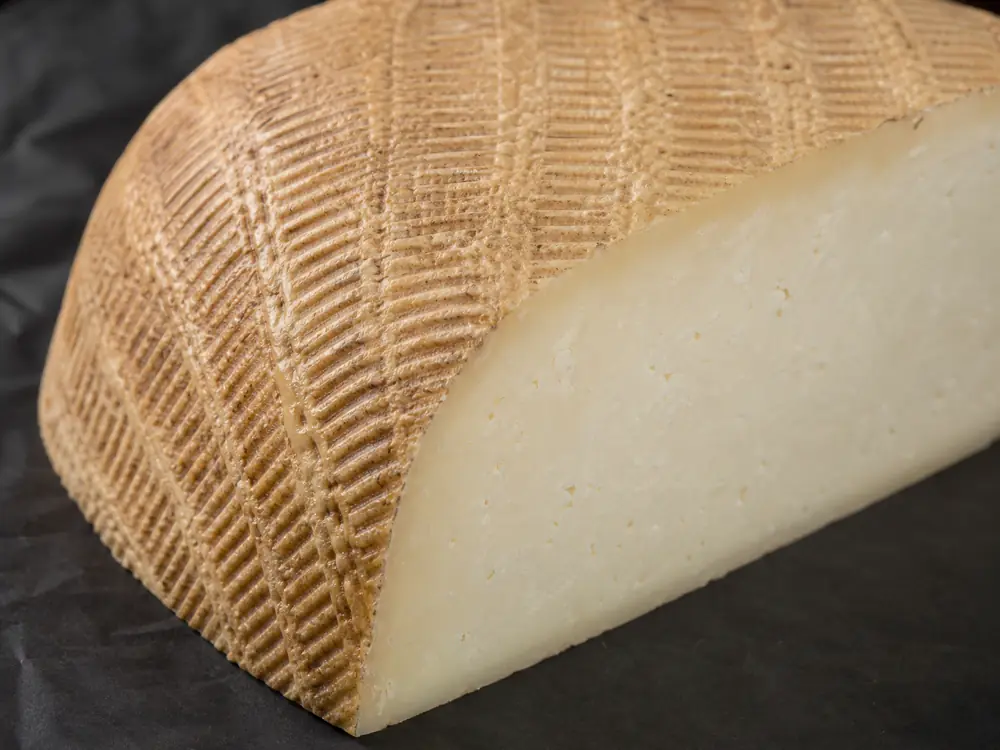
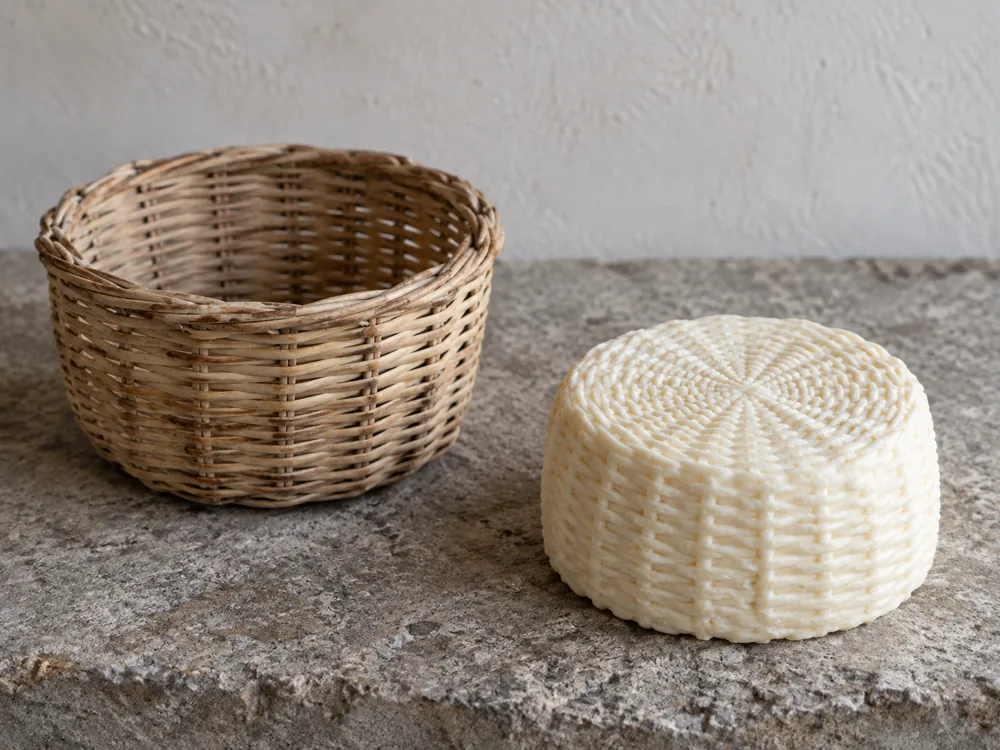
All three forms show the typical basket marks on the rind. The baskets may be plastic, rush, or another food-safe material, so the pattern shows how the wheel was molded and not where it was made.
After its 18th-century export growth the cheese was imitated far and wide, and the Consortium describes its own task as protecting the PDO cheese from non-PDO cheeses and imitations.
How Do Fresh, Semi-Hard, and Aged Crotonese Differ?
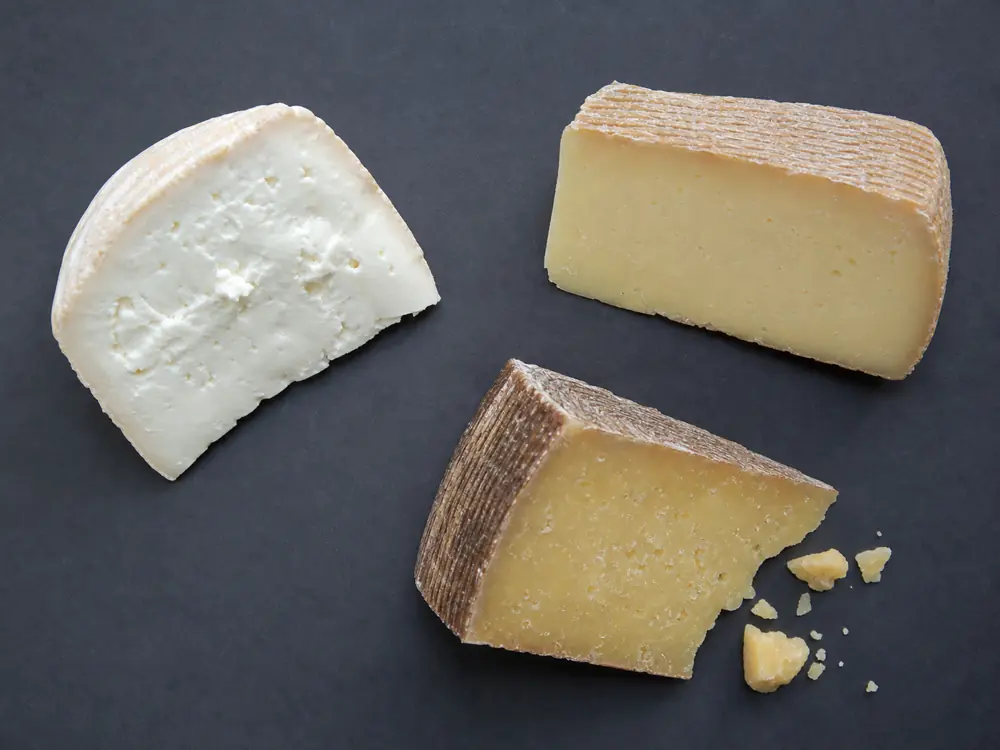
Rind, paste and taste separate the three forms in the specification's own descriptions.
| Form | Rind | Paste | Taste | Age |
|---|---|---|---|---|
| Fresh | Thin, white or pale straw, with clear basket marks | Tender, sweet, uniform, creamy, and milk-white, with rare eyes | Distinct, soft, slightly acidulous | Not stated |
| Semi-hard | Thick and slightly brown, with clear basket marks | Compact, with rare eyes | Intense and harmonious | 60 to 90 days |
| Aged | Hard and brown, sometimes treated with olive oil or olive dregs | Slightly straw-coloured, with rare eyes | Intense and decisive | More than 90 days |
Retail listings use the same terms with different numbers for the long-aged form.
| Source | What it says about age |
|---|---|
| Protected specification | Semi-hard 60 to 90 days; aged more than 90 days |
| Guffanti | Raw milk wheel, minimum 90 days |
| Nonna Calabrese semi-hard listing (Casearia Crotonese Brugnano) | Maturation 60 to 90 days, with a feature line for long seasoning of over six months |
The specification sets only a floor of 90 days for the aged form and no ceiling, and it ties six months to its largest wheels, which may be why sellers use that age for their longest-aged cheese.
An aged wheel can therefore be a little over three months old or well past six, so compare the age the producer states when you choose between wedges.
Guffanti adds that the straw-yellow of the paste is more or less intense depending on the seasoning, which gives a rough colour cue to how long a wheel has aged.
The Consortium describes ageing as active work: makers turn the wheels, brush or wash them, coat them with olive oil, and decide which surface molds add flavor and which must be removed.
What Does Pecorino Crotonese Taste Like?
The specification describes a balanced cheese rather than a loud one. No single aroma leads, or at most a slight sheep's milk note does.
With chewing and body heat the same aroma returns fuller and more marked, strongest on swallowing, and the specification says it then wraps the mouth with a long, pleasant persistence.
The Consortium calls the flavor mild and the aromas delicate. Guffanti calls its raw milk wheel intense, savoury, and slightly sweeter than other southern Italian pecorino, while Cheese.com lists salty, savory, and strong with a spicy aroma.
The specification limits spiciness to a very slight aftertaste in the long-aged form, so if you read a strong and spicy description, it fits the aged form rather than the fresh or semi-hard wheels.
Why Does the Production Zone Matter to the Cheese?
Ryegrass, clover, chicory, sulla, and alfalfa are among the pasture plants of the area. The flocks graze from September to June, and GMO-free feed bought from outside the zone may not exceed 40% of the yearly ration, mainly on winter days when the sheep cannot graze.
The Marchesato of Crotone is a name dating to 1390, and the area has Pliocene clay hills in the Crotone area and a mountain belt running from Sila Piccola to Sila Grande. The Sila plateaus are largely the natural summer pastures of flocks that live on the hills between the mountains and the Ionian Sea.
The natural whey starters of the zone carry particular weight: they create a microbiological link between the area and the cheesemaking technique that local master cheesemakers have handed down.
Pecorino Crotonese may be made all year, from two to four milkings a day, under the specification, while Guffanti lists November to June as its production months and Cheese.com January to June. A season in a listing therefore describes that seller's wheels and not a limit the specification sets.
Export documents for the cheese go back to the 16th century, and the specification calls it the only Calabrian dairy product that has had volumes large enough to sell outside the region for centuries.
How Is Pecorino Crotonese Made?
Whole sheep's milk goes into the vat raw, thermised, or pasteurised under the specification, and it coagulates at 36 to 38 °C for 40 to 50 minutes with kid rennet paste. Kid rennet is animal rennet, so the cheese is not vegetarian, and Cheese.com lists it that way.
The curd is cut to the size of a rice grain, stirred while it is heated to 42 to 44 °C for 5 to 6 minutes, and left to settle. Natural lactic ferments in the milk, or natural whey cultures from the production zone, may start the acidification.
What happens next depends on the milk.
| Step | Raw milk | Thermised or pasteurised milk |
|---|---|---|
| Filling the baskets | The settled curd gathers into one mass and is lifted out in pieces | The curd runs into the baskets together with the fat whey |
| Draining | Wheels are pressed by hand or stacked on one another | Wheels are steamed for 120 to 240 minutes |
The pressing and the steaming do the same job: each drains excess whey and gives the curd its typical basket shape.
Both routes finish the same way, with the formed wheels going for a few minutes into hot whey at no more than 55 °C. That dip closes the surface and starts the rind.
Salting is dry, with the salt spread by hand, or in saturated brine, for a number of days that depends on wheel size.
Nonna Calabrese's semi-hard listing gives its own sequence for a pasteurized wheel: milk pasteurized at 72 °C and cooled to 36 °C, rennet and lactic ferments, an hour of stewing in tanks at 65 °C, then 12 hours in brine per kilogram.
The Consortium calls the hand pressing frugatura and says the cheese then acidifies for one or more days before ageing. Ageing takes place in cool, lightly ventilated rooms or in sandstone caves.
How Do You Serve Pecorino Crotonese?
In its fresh, semi-hard, and aged forms it is a table cheese, and it is also used grated, so for serving, your choice between forms rests on the taste differences above.
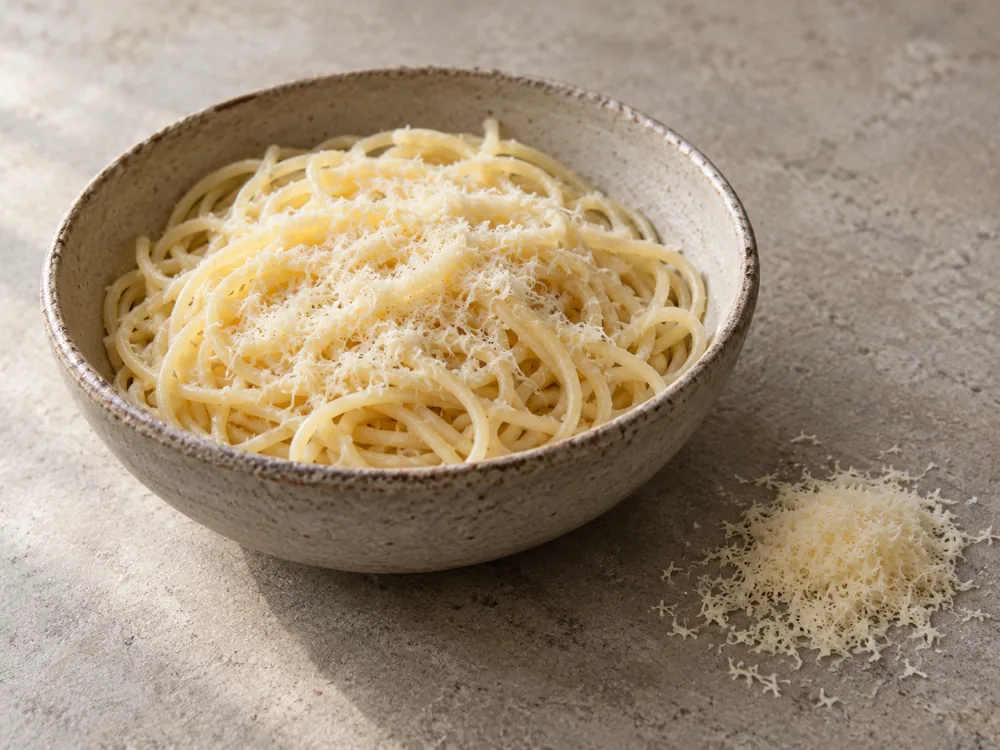
Cheese.com calls it best as a snack cheese and for presentation because of its ribbed rind, and lists grating over pasta, soups, and casseroles and slicing into grilled sandwiches and salads.
Guffanti chose its food pairings for its raw milk wheel, plain pasta among them, and the wine pairings are Cheese.com's.
| Pairing | Type | Why It Works |
|---|---|---|
| Spicy pear and quince mustard | Food | Named by Guffanti, an Italian cheese seller, for its raw milk wheel. |
| Plain pasta and homemade bread | Food | Also named by Guffanti. |
| Barbera | Wine | Listed by Cheese.com. |
| Fruity Sardinian red | Wine | Listed by Cheese.com. |
| Pinot Noir | Wine | Listed by Cheese.com. |
| Brunello | Wine | Cheese.com calls the cheese a perfect partner for Brunello wine. |
Which Form of Pecorino Crotonese Should You Buy?
The Consortium calls the aged form the one most closely tied to tradition and says the semi-hard form has become today's preferred choice, offering a more delicate combination of scents and flavors.
A PDO label does not have to show the form or the age, so the days or form in a listing are the seller's own statement, not a legal guarantee.
Wheel weight gives a second cue: the specification allows 0.5 to 5 kg for any wheel and lets one reach 10 kg only when it has aged more than six months, so a wheel over 5 kg is a long-aged one.
Choose by taste and by the days the seller states: semi-hard is the Consortium's preferred form today, aged is the traditional one and the only form with a slight spicy finish, and fresh is tender and slightly tangy. The logo and the PDO wording prove the name, not the age.
What Can Replace Pecorino Crotonese?
No other cheese carries the Crotonese name or the Marchesato production zone. The nearest replacements are two other protected sheep's milk pecorino, Toscano and Romano.
| Cheese | Milk | Age | Described as |
|---|---|---|---|
| Pecorino Toscano PDO | Whole sheep's milk, raw or heat-treated up to pasteurisation | Soft type at least 20 days; semi-hard type at least 4 months | A table or grating cheese with a fragrant, pronounced taste |
| Pecorino Romano PDO | Fresh whole sheep's milk from farms in the production area | Table type 5 months; grating type 8 months | Aromatic, lightly spicy, and tangy as a table cheese; intensely spicy when grated |
Age labels do not line up across the three names: Toscano's semi-hard type needs at least 4 months and Romano's table type 5 months, against 60 to 90 days for Crotonese semi-hard, so both are older cheeses than a Crotonese semi-hard wheel.
For fresh or semi-hard Crotonese, Pecorino Toscano's soft and semi-hard types are the closer match in kind, because Toscano is also sold as a soft type and a semi-hard type.
For a grated cheese, Pecorino Romano's grating type does the same job, but its Consortium calls it intensely spicy where the Crotonese specification allows only a very slight spicy aftertaste.
Wheel size and rennet separate the three further.
| Cheese | Wheel weight | Rennet named |
|---|---|---|
| Pecorino Crotonese PDO | 0.5 to 5 kg, up to 10 kg when aged more than six months | Kid rennet paste |
| Pecorino Toscano PDO | 0.75 to 3.5 kg | Calf rennet |
| Pecorino Romano PDO | 20 to 35 kg | Lamb rennet paste |
All three name an animal rennet, so none works as a vegetarian substitute for another.
What Do Pecorino Crotonese Labels Show?
A pasteurized semi-hard wheel from Casearia Crotonese Brugnano and Guffanti's raw milk wheel differ in milk treatment, format, and the figures their sellers print.
| Record | Milk | Age on record | Per 100 g |
|---|---|---|---|
| Casearia Crotonese Brugnano, semi-hard (Nonna Calabrese) | Pasteurized sheep's milk | 60 to 90 days | 412 kcal, 34 g fat (17 g saturated), 26 g protein, 2.1 g salt |
| Guffanti, 2 kg wheel | Raw whole sheep's milk | Minimum 90 days | Fat 40% of dry matter |
The 40% figure, the specification's minimum and Guffanti's own, is counted on dry matter, so it cannot be compared directly with Nonna Calabrese's 34 g of fat per 100 g.
The Nonna Calabrese semi-hard page gives a 60 to 90 day maturation next to a feature line for long seasoning of over six months and a hard brown rind. Its description also names goat milk while the ingredient list says sheep's milk, so the structured lines are the safer fields to read.
Nonna Calabrese gives 180 days for its vacuum-packed slice. For a whole wheel or an opened piece, ask the seller how to store it and at what temperature.
Is Pecorino Crotonese Safe During Pregnancy?
The milk treatment and the form of the wheel both matter, and the specification leaves milk treatment to the producer.
- Guffanti: raw whole sheep's milk
- Nonna Calabrese (Casearia Crotonese Brugnano): pasteurized sheep's milk in its semi-hard record
- Cheese.com: pasteurized sheep's milk
The CDC lists unpasteurized (raw) milk and dairy products made from raw milk, and soft cheese made from unpasteurized (raw) milk, as riskier choices. The NHS lists pasteurised or unpasteurised hard cheeses, pasteurised semi-hard cheeses and pasteurised soft cheeses as safe to eat, while foods made from unpasteurised milk, soft blue-veined cheeses and mould-ripened soft cheeses with a white coating must be thoroughly cooked.
A pasteurised semi-hard wheel fits the NHS line for pasteurised semi-hard cheese such as edam. A raw or thermised wheel of any form, fresh, semi-hard or aged, takes the NHS line that foods made from unpasteurised milk must be thoroughly cooked, so confirm the milk treatment with the seller.
Served cold, a pasteurized Crotonese, whether fresh and tender, semi-hard and compact, or aged, is a type the CDC list does not cover, so ask a clinician.
Both agencies describe heating as a safeguard: the NHS says any cheese cooked until steaming hot is safe, and the CDC names heating to an internal temperature of 165°F or until steaming hot for pasteurized soft cheese. The CDC adds that pregnant women are 10 times more likely to get a Listeria infection.
SOURCES & REFERENCES
What Else Should You Know About Pecorino Crotonese?
No. They are separate protected names with separate specifications: Crotonese comes from the Marchesato area of Calabria, and a Pecorino Romano wheel weighs 20 to 35 kg.
No. The specification sets the milk with kid rennet paste, which is animal rennet, and Cheese.com lists the cheese as not vegetarian.
Ask the seller how your wheel's rind was finished. The specification describes the aged rind as hard and brown, and it may be treated with olive oil or olive dregs.
It can be either, depending on the producer, so read the label for the milk treatment: Guffanti's wheel is raw milk, and the Casearia Crotonese Brugnano wheel that Nonna Calabrese sells is pasteurized.