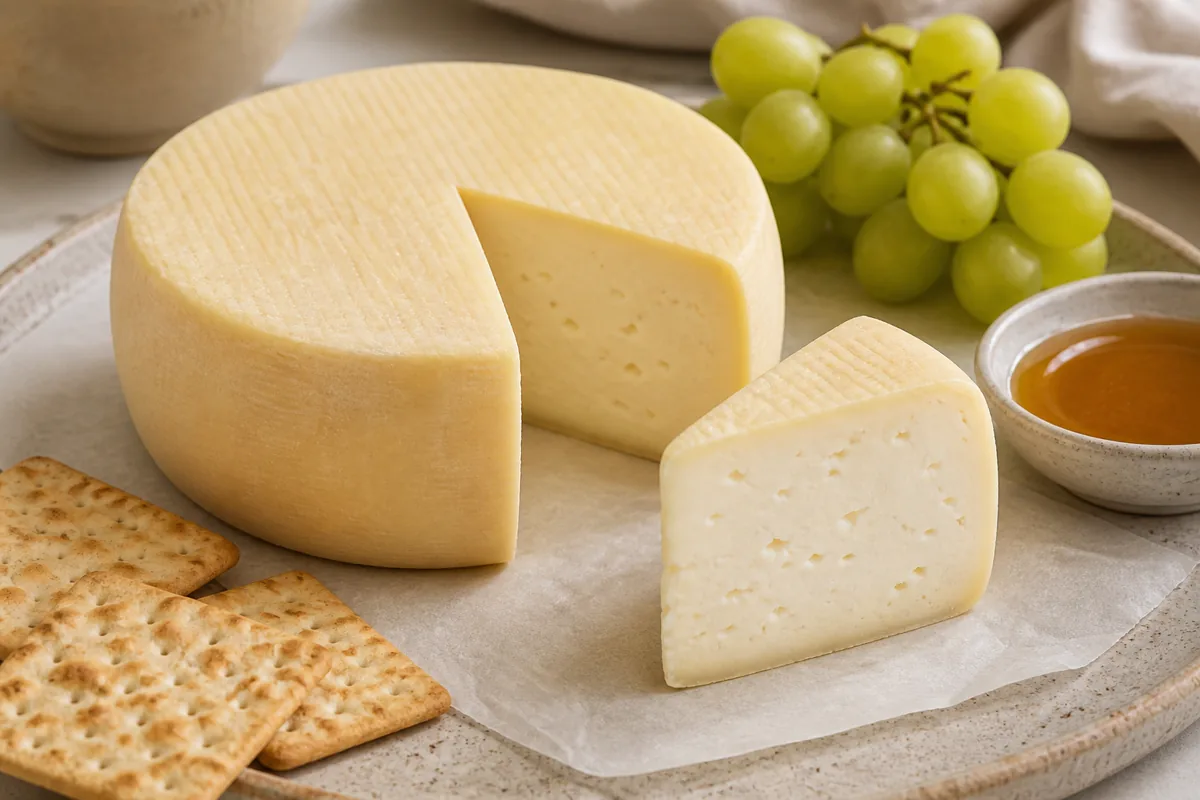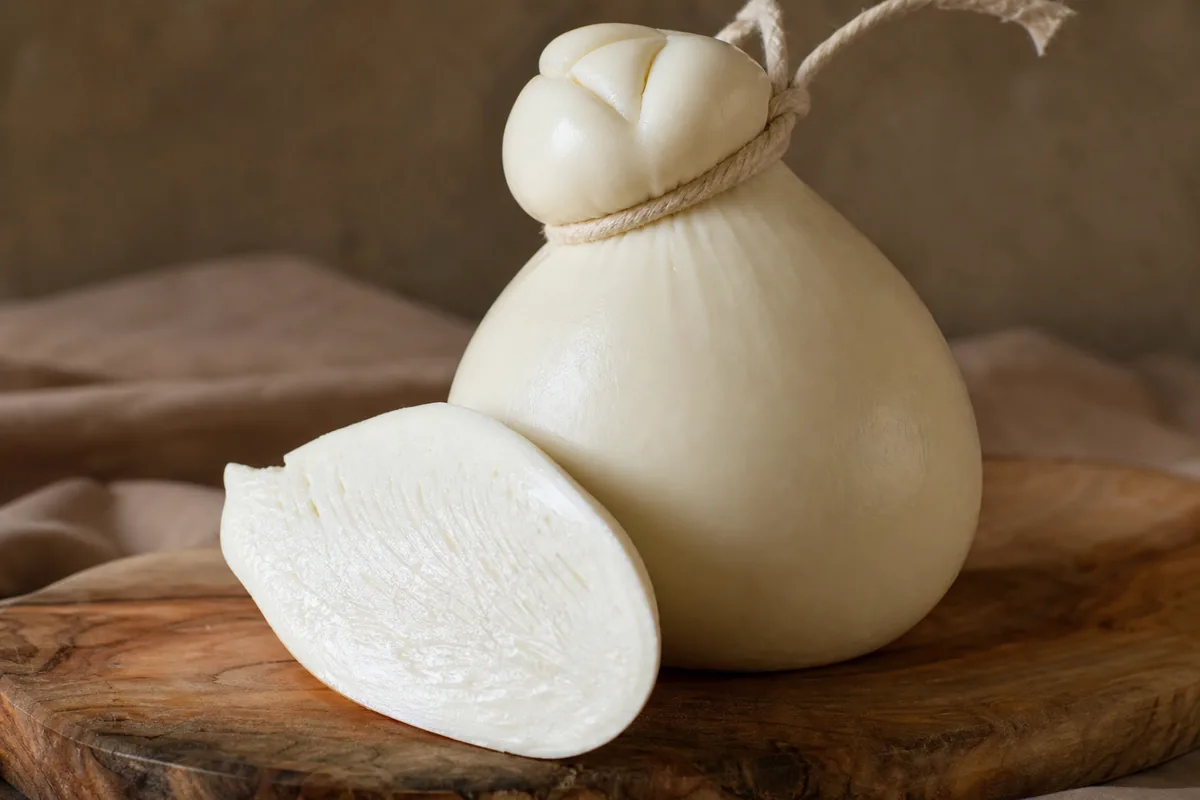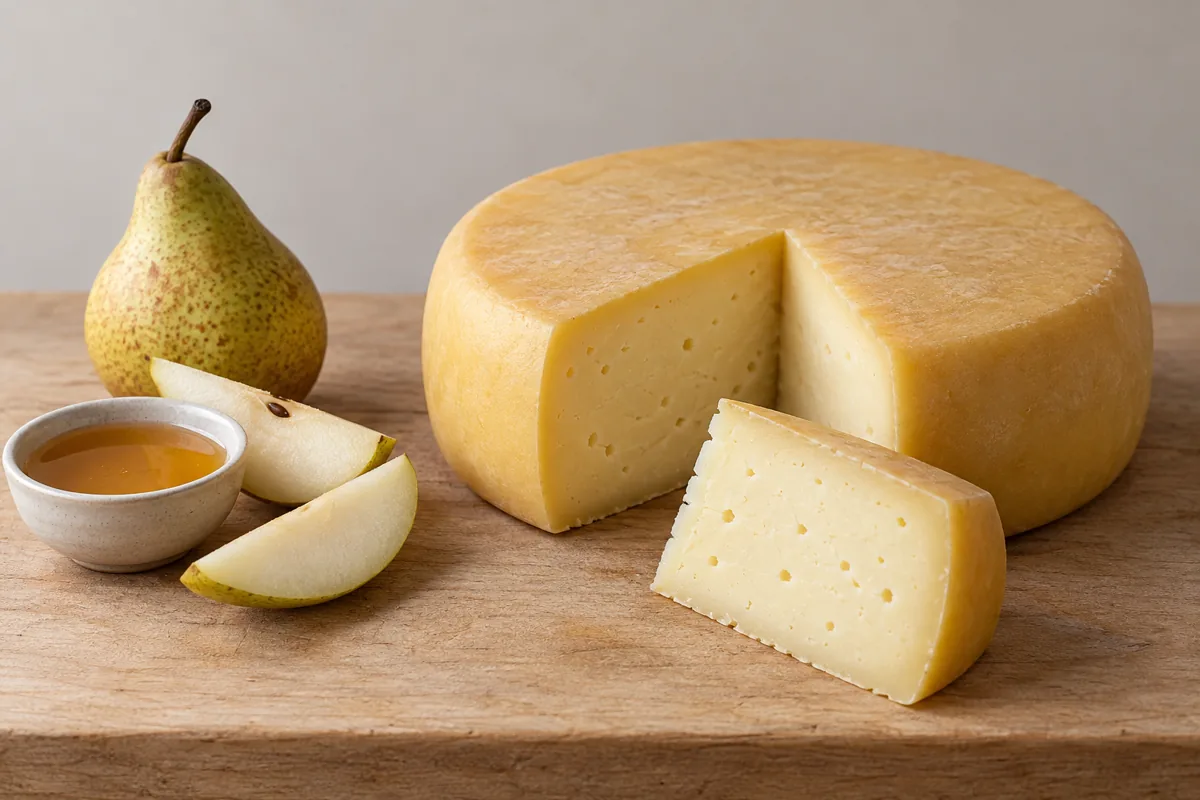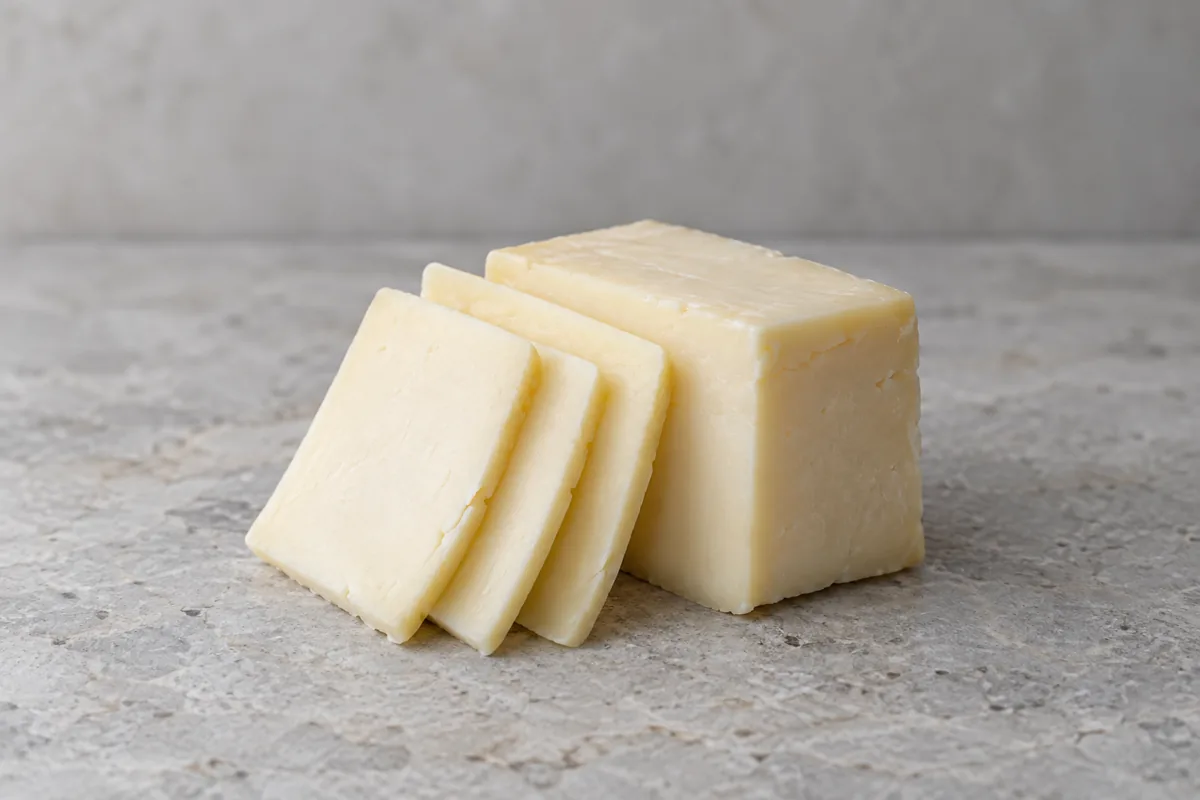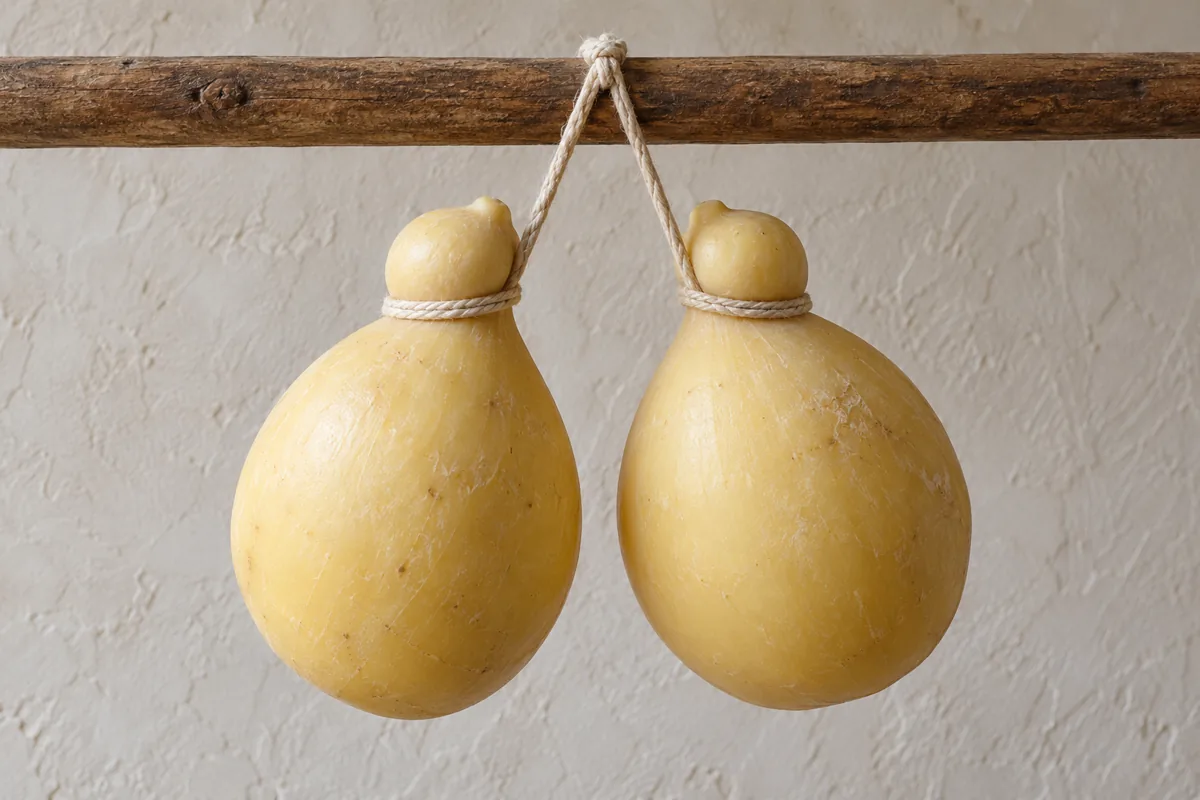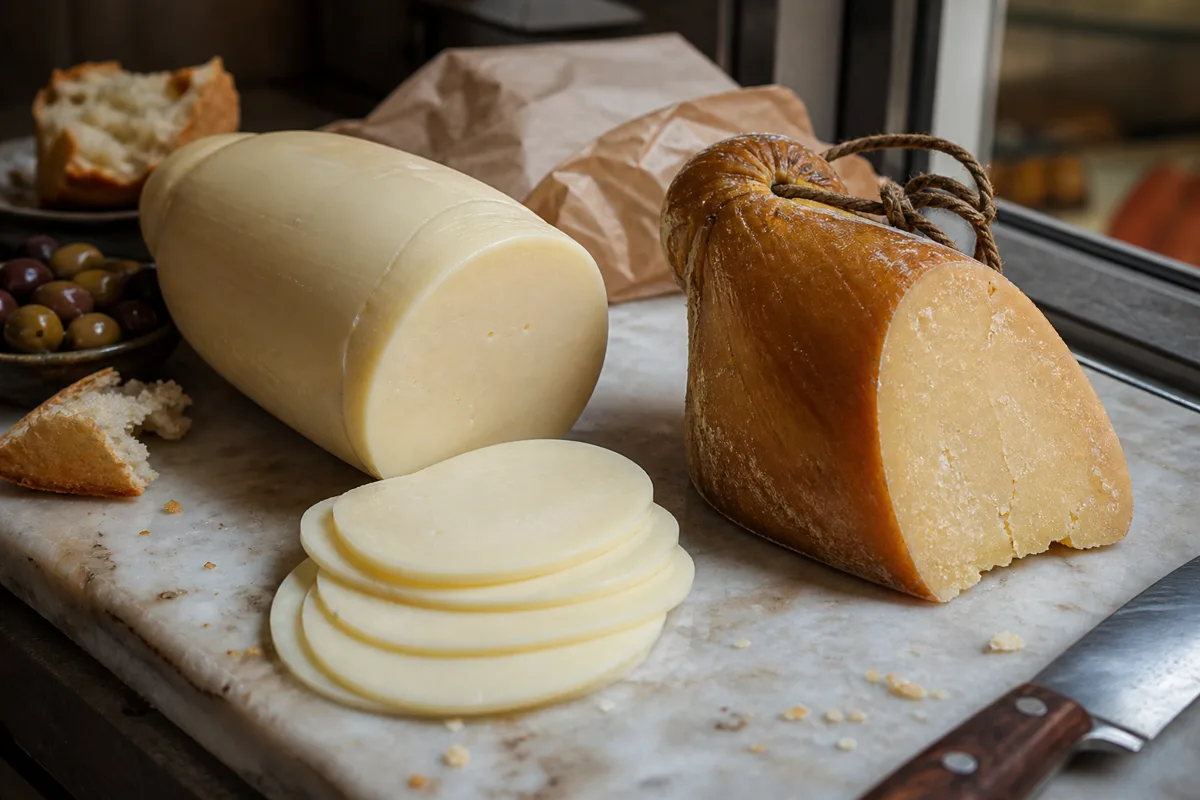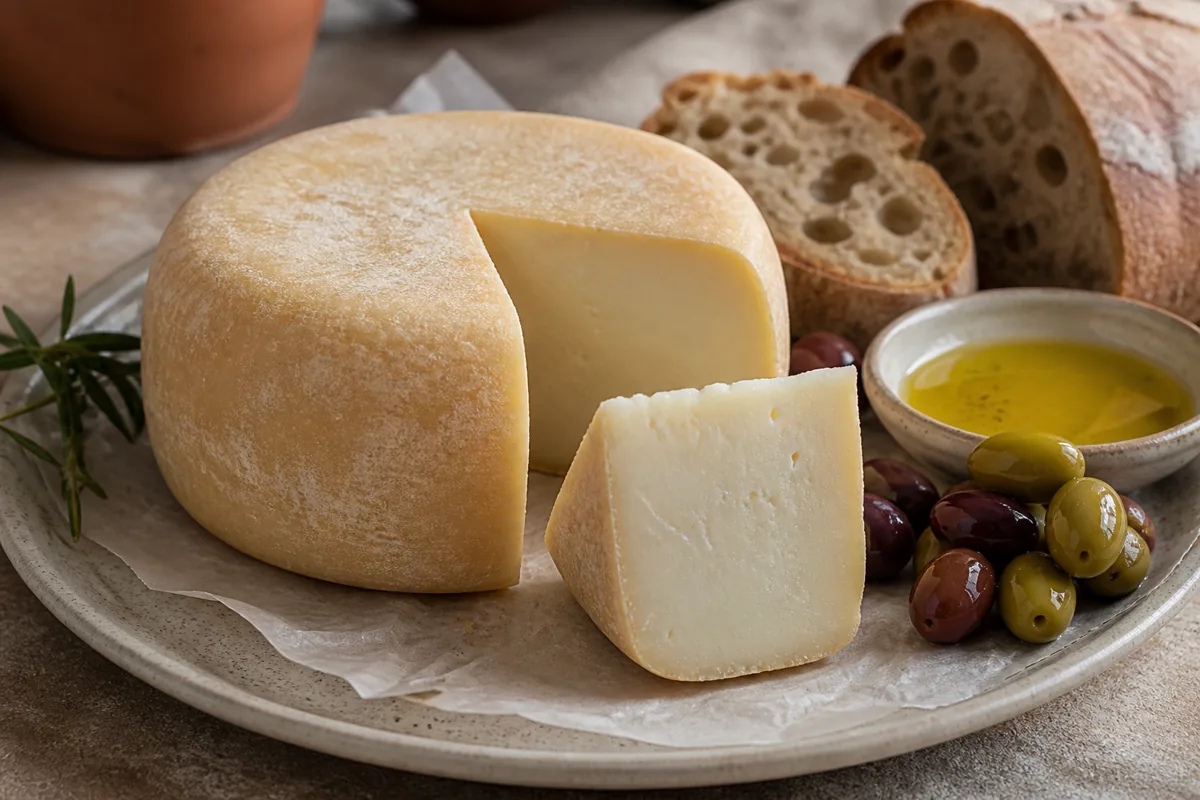
Caciotta is a broad Italian cheese name, so the package matters more than a generic flavor description because current records cover different milks, maturation times, rind treatments, storage temperatures, and cooking uses.
Buy it by producer and label because the name can lead you to a small, fairly young table cheese without establishing one recipe.
In This Article
Why Does the Caciotta Name Cover Different Products?
The Casciotta d'Urbino protection consortium describes generic caciotta as a varied group made with cow, sheep, goat, or mixed milk. Its overview says maturation can range from about 15 to 60 days, with longer cases being uncommon.
That range explains why two caciotta wheels can differ before either one is cut, since milk, pasteurization, age, rind treatment, and storage directions all belong to the exact product.

A name-only description can therefore attach one producer's cow-milk facts to a sheep or mixed-milk wheel. Keep each claim tied to its package, especially when buying a counter cut.
How Do Four Current Caciotta Labels Compare?
| Current product | Milk and age | Storage or use record |
|---|---|---|
| Martarelli Caciotta | Pasteurized cow's milk, matured 20 to 30 days | Producer describes a creamy, delicate table cheese for salads, vegetables, and cooked dishes |
| Cademartori Caciotta | Pasteurized whole milk, matured about 25 days | Producer suggests bread, salads, appetizers, fruit, nuts, and honey |
| Valcolatte Caciotta | Pasteurized Italian cow's milk, 700 g format | Store at 2 to 6 degrees C. Producer says it cuts cleanly and holds structure in cooking |
| Lattebusche Caciotta | Pasteurized Italian cow's milk, short maturation | Store at 0 to 6 degrees C. The surface-treated rind is not edible |
These examples share a mild table-cheese role, yet their records are not interchangeable because Cademartori supplies a 25-day age and a 30-minute serving suggestion, while Valcolatte supplies a cold range and a cooking-performance statement for its own product.
Lattebusche also shows why rind advice cannot be generic. Its page lists potassium sorbate as a surface treatment and tells buyers not to eat the rind.
Is Casciotta d’Urbino the Same as Caciotta?
Casciotta d'Urbino uses a distinct spelling and a protected specification. The current EU record defines its production area, milk rules, wheel dimensions, weight, rind, paste, and mild taste.
That PDO record does not define every caciotta, so treat it as a named product with its own rules, just as you would keep Pecorino Toscano separate from a generic sheep-milk table cheese.
What Five Things Should You Check on a Caciotta Label?
- Milk: Identify cow, sheep, goat, or a stated blend before predicting flavor or richness.
- Pasteurization: Check the exact statement instead of assuming it from the country or cheese name.
- Age: Use a stated maturation time only for that producer. The reviewed cow-milk examples include 20 to 30 days and about 25 days.
- Rind: Look for wax, coating, preservatives, or an inedible-rind instruction before serving the edge.
- Storage: Keep the printed temperature and date with a counter cut because the broad name supplies neither one.
The cut face can still help with condition. Choose a piece that matches the labelled style and avoid damaged packaging, dried edges, or uncontrolled wet breakdown.
If the seller cannot identify the producer, milk, or storage directions, choose a clearly labelled wheel. A neat cut does not recover missing product facts.
How Should You Use the Caciotta You Bought?
Current producers support both table and cooked uses, but each statement belongs to its product. Martarelli lists salads, vegetables, and cooked dishes, while Cademartori suggests bread and appetizers.
Valcolatte says its caciotta cuts precisely and keeps its structure in fillings, sandwiches, cold dishes, and baked preparations, which supports gentle cooking for that product without proving that every caciotta melts or holds in the same way.
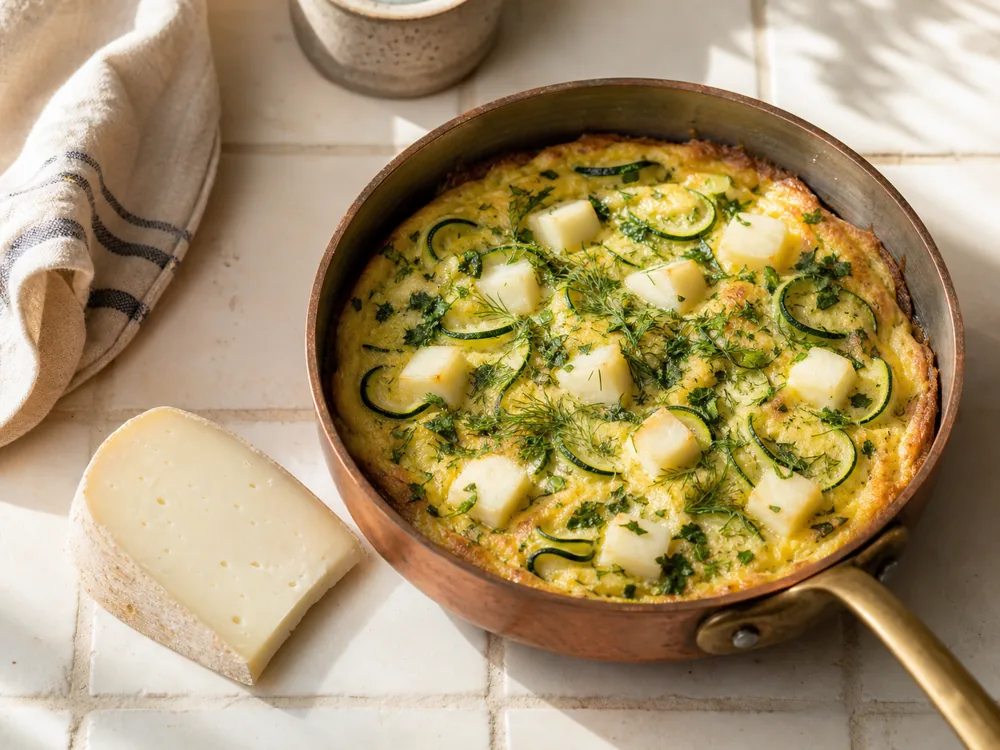
For a cold plate, bread and vegetables are supported by several current maker pages. For melting or baking, start with the product's own cooking claim rather than the family name.
How Does Caciotta Storage Follow the Exact Package?
The reviewed producer temperatures differ slightly: Valcolatte says 2 to 6 degrees C, while Lattebusche says 0 to 6 degrees C. General FSA guidance keeps chilled food at 0 to 5 degrees C and tells consumers to follow the label when it gives a specific instruction.
The old five-to-seven-day rule cannot be applied across this category because the current product records do not supply one shared opened-life count, so rewrap a cut piece, keep its label or receipt, and use the earliest applicable package date.
Can You Eat Caciotta During Pregnancy?
Caciotta has no single cold-serving pregnancy answer because the name does not establish milk treatment, firmness, or rind type, and the pasteurized cow's milk finding for the four current examples does not transfer to an unreviewed wheel.
Current NHS guidance allows pasteurized semi-hard cheese and pasteurized soft cheese that is not mould-ripened with a white coating. It also says any cheese can be eaten when cooked until steaming hot.
The CDC lists pasteurized soft cheeses heated to an internal temperature of 165°F or until steaming hot as safer and soft cheese made from unpasteurized (raw) milk as riskier. Eaten cold, a pasteurized soft or semi-soft caciotta is a type the CDC list does not cover, so ask a midwife or doctor.
If the label or counter information is incomplete, choose a clearly identified product or serve it cooked until steaming hot under the cited NHS guidance while keeping the package date and cold chain intact.
SOURCES & REFERENCES
What Do Buyers Often Ask About Caciotta?
It is a broad Italian name used for small, fairly young table cheeses. The exact producer and label decide the milk, maturation, rind, storage, and uses.
No. The reviewed producer examples in this guide use cow's milk, while the consortium overview says generic caciotta can use cow, sheep, goat, or mixed milk.
Check the package. Lattebusche explicitly marks its surface-treated rind as inedible, so a generic answer would be unsafe.
Some current products are sold for baked dishes or describe how they hold during cooking. Use that exact producer record instead of assuming every caciotta behaves the same way.
No universal opened-life count was found in the current product records. Follow the exact package date, after-opening direction, and storage temperature.
Check the exact milk treatment, firmness, rind, and package date. NHS guidance allows the stated pasteurized categories and says any cheese can be eaten when cooked until steaming hot.