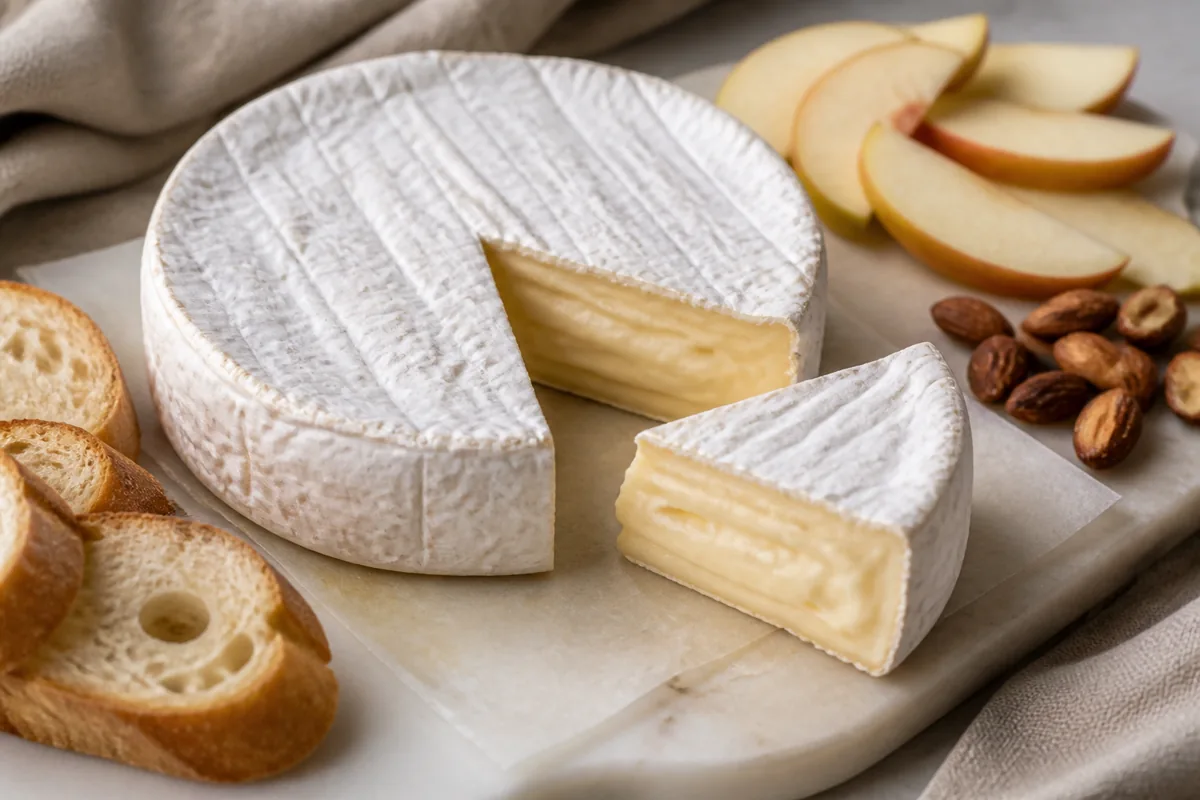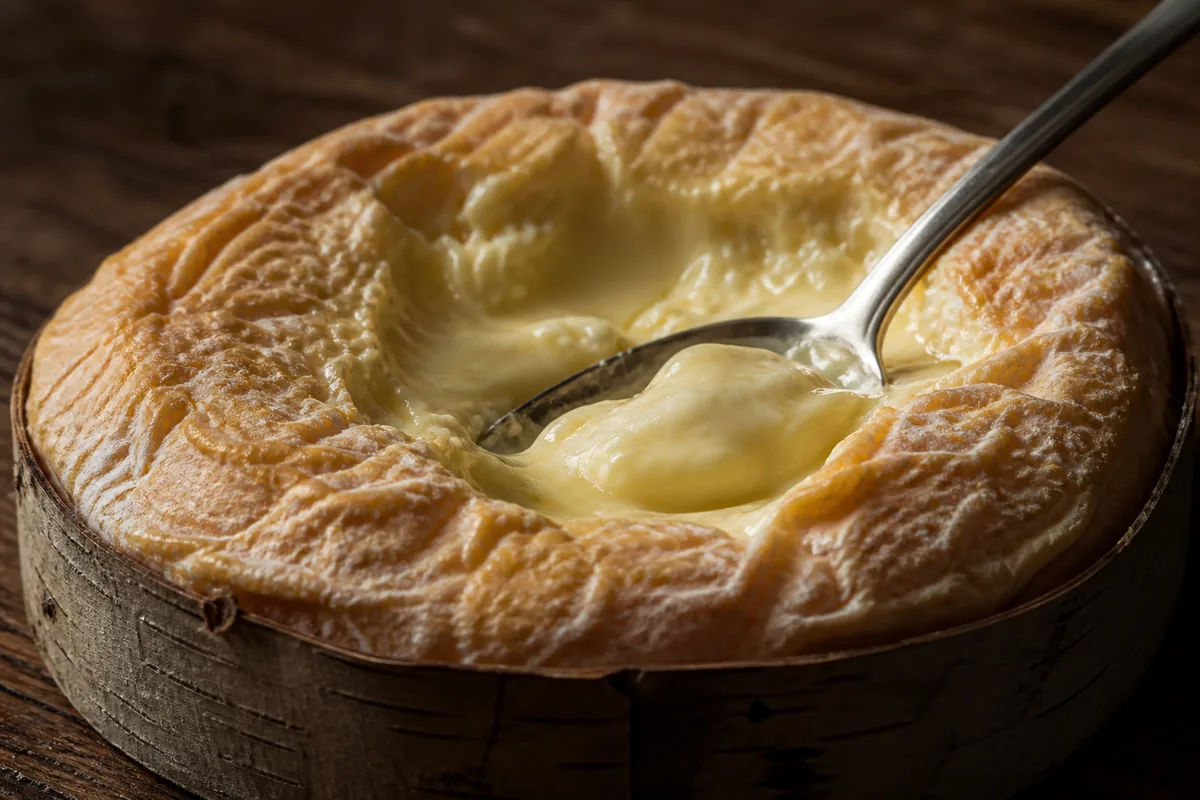
Open the round spruce box and you will find one of winter's most distinctive washed-rind cheeses: a soft, rippled wheel held together by a bark strap. Vacherin Mont d'Or becomes creamy enough to spoon at room temperature and fluid enough to share like fondue after baking.
The name covers two protected cheeses, so the country on the box matters. The Swiss version is a thermised-milk PDO from the Vaud Jura, while the French version, labelled Mont d'Or or Vacherin du Haut-Doubs, is a raw-milk AOP from the Haut-Doubs.
That distinction changes the label, the season and the pregnancy guidance you need to apply.
In This Article
Are There Two Different Vacherin Mont d'Or Cheeses?
Whichever version you buy, you get a low round cow's-milk cheese with a washed rind, spruce strap and spruce box. Its broad surface and moist paste explain why the centre softens so quickly after you take it out of the refrigerator.
The French AOP is uncooked and lightly pressed, while the Swiss PDO stands only 3 to 5 cm high, giving you legal details that help identify the protected product without changing how the cheese presents itself at the table.
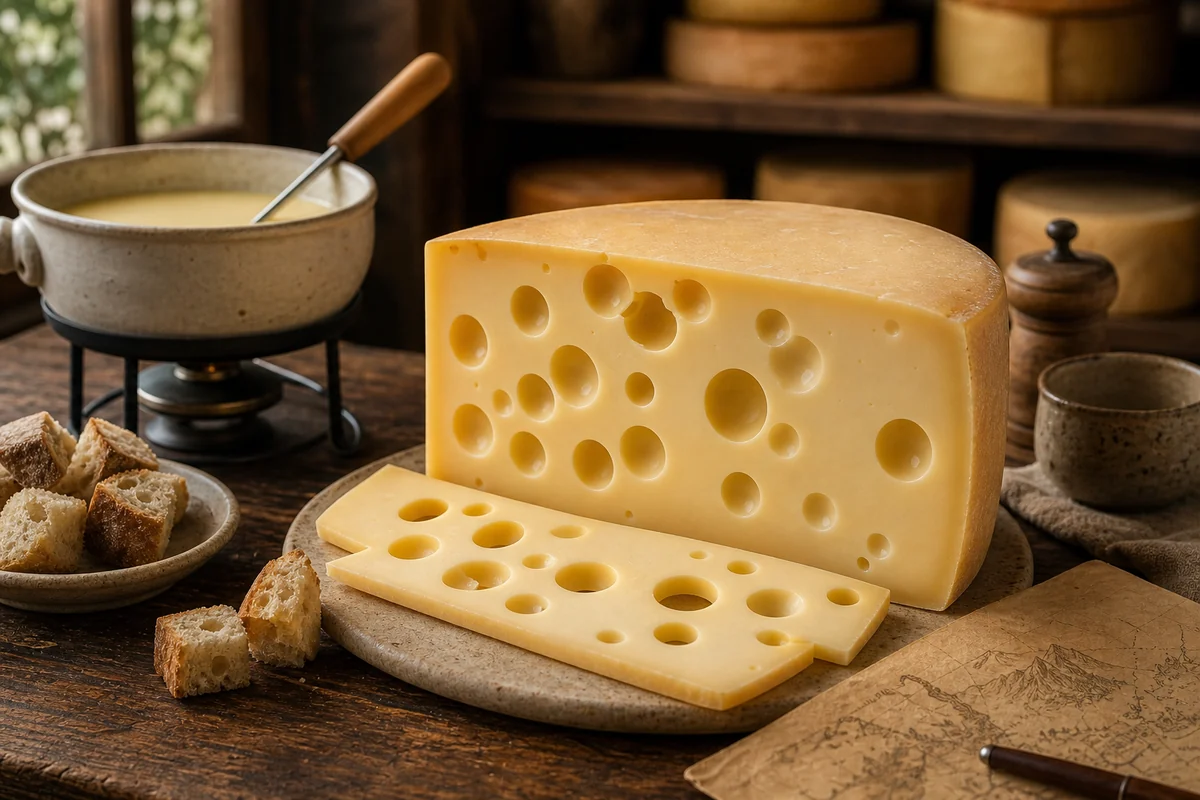
The shared word Vacherin can also lead you toward Vacherin Fribourgeois, but the two cheeses solve different needs. Fribourgeois has a firmer pressed body for slicing and melting; Mont d'Or arrives in a wooden box and may become soft enough to eat with a spoon.
The French rules narrow the milk further: only Montbéliarde and Simmental cows may supply it. Summer grazing, winter hay, a ban on fermented feed and a 24-hour limit from milk to cheesemaking keep the AOP closely tied to Haut-Doubs farms and dairies.
Labels often use the everyday names: Mont d'Or in France and sometimes just Vacherin in Switzerland. When the short name leaves you uncertain, the protected mark and country settle which cheese is in the box.
Why the Spruce Strap and Box Are Part of the Rules
The wood does real work throughout the cheese's life. The strap restrains a paste that would spread as it ripens, while the box supports the wheel through its final ageing, transport and the moment you set it on the table.
The Swiss process also keeps the cheese on spruce boards for at least 17 days, with regular washing and turning. By the time you taste it, spruce has shaped both the wheel's structure and its woody aroma.
The flexible band comes from the inner bark of spruce and goes around the wheel before it becomes fully soft. That early support is what lets you cut the top or warm the box later without watching the centre lose its round shape.
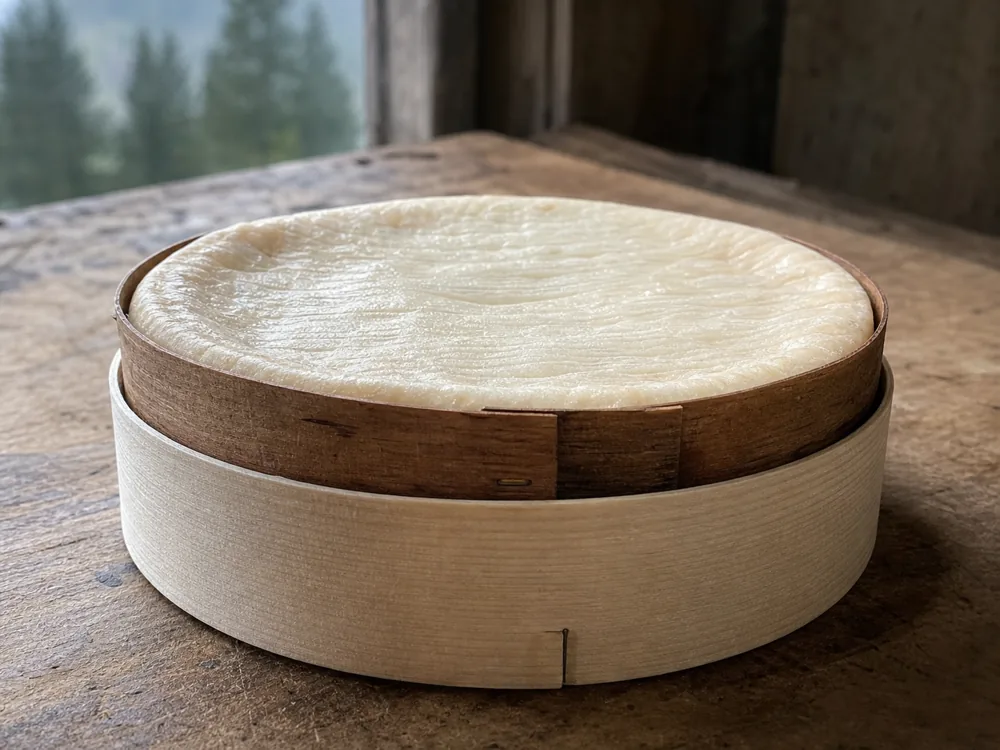
Swiss makers fit the strap after moulding and pressing but before the brine bath. French makers add it as soon as the wheel leaves its mould, then turn and rub the cheese with salted water almost every day; both methods bring wood into contact while the surface and paste are still developing.
The French wheel spends its first 12 days on boards and reaches at least 21 days of maturation. Because its box is slightly smaller than the soft cheese, the rind forms the pleats you see under the lid; those waves are normal, not evidence of shipping damage.
Does the Spruce Strap Have to Come From the Home Region?
The Swiss PDO requires its strap to come from the French-Swiss production region. The French AOP requires spruce but does not require local bark, following a 2016 court ruling that allowed straps from central Europe.
If local wood affects your choice, the Swiss designation guarantees regional bark and the French designation does not. Both still require a spruce strap and box, so the difference concerns origin rather than material.
How Do Swiss PDO and French AOP Vacherin Differ?
The two versions can look almost identical at the counter, so appearance will not settle the choice for you. Read the protected name before you infer anything about the milk, production area or season.
| Swiss Vacherin Mont-d'Or PDO | French Mont d'Or AOP |
|---|---|
| Milk: cow's milk thermised at 62°C for 15 seconds, or an equivalent combination | Milk: raw whole cow's milk, never heated above 40°C |
| Area: Vallée de Joux and the foot of the Vaud Jura, with raw materials from within 25 km of the dairy | Area: Haut-Doubs communes, with milking, making and maturing at 700 m or higher |
| Maturing: washed and turned on spruce boards for at least 17 days, then boxed | Maturing: at least 21 days from renneting, turned and rubbed with salted water |
| Name: Vacherin Mont-d'Or, a PDO since 2003 | Name: Mont d'Or or Vacherin du Haut-Doubs, an AOP |
Milk treatment is the distinction most likely to affect your decision. Thermisation is gentler than pasteurisation, which means the Swiss PDO is not pasteurised, while the French AOP remains raw.
The remaining rules show how each place defines authenticity, with France specifying cow breeds and altitude more tightly and Switzerland drawing the firmer boundary around the bark strap's origin.
Legal maturation gives you a floor, not a promise that every box tastes the same on day 17 or day 21. A younger wheel may still hold a slice, while a riper one may slump as soon as you lift the top.
If you plan to eat it cold, ask how soft the current batch is, while for baking the wheel's starting ripeness matters less because heat will loosen the centre anyway.
What Does Vacherin Mont d'Or Taste Like?
You can expect cream first, followed by wood, earth and a gentle savoury edge. Spruce is the shared signature: the Swiss description brings in resin and light acidity, while the French one adds butter, cream and mushroom.
| Point | Swiss PDO | French AOP |
|---|---|---|
| Paste | Soft, slightly runny and smooth, pale yellow | Creamy, white to ivory, slightly salted |
| Rind | Washed, slightly rippled, amber yellow to red-brown | Washed, pleated and slightly re-bloomed, light yellow to light pinkish brown |
| Aroma | Not described | Woody spruce, animal, straw and mushroom notes |
| Taste | Slightly salty, a little acidic, woody spruce resin | Balanced: cream or butter, woody spruce and/or mushroom |
| Fat | 490 to 549 g per kg of dry matter | At least 45 g per 100 g of dry matter |
Colour gives you a secondary clue once you know the designation. Swiss rind runs from amber yellow to red-brown, while French rind is usually lighter and may carry a fine returning bloom.
Inside, both versions should feel creamy rather than chalky, moving from sliceable to spoonable as ripening softens the paste and makes mushroom and woodland notes easier to notice.
The Swiss nutrition sheet lists 287 kcal, 23 g fat, 20 g protein and 1.2 g salt per 100 g, with 0 g of lactose. Use those figures for the Swiss PDO only; a French wheel needs its own label when exact nutrition matters to you.
How Do You Bake Vacherin Mont d'Or in Its Box?
The official Swiss method uses one whole wheel, 1 dl of white wine and about 25 minutes at 200°C. With 500 g of small potatoes and fresh herbs, it serves two.
Keep the cheese in its spruce box because the wood supports the molten centre, then wrap the sides and base in foil to catch leaks. Remove every piece of plastic and the wooden lid before the wheel goes into the oven.
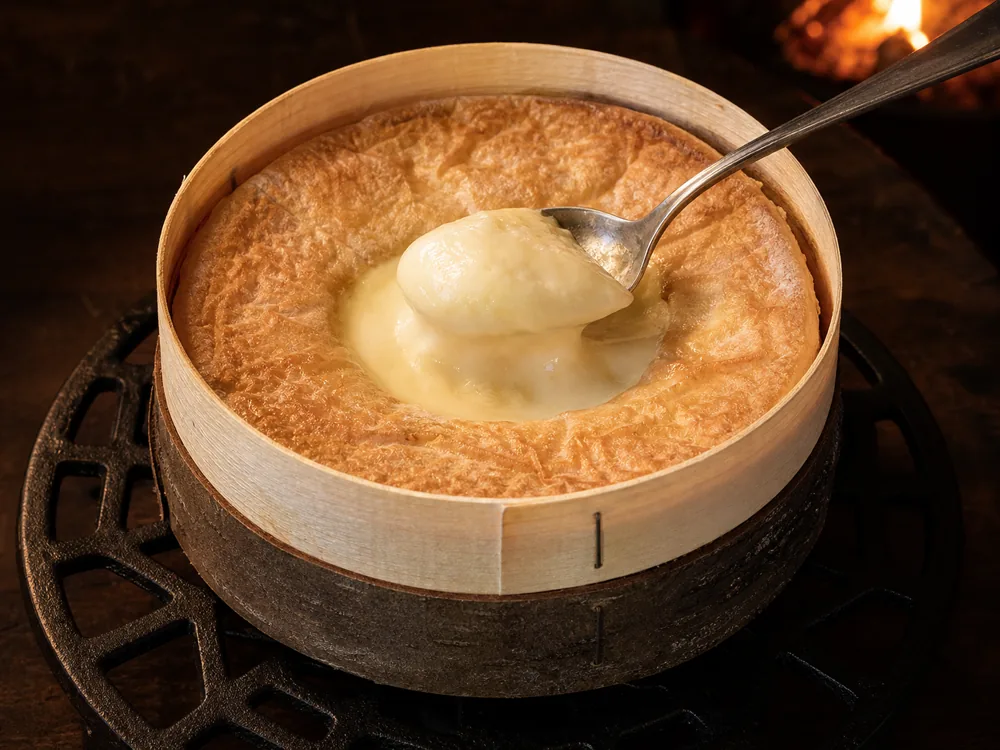
The French AOP has its own official boîte chaude recipe, built around a 500 g wheel, 5 cl of Savagnin and about 25 minutes at 220°C. Match the method to your wheel instead of treating one wine amount and temperature as universal.
Either method turns the box into a small fondue with a browned top and a centre that is steaming and loose enough to spoon.
What to Serve With Vacherin Mont d'Or
You do not have to bake a ripe wheel. Let it soften, lift or cut the top rind and spread the centre on bread; after baking, the same cheese works over potatoes boiled in their skins or straight from the box with crusty bread.
| Pairing | Type | Why It Works |
|---|---|---|
| Crusty bread | Food | A firm crust survives dipping, while the open crumb catches the melted paste and wine. |
| Small potatoes | Food | Boil them in their skins so they stay intact when you spoon the hot cheese over them. |
| Jura savagnin | Wine | Its acidity and oxidative, nutty character can balance the rich paste and echo a Jura serving tradition. |
We would keep the rest of the plate simple because the cheese already brings salt, fat, wood and mushroom. Potatoes, bread and a sharp salad support those flavours without turning the meal heavy.
When Is Vacherin Mont d'Or in Season?
You can buy both versions from September, but they leave the market on different dates. The protected name on the box tells you which calendar applies to your cheese.
| Designation | Made | Sold to consumers |
|---|---|---|
| Swiss PDO | 15 August to 31 March | September to April |
| French AOP | 15 August to 15 March | 10 September to 10 May |
After April, only the French AOP may still be sold, through 10 May, so a box outside the expected window deserves a closer check of its country, designation and date.
The season grew from practical dairy work in the Jura. Colder months brought less milk, making small soft wheels more sensible than the large formats used for Comté or Gruyère; rich late-season milk and a short warm set also helped create the moist curd that later turns creamy in the box.
Which Vacherin Mont d'Or Size Should You Buy?
Choose the box by weight first, then match it to the way you plan to serve the cheese. Swiss formats list diameter and weight, while French formats are based on box diameter and quote a weight that includes the box.
| Designation | Format | Size |
|---|---|---|
| Swiss PDO | Small or mini | 10 to 12 cm across, 350 to 500 g |
| Swiss PDO | Medium | 12 to 20 cm across, 500 g to 1.2 kg |
| Swiss PDO | Large | 20 to 32 cm across, 1.2 to 3 kg |
| Swiss PDO | Half Vacherin | 260 to 350 g |
| Swiss PDO | Pre-cut slice | 150 to 300 g |
| French AOP | Mini | Box base 110 to 125 mm |
| French AOP | Moyen (medium) | Box base 135 to 150 mm |
| French AOP | Maxi | Box base 165 to 200 mm |
| French AOP | Coupe (cut) | Box base 250 to 330 mm |
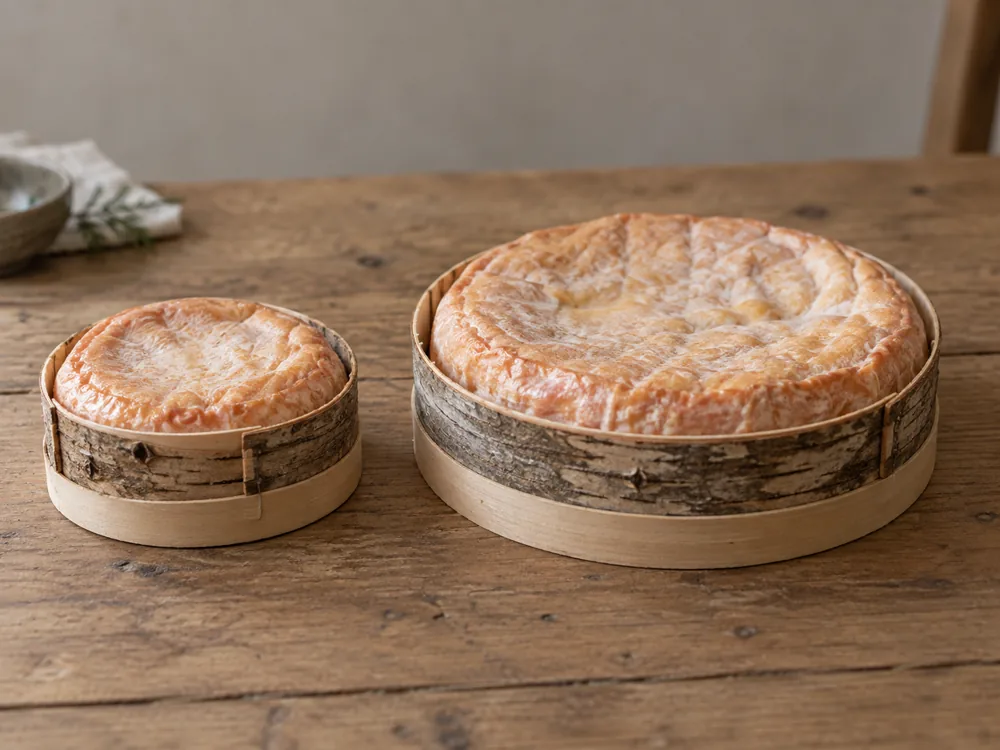
French whole wheels run from an average 480 g mini to the 3.2 kg coupe format sold by the cut. A whole-wheel label should show the protected name, AOP mark and mini, moyen or maxi size; on a Swiss box, look for the PDO name and producer label.
Some Swiss mini and half-wheel formats have no wooden lid, making the strap, retail wrapping and designation better evidence of an intact product.
Keep the box cold and level so its increasingly soft centre stays inside the strap. Swiss trade storage is 0 to 5°C and French wrapped wheels are held at 2 to 8°C, but the date and temperature printed on your own package take priority at home.
Confirm the country and protected name, milk treatment, package date, box size and how soft the current wheel is. Those details tell you more than a generic 'Mont d'Or' shelf label.
Is Vacherin Mont d'Or Vegetarian?
The French AOP uses rennet made from calf's stomach, so that version is not vegetarian. The Swiss public specification does not identify its rennet source, which means you need the label or maker's answer if the coagulant determines your purchase.
Is Vacherin Mont d'Or Safe During Pregnancy?
Neither version is pasteurised: the French AOP uses raw milk, while the Swiss PDO uses milk thermised at 62°C for 15 seconds. When you assess cheese during pregnancy, a cold Swiss wheel therefore cannot be treated as a pasteurised soft cheese.
The CDC places soft cheese made from unpasteurized (raw) milk among its riskier choices. Its safer heated line covers only pasteurized soft cheeses heated to an internal temperature of 165°F or until steaming hot, so it does not cover a raw or thermised wheel, even baked.
NHS guidance says foods made from unpasteurised milk must be thoroughly cooked, and it lists any cheese that's been cooked until steaming hot as safe to eat.
Before serving either version during pregnancy, cold or baked, take the exact designation and milk treatment to a midwife or doctor. When cooking is part of the advice you receive, check that the centre is steaming throughout because oven time alone does not prove it reached that condition.
A 1991 epidemiological report documented a listeriosis outbreak linked to Vacherin Mont-d'Or. That history cannot tell you whether today's individual box is contaminated, but it does show why current high-risk guidance deserves more weight than tradition.
For your decision, keep three facts together: the protected designation, the milk treatment and whether the centre became steaming hot. The wooden box and long tradition do not change any of those conditions.
Yes, both producer groups publish a baked-box recipe. The Swiss method uses 1 dl of white wine at 200°C, while the French recipe uses 5 cl of Savagnin with a 500 g wheel at 220°C, and both bake for about 25 minutes.
No. The Swiss specification allows mini and half-wheel boxes without a lid. Check that your cheese still has its producer label and protective retail wrapping; a missing lid on one of those formats is not by itself a defect.
The official French hot-box recipe uses one 500 g wheel for two people, with potatoes and charcuterie. If you are serving it as one cheese among several, buy less and follow the cheesemonger's portion guidance.