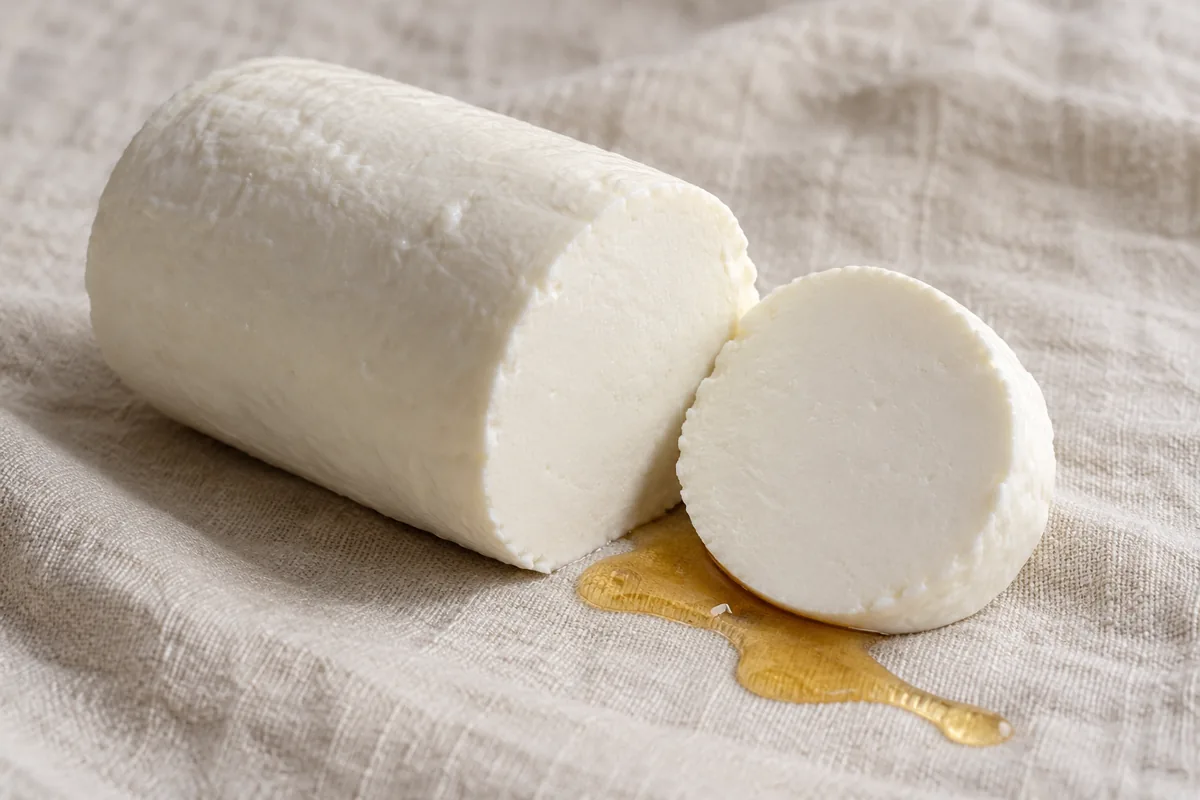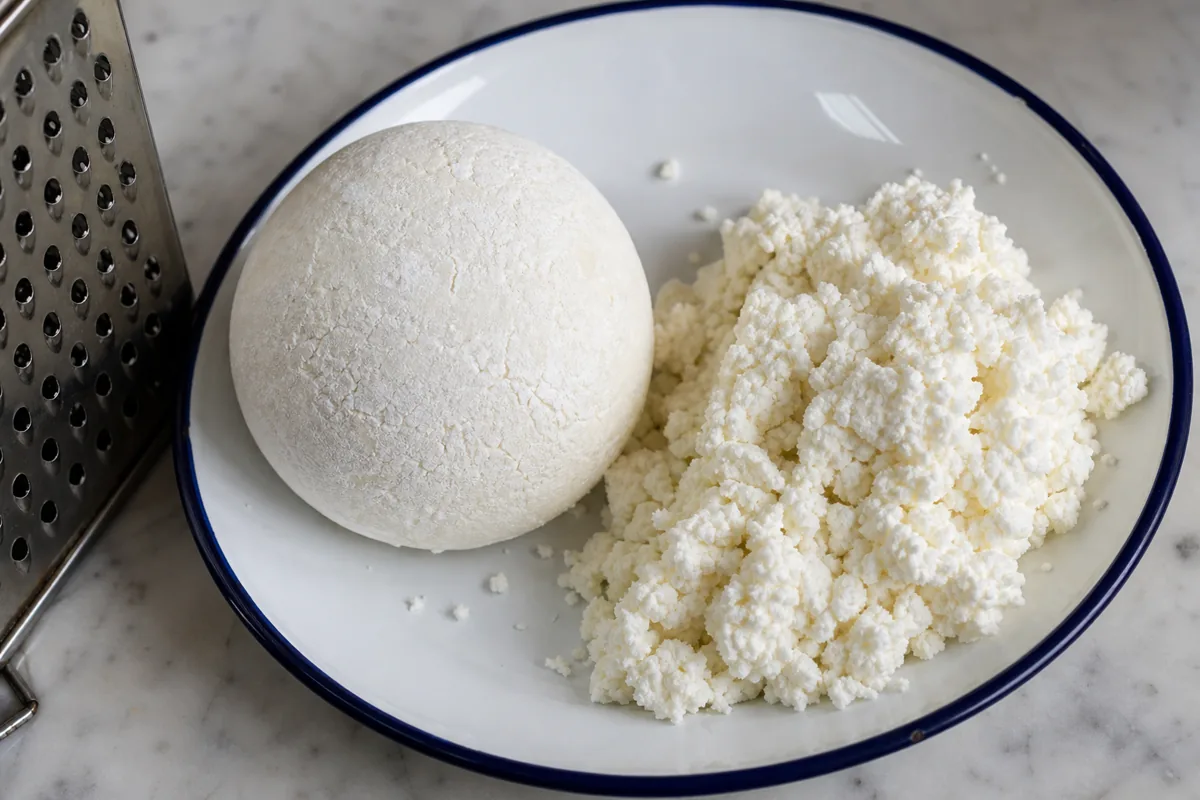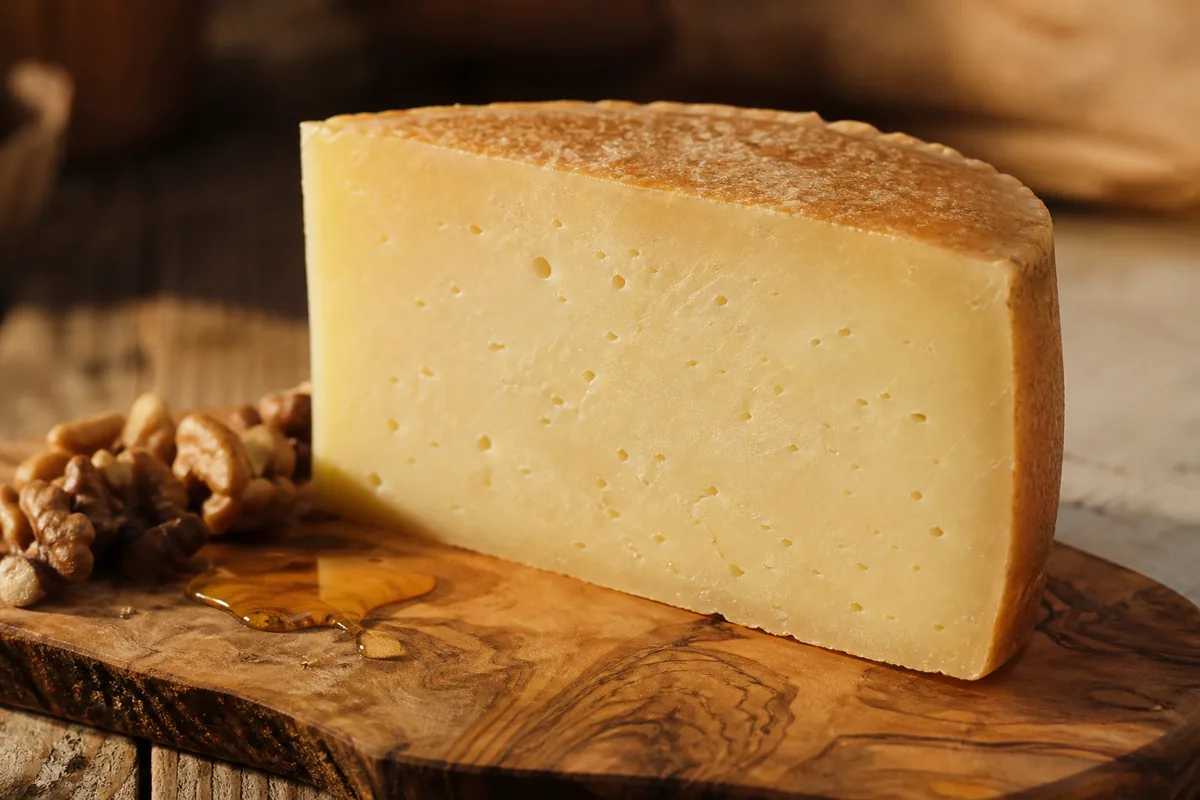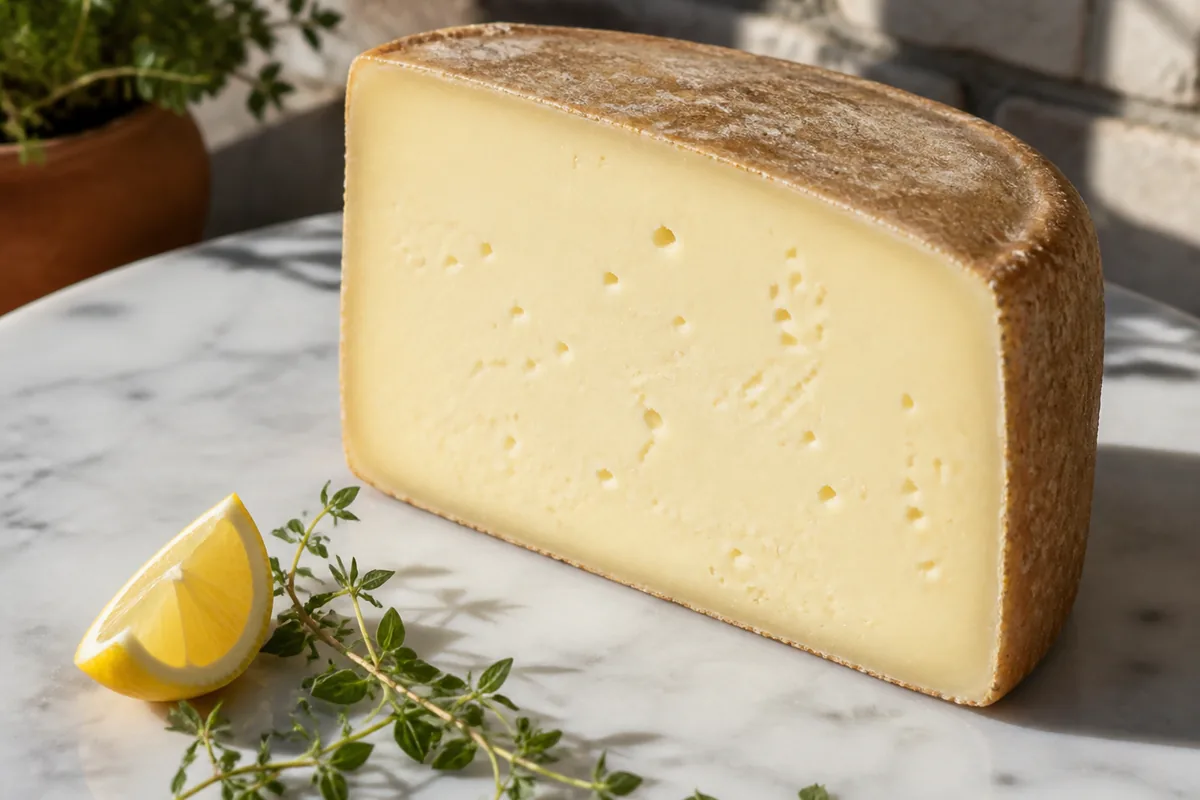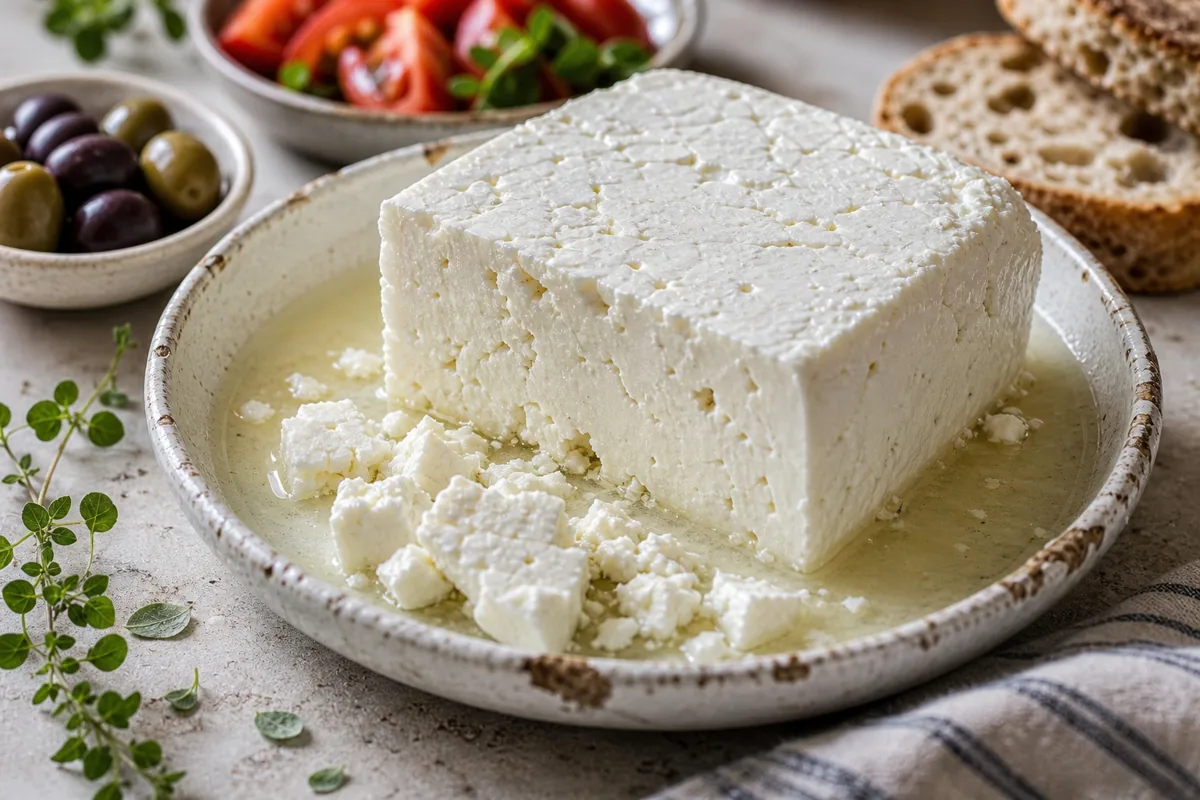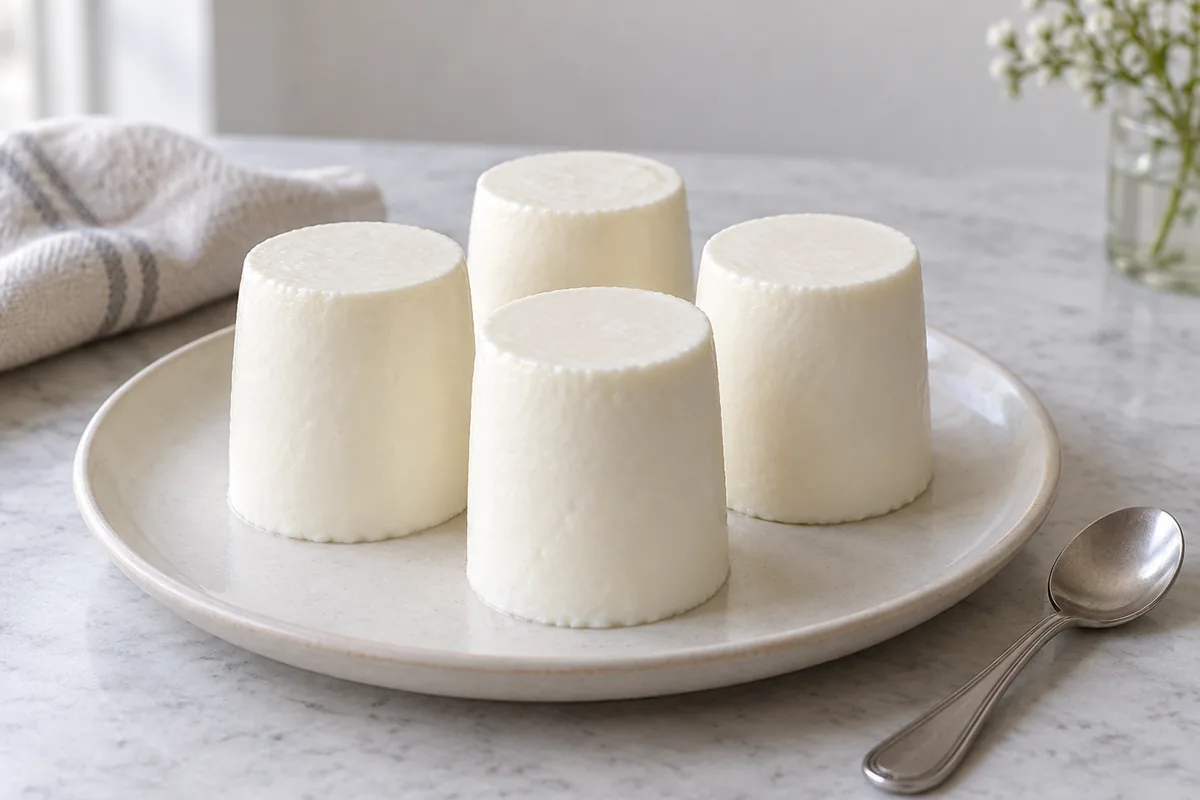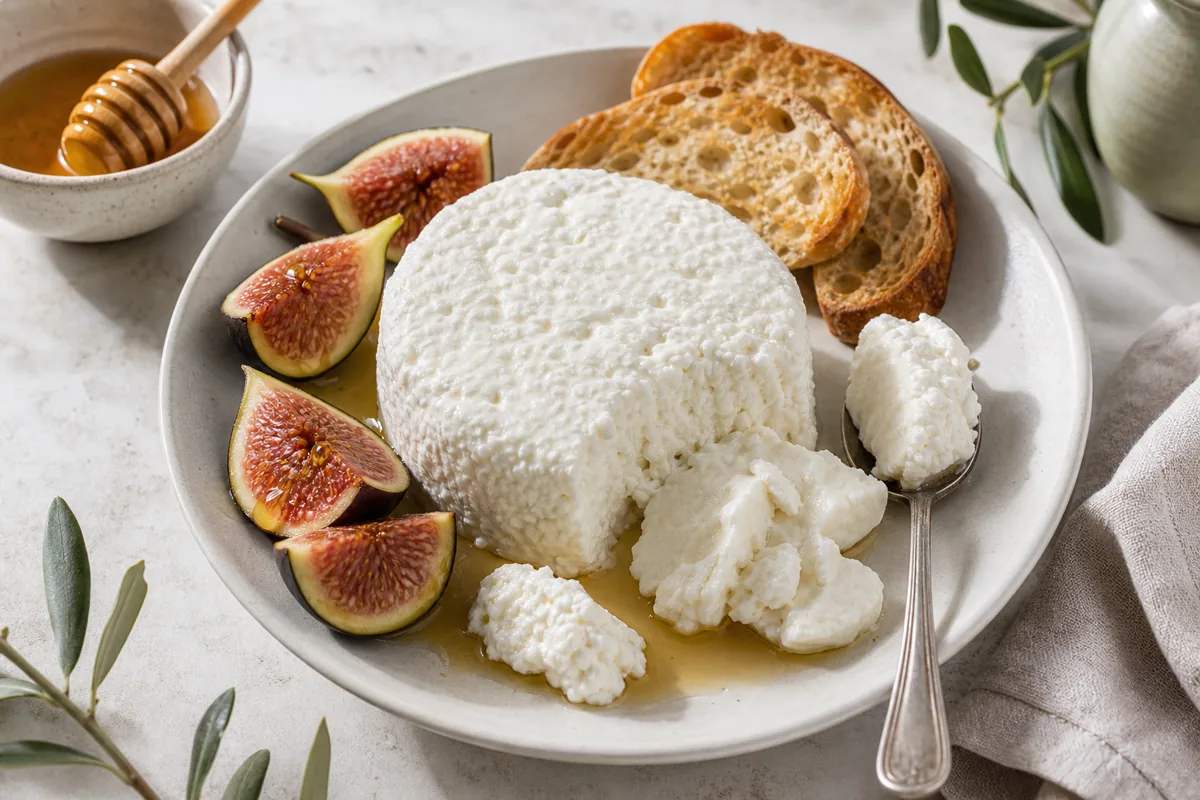
Anthotyro is a Greek whey cheese made from sheep and goat dairy, and shops sell it in two styles that do different jobs. The fresh style is soft or of medium hardness, with no rind, and the dry style is salted and ripened until it is hard or semi-hard.
Buy the fresh style for a honey plate or a salad, and buy the dry style when you want a salty cheese to grate over spaghetti.
In This Article
How Do Fresh and Dry Anthotyro Differ?
Both descriptions of the fresh style call it sweet, Greek Flavours mildly so, and it has no rind. The dry style is salty in Wikipedia's account, with a powerful smell it compares to sherry, and the outside of a matured piece is often covered in thick salt.
Anthotyro is commonly a truncated cone, and the Kalogerakis dry cheese is white, with no holes and a rough surface covered with rind.
| Point | Fresh anthotyro | Dry anthotyro |
|---|---|---|
| Texture | Soft or medium hardness (Wikipedia) | Hard (Wikipedia; the Kalogerakis texture line); semi-hard (Baladinos; the Kalogerakis description) |
| Taste | Sweet and creamy (Wikipedia); mildly sweet and milky (Greek Flavours) | Salty (Wikipedia); brackish and buttery (Kalogerakis); spicy once salted and matured (Psiloritis) |
| Smell | Not stated | Powerful, similar to sherry (Wikipedia) |
| Outside | No rind (Wikipedia) | Thick salt covering when left to mature (Wikipedia); rough surface covered with rind (Kalogerakis) |
| Named uses | Honey and fruit (Wikipedia); pie filling (Boukouvalas); salads, sandwiches and pasta (Greek Flavours) | Grated over spaghetti or pasta (Baladinos, Psiloritis); eaten on spaghetti or salads (Wikipedia) |
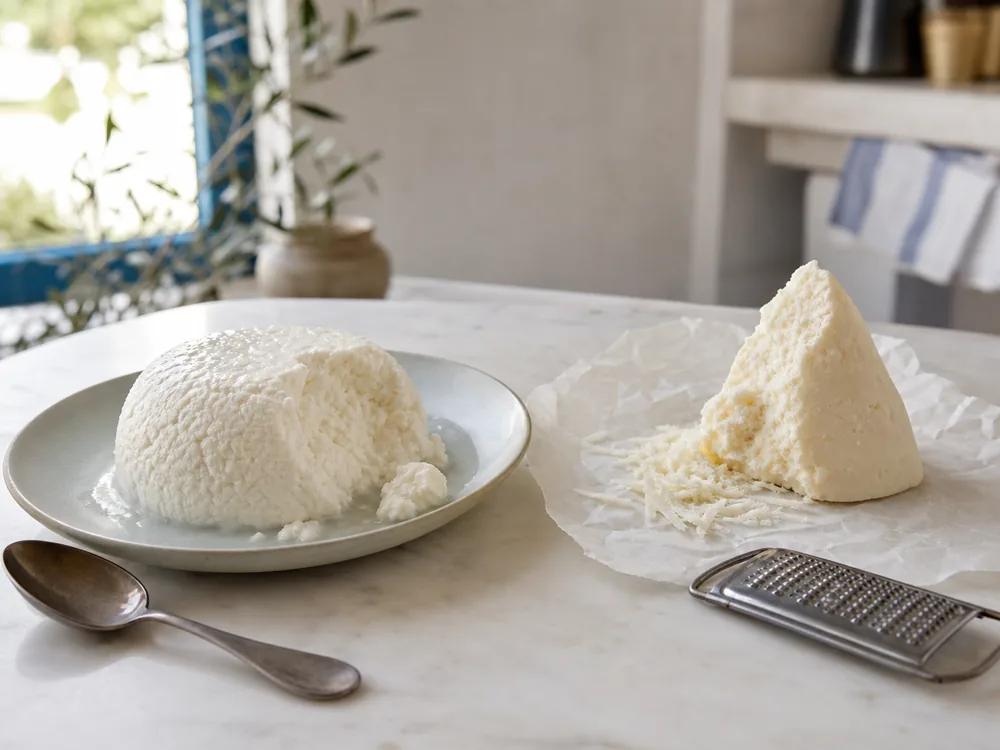
Anthotyro is usually produced in Thrace, Macedonia, the Ionian Islands and Crete, and a 2023 study of Greek cheeses of limited production sampled it among the market cheeses without PDO or PGI status.
Of the product records in the tables below, all but Biofarm's point to Crete. Baladinos is a dairy in Chania, Kalogerakis sells a Cretan cheese, Psiloritis names fresh Cretan milk and Greek Flavours sells a Cretan pack.
How Much Milk Goes into Anthotyro Besides Whey?
The records under this one name give different recipes for the milk, cream and whey, and the ingredient list on the pack is where you see which one you have.
The dairy Boukouvalas makes its anthotyro from the whey left from Feta production, with 2 to 3 percent pasteurized sheep and goat milk added. The Greek Flavours fresh pack lists goat and sheep milk whey and salt as its ingredients.
The Kalogerakis dry cheese lists milk and cream beside its whey. Its ingredient list gives at most 60 percent sheep and goat whey, at least 21 percent pasteurized sheep milk and up to 9 percent pasteurized goat milk.
The same list adds at least 5 percent sheep and goat cream, up to 5 percent salt and under 2 percent lactic acid. The Kalogerakis description also says the cheese contains cow milk, which the ingredient list does not show, so if you avoid cow's milk, ask the seller which is right.
Wikipedia's account sets the milk-to-whey ratio for anthotyros at usually 9 to 1, with rennet.
How Does Fresh Anthotyro Become Dry?
The curd drains in a tulle-lined basket with salt added every day for three or four days, after which the cheese is still fresh but less soft. If it is left to mature, thick salt is often added to cover the outside.
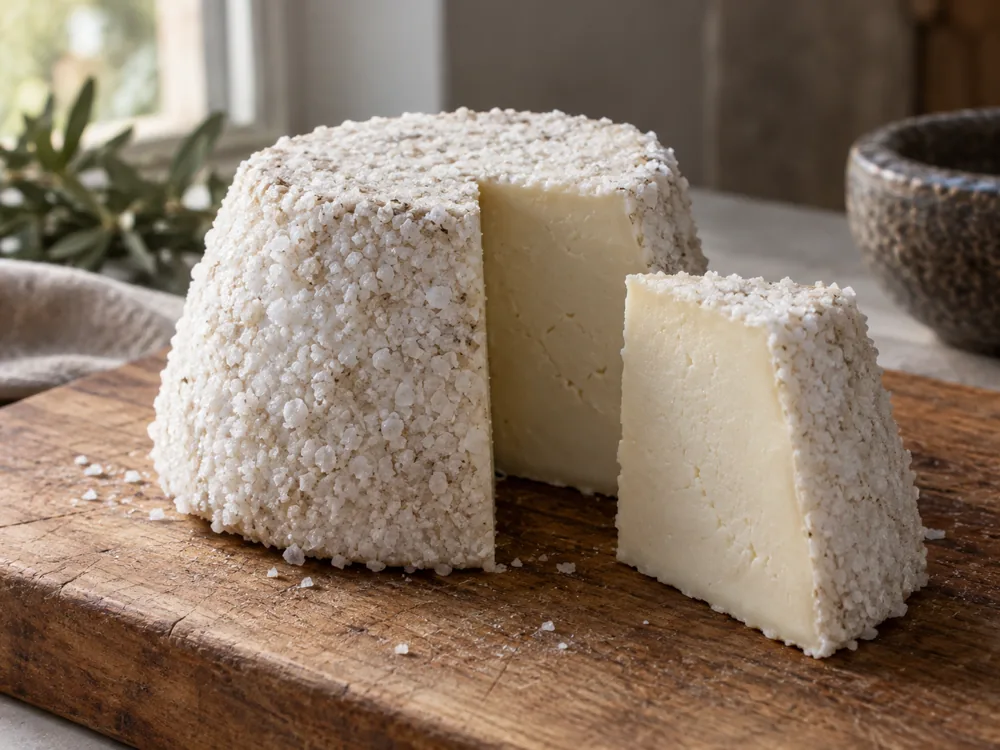
Baladinos, a dairy in Chania on Crete, makes its dry anthotyros almost the same way as the fresh one. The difference it names is ripening: with added salt and time, the cheese hardens and loses moisture.
Kalogerakis leaves its cheese to dry in ripening rooms for some weeks after production, while Wikipedia's infobox lists 10 days as the ageing time for anthotyros.
The Kalogerakis cheese was made as the dry version of sweet mizithra, a slightly saltier cheese that could be grated.
How Much Salt and Fat Does Each Style Carry?
The dry records carry 3 to 5 g of salt per 100 g and the fresh records 0.85 g at most, so salt is the clearest line between the two styles when you read the label.
| Style | Record | Salt | Fat |
|---|---|---|---|
| Fresh | Biofarm 350 g vacuum pack | 0.0 g | 15 g |
| Fresh | Greek Flavours Cretan pack | 0.85 g | 29.7 g |
| Dry | Baladinos Dry Anthotyros | 4.9 g | 29.5 g |
| Dry | Kalogerakis, sold by Hellenic Grocery | 5 g | 29.6 g |
| Dry, grated | Psiloritis 200 g, sold by Minoan Taste | 3 g | 26 g |
| Not stated | Foods 2023 study, 4 market samples | 0.6% | 13% |
| Not stated | Foods 2023 study, 3 partly skimmed samples | 0.4% | 12% |
By weight, every dry record carries at least three times the salt of the saltiest fresh pack in the table, and Wikipedia describes the fresh cheese as having no salt at all.
Biofarm sells its pack as a seasonal product rather than as fresh anthotyro, but its 0.0 g salt line and 28-day expiry put it with the fresh records.
Fat does not split the styles the same way. The Greek Flavours fresh pack lists 29.7 g, close to the dry records, while the Biofarm fresh pack lists 15 g.
The fattier of the two fresh packs is the Greek Flavours one, whose ingredients are whey and salt, while Biofarm makes its 15 g pack from pasteurized sheep's and goat's milk.
Do Moisture, Protein and Energy Figures Tell the Styles Apart?
Moisture does not. Baladinos gives a maximum of 65 percent moisture and Kalogerakis 70 percent for their dry cheeses, and the fresh Greek Flavours pack gives moisture below 70 percent.
The market samples in the 2023 study held more water than any of those figures: they averaged 71 percent moisture and 12 percent protein.
Fat in dry matter puts a fresh and a dry cheese on the same line as well. Kalogerakis gives 50 percent, Psiloritis 45.5 percent and the fresh Greek Flavours pack a minimum of 50 percent.
Energy runs from 338 kcal per 100 g on the fresh Greek Flavours pack to 370 kcal on the Baladinos dry cheese, with Psiloritis at 340 kcal and Kalogerakis at 358 kcal. Protein is 16.3 g on the fresh pack and 18.4 to 21.9 g on the three dry records.
Baladinos also gives a 30 g portion: 111 kcal, 8.85 g of fat and 1.47 g of salt.
Salt is the label figure that separates the two styles: 3 to 5 g per 100 g on the dry records against 0.85 g at most on the fresh packs. The moisture ceiling and fat in dry matter appear on both styles, so they do not show which one is in the pack.
Which Dishes Suit Each Style of Anthotyro?
Fresh anthotyro is eaten at breakfast with honey and fruit, or in savory dishes with oil, tomato and wild herbs. Boukouvalas names its anthotyro as a filling for pies and lists fruit with honey as another use.
Greek Flavours adds salads, sandwiches and pita for its fresh Cretan pack, and suggests stirring it into pasta or vegetables to add creaminess without heavy sauces.
| Use | How It Works |
|---|---|
| Breakfast plate | Fresh style with honey and fruit, per Wikipedia. |
| Pie filling | Named by Boukouvalas as a filling for pies. |
| Salads, pita and pasta | Fresh style crumbled over salads, added to sandwiches and pita, or stirred into pasta and vegetables, per Greek Flavours. |
| Grated over spaghetti | Dry style, per Wikipedia and Baladinos. |
Dry anthotyro may be eaten on spaghetti or salads, and Baladinos says its dry anthotyros is usually grated over spaghetti.
The Kalogerakis cheese became popular through Cretan weddings, where spaghetti boiled in the broth of local meat is coated with a large amount of dry anthotiros.
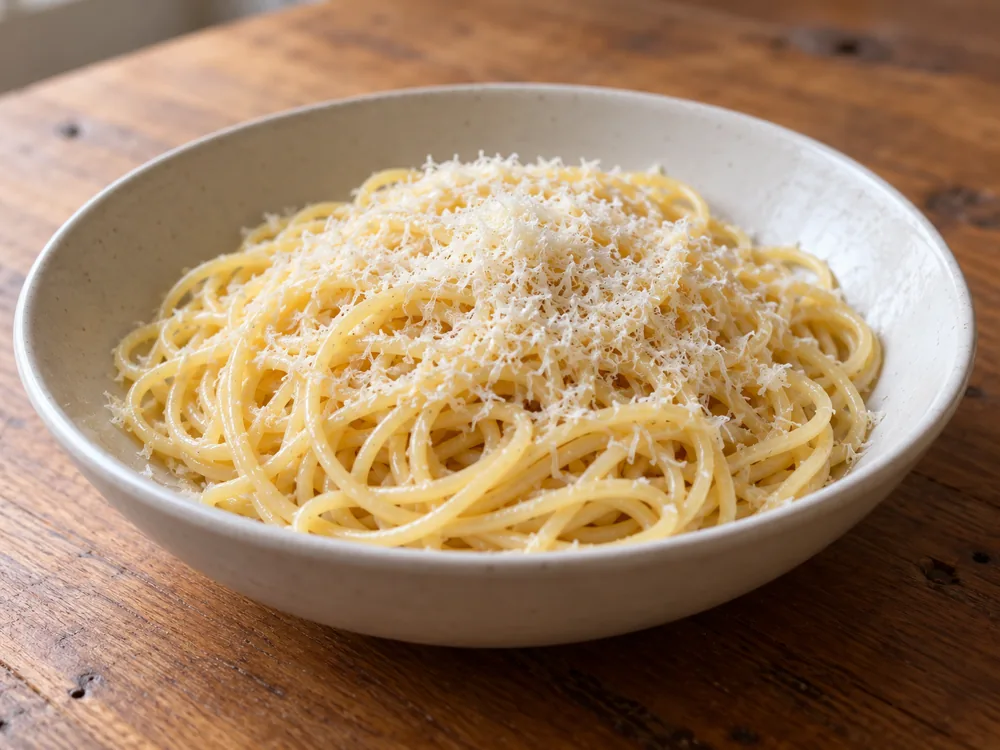
Psiloritis suggests grating the dry style over pasta or fried potatoes.
| Pairing | Type | Why It Works |
|---|---|---|
| Raki | Drink | Psiloritis says its grated dry cheese accompanies raki. |
| Ouzo | Drink | The same Psiloritis record names ouzo. |
| Honey and cinnamon | Food | Greek Flavours serves its fresh Cretan pack this way as a light dessert. |
How Do You Buy and Store Each Style?
Dry anthotyro reaches shops as whole pieces and as grated packs. Kalogerakis sells a 500 g piece and Psiloritis a 200 g grated pack.
A whole cheese usually weighs half a kilo or one kilo, and the cheese may be crumbled when it is shipped in containers.
Of the fresh records, Biofarm sells a 350 g vacuum pack and Greek Flavours a 400 to 500 g Cretan pack.
| Record | Style | Storage | Keeping time |
|---|---|---|---|
| Kalogerakis 500 g | Dry | 2 to 6 °C | Best before 12 months after packaging |
| Psiloritis 200 g | Dry, grated | 2 to 4 °C | Not stated |
| Biofarm 350 g | Fresh | Vacuum-sealed, refrigerated | 28 days |
| Greek Flavours Cretan pack | Fresh | 0 to 4 °C | A few days after opening |
| Retail vacuum packs, Sameli and Samelis, 2022 | Vacuum-packed | 4 °C | Sell-by date at 35 to 40 days |
The keeping times are far apart when you plan your shopping. The Kalogerakis dry cheese carries a best-before of 12 months after packaging, the Biofarm fresh pack gives 28 days, and retail vacuum packs in a 2022 study carried sell-by dates at 35 to 40 days.
The Kalogerakis pack prints the production day beside its life expectancy, so check both before you buy a piece.
In a 2021 study of fresh anthotyros in vacuum packs kept for 40 days at 4 °C, Pseudomonas, Aeromonas, Hafnia and Serratia bacteria grew first.
Lactic acid bacteria, mainly Leuconostoc mesenteroides, then took over and acidified the cheese by mid to late storage, strongly in some batches.
In a 2006 test, Aeromonas hydrophila added to anthotyros grew at 4 °C with a generation time of about 19 hours. It grew faster at 12 °C, with generation times of 4.1 and 6.1 hours for the two strains tested.
The CDC says to keep your refrigerator at 40°F (4°C) or below, and the date on each pack still applies.
Is Anthotyro Safe During Pregnancy?
Whether anthotyro is safe to eat while pregnant depends on the milk treatment on the pack, on the style, and on whether you eat it cold or cooked.
The fresh style is described as soft or of medium hardness. The dry style is hard for Wikipedia and semi-hard for Baladinos, and the Kalogerakis page says semi-hard in its description and hard in its texture line.
Biofarm makes its pack from pasteurized sheep's and goat's milk, Boukouvalas adds pasteurized milk to its whey, and the Kalogerakis list names its sheep milk, goat milk and cream as pasteurized. Wikipedia says anthotyro may be unpasteurized where law allows.
For the Boukouvalas and Kalogerakis cheeses, ask the seller whether the whey is pasteurized too.
The NHS lists pasteurised or unpasteurised hard cheeses, pasteurised semi-hard cheeses and pasteurised soft cheeses as safe to eat, along with any cheese that's been cooked until steaming hot.
If the milk is unpasteurised, the NHS says any foods made from unpasteurised milk must be thoroughly cooked. Its listing of pasteurised or unpasteurised hard cheeses as safe to eat covers an unpasteurised dry piece only on the reading that calls it hard.
The CDC lists unpasteurized (raw) milk and dairy products made from raw milk as riskier choices, along with soft cheese made from unpasteurized (raw) milk.
Among its safer choices, the CDC lists hard cheese, when made with pasteurized milk, which covers a pasteurized dry piece on the reading that calls it hard. It also lists pasteurized soft cheeses heated to an internal temperature of 165°F or until steaming hot.
Served cold, anthotyro is described as a pasteurized fresh cheese, soft or of medium hardness, or as a pasteurized semi-hard dry cheese, a type the CDC list does not cover, so ask a midwife or doctor.
The CDC says pregnant women are 10 times more likely to get a Listeria infection.
In a 2022 study, Listeria monocytogenes that researchers added on purpose to fresh vacuum-packed anthotyros grew by about 2.0 log10 CFU/g on average by day 15 at 4 °C. It failed to grow in cheeses that had aged 15 days at retail.
What Can You Substitute for Anthotyro?
Greek mizithra is the closest match for either style. It is essentially the same as anthotyros, apart from anthotyros possibly containing some cow's milk, and it is sold both fresh and salt-dried for grating.
The recipes differ: mizithra is made with a milk-to-whey ratio of usually 7 to 3, against the 9 to 1 Wikipedia gives anthotyros. It may be curdled with rennet, whey from an earlier batch or an acid such as lemon juice or vinegar.
Shop names overlap too. Hellenic Grocery lists the Kalogerakis cheese as Dry Mizithra, Anthotyro Cheese, so the ingredient list tells you more than the name.
Fresh mizithra is often baked in pies, the use Boukouvalas names for its anthotyro, and Wikipedia compares it to Italian ricotta.
Greek manouri appears in Wikipedia's mizithra entry as another Greek sheep cheese with a similar flavor, though not as dry as mizithra.
Wikipedia compares salt-dried mizithra to Italian ricotta salata, and aged mizithra is the grating cheese of Greek cuisine, especially suited to hot pasta. Salted, aged mizithra turns drier, denser, saltier and more sour.
| Either style, closest match | Mizithra in the same style |
| Fresh, like fresh mizithra | Ricotta |
| Fresh, similar flavor | Manouri, not as dry as mizithra |
| Dry, whey-cheese grating | Salted aged mizithra or ricotta salata |
SOURCES & REFERENCES
Fresh anthotyro is soft or of medium hardness with no rind, while dry anthotyro is salted and ripened until it is hard or semi-hard. Dry records list 3 to 5 g of salt per 100 g, against 0.85 g at most on the fresh packs.
Grate the dry style. Baladinos says its dry anthotyros is usually grated over spaghetti, the Kalogerakis cheese was made as a slightly saltier cheese that could be grated, and Psiloritis sells it ready grated.
Wikipedia describes the fresh style as sweet and creamy and the dry style as salty, with a powerful smell it compares to sherry. Kalogerakis calls its dry cheese brackish and buttery.
The Kalogerakis dry cheese carries a best-before of 12 months after packaging, and the Biofarm fresh pack gives 28 days sealed. Retail vacuum packs in a 2022 study carried sell-by dates at 35 to 40 days, and Greek Flavours asks for its opened fresh pack to be finished within a few days.
It depends on the milk, the style and whether it is cooked. The NHS lists pasteurised or unpasteurised hard cheeses, pasteurised semi-hard cheeses and pasteurised soft cheeses as safe to eat, and says any foods made from unpasteurised milk must be thoroughly cooked.
The CDC lists unpasteurized (raw) milk and dairy products made from raw milk as riskier. Served cold, anthotyro is described as a pasteurized fresh cheese of soft or medium hardness, or a pasteurized semi-hard dry cheese, a type the CDC list does not cover, so check the pack for the milk and ask a midwife or doctor.
Mizithra in the same style is the closest, since Wikipedia calls the two essentially the same. Wikipedia also compares fresh mizithra to ricotta and salt-dried mizithra to ricotta salata, and lists manouri as a Greek cheese with a similar flavor.