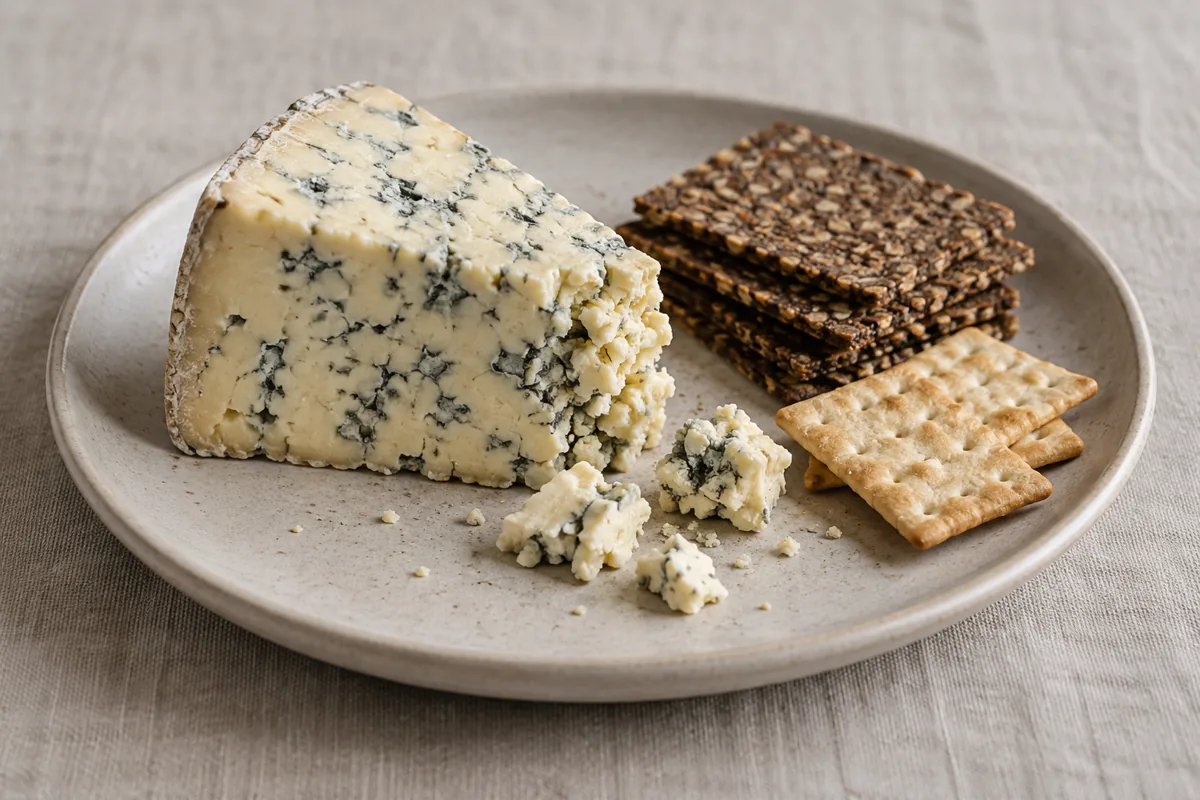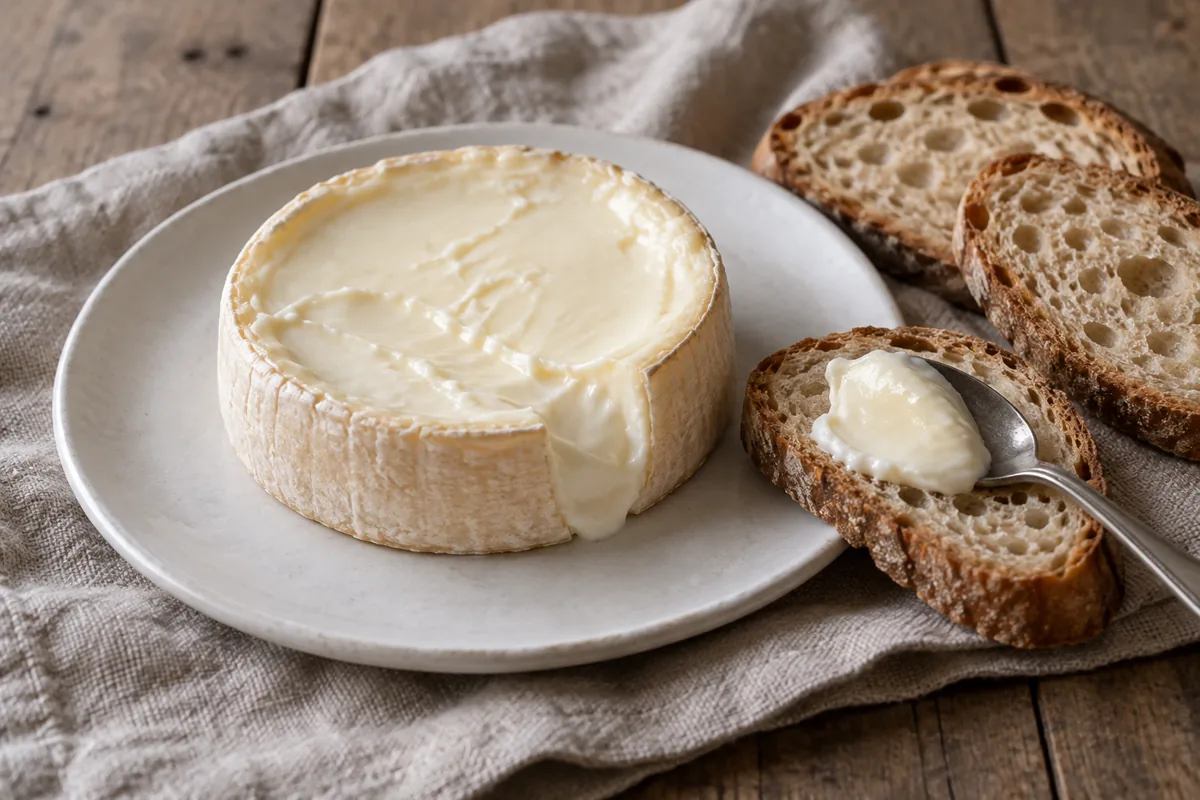
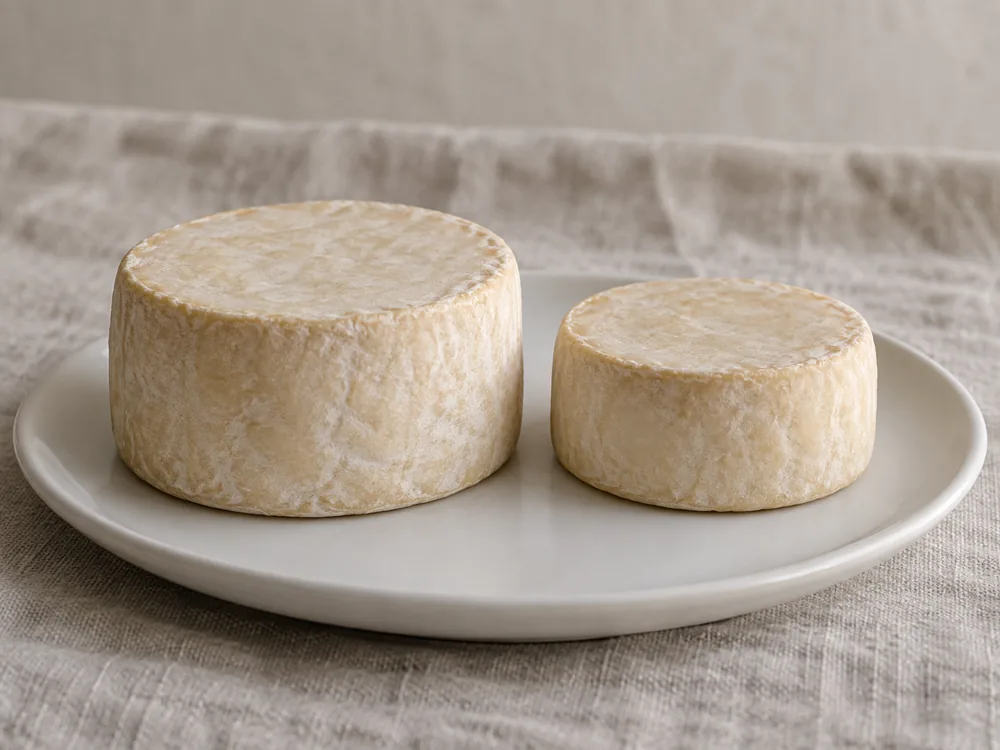
Azeitão is a raw sheep's-milk cheese made under the protected name Queijo de Azeitão in the Portuguese councils of Palmela, Setúbal, and Sesimbra. It is set with a cardoon preparation and sold as small rounds of about 100 g or 250 g.
The protected-name specification bans heat treatment of the milk, so a cheese sold as Queijo de Azeitão DOP is a raw-milk cheese, and if you are pregnant, that is the fact your answer turns on.
In This Article
What Is Azeitão Cheese?
The specification describes Queijo de Azeitão as a cured cheese made from raw sheep's milk from the delimited area, salt, and a preparation of cardoon (Cynara cardunculus), and nothing else.
The delimited area covers the councils of Palmela, Setúbal, and Sesimbra, and the milk is tied to the pastures of the Serra da Arrábida and the São Luís foothills. Feed from outside the area may not exceed 50% of the flock's dry matter over a year.
The style dates to about 1830, when Gaspar Henriques de Paiva of Belmonte had a cheesemaker from Castelo Branco make Serra da Estrela-style cheeses for him at Azeitão. A shepherd learned the method, and Paiva's son Frederico shrank the cheeses to the two sizes sold today.
Is Azeitão Made with Raw Milk, and What Does Cardoon Do?
Yes. The specification allows no heat treatment of the milk except warming it to 30-32°C for the make.
It also keeps the milk below 4°C for no more than 48 hours after milking. Cheese.com and Culture Cheese Magazine both describe the milk as raw or unpasteurized.
Cardoon is the coagulant: the enzymes cyprosin and cardosin in the flower curdle the milk, which makes thistle rennet a vegetarian alternative to animal rennet.
Cheese.com calls Azeitão suitable for vegetarians but not vegans, and the Pingo Doce record on Open Food Facts marks it vegetarian.
Up to 25 g of salt per litre goes into the milk before coagulation, which then runs at a steady 30-40°C for 45 to 60 minutes.
The specification requires flocks with official brucellosis-free status (B4).
How Long Is Azeitão Aged, and How Big Is It?
Azeitão cures for at least 15 days under the protected-name specification, while Cheese.com gives a 21-day minimum and Portuguese Wikipedia 20 days in summer and about 40 in winter.
The specification splits the cure into two stages of 8-12 days each, first at 8-14°C and then at 10-20°C.
| Source | Cure time | Size and weight |
|---|---|---|
| Queijo de Azeitão specification (Qualifica Portugal) | Minimum 15 days | Normal: 6-11 cm across, 3-5 cm high, about 250 g. Small: 5-7 cm across, 2-4 cm high, about 100 g |
| Cheese.com | Minimum curing time of 21 days | Not given |
| Portuguese Wikipedia | 20 days in summer, about 40 in winter | 100-250 g, about 8 cm across and 5 cm high |
| Culture Cheese Magazine | Not given | 6-8 oz, 2-3 in across, 1-2 in high |
If the age matters to you, ask the seller how long your cheese was cured.
Culture's 6-8 ounces (about 170-227 g) falls between the specification's 100 g and 250 g sizes, so a piece labeled by weight can differ from the two official sizes.
What Do the Rind, Paste, and Flavor Look Like?
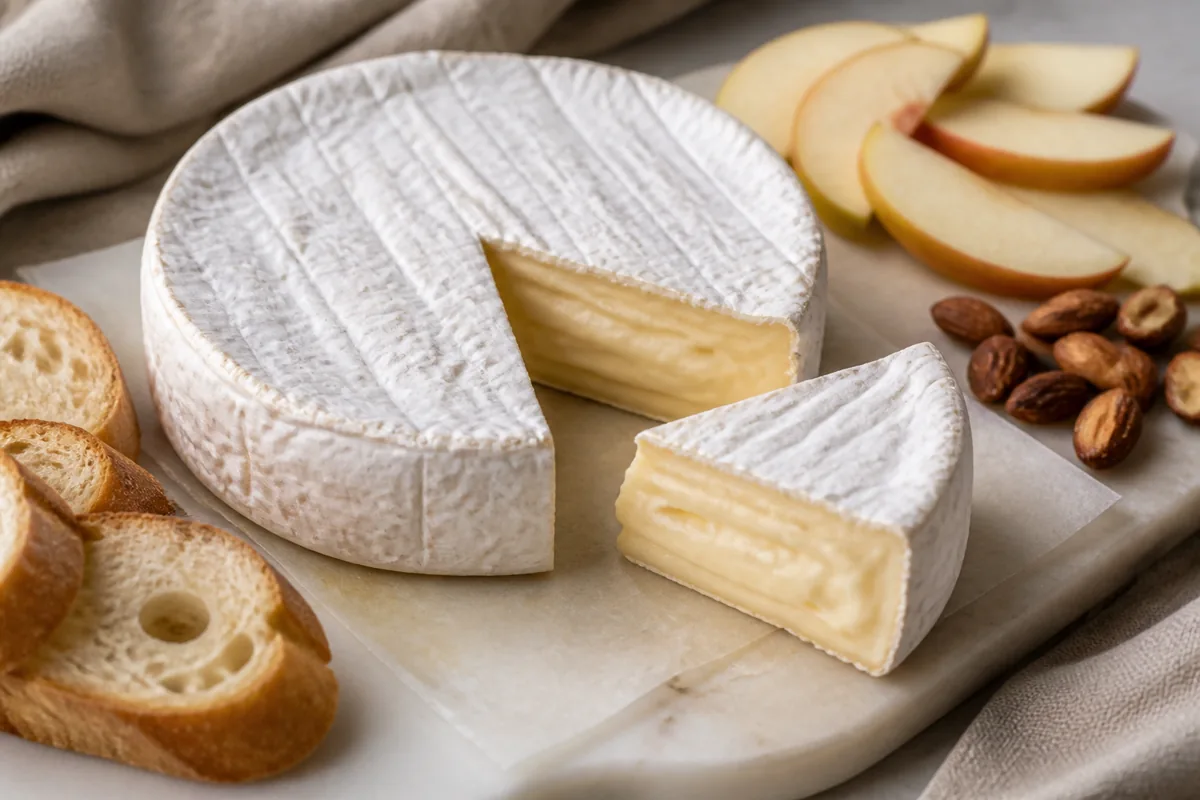
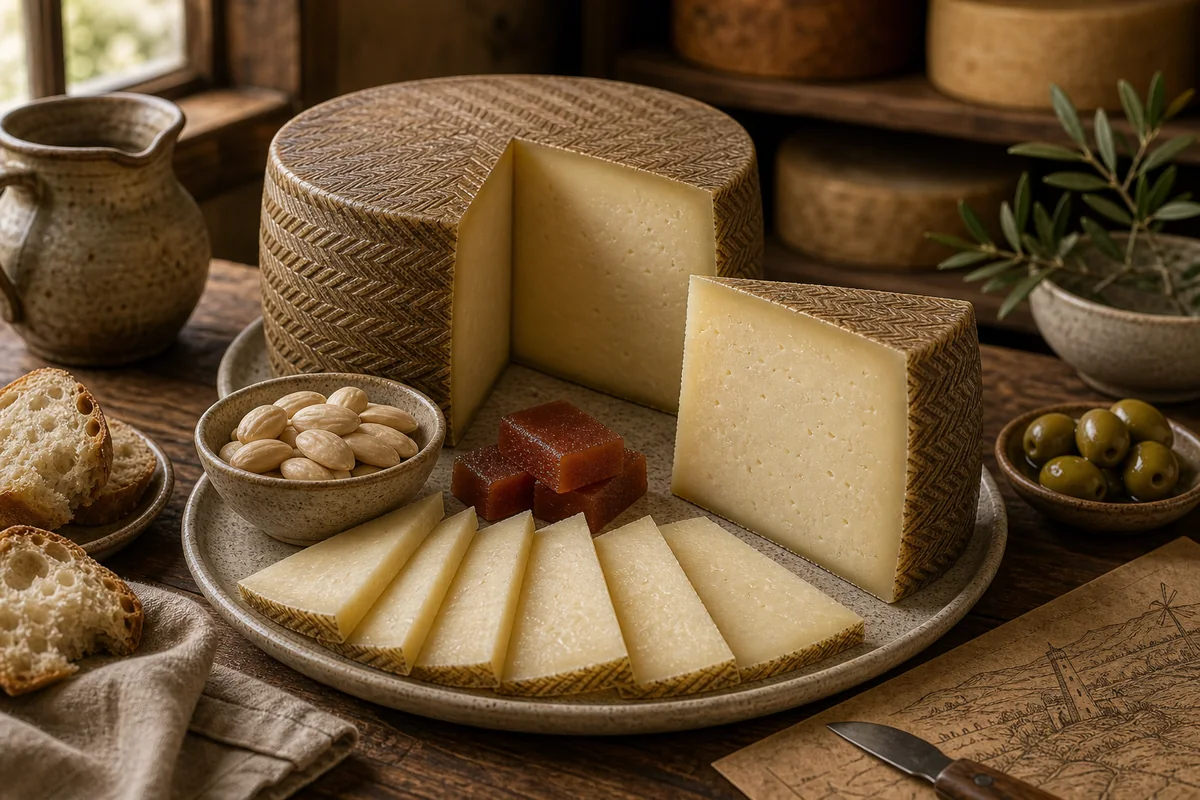
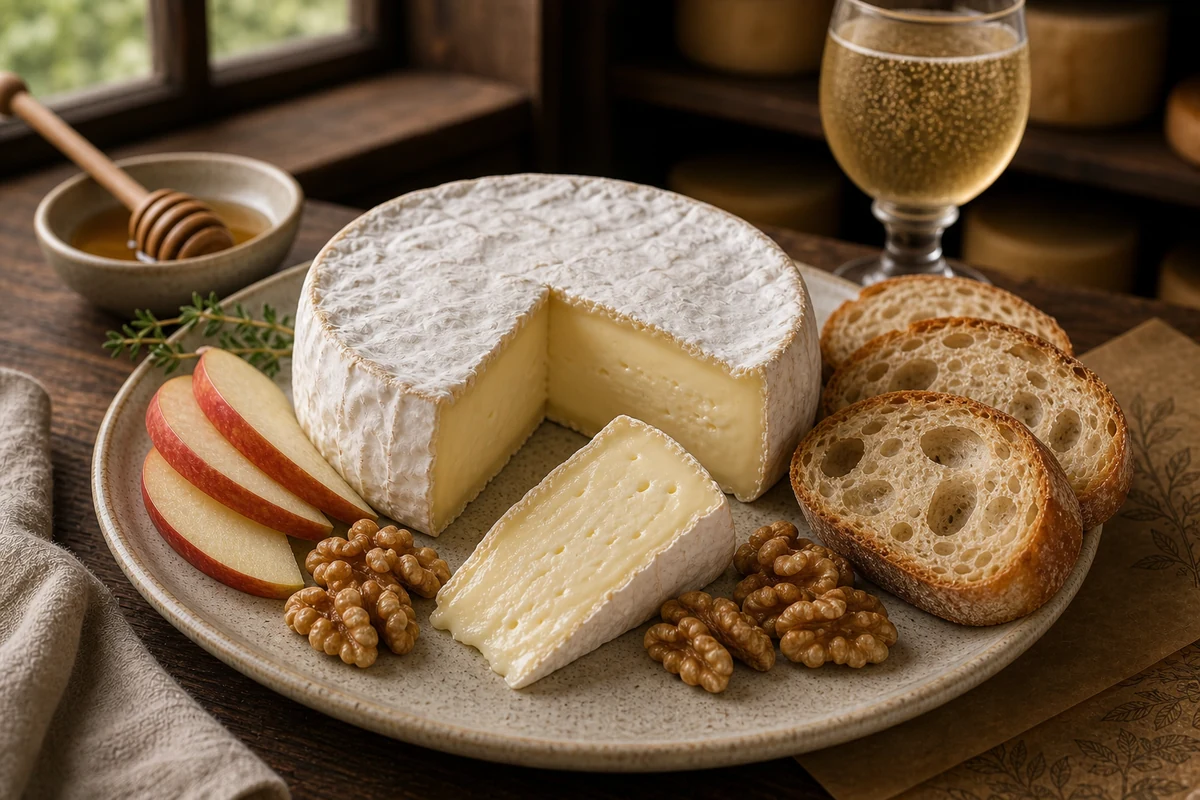
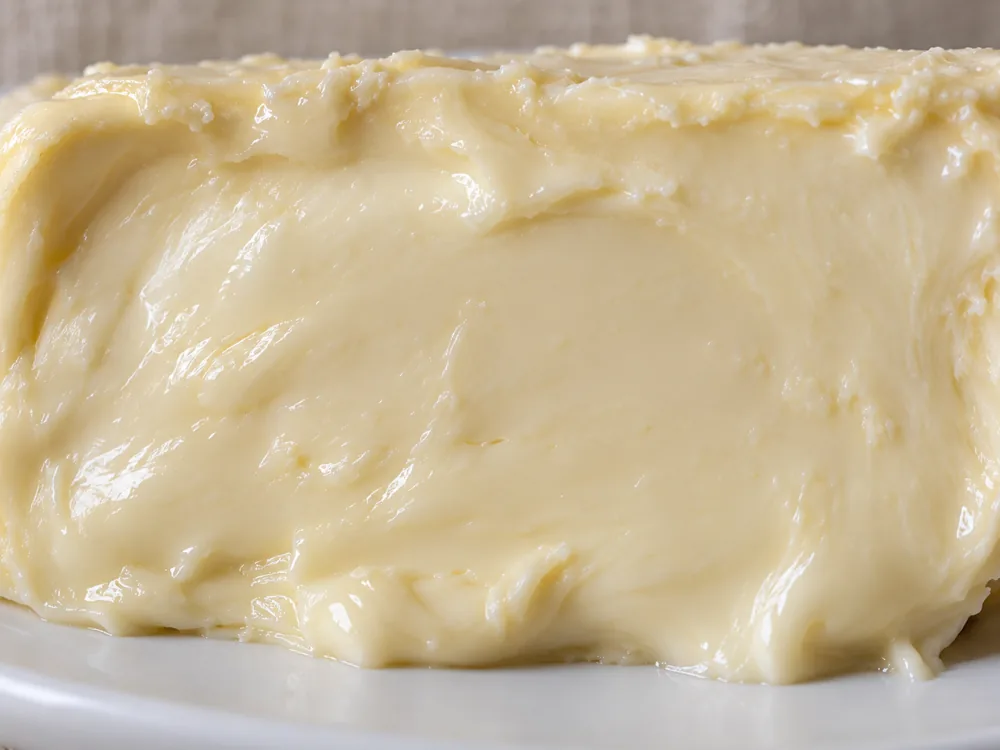
The specification describes a thin, smooth, whole rind that is yellow and malleable, and a closed paste that is buttery and white to slightly yellowish, with few or no holes. The cut face deforms easily and can even run.
| Source | Rind | Paste | Flavor |
|---|---|---|---|
| Specification | Thin, smooth, yellow, malleable | Buttery, creamy, cut face can run | Slightly piquant, sour and salty, mild aroma |
| Culture Cheese Magazine | Natural, rust-brown, sometimes dotted with white mold | Ivory-white and yielding; smooth and velvety when ripe, harder and drier with age | Pungent and sheepy aroma, slightly sour and sometimes bitter, balanced by sweet milk and herbaceous, vegetal notes |
| Cheese.com | Washed | Creamy and supple, buttery and pudding-like | Herbaceous, salty, sour |
Azeitão's rind is yellow and its aroma mild in the specification, but rust-brown and pungent in Culture's description. All three descriptions give a soft paste and a sour edge, and Culture and Cheese.com add herbaceous notes.
The specification also says the cheeses are normally washed with cold water and scraped about two days before packing.
How Do You Serve Azeitão?
To serve it, slice the top off the rind with a knife and spoon a dollop onto bread, the usual way according to Destination Eat Drink's Brent Petersen. He adds that Azeitão is typically semi-soft, so it is not sliced like a harder cheese.
| Pairing | Why It Works |
|---|---|
| Sweet white wine | Culture pairs it with sweet white wines from the same region. |
| Medium-bodied red | Culture also names medium-bodied reds with low tannin levels. |
For shelf life, storage temperature, and serving temperature of an opened Azeitão, follow the producer's label.
Is Azeitão Safe to Eat During Pregnancy?
Azeitão is made from raw milk by specification, and the CDC lists soft cheese made from unpasteurized milk among the riskier choices. Its examples are queso fresco, brie, camembert, and blue-veined cheese.
The CDC's safer choices include hard cheese made with pasteurized milk, such as cheddar, Parmesan, and Gruyère.
It also lists pasteurized cottage cheese, feta, and mozzarella, along with pasteurized soft cheeses heated to an internal temperature of 165°F or until steaming hot.
The NHS calls pasteurised or unpasteurised hard cheeses such as cheddar, gruyère, and parmesan safe. It asks that mould-ripened soft cheeses with a white coating, such as brie and camembert, and soft blue-veined cheeses be thoroughly cooked.
Azeitão is a raw-milk cheese by specification, and the NHS says any foods made from unpasteurised milk must be thoroughly cooked. It also lists any cheese cooked until steaming hot as safe to eat.
The two agencies group soft cheeses differently, so the answer for any one cheese in pregnancy depends on its milk treatment and style. Because Azeitão is a raw-milk semi-soft cheese, the NHS says it must be thoroughly cooked and the CDC lists it as a riskier choice, so ask a clinician about it if you are pregnant.
What Should You Check Before Buying Azeitão?
Before you buy, check three things on the label.
- Protected name: the specification sets the label wording as "Queijo de Azeitão - Denominação de Origem Protegida" or "Queijo de Azeitão DOP".
- Ingredients: a Pingo Doce label lists raw sheep's milk, salt, and cardoon.
- Fat figure: the specification's 45 to under 60% is fat in dry matter, which is not the same as fat per 100 g of cheese.
| Record | Energy | Fat | Saturated fat | Protein | Salt |
|---|---|---|---|---|---|
| Complete record with ingredients | 348 kcal | 29.4 g | 19.8 g | 20.4 g | 1.5 g |
| Record marked incomplete | 235 kcal | 18.2 g | 11.9 g | 15.0 g | 1.06 g |
The two entries for one retailer's cheese differ by more than 100 kcal, so use the figure on the label of the piece you are buying.
Which Cheeses Are Related to Azeitão?
Serra da Estrela is the closest relative on record: Azeitão began as an imitation of it, and Culture also traces Azeitão back to it.
Culture's article on thistle rennet also lists Serpa, Évora, and Spain's Torta del Casar as raw-milk cheeses set with cardoon.
SOURCES & REFERENCES
What Else Do People Ask About Azeitão?
Azeitão is a Portuguese cheese made under the protected name Queijo de Azeitão from raw sheep's milk, salt, and a cardoon preparation in Palmela, Setúbal, and Sesimbra. It is a small round with a buttery, semi-soft paste.
Yes. The protected-name specification requires raw sheep's milk with no heat treatment except warming to 30-32°C, and Cheese.com and Culture both describe it as unpasteurized.
Cheese.com calls it suitable for vegetarians, and a Pingo Doce label record marks it vegetarian. It is made from sheep's milk, so it is not vegan.
The specification sets a 15-day minimum, Cheese.com says 21 days, and Portuguese Wikipedia says 20 days in summer and about 40 in winter.
The CDC lists soft cheese made from unpasteurized (raw) milk as riskier, and the NHS says any foods made from unpasteurised milk must be thoroughly cooked. Because Azeitão is raw-milk by specification, ask a clinician.