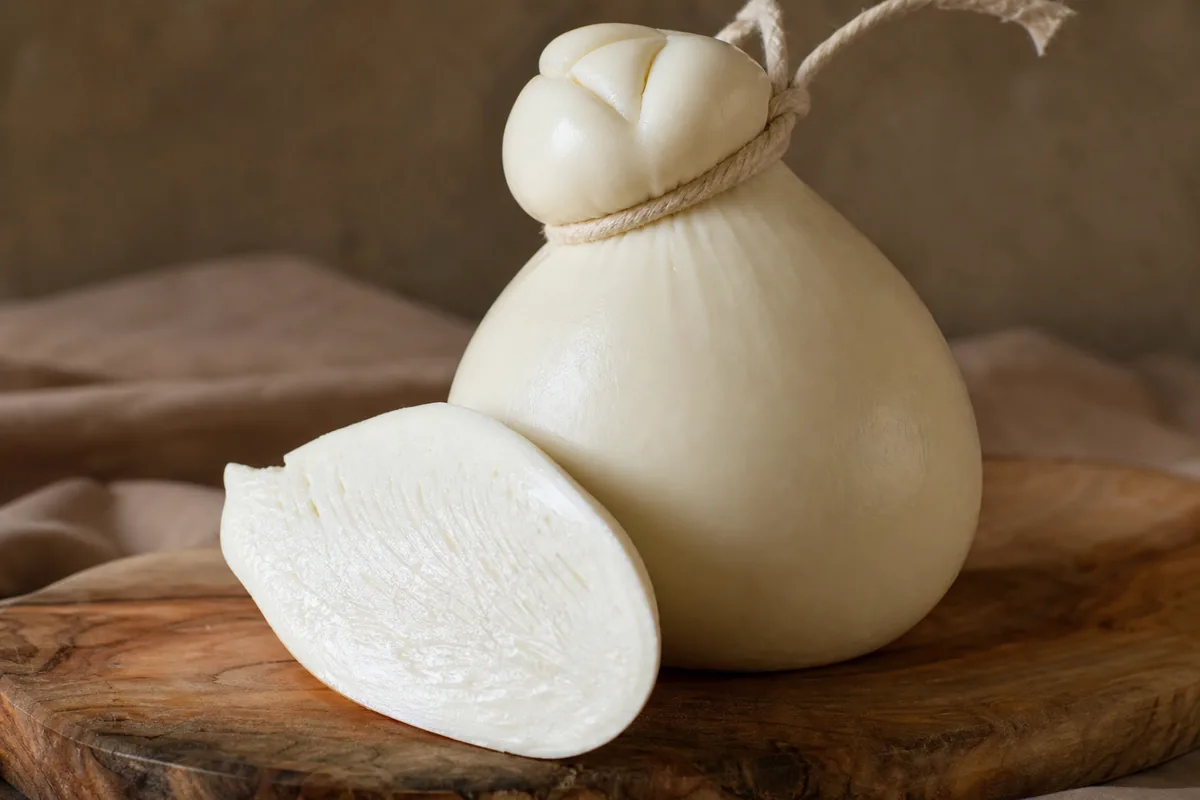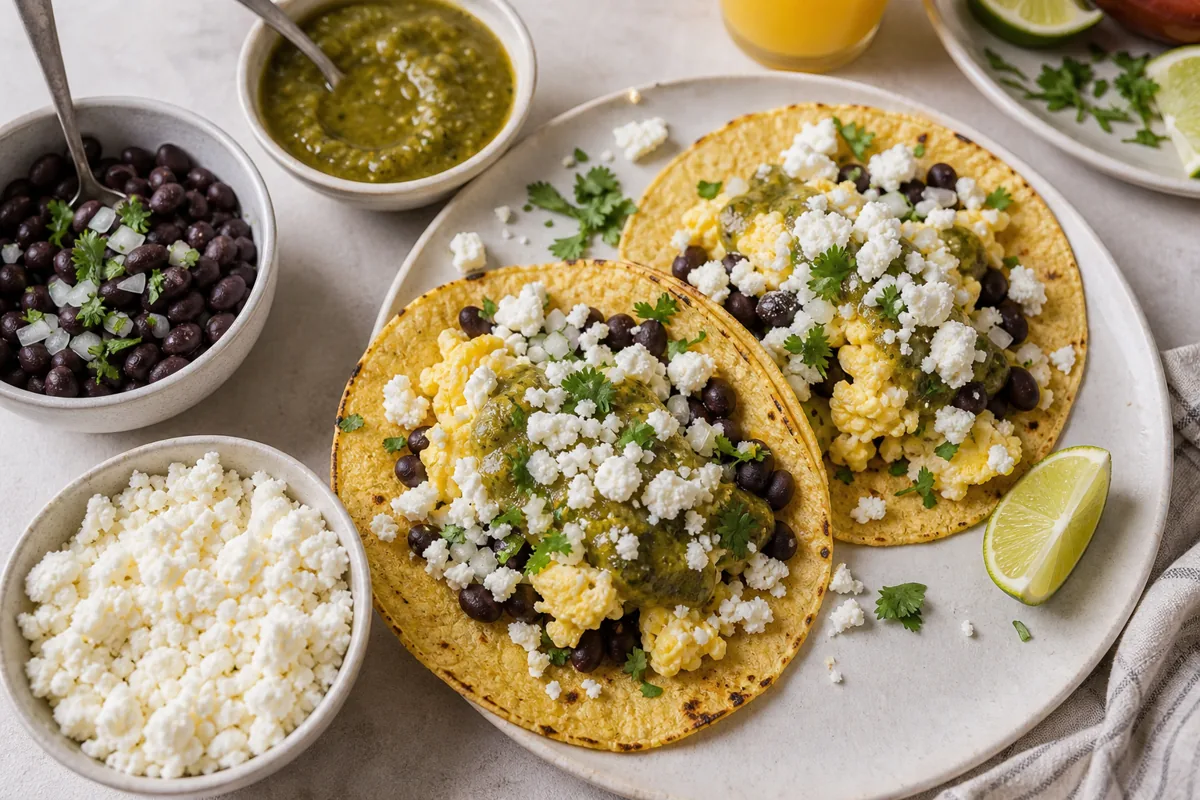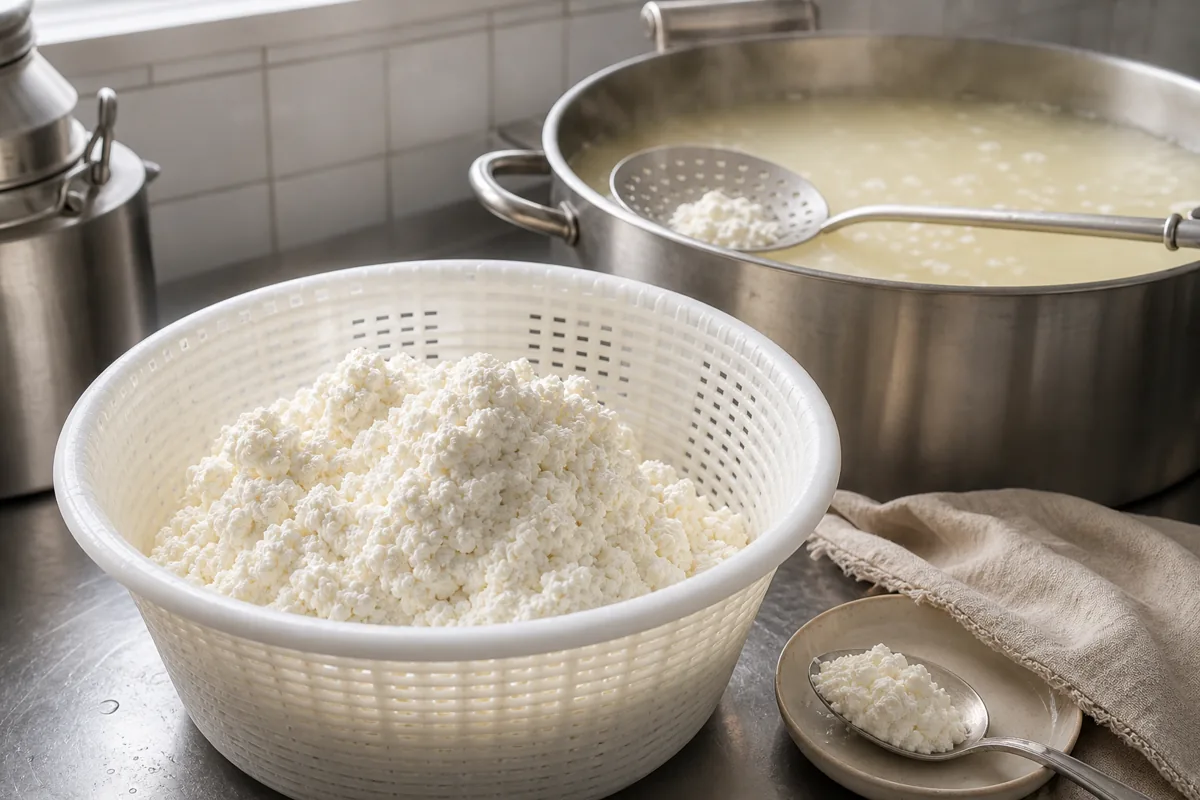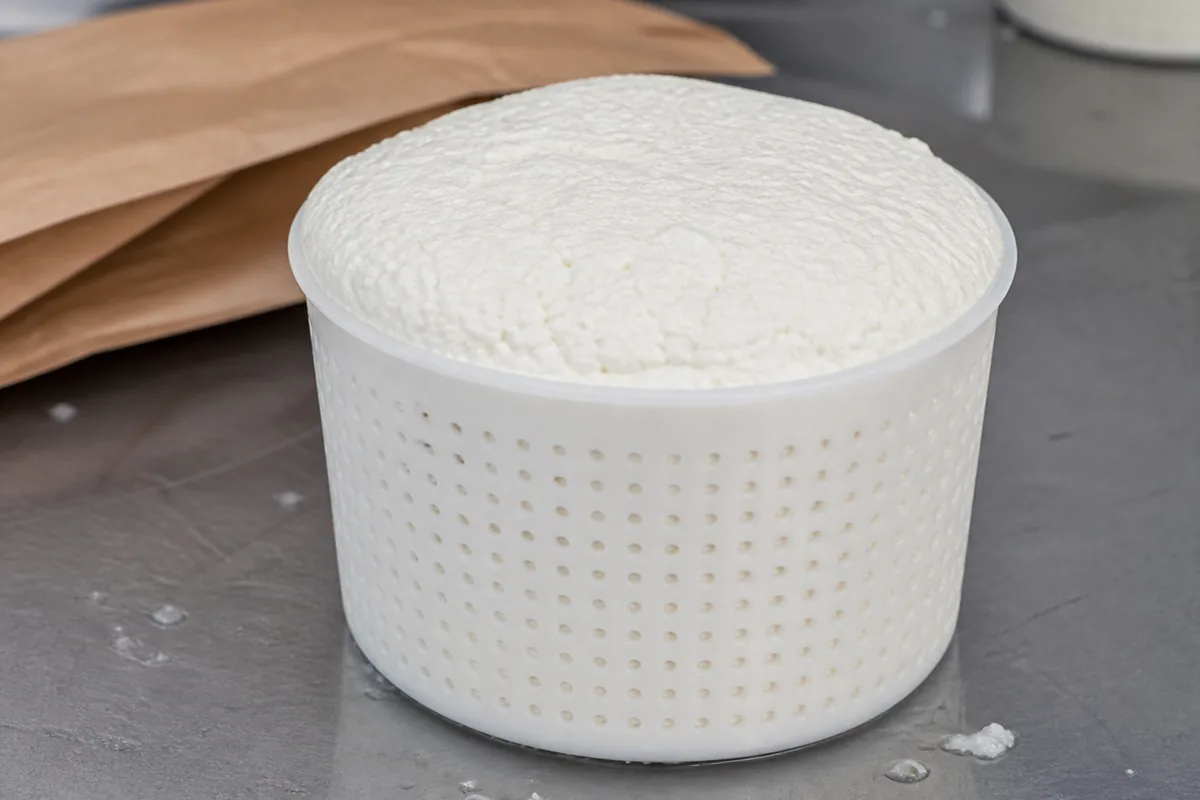
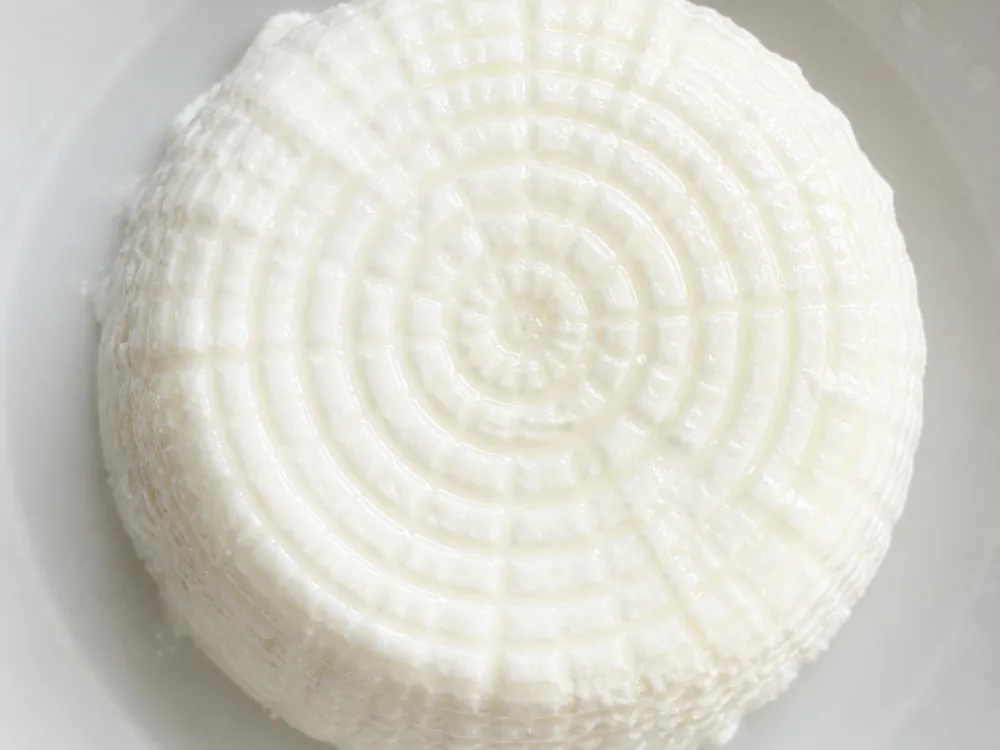
Basket cheese is a fresh cow's milk cheese that Italian Americans buy mainly for the Easter pie. It takes its name from the perforated basket that shapes and drains it.
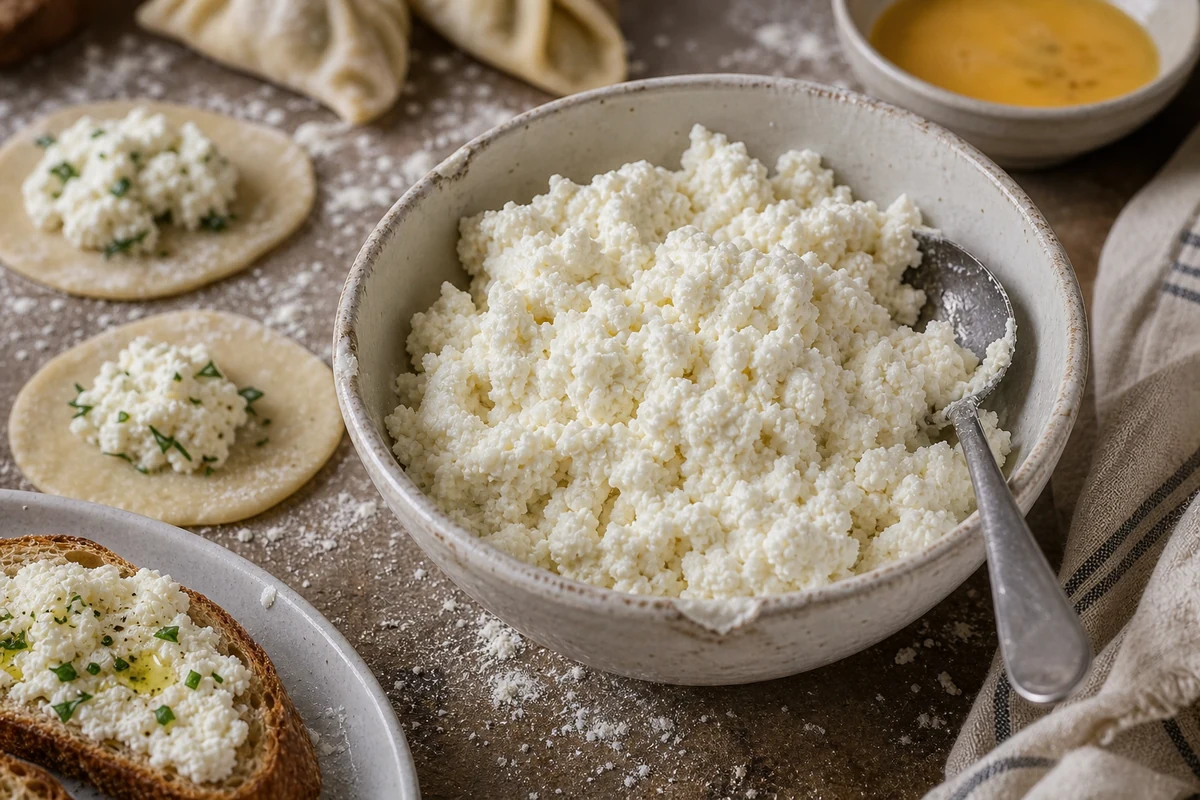
If you cannot find it, the substitute Rick Rodgers names is supermarket farmer's cheese. Ricotta goes into the AP's Campania pie beside basket cheese, so there it is a second cheese rather than a replacement.
In This Article
What Is Basket Cheese?
Basket cheese is a white cheese made from pasteurized cow's milk and rennet in the description of a 2025 Pittsburgh Post-Gazette feature, syndicated by the Associated Press. The feature places the cheese among the formaggi freschi, the fresh cheeses sent to market after very brief ripening.
The Liuzzi label matches that and adds salt: the basket cheese sold by Pennsylvania Macaroni Company lists pasteurized whole milk, rennet and salt as its ingredients.
How Is Basket Cheese Shaped, Drained, and Brined?
The basket does the shaping and the draining. In the AP's account, pasteurized milk is cooled to 90 degrees F, rennet goes in, and the set milk is cut into cubes after 45 minutes, then the curds are packed into plastic baskets, which were traditionally woven from wicker or reeds.
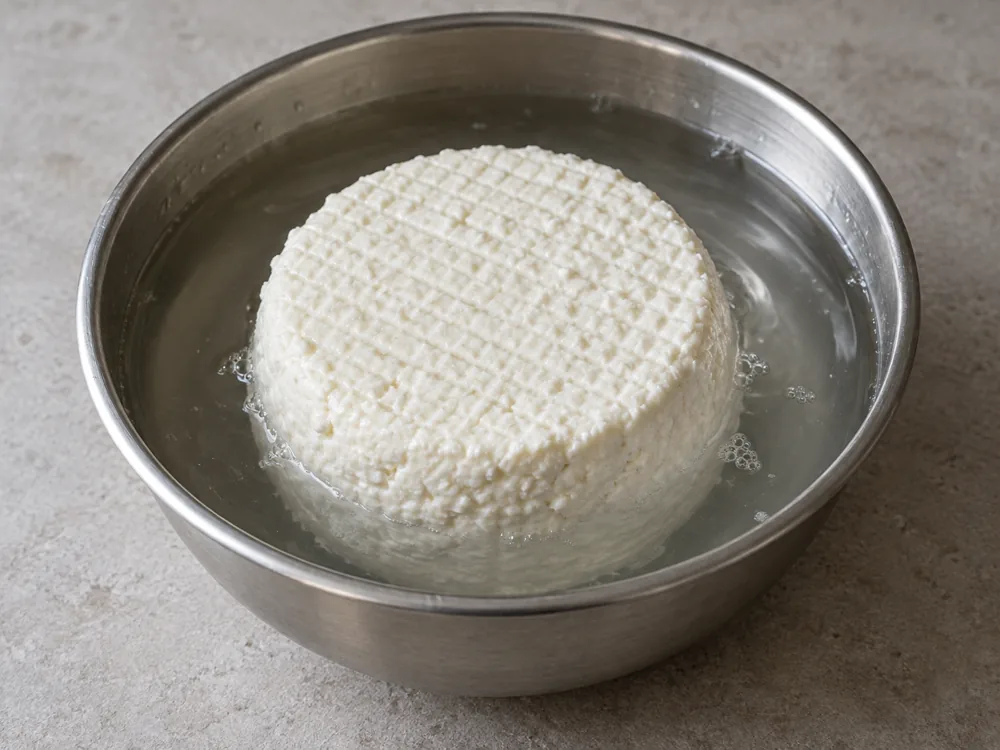
The baskets are flipped so the whey drains. The cheese cools for about an hour, then takes a 20-minute dip in salt brine before draining on racks.
At Valentino Cheese in New Castle, Pennsylvania, Kelly Gorgacz says her dairy lets the cheese drain overnight.
In the AP feature the cheese comes packed in brine, and once you unmold it in the sink, it shows the basket's impression. That woven imprint is the mark of the basket it is traditionally formed inside.
What Does Basket Cheese Taste Like?
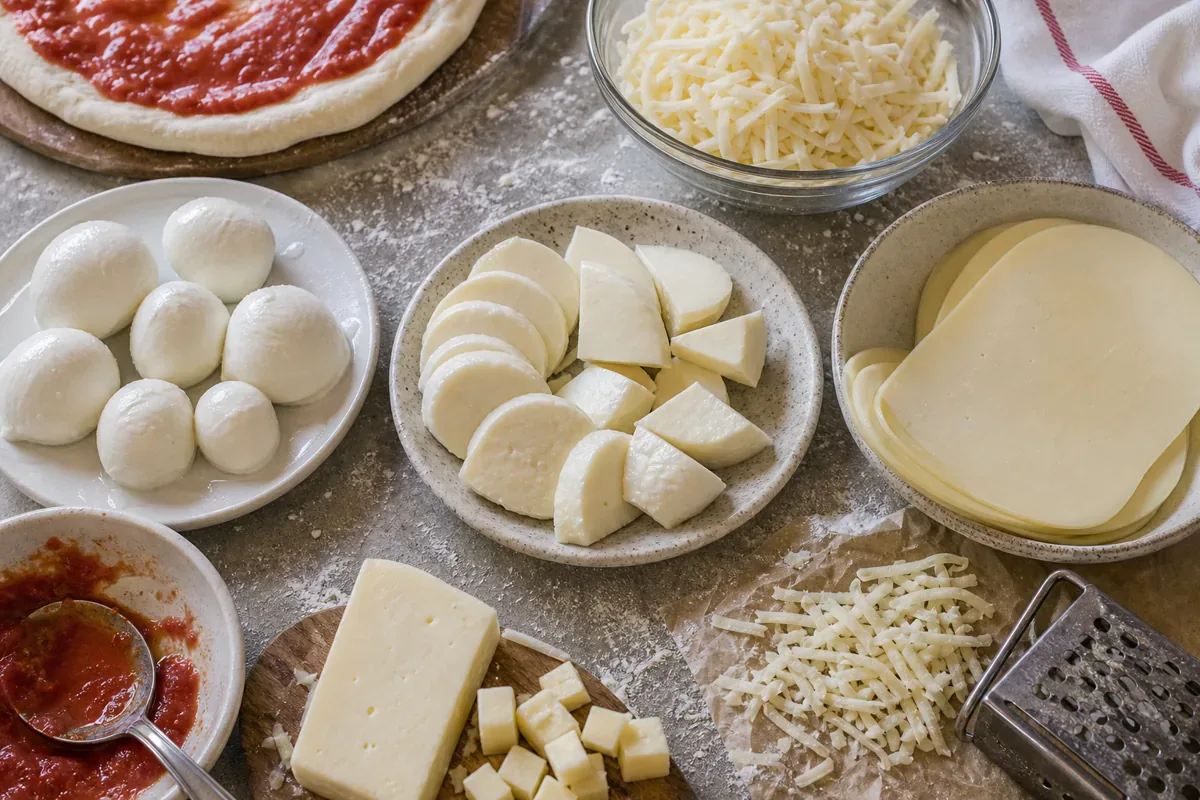
Basket cheese is mild. The AP feature describes a look between fresh mozzarella and ricotta but with a much milder taste.
| Source | Texture | Flavor |
|---|---|---|
| AP feature (Post-Gazette, 2025) | Delicate, similar to tofu | Somewhat bland, faintest flavor of curds |
| Talluto's Authentic Italian Foods (2023) | Smooth and tender, easy to slice or crumble | Delicate and slightly salty |
| Wikipedia | Semi-soft, rubbery, creamy | Fresh varieties have no salt taste, dry ones are mildly salty |
| Cheese.com | Soft and slightly crumbly | Mild and slightly tangy, with subtle smokiness |
Its texture is delicate, similar to tofu, in the AP feature, while Talluto's calls it smooth and tender, easy to slice or crumble, and slightly salty.
For the Easter cheese you buy, go by the AP feature and the Talluto's post: both describe the Italian-American Easter product and name the makers or the shop.
The Cheese.com entry does not fit that product. It lists a Middle Eastern country, gives scamorza as a synonym, and describes a tangy, smoky flavor that matches neither the AP feature nor Talluto's.
To serve it, the AP feature and Talluto's keep to simple uses:
- The AP feature: on crackers or bread, or with honey, jam or fruit
- The AP feature: with olive oil, salt and pepper
- The AP feature: crumbled onto salads, antipasto and whipped desserts
- Talluto's: in a salad with orange and fennel
The AP feature gives 70 calories per ounce and Cheese.com lists about 7 grams of fat per ounce. Neither is a package label, so use the nutrition panel on the cheese you buy.
How Long Does Basket Cheese Keep?
Plan to eat basket cheese soon: the AP feature, Talluto's and Cheese.com all say so, and the AP feature and Talluto's link that to its high moisture.
| Source | Figure given |
|---|---|
| AP feature | Three weeks at most, eat shortly after purchase |
| Cheese.com | Up to two weeks refrigerated, best within a week of purchase |
| Talluto's | Eat shortly after it is made |
If the package carries no date, one week, Cheese.com's best-within figure and the shortest in the table, is the safest number to plan around.
Ask the seller when it was made and follow any date on the package.
When Can You Buy Basket Cheese and What Does It Cost?
Basket cheese is usually made and sold only during Easter Week by Rick Rodgers's account, while Talluto's says it is available in spring and generally year-round.
In April 2025, the AP feature named Pennsylvania sellers stocking it then, and their prices are in the table below.
Prices in the AP feature and on the Liuzzi listing run from $7 to $9.95. Before you compare them, check what weight each price covers: three of the five in the table are per pound.
| Seller | Price | Detail |
|---|---|---|
| Valentino Cheese, New Castle | $7 per pound | Made with milk from Pasture Maid Creamery |
| Labriola | $7.95 | Not stated |
| Pennsylvania Macaroni Company | $8.49 | Vacuum-sealed |
| DeLallo's, Jeannette | $9.90 per pound | Fresh, delivered twice weekly |
| Pennsylvania Macaroni Company, Liuzzi listing | $9.95 | Sold by the pound; listed as sold out on 22 October 2026 |
Is Basket Cheese Safe in Pregnancy?
It depends on the specific cheese you hold. The Liuzzi label and the AP feature both say pasteurized milk, and NHS lists pasteurised soft cheeses such as cottage cheese, ricotta, feta, paneer and mozzarella as safe.
The CDC lists soft cheese from unpasteurized milk, with queso fresco as its example, among the riskier choices. It also puts any queso fresco-type cheese there whether it is pasteurized or not, and it lists pasteurized soft cheeses heated to an internal temperature of 165 degrees F or until steaming hot as safer.
Served cold, basket cheese is described as a pasteurized fresh, soft or semi-soft cheese, a type the CDC list does not cover, so ask a midwife or doctor.
One home recipe for basket cheese recommends raw farm milk, and small dairies do not always print the milk treatment, so read the label or ask the dairy, since the NHS says foods made from unpasteurised milk must be thoroughly cooked.
What Goes in the Easter Pie and What Can Replace Basket Cheese?
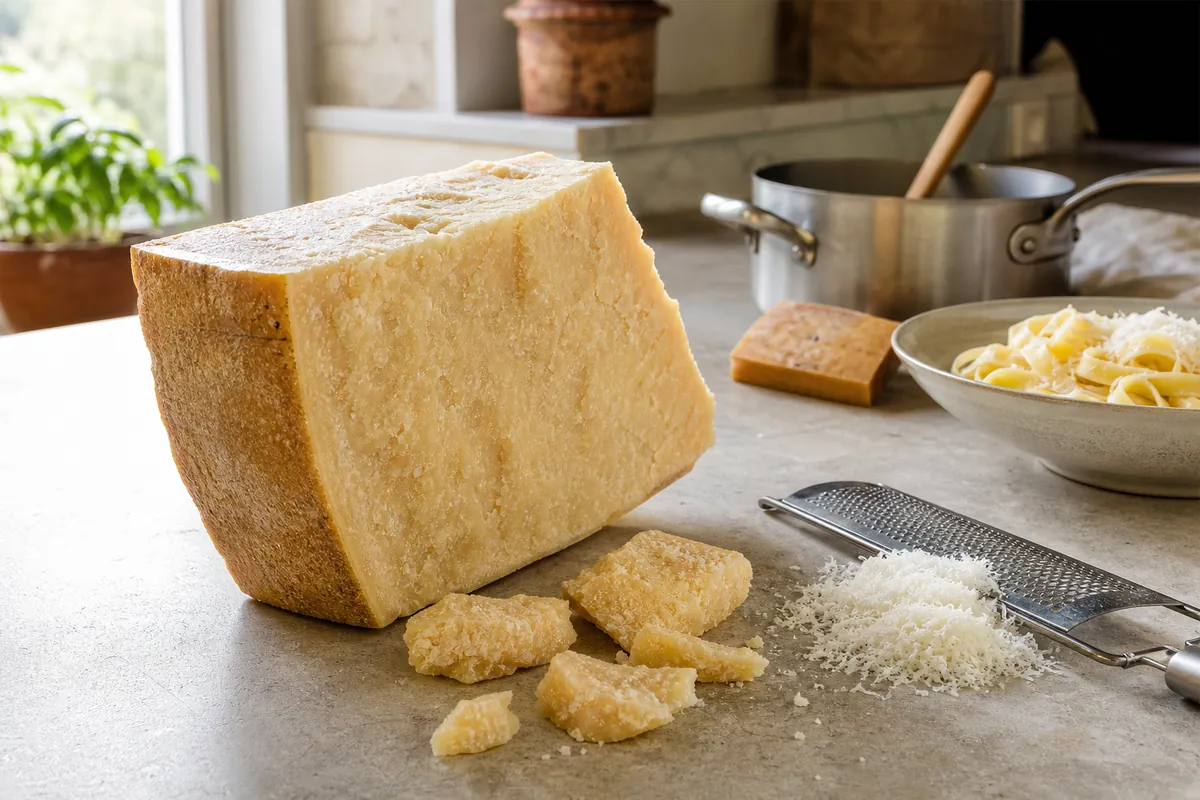
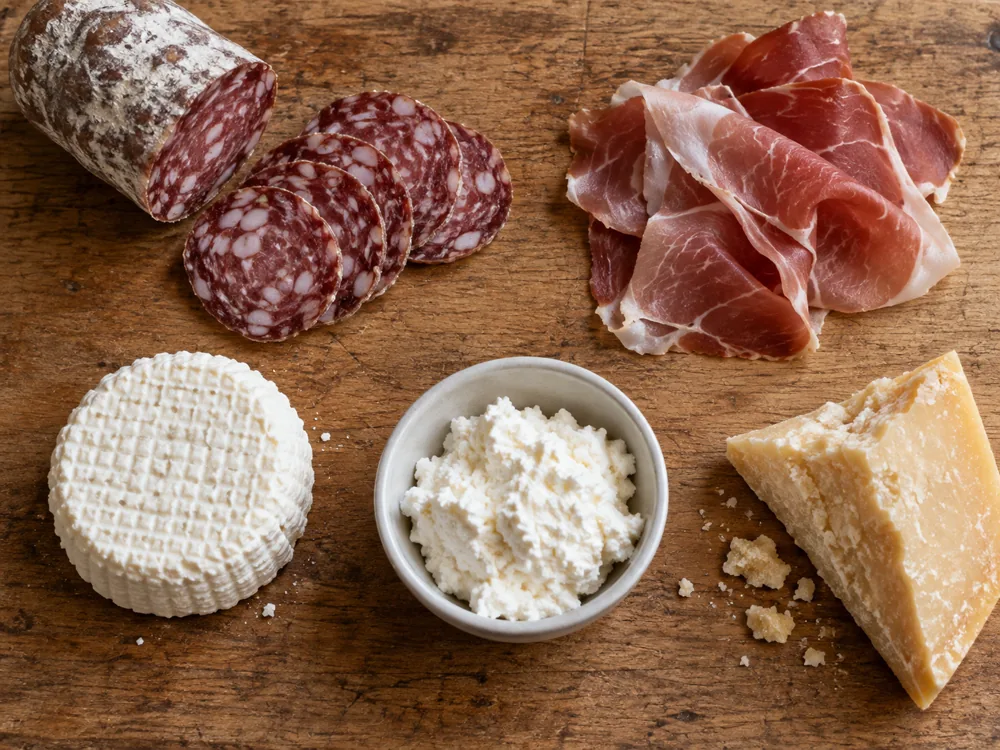
In the AP's account of the Campania version, a pie that began as a way to clear winter sausages from the smokehouse, the filling has soppressata, prosciutto, basket cheese, ricotta and Parmesan. Ricotta is already in that filling, which makes it a second cheese beside basket cheese rather than a stand-in for it.
The AP feature says basket cheese is most popular in an Italian Easter pie known as pizza rustica, pizza chena or pizzagaina. Pizza gaina and pizza chena are dialect variations of pizza piena, which means filled pie.
If you need a replacement, supermarket farmer's cheese is the one Rodgers calls a good substitute: he describes basket cheese as a fresh cow's milk cheese similar to farmer's cheese.
His recipe has you drain fresh ricotta for its filling in a wire sieve lined with paper towels for about 2 hours, which yields about 2 cups from 1 ¼ pounds.
Is Basket Cheese the Same as Canestrato?
No: canestro is Italian for basket, so several cheeses carry the name. New England Cheesemaking Supply separates the fresh American-Italian Easter cheese from traditional canestrato, which it calls aged, complex and comparable to Pecorino Romano or Ragusano.
The AP feature calls canestrato a distinct aged cheese with a thick rind, and the cheesemaking supplier adds that the basket pattern shows on the finished cheese.
| Cheese | Milk | Ripening | Source |
|---|---|---|---|
| US basket cheese | Pasteurized cow | None, fresh | AP feature, Liuzzi label |
| Canestrato | Goat and sheep in the AP feature, sheep, goat, cow or a blend for the supplier | Young or late-ripening, 4 to 12 months in the recipe | AP feature, New England Cheesemaking Supply |
| Canestrato di Moliterno | Sheep and goat | At least 60 days | Wikipedia |
| Turkish sepet peyniri | Goat, often sheep or cow | Fresh curd | Wikipedia |
If your recipe calls for canestrato, the aged Italian cheese is the one it means, and the fresh Italian-American Easter cheese is a different product.
Wikipedia gives Canestrato di Moliterno, made from sheep and goat milk, a minimum ageing of 60 days. Turkish sepet peyniri comes from the Aegean region, where it is traditionally made in reed baskets called gova and now often shaped in plastic containers.
SOURCES & REFERENCES
What Else Do People Ask About Basket Cheese?
The Liuzzi label and the AP feature both say pasteurized cow's milk. Small dairies and delis may not print the milk treatment, so confirm it before a pregnancy meal.
The AP feature gives three weeks at most, and Cheese.com gives up to two weeks and best within a week. If the package carries no date, one week is the safest number to plan around.
Rick Rodgers names supermarket farmer's cheese as the substitute, and the AP's Campania filling uses ricotta as a second cheese beside basket cheese.
No. Canestrato is an aged cheese with a thick rind, while the American-Italian Easter basket cheese is fresh and mild.