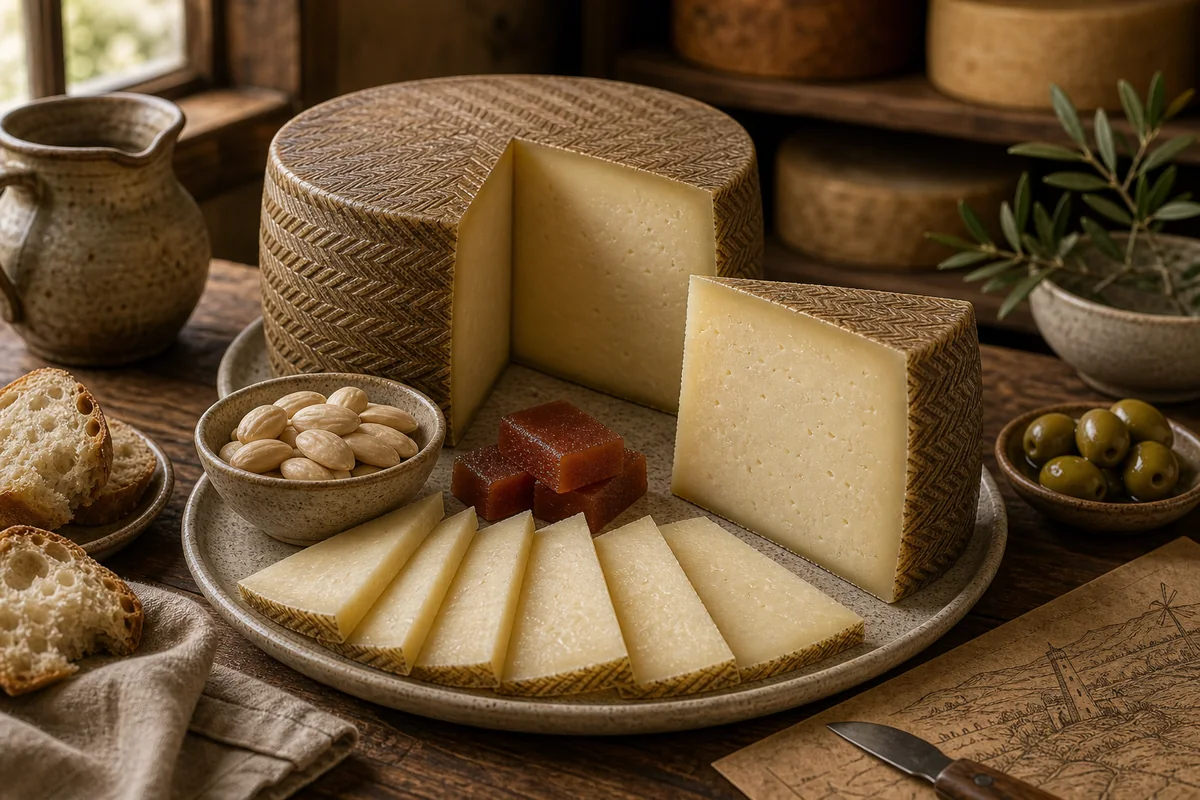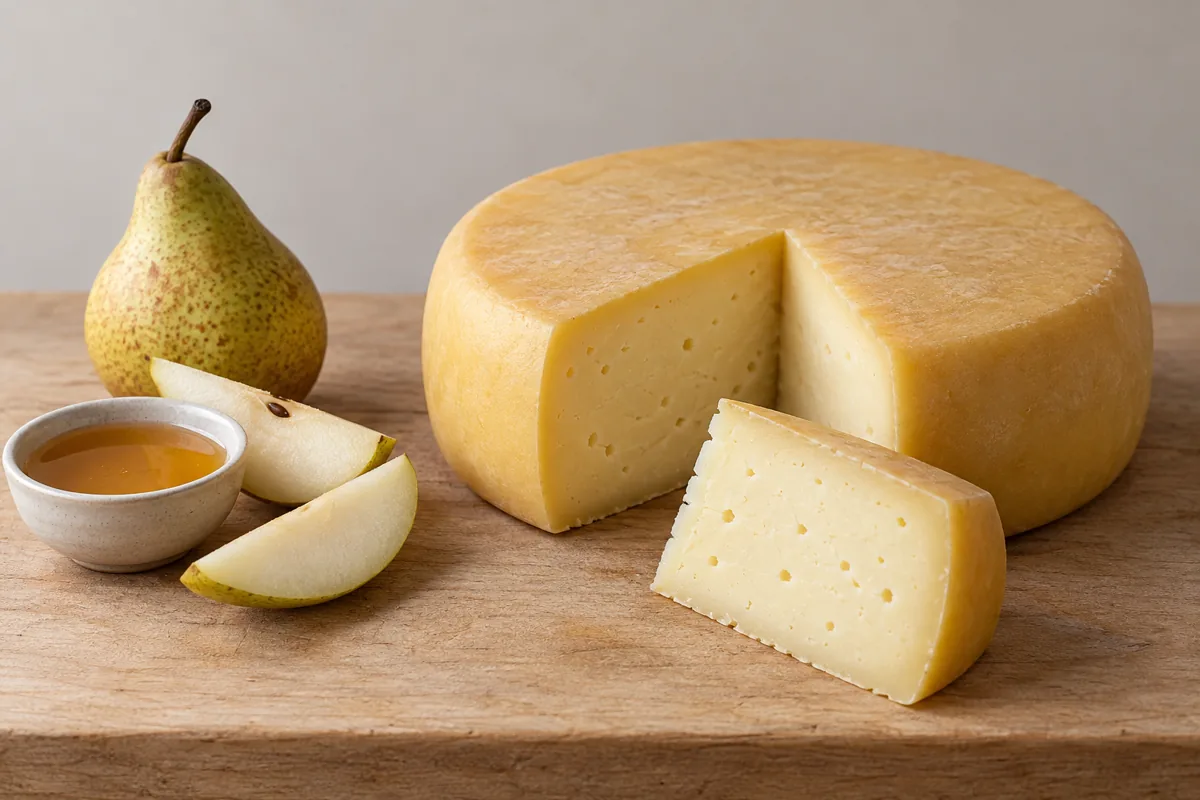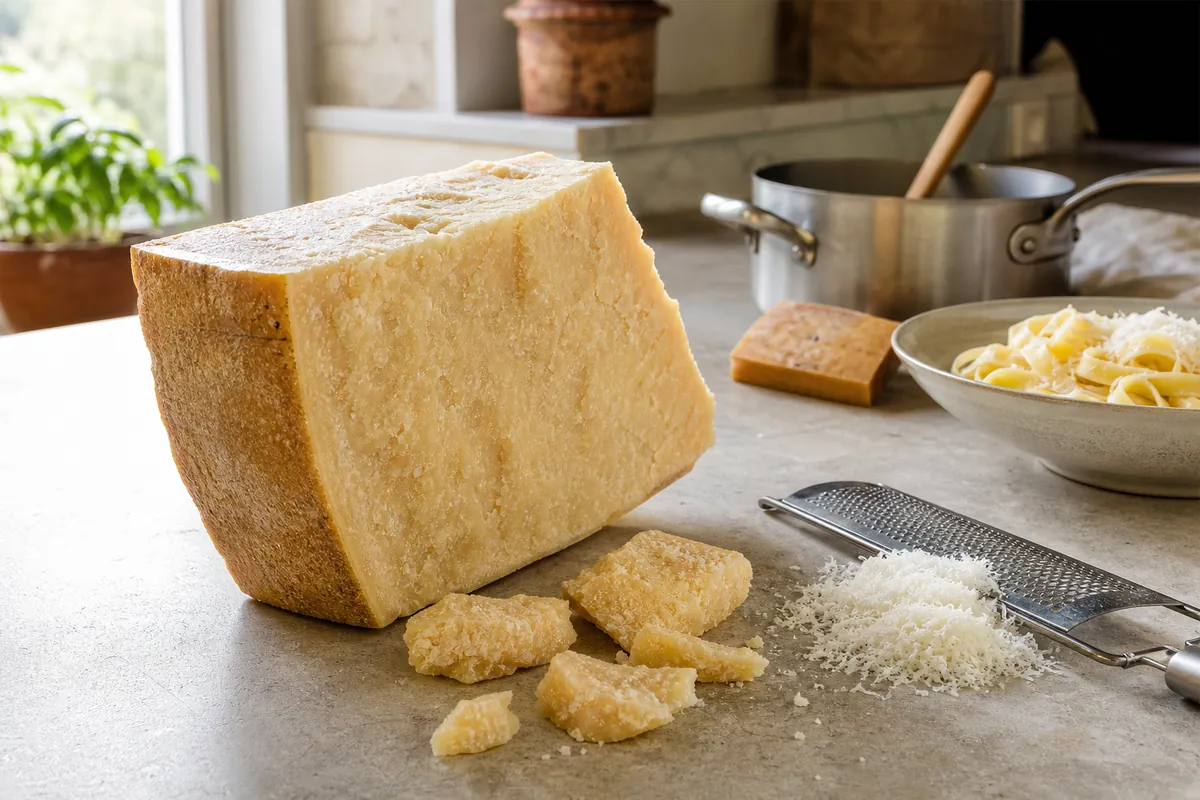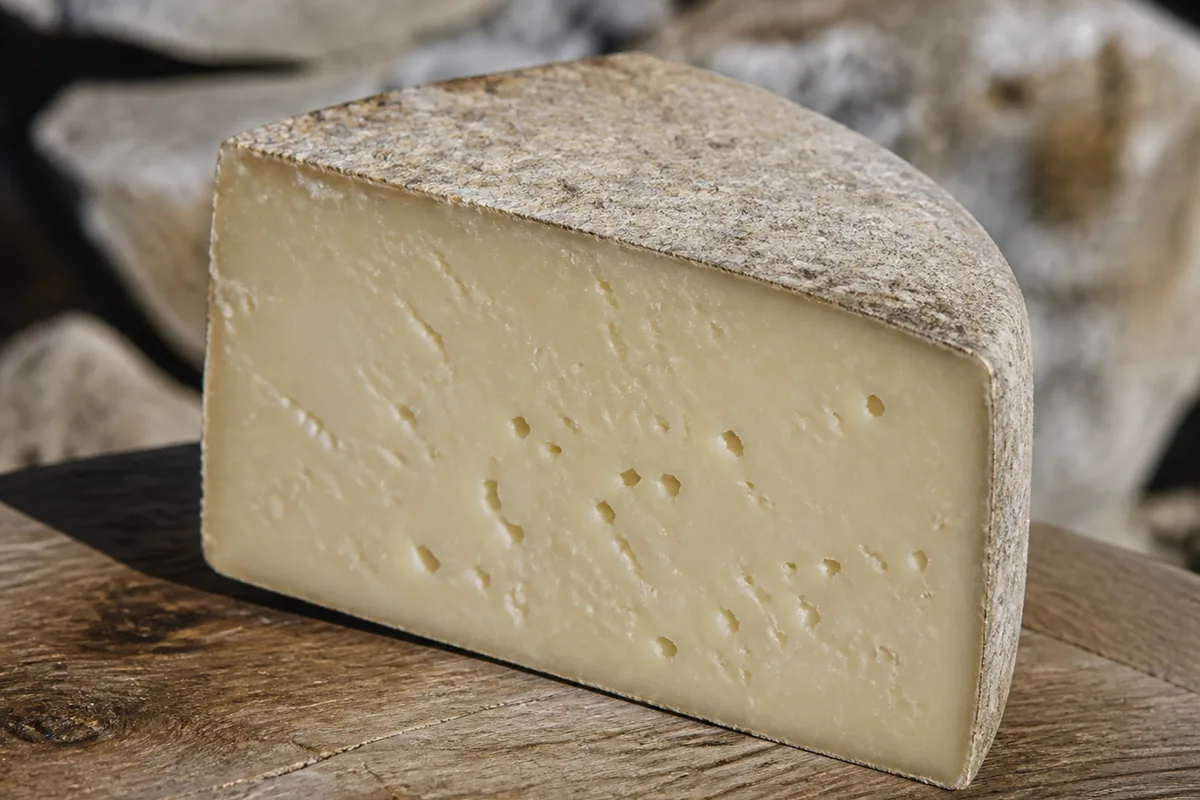
Dura is a hard cheese made from untreated sheep's milk by Oviken Ost, a family dairy on the Åkern farm in Häggen, Jämtland, Sweden. It won gold at the 2016 World Cheese Awards in San Sebastián, Spain.
Whether you can still buy it is uncertain: Schwedenhappen, a Swiss blog about Sweden, says in an article first published in 2017 and revised on 18 March 2026 that Oviken Ost has stopped operating.
In This Article
Where Does Dura Come From?
Dura comes from Åkern, a farm in the village of Häggen by Lake Storsjön in Jämtland, where the land has been cultivated since medieval times.
How long the farm has been in the Åkermo family depends on the account: since the 1350s in Land.se, since the middle of the 1300s in Jordbruksaktuellt's 2016 article, and since the 1500s, in Robert Åkermo's family, in the same paper's 2004 article.
Kristina Åkermo is a veterinarian by training, and she decided during vet school, after a class visit to a sheep-cheese dairy in Närke, to make sheep cheese once she no longer wanted to be a vet. She did so after 10 to 12 years as a district veterinarian.
In 2004 Kristina ran the dairy and the animals, while Robert, who worked as a building consultant for the Hushållningssällskapen in Norrland, handled the management of the company, the fields and the forest.
When the Åkermos took over Åkern in the late 1990s, milk production on the farm had stopped and it made only hay. They decided on the dairy project in 1999, and it took four years to go from that idea to the first cheese made from their own sheep.
The whole project cost 3 to 3.5 million Swedish kronor, depending on how it is counted. By 2016 the farm as a whole, counting its cheese, lamb production, lambskin sales and other farming, turned over about 4 million kronor a year.
Kristina Åkermo said the farm works "så naturligt det bara går", which means as naturally as it can. She also said that a good cheese mass needs lime-rich milk and that the lime-rich earth around the farm supplies it.
How Did the Åkermos Build Their Sheep Herd?
Dairy sheep were scarce in Sweden when the Åkermos began collecting ewes in 1999: Kristina Åkermo said in 2016 that there were perhaps a hundred dairy-breed animals in the country, all related to one another.
The Åkermos built their dairy flock by crossbreeding: they covered Gotland, Svea and Leicester ewes with purebred East Friesian dairy rams, and in 2003 they imported semen from a Dutch East Friesian ram.
In 2004 Robert Åkermo gave these milk yields: an ordinary sheep gives roughly 100 to 150 kg of milk a year, a normal East Friesian 300 to 400 kg and a good one 600 to 700 kg. The target for the Åkermo ewes was 500 to 600 kg a year.
They later bought six purebred dairy rams from Finland, and by 2008 the flock was large enough for them to start selecting the ewes best suited to milking.
In 2016 Kristina Åkermo said the ewes she selects must be easy to milk, manageable and able to milk for a long time, and must look after their lambs and lamb easily, because they lamb outdoors in summer.
How big the flock was depends on the year and on whether the count is of all ewes or only those milked.
| Year | Flock size | Given by |
|---|---|---|
| 2004 | 175 ewes, in a barn built for up to 450 | Jordbruksaktuellt, Oviken Ost article |
| 2016 | 250 ewes milked daily, about 350 lambs a year | Jordbruksaktuellt, sheep cheese article |
| 2017 | 300 ewes, called the largest dairy sheep herd in the Nordic countries | Land.se |
The 250 milked ewes of 2016 were a ceiling set by the equipment: the most the milking parlour's system could take, a pit with twelve places on each side.
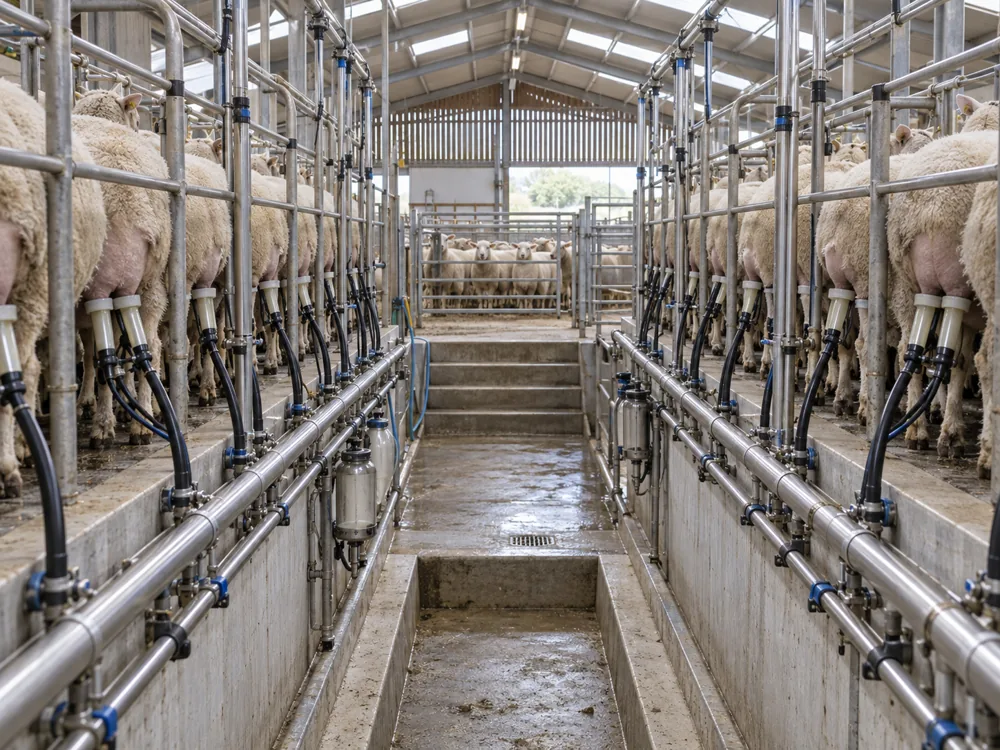
The first milking season fell well short of its plan: Robert Åkermo said in 2004 that the aim had been to milk 100 ewes. Not every ewe became pregnant, though, and with the milking parlour finished a few weeks late, 20 to 30 ewes dried off once their lambs were more than 35 to 40 days old.
Only about 60 ewes were milked from September to February, and the year's cheese came to about 1 ton, against a goal of 5 tons for the following year.
During 2016 the Åkermo family paused sheep milking and sheep cheese making, and planned to breed the ewes again in February for lamb and cheese production the following year.
How Is Dura Made?
Dura is a pressed hard cheese with a natural rind, usually aged for at least 2 months before it is eaten. In 2017 Oviken Ost made its cheese only from untreated sheep's and cow's milk.
Kristina Åkermo said the dairy used old methods, without additives or waxed surfaces, and tried to work with microorganisms instead of against them.
At Oviken Ost, using only untreated milk demanded very high quality at every step of the process. When Schwedenhappen's author visited, bacteria had settled in one batch and made the cheese inedible, and the author says the cause is often the milk.
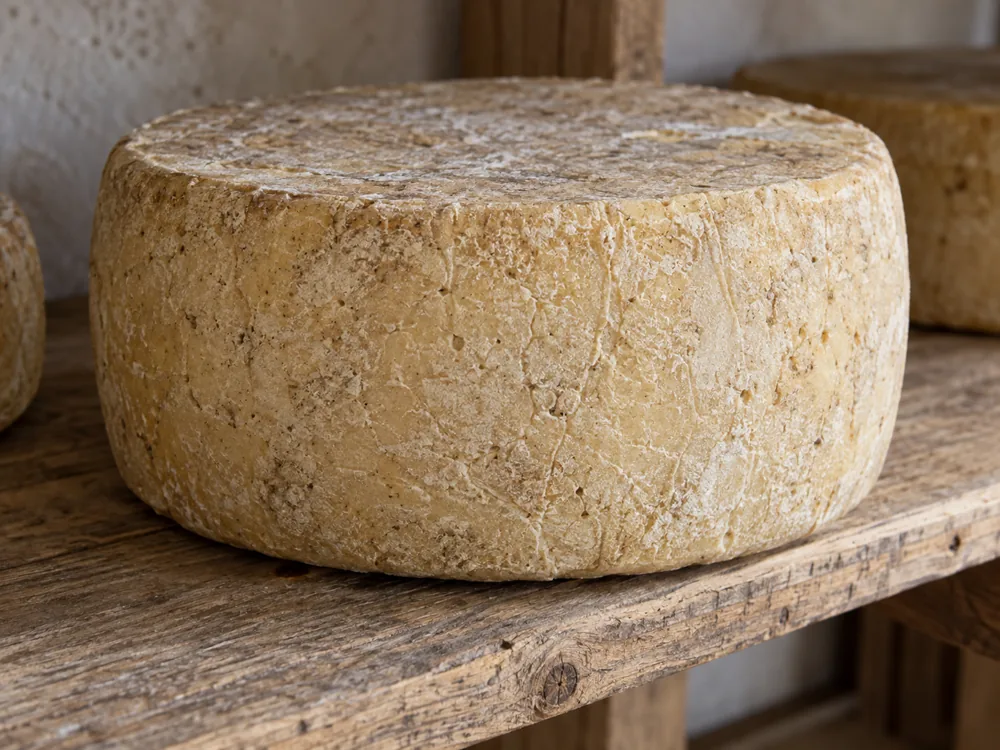
Sheep's milk goes further in the vat. Robert Åkermo said in 2004 that it takes about 4 litres of sheep's milk to make a kilo of sheep cheese, against a little over 10 litres of cow's milk for a kilo of cow cheese.
He pointed to the fat and protein make-up of the milk, which he said makes sheep's milk easier to turn into cheese than cow's milk. The protein and fat content of the dairy's sheep's milk was put at around 6 to 7 percent, almost double the levels in goat's and cow's milk.
In 2004, sheep's milk that did not go straight from milking to the vat was chilled in a tank to about 5°C (41°F) until cheesemaking. In 2016 the cow's milk was collected still warm from the udder and pumped directly into the vat.
In 2016 Oviken Ost made about 20 to 25 tons of cheese a year, about 8 tons of it from the dairy's own sheep. The rest was made from cow's milk, which the dairy bought from Västgården, a farm in Älven about 8 kilometres from Åkern.
The dairy has not always had its own building: the first cheese was made in a mobile dairy, rented in Jordbruksaktuellt's 2004 account and borrowed from Eldrimner in its 2016 one.
In 2004 the dairy's own building was expected in 2005, and it was finished in 2006, the year cheese from cow's milk also began.
When Does Oviken Ost Make Sheep's Milk Cheese?
Oviken Ost's sheep's milk, the milk Dura is made from, was available from late summer or autumn to about February, the months the ewes were milked. In 2016 the ewes were bred between February and April and lambed outdoors on pasture in July and August.
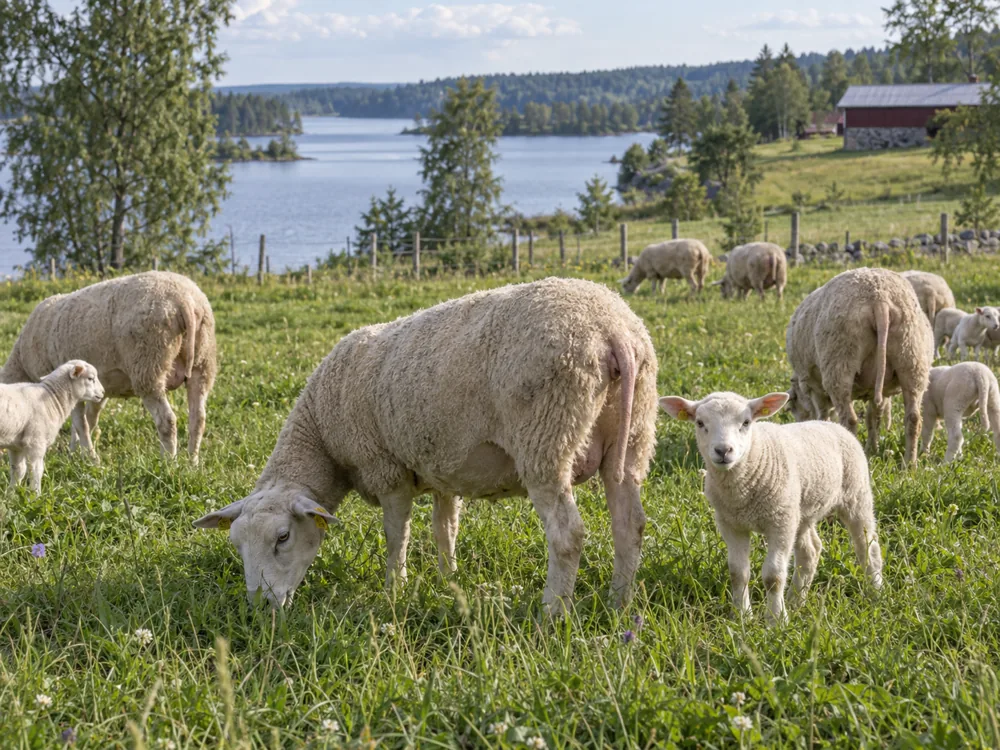
Milking began in August in both of Jordbruksaktuellt's articles and in September in Schwedenhappen's account. The paper gave it about six months in 2016, and in 2004 said it starts when the lambs are separated from their mothers, runs a little over 200 days and ends some time in February.
Schwedenhappen's author visited in June, when only cow's milk was being made into cheese because about 200 lambs were due around 20 June, and reports that the lambs stay with their mothers until the end of August.
In 2004 lambing was steered to late summer for a commercial reason: the lambs were raised through the winter at another farm, Brodiket, and went to slaughter in spring, when lamb meat fetches higher prices.
What Does Dura Taste Like?
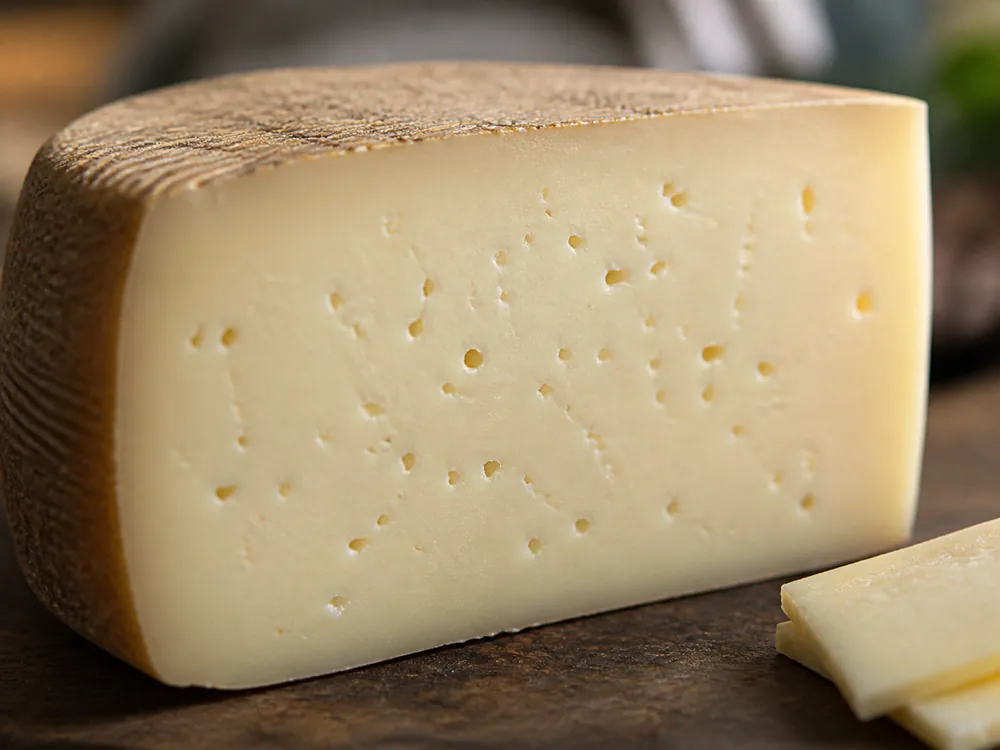
TasteAtlas describes Dura's flavour as mild and salty, with complex notes of coconut and fresh minerals, and its texture as hard and dense, with a few eyes scattered through the body. Its fat content is about 30%.
How Did Dura Win at the World Cheese Awards?
Dura won its gold in a field where very many sheep's cheeses took part, Robert Åkermo told Smakriket, a Swedish regional food site. He said winning felt extra good because the contest was held in Spain, which he called "fårostarnas Mecka", the Mecca of sheep's cheeses and the home of Manchego.
Kristina Åkermo called it an honour to win in the Basque region, which she described as one of the world's best areas for hard sheep's cheese.
The 2016 contest, the 29th edition, ran from 16 to 18 November 2016 under the Guild of Fine Food and drew about 3,000 cheeses, from 31 countries in one count and 25 in another. Smakriket calls it the world's largest cheese judging competition.
| Question | Count | Given by |
|---|---|---|
| Cheeses entered | 3,021, or nearly 3,000 | Dairy Reporter (3,021); Smakriket (nearly 3,000) |
| Countries | 31, or 25 | Dairy Reporter (31); Smakriket (25) |
Smakriket reports two medals for its member dairies that year, Dura's gold and a silver for Löfstalund, a pressed hard cheese made from unpasteurized goat's milk by Löfsta Herrgårdsmejeri.
Schwedenhappen says the dairy won World Cheese Awards gold three times.
How Are World Cheese Awards Gold Medals Decided?
In 2016 the judges worked in teams of four, with a variety of cheeses per table in different categories. Each team picked out cheeses worth a bronze, silver or gold medal, or no award, weighing the rind and body, colour, texture, consistency and, above all, taste.
Each table then chose a "super gold" from its gold medal cheeses, and those went to a super jury of 16 judges.
That jury gave the champion, Kraftkar, a Norwegian blue cheese from the producer Tingvollost, 71 points out of 80, just ahead of two Spanish cheeses on 67 points each.
Dura's 2016 gold was the highest of the three medals a team of four could award. The super gold and the champion title were the later rounds above it.
Which Restaurants Served Oviken Ost Cheese?
Schwedenhappen lists four restaurants among Oviken Ost's customers.
- Noma in Copenhagen
- Grand Hôtel in Stockholm
- Operakällaren in Stockholm
- Fäviken in Järpen, Jämtland, run by the chef Magnus Nilsson
How Can You Tell Dura from Oviken Ost's Other Cheeses?
Oviken Ost made far more than Dura. Its first production year gave a green-veined cheese of the Roquefort type, feta, a fresh cheese and yoghurt, with a red-smear cheese, camembert and some kind of hard cheese planned next.
By 2016 the range covered several hard cheeses, green-veined cheeses, smear-ripened cheeses called kittostar and halloumi and feta, with butter and yoghurt made to order.
Schwedenhappen's author, who visited, lists hard cheeses in different flavours and ripening stages, caraway among them, alongside green-veined cheeses, feta, yoghurt, butter, soured milk and ricotta.
The name Oviken Ost on a label or listing does not identify Dura on its own: the dairy also made cheese from cow's milk, and hard cheeses in other flavours and ripening stages.
Look for the name Dura itself next to the words for sheep's milk and hard cheese, since Dura is a hard cheese made from untreated sheep's milk. If the listing is in Swedish, these words help.
| Swedish | English | What it describes |
|---|---|---|
| fårmjölk | sheep's milk | Dura's milk, in Smakriket |
| komjölk | cow's milk | The dairy's milk, in Land.se |
| hårdost | hard cheese | Dura, in Smakriket and Land.se |
| obehandlad, opastöriserad | untreated, unpasteurised | Dura's milk (obehandlad, in Smakriket) and the dairy's milk (opastöriserad, in Land.se) |
How Does Dura Compare with Manchego?
Manchego is a cheese from La Mancha, Spain, made from the milk of Manchega sheep, and it differs from Dura in milk treatment, in the sheep behind the milk and in the protected-designation rules Manchego follows.
| Attribute | Dura | Manchego |
|---|---|---|
| Origin | Jämtland, Sweden | La Mancha, Spain |
| Milk | Sheep's milk | Milk of Manchega sheep |
| Milk treatment | Raw (untreated) | Pasteurised or raw; raw may be labelled artesano |
| Minimum ageing | Usually at least 2 months | 60 days, or 30 days for cheeses up to 1.5 kg |
| Flavour | Mild and salty, with coconut and fresh minerals | Well developed but not too strong, creamy with slight piquancy |
Manchego can be made from pasteurised or raw milk, while Dura's milk is raw.
Manchego is aged from 60 days to 2 years, and Wikipedia describes the 1 to 2 year viejo as sharper, with a deep pepperiness.
Manchego's identity is fixed by a protected designation, whose rules require whole milk of Manchega sheep from registered farms in parts of four provinces, a minimum age, and pressing in a cylindrical mould no more than 12 cm high and 22 cm across.
Dura's milk comes from a crossbred flock of Gotland, Svea and Leicester ewes and East Friesian rams, where Manchego's must come from Manchega sheep.
The rinds differ in what they may carry: Manchego's natural rind may be washed, coated in paraffin or dipped in olive oil, while Oviken Ost said it used no waxed surfaces.
Can You Eat Dura While Pregnant?
The UK NHS lists pasteurised or unpasteurised hard cheeses, such as cheddar, gruyère and parmesan, as safe to eat during pregnancy. The US CDC lists hard cheese made with pasteurized milk as a safer choice and lists unpasteurized (raw) milk and dairy products made from raw milk as riskier.
Dura is described as a hard cheese, which puts it under the NHS line for pasteurised or unpasteurised hard cheeses. It is made from raw milk, though, which puts it under the CDC's riskier line for dairy products made from raw milk, so ask a midwife or doctor which advice to follow.
Where Can You Buy Dura?
Schwedenhappen says Oviken Ost has stopped operating, in an article revised on 18 March 2026. Any older retailer listing may no longer have Dura in stock.
In 2004 the dairy sold through its farm shop, markets, cheese shops, grocery stores and restaurants, and a partnership with Skärvångens Bymejeri carried part of the sales and distribution and offered storage space.
By 2016 its channels were restaurant wholesalers, restaurants, delicatessens and the farm shop, and Schwedenhappen's original 2017 text mentions a small farm shop with its opening hours on the dairy's website.
In 2004 Jordbruksaktuellt gave a shop price of roughly 300 kronor per kilo for the dairy's green-veined cheese, not for Dura.