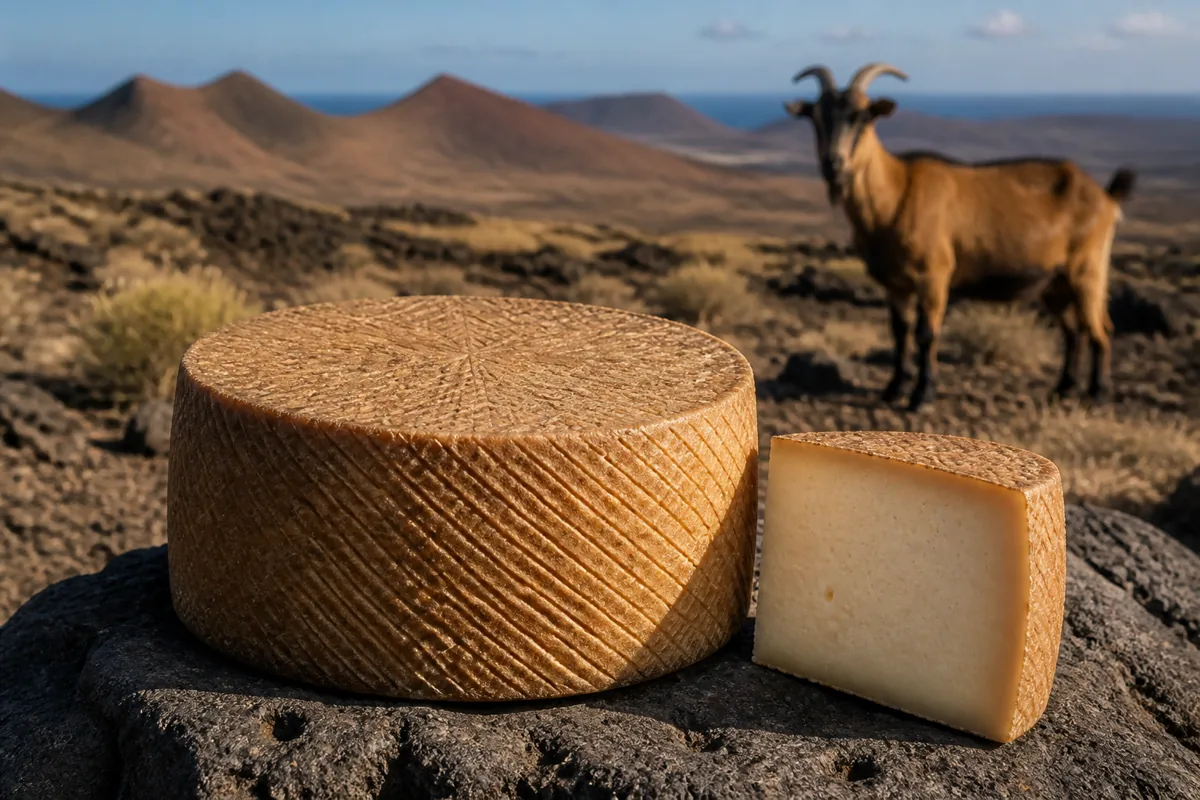
Majorero is a pressed goat's milk cheese with a Protected Designation of Origin (PDO).
It is made and matured only on Fuerteventura in Spain's Canary Islands.
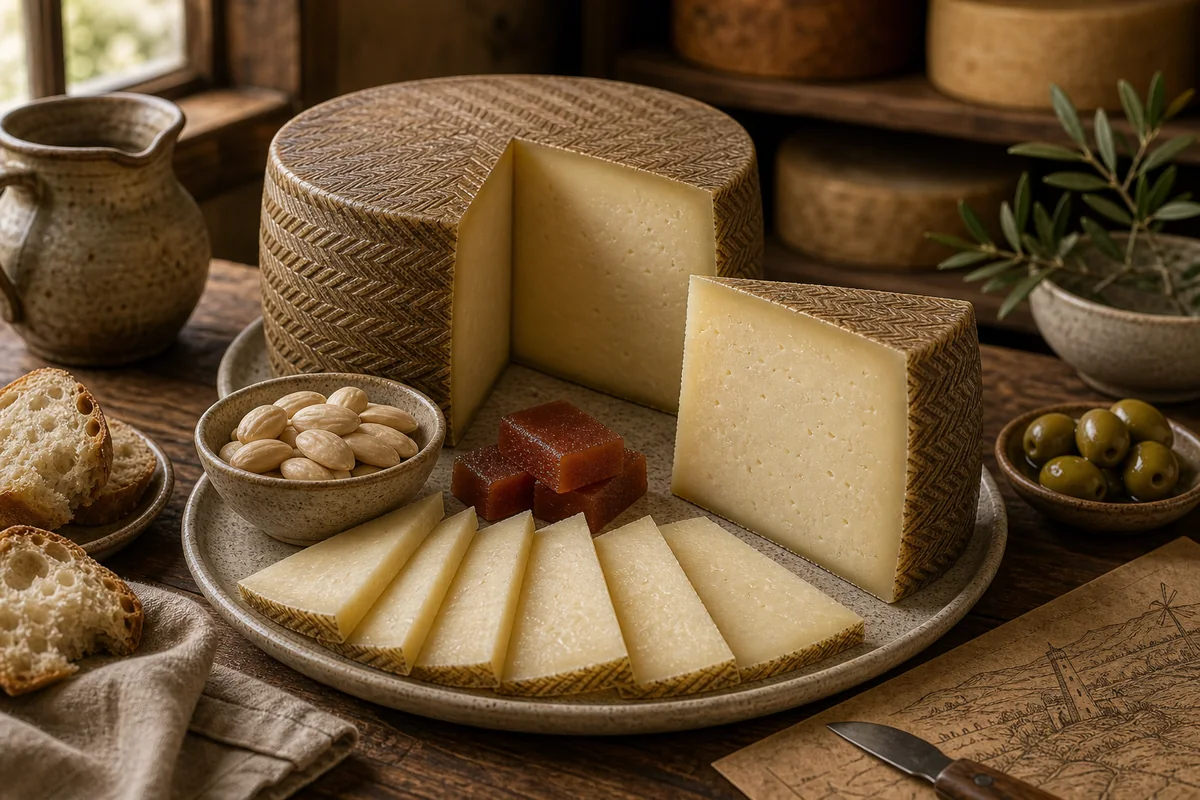
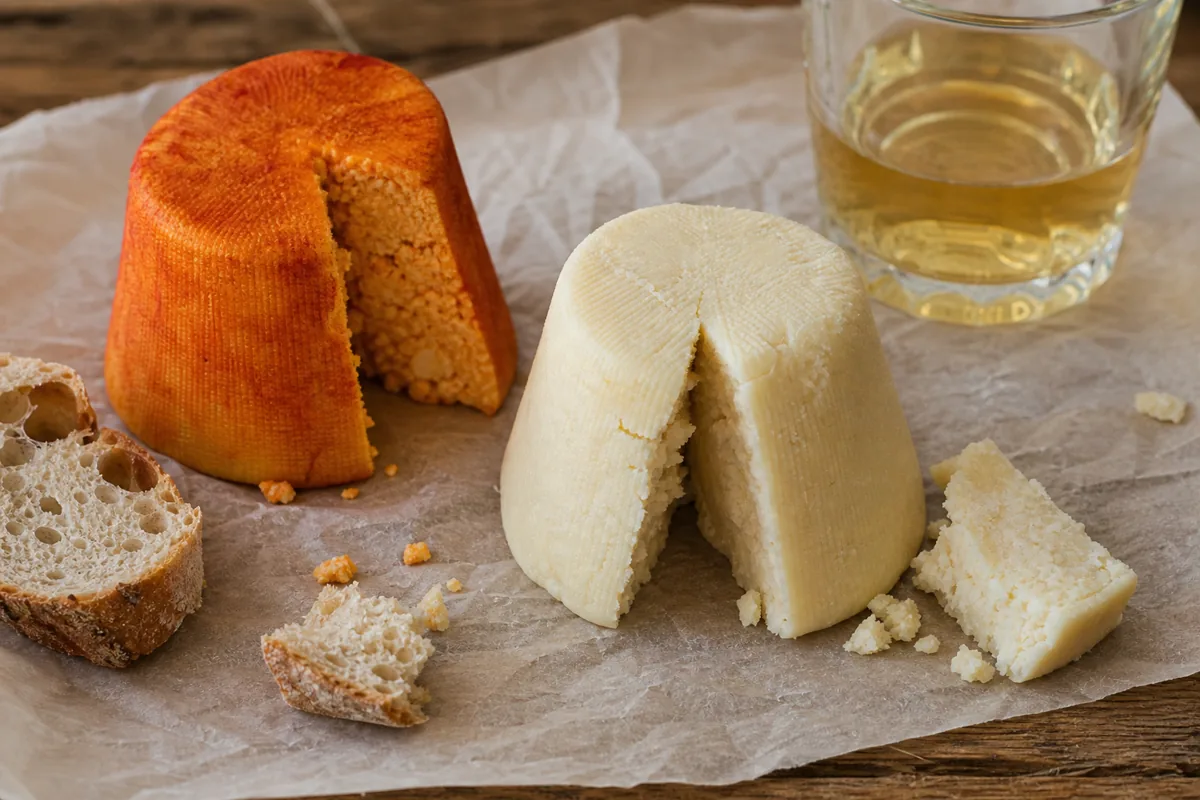
It comes in three age classes, tender, semi-cured and cured, and the rind carries the imprint of the plaited palm leaves once used to shape the wheel.
The regulatory council describes the paste as compact and creamy, with an acidulous, slightly spicy flavor.
In This Article
Where Is Majorero Made, and What Does the PDO Require?
Production and maturation both have to happen on Fuerteventura. The council's guide says the designation dates to 1996, when Majorero became the first Canary Islands cheese and the first Spanish goat's cheese with a designation of origin.
Majorero is also the word for the people of Fuerteventura. Cheese writer José Luis Martín, in a 2024 Foods and Wines from Spain article, traces it to Maxorata, the island's indigenous name before the conquest, and glosses it as “children of the country”.
English Wikipedia calls the spelling Mahorero a Guanche word still used for the island's people.
The milk comes from the Majorera, the island's own goat breed. The guide quotes a local saying that Fuerteventura has more goats than majoreros.
The guide describes a large, short-haired goat with a coat of several colors and arched horns, shaped by herders who crossed local goats with other breeds until the animals suited the island's arid ground.
Rain is scarce there: Foods and Wines from Spain says most of the island records less than 100 millimeters a year, with up to 250 on higher ground that sometimes catches the trade winds.
In a 2009 study of the PDO's 16 farms and dairies, pasture supplied less than 20 percent of the animals' daily diet, and the forage on offer was mainly arid and semi-arid shrubs.
The council calls the Majorera's milk dense, aromatic and fatty and names it, together with the cheesemakers' skill, as the main secret of the cheese.
The same study reports an average of 551 kilograms of milk over a 210-day lactation, with 4.4 percent fat and 3.7 percent protein. About 5.9 kilograms of milk go into 1 kilogram of cheese, and because Majorera goats are not seasonal, the dairies make cheese all year.
At that yield a wheel of 1 to 6 kilograms takes roughly 6 to 35 kilograms of milk, which is between 2 days and 2 weeks of one average goat's output.
The PDO specifies whole milk from Majorera goats, raw or pasteurized. It also allows an occasional addition of up to 15 percent Canary sheep's milk when the cheese is destined for maturation.
The council's rules also set the condition of the milk: it must come from healthy goats and sheep on farms enrolled with the council and be free of impurities, colostrum, medicinal products and preservatives that could harm the making, ripening or keeping of the cheese.
How Is Majorero Made?
The curd is set with enzymes, left uncooked and pressed into a semi-hard or hard paste. In traditional raw-milk cheesemaking the milk is filtered and coagulated right after milking, according to the council's production page.
Other batches take a longer route of filtering, degassing, cooling to 4°C and storage. Dairies that pasteurize heat the milk to 72°C for 15 seconds or 65°C for 30 minutes.
In the 2009 study, milk on the pasteurized route stayed in refrigerated tanks for one or two days before the curd was made. The council adds that the starter cultures lost to the heat are replaced and that calcium salts restore the calcium that precipitated during heating.
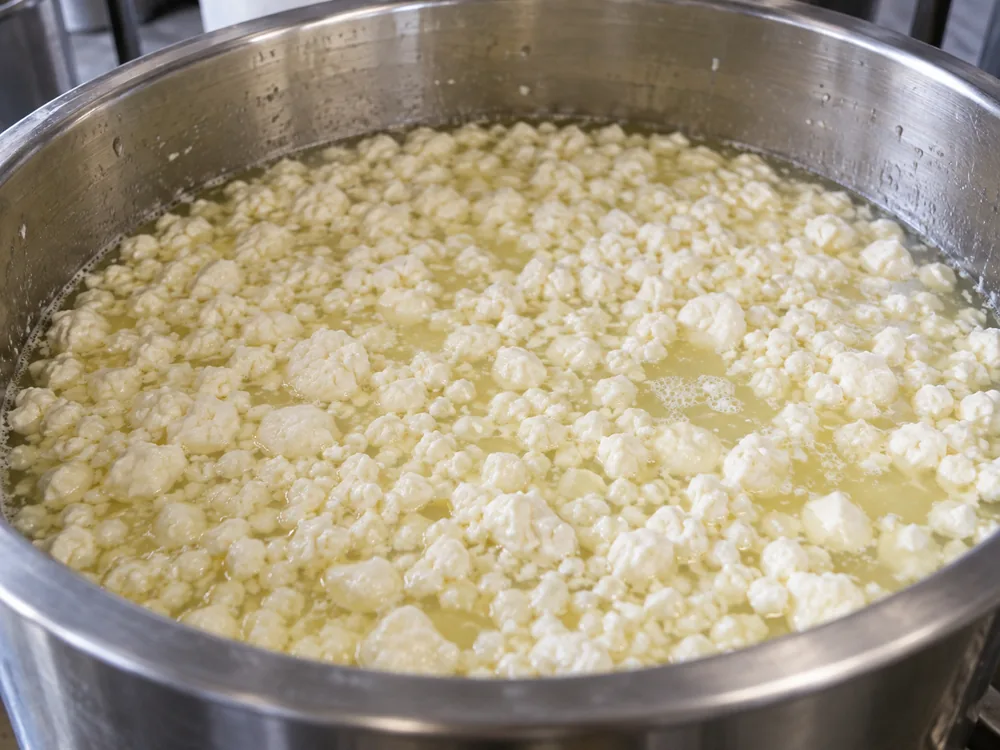
After starter cultures go in, rennet is added at about 28 to 32°C and the curd sets within about an hour. The curd is then cut into pieces of 5 to 15 millimeters.
Fourteen of the 16 dairies in the 2009 study used commercial starter cultures, and two used the previous day's whey as the starter.
The council says smaller pieces let more whey out and that the size also sets the cheese's consistency, so tender wheels are cut into the larger pieces and cured wheels into the smaller ones. The study describes pea-sized grains, cut over 5 to 10 minutes and left to rest for 10 to 15 minutes before the curd goes into the molds.
Pressing has two jobs, according to the council: it finishes draining the whey and it sets the final shape as the paste hardens, with pressure and time depending on the type and size of the cheese.
Molds, mostly plastic today, shape the wheels through about three pressing cycles with turning, two to three hours in all. In the study, 70 percent of the dairies pressed mechanically and 30 percent by hand.
Salt contributes to flavor and keeping and takes part in forming the rind, the council says, and it goes on by hand or through a brine of 20 degrees Baumé for no more than 24 hours.
For dry salting, the council has the wheels turned every 8 to 12 hours, while the study records salt added to each side at intervals of 18 to 22 hours. Only 40 percent of the study's dairies used brine.
After salting, Foods and Wines from Spain says, the wheels rest in a cool, well-ventilated place, and on the third or fourth day they are washed, preferably in whey, to remove surplus salt.
Ripening takes place in chambers at 12 to 18°C with humidity above 75 percent, and the council requires systems that identify PDO cheeses and keep them clearly separate from others.
The wheels are turned, cleaned and, where the maker uses a coating, rubbed during that time.
The PDO requires at least 8 days of maturation. The 2009 study found that dairies using pasteurized milk also make cheese ripened for less time, and the council does not control that production.
The study still calls the process traditional and lists three recent changes: commercial rennet and starters, pneumatic presses and brine for salting.
How Can You Recognize a Real Majorero?
A PDO wheel is cylindrical, 6 to 9 centimeters high and 15 to 35 centimeters across, and weighs 1 to 6 kilograms. That makes it a broad, low wheel and not a tall drum.
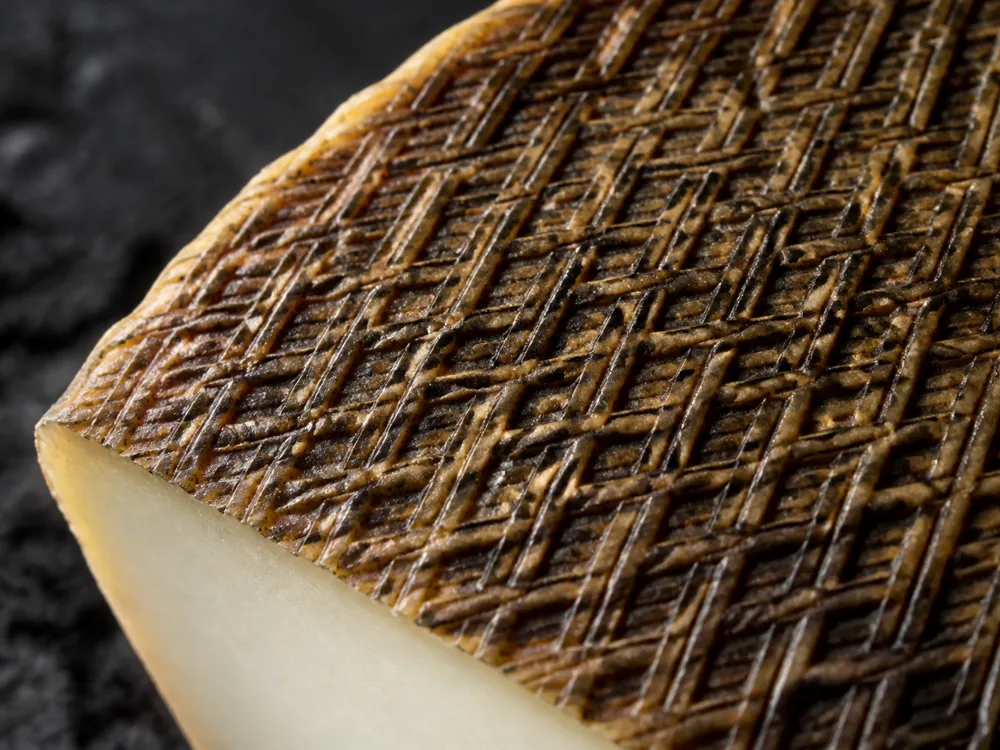
The side of the rind carries the imprint of plaited palm leaves, and the two flat faces carry the dairy's own mark, called the pinta. The council's text calls the palm mold a pleita.
The guide counts an original or figurative imprint as valid, and the production page notes that most molds are plastic now. A wheel's pattern may therefore be a molded copy of the palm weave.
The council's own mark is a back label with its logo, numbered and serialized, which the guide says is placed on top of the commercial label.
The council and the guide write DOP, from Denominación de Origen Protegida, where English writes PDO. Cheese.com lists Queso Majorero, Queso Fuerteventura, Majorero PDO and Majorero DOP as names for the same cheese.
How Do Tender, Semi-Cured, and Cured Majorero Differ?
The council divides Majorero by maturation: tender cheese ripens for 8 to 20 days, semi-cured for 21 to 60 days, and cured for more than 60 days.
| Class | Maturation | Dry extract | Protein | Flavor |
|---|---|---|---|---|
| Tender | 8 to 20 days | 50% | 17.4% | Juicy and lactic, with hints of milk, soft yogurt and raw nuts |
| Semi-cured | 21 to 60 days | 57% | 25.5% | Still lactic, with a more intense and persistent flavor and noticeable aromas |
| Cured | More than 60 days | 63% | 27.5% | Complex and persistent, with cereal and nut notes beside toasted and spicy ones |
Composition figures come from the council and flavor notes from Martín's article. Dry extract is what remains after the water is removed, so a tender wheel is about half water and a cured wheel about 37 percent.
Protein climbs from 17.4 to 27.5 percent across the classes, while fat rises from 52 to 55.5 percent of the dry extract. Multiplying each class's fat share by its dry extract gives about 26 grams of fat in 100 grams of tender cheese and about 35 grams in cured.
The council does not tie its acidulous, slightly spicy description to any class. Two other sources place the sharper notes with age: Martín puts toasted and spicy notes only with the cured class, and the Foods and Wines from Spain product page calls well-ripened cheeses slightly sharp and piquant.
English Wikipedia likens Majorero to Manchego and, like Cheese.com, describes a milky, nutty cheese with a buttery, slightly gummy paste and an acidic taste, and Wikipedia adds that the taste is not salty.
The classes are legal windows, and the 2009 study found wheels sold at 8 to 20 days, at about 30 days, and at more than 60 days. A wheel sold as semi-cured may be closer to one month old than to two.
The same study recorded average farm prices of 7.56 euros for fresh, 9.19 for semi-hard and 10.29 for hard cheese, without stating a weight unit. Those 2007 survey figures put hard cheese about 36 percent above fresh, with semi-hard about 22 percent above.
The paste is white in young cheese and slightly ivory in ripe cheese, according to the Foods and Wines from Spain product page, which adds that eyes, if any, are small.
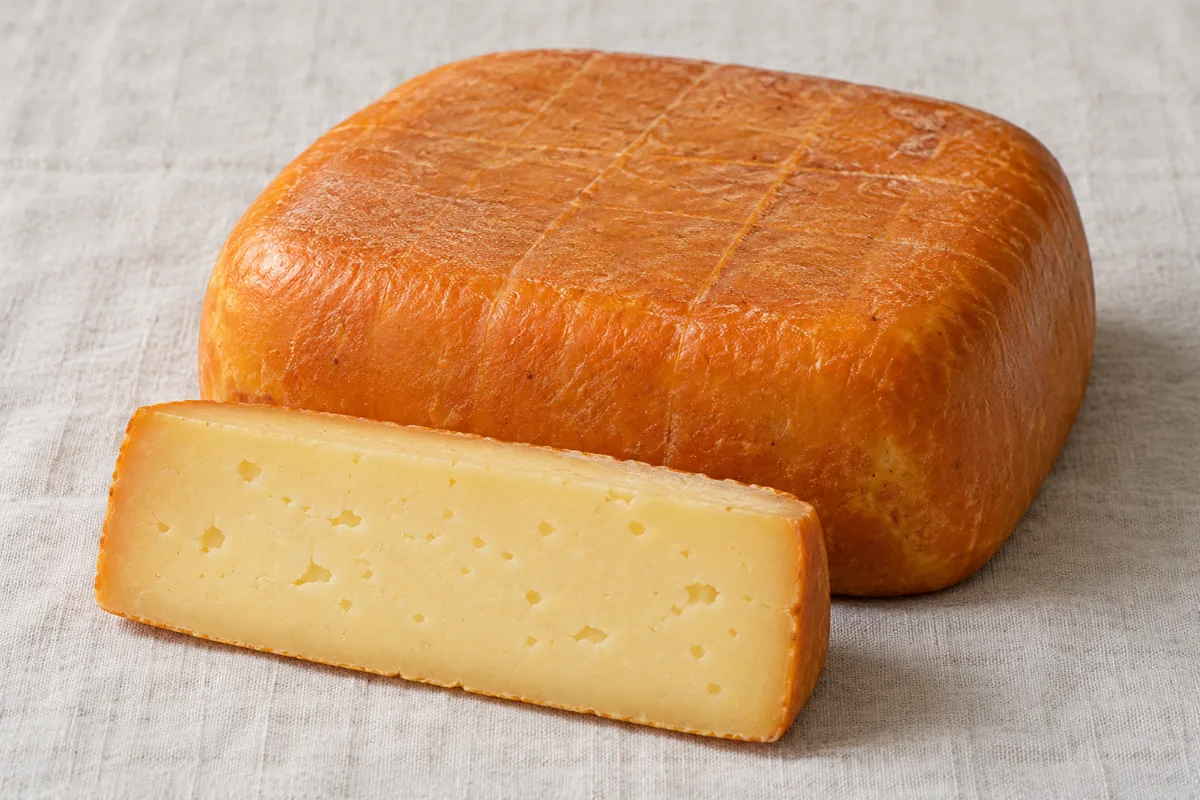
The council describes the rind as white in tender wheels and waxy and hard in cured ones, and Foods and Wines from Spain adds that it is almost absent on lightly ripened cheese and brownish-yellow on ripe wheels.
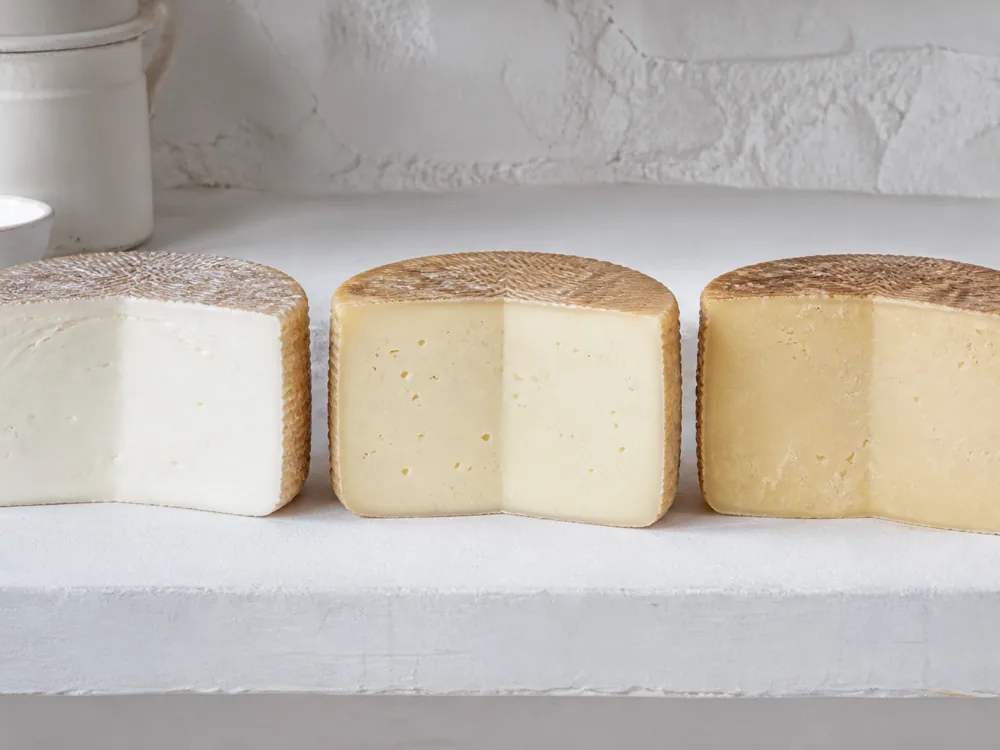
The class comes from days of maturation, not from the name on the wheel: tender is 8 to 20 days, semi-cured 21 to 60 and cured over 60, though wheels sold as semi-cured were nearer 30 days in the 2009 study, and average farm prices rose from fresh to hard.
What Do the Oil, Paprika, and Gofio Coatings Do?
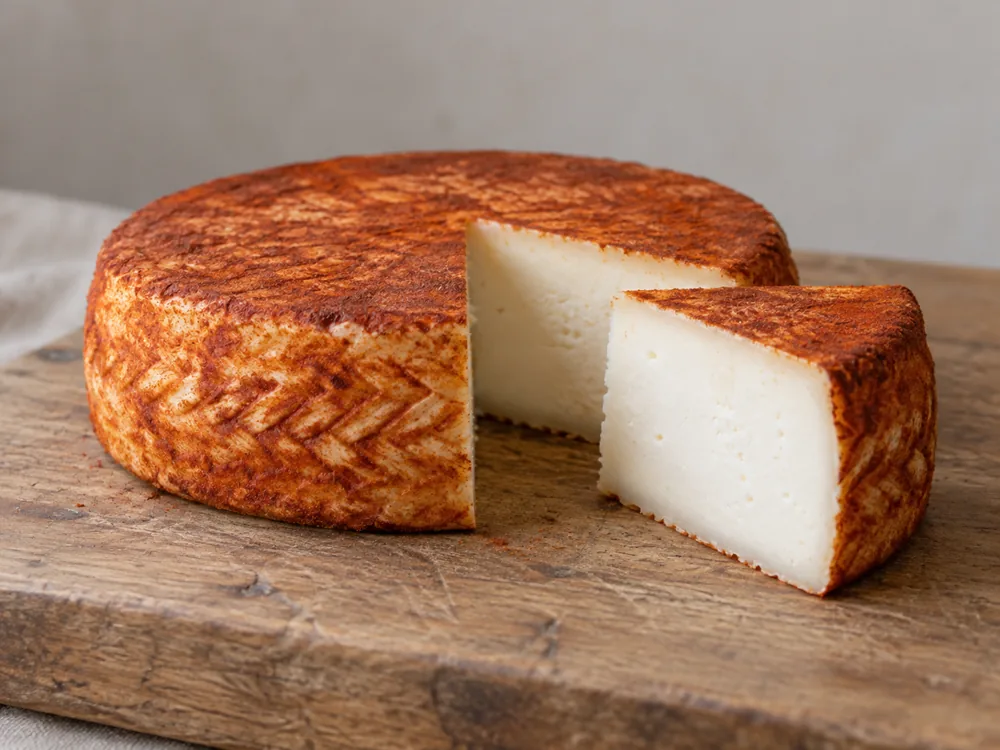
The PDO lets the rind be rubbed with oil, paprika or gofio, and the council gives each a different role: olive oil gives the most natural look, helps keep the cheese and lets it be tasted in its pure state.
Paprika adds a reddish note to the rind and a characteristic flavor, and gofio, a flour of toasted maize or wheat that the council calls indispensable in Canary cooking, gives it a sober, defined flavor.
The guide's producer pages grid each dairy's classes against its surface treatments, and ten of them mark combinations as PDO, the same count as the ten registered dairies in Martín's article.
Martín calls paprika the most common of the three coatings. The guide records what dairies offer and not what they sell, and it shows paprika and gofio at all ten PDO producers and oil at two.
| Coating | Council's description | PDO producers in the guide |
|---|---|---|
| Olive oil | Most natural look, helps conservation, tasted in its pure state | 2 of 10 |
| Paprika (pimentón) | Reddish note on the rind and a characteristic flavor | 10 of 10 |
| Gofio | Sober, defined flavor from a flour of toasted maize or wheat | 10 of 10 |
The council sets classes by days of maturation and lists surface treatments separately, saying the cheeses meant to keep longer are the ones that may be coated. The guide's PDO marks follow that pattern: on all ten pages tender cheese is marked only uncoated, and oil, paprika and gofio are marked only on semi-cured and cured wheels.
Foods and Wines from Spain describes ripe wheels rubbed with fat or oil, preferably olive oil, and finished with a product that closes the pores to prevent weight loss, while English Wikipedia says oil or gofio rubbed on after ageing prevents excessive drying.
The same pages show styles such as smoked, prickly pear, herbs, wine and spices, plus an aged añejo class, none of which carries a PDO marker.
Is Majorero Made with Raw or Pasteurized Milk?
Both are allowed, so the name Majorero cannot answer the question and the label has to.
In the 2009 study, 85 percent of the PDO's farms made cheese from raw milk and 15 percent pasteurized. A 2024 article lists ten registered dairies, four of which use pasteurized milk.
The two counts measure different things, farms in 2007 and registered dairies in 2024, so they do not by themselves show a shift toward pasteurizing.
The guide's producer pages show a split of their own among the ten PDO producers: five show raw milk, four show pasteurized milk and one shows both.
English Wikipedia's fact box lists Majorero as not pasteurised and Cheese.com says it is made from unpasteurized goat's milk, but the specification allows both, so one reference page's answer cannot settle a given wheel.
The article's author, José Luis Martín, writes that raw milk cheeses have a more intense flavor.
Pregnancy guidance sorts cheeses by hardness and, for some groups, by whether the milk was pasteurized, so the label's milk treatment matters most if the wheel counts as semi-hard under NHS wording, or as hard under CDC wording.
Is Majorero Vegetarian?
Usually not. The council's production page leaves the rennet to the producer's judgment, and the Foods and Wines from Spain product page describes animal rennet, preferably from the dried stomachs of kids.
In the 2009 study every dairy used commercial rennet, and only 5 percent used a microbial type. The rest used animal rennet extract.
English Wikipedia names lamb rennet where the product page names kid rennet, and both are animal rennets.
Cheese.com lists Majorero as not vegetarian. Because the PDO leaves the choice to the maker, a vegetarian buyer needs the dairy's own statement about the coagulant in a particular wheel.
What Do You Serve with Majorero?
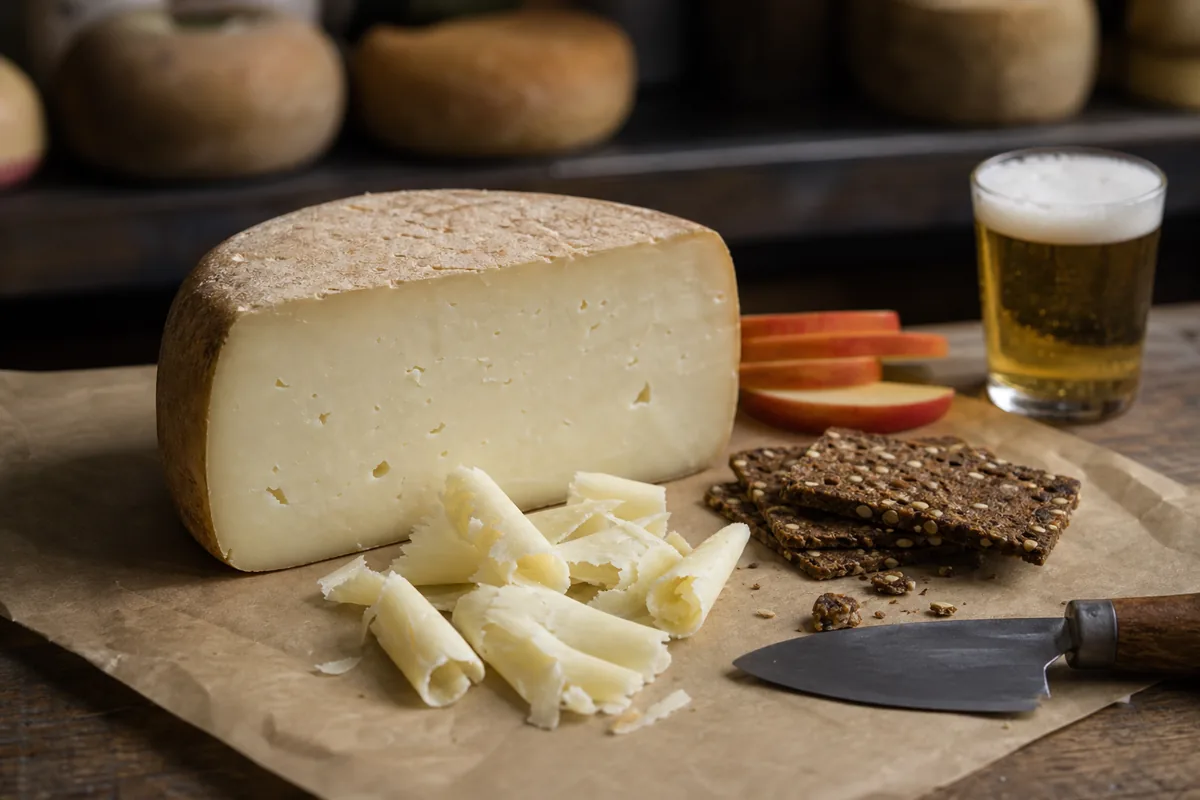
The council suggests tender Majorero for breakfast, a snack or a dessert with honey, semi-cured as an aperitif cheese to go with wine, and cured Majorero with meals for its flavor and character.
Martín's article places tender cheeses, which he describes as semi-soft to semi-hard, at dessert with honey or marmalade or as an appetizer with oil, spices or fresh aromatic plants.
He rates semi-cured cheeses, with their semi-hard texture, as an aperitif or a dessert on a cheese board, and says cured cheeses grow harder the longer they age.
The same article says many mojo sauces are made with it to be served with papas arrugás, wrinkled potatoes.
English Wikipedia calls Majorero versatile with pasta, potatoes and many vegetables and says it pairs well with pear products.
Where Can You Buy Majorero?
On Fuerteventura the guide's map numbers 30 producers, a cheese museum and five markets with set days, in Puerto del Rosario (two), Morro Jable, La Lajita and La Vega de Tetir.
The Museo del Queso Majorero in Antigua has a tasting room and a shop beside exhibits on the island's volcanic origin, flora and fauna, the Majorera goat and the history and gastronomy of the cheese, and an old mill restored with its original machinery.
In the 2009 study 75 percent of the dairies sold directly and 65 percent used intermediaries, so at least 40 percent did both.
The study's 170 consumer surveys found that most cheese was bought at large supermarkets' cheese counters, cut to the customer's order and generally not sold pre-cut and wrapped, and that shoppers were largely unfamiliar with the PDO logo.
The authors read that as a sign that choices between brands are haphazard.
Martín calls Majorero the most produced cheese in the Canary archipelago and says its large and medium, long-ripened cured wheels are exported mainly to the United States, Canada and Europe.
The guide tags each producer's cheese in one line of coating, class, animal and milk treatment, for example “paprika semi-mature • goat • raw milk”, with the Spanish original on the same line.
| Spanish | English |
|---|---|
| tierno | Tender (the guide's English: soft) |
| semicurado | Semi-cured (the guide's English: semi-mature) |
| curado | Cured (the guide's English: mature) |
| cruda | Raw milk |
| pasteurizada | Pasteurized milk |
| pimentón | Paprika |
| aceite | Oil |
| gofio | Flour of toasted maize or wheat |
| contraetiqueta | Back label, the council's numbered and serialized mark |