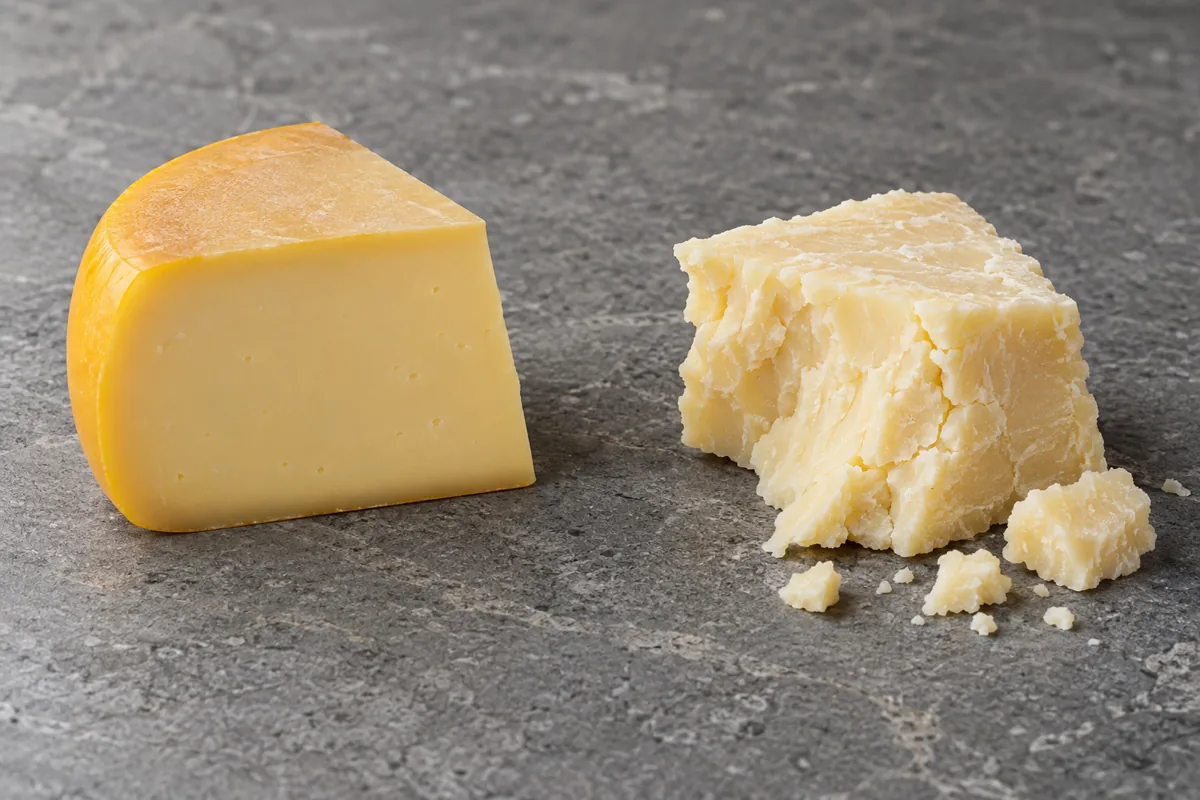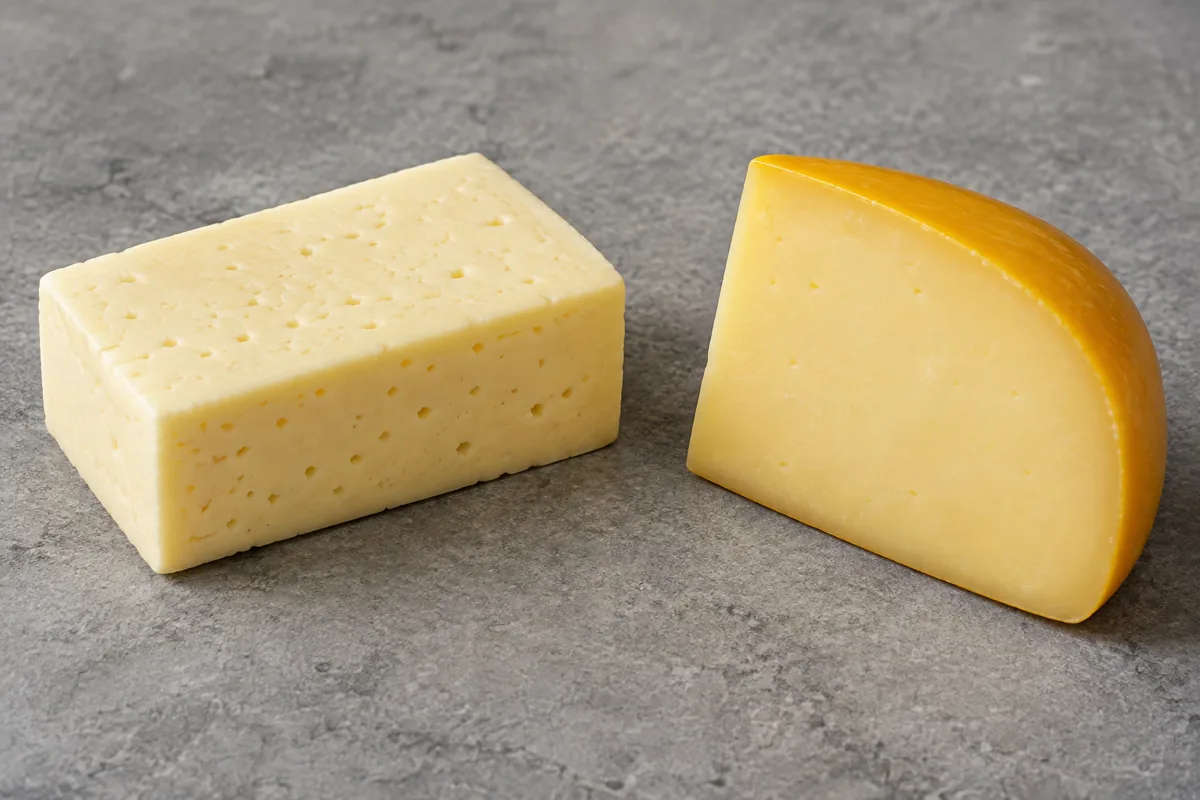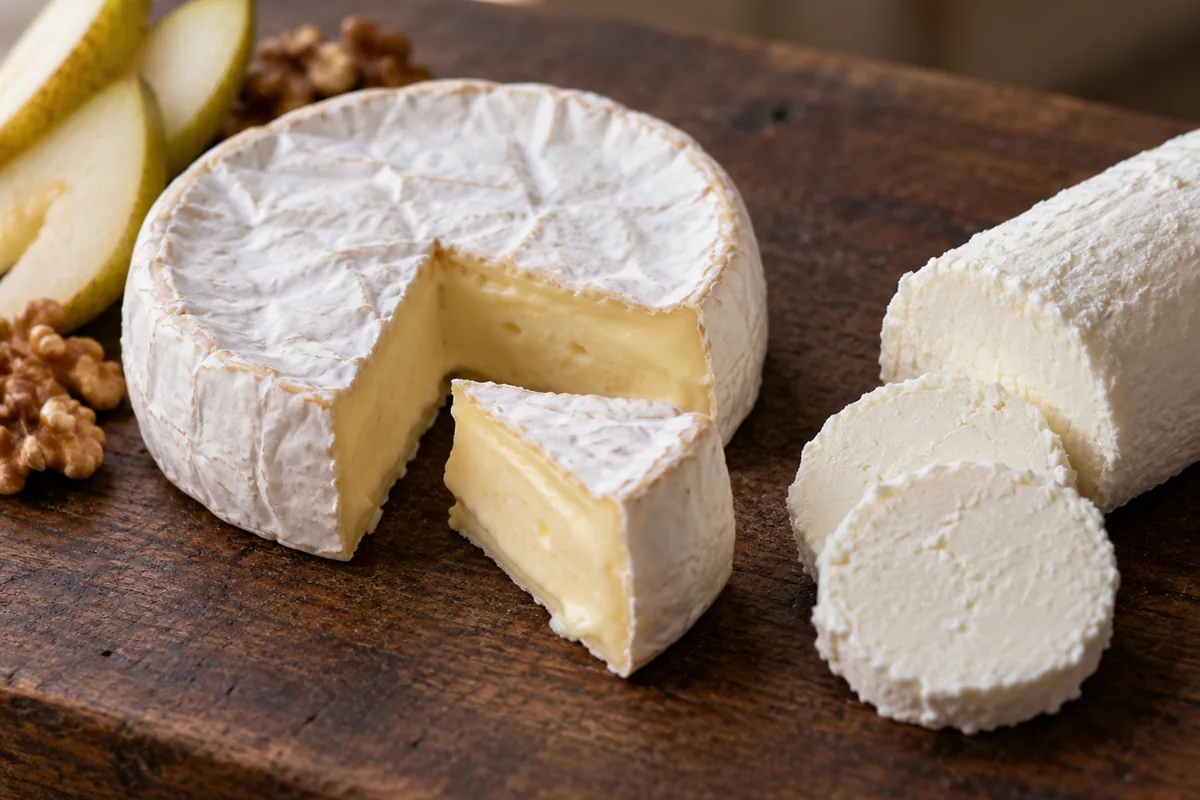
Brie and goat cheese are both sold as soft cheeses, yet they start from different milk and finish in different ways.
Brie is made from cow's milk and ripens under a white rind. Fresh goat cheese skips the ripening, and Culture magazine says chèvre is ready almost immediately after its curds coagulate.
That difference shows up in taste, in the oven, in USDA's nutrition tables and in pregnancy advice, which turns on whether the cheese has a white mould coating.
In This Article
What Is the Difference Between Brie and Goat Cheese?
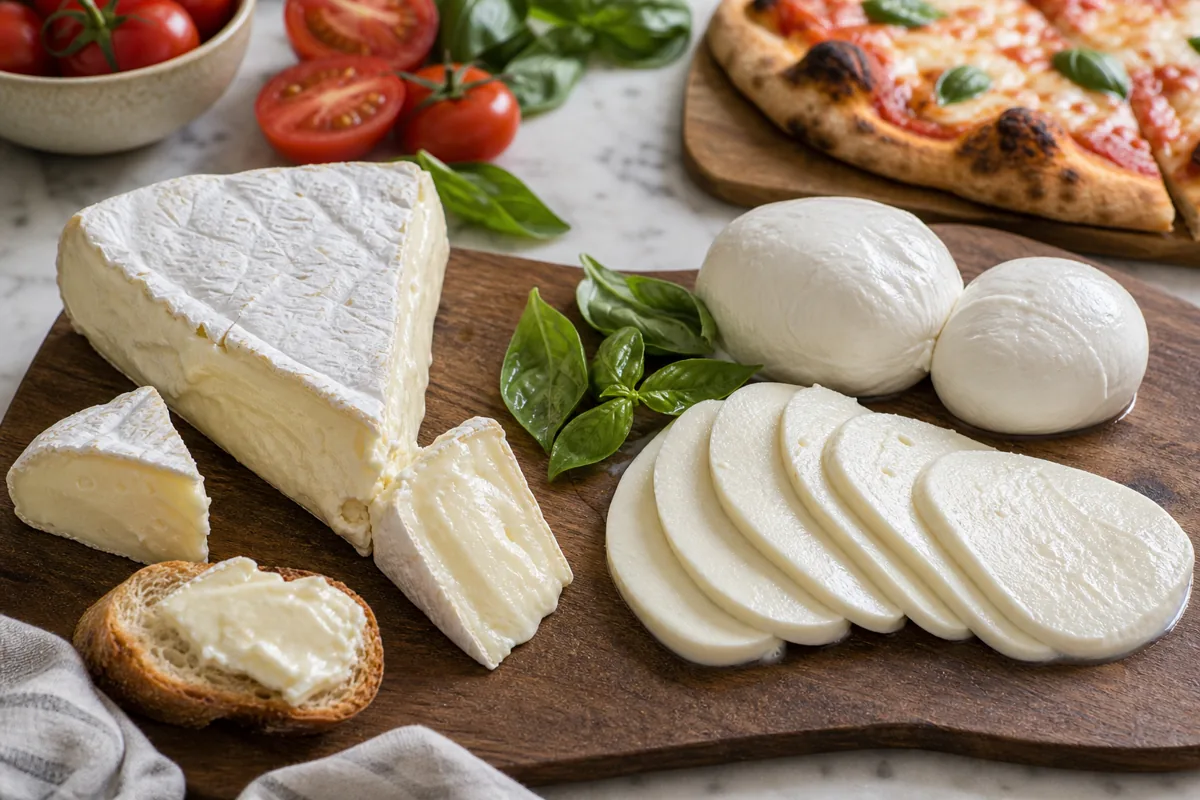
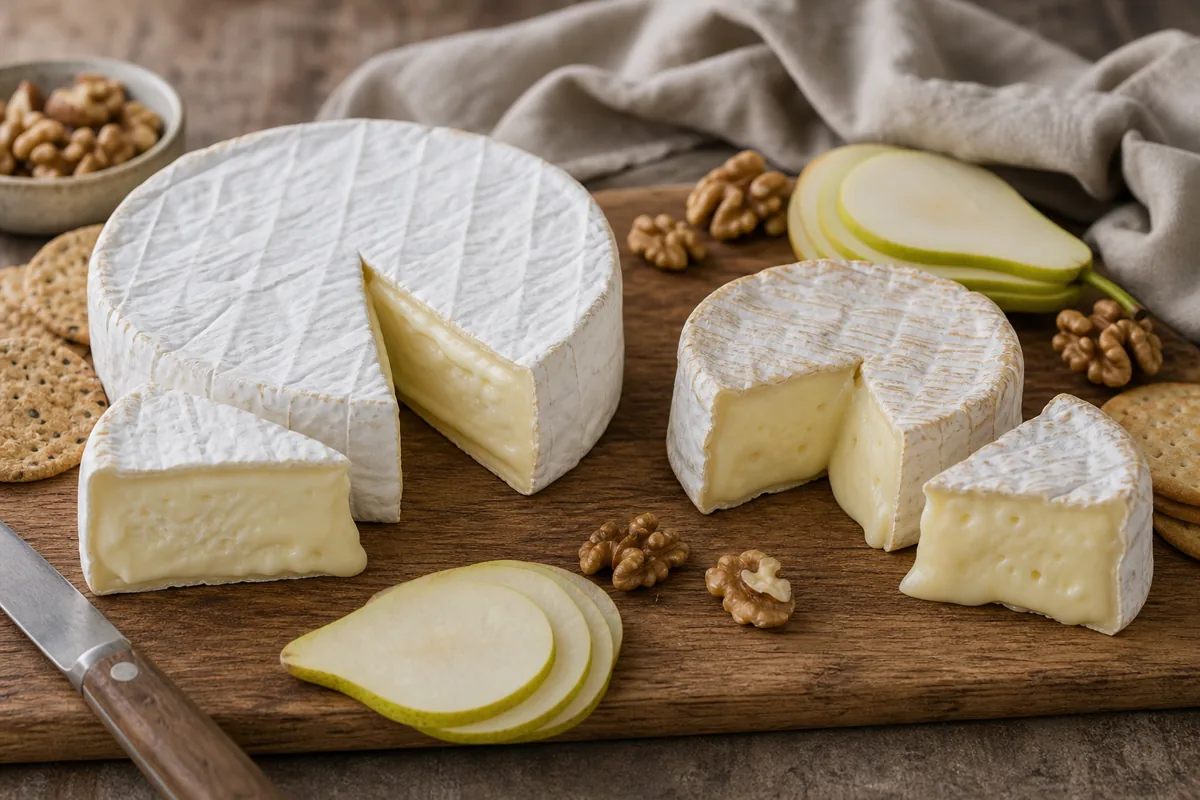
Brie is a cow's-milk cheese with a rind of white mould that people usually eat, and Wikipedia gives its ripening time as generally five to six weeks.
Cheese.com describes the paste as pale yellow, soft and creamy under the rind and firmer at the centre, so how far the softness has travelled depends on the age of the wheel.
The two named regional types, Brie de Meaux and Brie de Melun, have held AOC status since 1980, and both are made with unpasteurised milk, according to Wikipedia.
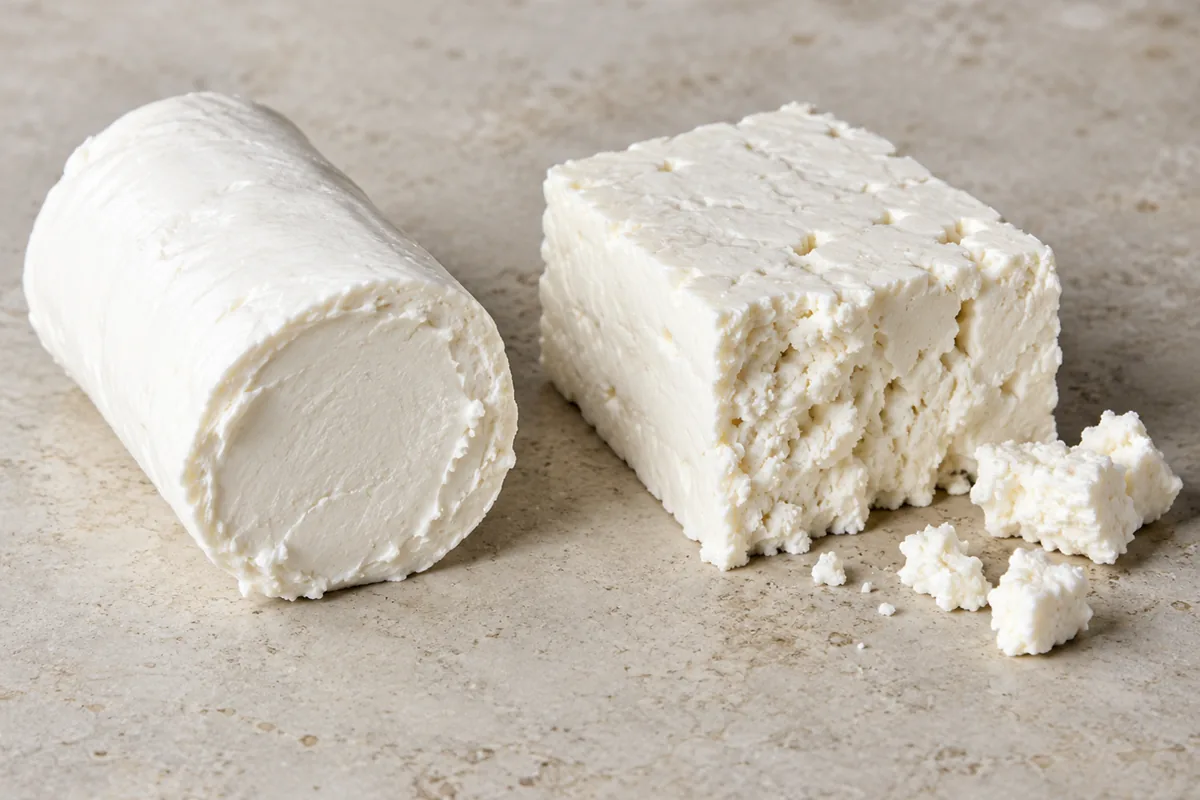
Goat cheese covers a wider range. Cheese.com says it can be soft and creamy or firm and crumbly depending on how it is made and aged, with fresh goat cheese at the soft end.
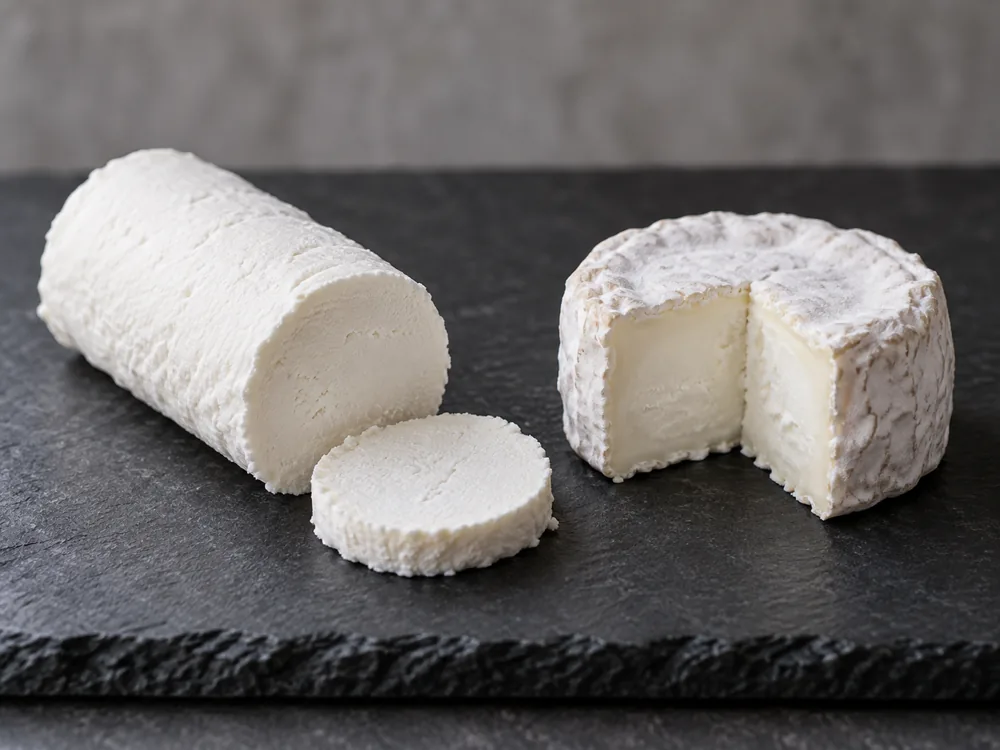
Culture magazine describes fresh chèvre as goat's milk heated and mixed with cultures and rennet, left to separate into curds and whey, then dusted with salt.
A white mould coating can also appear on goat cheese. The NHS lists chèvre next to brie and camembert as a mould-ripened soft cheese with a white coating, which places a coated goat cheese closer to Brie than a plain fresh log.
Unless a sentence says otherwise, "goat cheese" below means fresh chèvre, the form that Culture magazine and USDA's soft-type entry describe.
| Attribute | Brie | Goat Cheese |
|---|---|---|
| Milk | Cow's milk | Goat's milk |
| Form | Soft-ripened wheel, firmer at the centre when young | Soft and creamy when fresh; firmer and crumbly when aged |
| Rind | Edible white mould rind | None on a plain fresh log; a white coating on some ripened rounds |
| Taste | Mild, slightly nutty, mushroom note from the rind | Tart; mildly acidic when young, earthy when aged |
| Heat | Baked whole until the centre is nearly liquid | Melts, but not as quickly as some other cheeses |
| Per 100 g (USDA) | 334 kcal, 27.7 g fat | 264 kcal, 21.1 g fat (soft type) |
| Pregnancy (NHS) | Must be thoroughly cooked, pasteurised or not | Pasteurised without a white coating is on the safe list; with a white coating it must be cooked |
Brie is one fairly fixed style, so its column holds across brands. The goat column carries qualifiers because the category runs from fresh to aged, and each qualifier changes an answer.
A plain fresh log and a coated ripened round fall on opposite sides of the NHS pregnancy rule, and a young cheese and an aged one taste different.
How Do Brie and Goat Cheese Taste Different?
Brie starts mild. Cheese.com describes a slightly nutty flavour that becomes more pronounced with age, with a subtle mushroom-like taste from the rind set against a smooth interior.
Younger Brie is milder and firmer and older wheels turn more pungent, according to the same entry, and Wikipedia lists the common notes as creamy, nutty, mushroom-like and slightly acidic.
Goat cheese starts tart. Cheese.com calls its taste distinctive and tart, running from creamy to sharp, with young cheeses showing slight acidity and cheeses aged for weeks or months turning earthy and sometimes floral.
On those descriptions, age pushes the two cheeses in different directions from different starting points. A young Brie is the gentle one that gains an edge, and a young goat cheese is the acidic one that gains earthiness.
Brie also brings a rind into every bite. Cheese.com calls the rind edible and part of the experience, though some people remove it, and it suggests at least 30 minutes at room temperature before serving.
Can You Eat Brie and Goat Cheese When Pregnant?
The NHS sorts these cheeses by whether they have a white coating on the outside, and pasteurisation does not change the result for the coated group.
Its wording covers "pasteurised or unpasteurised mould-ripened soft cheeses with a white coating on the outside, such as brie, camembert and chèvre", and says these must be thoroughly cooked.
Pasteurised soft cheeses are on the NHS safe list, and it names goats' cheese that does not have a white coating among them. That separates a plain pasteurised fresh goat log from a coated goat round, which falls in the cooked-only group.
The NHS also lists any cheese cooked until steaming hot, including soft or blue cheese, as fine to eat, which is the condition a baked Brie has to meet. The Daily Meal's baking times describe texture, not safety, and a wheel softened for about 8 minutes is not one cooked until steaming hot.
The CDC frames the same risk around milk treatment. It lists soft cheese made from unpasteurized milk, with brie and camembert named, as riskier, and it treats pasteurized soft cheese heated to an internal 165°F or until steaming hot as safer.
The CDC states that pregnant women are 10 times more likely to get a Listeria infection, which is the context for its cheese list.
The raw-milk AOC Bries are in the cautious group of both agencies. The NHS says any cheese cooked until steaming hot is safe to eat, and the CDC states its heating condition only for pasteurized soft cheese.
Goat cheese is not on the CDC list by name, but the list counts queso fresco-type and similar fresh, soft cheeses as riskier whether made with pasteurized or unpasteurized milk. A reader who follows the CDC can heat a pasteurized fresh goat log to an internal 165°F or until steaming hot, the condition the CDC sets for pasteurized soft cheese.
How Do Brie and Goat Cheese Behave Under Heat?
Brie is the cheese people bake whole. Wikipedia notes it is sometimes served baked, and The Daily Meal's timing for an 8-ounce wheel without pastry is 20 to 25 minutes at 350°F, or closer to 35 minutes in puff pastry.
The target is a centre that is nearly liquid with a layer just under the rind that stays a little firmer. Overbaking reverses it, because the same article warns that the cheese can re-solidify if it stays in too long, and it says to keep an eye on it.
The same article gives about 8 minutes for a slightly softened wheel and a few minutes beyond the standard range for a completely liquid centre.
Goat cheese heats differently. Cheese.com says goat cheese melts, but not as quickly as some other types of cheese.
Culture magazine's example is a pizza baked just to the point of meltability.
Cheese.com still lists sauces, pizza with caramelized onions and tarts among the uses, so heat is a normal way to use goat cheese.
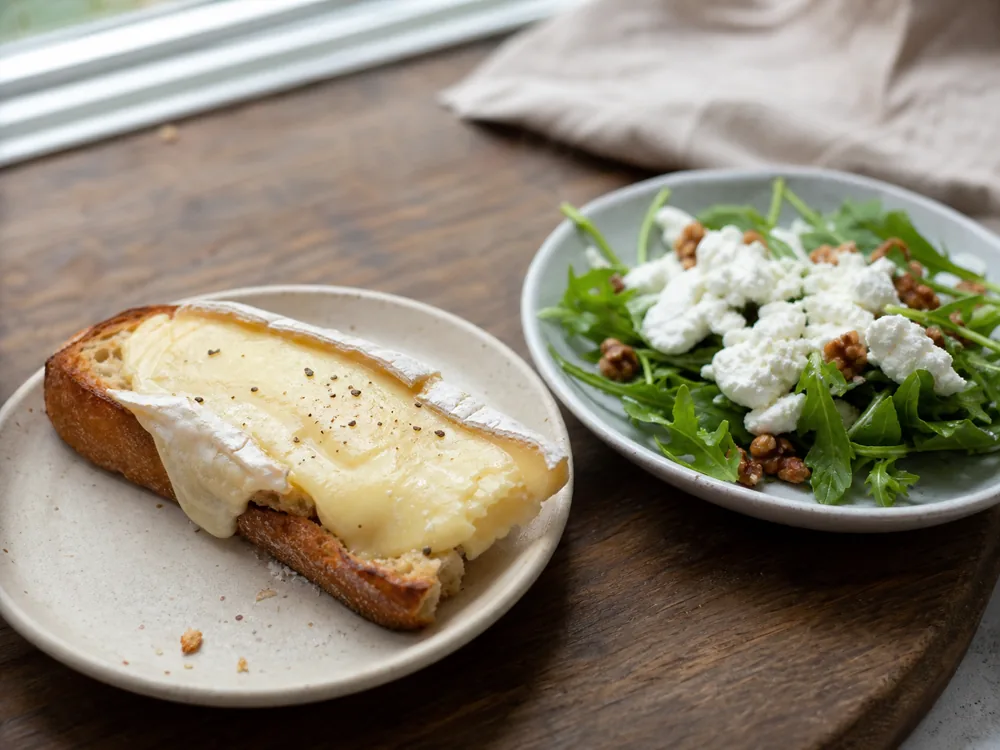
A recipe that relies on a flowing centre to scoop or spread points to Brie. A recipe that wants soft dollops of tang on top of something else points to goat cheese.
Which One Belongs on a Cheese Board?
Cheese.com describes Brie as an appetizer, sliced and served with bread, crackers or fruit.
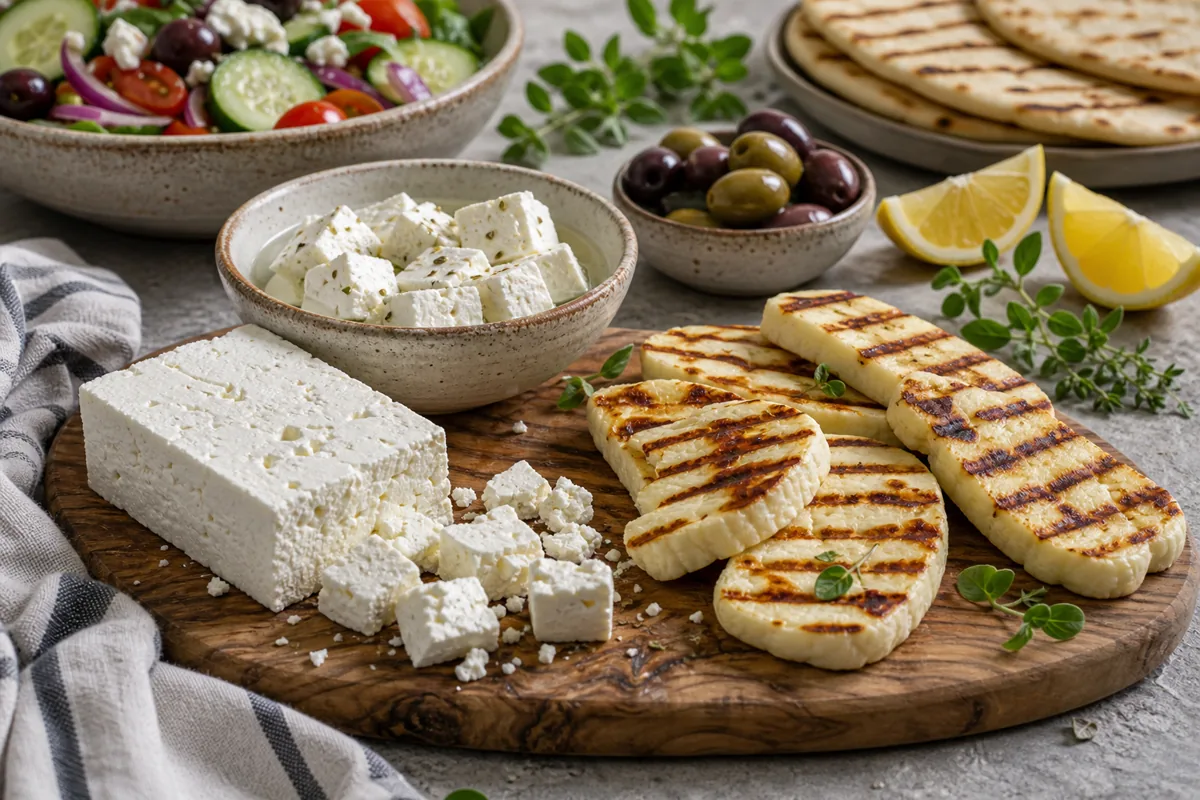
Culture magazine's serving ideas for fresh chèvre are more varied: layered with fruit, sprinkled on pizza, coated in breadcrumbs and served over greens, or put on steak.
Fruit and bread appear for both cheeses across Cheese.com and Culture magazine, and so does white wine, which makes it the easiest shared drink on a mixed board.
| Pairing | Type | Why It Works |
|---|---|---|
| Brie | Food | Crusty bread, crackers, apples, pears, grapes, walnuts, fig jam, dates and cured meats, according to Cheese.com. |
| Goat cheese | Food | Fruit layered on top and greens, according to Culture magazine; crusty bread and caramelized onions, according to Cheese.com. |
| Brie | Wine | Chardonnay, Sauvignon Blanc and Champagne, according to Cheese.com. |
| Goat cheese | Wine | Most any white wine, according to Culture magazine. |
| Goat cheese | Drink | Wheat beers and Pilsners, according to Culture magazine. |
Brie's partners lean sweet and rich, with dates, fig jam and cured meats. Those for goat cheese lean toward greens and onions.
Is Brie or Goat Cheese Healthier?
USDA's FoodData Central lists generic entries for both. Per 100 g, Brie carries 334 kcal and 27.7 g of fat against 264 kcal and 21.1 g for soft-type goat cheese.
Per 1-ounce portion (28.35 g) that works out to about 95 kcal and 7.8 g of fat for Brie and about 75 kcal and 6 g for goat cheese. Cheese.com's Brie entry gives 93 calories and 7.8 g of fat per ounce, and it gives 70 to 100 calories per ounce for goat cheese across its types.
| Nutrient | Brie | Goat cheese, soft type |
|---|---|---|
| Energy | 334 kcal | 264 kcal |
| Total fat | 27.7 g | 21.1 g |
| Saturated fat | 17.4 g | 14.6 g |
| Protein | 20.8 g | 18.5 g |
| Water | 48.4 g | 60.8 g |
| Sodium | 629 mg | 459 mg |
| Cholesterol | 100 mg | 46 mg |
| Calcium | 184 mg | 140 mg |
| Iron | 0.5 mg | 1.9 mg |
| Vitamin A | 174 µg RAE | 288 µg RAE |
The soft goat entry holds 12.4 g more water per 100 g, which fits its lower calorie count: the same weight of cheese contains less fat and protein.
Goat cheese comes out lower in sodium and cholesterol and higher in iron and vitamin A in these entries. Brie comes out higher in calcium and protein.
Scaled to one ounce, the sodium gap works out to about 178 mg for Brie against about 130 mg for goat cheese, and saturated fat to about 4.9 g against 4.1 g.
These are generic USDA entries, so the label on a particular log or wedge overrides them, and an aged goat cheese will not match the soft-type entry.
Can You Substitute Goat Cheese for Brie?
A swap changes the rind, the flavour and the way the cheese behaves under heat, so the dish decides whether it works.
- Baked wheel: Brie, the cheese The Daily Meal bakes whole until the centre is nearly liquid, while Cheese.com says goat cheese melts, but not as quickly as some cheeses.
- Toast or crackers with fruit: either, with the choice between a mild nutty cheese and a tart one.
- Over greens: goat cheese, which Culture magazine names for serving over greens.
- Served uncooked in pregnancy: a plain pasteurised goat log, under the NHS wording above.
The closest match to Brie in structure would be a goat cheese with a white coating, since the NHS groups it with brie as mould-ripened.
What to Check When Buying Brie and Goat Cheese
The Nibble quotes Gilles of Artisanal Premium Cheese on reading the rind first. A pristinely white rind signals an underripe wheel with a chalky, solid interior, while a ripe rind turns mottled with reddish, brownish or yellowish colour and the paste is straw-coloured.
Gilles adds a caution: an industrially produced Brie might purposely have a perfectly white rind at maturation, so a white rind alone does not prove the wheel is underripe.
Touch gives a second check. The Nibble quotes Jenkins saying that, pressed between thumb and forefinger, a ripe Brie should yield like bread dough.
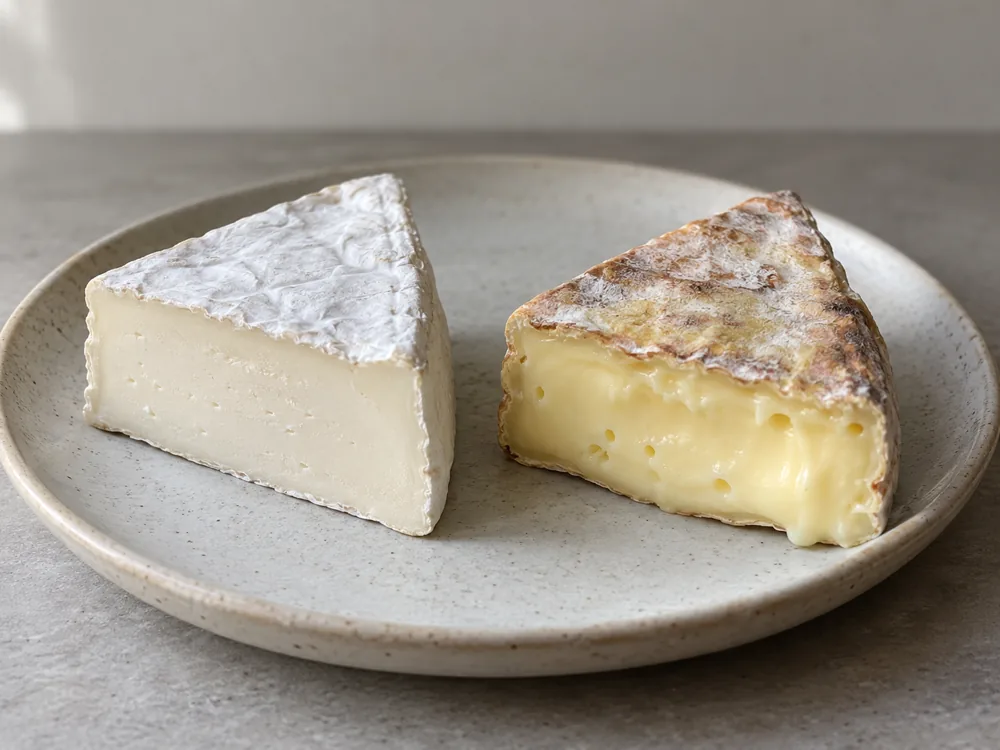
Wikipedia gives a touch cue of its own: Brie is ready to eat when the outside is firm and the inside slightly bouncy and resilient.
Production changes what ripe looks like. The Nibble says a properly ripened artisanal Brie should not be completely runny, while factory-made pasteurised versions are typically considered ripe when runny.
Size is a buying variable as well. Wikipedia puts Brie de Meaux at 36 to 37 cm across and about 2.8 kg and Brie de Melun at 27 cm and about 1.5 kg, so the 8-ounce wheel in a baking recipe is a small fraction of a full wheel.
Age is also a taste choice, since Cheese.com describes younger Brie as milder and firmer and older Brie as more pungent.
For goat cheese the first decision is type. Cheese.com says fresh goat cheese tastes mildly acidic and versions aged for weeks or months turn earthy, so a label that says fresh or aged tells you which cheese you are getting.
The same label matters for pregnancy, because pasteurisation and a white coating are the two details the NHS wording uses.
Cheese.com says goat cheese can be frozen, although the texture may change slightly after thawing.
Brie or Goat Cheese: Which Should You Buy?
Buy Brie when the dish needs a mild, nutty cheese that can be baked until the centre is nearly liquid, or when a pregnant guest will eat it cooked until steaming hot.
Pick Brie for a baked wheel and a mild nutty taste. Pick goat cheese for tang, about 75 instead of 95 calories per ounce, and, in pregnancy, a plain pasteurised log without a white coating, which the NHS lists as safe uncooked.
Buy goat cheese when the plate needs tang over greens or toast, and when it is to be served uncooked to someone pregnant, in which case a plain pasteurised log without a white coating is the form the NHS names.
Both can sit on one board, with a white wine that suits each.