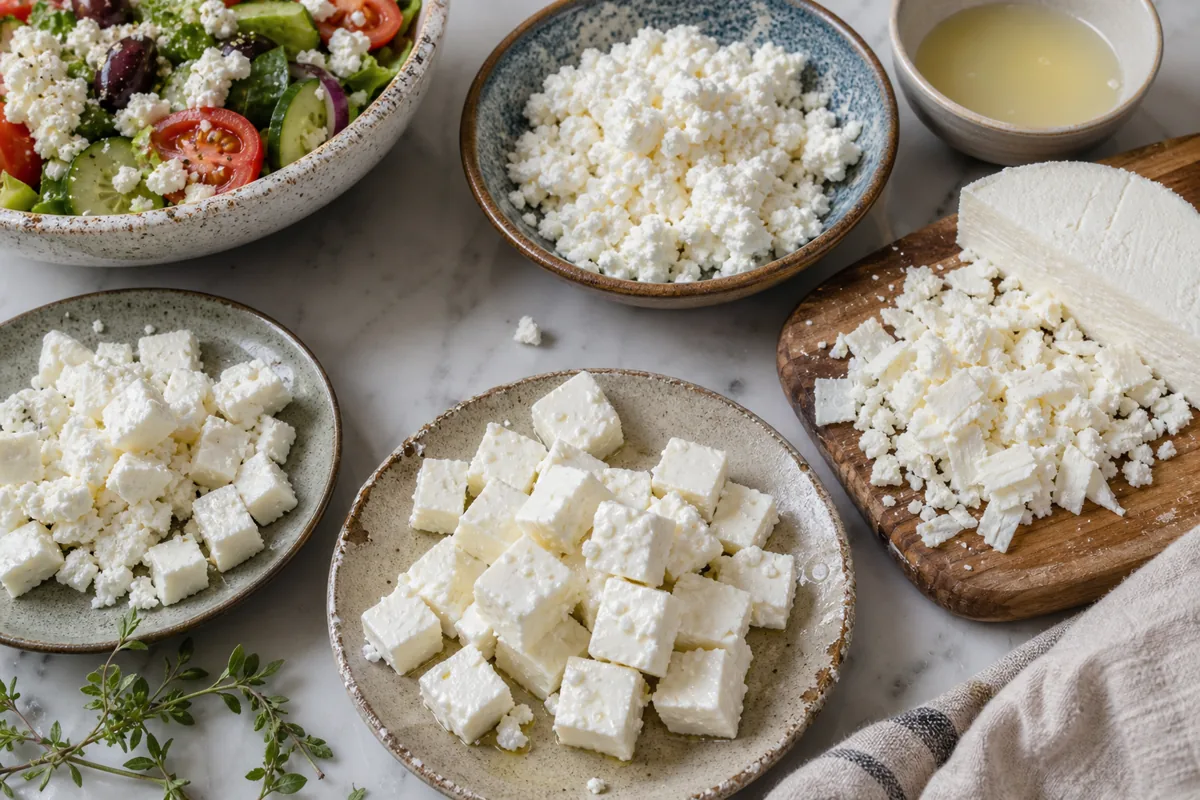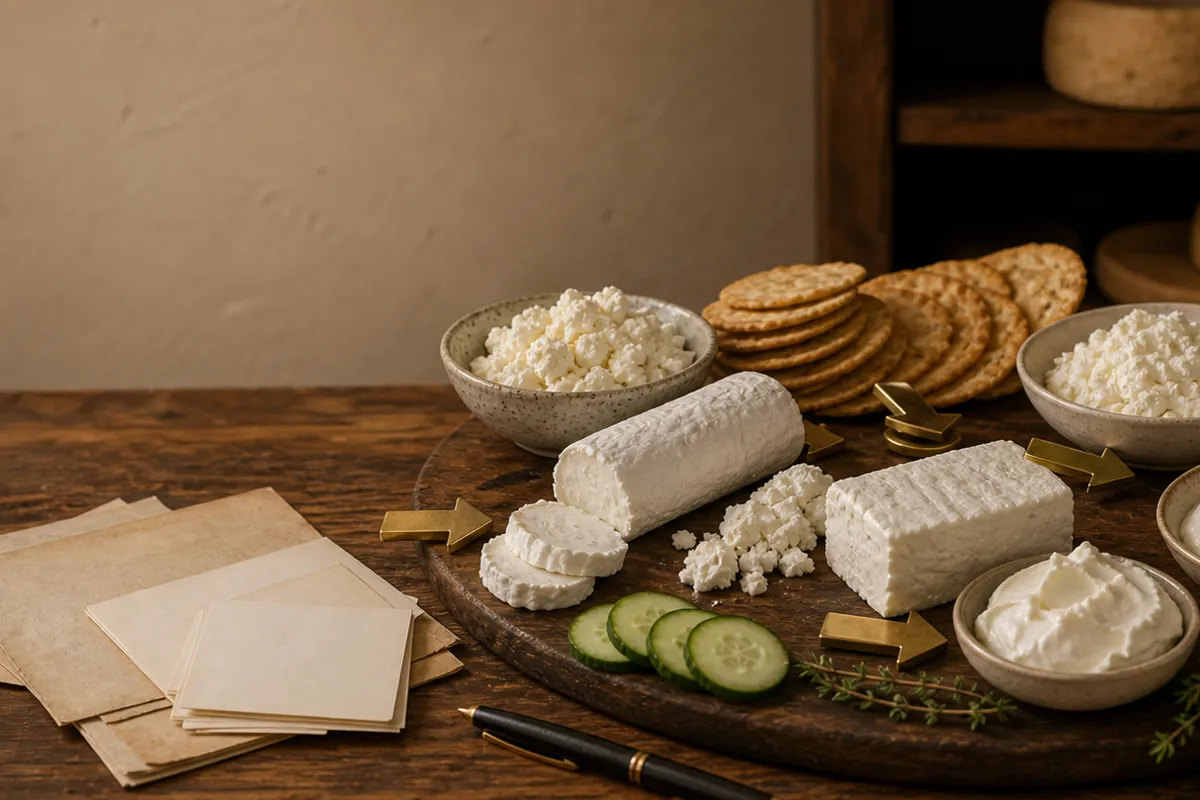
Goat cheese is one of the harder cheeses to replace because it is not one job. Fresh chevre-style cheese can be a bright crumble, a soft smear, a warm pocket on flatbread, or the tart center of a board.
The clean substitute decision starts with the dish. A salad needs pieces that stay visible.
A dip needs smoothness. A tart needs soft pockets that do not vanish into the filling.
A cheese board needs flavor, not just a white shape.
So the swap follows the dish, not the label. Get it wrong and the salad turns to paste or the tart loses its tang.
In This Article
5 Goat Cheese Substitutes: Best Alternatives for Salads and Tarts
Goat cheese does three different physical jobs, so the first question is which one your recipe is using: a crumble that stays visible, a smear that spreads, or a soft pocket that survives the oven.
| Substitute | Texture it gives | Acid it brings | Job it covers |
|---|---|---|---|
| Feta | Breaks into angular pieces | Briny and sharp | Crumble and warm pockets |
| Ricotta salata | Shaves or crumbles dry | Mild, mostly salt | Clean crumble, added late |
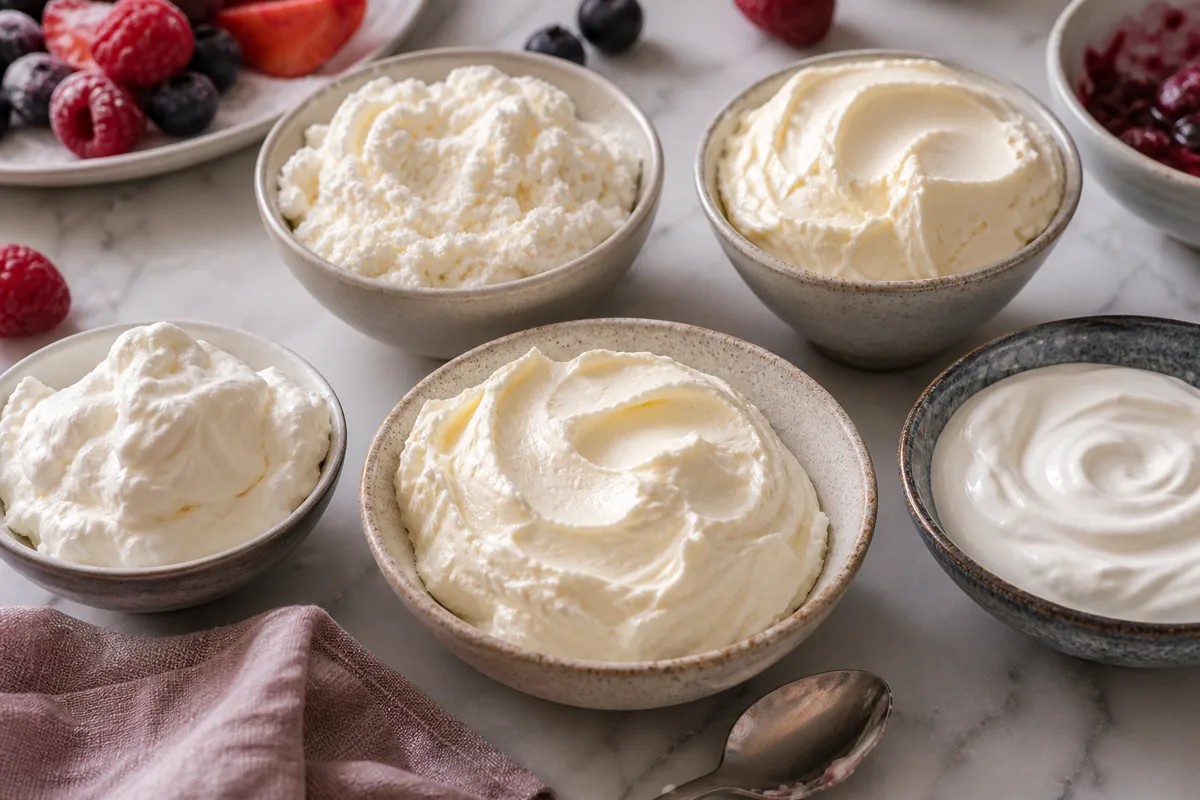
| Cream cheese | Smears smoothly | Almost none without help | Smear and tart filling |
| Labneh | Spoons into a soft mound | Yogurt-like tang | Smear and dips |
| Mascarpone | Rich and loose | None | Creamy body only |
No cow-milk cheese copies goat-milk tang, so every entry below is judged on whether it protects the dish's texture and acid balance instead.
1. Feta
The best all-round answer, because it covers the two things most recipes notice first: tang and crumbly texture.
It is usually sheep-milk and brined, so it is saltier than fresh goat cheese while giving salads, flatbreads, grain bowls and roasted vegetables a similar bright top note.
Start with about three quarters of the goat cheese the recipe names, then taste the dressing before adding any salt. In the oven it keeps the strongest visible pieces, which is what makes it the one substitute that also works in tarts and stuffed vegetables.
Swapping feta by volume and keeping the original seasoning is the most common failure here. It will overpower tomatoes, cucumbers, beets, berries and vinaigrette before you notice.
It fails on salt in anything that cooks down, and the symptom is a topping that turns aggressive as water leaves the dish. Use ricotta salata instead when the plate already has olives, cured meat, pickles or salted nuts.
2. Ricotta Salata
For clean crumble without extra brine, especially on ripe tomatoes and finished plates.
It is pressed, salted and dried, so it shaves or crumbles dry rather than breaking into wet angular pieces.
Add it late or after cooking rather than baking it in, since it is a finishing cheese rather than a hot filling.
It fails on tang, and the symptom is a plate that reads salty but flat. It solves the crumble problem without pretending to taste of goat milk, so add lemon or vinegar if the dish needed the acid too.
3. Cream Cheese
For the smear job: dips, spreads, flatbread bases and tart fillings that need body.
It is dense and mildly cultured, so it brings the spreadable richness without any of the goat-milk sharpness.
Add lemon juice or vinegar before you taste it, not after. Untreated it is the flattest option on this list, and a sweet vegetable underneath it will feel heavy.
In a tart, cream cheese plus lemon gives the body while feta gives the sharper pockets. Using both covers a job neither one covers alone.
It fails in a warm dish that wanted structure, and the symptom is a filling smoother than planned. It softens more completely than goat cheese does, so the pockets disappear.
4. Labneh
For dips, beet salads and any smear where the acid is the point.
It is strained yogurt, so it spoons into a soft mound and carries a yogurt-like tang closer to fresh goat cheese than cream cheese manages.
Use it cold and spoon it rather than spreading it, and strain it further if any whey is still separating.
It fails under heat, and the symptom is a broken, grainy topping. Keep it off the oven tray and add it to a warm dish only once the heat is off.
5. Mascarpone
The narrowest option, for recipes that wanted creamy body rather than goat-milk flavour.
It is a cream-based cheese with no cultured acidity at all, which makes it the furthest from goat cheese on this list.
Use it only where something else supplies the acid, and add lemon zest or juice deliberately if nothing else will.
Reach for mascarpone only after ruling out the other four. It is the right answer when the recipe treated goat cheese as richness, and the wrong one whenever tang was the reason it was named.
It fails whenever tang mattered, and the symptom is a dish that tastes rich and dull at the same time.
How Do You Choose Between Crumble, Smear, and Warm-Pocket Substitutes?
Feta is the best all-around goat cheese substitute because it covers the two jobs most recipes notice first: tang and crumbly texture. It is saltier and usually sheep-milk based, but it gives salads, flatbreads, grain bowls, and roasted vegetables a similar bright top note.
Cream cheese is not a flavor match, but it is useful when the recipe wanted spreadable richness. Ricotta salata goes the other direction.
It is firm, dry, and grateable, so it solves the clean-crumble problem without trying to taste like goat milk.
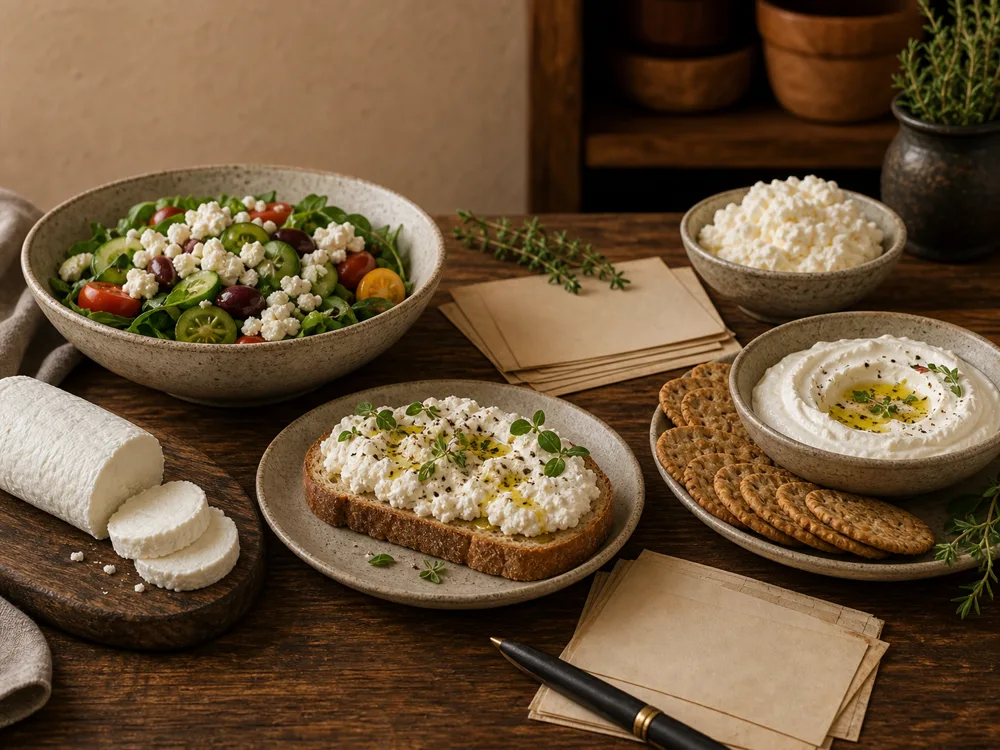
The substitute should not try to solve every goat-cheese job at once. If the dish needs crumble, use feta or ricotta salata.
If it needs smear, use cream cheese, labneh, or a soft fresh cheese. If goat cheese is the star of the plate, the best substitute is often no substitute.
Texture tells you more than color. Feta breaks in angular pieces, ricotta salata shaves or crumbles dry, cream cheese smears, and labneh spoons into a soft mound.
Goat cheese can do several of those things depending on age and moisture, so the substitute has to match the specific texture the recipe uses.
Acid is the second decision. Feta gives briny sharpness, labneh gives yogurt-like tang, and cream cheese needs lemon or vinegar before it tastes lively.
If the original goat cheese was there to wake up a sweet vegetable, a neutral creamy substitute will feel heavy unless you add acid deliberately.
No cow-milk substitute copies goat-milk tang exactly. The goal is to protect the dish's texture and acid balance, not to fake the same flavor molecule for molecule.
Why Do Salads and Flatbreads Need Salt Control?
Salads are where feta looks like the obvious answer, and most of the time it is. The difference is salt.
Feta can overpower tomatoes, cucumbers, beets, berries, and vinaigrette if you swap it by volume and keep the original seasoning.
Start with about three-quarters of the goat cheese amount when using feta, then taste the dressing before adding more salt. If the dish already has olives, cured meat, pickles, or salted nuts, ricotta salata may be the calmer choice.
| Dish | Best substitute | Why it works |
|---|---|---|
| Green salad | Feta | Tang and crumble stand up to vinaigrette. |
| Tomato plate | Ricotta salata | Clean slices avoid extra brine on ripe tomatoes. |
| Flatbread | Feta or cream cheese blend | Feta stays in pieces; cream cheese makes a spreadable base. |
| Beet salad | Labneh or feta | Labneh gives creamy acid; feta gives sharper salt. |
The feta comparison matters enough that it has its own related guide: goat cheese versus feta. Use that page when the decision is identity and flavor.
Stay here when the question is what to put in tonight's dish.
Flatbreads add another constraint because heat dries the topping while the crust browns. Feta can stay distinct, but it may turn salty fast.
A cream cheese base can stay smooth, but it needs lemon, herbs, or pepper flakes so the flatbread does not taste heavy.
When feta stands in for goat cheese, reduce added salt first. You can always add more cheese, but you cannot pull brine back out of a finished salad.
Why Do Dips and Spreads Need Acid Added Back?
Cream cheese is the practical substitute for goat cheese in dips because it brings body and a clean spread. It does not bring the same lemony goat tang, so the correction has to happen in the bowl.
Add lemon juice, vinegar, yogurt, or a small amount of sour cream before adding more herbs. Brightness should come before garlic, pepper, or chili.
Otherwise the dip tastes seasoned but still heavy.
Boursin, a garlic-herb spreadable cheese, is useful when the recipe already wants herbs. It is a poor neutral substitute if the original dish depended on plain goat cheese and delicate toppings.
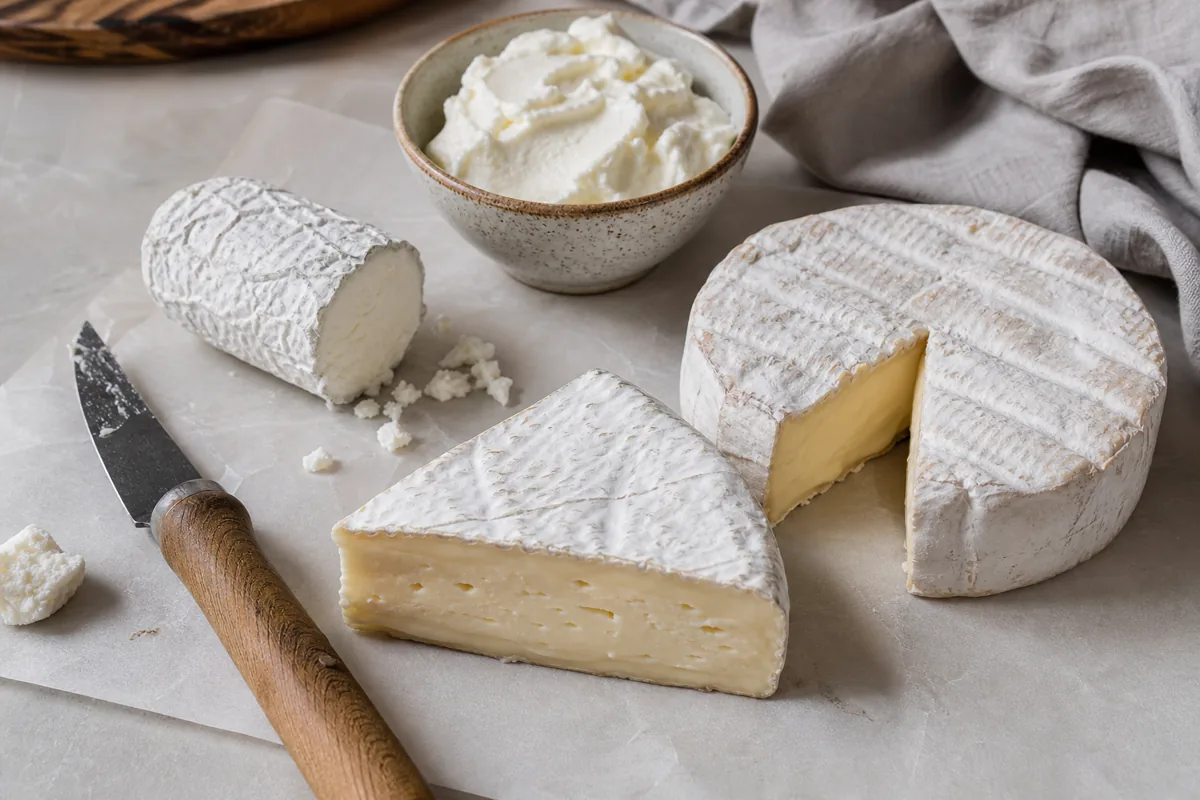
For boards, think about role before flavor. A goat log can be the bright center of a small plate.
Cream cheese needs herbs, pepper jelly, smoked fish, or vegetables to become board-worthy.
Labneh is useful when the dish already welcomes a spoonable dairy. It works with olive oil, za'atar, roasted carrots, cucumbers, beets, and warm pita.
It fails when the recipe expects the cheese to crumble cleanly over greens or sit in visible pieces after tossing.
Why Do Warm Dishes Need Pockets Instead of a Smooth Melt?
Fresh goat cheese softens in warm dishes, but it usually stays in pockets. That behavior matters in tarts, stuffed peppers, omelets, baked pasta, and flatbreads.
A substitute that melts into a sauce changes the dish.
Feta keeps the strongest visible pieces, but it gets saltier as water cooks off. Cream cheese softens more completely and can turn a filling smoother than planned.
Ricotta salata should be added late or after cooking because it is better as a finish than as a hot filling.
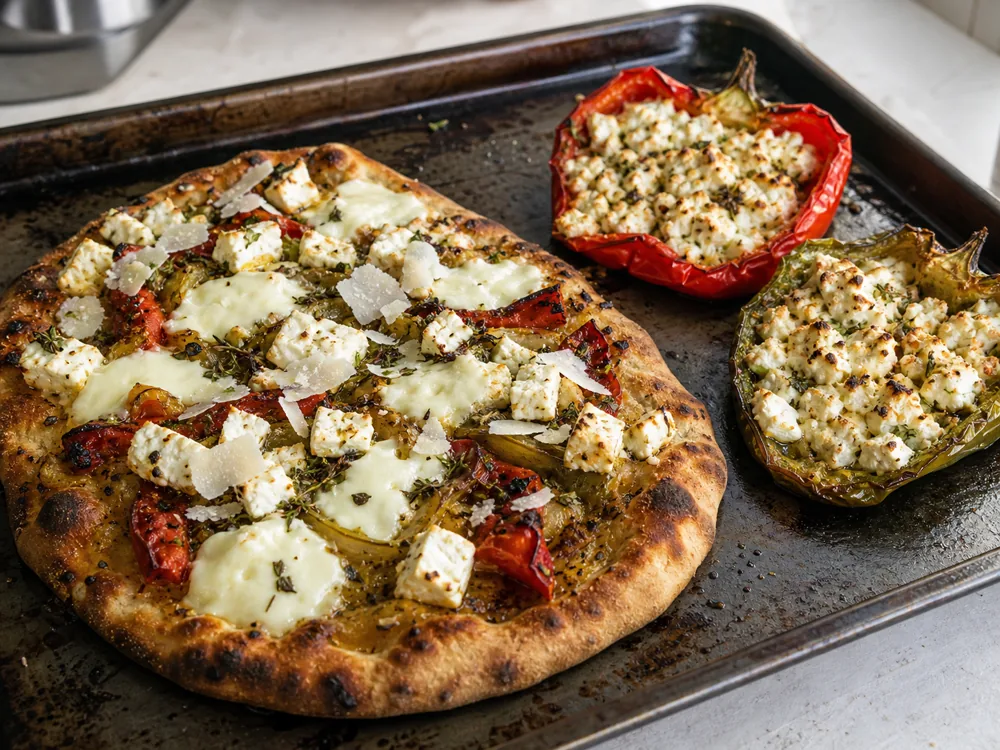
- Tart filling: cream cheese plus lemon gives body, while feta gives sharper pockets.
- Flatbread: feta can bake on top; ricotta salata is better after the oven.
- Stuffed vegetables: feta with herbs and breadcrumbs holds shape better than cream cheese.
- Warm dip: cream cheese or Boursin melts smoother than goat cheese.
If the recipe is really asking for a cheese that can be grilled or seared, move to a different family. Halloumi, a brined grill cheese, and the firm acid-set cubes of paneer survive direct heat, but they are not goat-cheese flavor substitutes.
Warm pockets also depend on timing. Add feta before baking when you want firmer salty pieces.
Add ricotta salata after baking when you want clean shavings. Add a cream-cheese blend under toppings when you want a creamy base that seasons the whole bite.
Do not use ricotta as a direct goat cheese substitute in a warm dish unless you drain it first. Extra moisture can make fillings loose and flatbreads soggy.
When Is the Real Goat Cheese the Only Answer?
Substitutes work best when goat cheese is supporting the dish.
If the recipe is a goat cheese salad with honey, a baked goat cheese appetizer, or a cheese board built around chevre, the substitute will be obvious.
Aged goat cheeses make this even clearer. A Loire-style aged round such as an aged Chavignol-style puck brings rind, density, and a deeper mineral flavor that feta or cream cheese cannot copy.
Those cheeses need a full profile and pairing approach rather than a quick swap.
- Use the real cheese when goat cheese is the named centerpiece.
- Use feta when acid, salt, and crumble matter more than milk identity.
- Use cream cheese when the dish needs a smooth base.
- Use ricotta salata when clean pieces matter more than tang.
- For briny salads, compare against Greek-style brined cheese first.
- For creamy dips, compare against block-style spread behavior first.
- For firm shavings, compare against pressed salted ricotta first.
Store any fresh substitute with the same caution you would use for opened soft cheese. These swaps lose quality fast once exposed to air.
The best goat cheese substitute is the one that protects the plate's texture first. Once that is safe, you can adjust acid, salt, herbs, and timing.
That is why a substitute can be correct in one goat-cheese recipe and wrong in the next. The same feta that saves a tomato salad can make a delicate herb dip too salty.
The same cream cheese that fixes a spread can disappear into a tart filling where visible goat-cheese pockets were the point.
For shopping, buy the substitute in the form you need. Blocks, logs, tubs, and crumbles behave differently even when the cheese name is similar.
Pre-crumbled feta is easy for salads, but a block in brine tastes cleaner. Tub cream cheese spreads fast, but block cream cheese behaves better in warm fillings.
For serving, taste the substitute with the other sharp ingredients before assembling the whole dish. Olives, pickled onions, vinaigrette, lemon zest, and cured meat can make feta feel too salty, while honey, roasted squash, and beets can make creamier swaps feel balanced.
If the dish has no other acid, choose a tangy substitute or add acid yourself.
If the dish already has vinegar, citrus, pickles, or tomatoes, choose the substitute by texture instead.
That split keeps the swap from becoming either bland or sharp in the wrong place.
For a cold board, let the substitute warm slightly before serving. Feta tastes less harsh, cream cheese spreads cleaner, and labneh loosens enough to scoop.
Very cold substitutes make the differences feel sharper than they need to be.
SOURCES & REFERENCES
What Else Do People Ask About Goat Cheese Substitutes?
These answers cover the common recipe problems behind goat cheese substitutes.
Feta is the best substitute for goat cheese in most salads because it gives tang and crumble. Use less added salt because feta is usually brinier than fresh goat cheese.
Yes, when the recipe needs a spread, dip, or creamy filling. Cream cheese lacks goat cheese's tang, so add lemon juice, yogurt, or vinegar before adding more seasoning.
No. Feta is usually sheep milk with possible goat milk, while goat cheese is made from goat milk.
They overlap in tang and crumble, but feta is saltier and goat cheese tastes cleaner and more citric.
Use feta if you want salty visible pieces, or use a cream cheese blend if you want a spreadable base. Ricotta salata is better after baking because it stays cleaner as a finishing crumble.
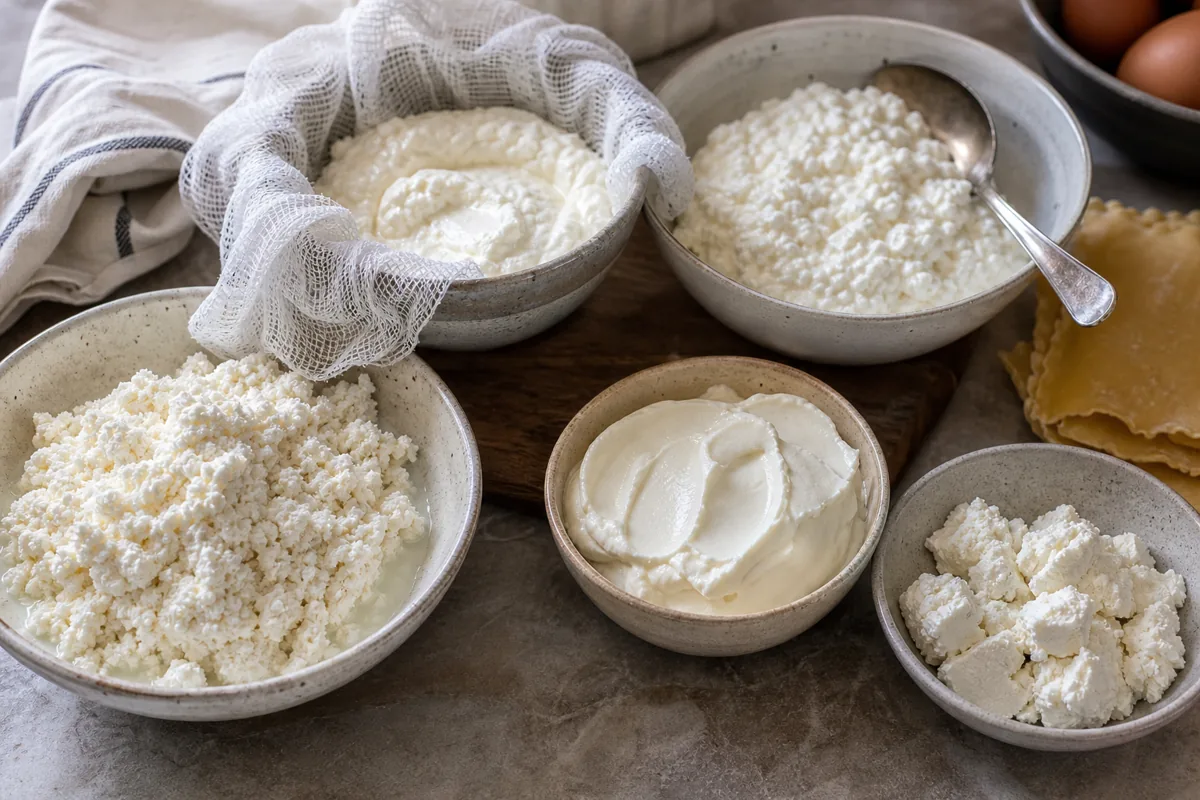
Fresh ricotta is usually too wet and mild to replace goat cheese directly. Drain it first, or choose ricotta salata when you need firm crumble.