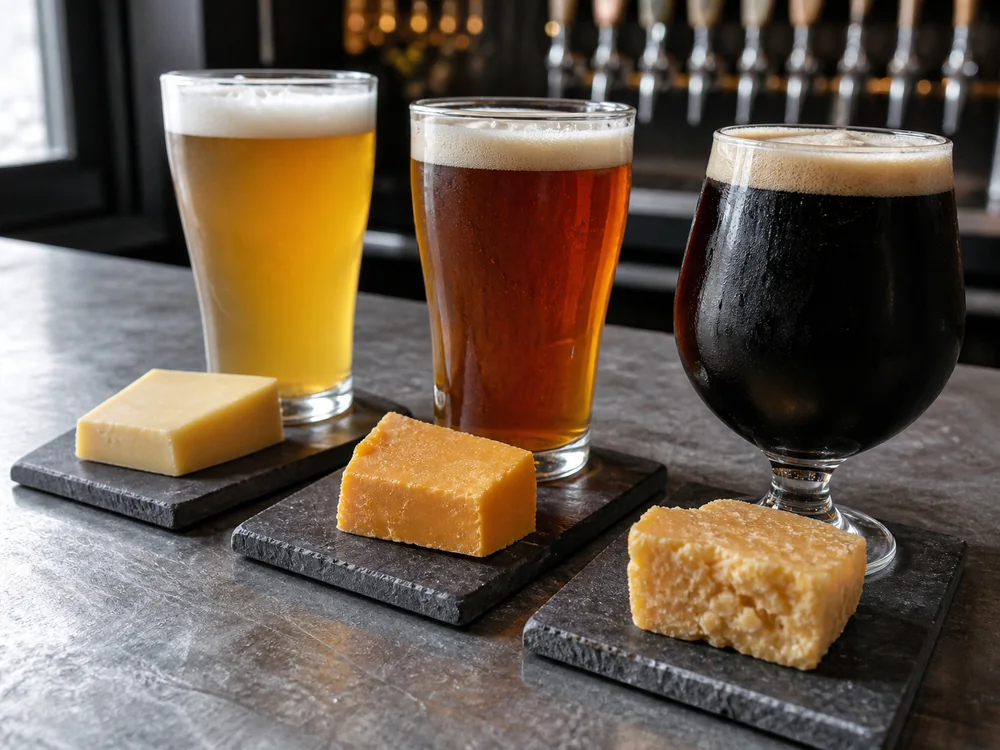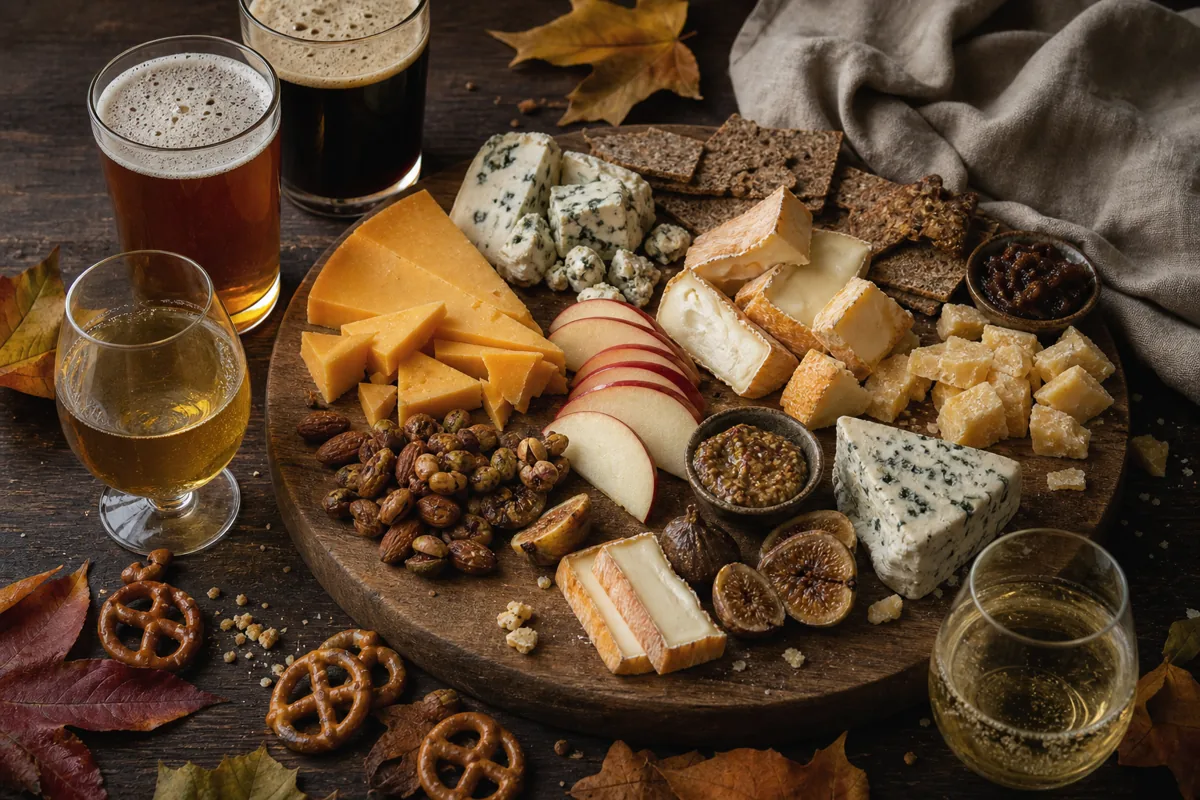
Fall beer and cider cheese pairing is a seasonal cheese pairing problem, not just a beer list or cider list. Cooler weather brings darker malt, orchard acidity, apples, nuts, mustard, pretzels, and richer cheese.
The board works when beer handles roast, malt, and bitterness while cider handles apple acidity, tannin, and sweetness. Use both drinks on the same board only when each has a clear cheese job.
A fall tasting feels intentional when the cheese matches malt, apple acidity, roast, spice, and serving temperature instead of defaulting to a random cheddar plate.
This article is fall-seasonal and board-focused. For all-season beer pairings or cider-only decisions, use those parent articles as support rather than repeating them here.
In This Article
Give Beer the Malt Jobs and Cider the Acid Jobs
Start with the fall table. A fall board can use heavier cheese than a summer board because apples, nuts, malt, rye crackers, and mustard give the drinks structure.
Beer should cover malt, roast, hop, and yeast. Cider should cover acid, apple fruit, tannin, and light sweetness.
The strongest board uses one aged cheese, one sharp cheese, one soft or washed-rind cheese, and one small blue-cheese accent.
That split keeps the board readable. Beer should handle caramel, toast, roast, hops, and yeast.
Cider should handle apple snap, tannin, light sweetness, and freshness. If both drinks are doing the same job, remove one.
Aged Gouda and cheddar belong near malt because their caramel and tang give beer something to answer. Brie, alpine cheese, goat cheese, and washed rinds often need cider or perry because acid and bubbles keep the texture from feeling too heavy.
| Pairing | Type | Why It Works |
|---|---|---|
| Trappist-style ale + aged Gouda | Beer | Best malt bridge. Dark fruit, caramel, and yeast depth meet aged Gouda crystals, salt, and butterscotch without needing sweet jam. |
| Amber ale + sharp cheddar | Beer | Best everyday fall match. Toasted malt and mild bitterness fit cheddar tang, pretzels, mustard, and apple slices. |
| Brown ale + smoked Gouda | Beer | Best smoky board match. Nutty malt and light roast make smoke taste savory instead of harsh. |
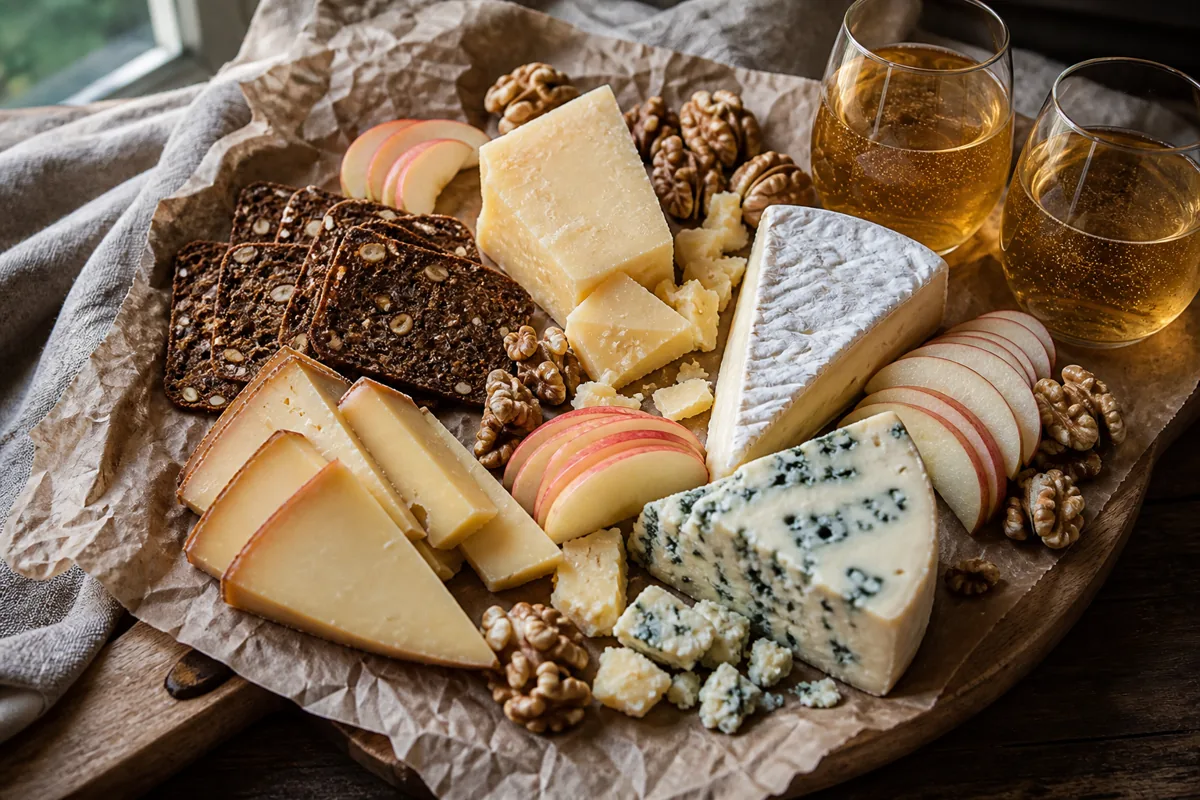
| Dry cider + aged cheddar | Cider | Best orchard match. Apple acidity cuts cheddar fat and turns the classic apple-cheddar pairing into a drink pairing. |
| Hopped cider + goat cheese | Cider | Best bright contrast. Hop aroma, apple acidity, and tangy goat cheese keep a fall board from becoming too heavy. |
| Perry + Brie | Pear cider | Best soft-rind match. Perry's pear fruit and gentle acidity lift Brie without the bitterness that can bother bloomy rind. |
| Dark ale + blue cheese | Beer | Best bold accent. Roast, malt sweetness, and body can handle blue cheese salt when the portion stays small. |
| Semi-dry cider + washed rind | Cider | Best rind match. Apple sweetness and acidity soften washed-rind aroma while keeping the cheese savory. |
- Beer lane: Trappist ale, amber ale, brown ale, porter, stout, aged Gouda, cheddar, smoked cheese, and blue accents.
- Cider lane: dry cider, hopped cider, perry, semi-dry cider, cheddar, goat cheese, Brie, and washed rind.
- Fall board supports: apples, roasted nuts, mustard, pretzels, rye crackers, dried figs, and dark bread.
- Serving sequence: cider and soft cheese first, maltier beer and aged cheese later, blue cheese last.
The parent beer and cheese structure explains intensity matching. Here, the extra layer is season: richer cheese and fall snacks can carry darker malt.
The parent cheese and cider structure explains dry, semi-dry, and sweet cider. Here, cider shares the table with beer, so each pour needs a separate job.
Build a Four-Pour Fall Matrix Before Buying Cheese
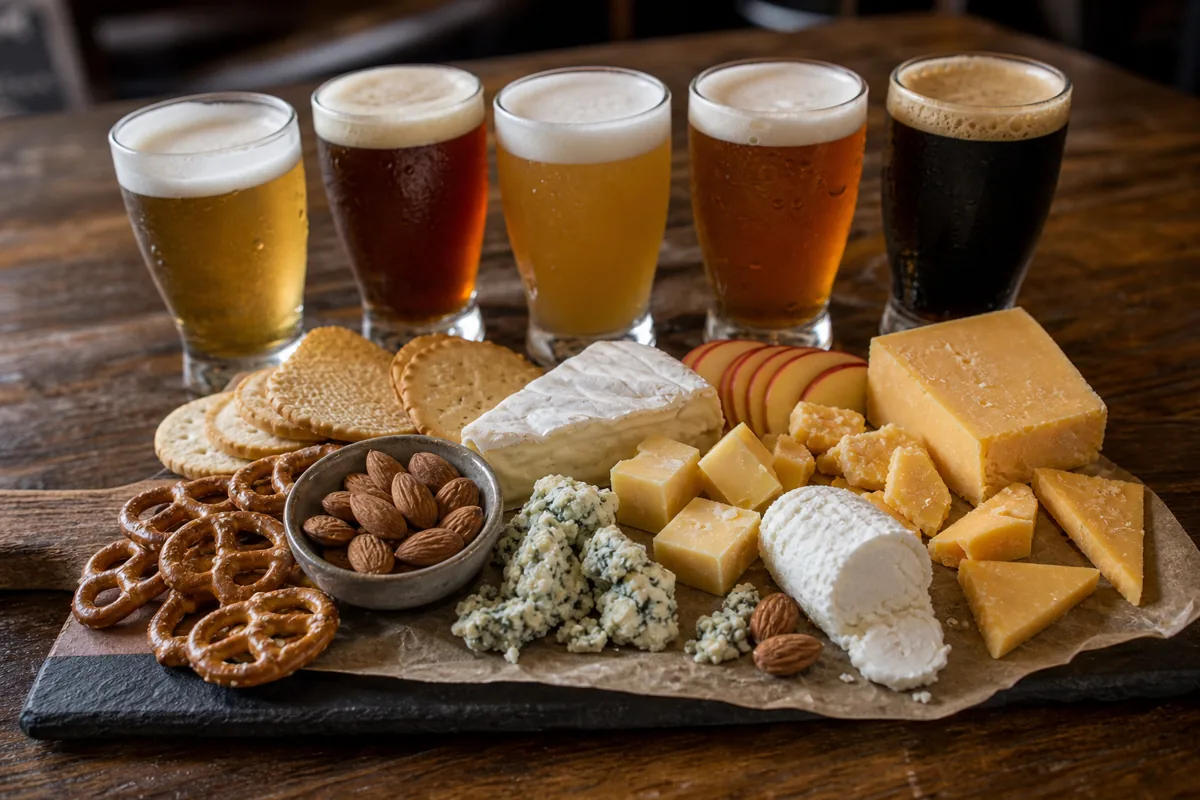
The cleanest fall board starts with two beers and two ciders. Add one amber or Trappist-style ale, one darker ale, one dry cider, and one perry or semi-dry cider.
Then choose cheese by texture. Firm aged cheese handles malt, sharp cheese handles dry cider, creamy cheese handles perry, and blue cheese handles only the strongest end.
The four-pour matrix stops the board from becoming a random tasting. Amber ale covers nutty aged cheese.
Dark ale covers cheddar, smoked Gouda, or a blue accent.
Dry cider covers sharp and salty cheese, while perry or semi-dry cider covers soft and bloomy cheese.
Buy the four pours before the cheese. What the shop actually stocks in dry cider and amber ale narrows the cheese list quickly, and cheese bought first leaves you hunting a pour that may not be there.
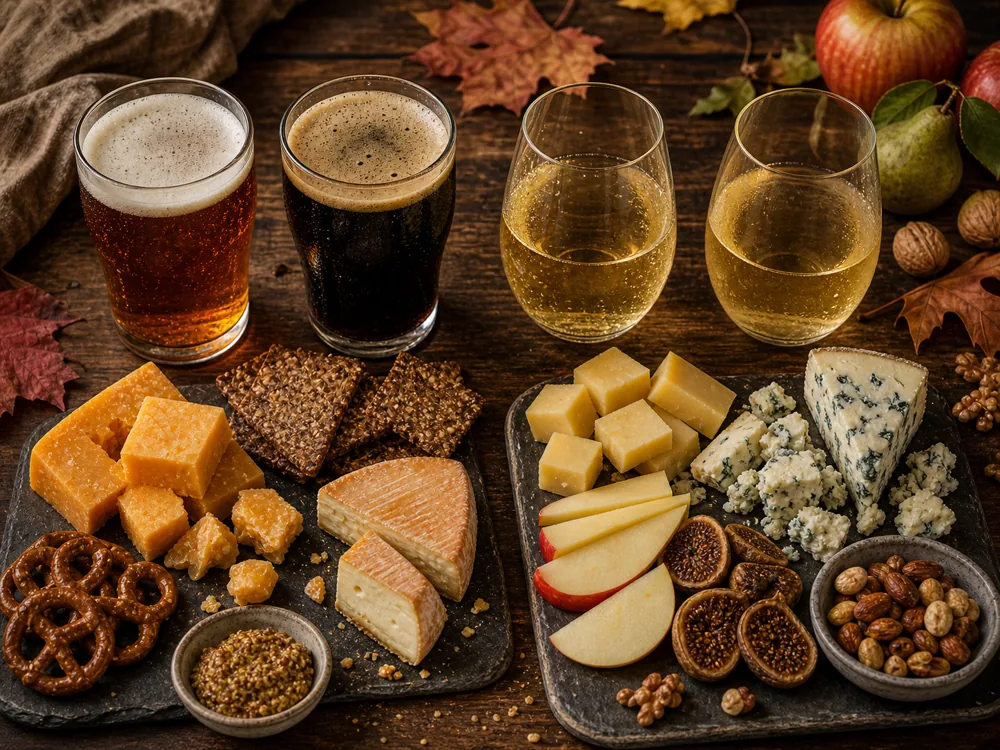
| Fall drink | Best cheese lane | Why it works |
|---|---|---|
| Trappist or Belgian-style ale | Aged Gouda, alpine cheese, washed rind | Malt, yeast, and dark fruit meet nutty age and rind depth. |
| Amber ale or brown ale | Cheddar, smoked Gouda, firm sheep cheese | Toast and caramel fit salt, tang, smoke, and nuts. |
| Dry cider | Aged cheddar, Manchego-style cheese, firm Gouda | Apple acidity clears fat and sharpness. |
| Hopped cider | Goat cheese, washed rind, young cheddar | Hop aroma and apple acid brighten tang and rind. |
| Perry | Brie, Camembert, mild alpine cheese | Pear fruit and gentle acid soften cream without heavy bitterness. |
| Semi-dry cider | Blue cheese, washed rind, aged Gouda | Sweetness and acid balance salt, rind, and caramel. |
Aged Gouda crystals make the beer side easier because malt and caramel have something to echo. Young Gouda is milder and needs cider or lighter beer.
Sharp cheddar tang makes the cider side easier because apple acidity feels natural beside cheddar salt. Dry cider is the cleanest fall shortcut.
Serving temperature decides more than the matrix does. Cider straight from the fridge is too cold to read against a soft cheese, and ten minutes in the glass brings back the apple fruit the whole plan depends on.
Dark ale runs the other way. Poured properly cold it tastes mostly of roast, and a little warmth lets the malt sweetness come forward to meet aged Gouda.
Do not force one drink to serve every cheese. A fall board works because beer and cider divide the work instead of competing.
Use glass size as part of the plan. Beer and cider can fill guests quickly, especially with rich cheese.
Smaller pours let people compare the roles without losing the appetite for the board.
Rinse each glass with water between a dark ale and a dry cider. Roast malt clings to the sides and turns the next cider bitter before it ever reaches the cheese.
Use Fall Sides as Controls, Not Decorations
Fall changes the pairing because the board gets denser. Apples are firmer, nuts show up more often, and guests expect cheddar, Gouda, darker bread, and fuller drinks.
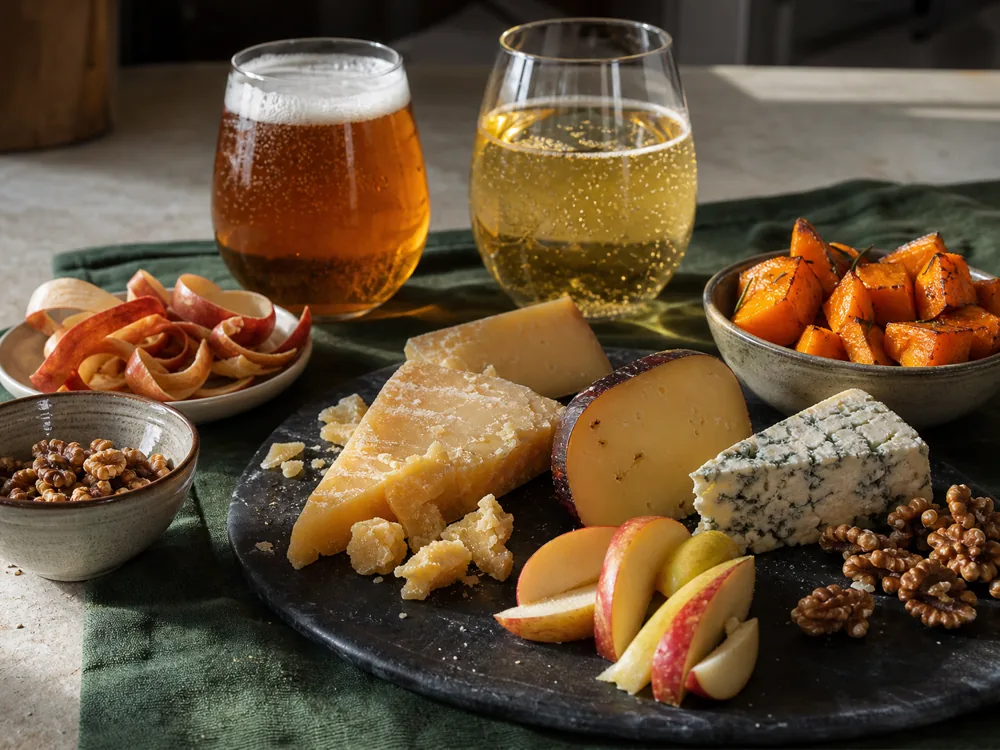
That does not mean everything should be heavy. The cider side keeps the board from becoming all malt, roast, and salt.
Apple slices are the reset. They make cheddar and Gouda taste cleaner and keep dry cider from seeming too sharp.
Roasted nuts are the bridge for amber ale because they echo malt without adding more dairy.
Mustard should be used carefully. It can wake up cheddar and aged Gouda, but it can flatten perry, Brie, or mild washed-rind cheese.
Put it near the beer side of the board, not beside every wedge.
- Malt adds warmth: amber ale, brown ale, and Trappist-style ale fit aged and nutty cheese.
- Cider adds lift: dry cider, hopped cider, and perry keep rich cheese from feeling dull.
- Apples add structure: tart slices bridge cheddar, cider, and fall board texture.
- Nuts add bitterness: walnuts, almonds, and pecans stop sweet cider from flattening cheese.
Blue cheese salt belongs late because it can make lighter cider taste thin. Use it with dark ale, semi-dry cider, or a small pour of richer cider.
Smoked Gouda flavor belongs with brown ale, porter, or off-dry cider. Smoke plus dry bitter beer can turn harsh unless nuts or bread reset the bite.
If the board tastes too heavy, add dry cider, perry, apple slices, or pickled onions. If it tastes too sharp, add maltier beer, aged Gouda, nuts, or a little mustard.
Avoid Stacking Smoke, Sweetness, and Bitter Beer
The common mistake is stacking every fall flavor at once. Smoked cheese, dark ale, mustard, cured meat, blue cheese, and sweet cider can overload the board.
The second mistake is treating cider as a sweet garnish. Dry cider is often the better fall tool because it keeps cheddar and Gouda lively.
Smoke is the easiest way to overload the board. Smoked Gouda, smoked meat, porter, and charred bread can taste flat together.
Keep one smoke element, then add apple, mustard, or rye to bring back lift.
Sweet cider needs a salty or blue target. If you pour it with Brie, young Gouda, or mild alpine cheese, the board can turn soft and sugary.
Save sweeter cider for sharp cheddar, blue cheese, or a small closing bite.
Do not build a fall board with only dark beer and strong cheese. Without cider, apple, or another acid source, aged Gouda, cheddar, blue cheese, and washed rind can feel heavy fast.
- Too smoky: smoked Gouda, smoked meat, and dark ale can turn bitter together.
- Too sweet: sweet cider plus Gouda plus dried fruit can taste flat.
- Too bitter: aggressive IPA can make washed-rind cheese taste harsh.
- Too cold: Brie and washed rind taste waxy beside chilled cider.
- Too crowded: five drinks and eight cheeses make the board hard to read.
For strongly hoppy beer, use the all-season cheddar-and-hops lane. Cheddar handles bitterness better than Brie or washed rind.
For sweet cider, borrow from blue cheese balance. Salt needs sweetness, but the portion must stay small.
These avoids keep the board seasonal and readable. The best fall pairing has contrast, not maximum intensity.
Build the Board in Bright-to-Dark Zones
Choose four cheeses: one aged, one sharp, one soft or washed-rind, and one blue accent. That lineup gives every drink a clear target.
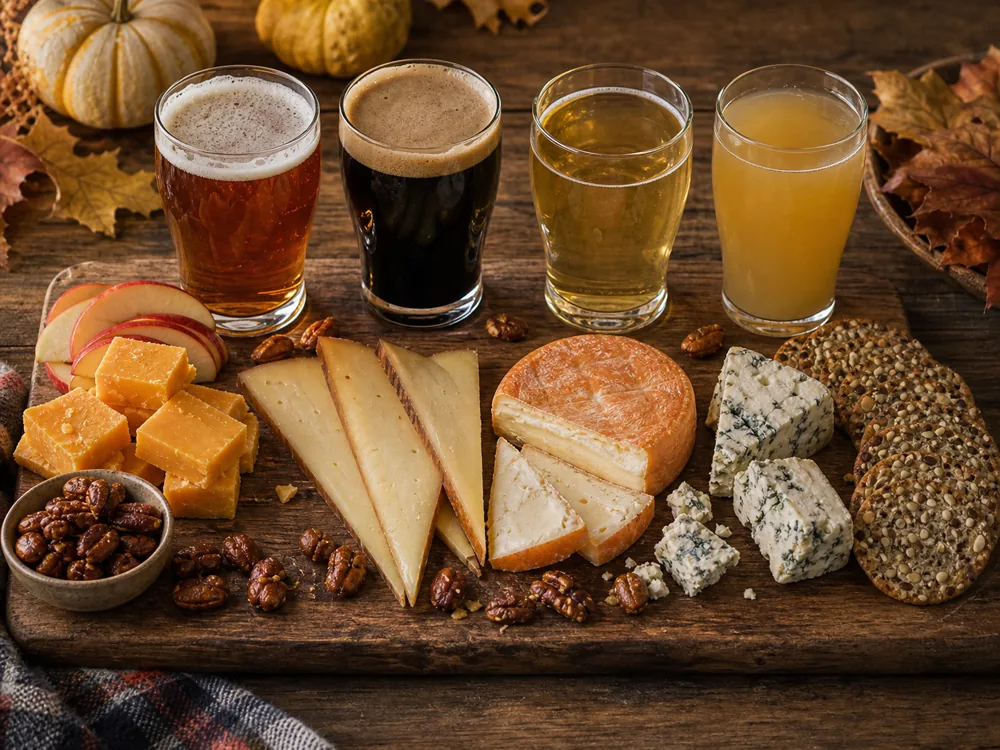
Then add fall supports that solve problems. Apples add acid, nuts add bitterness, pretzels add salt, and mustard adds heat.
Put the dry cider and perry zone first. That zone can hold Brie, alpine cheese, goat cheese, apple, pear, and lighter crackers.
It should feel bright and easy before the maltier side starts.
Put amber ale, dark ale, aged Gouda, cheddar, smoked cheese, blue accent, mustard, nuts, and rye in the darker zone. Guests can then move across the board instead of tasting bitter beer beside delicate cheese too early.
- Aged cheese: aged Gouda or alpine cheese with Trappist-style ale.
- Sharp cheese: aged cheddar with dry cider or amber ale.
- Soft/rind cheese: Brie, Camembert, or washed rind with perry or semi-dry cider.
- Blue accent: blue cheese with dark ale, porter, or semi-dry cider.
- Fall supports: apples, mustard, nuts, pretzels, rye crackers, and dried figs.
Choose Use: dry cider + aged cheddar, amber ale + Gouda, perry + Brie, dark ale + blue cheese accent for: Best balanced fall board
This board keeps beer and cider in separate roles. It covers acid, malt, cream, salt, and a small bold finish without becoming heavy.
Choose Use: Trappist-style ale, hopped cider, aged Gouda, washed rind, goat cheese, cheddar, apples, mustard, nuts, and rye crackers for: Best rustic cool-weather board
This version is more savory and complex. Yeast, hops, apple acidity, rind, and nuts make the board feel seasonal without relying on sweetness.
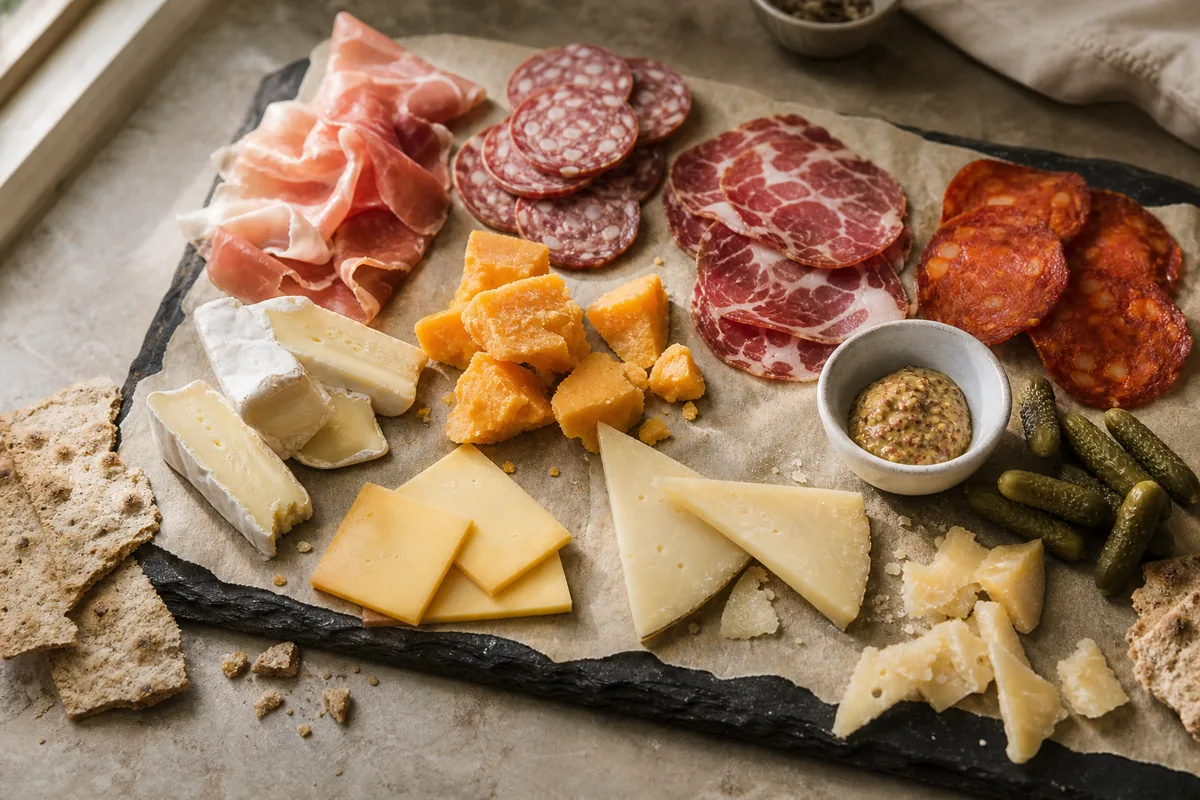
If cured meat joins the table, use cheese and meat balance sparingly. Salami and smoked meat can make dark beer feel more bitter.
For board layout, charcuterie board structure helps keep wet apples, sticky mustard, blue cheese, and crackers from bleeding into each other.
The autumn version is the target here. Spring and summer examples help show what this article is not trying to own.
Buy Less Blue, More Apple, and Smaller Pours
Serve from bright to dark. Start with dry cider or perry and the softer cheeses, then move into amber ale, aged cheese, dark ale, and blue cheese.
Buy smaller amounts of stronger cheese. A fall board needs contrast more than volume.
Buy more apple and bread than you think. They are not filler.
They reset the palate between malt, cider tannin, mustard, and rich cheese.
Without them the board feels heavy fast.
Keep the blue cheese small and late. It can make cider taste thin and dark beer taste bitter if it arrives too early.
A few small pieces are enough for the sweet-cider or dark-ale finish.
- First pour: dry cider or perry with Brie, goat cheese, or mild alpine cheese.
- Second pour: amber ale or Trappist-style ale with Gouda, cheddar, or washed rind.
- Third pour: dark ale or porter with smoked Gouda, blue cheese, or aged cheddar.
- Reset foods: apples, nuts, pretzels, rye crackers, mustard, and water.
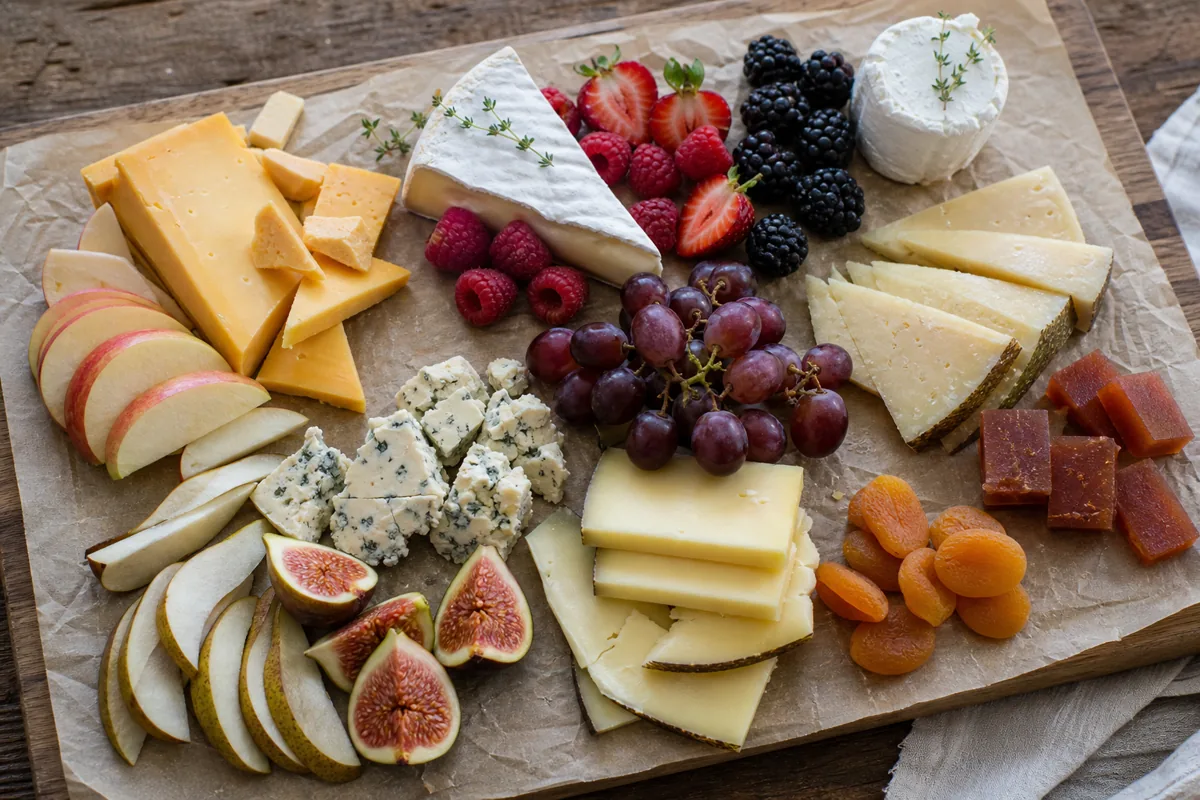
If fruit is part of the board, keep the apple lane practical. Cheese and fruit balance matters because dried fruit can make cider taste sweeter than intended.
The final test is simple: each drink should have a cheese it improves. If beer and cider both point to the same wedge, simplify the board.
SOURCES & REFERENCES
Fall Beer and Cider Pairing FAQ
These are the questions that come up once the autumn board is laid out.
Aged Gouda, aged cheddar, smoked Gouda, Brie, washed-rind cheese, goat cheese, and small blue-cheese accents work best. Match beer with malt, roast, and salt, then match cider with apple acidity, tannin, and lift.
Amber ale, brown ale, Trappist-style ale, porter, and dark ale work well with fall cheese boards. Use amber ale with cheddar, brown ale with Gouda, and dark ale or porter with blue cheese or smoked Gouda.
Dry cider works with aged cheddar, perry works with Brie and alpine cheese, hopped cider works with goat cheese or washed rind, and semi-dry cider works with blue cheese or aged Gouda.
Yes, if each drink has a separate role. Use beer for malt, roast, and bitterness. Use cider for apple acidity, tannin, and freshness. Do not pair every cheese with both drinks.
Avoid stacking too many heavy flavors. Smoked cheese, blue cheese, dark ale, sweet cider, cured meat, and mustard can overload the board if they all appear in large portions.