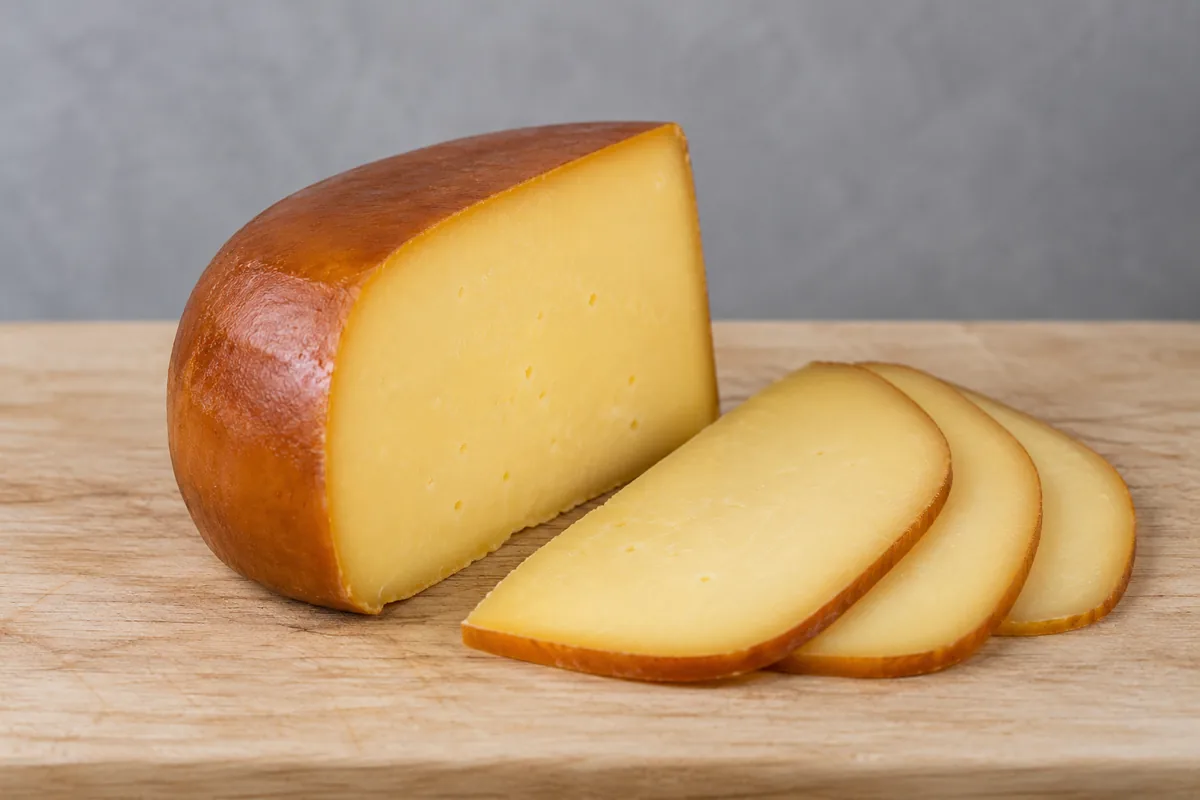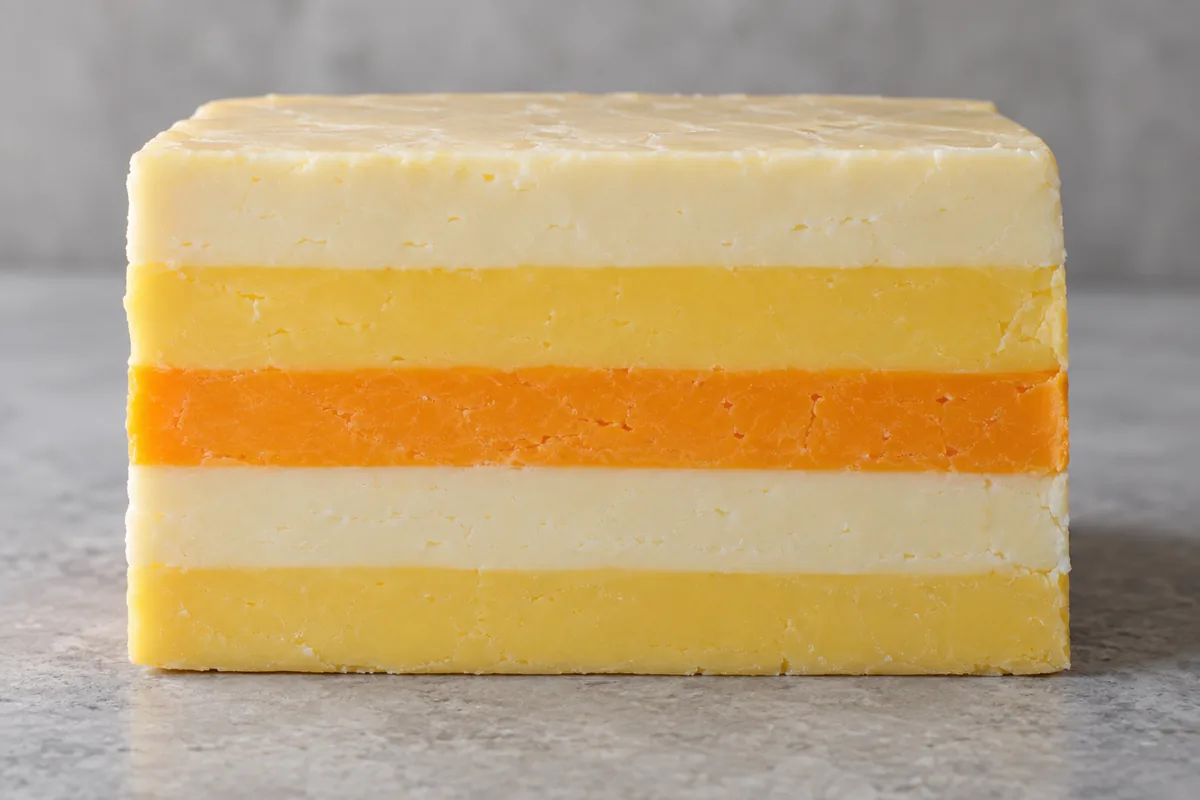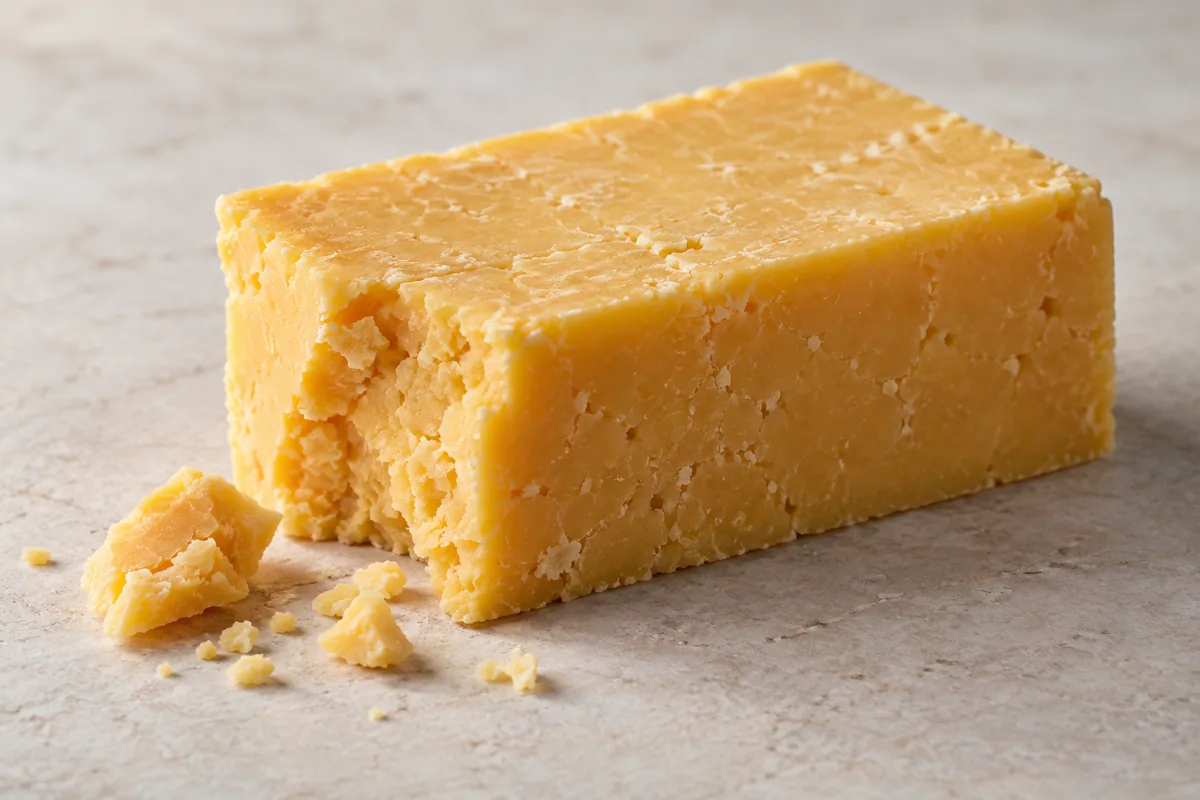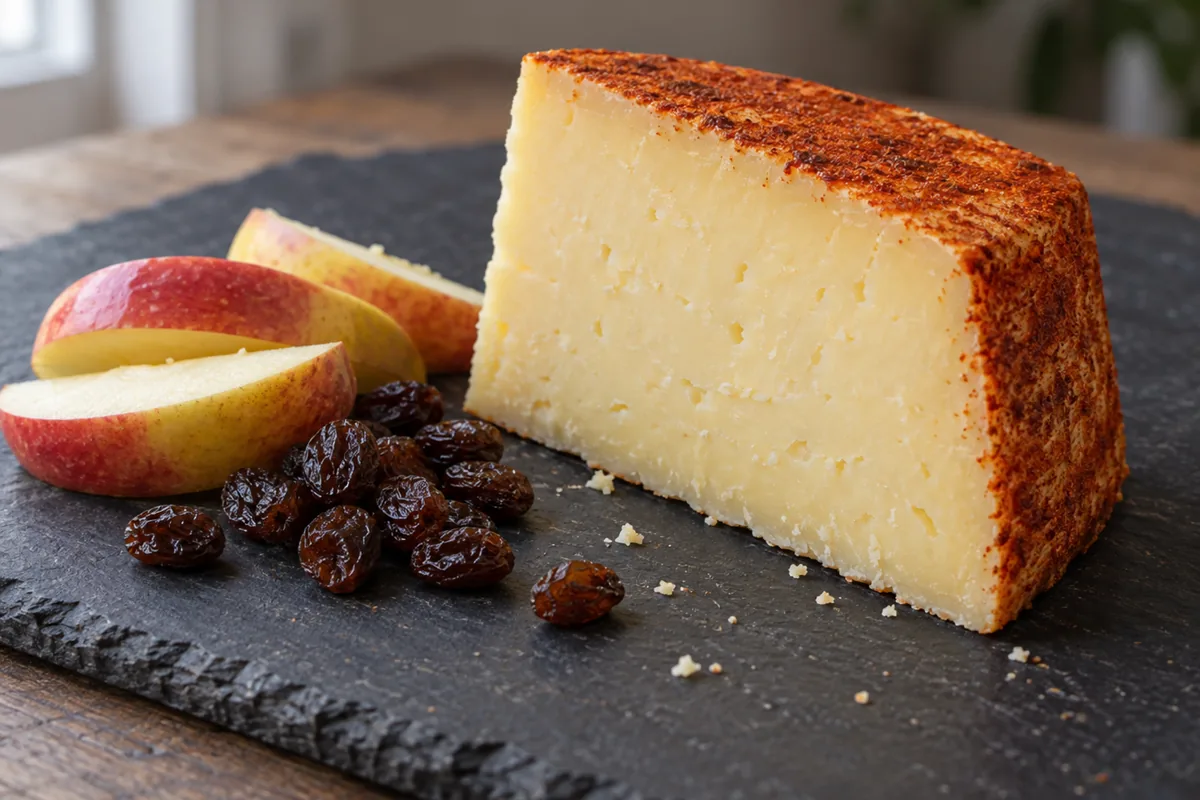
Applewood is a British smoke-flavoured Cheddar with a paprika-dusted edge. It gets that flavour from smoke flavouring, so the name does not mean the cheese was smoked over apple wood or made with apples.
That distinction helps you choose the right cheese before you even taste it. Original, Vintage, Grated and Plant Based share a smoky idea, but their base, nutrition and best uses are different.
In This Article
What Applewood Actually Is
The Applewood story begins in Somerset in 1965, using Barber's Somerset Cheddar as its base.
Barber's makes the Cheddar on its farm, then it travels to the Ilchester dairy for the smoke flavouring and paprika finish. This makes Applewood a branded flavoured cheese rather than a protected regional style.
The two-stage route explains why the name belongs to a finished product rather than a cheesemaking tradition.
Barber's supplies the Cheddar base, while Ilchester turns that base into Applewood through blending and flavouring.
When you see the name on a menu or supermarket shelf, check whether the pack says Original, Vintage, Grated or Plant Based before carrying one product's details over to another.
That product name matters even when the packs look closely related. Original tells you what the classic brand tastes like; Vintage changes the Cheddar beneath it, Grated changes the blend, and Plant Based changes the food itself.
Where Does the Smoky Flavour Come From?
The Original ingredient list is short: Cheddar cheese, smoke flavouring and paprika. Apple does not appear, and the brand does not describe a smokehouse or a wood-burning stage.
The paprika gives the outer edge its warm amber colour, while the smoke flavouring reaches the cheese itself. If smoke method matters to you, read the ingredient list instead of relying on the product name.
Smoke flavouring can give a consistent smoky profile without exposing each cheese to a wood fire, and paprika supplies a visible border that shoppers often read as evidence of smoking.
The coloured edge tells you that paprika was applied; it does not tell you whether the smoke came from wood, so the ingredient list must answer that second question.
Applewood is smoke-flavoured Cheddar. A wood-smoked cheese should name the smoking method or wood rather than listing only smoke flavouring.

Which Applewood Product Are You Buying?
Original is the familiar everyday bar, while Vintage starts with 12-month matured West Country Farmhouse Cheddar. Grated adds mozzarella and potato starch for convenience, and Plant Based replaces dairy with a starch-and-coconut-oil formula.
| Product | Base or composition | Energy | Protein | What changes for you |
|---|---|---|---|---|
| Original | Cheddar, smoke flavouring, paprika | 410 kcal | 24.9 g | The standard dairy flavour and the richest listed fat figure |
| Vintage Wedge | 12-month matured Cheddar, smoke flavouring, paprika | 365 kcal | 22.6 g | A more mature Cheddar base beneath the same smoky idea |
| Original Grated | 79% Applewood Cheddar, 19% mozzarella, potato starch | 365 kcal | 23.0 g | A blended grated product designed for easy distribution and melting |
| Plant Based | Water, modified starch, coconut oil and flavourings | 301 kcal | 0.1 g | A vegan alternative with a very different nutritional profile |
The 0.1 g protein on the Plant Based label makes the largest difference easy to see: it is not dairy Applewood with one ingredient removed. If protein, allergens or saturated fat matter to you, compare the exact pack rather than the colour of the branding.
The Grated pack also deserves to be read as a blend rather than pre-shredded Original.
Its mozzarella changes the melt and its potato starch keeps the shreds separate, so both the texture in the bag and the result in a dish can differ from cheese grated from a bar.
Vintage packaging has carried conflicting nutrition figures across different formats. The number printed on the pack in your hand is more useful than a figure remembered from another Applewood page.
Vintage is the strongest choice when you want the mature Cheddar base to remain noticeable beneath the smoke.
Original is easier when the smoky flavour itself is the reason you are buying the cheese.
What Texture and Uses Should You Expect?
Applewood can feel creamy when it is cool and freshly cut, yet become denser or more crumbly in another format. Temperature, age and whether you bought a bar, slices or grated blend all influence what your knife or grater meets.
A cold bar will usually feel firmer than a piece allowed to lose its refrigerator chill, while thin slices soften faster on the tongue. That helps explain why “creamy” and “crumbly” can both be honest descriptions without requiring two different cheeses.
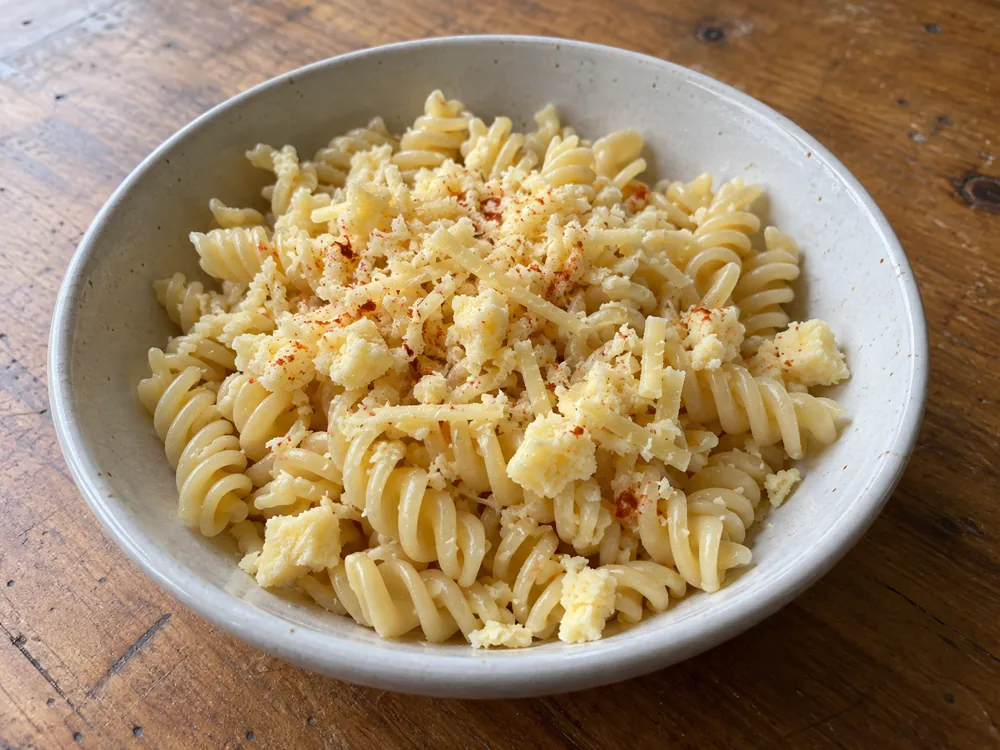
Its smoky flavour is assertive enough that a thin layer can season pasta, pork chops, toasties or a baked topping. The grated product includes mozzarella for easier melting, so you should not expect it to behave exactly like a wedge of Original.
Use a bar when you want cubes, slices or a coarser grate with a clear Cheddar bite. Use the blend when even coverage matters more than preserving that single-cheese texture, especially across a toastie or baked surface.
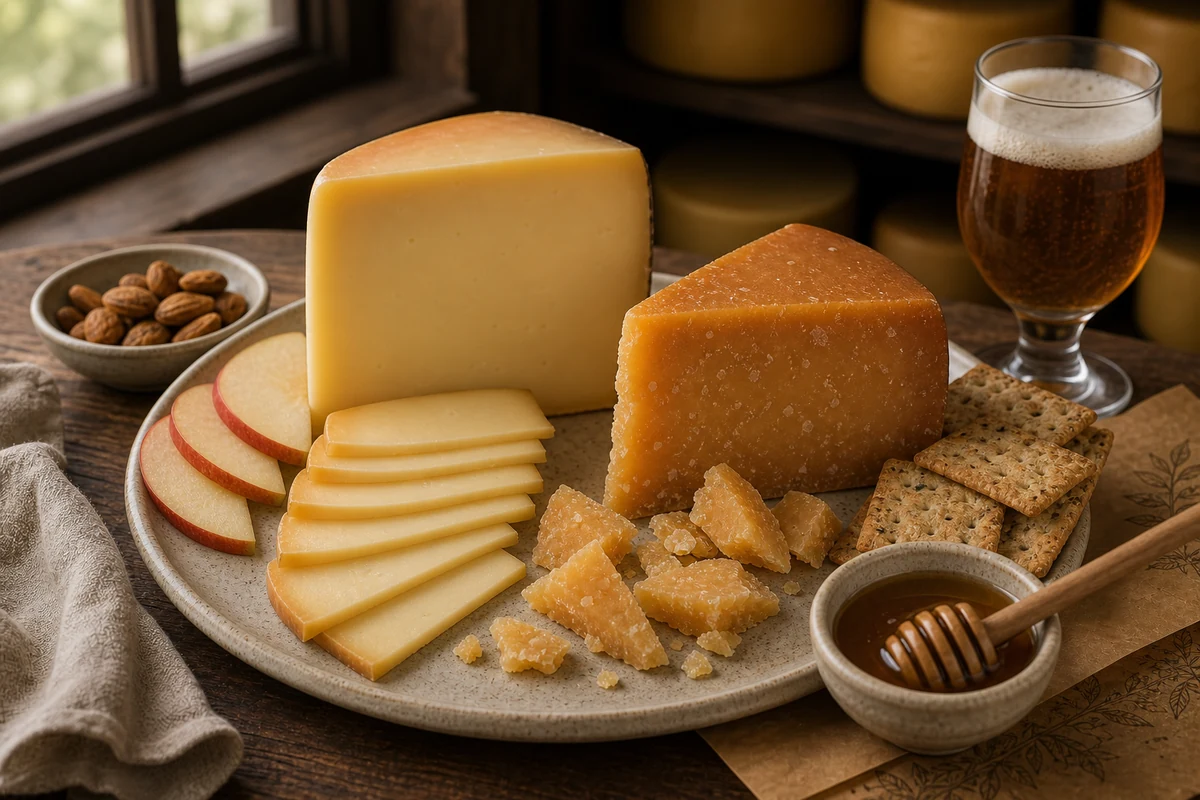
On a cheese board, sweet apples and raisins soften the smoke and paprika without adding another strong savoury flavour. Bread and mild crackers keep the cheese in front, which is useful if you are comparing Original with Vintage.
| Pairing | Why It Works |
|---|---|
| Sweet apples | Fresh sweetness and acidity soften the smoke and keep the Cheddar base visible. |
| Raisins | Concentrated sweetness gives a small counterpoint to the salty, smoky finish. |
How Is It Different From Applewood-Smoked Cheddar?
In North America, “applewood-smoked Cheddar” usually describes a smoking material, not the British brand. The shared word can therefore point to two quite different products.
| Cheese | How the smoke is produced | What to look for |
|---|---|---|
| Applewood Original | Smoke flavouring appears on the ingredient list | The Applewood brand name and paprika-dusted edge |
| Applewood-smoked Cheddar | The maker may smoke Cheddar with applewood, sometimes with other hardwoods | A named wood and a stated smoking or cold-smoking process |
If you want the aroma of real wood smoke, choose a cheese whose maker explains that process. If you want the familiar creamy, paprika-edged British product, the Applewood label is the clearer buying signal.
For comparison, one Wisconsin maker describes smoking Cheddar with applewood and hickory chips, while another describes cold smoking with apples and hardwood. Those process statements are the evidence you would expect when wood smoke, rather than smoke flavouring, defines the product.
Neither method is automatically superior; they simply produce different buying propositions. Applewood offers a stable branded flavour, while a wood-smoked Cheddar asks you to care about the fuel, smokehouse and variation between batches.
How Long Does Applewood Keep After Opening?
Opened-storage instructions vary by pack and seller: one slices label gives seven days, while a cut-to-order retailer gives twelve. That difference is why your own date, format and wrapping matter more than one universal number.
Keep the cheese refrigerated and wrap the cut face so it does not dry out or perfume everything nearby. The pack's shorter storage instruction always wins.
A bar, a stack of slices and an opened grated bag expose different amounts of surface area.
Grated cheese will dry and pick up refrigerator odours fastest, while an intact bar gives you the most control over wrapping the newly cut face.
Does Applewood Fit Your Diet?
The dairy versions contain milk, and an Original slices specification marks that product vegetarian and suitable for coeliacs but not suitable for a lactose-free diet. Formulas can change, so use that as a pointer to the label rather than a guarantee for every pack.
Plant Based carries a vegan symbol and a different allergen statement, but it should be assessed as its own product. A low sugar figure on dairy Applewood does not prove that a pack is lactose-free.
That distinction is easy to miss because nutrition panels often show very little sugar. Lactose in cheese depends on production and the product specification, so the explicit “not suitable” statement on the Original slices matters more than an inferred answer from one number.
For pregnancy, NHS guidance permits pasteurised or unpasteurised hard cheeses such as Cheddar, while CDC guidance lists hard cheese made with pasteurised milk among safer choices. The Original slices label checked states pasteurised milk; use the current cheese-in-pregnancy guidance for your country and confirm the exact Applewood product you are buying.
The same product-by-product discipline applies to vegetarian and coeliac labels. A specification for Original slices cannot silently certify Vintage, Grated or a reformulated pack, even when the front branding is nearly identical.
The British brand lists smoke flavouring rather than a wood-smoking process. Paprika creates the warm-coloured outer edge.
Apple does not appear in the dairy product ingredient lists checked. The name is a brand name, not an ingredient list.
Vintage starts with 12-month matured West Country Farmhouse Cheddar, while Original uses the brand's standard Cheddar base. Both keep the smoke flavouring and paprika finish.
The Original slices specification and label checked mark that product vegetarian. Check the exact pack because formulations and products can differ.
Instructions vary from seven days for one slices pack to twelve days for a cut-to-order wedge. Follow the shorter instruction printed on your own product.