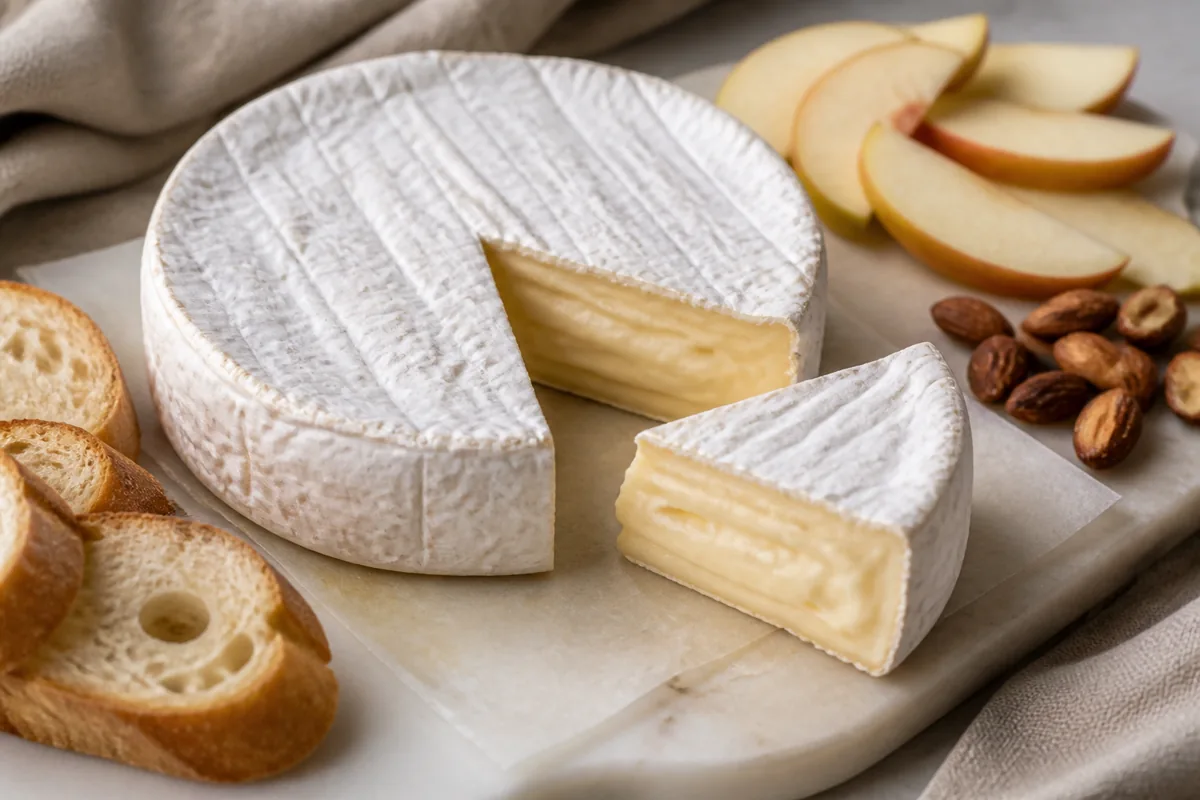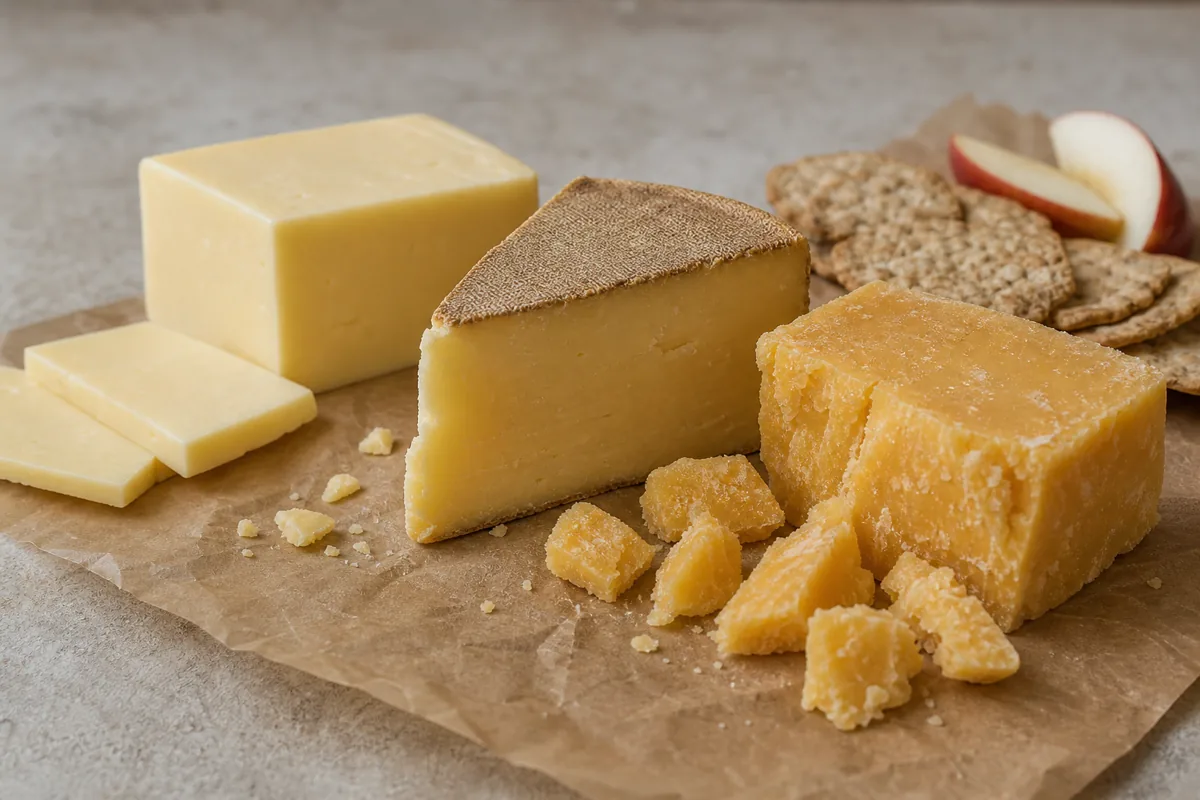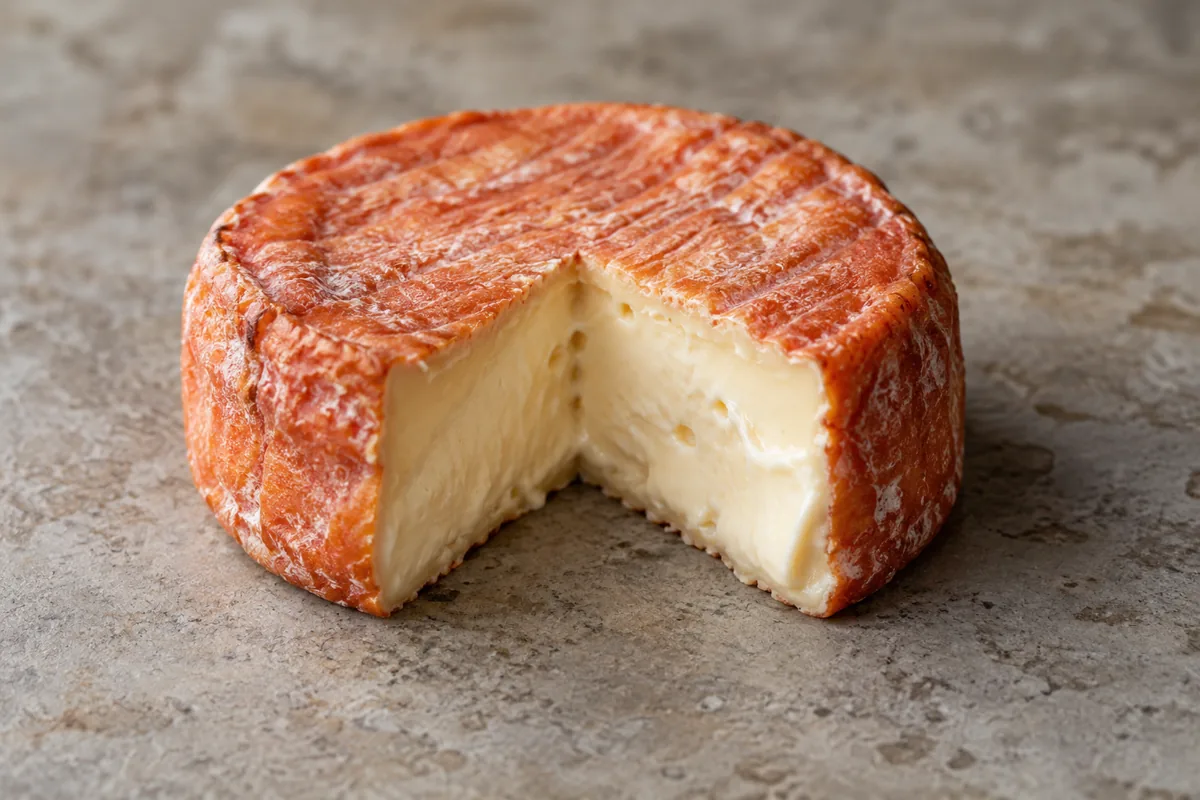
ColoRouge is a soft, washed-rind cow's-milk cheese that MouCo Cheese Company makes in Fort Collins, Colorado. MouCo's flavor guide takes it from smooth and buttery at 0 to 3 weeks to earthy and aromatic at 7 to 8 weeks or longer.
The buying decision is therefore which week of that timeline you want, and the three dates on MouCo's label show where a given wheel stands.
In This Article
What is Colorouge cheese?
MouCo describes ColoRouge as washed-rind and surface-ripened, made with 100 percent local cow's milk. Cheese.com and the Say Cheese! review both list the milk as pasteurized.
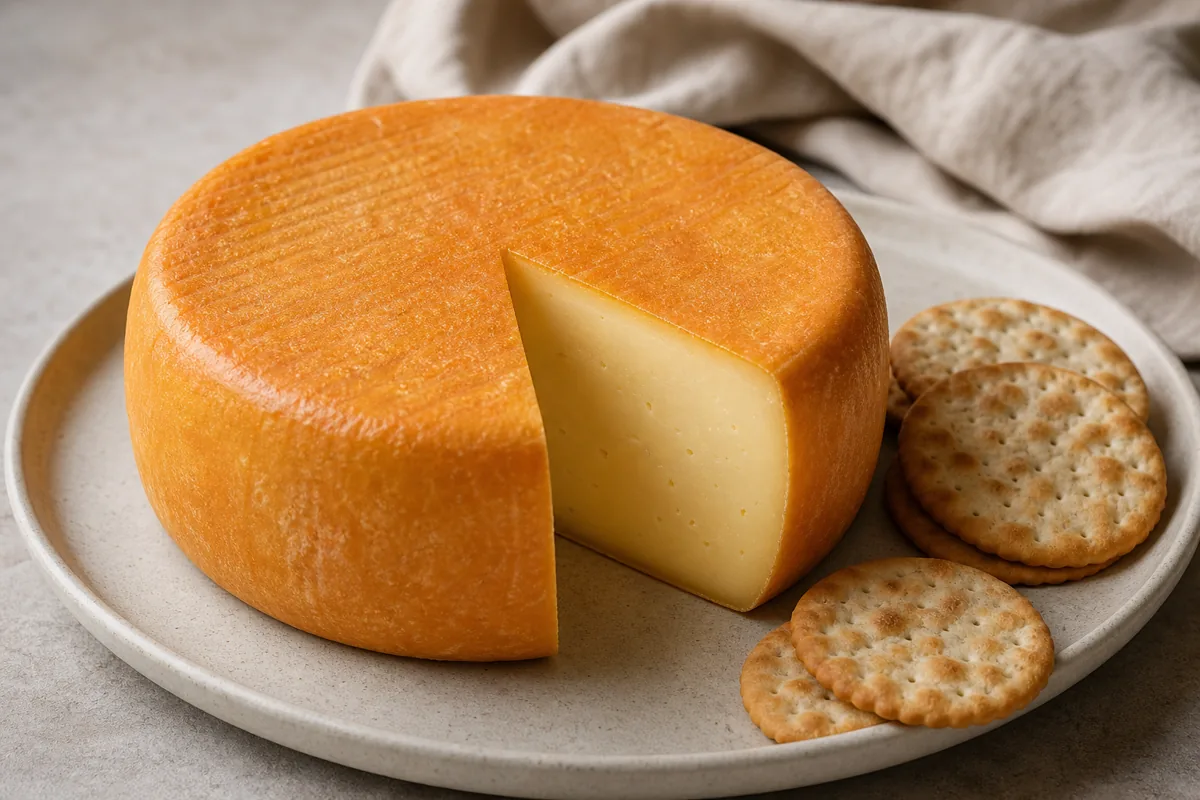
Cheese.com adds that the curd is ladled by hand and that the wheels are turned by hand during ageing. It says the rind is then hand-rubbed, which gives the cheese its orange color.
The wheels are small. The Say Cheese! review calls it a petite round and gives the weight as 4.4 oz.
The review lists MouCo's other soft-ripened cheeses as a Camembert, a truffle cheese, one with ash and another with peppercorns, which makes ColoRouge the orange wash-rind option in that line.
| Detail | Source | What it says |
|---|---|---|
| Rind color | MouCo | A vivid red-orange rind that deepens in character as the cheese matures |
| Rind color | Cheese.com | Fact box lists the color as white; the description says the hand-rubbed rind is orange |
| Rind color | Say Cheese! | Calls it an orange wash-rind option and says the name joins Colorado and rouge, French for red |
| Texture | Cheese.com | Creamy and soft |
MouCo, the Cheese.com description and the Say Cheese! review all point to orange or red, and only the Cheese.com fact box says white, so the wheel in front of you settles the question.
The Say Cheese! review says the cheese is made with "natural, non-GMO animal rennet." That matters if you avoid animal rennet.
How does Colorouge change from week 1 to week 8?
MouCo divides ColoRouge into three windows and ties each to texture, flavor, and rind. At the start the rind is "still early in its life," and wrinkles appear in the middle window.
| Age | What MouCo says to expect |
|---|---|
| 0 to 3 weeks | Smooth and creamy, with a mild buttery flavor and a whisper of tang; the rind is early in its life. |
| 3 to 7 weeks | The paste softens, roasted and nutty notes show, the aroma strengthens, and wrinkles appear. |
| 7 to 8+ weeks | Earthy flavors lead, layered over buttery richness and aromatic depth. |
MouCo ties the middle window to the rind, saying the aroma strengthens as the rind cultures "get to work, shaping both texture and character." Because MouCo calls ColoRouge surface-ripened, the rind is where the change it describes begins.
Cheese.com orders the flavors differently: a young wheel has a mild earthy aroma, the texture softens and the taste turns buttery with age, and a fully matured wheel at 7 to 8 weeks is more complex and spicy.
MouCo puts buttery flavor first and earthy last, while Cheese.com puts an earthy aroma first and a buttery taste later, so neither word alone dates a wheel. MouCo's week windows are the scale to date a wheel by.
Three buyers on MouCo's product page point in different directions: one prefers a younger, tangier wheel, one praises a robust nutty flavor with a slight tang, and one calls it meaty, farmy, dewy and smooth.
The Say Cheese! reviewer tasted ColoRouge both young and more aged and found it on the verge of funky without quite getting there.
The reviewer also says MouCo's cheeses keep a young-cheese flavor even as the taste grows more complex with age.
What does the d8Code on Colorouge tell you?
Each wheel carries a sticker with three dates, and MouCo calls the d8Code its built-in flavor map. The product page includes a "made today" example, and run for 1 October 2026 it showed these dates.
- Fresh and Tangy: October 15, 14 days after the batch date.
- Creamy and Soft: October 29, 28 days after the batch date.
- Enjoy with Friends by: December 10, 70 days after the batch date.
Counted in days, the first two dates land inside MouCo's first two windows, with day 14 in the 0 to 3 week window and day 28 in the 3 to 7 week window.
The earthy window starts at day 49, between the second and last dates, so no sticker date marks it. The last date falls at 10 weeks, later than the 7 to 8 plus weeks that MouCo's flavor guide gives for peak ripeness.
Eat the wheel by the last date on its sticker.
By day count, MouCo's windows run mild and buttery to day 21, roasted and nutty from day 21 to 49, and earthy from day 49, while the sticker dates fall at days 14, 28 and 70.
What is the Colorouge rind like, and should you eat it?
Ask MouCo or the seller whether to eat or trim the ColoRouge rind. MouCo describes the rind as alive with cultures working in symbiosis, shaping the texture, aroma, and rhythm of how the wheel matures.
The Say Cheese! reviewer calls the rind refined, not as gritty or sandy as washed rinds that form large crystals, and about as far from Ardrahan as a washed rind gets. The same review calls the inside meaty yet supple and soft.
MouCo's age cues sit on the rind: it is "still early in its life" before 3 weeks, wrinkles appear between 3 and 7 weeks, and the red-orange rind deepens in character as the cheese ages.
By MouCo's account, a wrinkled rind therefore means the wheel is past its first three weeks, which puts it beyond the sticker's first date at day 14.
Is Colorouge a Good First Washed-Rind Cheese?
The Say Cheese! reviewer recommends ColoRouge as an introduction to washed-rind cheese for someone who is fearful of adventure eating. The tasting notes back that up: a distinct sour note that is not unpleasant or overly sharp, good saltiness, a little bite, and "just a hint of stink."
The reviewer, who tasted both a young and a more aged wheel, says it lacks some of the depth and nuttiness of Époisses and Pont l'Évêque. A reader used to those cheeses should therefore expect a gentler washed rind, even in the mature window.
The same reviewer says a love of big, bold flavors does not rule out liking subtlety, and that with MouCo cheeses the flavors are there but the taste buds need a little coaxing.
MouCo describes its aim as "complexity, not domination," and the reviewer's notes show what that looks like in practice: flavor that is present but quiet.
How should you serve Colorouge?
For food, the Say Cheese! reviewer recommends crusty French bread, Croccantini, or water crackers, with crisp green apple or celery alongside. The reviewer says ColoRouge is subtle for a washed-rind cheese and competes with strong flavors such as rye.
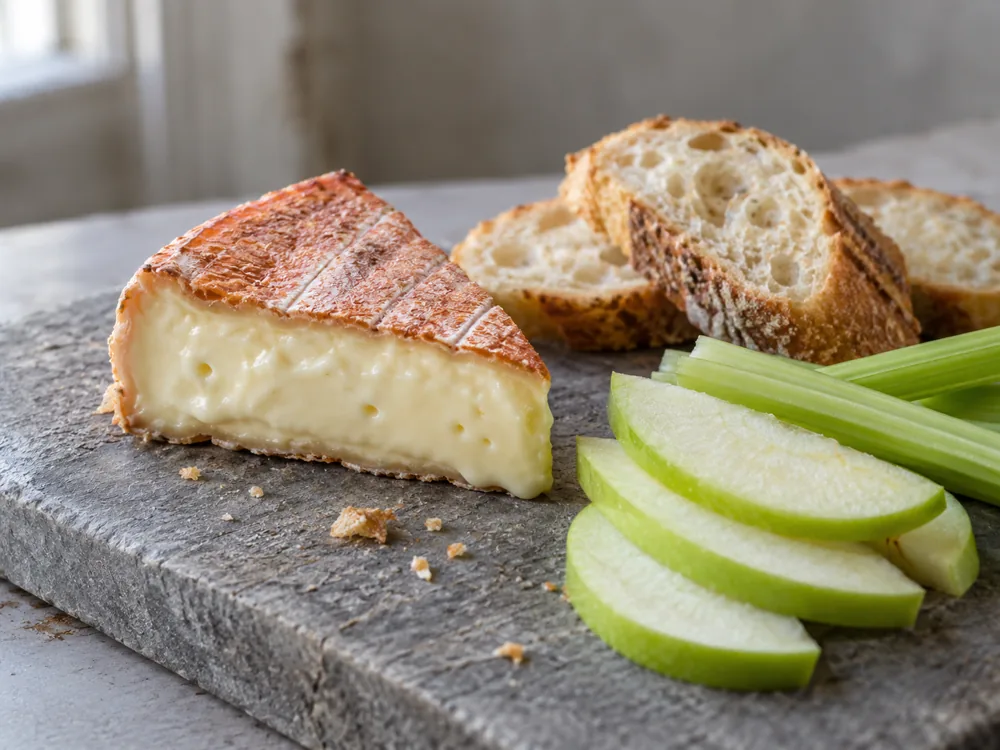
A MouCo customer named Heather writes that eating it on its own, without a cracker, keeps its flavor undisturbed, though it is also tasty on something crisp.
| Pairing | Type | Why It Works |
|---|---|---|
| Crusty French bread | Food | The Say Cheese! reviewer's first suggestion, along with water crackers. |
| Green apple and celery | Food | Named by the same reviewer as fine accompaniments. |
| Fig jam on pain aux amandes crackers | Food | Suggested by the same reviewer, who says the cheese suits sweet or savory items. |
| Olive oil potato chips | Food | Called surprisingly good with ColoRouge by the same reviewer. |
| Riesling, Pinot Blanc, zinfandel and Oloroso | Wine | The Say Cheese! reviewer lists these among wines that suit ColoRouge. |
| Calvados | Drink | Food writer Fiona Beckett suggests apple brandy with washed-rind cheeses, and the reviewer applies that to ColoRouge. |
| Belgian ale | Drink | Listed by the reviewer, together with an Oskar Blues IPA. |
The reviewer says the tangy notes in apple brandy complement the creamy texture and mild nutty flavor of ColoRouge. Apple therefore appears twice among the reviewer's partners, as crisp green apple and as Calvados.
On cheese boards, the reviewer says ColoRouge also goes well with dried meats, and calls the 4.4 oz round a good size for a board or a picnic basket.
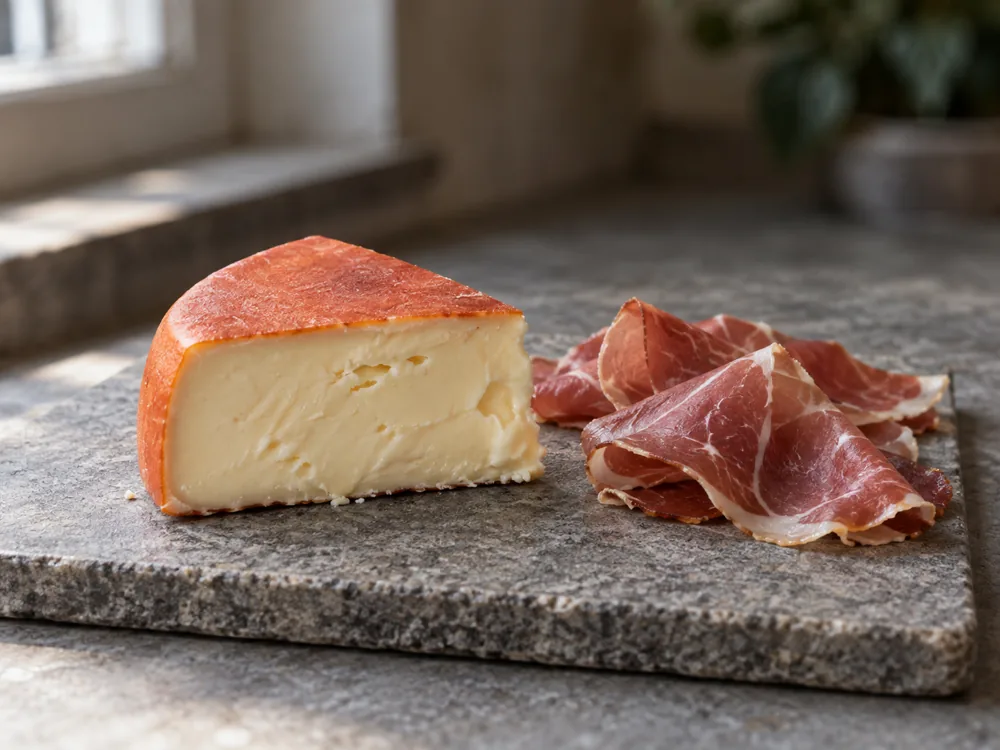
Cheese Grotto gives general serving advice, not advice specific to ColoRouge: cheese comes out of the fridge 30 to 60 minutes before serving, because cold suppresses the volatile compounds that carry flavor, especially in soft styles.
That window stays well inside the FDA two-hour limit for refrigerated food left at room temperature, which the storage block below spells out.
Can you cook with Colorouge?
MouCo publishes five ColoRouge recipes: a Colorado tartiflette remix that is a potato bake, gnocchi, cheese fondue, spinach-stuffed portobello mushrooms, and Southern-style biscuits.
MouCo's descriptions add the supporting ingredients: wine, kirsch and spices for the fondue, garlicky spinach for the portobellos, and gravy, saucy mains or a smear of butter alongside the biscuits.
The Say Cheese! reviewer says heating does not change the taste much, because the flavor is already subtle for a washed-rind cheese, and suggests baking it in a noodle or potato dish.
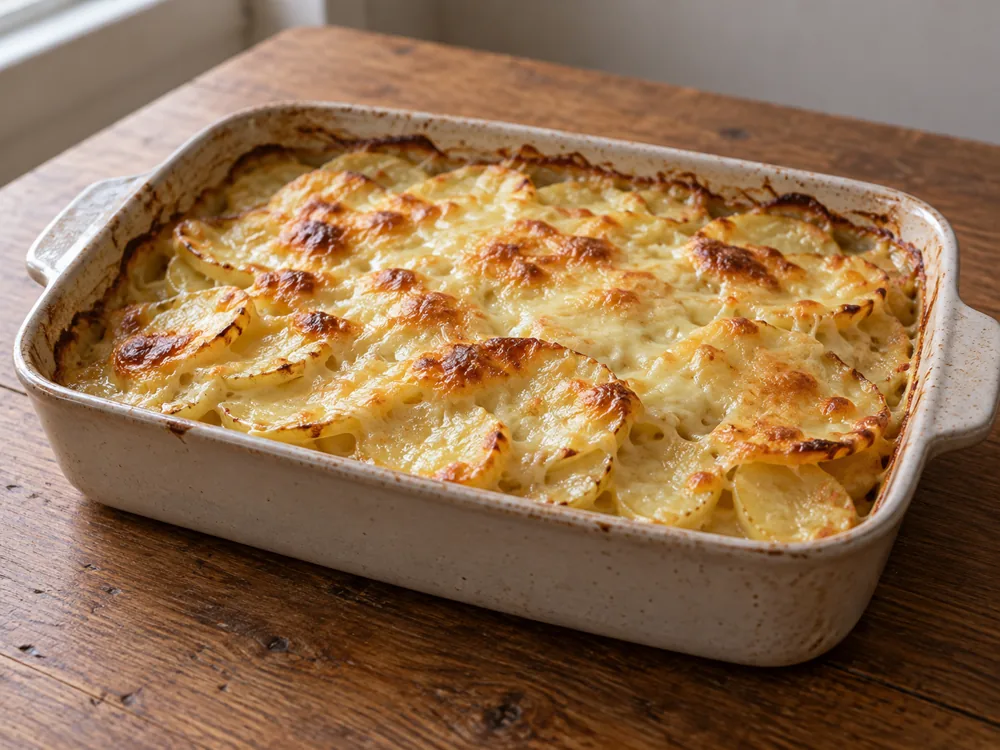
A MouCo customer says it melts nicely and has an expanded flavor profile after baking while staying delicious cold, and MouCo's reply on the page agrees that a little oven time brings out a different side of ColoRouge.
A second customer makes a deluxe grilled cheese or panini with it.
Each recipe in MouCo's cookbook sets its own method.
How do you store Colorouge?
ColoRouge's storage rules below come from the FDA's food-safety limits and Cheese Grotto's advice for washed-rind cheeses in general.
For cheese storage in general, Cheese Grotto says a strong washed rind can pass its aroma to a delicate cheese on the same shelf within days. It warns that plastic wrap traps moisture against the rind, and that plastic containers fail on airflow and humidity.
Cheese Grotto's reasoning is humidity: it puts professional cheese caves at 70 to 80 percent relative humidity and home refrigerators at 30 to 50 percent, and says washed rinds begin to crack when the air dries out. It gives 34 to 39 degrees F as its refrigerator range for cheese, which sits under the FDA's 40 degrees F ceiling.
Cheese Grotto accepts plastic wrap for one to two days between uses, but says that longer than that it speeds rind breakdown and leaves soft cheese slimy.
MouCo says ColoRouge evolves "without trying to own your refrigerator," while Cheese Grotto's aroma warning is about strong washed rinds.
Cheese Grotto's 1 to 2 weeks is a general figure for washed rinds such as Taleggio, raclette and Époisses, while MouCo's three dates count from the batch date out to day 70.
Is Colorouge safe to eat during pregnancy?
For a soft cheese like ColoRouge, the CDC's safer choice is heating a pasteurized one to an internal temperature of 165 F or until steaming hot. The CDC also says pregnant women are 10 times more likely to get a Listeria infection.
NHS names pasteurised or unpasteurised mould-ripened soft cheeses with a white coating as cheeses that must be thoroughly cooked. ColoRouge's washed rind is red-orange by MouCo's account, but the Cheese.com fact box lists its color as white, so if your wheel shows a white coating, cook it thoroughly.
Where Can You Buy Colorouge, and What Does It Cost?
MouCo's online shop lists ColoRouge at $8.00 and says orders ship insulated with cold gel. If the shop's round matches the 4.4 oz in the Say Cheese! review, that is about $1.80 an ounce.
A customer on the product page writes that ColoRouge is very rarely in stores, and MouCo's reply suggests asking the store's cheese counter to bring it in, adding that hearing directly from shoppers helps. MouCo's site menu also carries a Find our Cheese page.
The d8Code counts from the batch date, so a wheel that spends days in transit or on a shelf arrives with fewer days before its last date. Check the last date on the sticker when the wheel arrives.
What can replace Colorouge if you cannot find it?
Cheese.com describes orange-rind Port Salut as a pasteurized cow's-milk cheese with an orange washed rind and a mild, mellow flavor that increases the longer the cheese is kept. That makes it the gentler match.
Cheese.com gives Port Salut disks as about 2 kg (4.4 lb), 16 times the weight of a 4.4 oz ColoRouge round, so a recipe written around one whole ColoRouge round needs a weighed piece of Port Salut rather than a matching wheel.
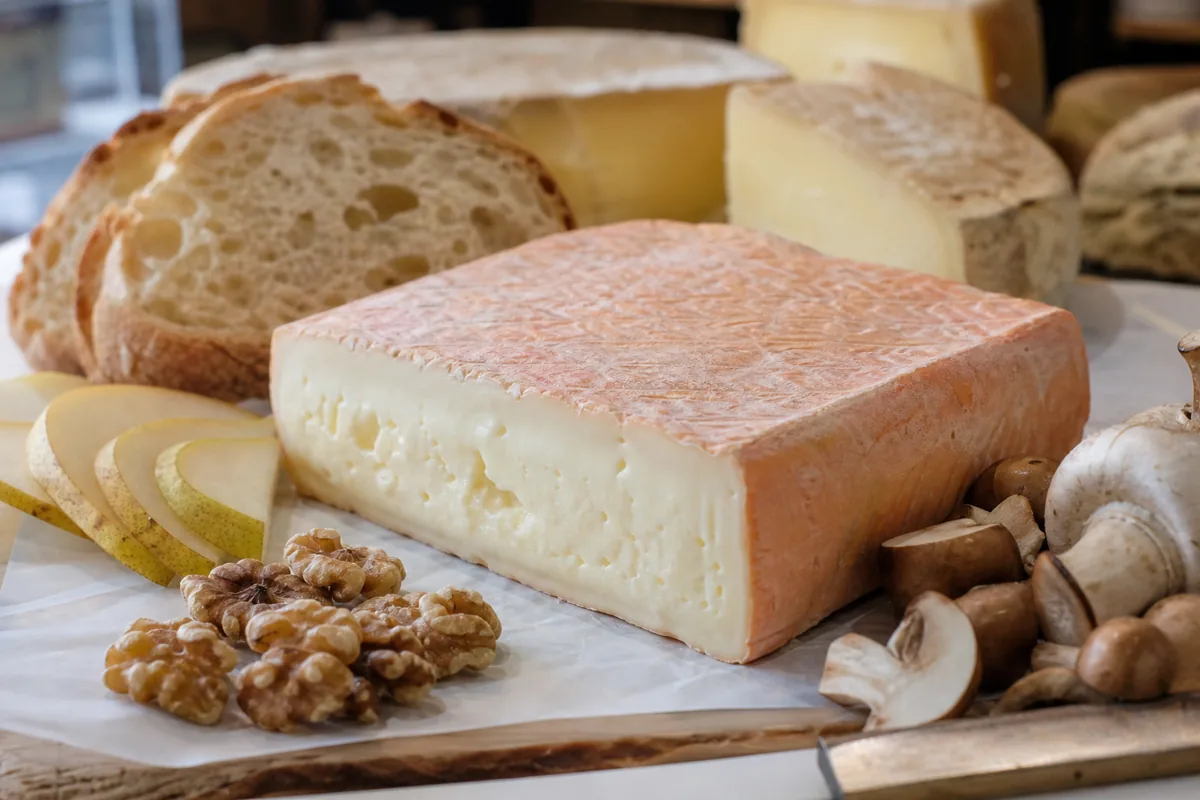
For more punch, cooksinfo.com describes Taleggio PDO as washed once a week with brine, giving it an orangey-pink rind. Despite a pungent aroma, the flavor is buttery with a gentle fruity tang that grows more pronounced as the cheese ages.
Taleggio requires a minimum of 35 to 40 days, so its youngest age sits close to ColoRouge's 7 to 8 week mature window.
The Rothschild Heritage AOP farmhouse page confirms Brie de Meaux requires raw cow's milk for AOP designation, with a flowery and slightly chalky rind and an unctuous paste with a hazelnut flavor, so bloomy-rind Brie changes both the flavor and the pregnancy conditions.
Cheese.com's fact boxes list ColoRouge at 12% fat and Port Salut at 72.7% without naming a basis, so the two figures cannot be compared as they stand.
Why is Colorouge associated with Colorado cheese?
MouCo makes ColoRouge in Fort Collins from local milk. The Say Cheese! review says the milk comes from an antibiotic-free Front Range dairy.
MouCo's own wording for the cheese is "Clean ingredients, real milk, real time."
MouCo lists first place at the 2004 ACS cheese competition, second place in 2009, and third place in 2023. It also lists gold at the 2016 Los Angeles International Dairy Competition and bronze at the 2020 World Cheese Awards.
Awards do not say which week's wheel won, so the d8Code stays the better guide at the counter.
SOURCES & REFERENCES
Colorouge is a soft, washed-rind cow's-milk cheese made by MouCo Cheese Company in Fort Collins, Colorado.
MouCo says a young wheel is smooth and buttery with a whisper of tang. Between 3 and 7 weeks the paste softens and roasted, nutty notes show.
At 7 to 8 weeks or later, MouCo says earthy flavors rise to the front.
MouCo's d8Code puts three dates on each wheel's sticker: Fresh and Tangy, Creamy and Soft, and Enjoy with Friends by.
Ask MouCo or the seller whether to eat or trim the rind. MouCo describes it as alive with cultures, and a reviewer calls it refined rather than gritty.
MouCo describes a young window at 0 to 3 weeks, a creamy window at 3 to 7 weeks, and a bold window at 7 to 8 weeks or beyond.
MouCo's online shop lists ColoRouge at $8.00 and ships it insulated with cold gel.