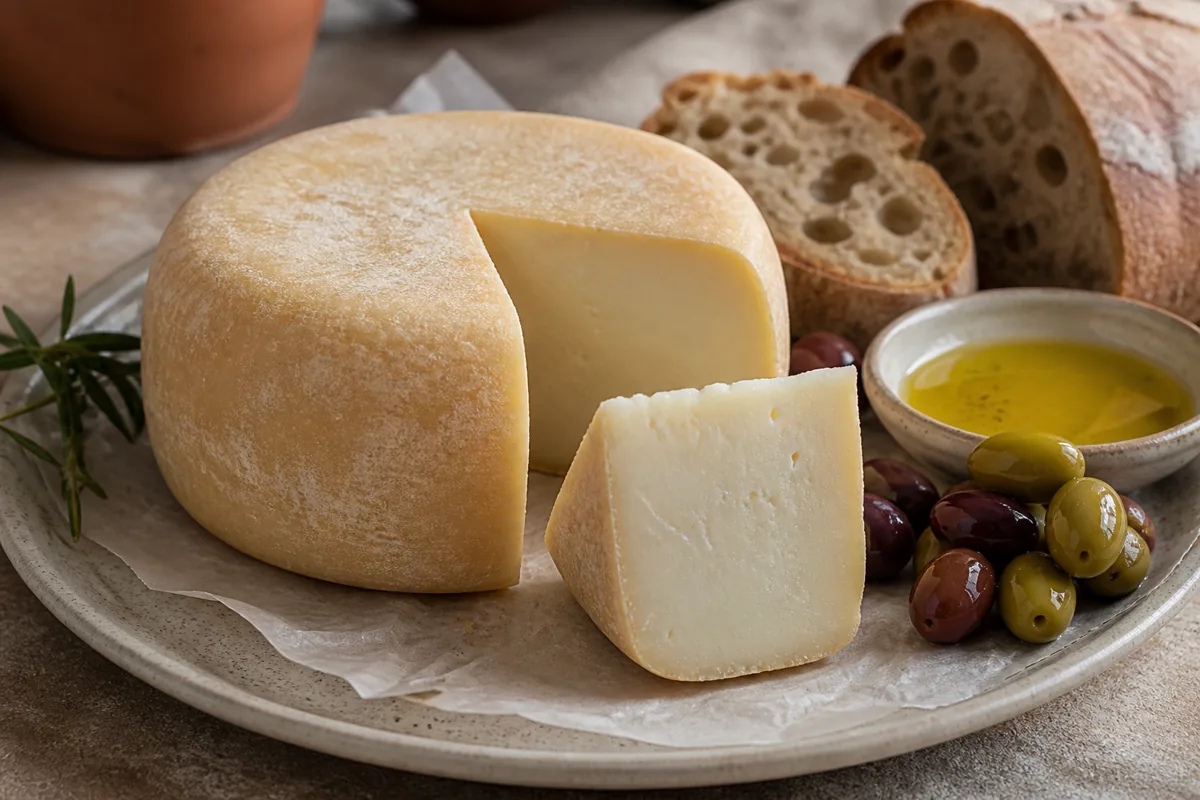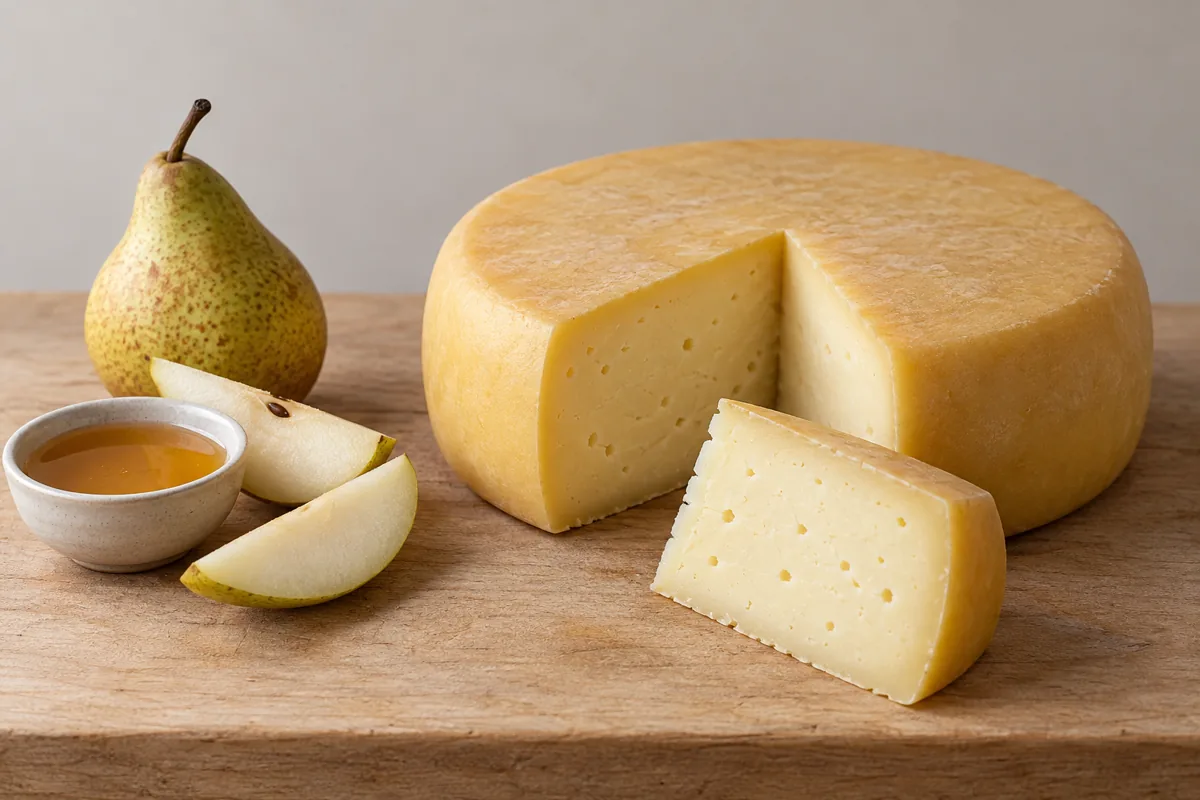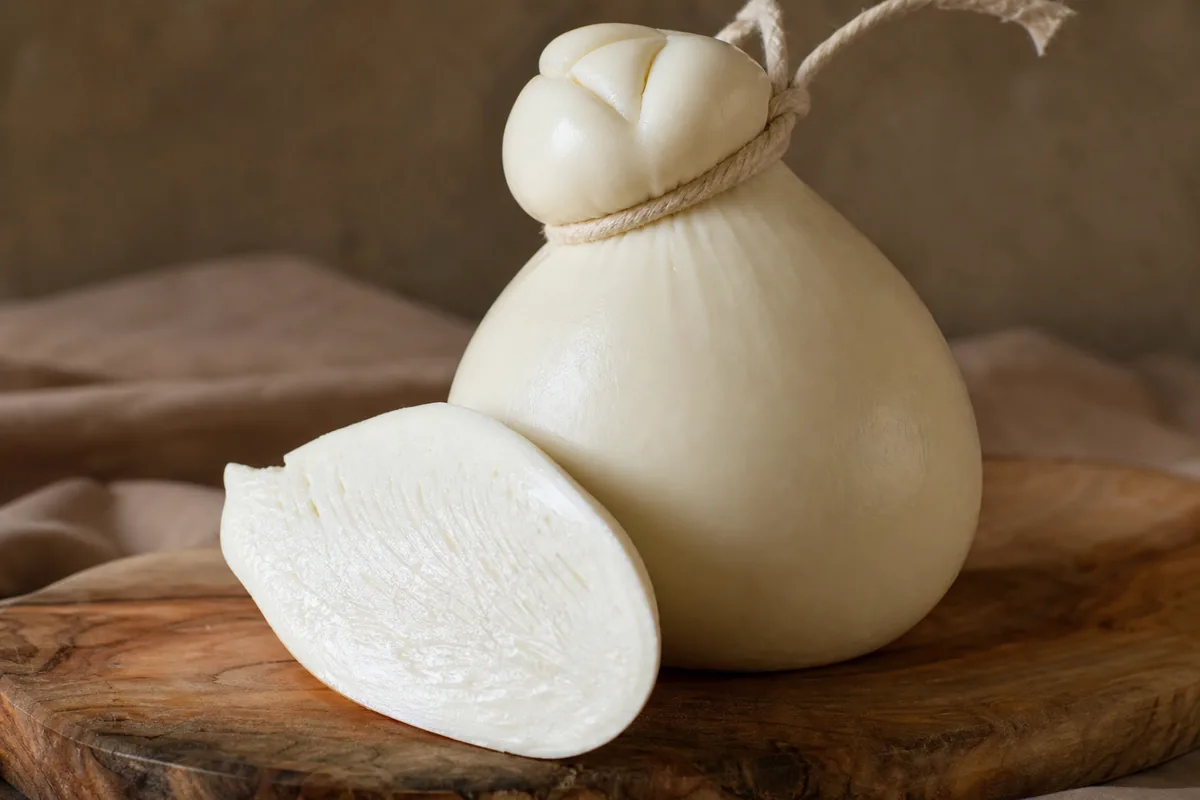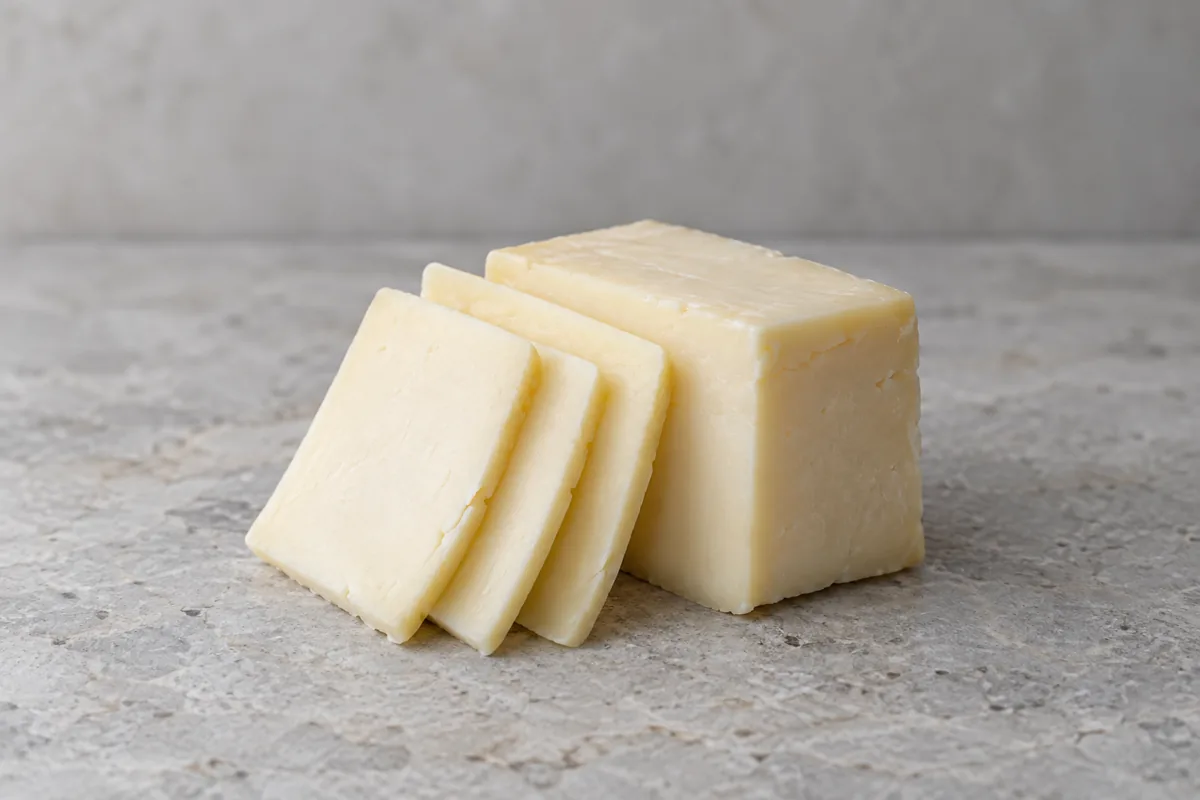
Cacio de Roma is a pasteurized sheep's milk cheese from the countryside around Rome, aged about 40 days. Its importer, Forever Cheese, describes it as semi-soft and creamy with a mild, sweet flavor.
It is a different cheese from Pecorino Romano, which the protected rules describe as a hard cheese aged at least five months.
The listings and the one review disagree a little on how firm and how strong it is, and none describes its rind.
In This Article
What Is Cacio de Roma?
Wikipedia says cacio e pepe means "cheese and pepper" in several central Italian dialects, so cacio is the word for cheese and Roma names the place. Forever Cheese says the cheese is made in the countryside of Rome, in Lazio, Italy, from locally collected milk.
The importer also says the cheese is known as a caciotta for its small form, and Cheese.com repeats that for a small round. The word therefore describes the cheese's shape and size and says nothing about the milk, which the importer's page and data sheet state separately.
The product page supplies the breeds and origin, while the ingredient list comes from a Forever Cheese data sheet dated 9/6/2019.
Forever Cheese gives the age twice, as "aged about one month" in its description and as 40 days in its attribute list, and Cheese.com also says about one month. It files the cheese under young cheese, so the figure counts weeks of ripening, not months.
Is Cacio de Roma the Same as Pecorino Romano?
No. Forever Cheese sells Cacio de Roma as semi-soft and aged about 40 days, while the Pecorino Romano production rules describe a hard, cooked-curd cheese aged at least five months for the table and at least eight months for grating.
Lazio does not separate the two, because the Pecorino Romano zone covers Sardinia, Lazio and the province of Grosseto, and a wheel may say Lazio on its stamp only when the whole production cycle took place there. Both use sheep's milk, so the differences sit in age, texture and use.
| Point | Cacio de Roma (Forever Cheese) | Pecorino Romano (production rules) |
|---|---|---|
| Age | About 40 days | At least 5 months for table cheese, at least 8 months for grating |
| Milk | Pasteurized sheep's milk | Fresh whole sheep's milk from Sardinia, Lazio or Grosseto |
| Texture | Semi-soft, creamy | Hard, cooked curd |
| Rennet | Animal rennet | Lamb rennet paste from animals raised in the zone |
| Flavor | Mild, sweet | Aromatic and slightly spicy as a table cheese; piquant and intense when aged for grating |
| Size | Small form; case pack listed as 2/4lb | Wheels of 20 to 35 kg |
| Rind | No rind described | Thin, ivory or natural straw colour, sometimes coated with a neutral or black protective |
| Marking | Trademark symbol on the name; no wheel marking described | Stamped with the name, the protection logo, a province code, the dairy's code and the month and year of production |
Five months is nearly four times as long as 40 days, and eight months is about six times as long. The rules tie that time to flavor, aromatic and slightly spicy at the table-cheese minimum and piquant and intense after the longer ageing used for grating, while the sources describe Cacio de Roma at about 40 days as mild and sweet.
The rules also fix the curd cooking at 45 to 48°C and allow salting dry or in brine.
Under those rules the stamped wheel and its rind identify Pecorino Romano, while none of the Cacio de Roma sources describes a rind or stamp to look for, so the label is the only identification they support.
The fat figures cannot be compared. Cheese.com lists the fat content as 20% without saying whether that is by weight or on dry matter, and the Pecorino Romano rules count fat on dry matter, at least 36%.
Wikipedia names grated Pecorino Romano as the cheese in cacio e pepe, where hot starchy pasta water melts it into a sauce with black pepper, and says the cheese can easily turn lumpy instead of smooth and creamy. No source places Cacio de Roma in that dish or tests how a younger, softer cheese behaves in it, so it is a different cheese and not a swap.
What Does Cacio de Roma Taste and Feel Like?
Forever Cheese calls the flavor mild and sweet and the texture creamy and semi-soft. Cheese.com agrees on mild and describes an ivory cheese, but lists the texture as semi firm.
| Source | Description |
|---|---|
| Forever Cheese | Semi-soft, creamy, mild sweet flavor |
| Cheese.com | Semi firm, ivory, mild, aroma of sheep's milk |
| John Eats Cheese, 2011 | Semi-firm and pliable rather than dry, quite mild like Manchego, with very little sheep's milk taste |
| Peacock Cheese, Fulvi brand | Semi-soft, very full and flavorful taste |
Cheese.com files the cheese as semi-soft in its type field and semi firm in its texture field, so even one entry straddles the two descriptions.
The 2011 review places the taste somewhere between provolone and Parmesan, and calls the texture firm but pliable instead of dry. The review predates the importer's 2019 data sheet by eight years, and a different maker or batch could explain why it reads firmer than the importer's semi-soft.
Cheese.com describes the aroma as that of sheep's milk, while the review finds very little sheep's milk taste, and smell and taste are different senses, so both statements can hold.
Three sources agree the cheese is mild, and the Fulvi listing is the outlier. Its description follows the importer's wording until the second sentence's last clause, where "a very full, flavorful taste" replaces "a semi-soft texture and mild sweet flavor".
Because the rest of that sentence is the importer's, the phrase may be the retailer's own rewording and not a different cheese.
How Do You Use Cacio de Roma?
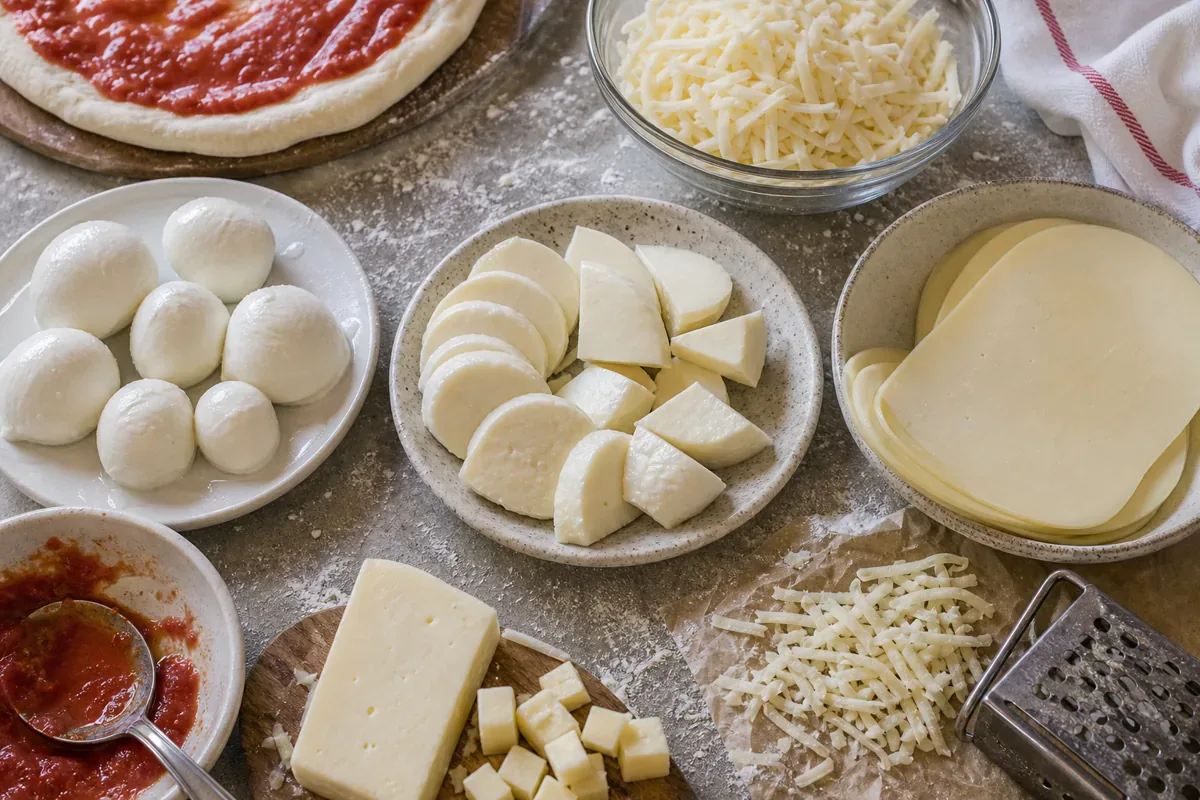
Forever Cheese lists three uses: as a snack, melted on pizza, or on a cheese plate.
Cheese.com says the cheese melts very well and is therefore used in everyday cooking, with salad and pasta named beside pizza and snacking.
The 2011 review says it is apparently a wonderful melting cheese for paninis and pizzas, and adds, again second-hand, that it is supposedly a very common table cheese in Italian homes according to Mario Batali.
| Use | How It Works |
|---|---|
| Snack | Forever Cheese, Peacock Cheese and Cheese.com. |
| Melted on pizza | Forever Cheese, Peacock Cheese, Cheese.com and the 2011 review. |
| Cheese plate | Forever Cheese and Peacock Cheese. |
| Salad and pasta | Cheese.com. |
| Paninis | The 2011 review. |
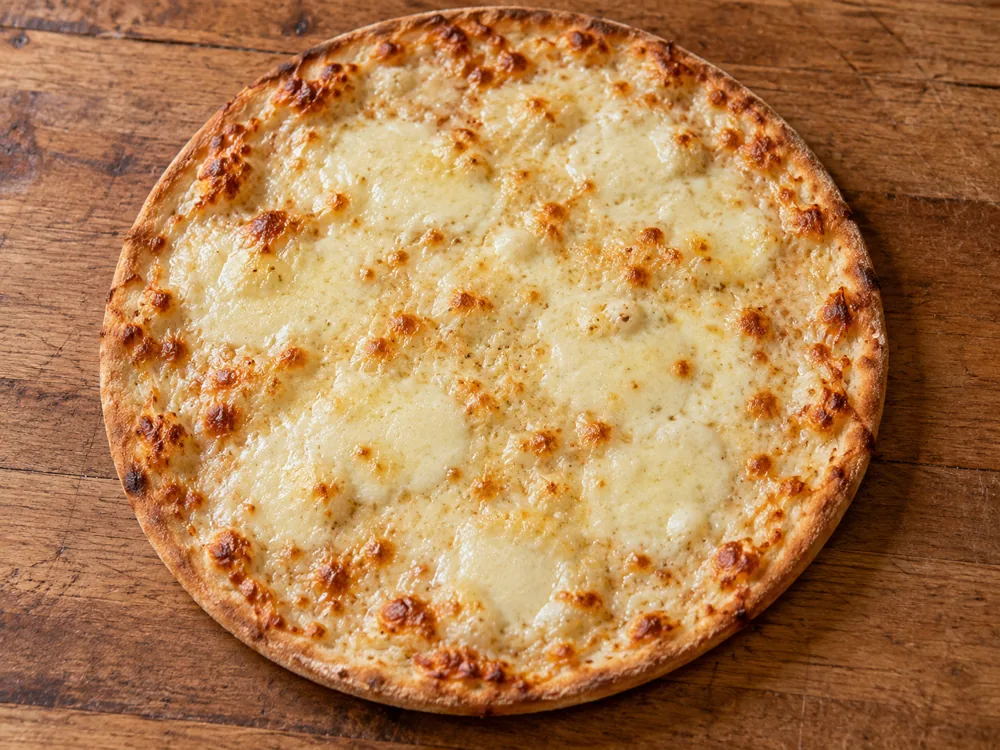
None of these sources gives a melting temperature or says how far the cheese stretches, so we do not compare it with mozzarella.
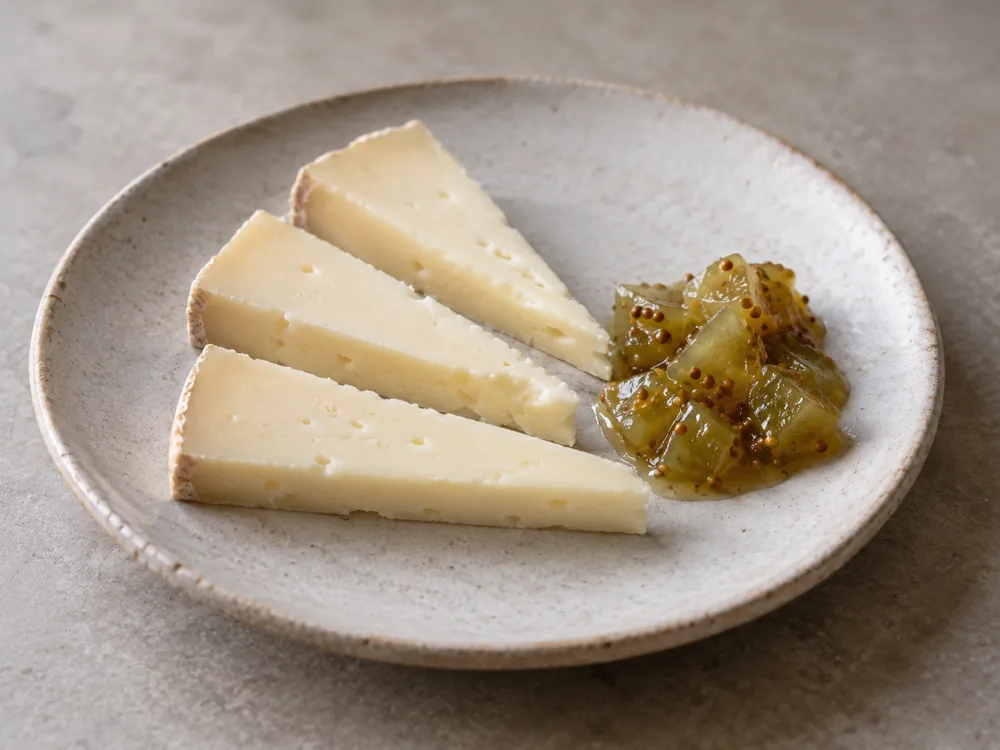
The one pairing a source names is mostarda. Forever Cheese's page for Casa Forcello green tomato mostarda lists Cacio de Roma among its suggested pairings, with Taleggio and fresh and bloomy rind cheeses, and calls mostarda a traditional condiment that balances sweetness and heat.
That page describes hand-cut candied green tomato with a hint of potent mustard and places the producer in Lombardy, not Lazio, so the pairing is the importer's suggestion rather than a regional custom.
Is Cacio de Roma Vegetarian?
No. The Forever Cheese data sheet lists pasteurized sheep's milk, rennet and salt and then specifies animal rennet, and Cheese.com marks the cheese as not vegetarian.
Switching to Pecorino Romano does not change that, because its production rules call for rennet paste from lambs raised in the production zone.
The coagulant statement comes from that 2019 data sheet, so check the ingredient list on the package of the exact cheese for the current recipe.
Is Cacio de Roma Safe During Pregnancy?
Forever Cheese states that Cacio de Roma is made from pasteurized sheep's milk, which matters because the CDC lists soft cheese made from unpasteurized milk among the riskier choices for pregnant women, who it says are 10 times more likely to get a Listeria infection.
Cacio de Roma is not on either agency's list by name. The NHS lists pasteurised soft cheeses such as mozzarella as safe, and the CDC's safer list includes feta made with pasteurized milk and pasteurized soft cheeses heated to an internal temperature of 165°F or until steaming hot.
The NHS makes an exception for pasteurised or unpasteurised mould-ripened soft cheeses with a white coating, which must be thoroughly cooked, and the Cacio de Roma sources do not describe its rind.
How Do You Buy Cacio de Roma?
Forever Cheese sells the cheese as a whole cheese and as pre-cut wedges, lists it as exclusive to the company, and puts the registered-trademark symbol on the name. It gives the pronunciation as KAH-cho day RO-ma.
None of the product pages or the review states the rind colour, whether the rind is edible, or how long an opened wedge keeps. We left those out instead of borrowing advice from other caciotta.
Peacock Cheese lists a Fulvi-brand Cacio Di Roma with the same 40-day age, semi-soft texture and Lazio origin.
Cheese.com lists "Rustico Red Pepper Pecorino" as a synonym, yet it also names Rustico Red Pepper as a separate semi-soft cheese, so a pepper cheese sold under that name is not what the Cacio de Roma sources describe.
SOURCES & REFERENCES
Forever Cheese describes it as a semi-soft, creamy sheep's milk cheese from the countryside of Rome in Lazio, known as a caciotta for its small form and aged about 40 days.
No. Pecorino Romano is a hard, cooked-curd cheese aged at least five months under its production rules, while Forever Cheese lists Cacio de Roma as semi-soft and aged about 40 days.
Forever Cheese states pasteurized sheep's milk on its product page and data sheet. Check the package of the exact cheese you buy.
No. The Forever Cheese data sheet specifies animal rennet, and Cheese.com marks the cheese as not vegetarian.
Cheese.com says it melts very well, and Forever Cheese lists melting on pizza as a use.